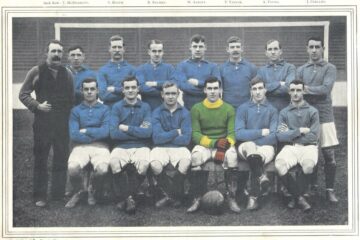
(Main header photograph: Everton Team Photo 1881, believed to be the earliest of an Everton team (The Everton Collection))
One man’s garbage is another man’s treasure

‘The Everton Collection (formerly The David France Collection) is the greatest compilation of football club memorabilia in the world’ – so declared Christies and Sotheby’s in 2005. Like many history buffs, I’ve wondered how you assemble such archives and sought insight from someone watching from the sidelines – Elizabeth, his wife of fifty-one years.
How did the never-ending treasure hunt start? I heard it had something to do with 130 mph wind?
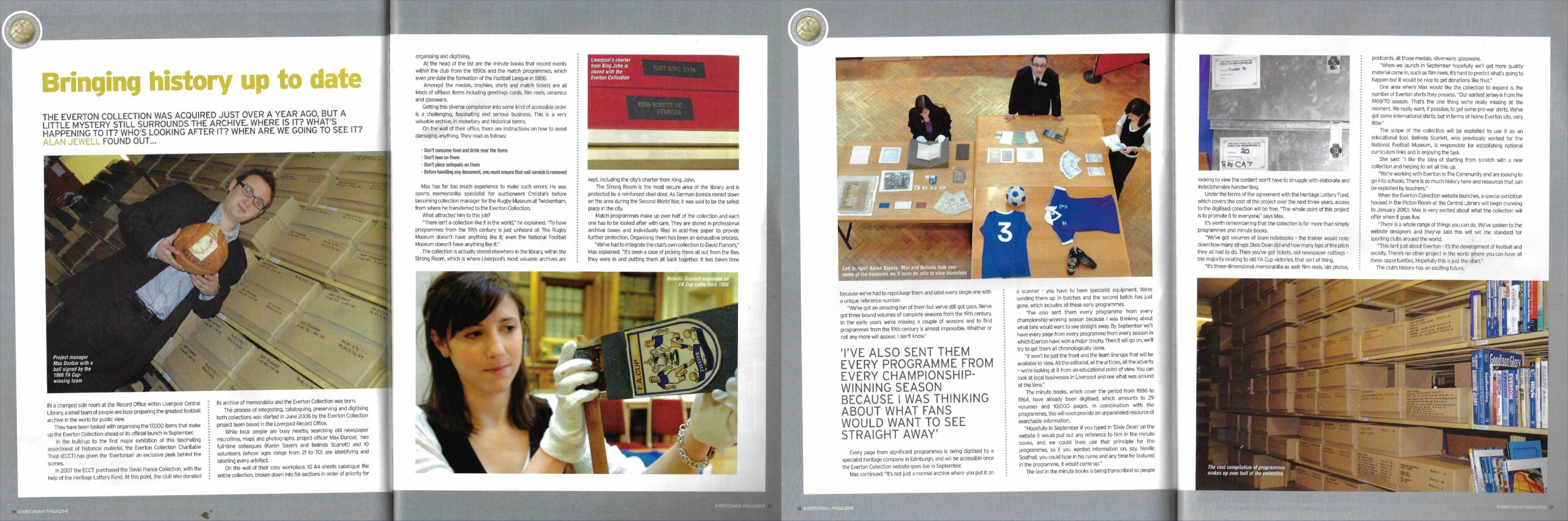
Yes, we were hiding from Storm Alicia in a Houston-sized walk-in closet with floor-to-ceiling shelves containing his boyhood bits and pieces when the Category three hurricane struck in 1983, and David decided to build on them and to secure Everton’s trail-blazing history.
My husband is not a collector who acquires, catalogues, displays and enjoys being surrounded by items. David was further motivated after learning that the club had no archives – or more to the point, weren’t interested in developing archives. To him, it was another business project requiring strategic planning, disciplined implementation, boundless enthusiasm and no little investment. Of course, the task was complicated by the fact that we lived in the USA.

In the days before the internet – he enlisted an army of UK dealers and was known as the ‘crazy bloke in Houston willing pay stupid money for old Everton stuff’. So, one evening per month, he scrutinised catalogues and inspected recent acquisitions for condition. For my part, I insisted on no Everton clutter in the house, and be restricted to the 8 ft x 6 ft closet. I thought of it as a harmless activity, certainly not as demanding as his key interest of running marathons.
When do it get serious – was it influenced by Christies and Sotheby’s?
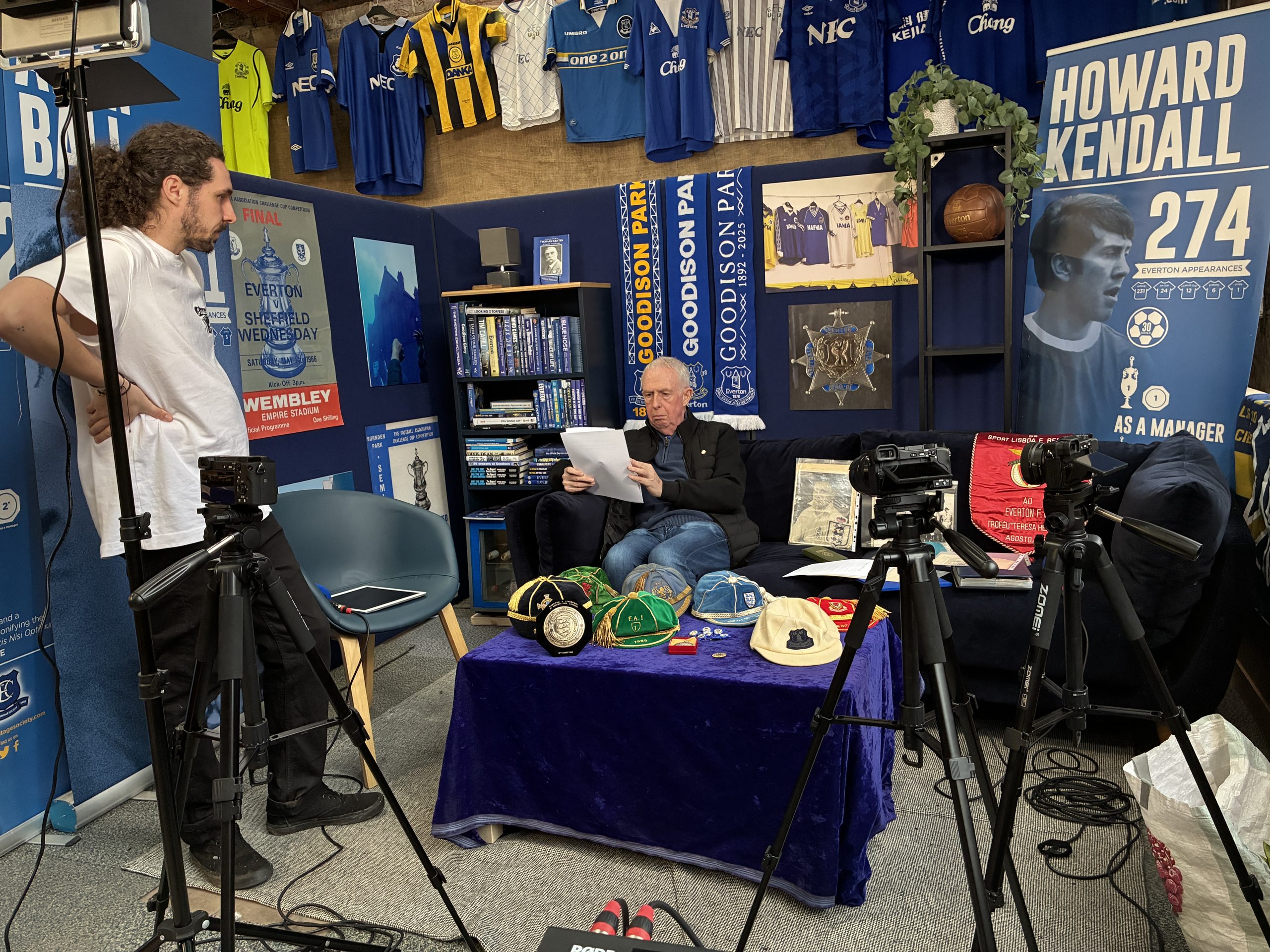
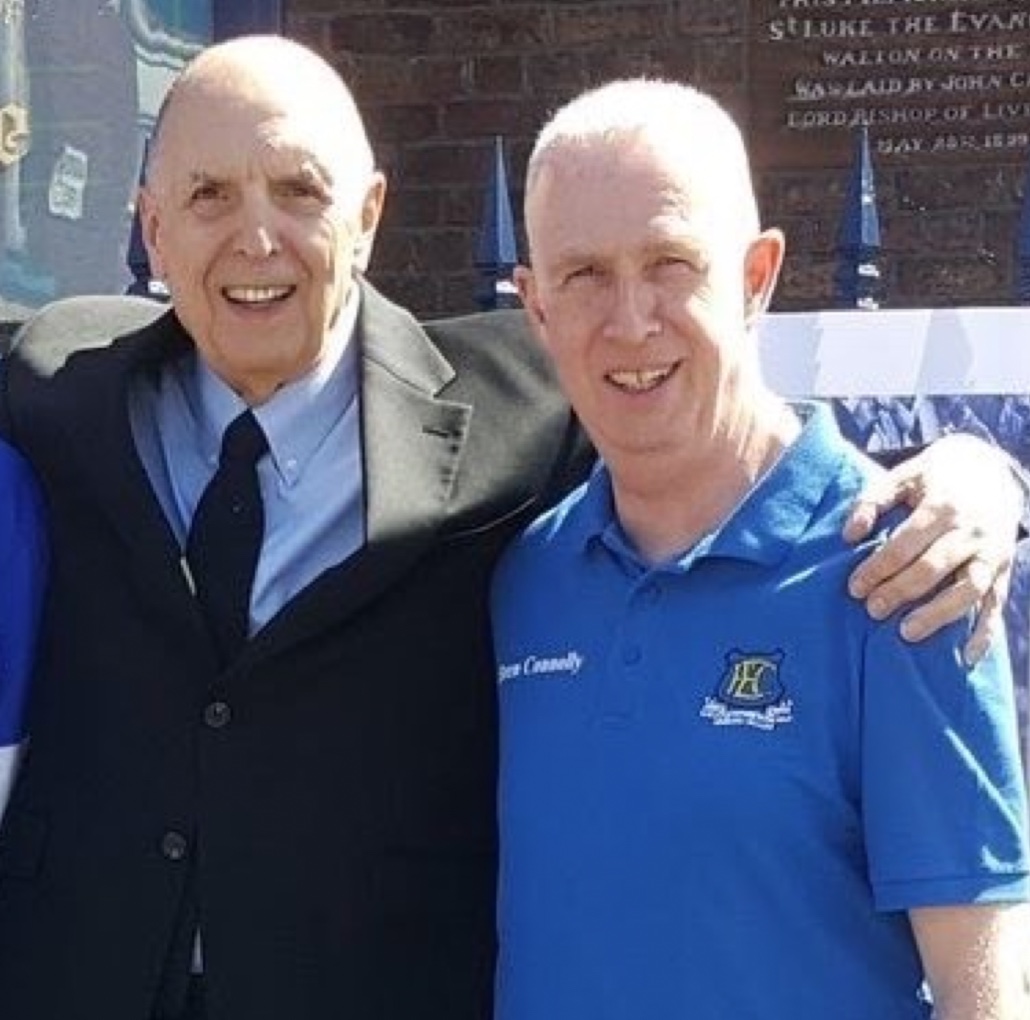
Around 1990, the major auction houses introduced sales of sports memorabilia. As a result, prices skyrocketed, but lured more family treasures onto the market. David attended three auctions per year in London and Glasgow. In preparation, he reviewed the available lots, estimated prices, and established his priorities within a budget (my role was one of guardian of the family purse), then coordinated with other Everton parties, like Brendan Connolly from Frodsham, Steve Hickson from Carlisle, as well as others in Durham, Rutland and Norway, to minimise competition. His expenditure was £10,000 per auction, about £40,000 per year. Back then it was the price of a Porsche 911 Carrera. Of course, he spent £90,000 in 1995 – which is another story. Remember the ‘Take it back!’ saga recalled to Dave Prentice at Liverpool Town Hall? [This is a reference to David revealing to Elizabeth how much he had just paid for a rare collection of Tommy Lawton memorabilia. The film is included at the end of this article (from 11.30mins in).]
When did you realise that the results of his efforts were special and the envy of other clubs?
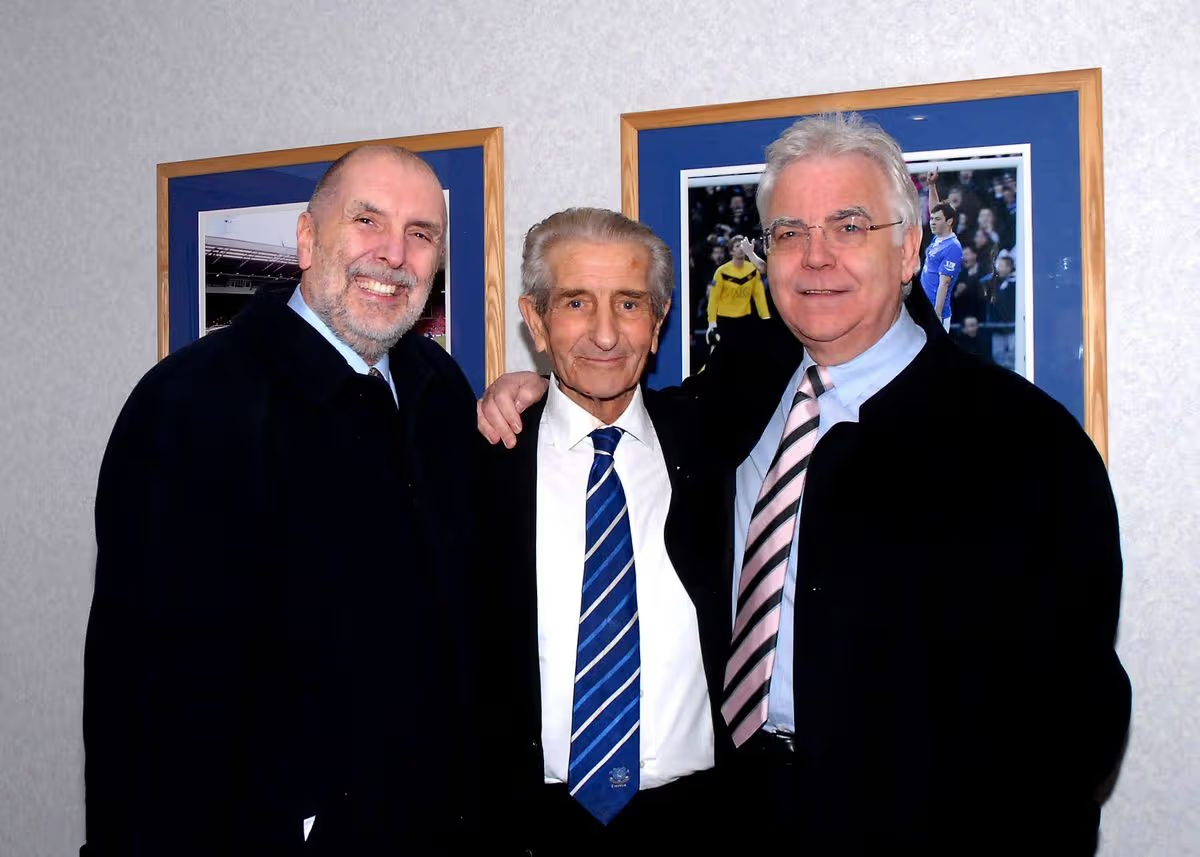
Enter Bill Kenwright. Even though they agreed on very little, David would visit Bill’s office in London – Blue Bill loved to amble down memory lane and was in awe of his ongoing efforts to safeguard the club’s past. In fact, he offered my spouse the position of heritage advisor to the board – which he declined tactfully. While Bill claimed that the collection was priceless, I only became aware of its monetary value when we received an insurance valuation of £2.6-3.0 million. I was shocked and declared ‘One man’s garbage is another man’s treasure’ but heeded the insurer’s advice to keep the items in a bank vault.
I imagine that the decision to sell was difficult, and expedited by health issues?
Our decision to sell the collection was prompted by an assortment of illnesses and cardiovascular incidents. Our goal was to dispose of all items as a complete collection to benefit the Merseyside public, via a dedicated Everton museum/ exhibition centre and website.
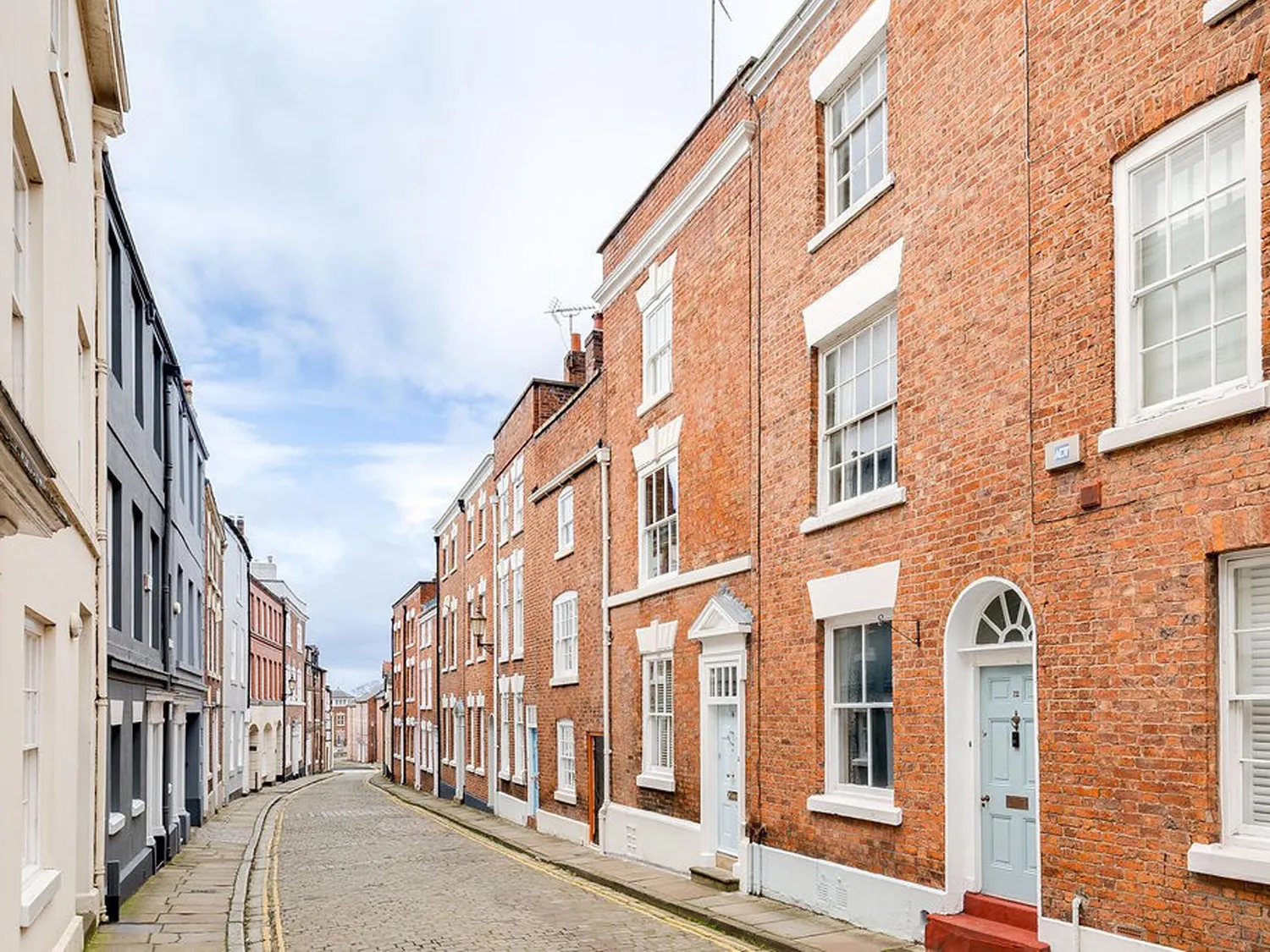
Remember our 300-year-old house in King Street? Shortly after his retirement, we restored a townhouse inside Chester’s Roman Walls to enable me to spend more time with my ageing parents. In due course, the paper items which had crossed the Atlantic in 1,000 or so envelopes returned in thirty heavy duty metal crates – like those used on construction sites – to be rehoused in King Street, then at our local Nat West Bank.
Do you recall the Malta Protocol (slow learner for fourteen years, fast for fourteen years, business career for fourteen years)? Well it was expanded by fourteen years of Everton deeds. David had completed something that the club should have done and our goal was to transfer the collection to blue ownership. To do so, he contributed articles to the Daily Telegraph, the Liverpool Echo, ToffeeWeb, Blue Kipper and the club’s Evertonian magazine which sparked interest across the UK. I must clarify that we were not motivated by money. Given our humble backgrounds, we had learned thriftiness, financial discipline, patience and hard work, and enjoyed a great life, great freedom, without ever having borrowed money.
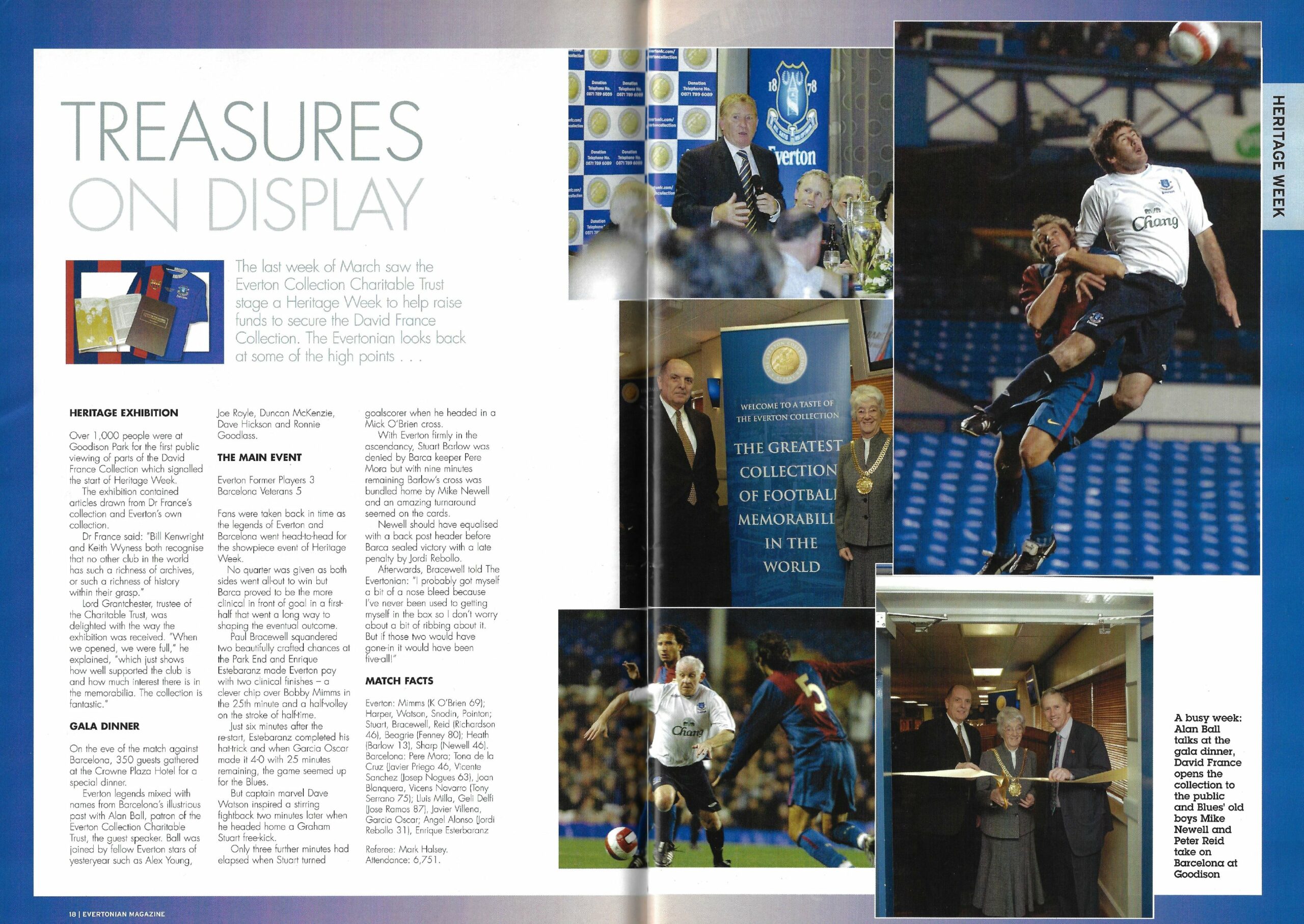

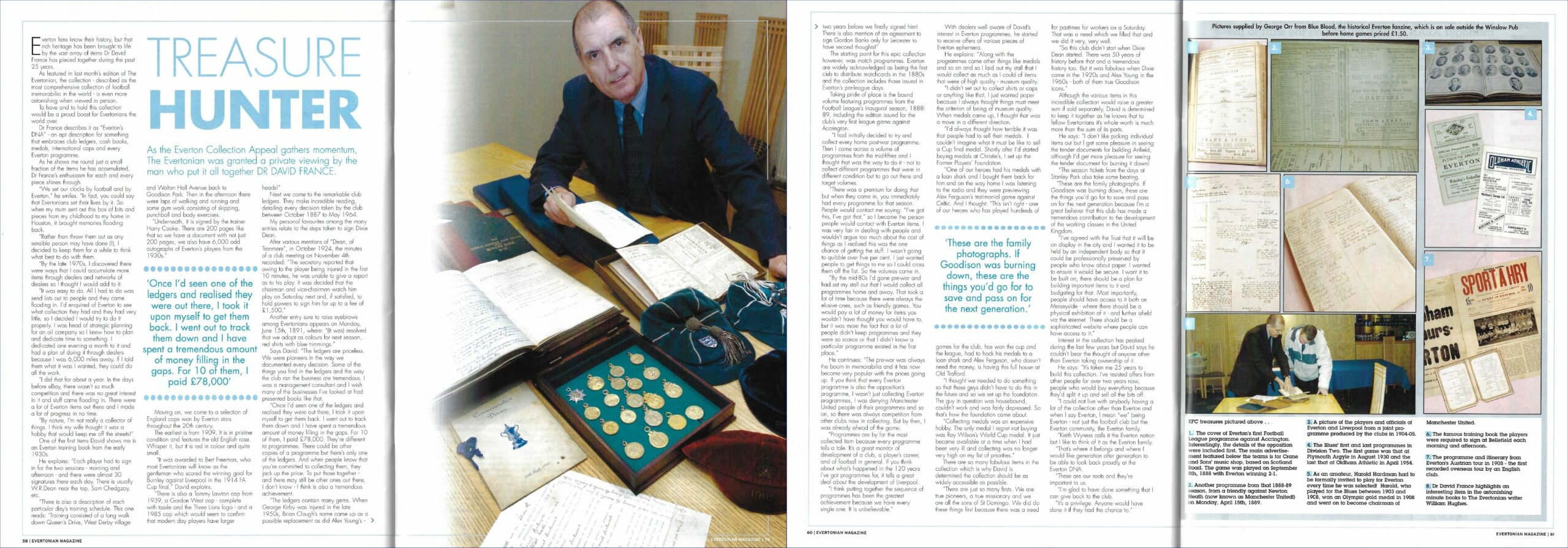
How do you go about selling the unbroken collection to reflect the commitment involved in its compilation?
To prepare for its public outing, we catalogued about 10,000 unique items and arranged for a valuation by Christie’s experts – David Convery and Grant McDougal and Sotheby’s – Graham Budd. They determined a value of £1.4 million reserve, probably reaching £2.0 million if sold at two or three auctions over eighteen months. Subsequently, we invited some of the people who had expressed interest in the items to Chester where hundreds of items were show cased throughout the townhouse. All guests received a fifty-page catalogue. The Everton-related ones were provided with a list of conditions, which required all items to be professionally catalogued, preserved by experts, augmented with quality acquisitions, displayed in Liverpool, and incorporated into a website to facilitate worldwide access. My job was security, along with a bouncer from the Hall of Fame dinner, to greet invitees and make sure they departed empty- handed.
We scheduled the hands-on inspections for over three days. The guests included the EFC Shareholders’ Association, Philip Carter and Gordon Locke of EFC, Lord Grantchester and collector Mark Denny, Bill Kenwright, Stephen Done and a pal of David Moores of LFC, members of the PFA hierarchy, representatives of Liverpool City Council, Mr Said and his lawyer representing a LFC Middle East client, Mr Yamamoto and Roy Cammels (Sports Programmes), representing LFC Far East interests, as well as top collectors associated with Manchester United, Liverpool, Rangers and Chelsea.
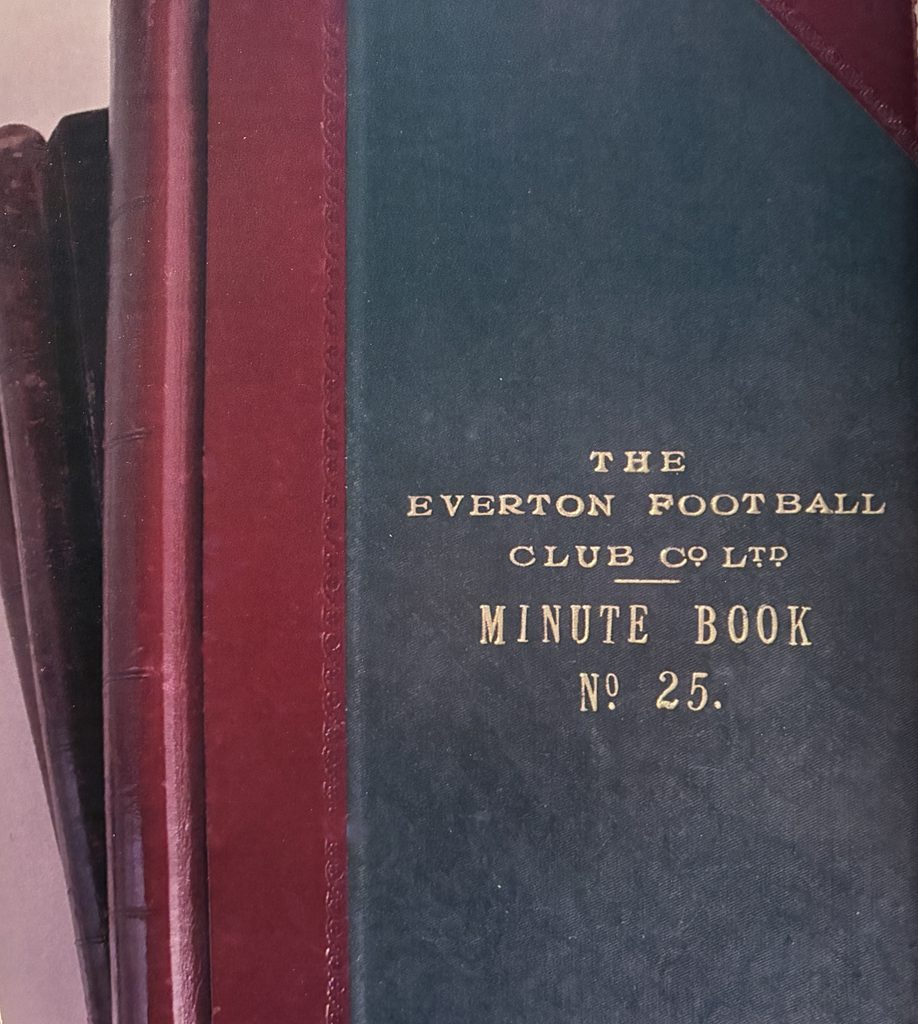
As for the results, Sir Philip Carter – who was concerned about our ownership of the discarded minute books, possibly during his chairmanship – did not finalise a bid but suggested its payment over ten years. Our task group concluded that the club did not meet the need for stable ownership. Whereas, Lord Grantchester offered £250,000 for the minute books, and a Manchester United zealot proposed a king’s ransom for the first Everton v Newton Heath programme. Whereas LFC considered it inappropriate to compete with EFC, LFC Middle East bid £1.4 million per Christies/Sotheby’s valuation and LFC Far East offered US $2.6 million, increased later to US $2.9 million (£1.45 million). Bill Kenwright was extremely interested in the collection for his own personal use – no doubt to illuminate his office on Venice Walk – and proposed negotiations after the formal bidding had been concluded.
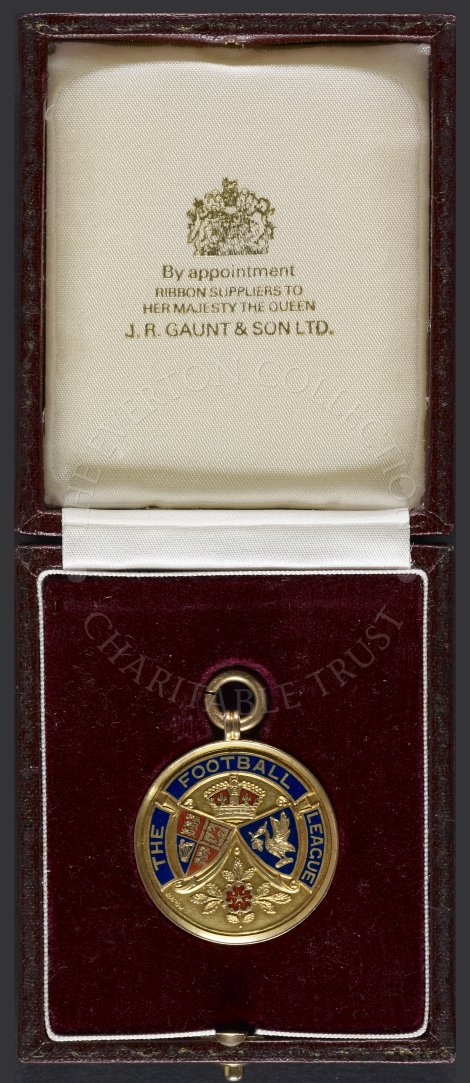
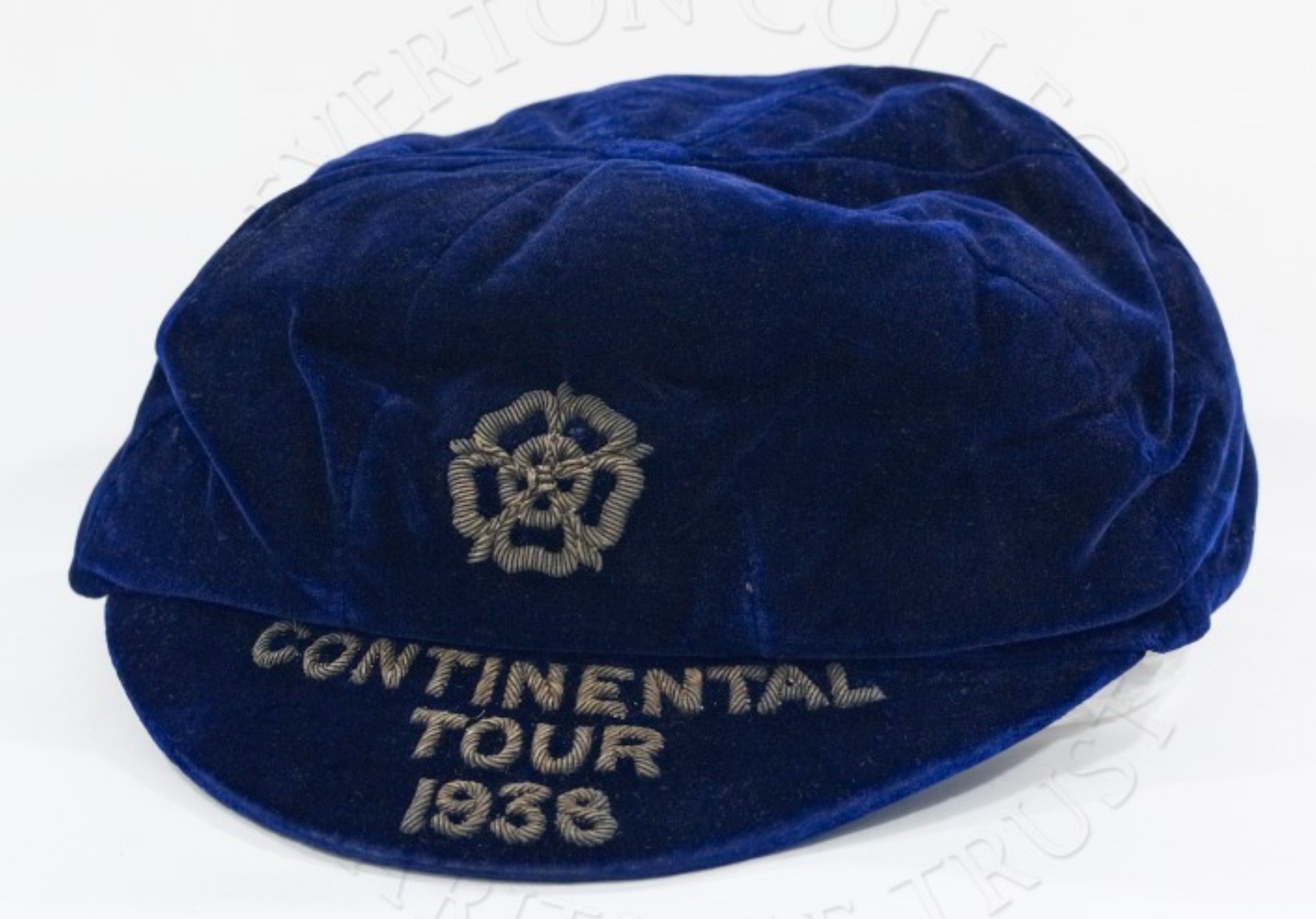
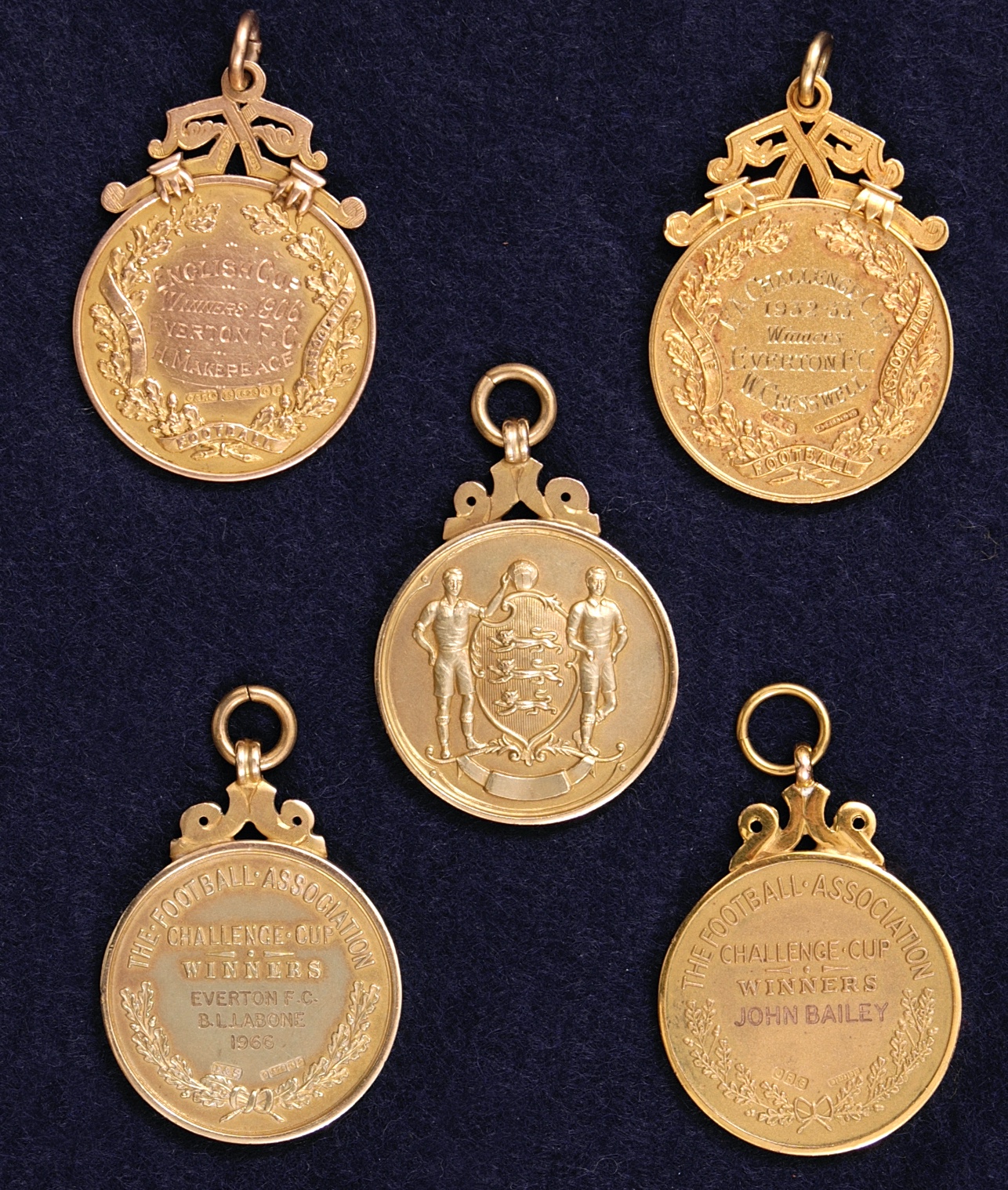
awarded to Harry Makepeace
Much to their chagrin, the top bidders were not blue enough. We rejected the LFC bids and Sotheby’s auction offer (much to their displeasure), and sought an independent and resourceful Everton vehicle – such as a dedicated charity, to secure, maintain, restore, insure, supplement, exhibit, etc. There was never a question of the collection falling into alien hands.
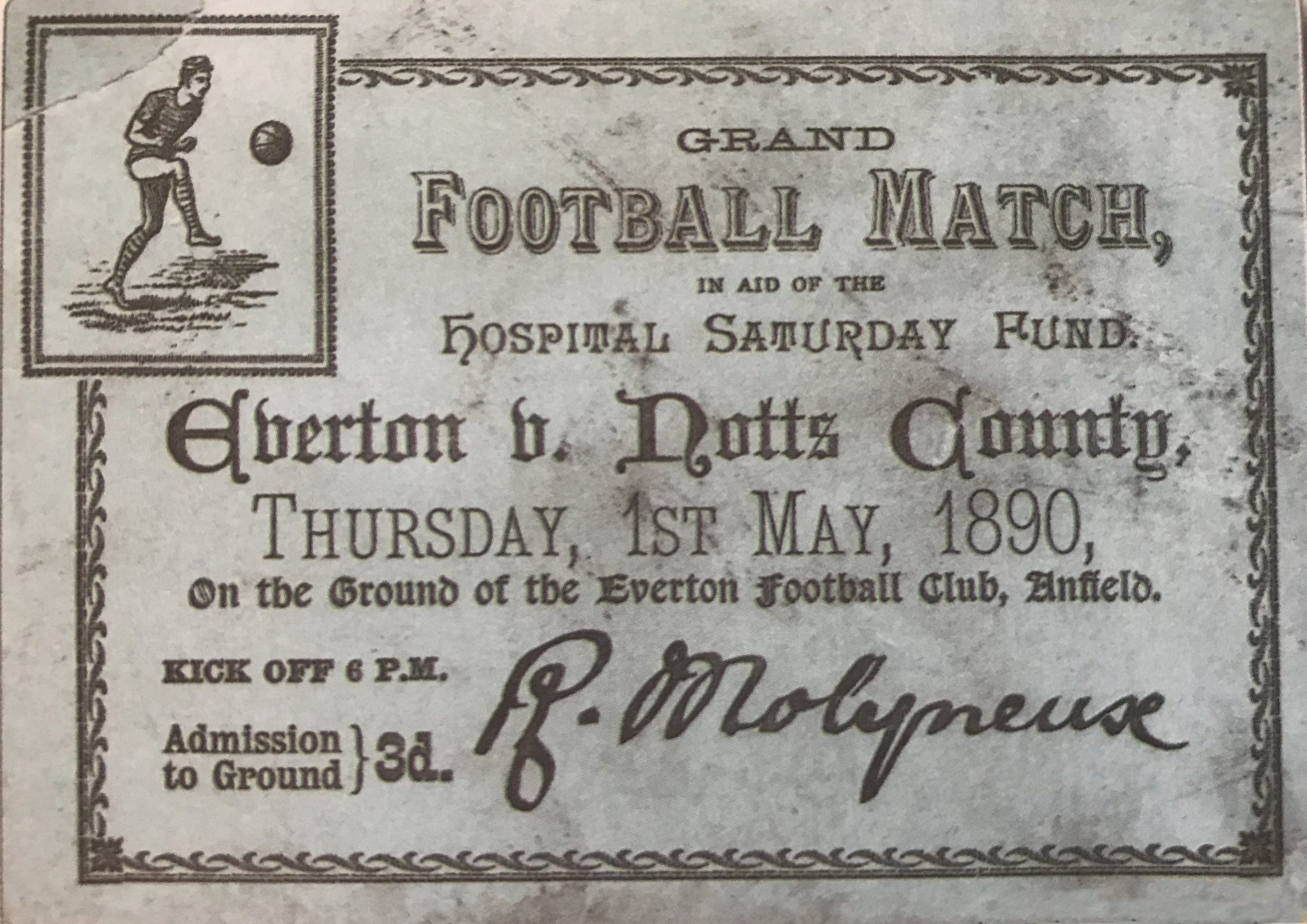
Subsequently, the Everton Collection Charitable Trust was registered with the UK Charity Commission. Initially, it consisted of Lord Grantchester, Tony Tighe (a PR guru and enthusiastic Everton shareholder) and CEO Keith Wyness (a much-admired executive) supported by Ted Birch (a battle-hardened lawyer) and Janet Dugdale of National Museums Liverpool.
What are your recollections of the lengthy fun-raising process?
I thought that they would jump at the offer. Especially as the club had recently spent £700,000 on Anderson da Silva. Remember him? – the Brazilian midfielder without a work permit? Thought not. Anyway, we agreed to a three-year exclusivity agreement to enable the Trust to raise the funds, and moved the crates to the Liverpool Record Office. Although the Trust worked hard, it struggled to raise funds.
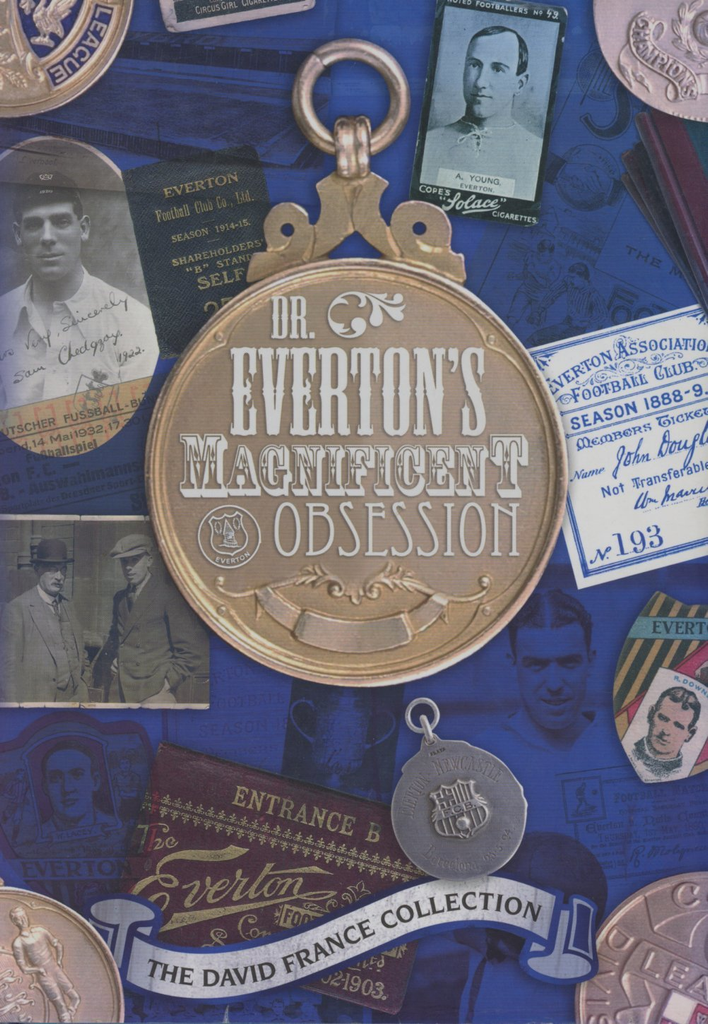
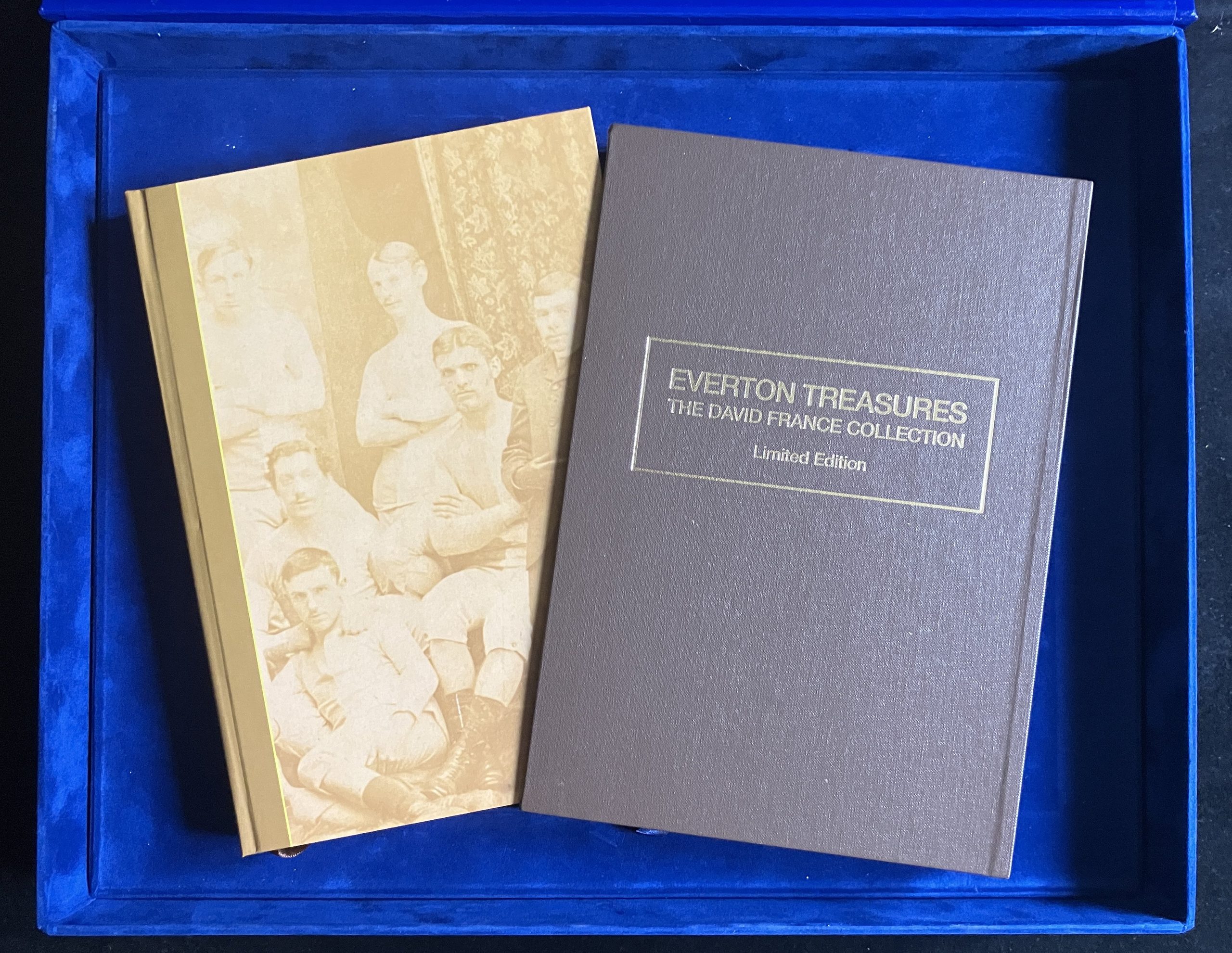
On one hand, the clash between the veterans of Everton v Barca was poorly attended, and the begging envelopes placed on all seats at Goodison were ignored. On the other hand, the replica medals remain much sought after collectables. Also David and David Prentice produced the ‘Everton Treasures’ limited edition book to support the fund- raining. You may be more aware of the publication after it was which was converted and expanded into the hugely popular ‘Dr Everton’s Magnificent Obsession’.
Perhaps naively, I thought that everyone was on the same page, but progress was corrupted by squabbling on the other side of the table. Some, who I prefer not to identify, behaved as if they wanted Lord Grantchester and the Trust to fail. With my husband reduced to skin and bones at 140 lb., I feared that the nameless people were taking advantage of his ill health. For example, on one occasion David was asked to visit the UK, and shook hands on a deal, only to receive a call days later (on Christmas Eve) to renege.
Even at a significantly discounted price, negotiations were unnecessarily challenging. Perhaps due to his origins, certain people underestimated David who had retired at the age of forty-two, but retains the smarts and resilience that took him to the boardrooms of the oil and gas industry in Houston. Nonetheless, it was not easy for even him to sell something to someone who is aware that you want them to own it.
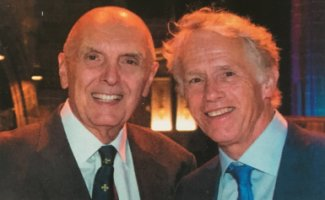
Our task group, which included Brian Labone and lawyer Norman Jones, grew frustrated with the shenanigans, and recommended that all items be sold at auction. Even the ‘Last of the Corinthians’ noted, ‘If Everton want it, they can buy it at auction.’ Despite a vote of 3-1 in favour of a public sale, David remained adamant. He wanted the collection transferred into blue hands for the benefit of future generations.
To their credit, Everton Football Club contributed £250,000, and Lord Grantchester made a generous personal donation of £100,000. In addition, the club transferred its modest artefacts and other items on loan. Eventually, after the award of a major Heritage Lottery Fund grant approaching £1.0 million, we handed over the keys to the Trust in exchange for £800,000. Sadly, certain verbal promises were broken.
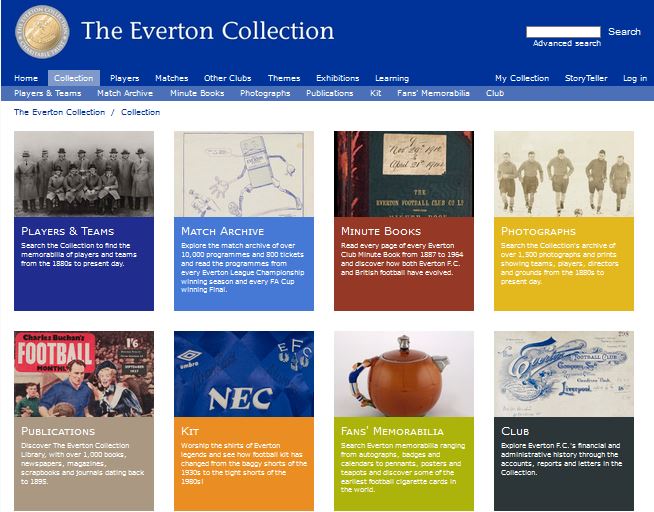
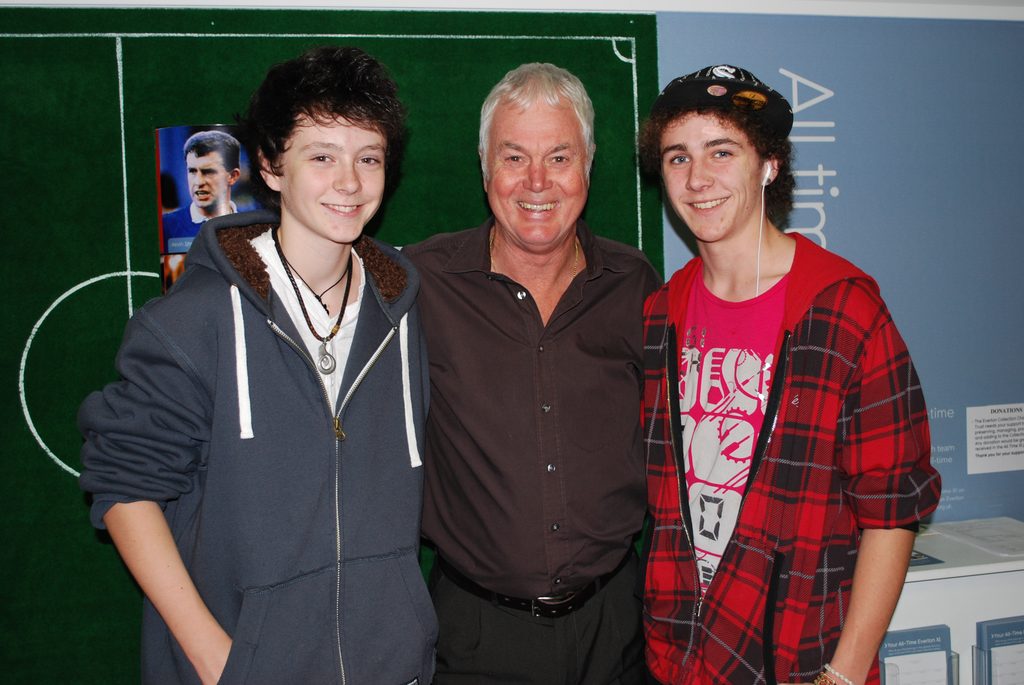
in the Picton Reading Room, Liverpool Central Library in 2009
The collection took twenty years to assemble, but has laid comatose since 2008. So, what has happened during the past eighteen years?
I know that a curator and two members of staff were hired for a couple of years, none were Evertonians, to maintain all items to library professional standards and digitise them. In addition to an impressive website, there was a breath-taking exhibition called ‘Everlution’ at the Picton Room in 2009 – then silence. During that time, David supported Lord Grantchester in acquiring additional items – some belonging to Alan Ball. Also, he tracked down one of the Littlewoods clocks.
As for inactivity? During the past decade, no income was reported and no staff were engaged after the initial experts departed. Even worse, David Stoker and Jan Grace retired from the Record Office. My other half prefers to get the ball rolling, not interfere and encourage others if progress is being made. Recently, however, he felt the need to recommend the addition of new trustees – two or three from the Everton FC Heritage Society – and the immediate involvement of Everton staff and its new owners.
When do you think the world’s greatest football archives will be displayed in a dedicated Everton museum?
The interesting sample of items profiled in David’s interview with David Prentice at Liverpool’s Town Hall created rekindled interest of the fans. As for a world-class museum to house world-class memorabilia, the signals are confusing. Angus Kinnear reported that there would be a museum (location and schedule were not defined). Whereas Lord Grantchester proclaimed that there is no need for a museum. People can arrange to view items at the Liverpool Record Office.
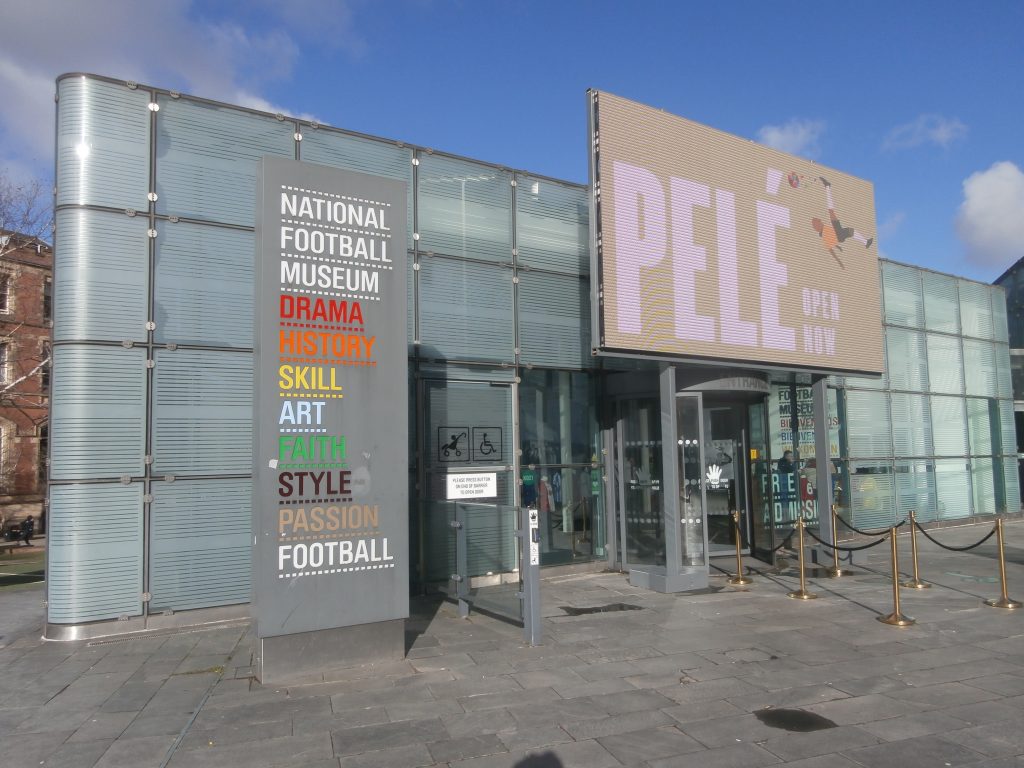
I believe that a heritage museum with imaginative and interactive exhibits – better than the one at Anfield – will attract paying patrons to Hill Dickinson during the week all year round. As you know, David has referred to it as ‘Toffee World’ for the past two decades. To assist, he and Brendan Connolly have outlined additional items to make the existing knowledge-based collection more exciting, with the addition of match-worn kits, official pennants, press photographs and purpose-made videos.
As for future trustees, the guardians of our heritage, they must perform an audit before agreeing to serve – after all, they will be legally responsible for ensuring the charity does what it was set up to do, protect its assets, and is accountable to regulators, sponsors and the public. These are significant responsibilities, given the disrespectful whispers of missing items.
Finally, do you think there will be a museum in David’s lifetime? Perhaps one honouring the dedication of Dr Everton?
That’s like asking ‘When will Everton win the League Cup?’ As for recognition, Liverpool City Council ensured that my other half received a Citizen of Honour award (the first since Bill Shankly) for protecting the history of Merseyside football. Surely there is no greater honour for an old man from Widnes? Many years ago, we were told that there would be a tasteful display on the collection’s architect with some of David’s books, paraphernalia, medals for trail-blazing research, and other bits and bobs. This leads me to an outstanding matter. The late chairman and theatre impresario agreed to repay half of the transaction legal costs but requested a delay until the club could afford the £15,000. Some eighteen years on, it’s still unpaid. I should ask Norman Jones to dust off the invoice.
As an Everton widow, I’ll leave the final words to the UK’s Prime Minister, then the Secretary of State for Culture, Media and Sport: ‘All supporters of football owe Dr David France a huge debt of thanks for the foresight, meticulousness and intellectual vigour with which he prepared his wonderful collection and rescued the history of football.’
Sincere thanks for taking the time to clarify this fascinating background regarding the history of the Everton Collection. On behalf of Evertonians young and old, I would like to thank you for your unsung support in the compilation and transfer of these archives and artefacts, unparalleled as they are in their exceptional completeness.
Elizabeth France was speaking to Mike Royden (vice-chair of Everton FC Heritage Society)
………………………………………………………………………..
Web layout and image research by Mike Royden
………………………………………………………………………..