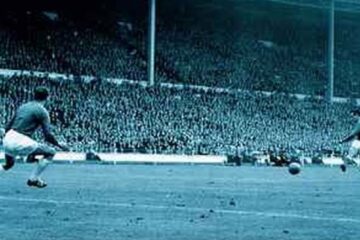
How these remarkable founders shaped the game we love today
.
Reverend Henry Corbett (Chaplain to Everton Football Club)

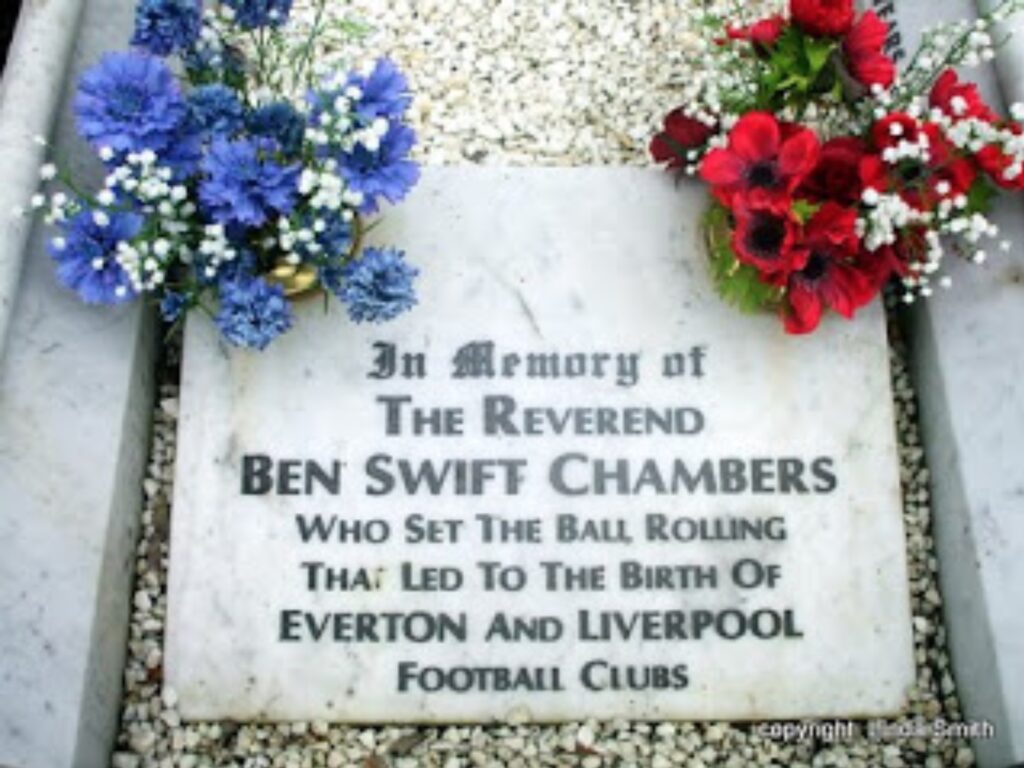
In the churchyard of Shepley Methodist Church in Yorkshire there is a gravestone which reads:
“In Memory of the Rev Ben Swift Chambers who set the ball rolling for the birth of Everton and Liverpool Football Clubs.”
Why was a Methodist minister starting a football team? The Reverend Ben Chambers had come to the Everton district of Liverpool in 1877 and had started a cricket team in the summer and wanted to keep sporting activity going through the winter. Why? Because sport was seen to teach good values of teamwork, respect, discipline, and also was a positive alternative to less helpful pursuits.
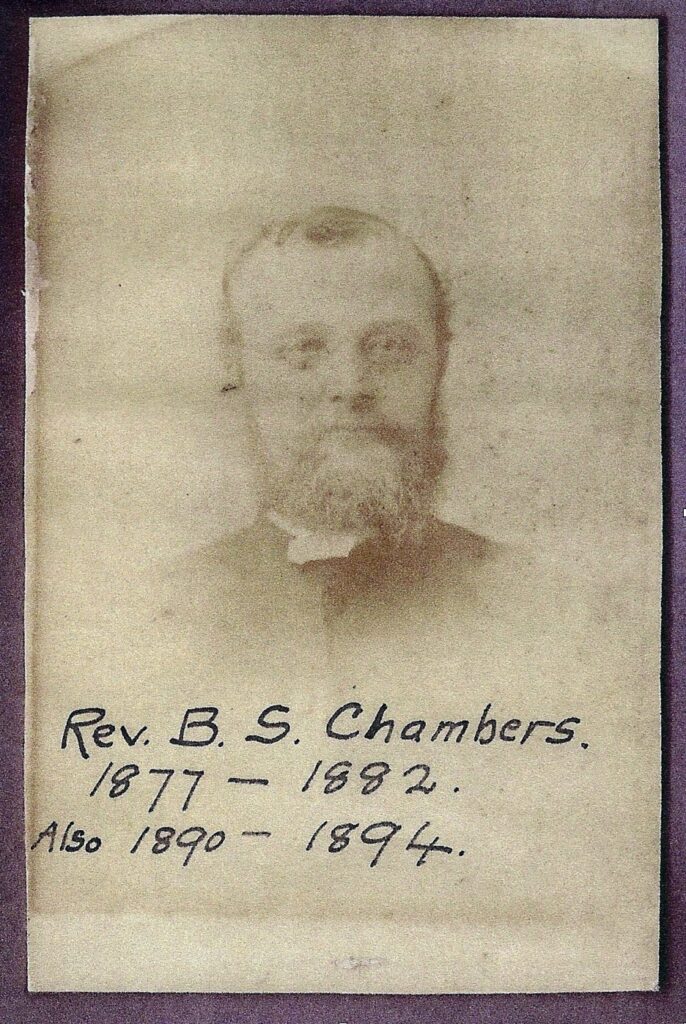
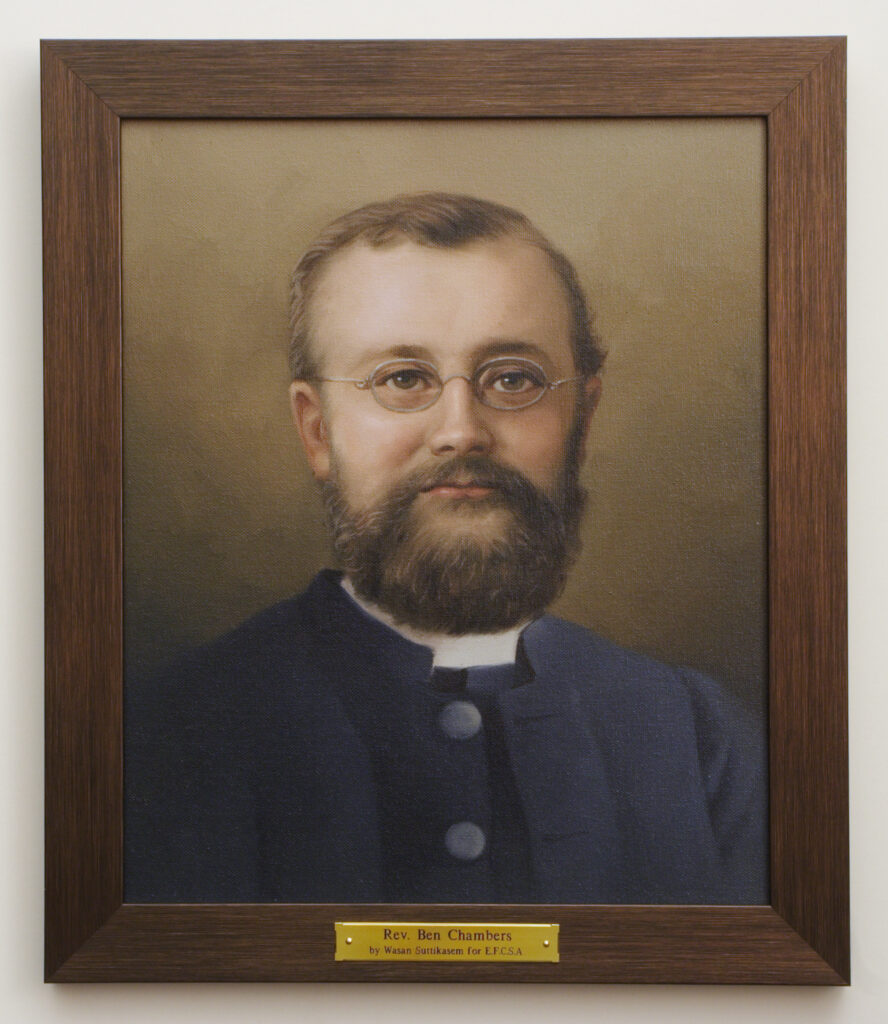
from the Founding Fathers of Merseyside Football series commissioned by David France and painted in oils by Wasan Suttikasem
So in 1878 Chambers founded St Domingo’s Football team. They became Everton Football Club in 1879 and played in Stanley Park, Anfield. And Liverpool? A disagreement over Everton’s use of their Anfield ground (a mix of issues including rent, alcohol and politics) led to Everton moving to a new ground, Goodison Park, in 1892, and a new club was formed at Anfield; Liverpool Football Club. So Liverpool came out of Everton, and both clubs honour the Reverend Ben Chambers for their existence. At Chambers’ death in 1901 this tribute was paid to him, “a powerful and winning personality, eager to serve, keen to do good, delighting in the success of his friends, a never-failing friend,” someone who “hated sectarianism with all the energy of his strong nature. He was one of the best of husbands and a model father.”
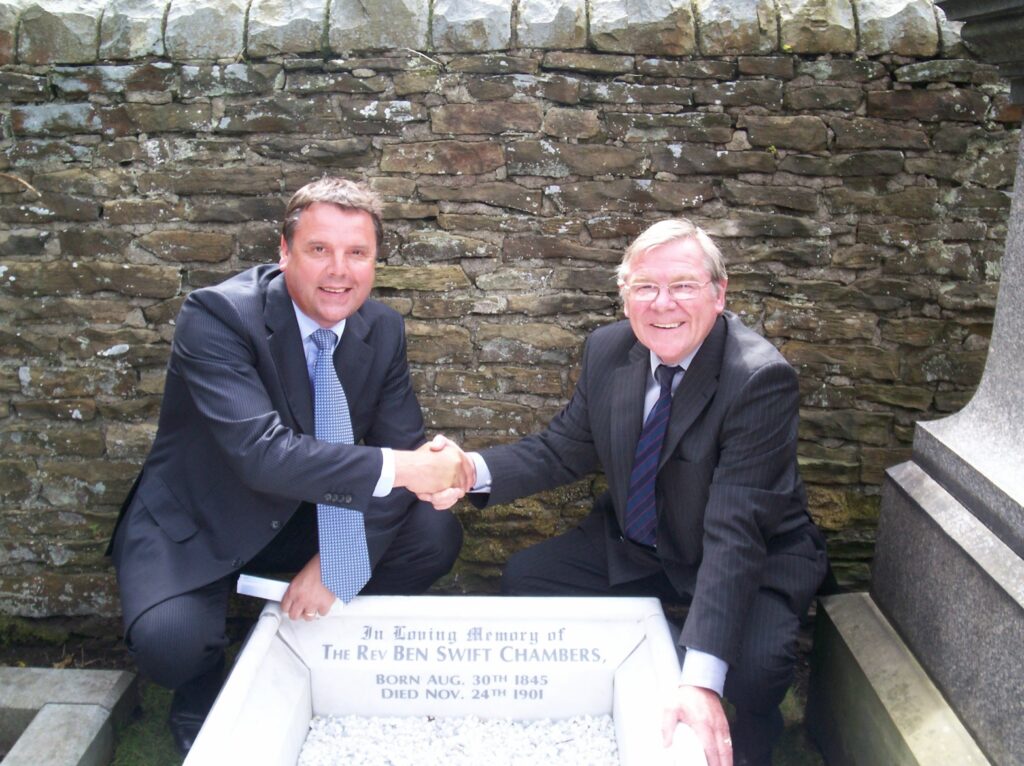
Graeme Sharp (Everton) and Brian Hall (Liverpool) at the grave of the Reverend Ben Swift Chambers
Another impressive clergyperson, with the engaging name Tiverton Preedy, came to a poor area in Barnsley. He founded Barnsley St Peter’s Football Club, and he also played for the club, was the secretary, recruited players, and found a ground. When Preedy left Barnsley he was described as “a fearless pastor – if there was any work wanted doing or any place wanted visiting, no matter what the dangers were, you would always find him there”. Preedy kept in touch with the club and when Barnsley won the FA Cup in 1912 the club presented him with the match ball. It stayed in his study until his death and in his will he bequeathed it back to the grateful Club.
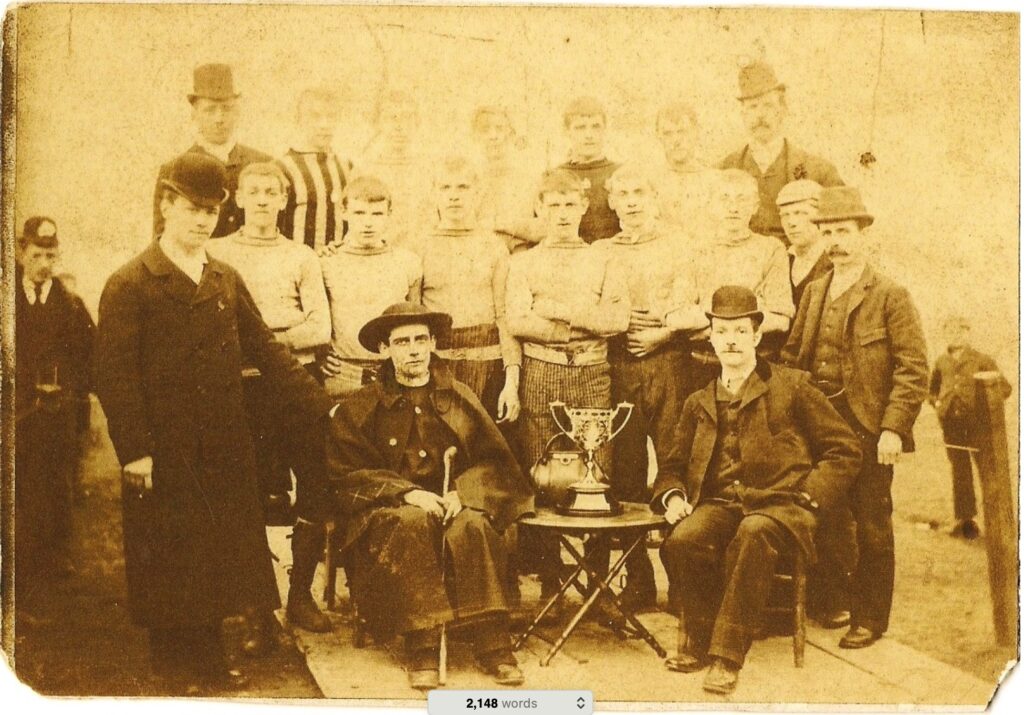
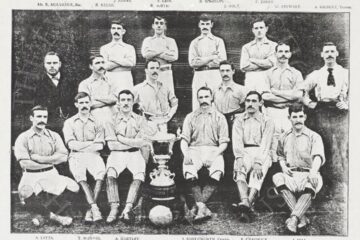
The Reverend Tiverton Preedy, seated left with his Barnsley team
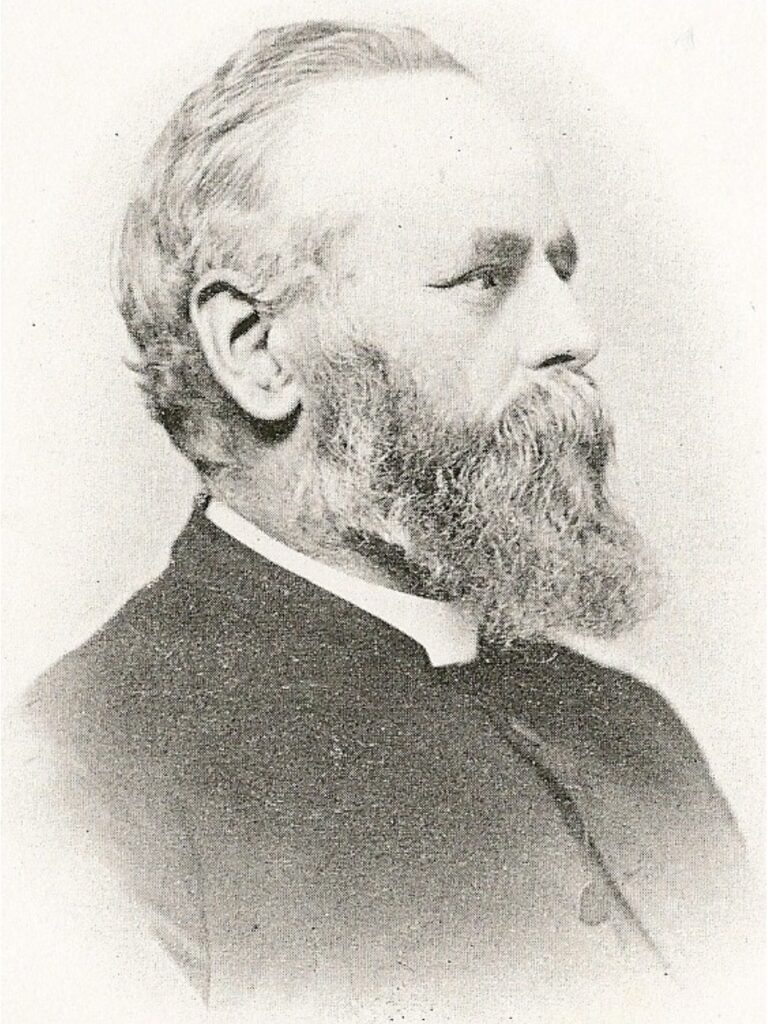
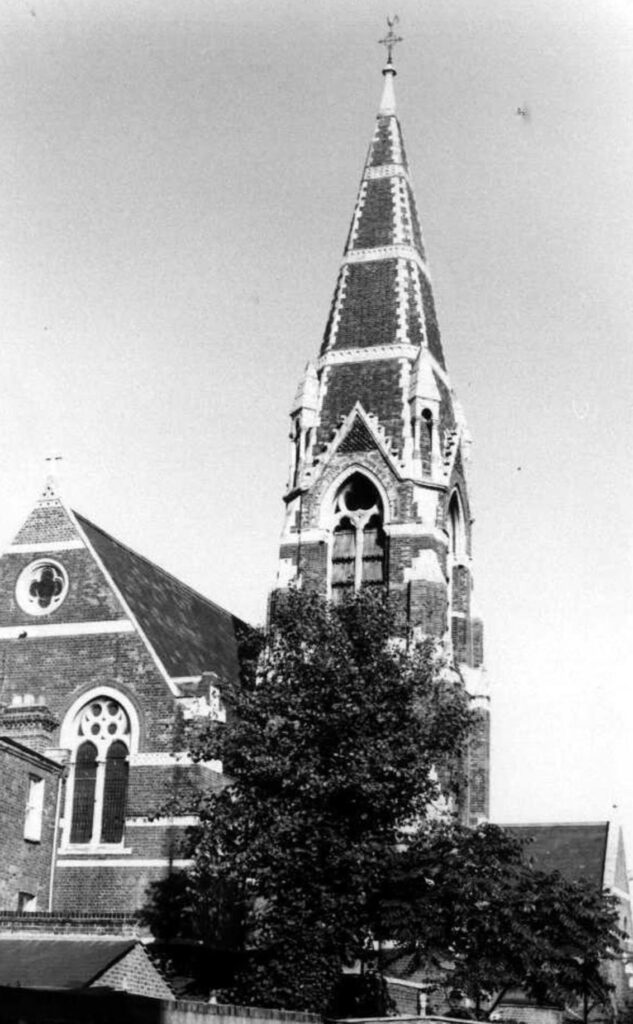
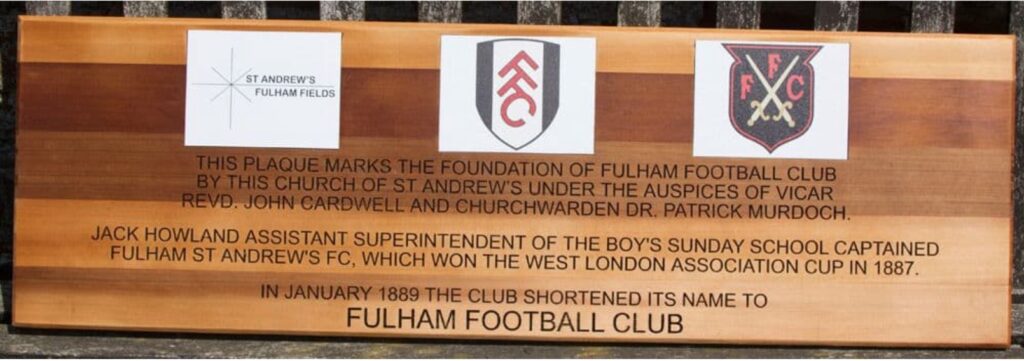
The founder of Fulham Football Club was the Reverend John Henry Cardwell. In 1879 he had founded St Andrew’s Cricket and Football Clubs, and in 1886 the football side became Fulham Football Club. The Church Times paid this tribute to the Reverend Cardwell, “Though ever a fighter for truth and light, he had the gift of being able to fight without bitterness and without losing friends. No priest in the London Diocese was more universally loved.” Cardwell himself commented that hearts are not won “by an aggressive propaganda” but by “making friends first”. He also had a good sense of humour: he enjoyed a young person in the parish calling him “Mr Cardboard”!
Bolton Wanderers, Southampton, Tottenham Hotspur, Aston Villa, Swindon Town, Birmingham City, Queens Park Rangers all have church roots and in Scotland, Celtic and Hibernian were founded by Catholic priests. Manchester City owe their origin to a vicar’s daughter, Anna Connell, who started a group for men in east Manchester, as she saw the effects of drunkenness, violence and gang fights on the streets. Three people turned up to her first meeting, but with help from a church sidesman and a churchwarden, she recruited effectively and out of that growing group came St Mark’s football team. Anna’s father, the Reverend Arthur Connell, was the first President and that team became Manchester City in 1894.
What would these Reverend founders make of football today? What would they say to our new Government regulator? The honest answer of course is “I don’t know.” However, they were preachers who knew the Scriptures. It was said of Tiverton Preedy, “his direct, and forceful mission preaching, made a great impression on the mining population of the district.” So what messages might they preach to those in leadership in football, in the media, in this country and across the world?
These clergy loved sport because of the values we can learn from sport, including training, perseverance, discipline, fair play, teamwork, courage, coping with success and disappointment, friendship.
So here are three positive messages our Reverend founders might pass on;
Firstly, from the apostle Paul, ‘Everyone who competes in the games goes into strict training. They do it to get a crown that will not last, but we do it to get a crown that will last forever.’
Secondly, ‘Anyone who competes as an athlete does not receive the victor’s crown except by competing according to the rules.’
And a third great message for sport is from the New Testament letter to the Hebrews, ‘Let us run with perseverance the race set before us.’
Now three messages of concern I think these Reverend preachers would want to pass on;
From the apostle Paul again, ‘The love of money is the root of all kinds of evil.’ Money coming into football is not in itself a problem, but greed and the love of money our Reverends would definitely warn against.
‘Remember the poor.’ Our Reverends worked in low income areas. They would surely be concerned about the pricing of elite football. They would never want the clubs they founded to be beyond the reach of people in poorer areas. That’s a challenge to clubs thinking only of maximising profits: what about some tickets available for those without deep pockets? Football should be the people’s game, not the rich person’s game.
Finally a defining message from their Lord and teacher, Jesus, ‘Love your neighbour as yourself.’
Football, and sport, can bring people together wonderfully. The Reverend founders knew that, and nearly all professional football clubs across the world speak of a concern for their community, their supporters, and some, like Everton, have outstanding award-winning community sections. “Neighbour” includes everyone we live alongside, whatever their background or backstory. Our Reverends would preach Jesus’ two great commandments, ‘Love God, and love your neighbour.’
That’s the way to win.
The Reverend Henry Corbett
……………………………………………………………………
Acknowledgements
This article originally appeared on Seen and Unseen
View Rev Henry Corbett’s articles here
……………………………………………………………………
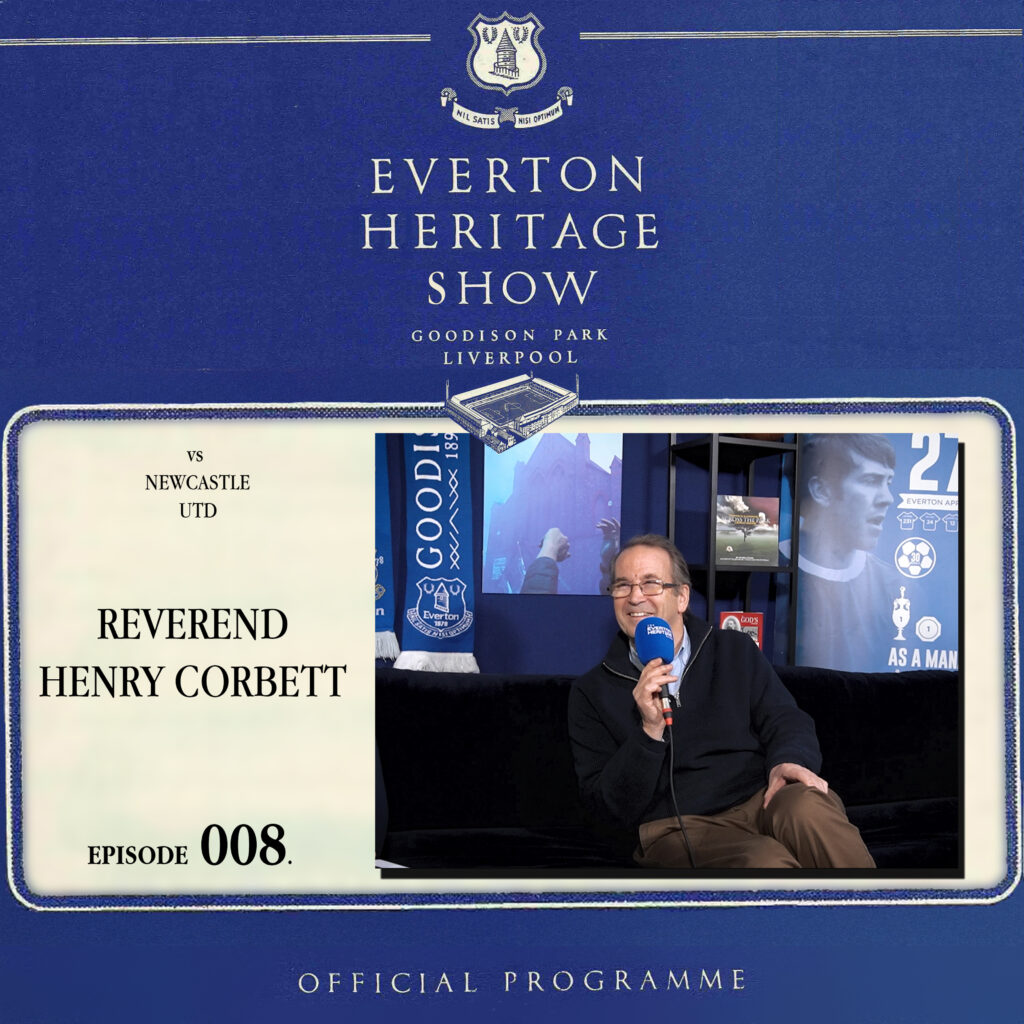
In November 2025, Reverend Henry Corbett (a member of our society) joined us on the blue couch, for an episode of the The Everton Heritage Show, where he was interviewed by presenter Lewis Royden. Watch the full programme here (click image);


……………………………………………………………………
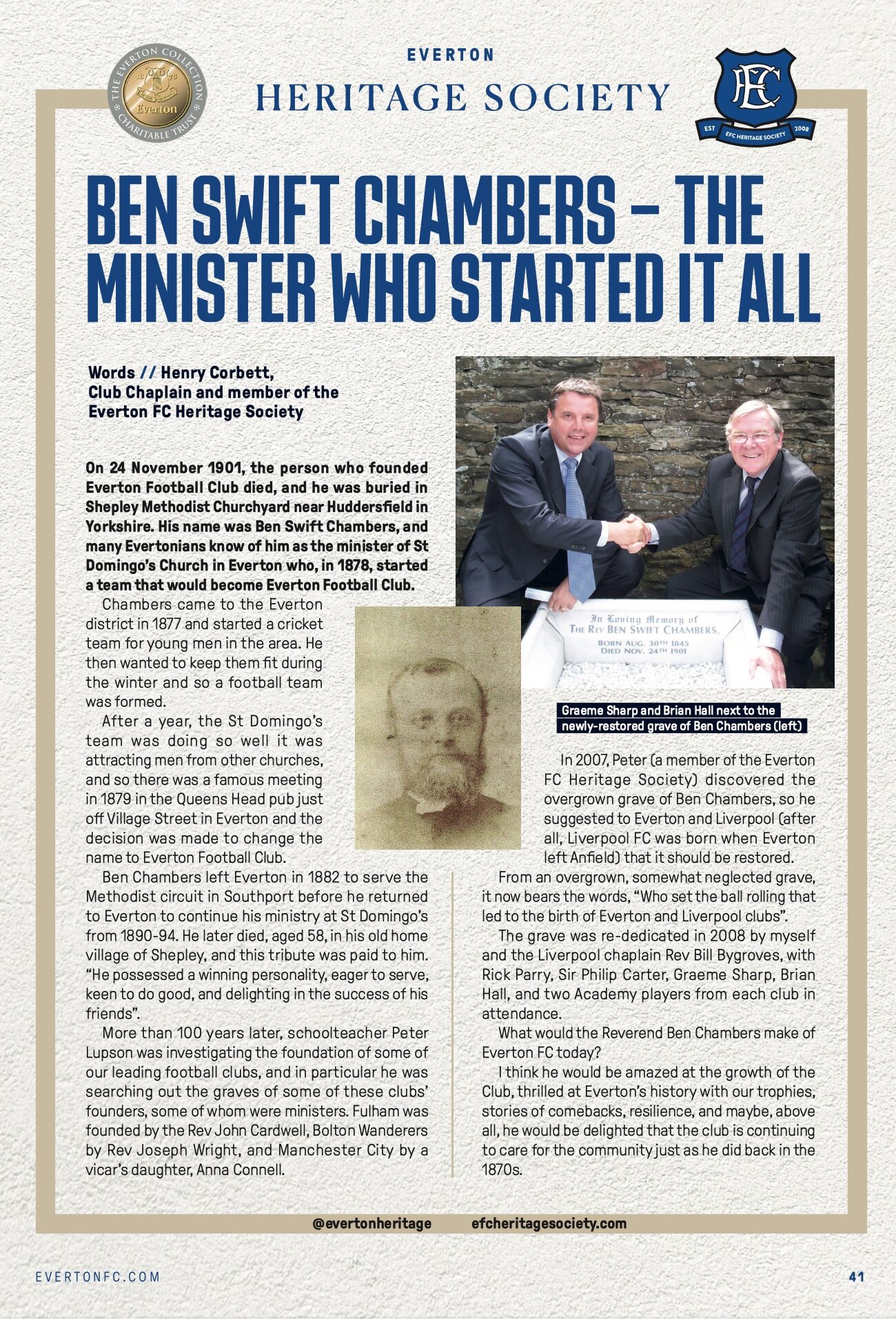
(Everton v Newcastle matchday programme (Everton FC Heritage Society page) November 2025)
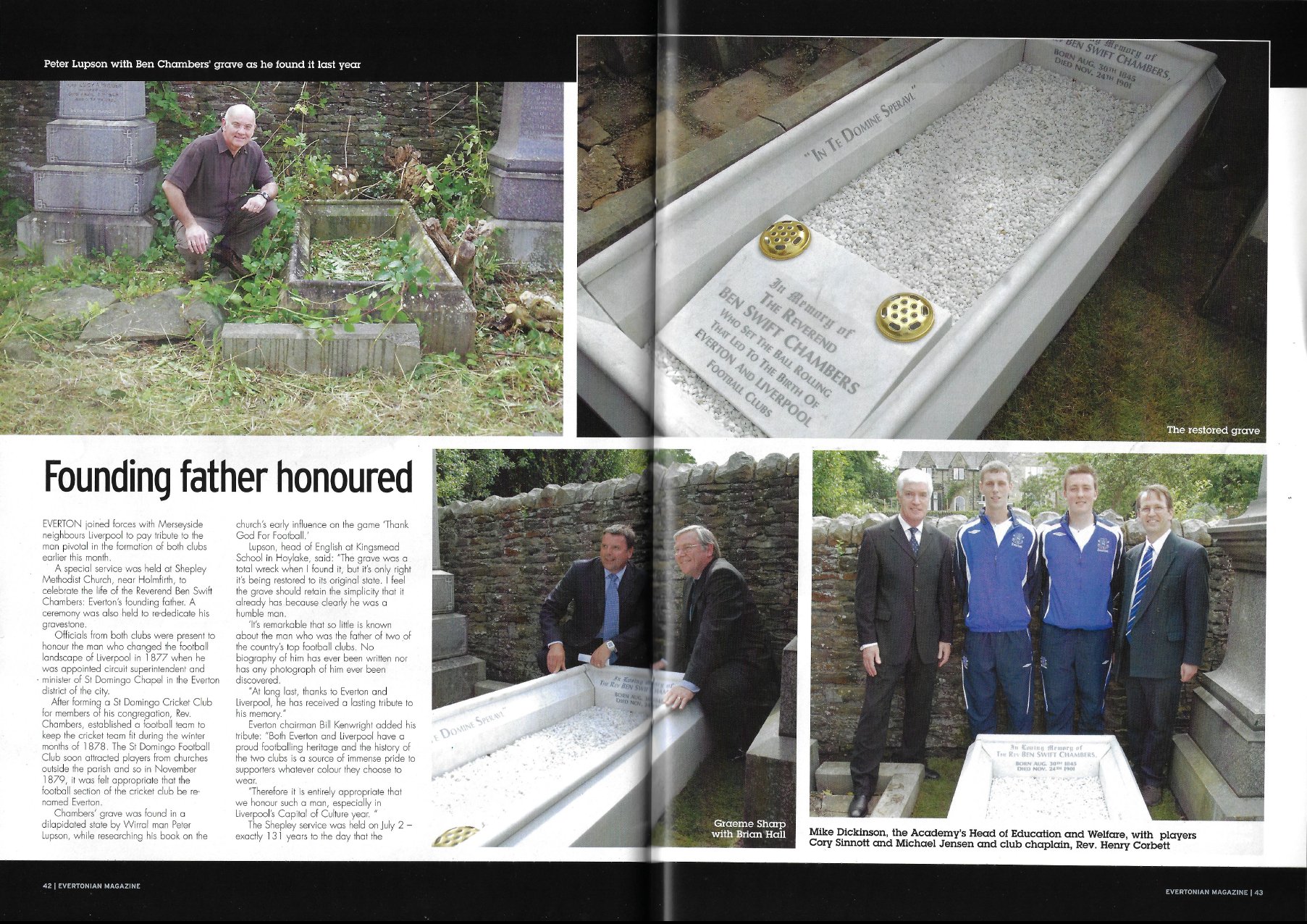
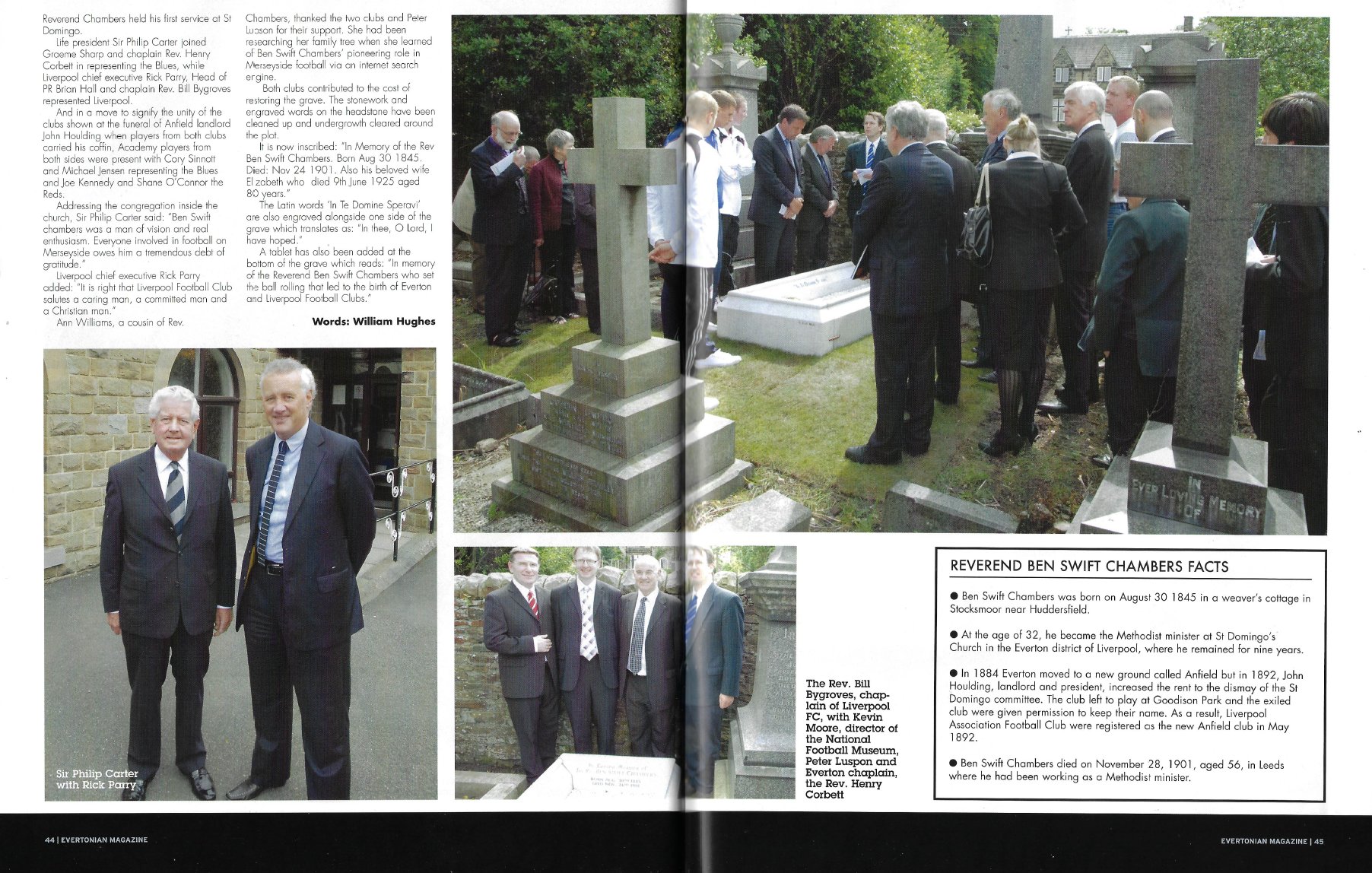
The 2008 rededication, mentioned in the programme article above, was covered shortly afterwards in the pages of The Evertonian magazine;