Mike Royden
Entering into the Park End Captain’s Table at Goodison Park minutes after the annual Remembrance memorial, attendees were keen to gather a hot drink and sit down for a moment’s respite after escaping from the bitterly cold weather.
While chatting to fellow Heritage Society members, we were approached by Paul Walsh, a life-long Blue, volunteer with the 1878s, and a fan of the work carried out by the Society. He had in his hand a map he had recently acquired, and very kindly wished to donate it to the Society so that something could be made of it.
What follows is an assessment of the map, with a study of some of this buildings shown on it, the most famous of which is the Everton Lock-up. Although it didn’t appear on a team shirt until 1978, the Everton crest had been designed much earlier, in fact before the Second World War, a story which is also included below.
Finally, a study of the team shirt monograms and crests lays out a guide on how the badge has been adopted and reconfigured through the history of the club.
.
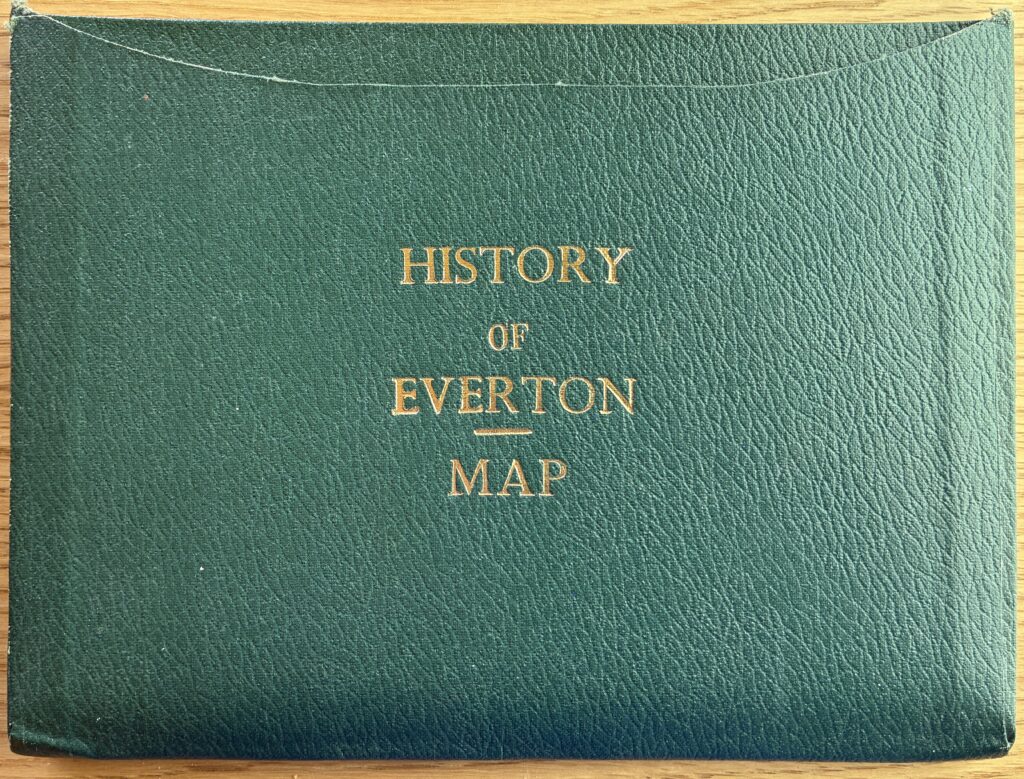
Folded and enclosed in an attractive green case, we carefully unfolded it as members gathered round to take a look. It was a map of Everton on which was engraved;
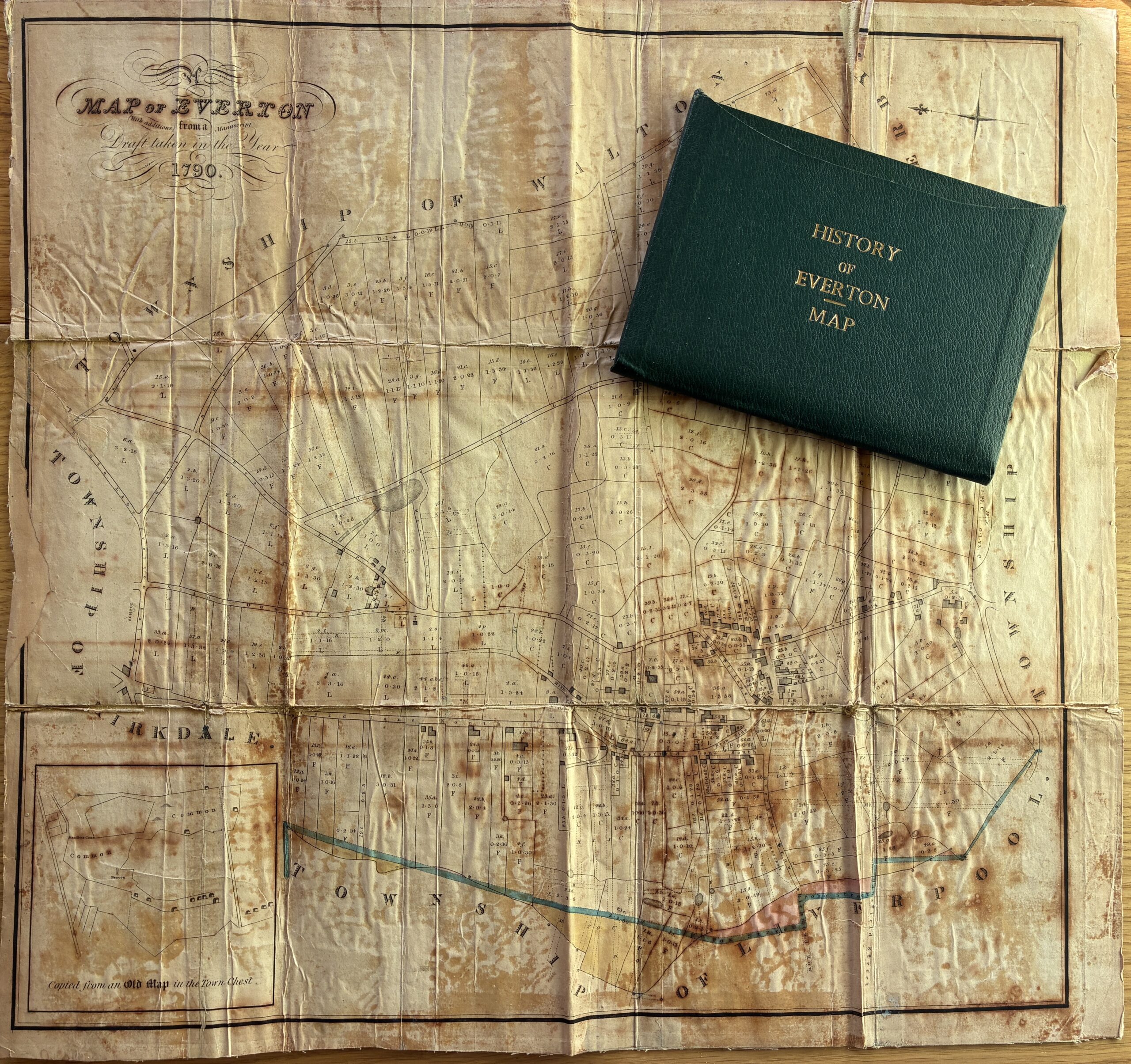
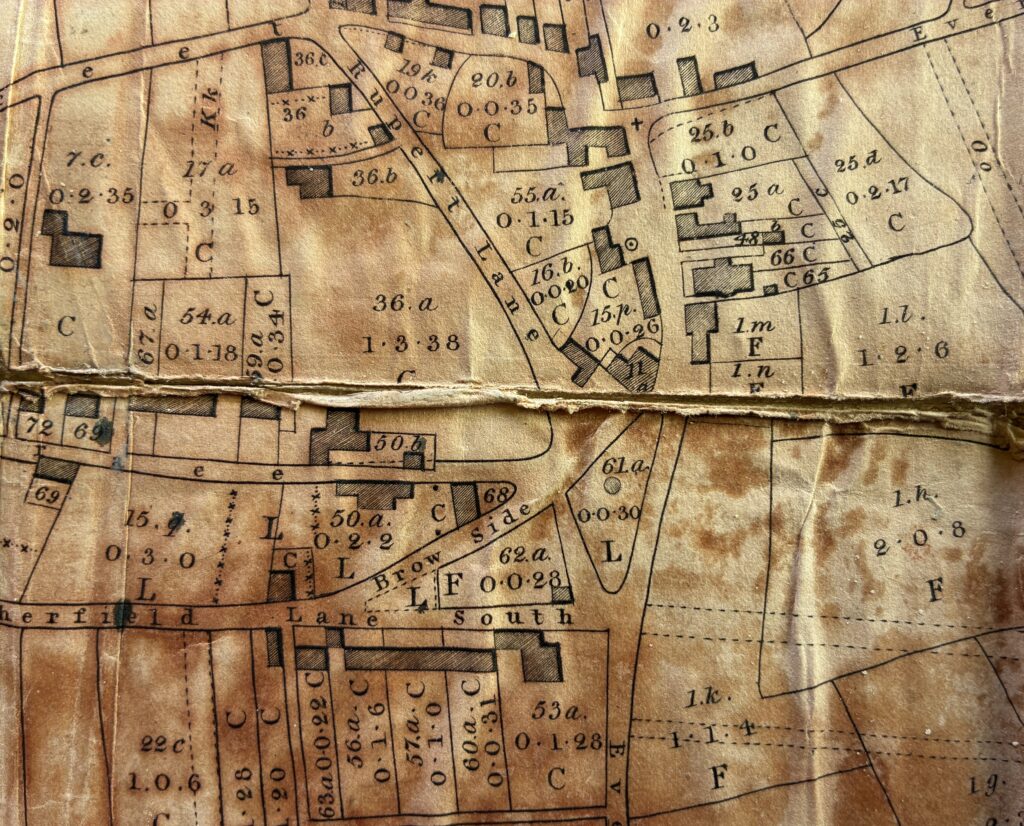
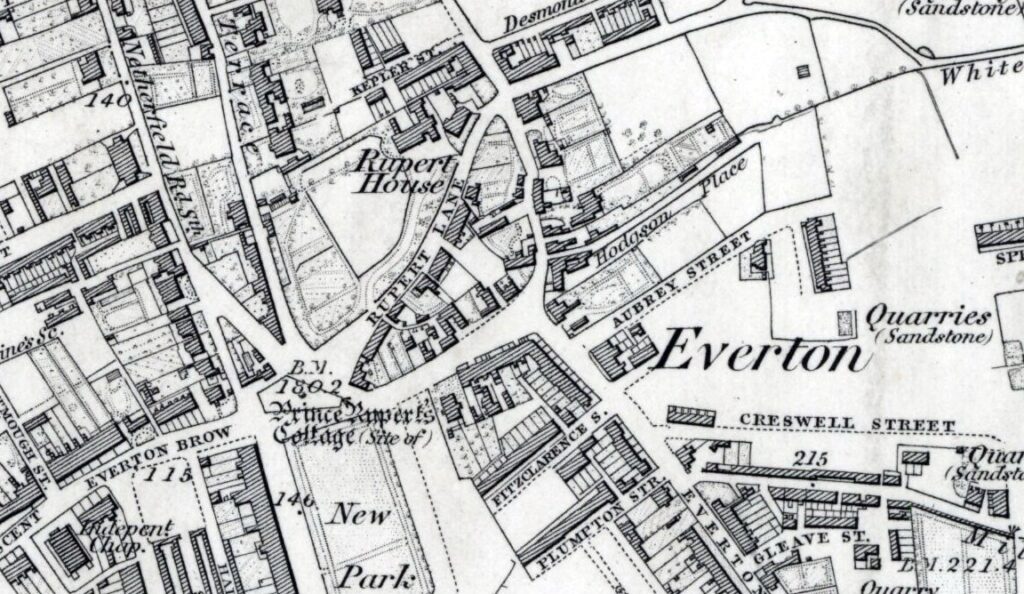
What this original map shows is actually the Township of Everton as it was in 1790, and although there were clear marks of foxing, the map was still in remarkably good condition.
What is a Township?
Usually, areas of local administration were centred around the village church, the area being known as the parish. Consequently, you were expected to attend the church that served the parish in which you lived every Sunday, and there you would also be baptised, married, and buried in the churchyard. However, this area of South West Lancashire was so sparsely populated, that parishes were far larger than elsewhere in more densely populated areas and the Parish was divided up into smaller ‘townships’ to aid the effective administration and governance across the community.
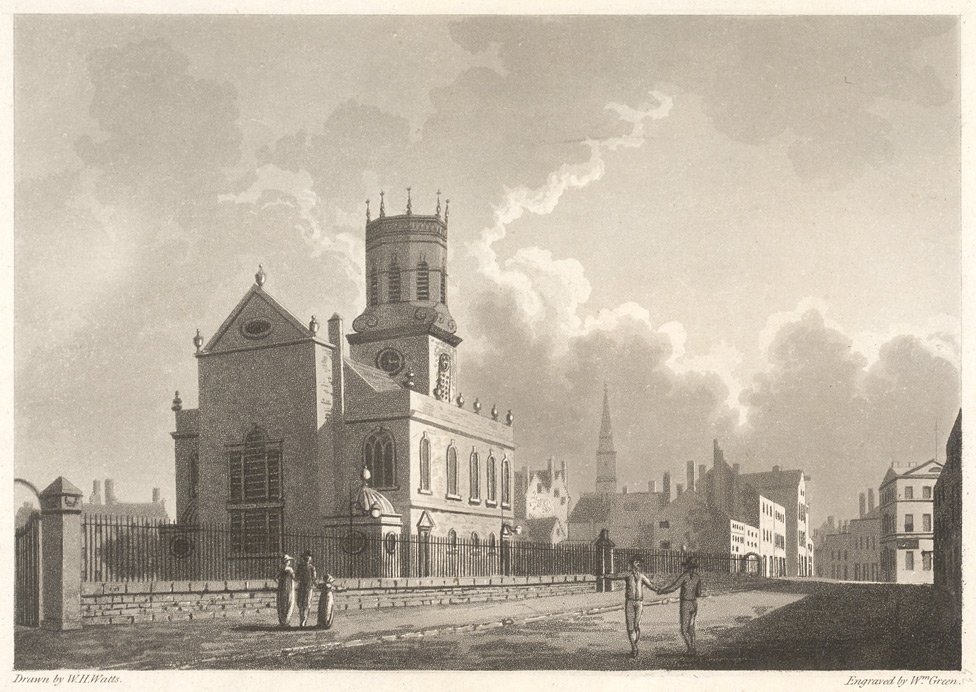
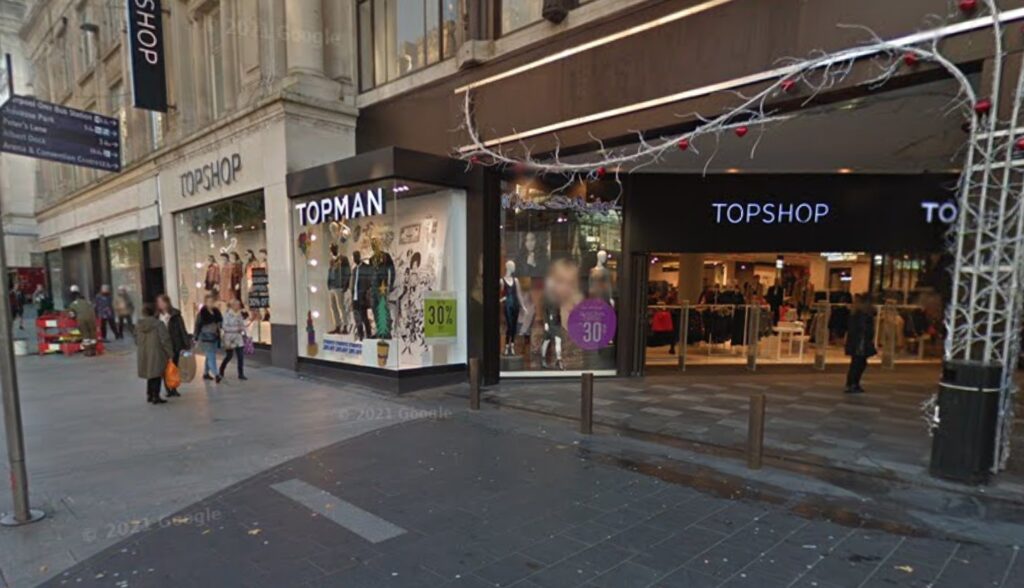
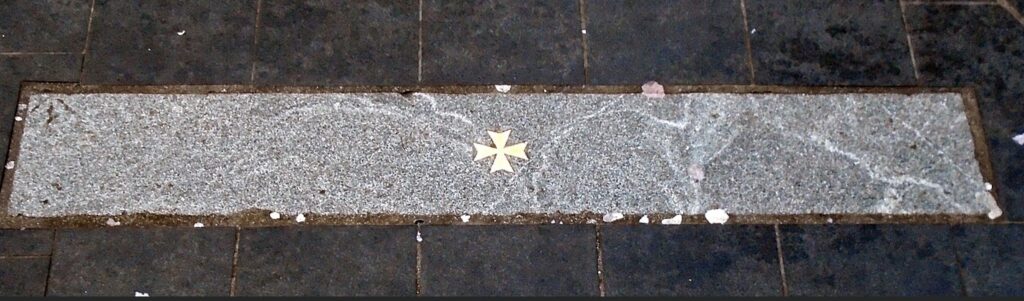
A local example is here. The parish of Liverpool was created in 1699 when it separated from Walton. The parish church of Liverpool was St Peter’s Church centred on Church Street in the city centre, which runs onto Lord Street. It was built in 1700 and was the Pro-Cathedral of the town until the construction of the Anglican Cathedral. The church was demolished in 1922 and Woolworths built on the site the following year. The position of the church can still be observed – look for the small brass cross inlaid in the paving stone outside the entrance to Liverpool One.
More relevant to Everton was the Parish of Walton-on-the Hill. Again, another very large parish, with the ‘mother’ church of St Mary’s (‘Walton Church’) situated on County Road, close to Goodison Park. The site dates back at least to Domesday, in which it is mentioned, but the earliest part of the present church is the west tower, built between 1829–32. The Parish of Walton-on-the Hill was divided up into smaller townships, and Everton was a township of Walton. You can see the names of the adjoining townships on the borders of our 1790 map above (Kirkdale, Walton, West Derby and Liverpool), while the map below shows the position those townships in situ.
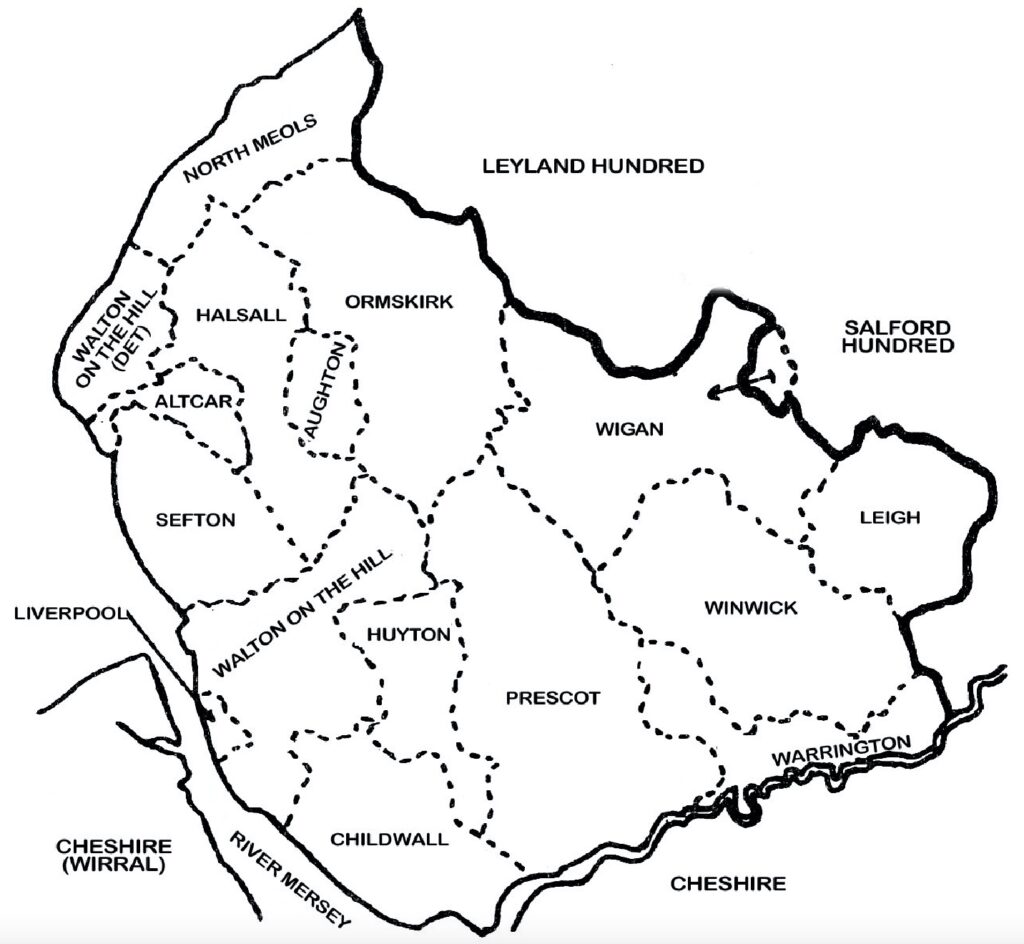
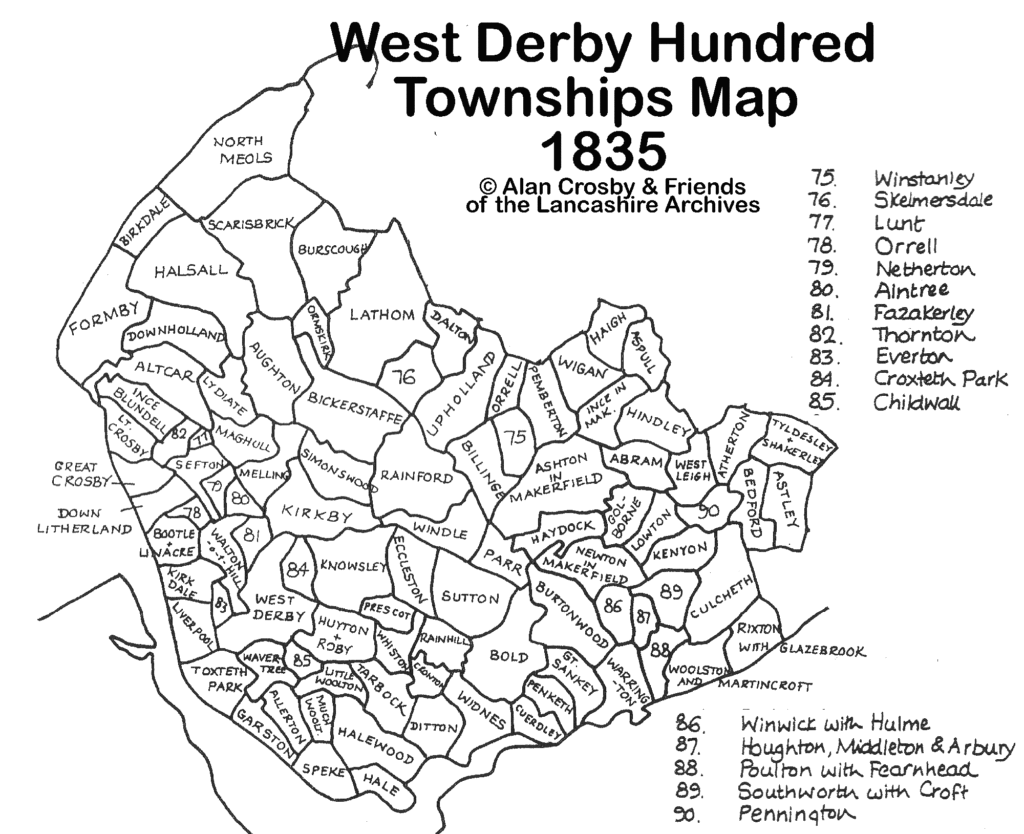
This explains why the map we are studying is called the Township of Everton and its relationship to the parish.
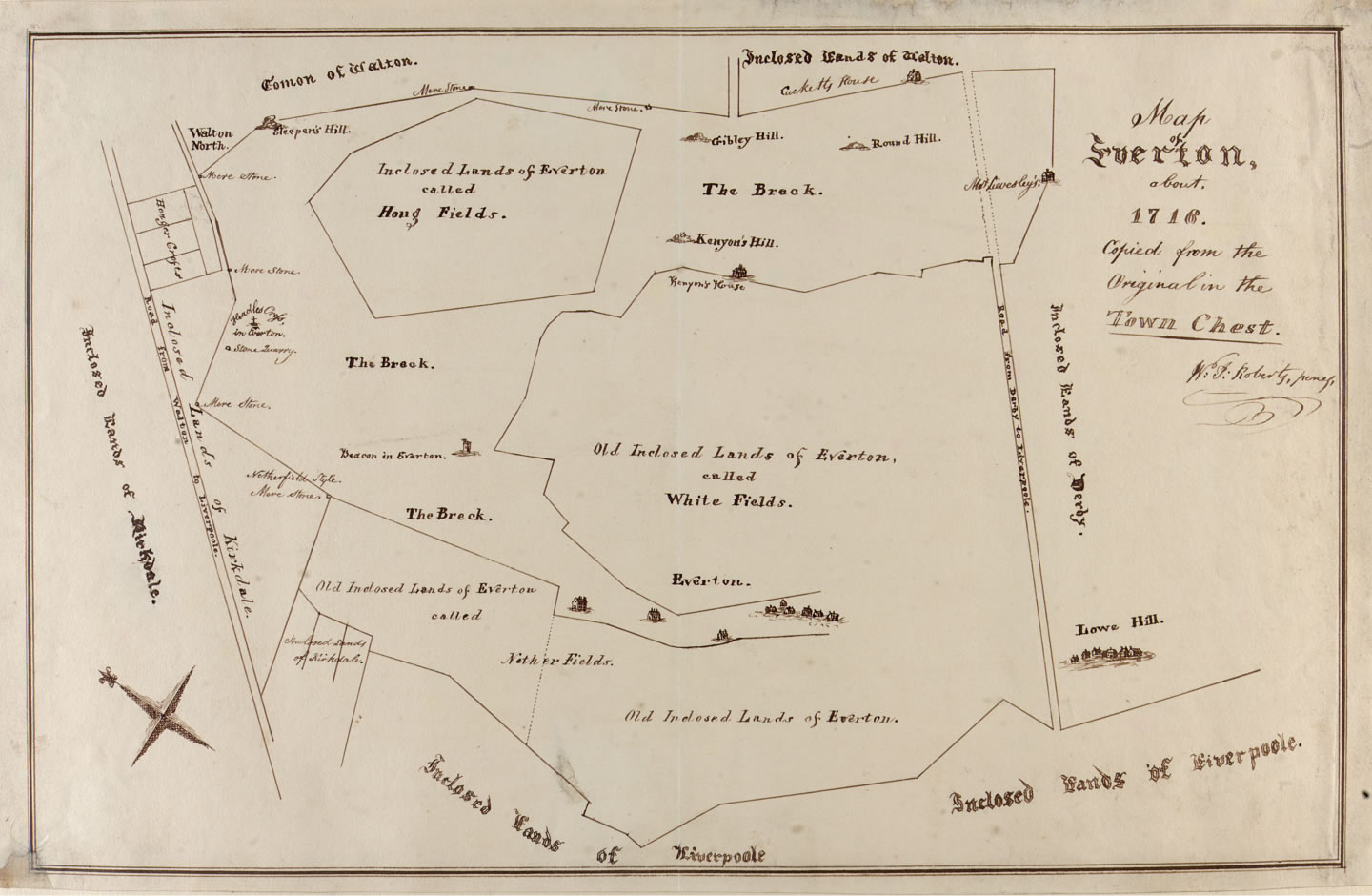
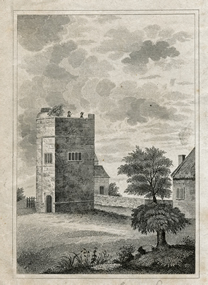
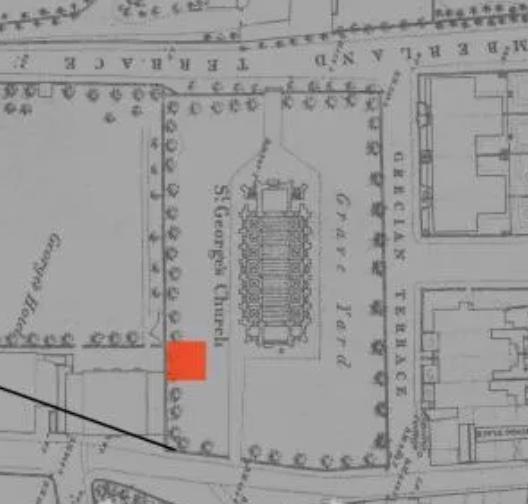
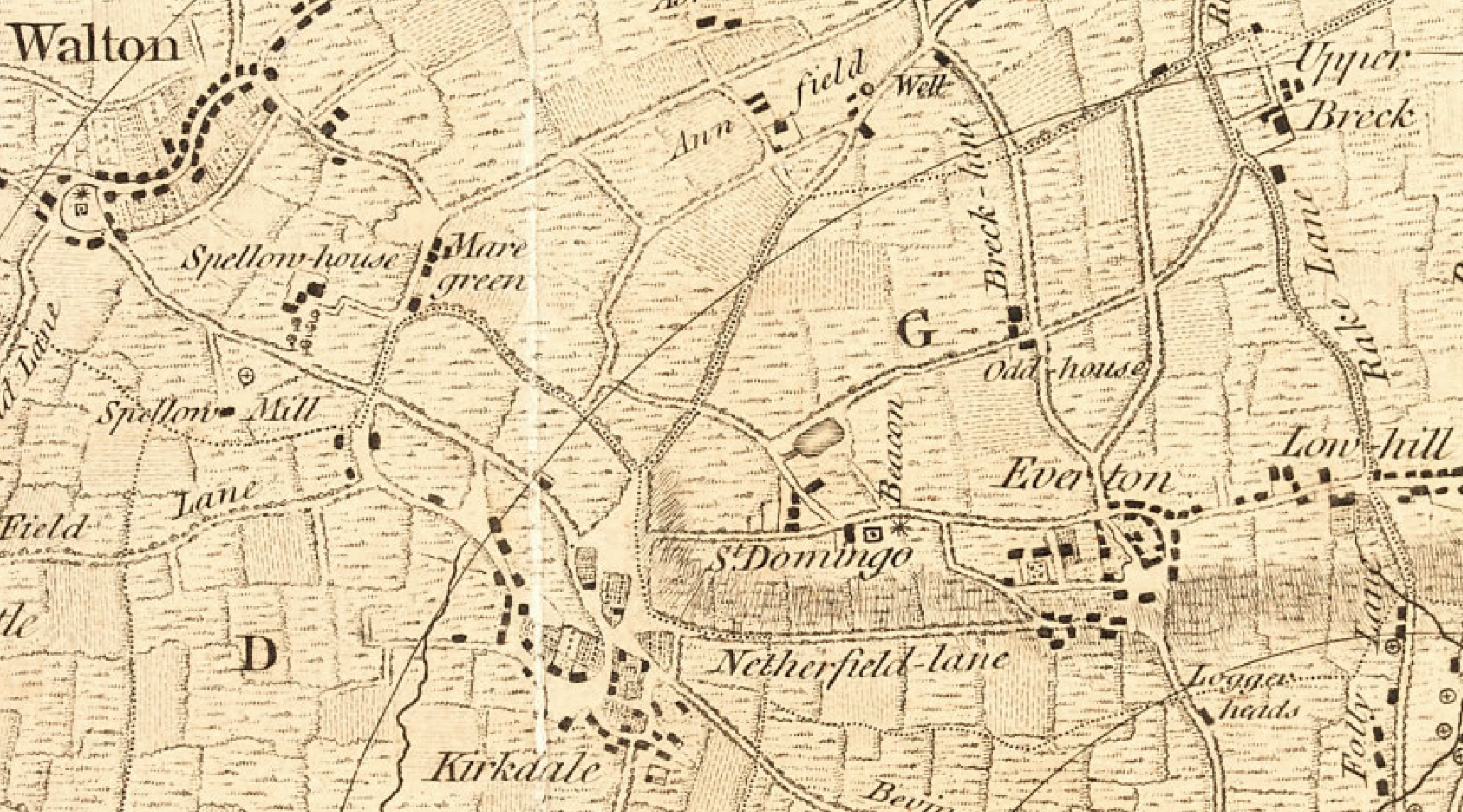
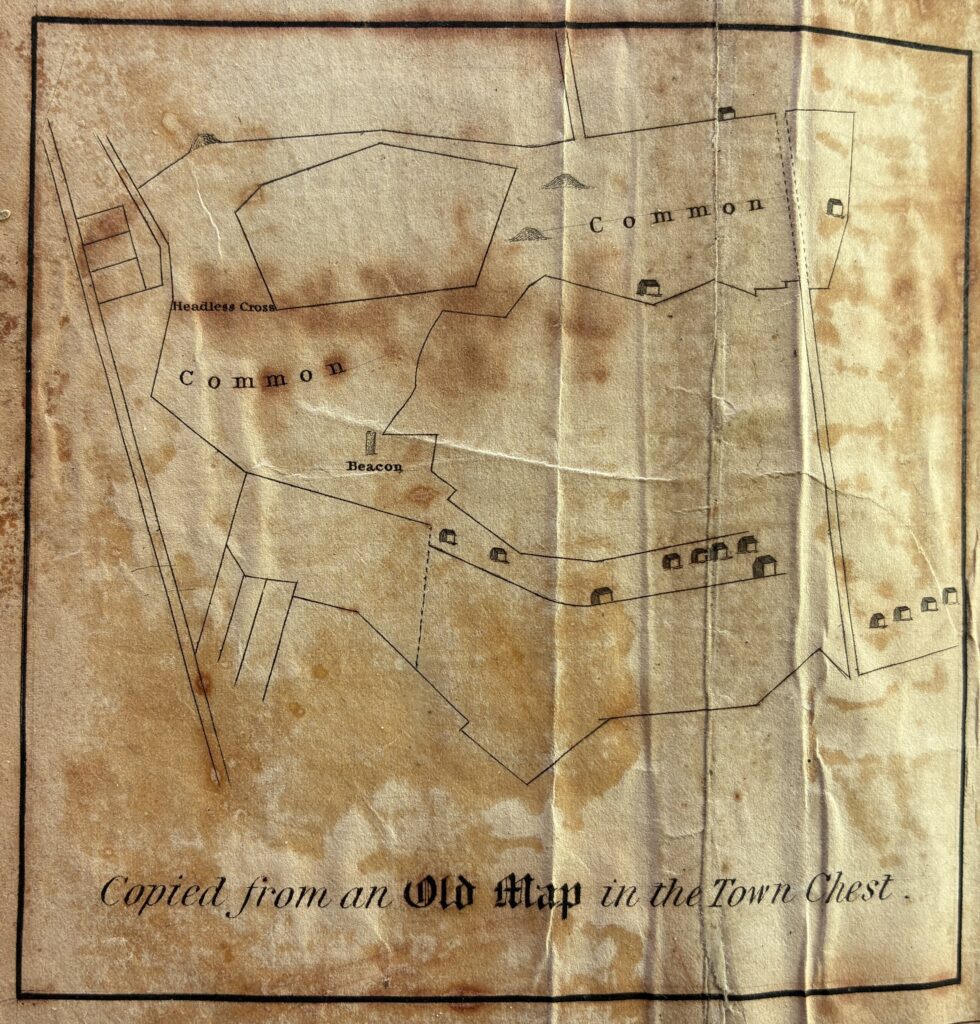
Here (above) we have an even earlier map of Everton, with the village to the lower centre. Some of the place-names are still familiar today, such as Low(e) Hill, Sleepers Hill and the Breck. Nether (meaning lower), marks the fields running down the hill to Liverpool from Everton Village, where Netherfield Road today still marks the vicinity. In the centre left there is ‘Beacon in Everton.’ This is frequently mistaken for the Everton Lock-Up, but was already in existence long before the famous tower. The former position of the Beacon was in a section of the present day St Georges’s Church, and was used as a signalling station and a marker for vessels entering the River Mersey, often by lighting a fire basket on the top level. Its precise date of construction is unknown, and in its original form may have been built in 1230 by Ranulf, the Earl of Chester and first baron of Liverpool, but Robert Syers suggests that this is unlikely. Perhaps an earlier form of the Beacon was first erected at that time, then replaced with the more recent version in later centuries, estimated to be around the time of the English Civil War during the 1640s.
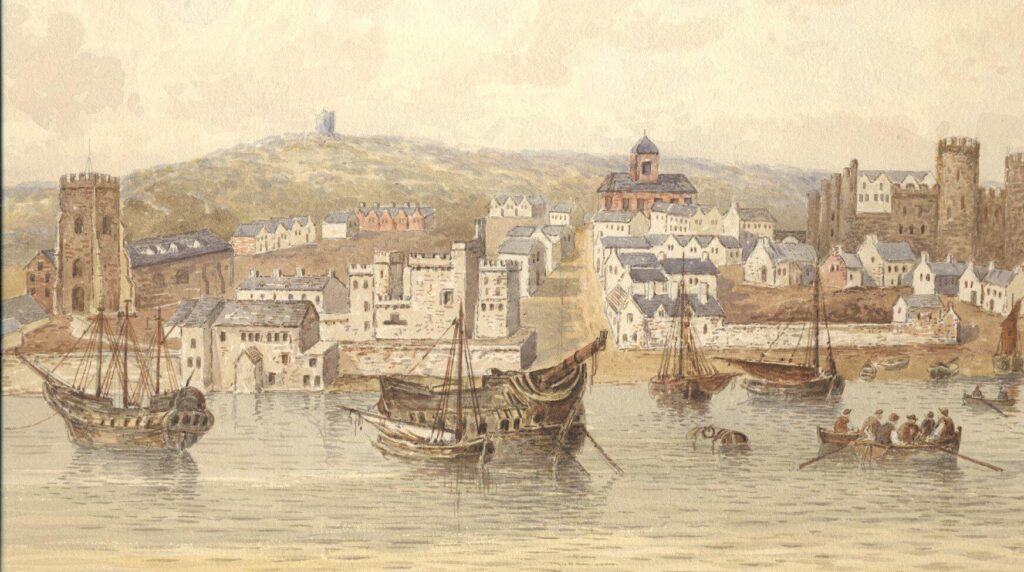
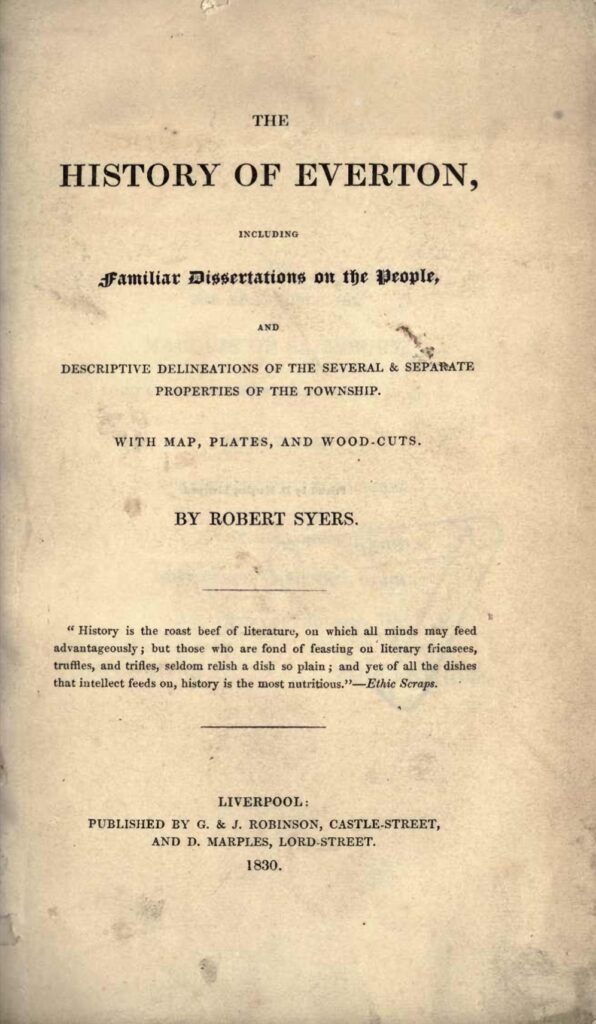
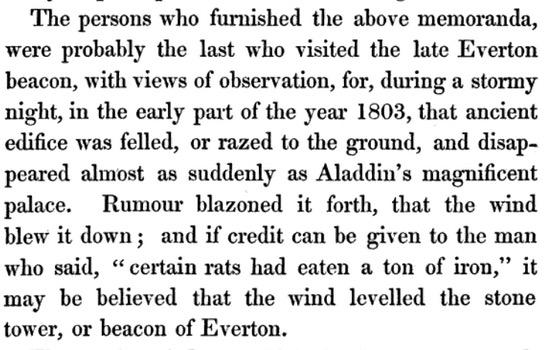
Robert Syers, writing in 1830, included a detailed description of the beacon made by visitors in 1802. He tells how they may have been the last to visit because it was ‘felled or razed to the ground’ in early 1803. In his History of Everton, he describes its demise;
A full copy of Syers’ History of Everton, which contains a detailed description of the Beacon from page 56 onwards, can be dowloaded by clicking the image.
.
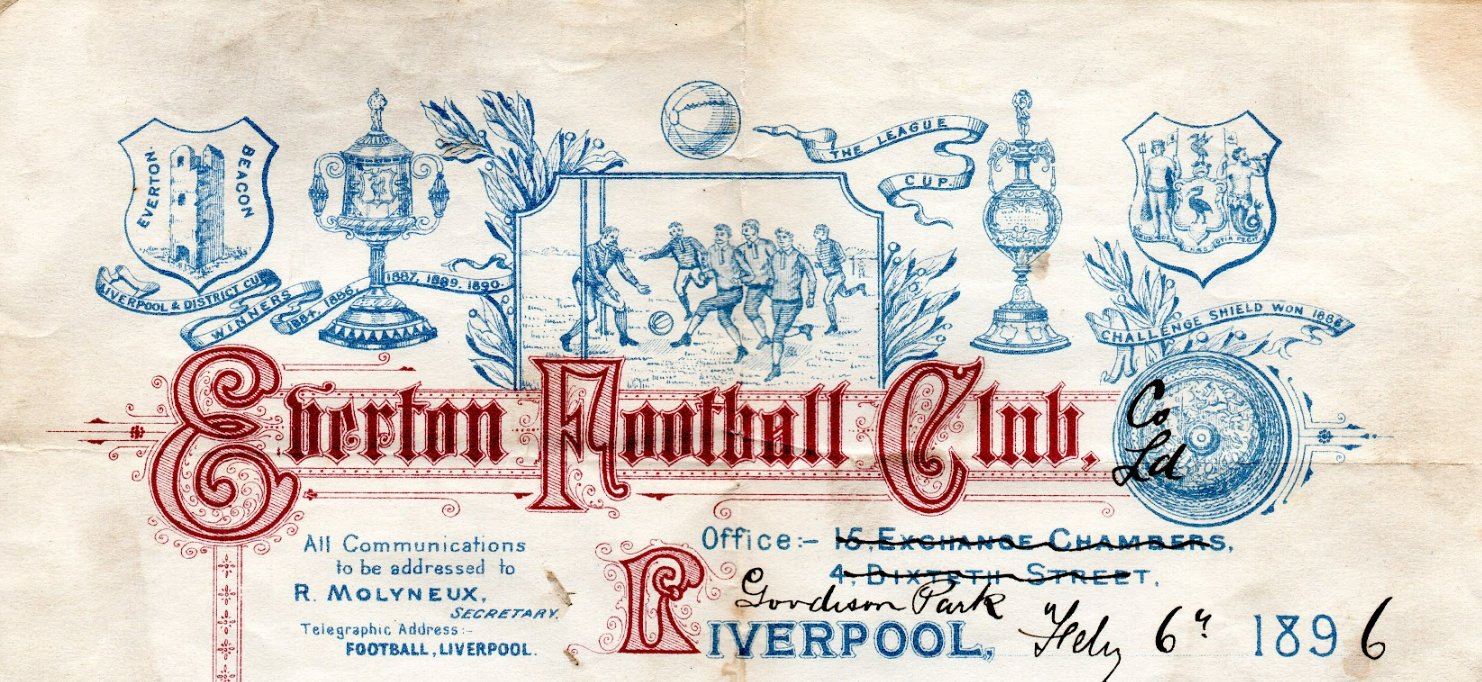
Below is a photograph of the header of part of an official letterhead in the possession of Brendan Connolly, an Everton FC memorabilia collector and noted expert (and former chairman of Everton FC Heritage Society). Dated 1896, there is a clear representation of the Everton Beacon, still remembered as a local landmark, to give the club its identifiable connection with the Everton township, despite this tower disappearing almost a century earlier.
In his History of Everton, Robert Syers described what the area looked like at the time it was surveyed for the map of 1790,
‘There are few places in England, or indeed in any other country, so highly favoured, by situation, as Everton; in picturesque, beautiful, and interesting scenery, it has scarcely a rival in Britain. On its western side, it rises with gentle acclivity, until its crest, or the summit of its brow, acquires a commanding eminence, which overlooks the modern Tyre.[Lebanon]
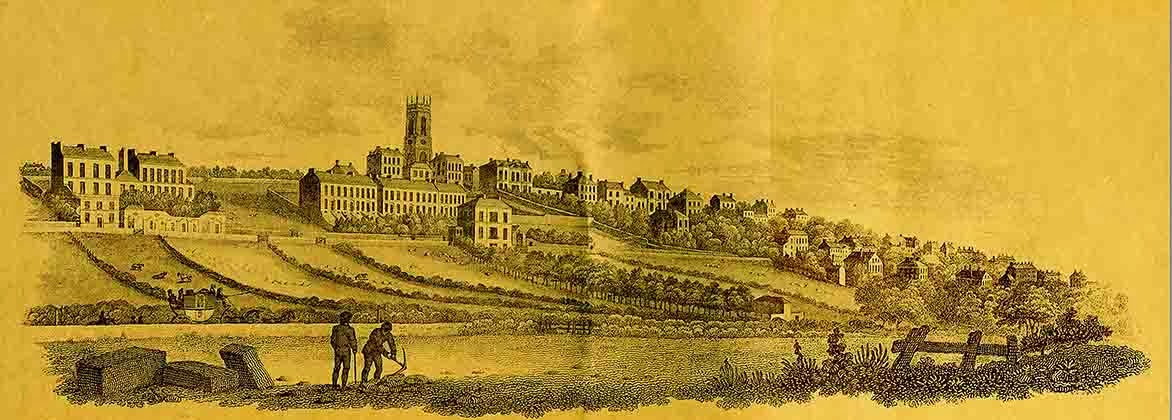
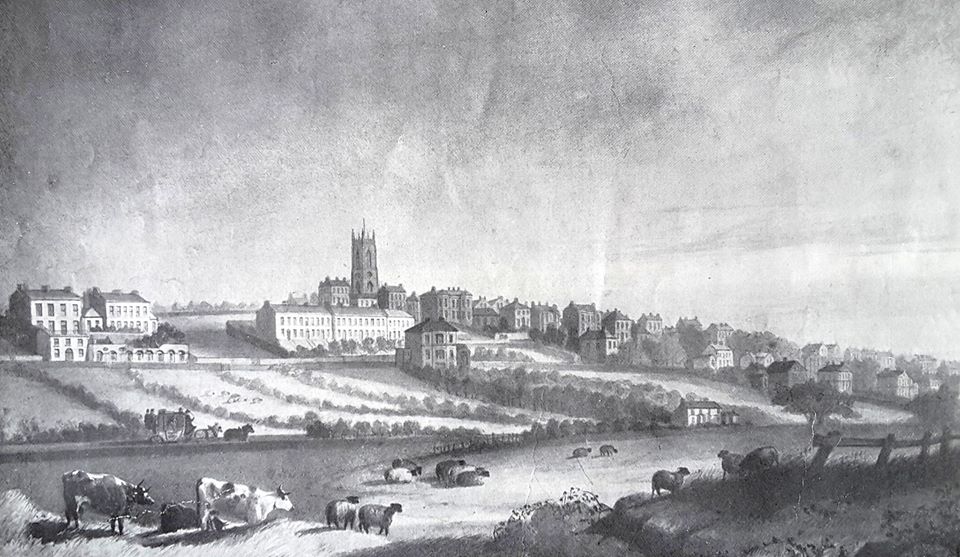
About mid-way on the eastern edge of Everton the land gradually slopes, until it joins the extensive plains of neighbouring townships, over which are interspersed gentle mounds and rising hillocks, which relieve the prospect from tame flatness: and, from those eastern parts, taking an inland view, in the proper season, may be seen all that can be desired of rural beauty; the eye being relieved by a view of lofty hills in the distance; the intermediate plains serving the husbandman for an area where he performs his agricultural labours profitably to himself, and advantageously to the population in his neighbourhood.
On the south, Everton is joined to land of equal, if not superior elevation with itself; consequently, the extent of prospect from its southern border is circumscribed and limited. The western parts of Everton are rapidly assimilating and connecting themselves with Liverpool; numberless dwellings are here annually erected; nay, so magical is now the builder’s power, that, it might be said, many dwellings are constructed in this quarter weekly, generally but small domiciles, and chiefly intended for the occupation of the humble: but the slope of the brow, and the platform-crest, are studded over with beautiful villas and elegant mansions, where the wealthy children of the commerce of Liverpool, and the retired gentry, with their families, reside. In fine, such is Everton at this day; a delectable spot indeed, and almost entitled to the denomination of Modern Arcadia.’
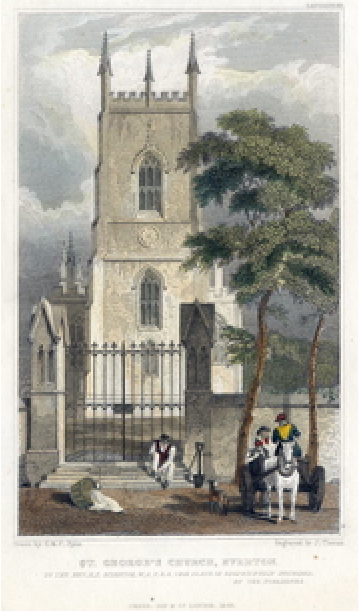
Approximate former site of Everton Beacon, lying in the churchyard grounds of St George’s Church. (Thanks to Darren Waite)
.
.
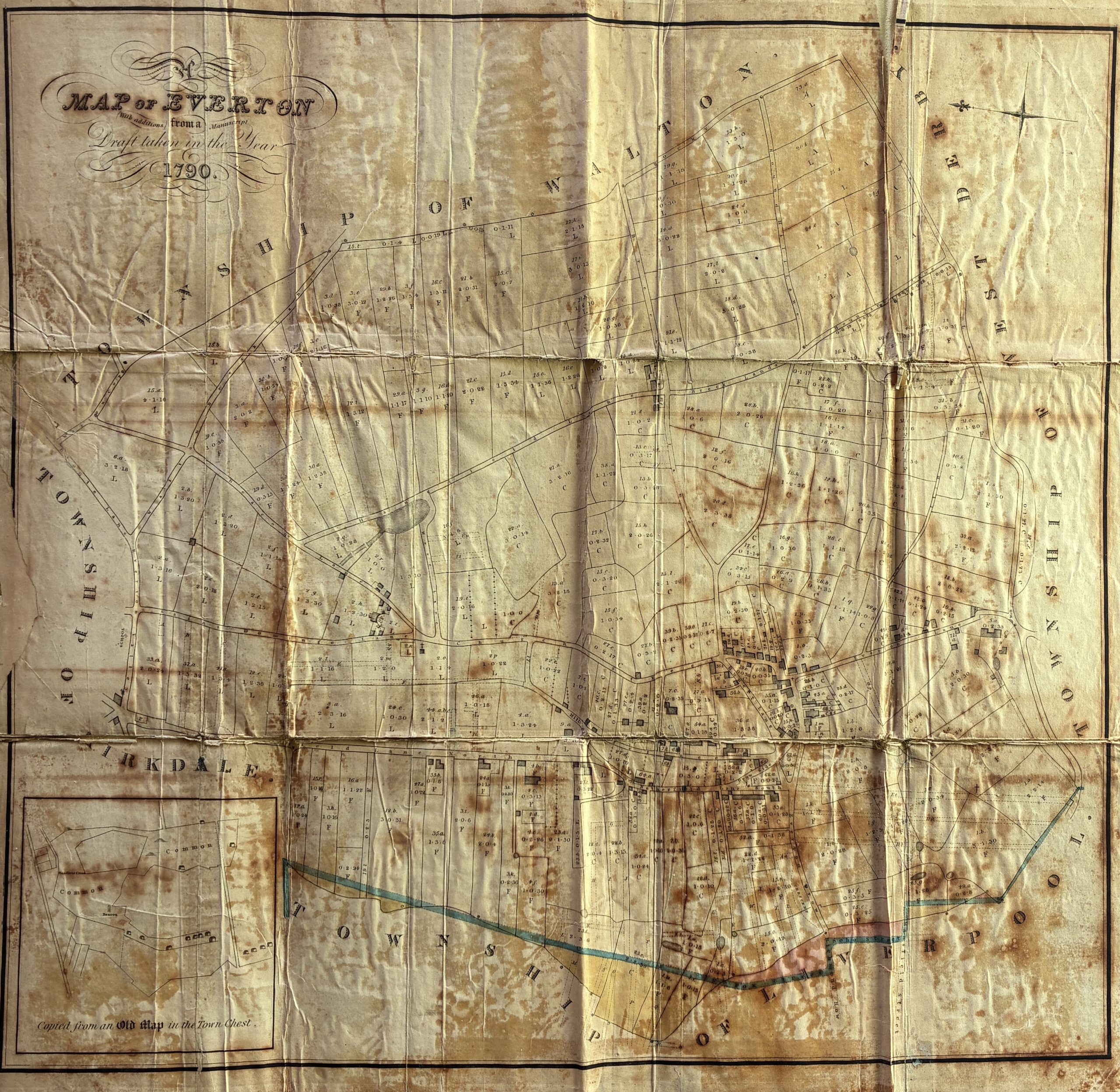
It would appear that our map in its original form was published as part of Robert Syers History of Everton (1830). He continually refers to it within his text, including the numbers of many of the plots shown here. A PDF copy of the full book is available here.
.
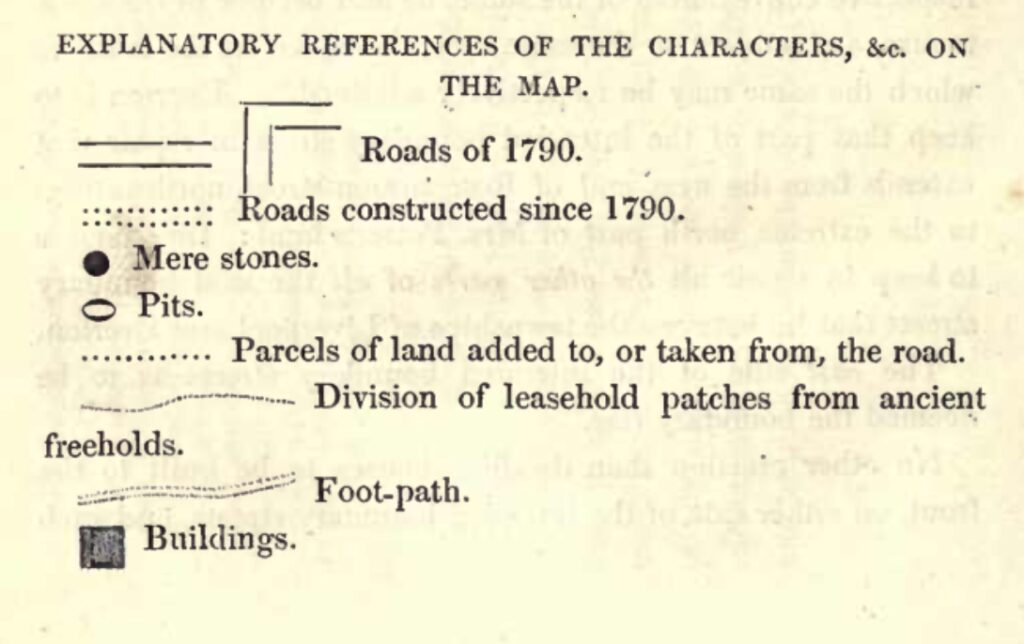
The guide to the map, included at the end of Syers’ History of Everton volume
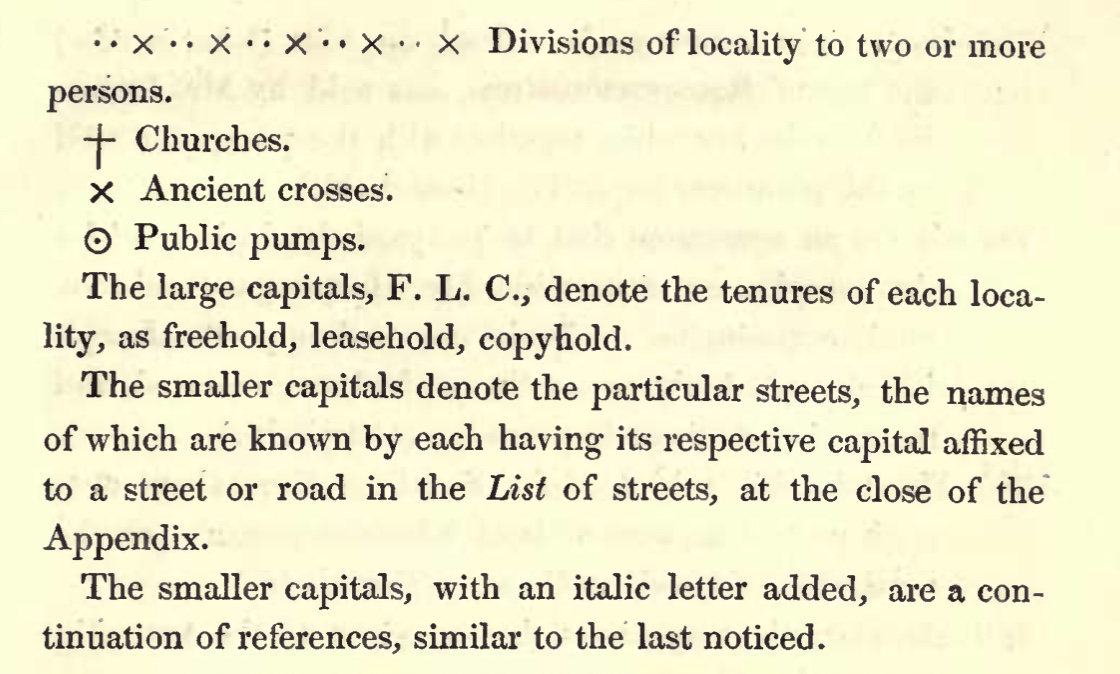
.
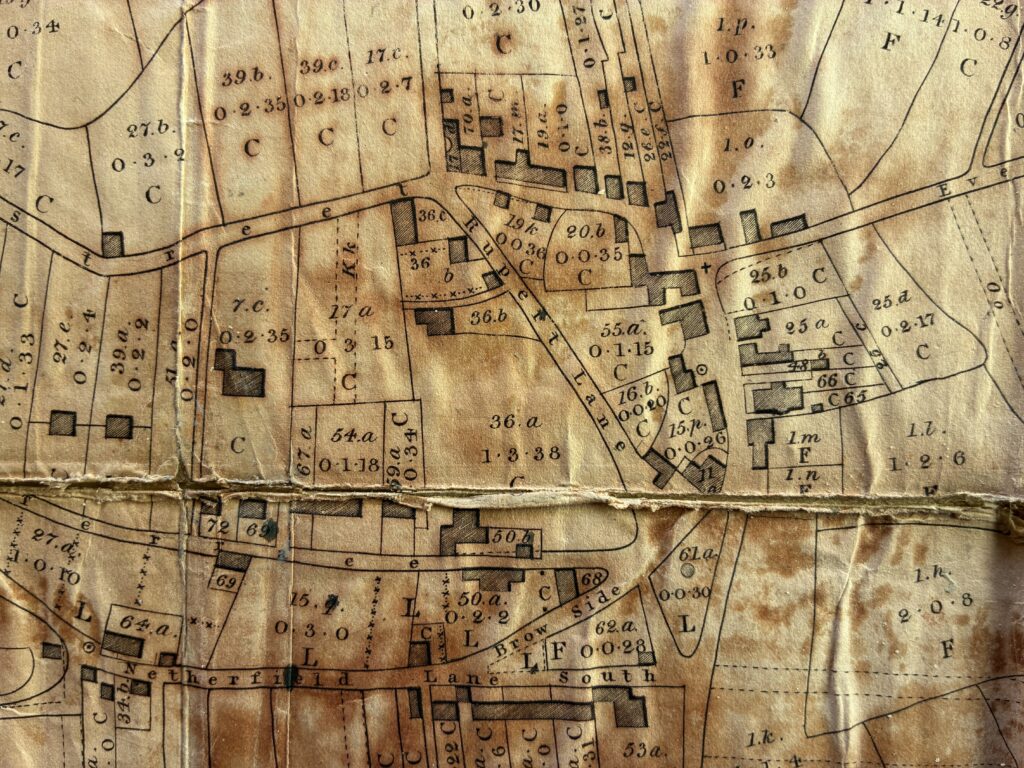
.
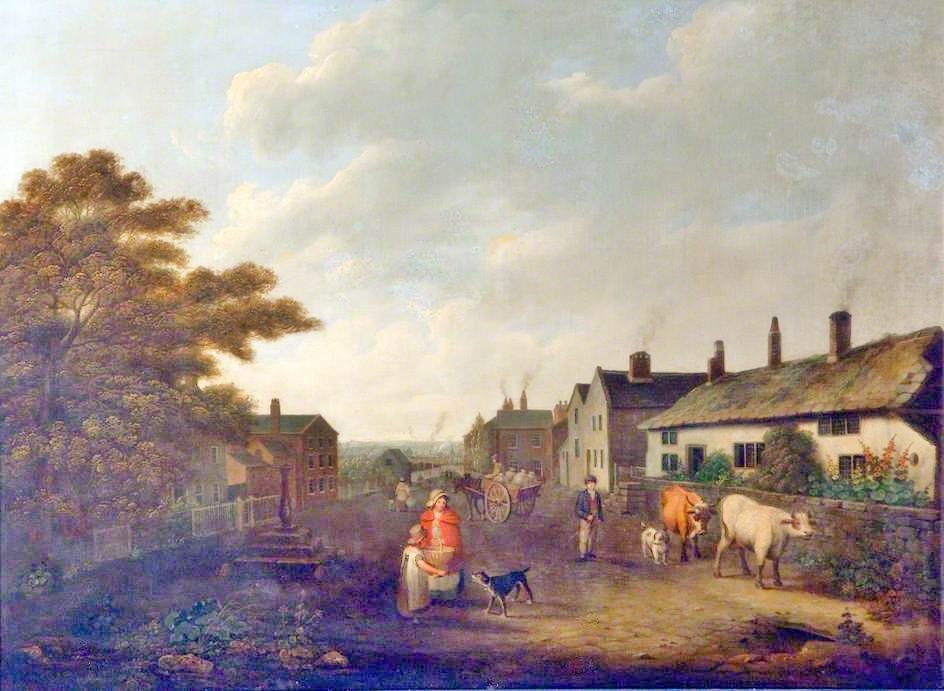
(1850 British School / Walker Art Gallery)
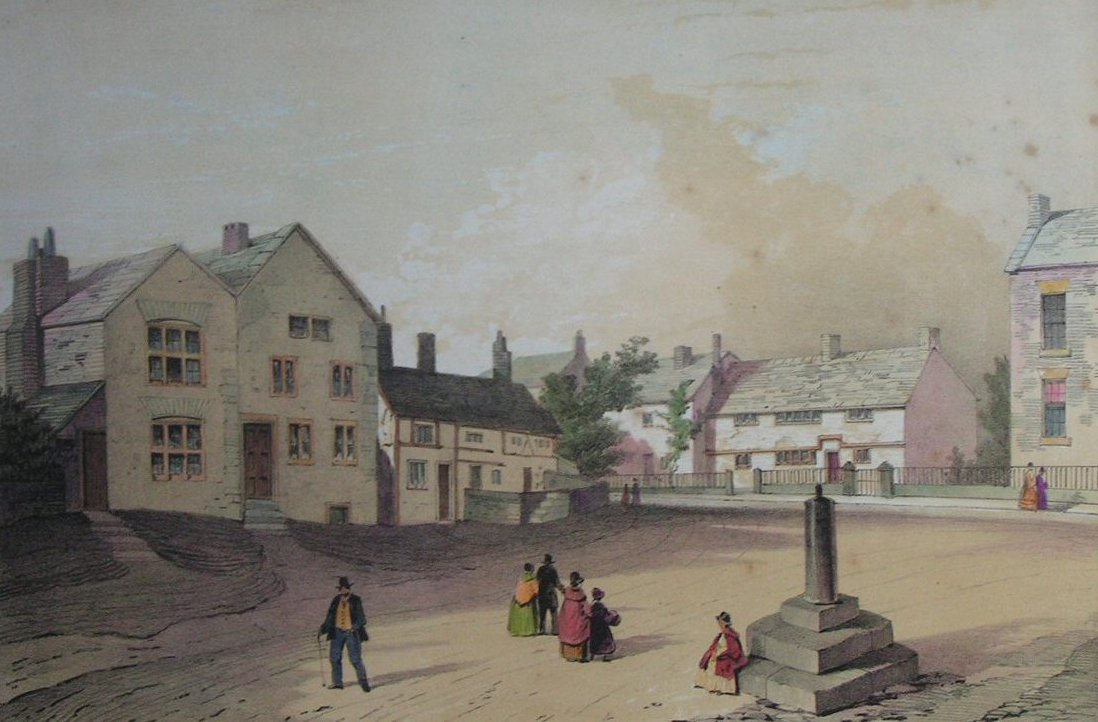
‘Everton Village’ by H Greenwood after W G Herdman
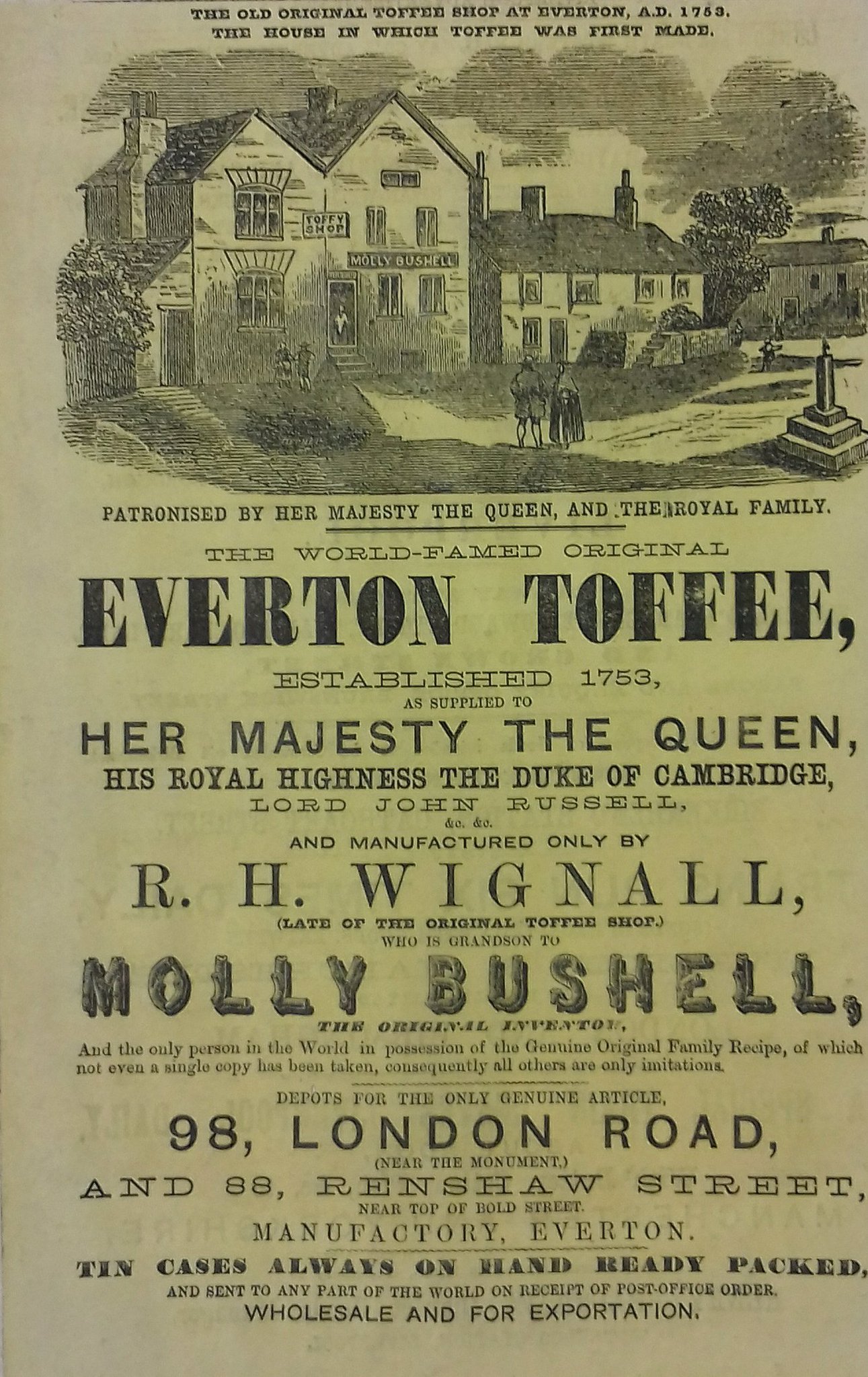
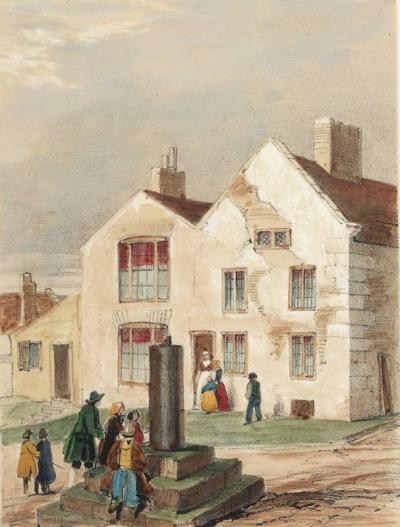
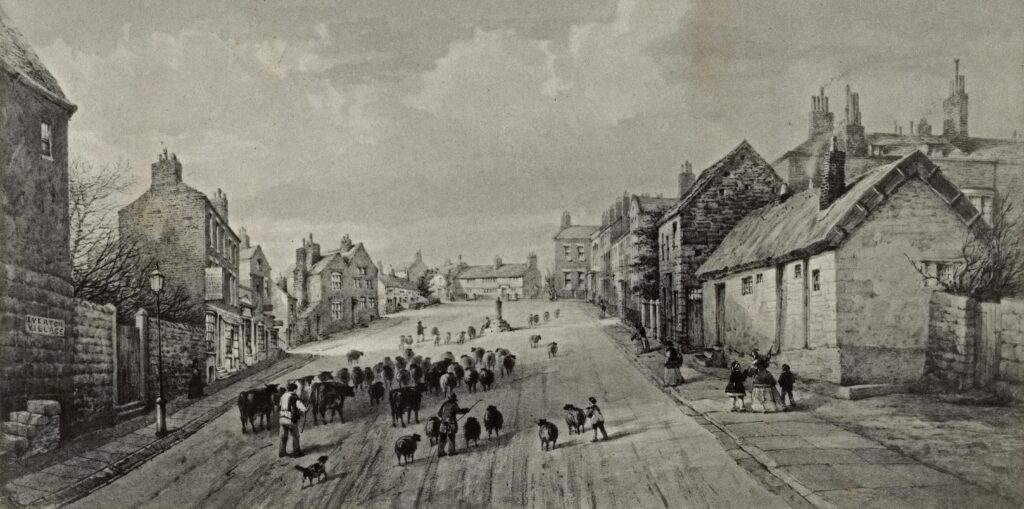
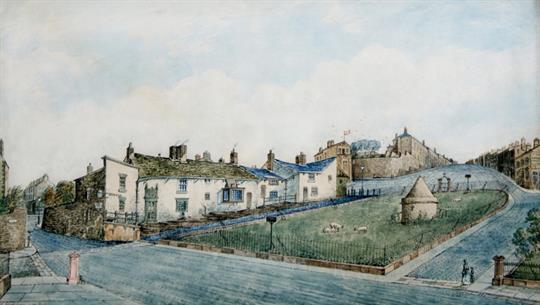
Molly Bushell’s Toffee Shop to the left of centre opposite the village cross
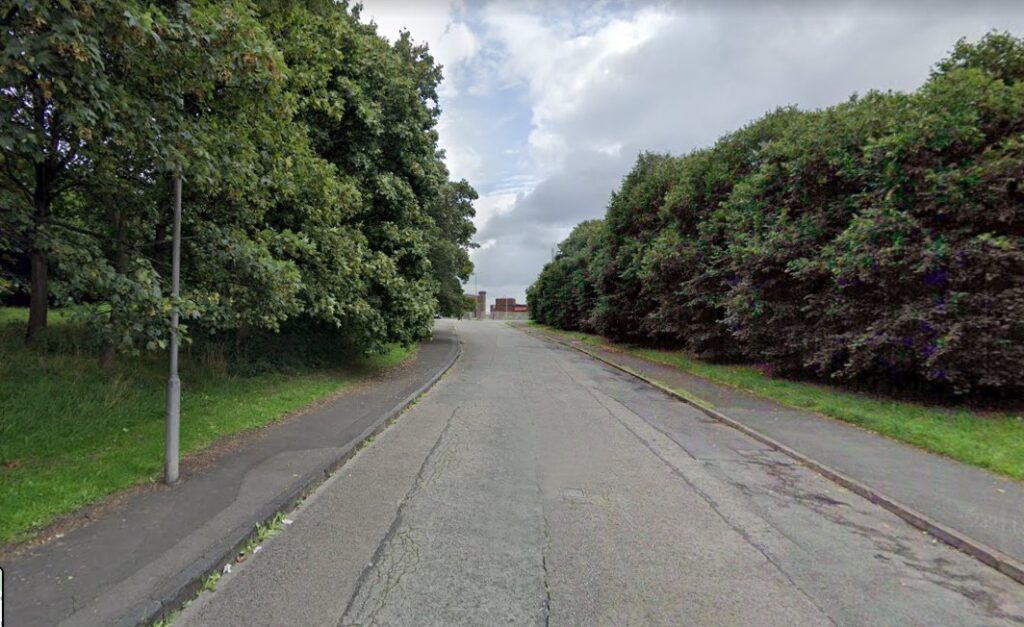
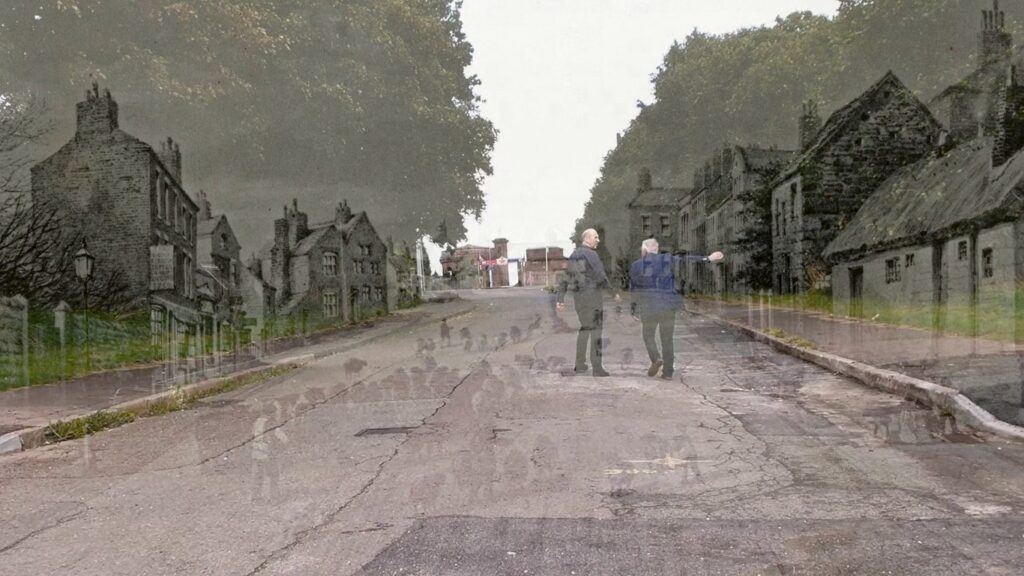
(created by Lewis and Mike Royden, for ‘Everton Village and the Birth of Everton Football Club‘ – a film by Everton FC Heritage Society (link below).
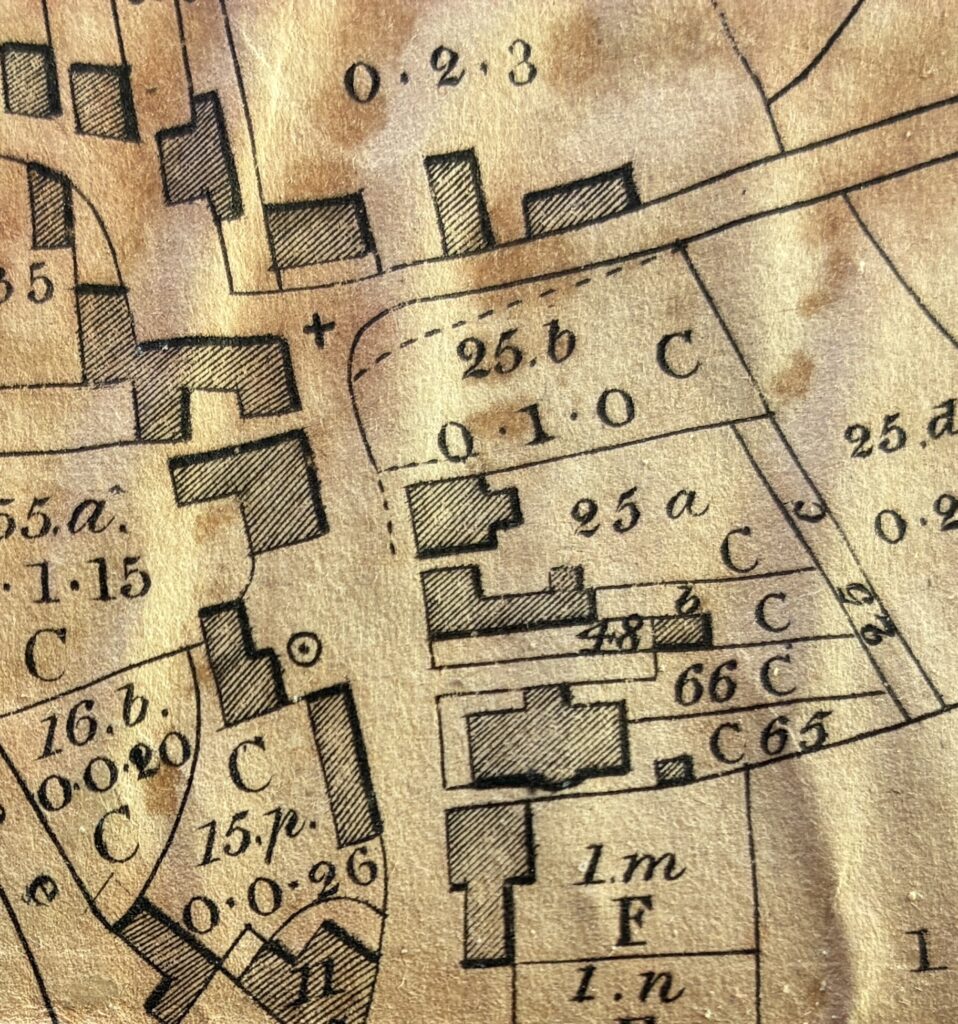
.
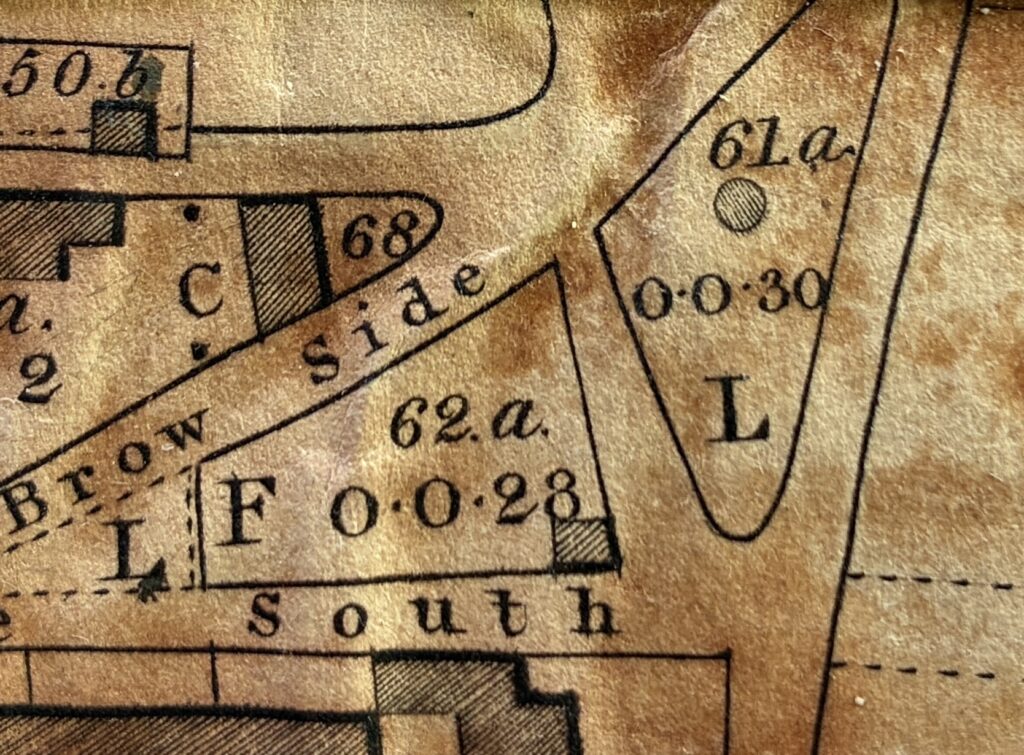
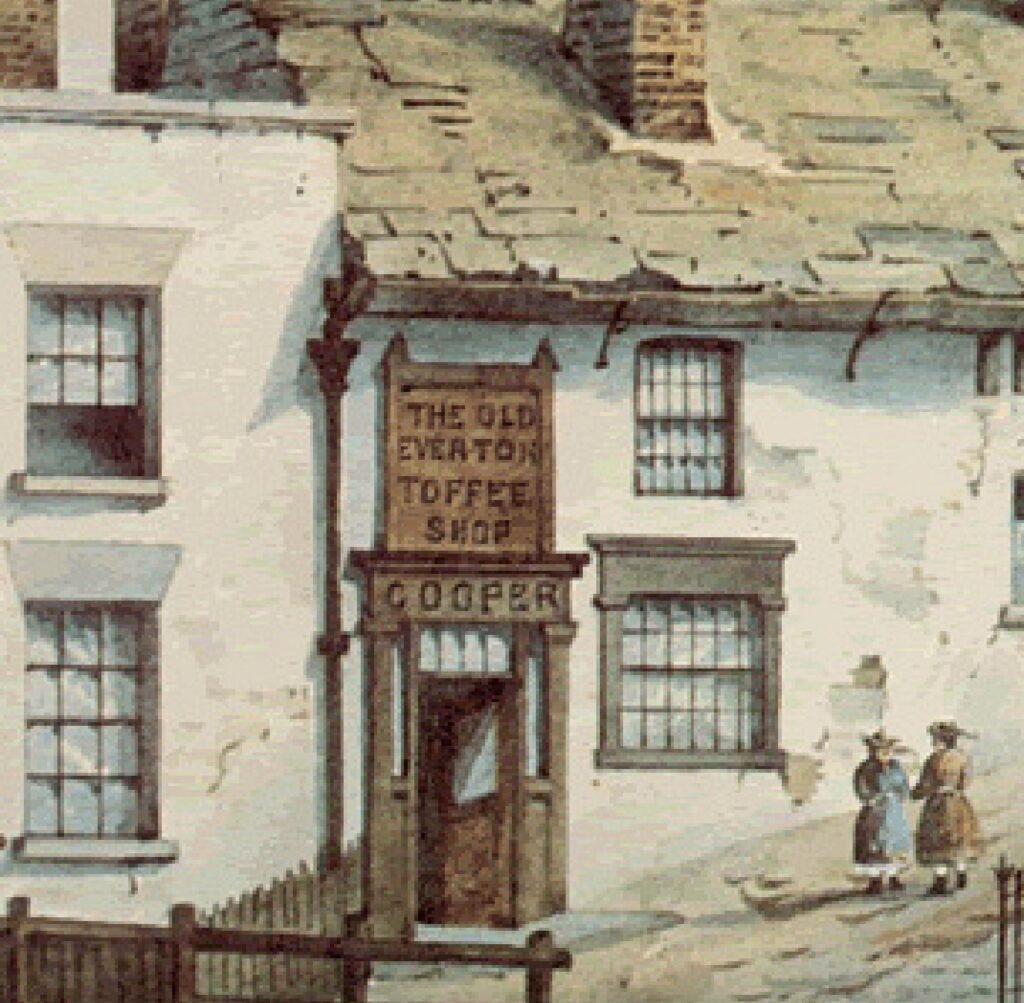
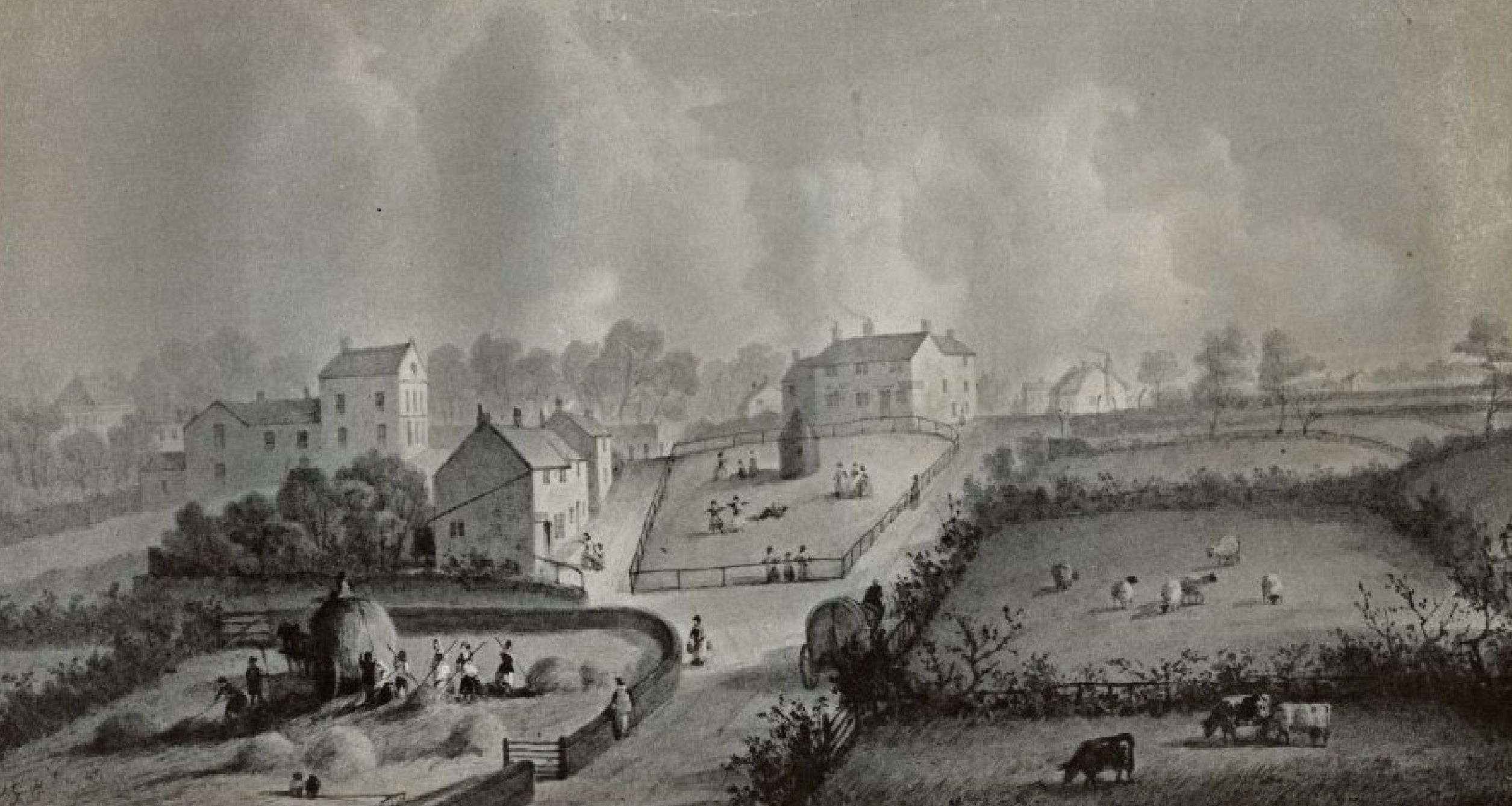
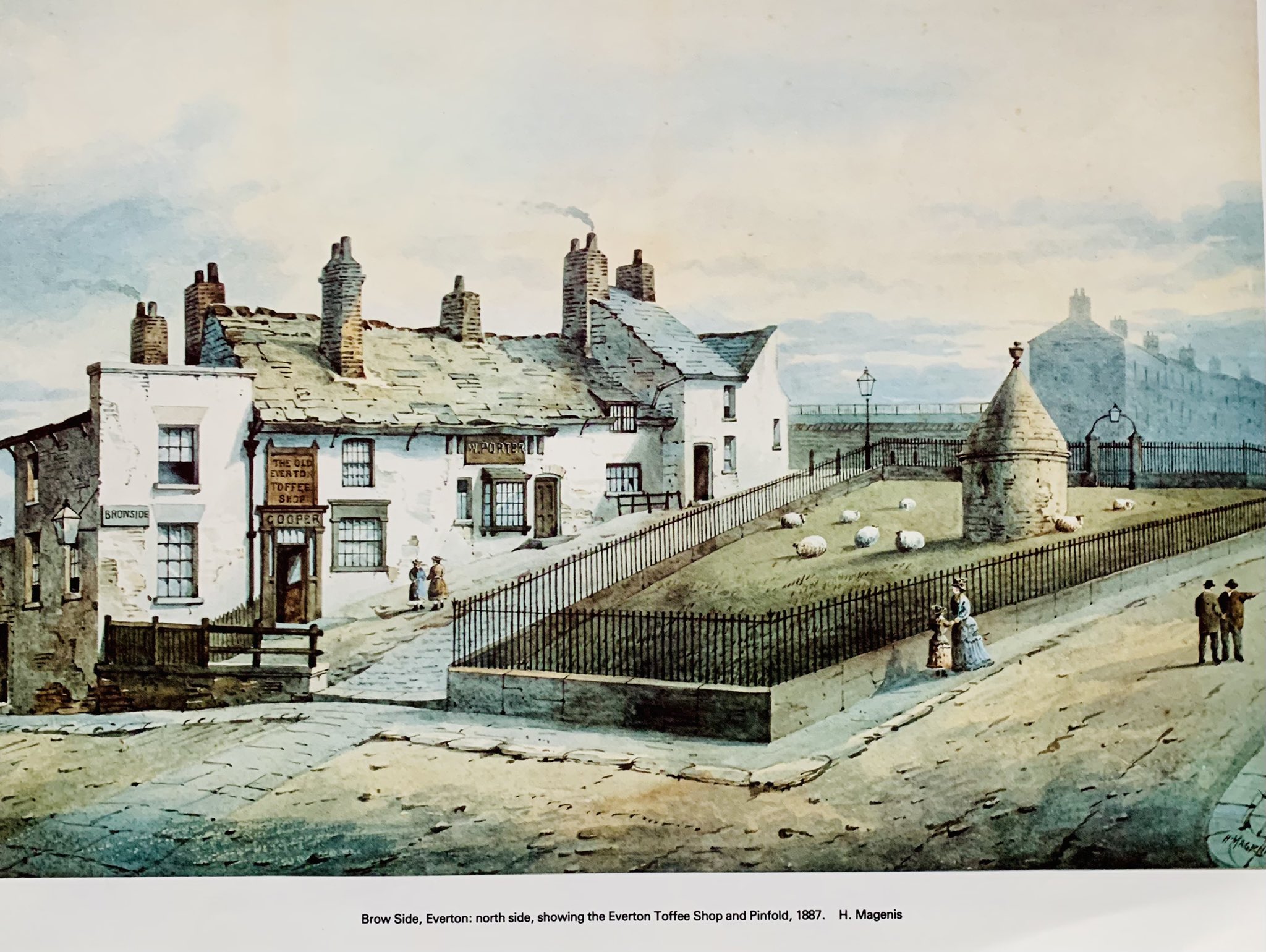
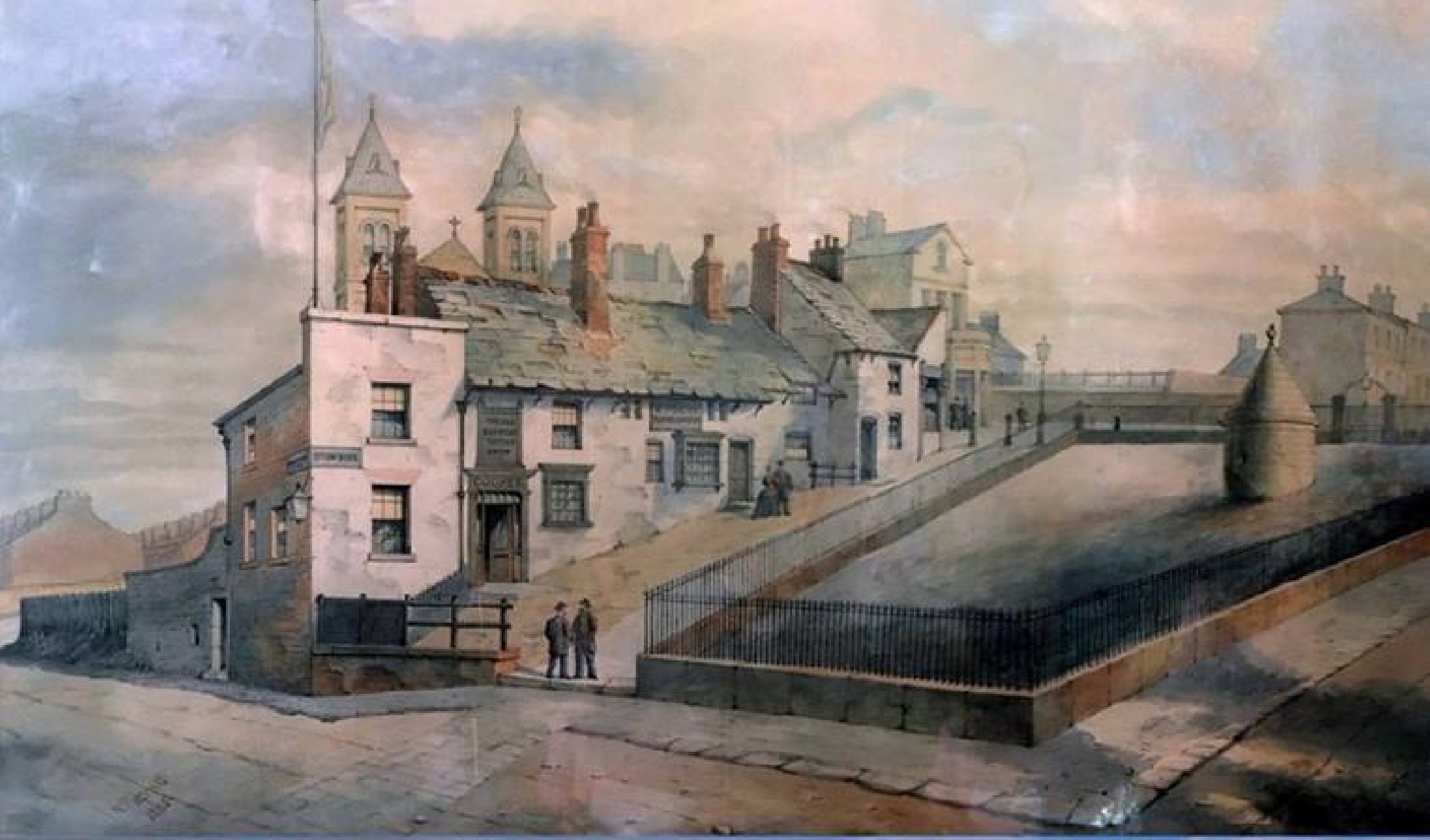
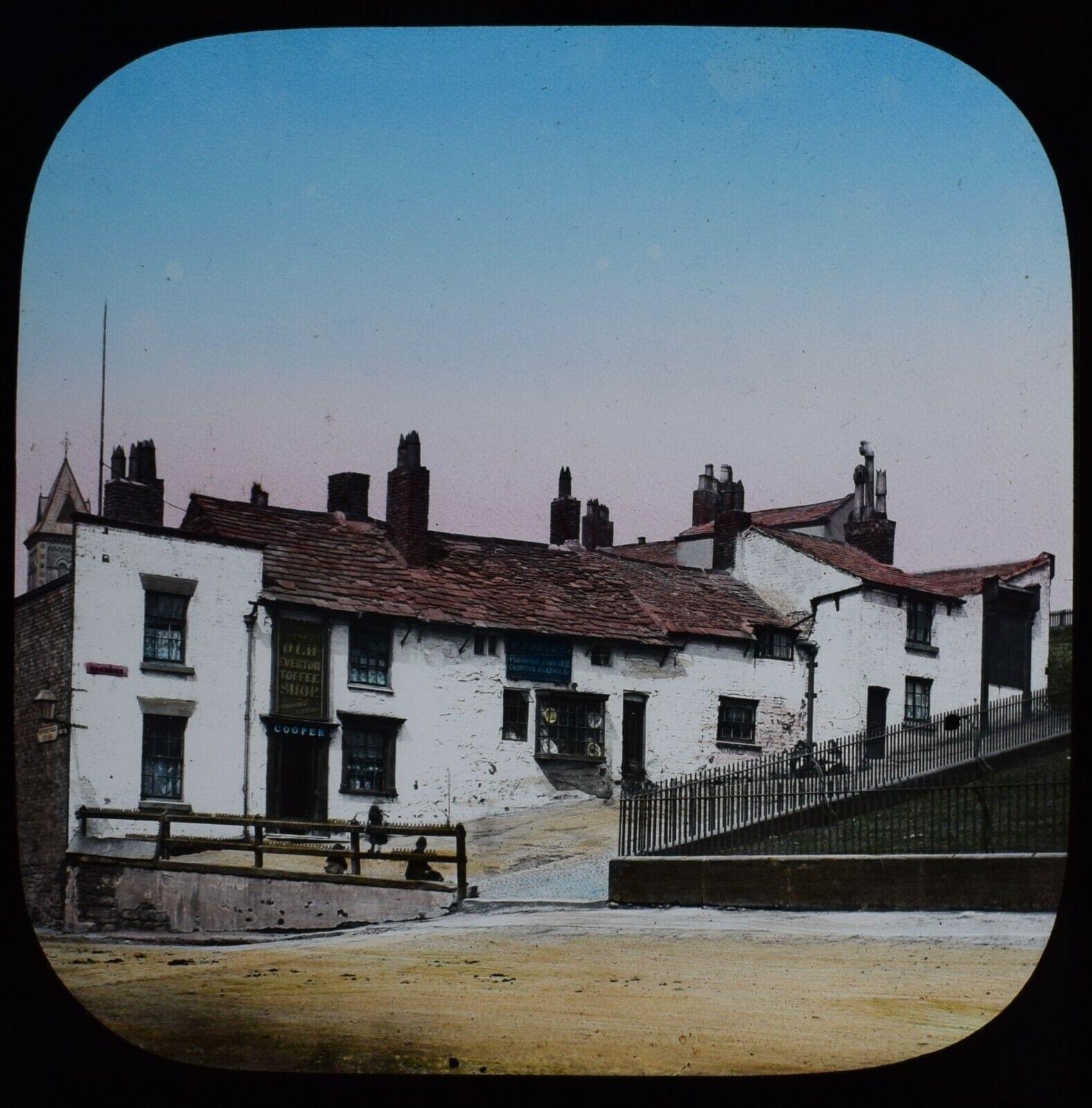
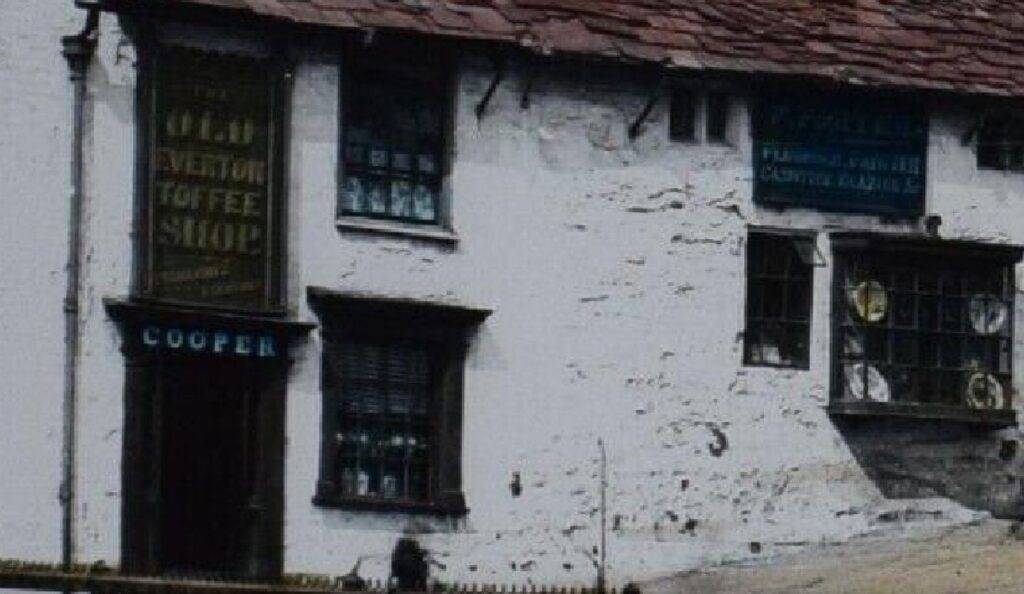
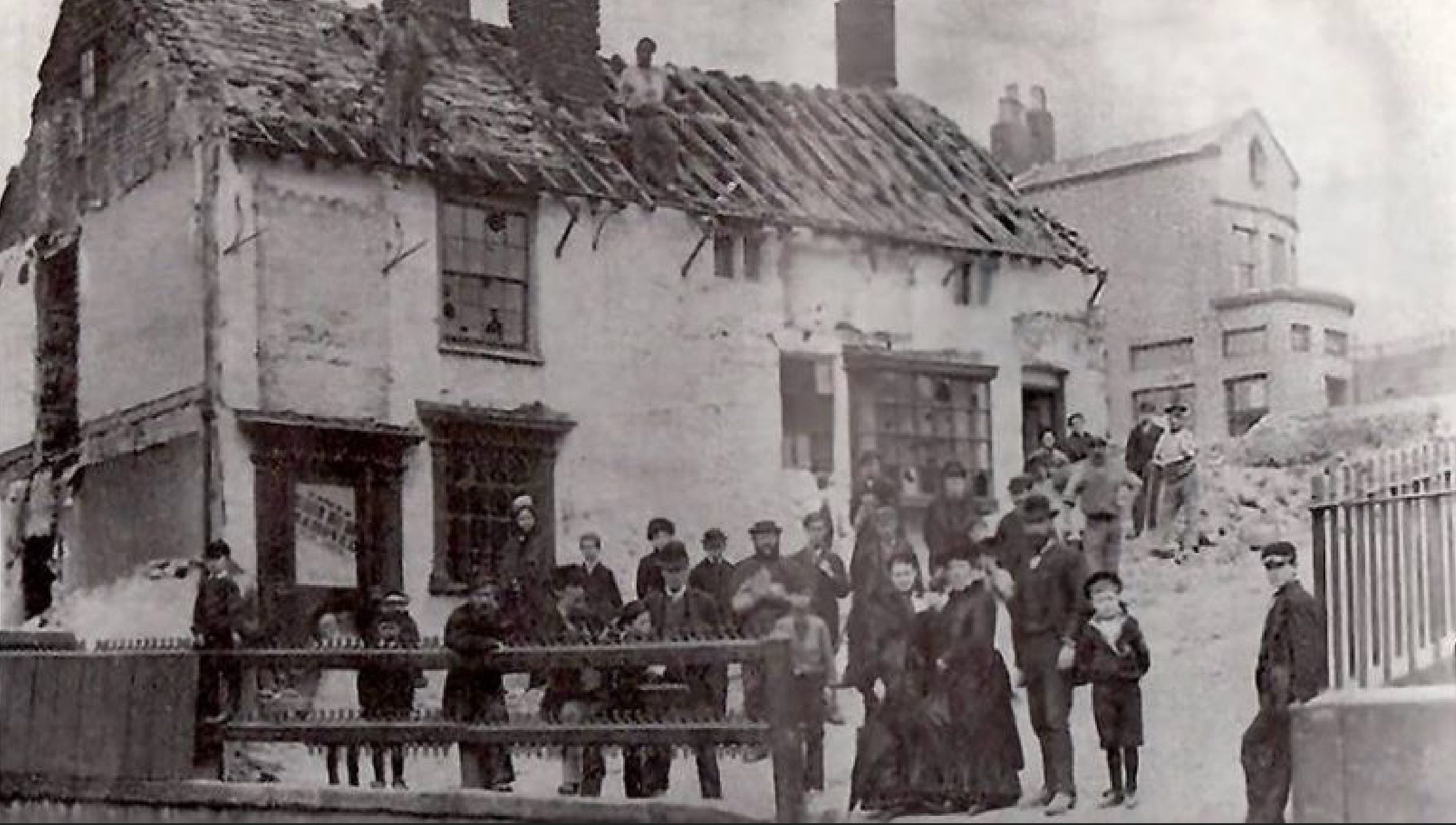
Extending in a line of some 50 yards, east and west, there is a pile of buildings on the north side of the path over the precipitous road, at the upper part of Everton Brow. These buildings are about fifty paces distant north of the Bridewell, or Round-jug of Everton; most of them were erected in and about the year 1692, and are in a tolerable state of preservation, but present no feature worthy of remark, beyond the brief notice of their being a set of larger kind of cottages, two stories high, and tolerably roomy within; the spot where these buildings stand is marked 62a, on the map. The western-most of these domiciles has long been Mrs. Cooper’s manufactory for that luscious compound of sweets, whose excellence is celebrated far and near, under the name of Everton toffee. At the east part of this pile of buildings is a butcher’s shop, where considerable business is done; and was for many years past, until lately, the only shambles in the township.
Robert Syers, The History of Everton, including Familiar Dissertations on the People, Descriptive Delineation of the Several and Separate Properties of the township, with map, plates and wood-cuts (1830) p.52/53
[NB henceforth referred to as Syres, Everton pp.]
Syers’ description is reflected in the view below, although painted sixty years after his publication.
He writes again later;
It may be as well now to step across the road of Browside, where, on an insular patch of land, stands not only the locality 62a [See our Map], but also, on the north of that locality, a spot of ground belonging to the township, admirably adapted for a small public building such as a free-school, for instance. There is a short, narrow passage which runs the greater part of the way between the ground of the township and the north parts of locality 62a ; the south front of which locality is filled up with small-sized dwellings, that have been already noticed in the section of Antiquities. At the westernmost of these dwellings is a manufactory of that luscious and far-famed commodity, called Everton Toffy which for more than twenty years has been conducted under the management of Mrs Cooper.
Syres, Everton pp.300-301
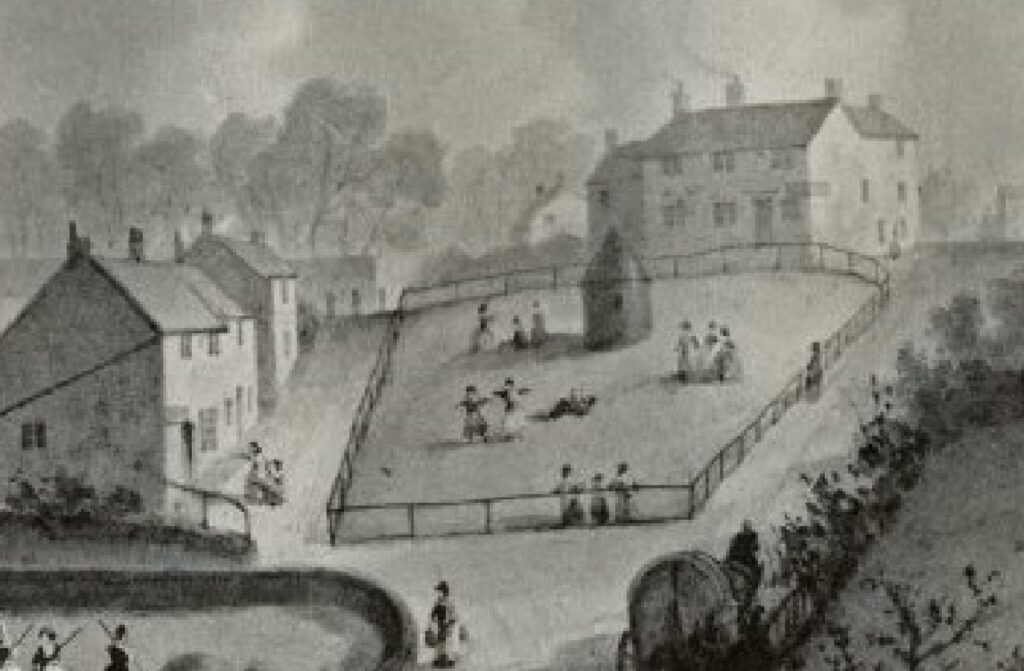
(Left:) An extract from an early view of the lock-up within the penfold by William Herdman

An report on the Queen’s Head Hotel Archaeological Excavations carried out by the Museum of Liverpool with The Everton FC Heritage Society by Ken Rogers, can be found on this website here.
………………………………………………………………………………………………….
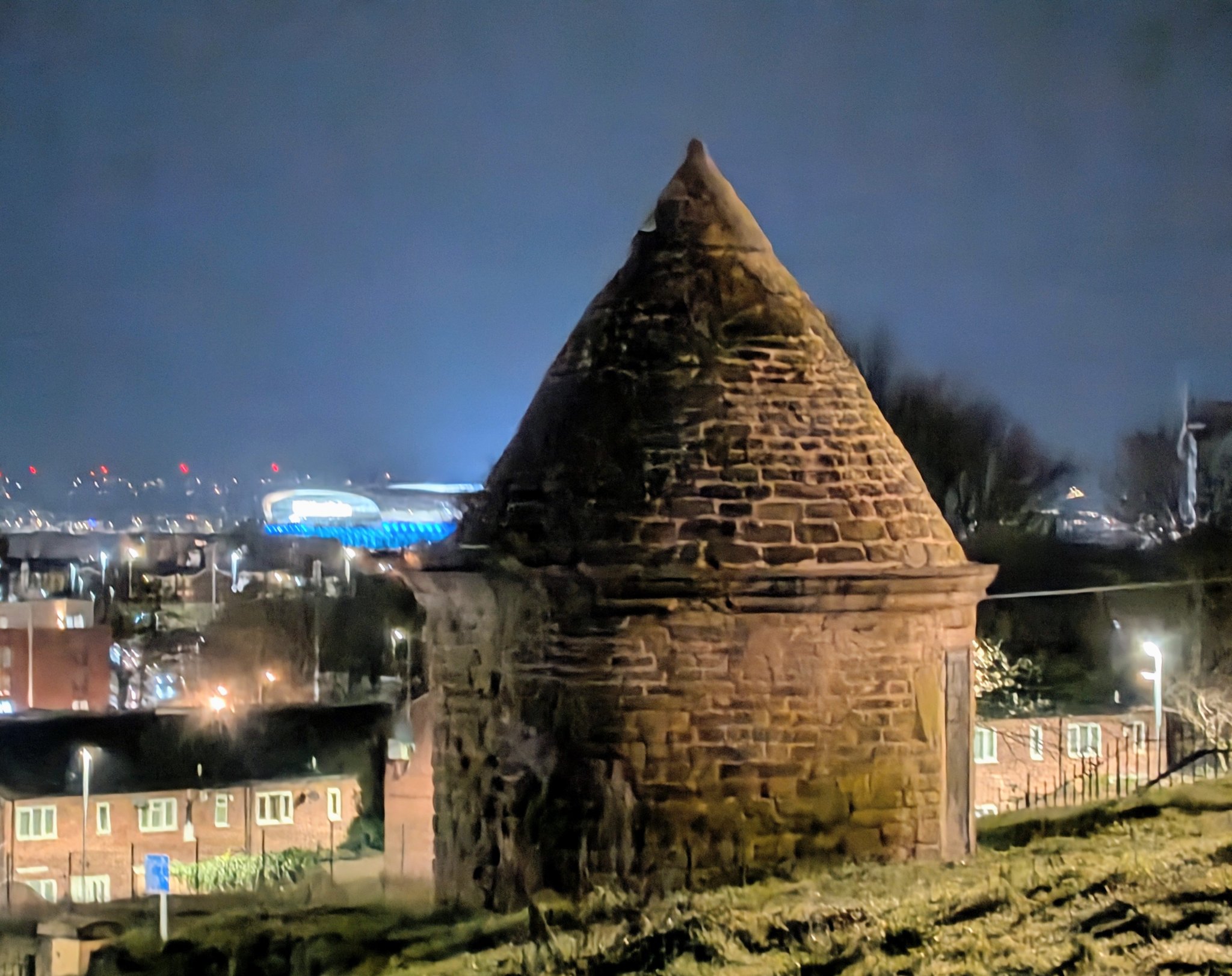
The Everton Lock Up
Before the introduction of a local police force, village representatives – for example those sitting in the manor court held in each parish or township, would annually elect a responsible villager to look after highways, keeping ditches and bridges maintained, and would also elect a constable. Most time was spent dealing with disputes, and drunken behaviour. As the magistrates court and other constables were often too far away, many rural parishes opted to construct a village lock-up for the temporary detention of local miscreants. There they would be kept, usually overnight, before transfer to the nearest court. In practice, drunks were usually detained to sleep it off before release the next day.
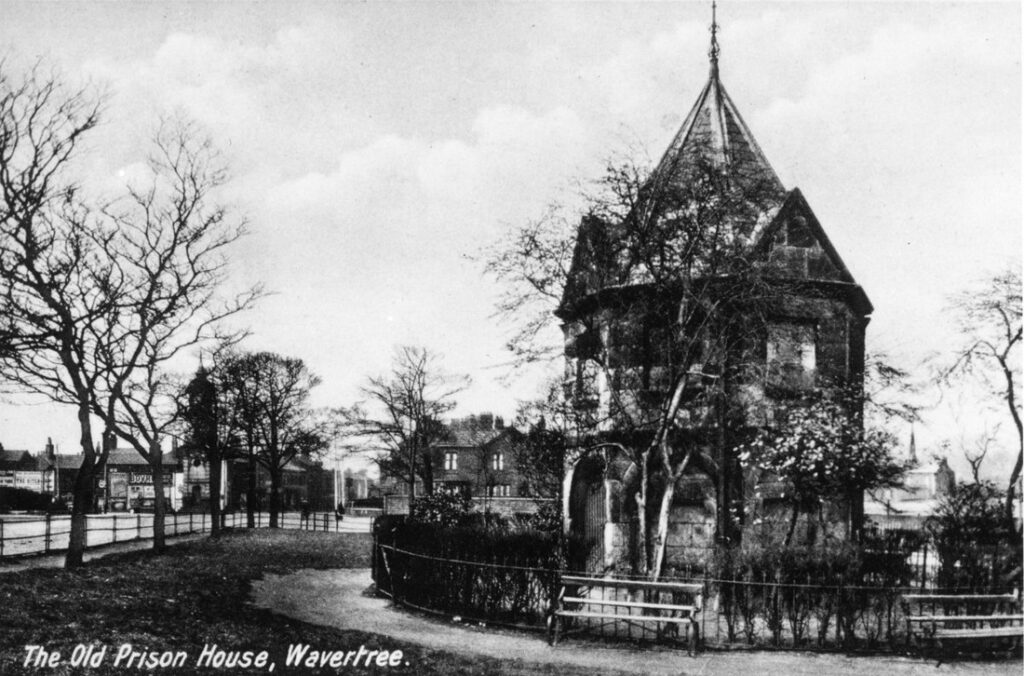
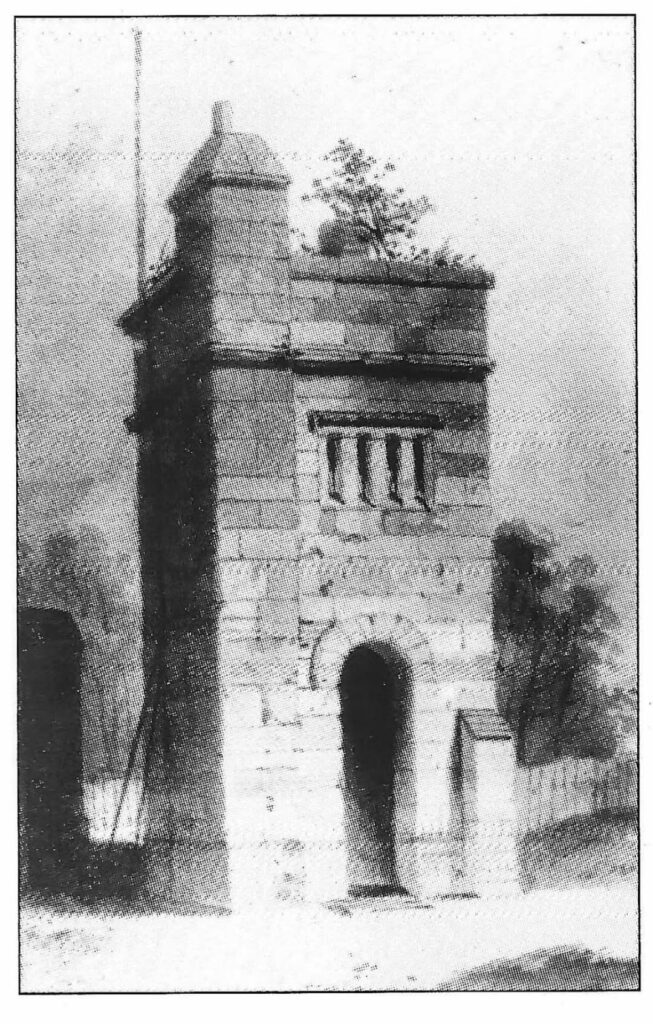
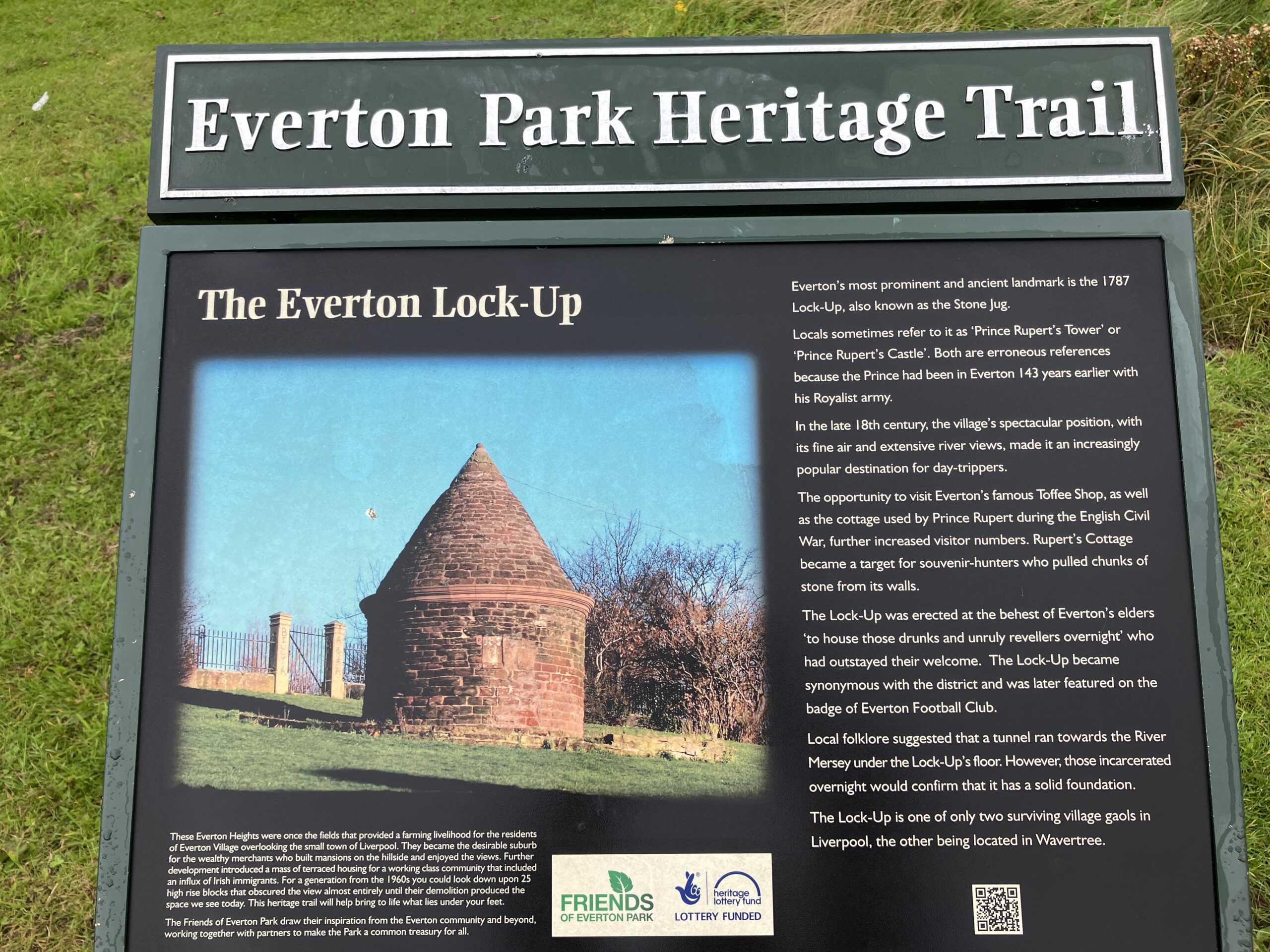
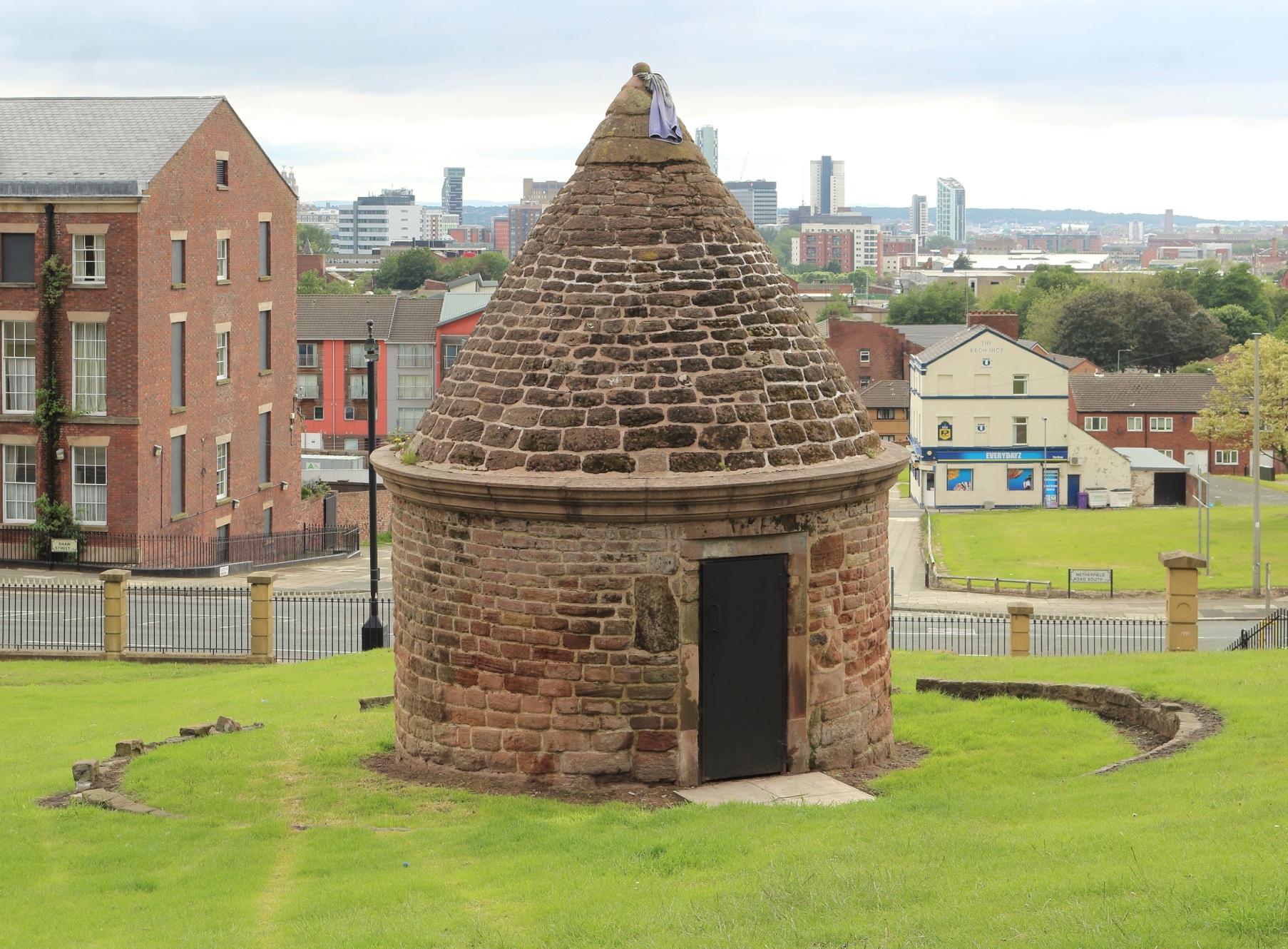
The buildings were simplistic, without facilities, and usually comprised of a small room with a single door, often without a window, or with a narrow slit at best. Most lock-ups were stone-built with a tiled dome or spire as a roof. Only two survive in Liverpool, both Georgian grade II listed buildings; Wavertree lock-up on the former village green, and the Everton lock-up on Everton Brow in Netherfield Road.
Opened in 1787, the Everton lock-up has been given numerous nicknames during its existence. Syers for example records it was sometimes referred to as the Bridewell, Stewbum’s Palace, the Roundhouse, or the ‘Round Jug.‘ (Stewbum being a colloquial reference for an offender, or the drunk and disorderly, having to stew on their backsides in a cold dark lock-up for the night).
But most ludicrous nickname is ‘Prince Rupert’s Tower.’ The building was erected 143 years after Prince Rupert’s Royalist Army was encamped close by during the Siege of Liverpool in 1644. This was the time of the First Civil War, and Prince Rupert and his army made their preparations on Everton Brow to attack the Parliamentarian garrison in Liverpool Castle. As for the lock-up, neither he or any of his men ever saw the building, let alone set foot in it.
More from Mr Syers;
The bridewell is a mere stone-jug or watch-box, a diminutive building, and, as regards its interior, a dark, damp strong-hold, for the temporary reception and incarceration of the unruly, the vicious, and the criminal, that is, until a magistrate’s committal consigns such unfortunate human beings to a more fit and congenial place of confinement. This apology for a bridewell ought to be taken down it is a discredit to the community, whose good taste and liberal views, in most cases, lead them to do what is proper and needful ; a trifle assessed on the annual value of each one’s property would serve to erect, on a small scale, a suit of buildings on this eligible spot. The place would be highly convenient for the purpose; and the buildings ought to be sufficiently spacious for Everton’s parochial and constabulary affairs to be conducted therein. But it would only cost what might be termed a bagatelle, so far as regards the wealthy settlers and land-owners of Everton, were they to erect a handsome and spacious suit of buildings, which should comprise a set of offices for the high-constable and tax-collector; a secure, convenient, and decent jail or bridewell; and a good sized apartment, capable of containing the inhabitants of the township, whenever they might be convened together, to deliberate on public affairs. At present this appeal, or recommendation, may be disregarded and inefficient, but, as the poet says, though in a different sense, ” to this, good people, ye must come at last;” for awhile the convenience of Kirkdale jail may delay the execution of the plan, but, of a certainty, it is destined at some time or other to be done.
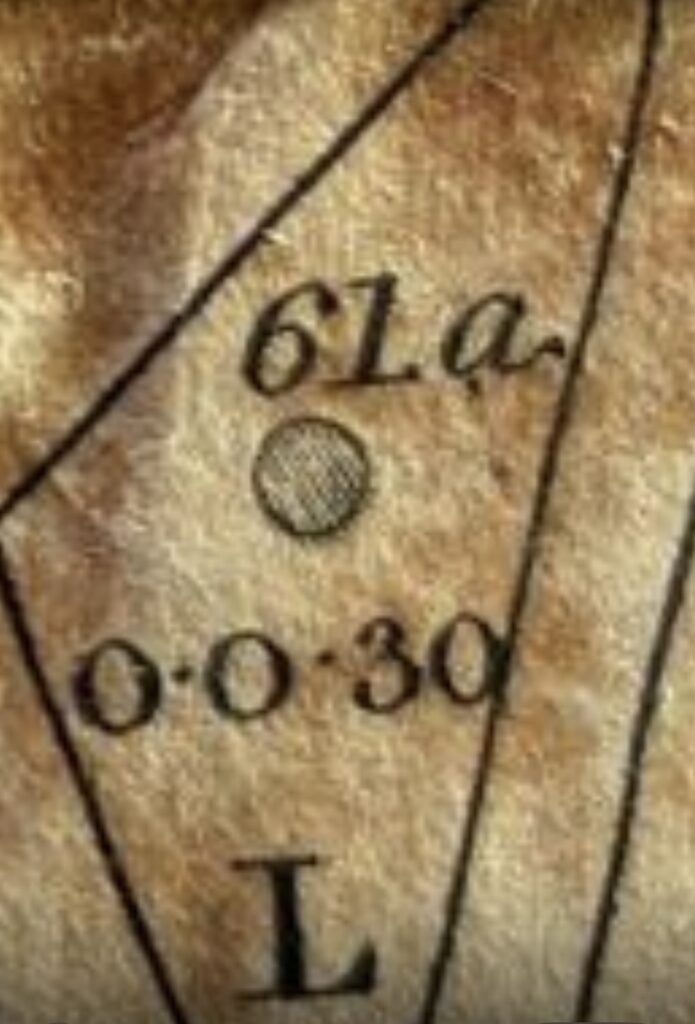
A vague rumour has latterly arisen touching this spot of land, locality 61a; it has been indirectly and distantly hinted, that it was given to the town-ship on a condition, viz., that a church should be built thereon, but there is no evidence in the archives and public documents of the township which leads to such a conclusion; on the contrary, on consulting the town’s book, it appears that on the 18th April 1770, Mr. Seacombe sold this land, with a barn that stood on it, to the township for £20; but there is no stipulation made in the deed of transfer that a church should be built thereon, nor does the word church appear in any part of the transaction. Syers, Everton, p.311
In fact, the lock-up may never have existed if a Mr Rose had got his way,
In the year 1770, the place where the bridewell now stands was sold by the late J. Seacome, Esq. to the township for £20, it was at this place that the late Joshua Rose, Esq. proposed to build a church at his own expense, the foundation of which was commenced; but the project was given up, as is supposed, in consequence of a want of concert between the constituted authorities of Everton and Mr. Rose. Syers, Everton, p.354
Syers again wrote,
In the year 1787 a stone-jug or bridewell was built on the triangular patch of land lately walled and railed in, at the upper part of Everton-brow: such an erection might have suited the temper and the exigencies of the times in which it was erected; but how does it suit the temper and the exigencies of these enlightened times?
Surely this apology for a stronghold will be razed to the ground, and its site occupied with something more becoming and useful and what would be the expense? so little, indeed, that it would be scarcely felt, comparatively speaking, by such a wealthy and respectable community as that of Everton; whilst the advantages to be attained would be great and many.
Somewhere hereabout, a large hall should be erected, in which the inhabitants of the township might conveniently and comfortably assemble; the chief constable’s offices, and even his residence, might be fixed here: a spacious bridewell might also be constructed, with the additional advantage of having secure archives in which to deposit the township’s books and documents of value and interest. This last, indeed, is a necessary measure, for it is astonishing how few documents are now to be met with, touching Everton’s public affairs; that many documents exist, there is little doubt, but most of them are missing, and in all likelihood they lie neglected among the family papers of persons formerly in authority at Everton; yet so supine, or so suspicious, are the representatives of those persons, that all applications to recover, or even to inspect them, with scarcely a single exception, are and have been unsuccessful.
In the year 1787, it was ordered that a lamp should he fixed on the bridewell; but the measure was never carried into effect. It somewhat ludicrously occurred, that the high constable of Everton and his fidus Achates were the first prisoners who were incarcerated in this bridewell. It seems that the worthy smith of Everton, the late Mr. George Mercer, had a wag of a journeyman, who, under the directions and superintendence of the constable, placed locks, bolts, and other fastnesses on this petty-prison; the smith had just completed his work, when the constable and his deputy stepped into the interior to examine the fitness and correctness of things; but no sooner had the men of authority graced the interior with their presence, than the merry blacksmith turned the key of the outer lock, and leisurely walked away.
The bawls and calls of the guiltless creatures, thus unexpectedly shut up in “durance vile,” brought some stray passengers to hear their sad plaints, who, on receiving due instructions, proceeded to the smith’s laboratory, and with proper petition or remonstrance, there and then made, softened the heart of Vulcan’s mischievous son for after treating the applicants with a joke to fit the occasion, he presented the key of the dungeon, and forthwith the entrapped men of authority were set free.
Syers, Everton, (1830) p. 356
………………………………………………………………………………………………….
The Everton Badge and Crest
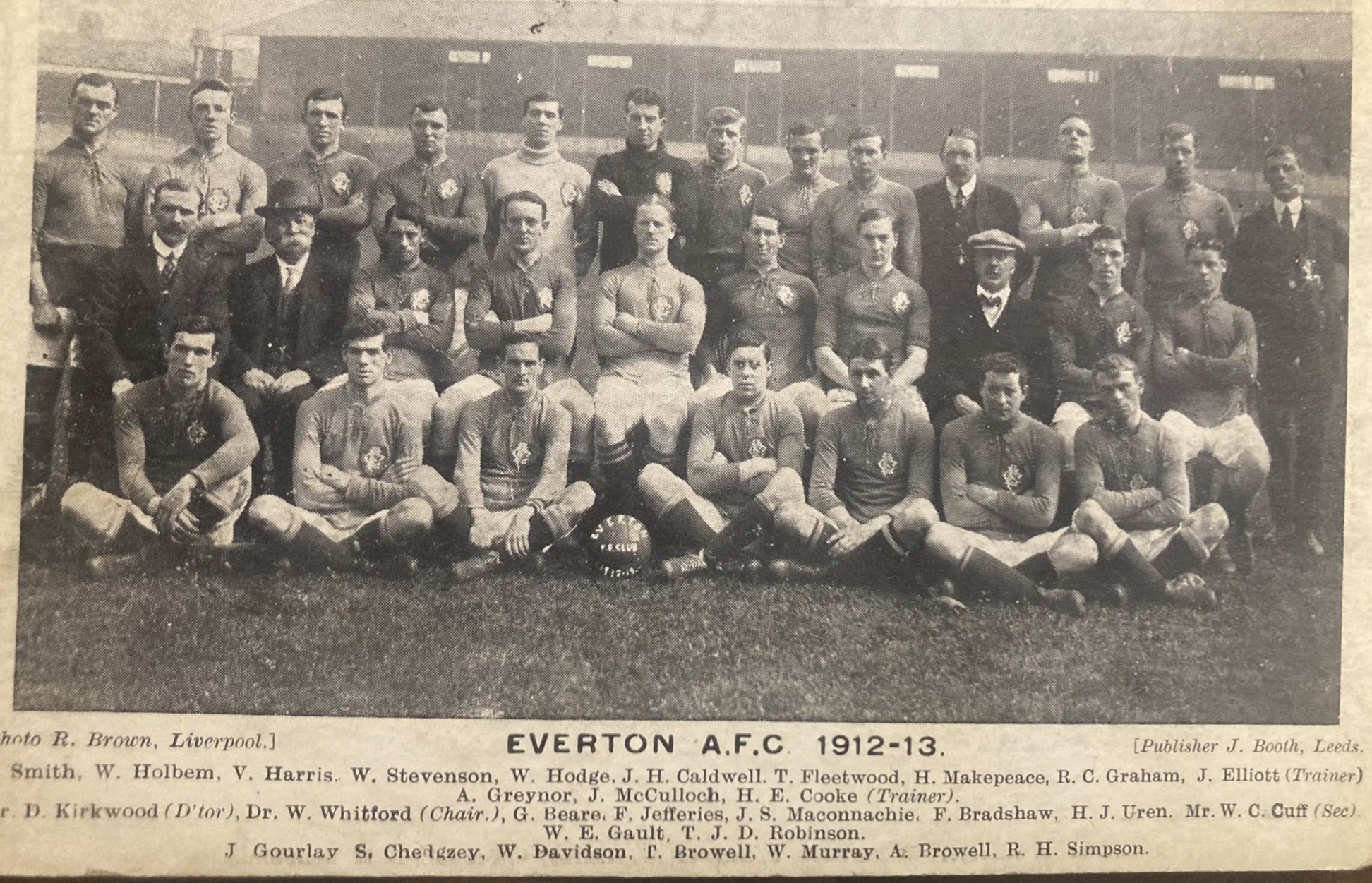
The first evidence of a crest on Everton’s shirts comes from 1912-13 – a monogramme on a white shield. This became a regular feature in the Twenties, albeit reversed. It is unknown if this was a regular feature in 1912-13 or just a one-off.
.
1920/21 — 1929/1930
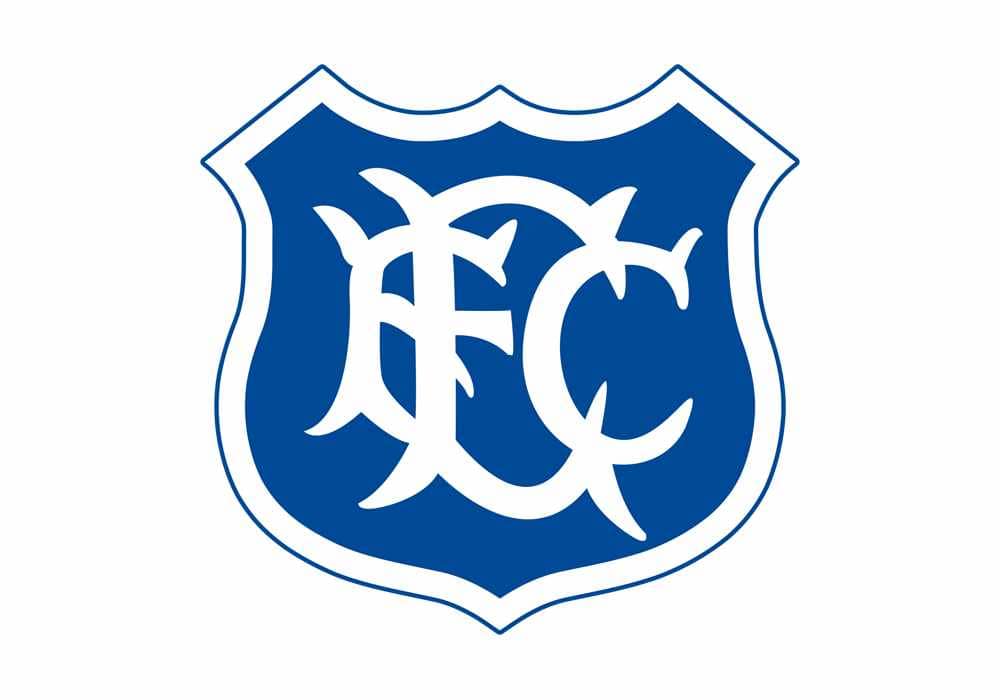
THE first official crest to feature on an Everton shirt was introduced in the 1920/21 season. The white letters ‘EFC’ were entwined upon a blue shield and it remained on the shirt until the end of the 1928-1929 season.
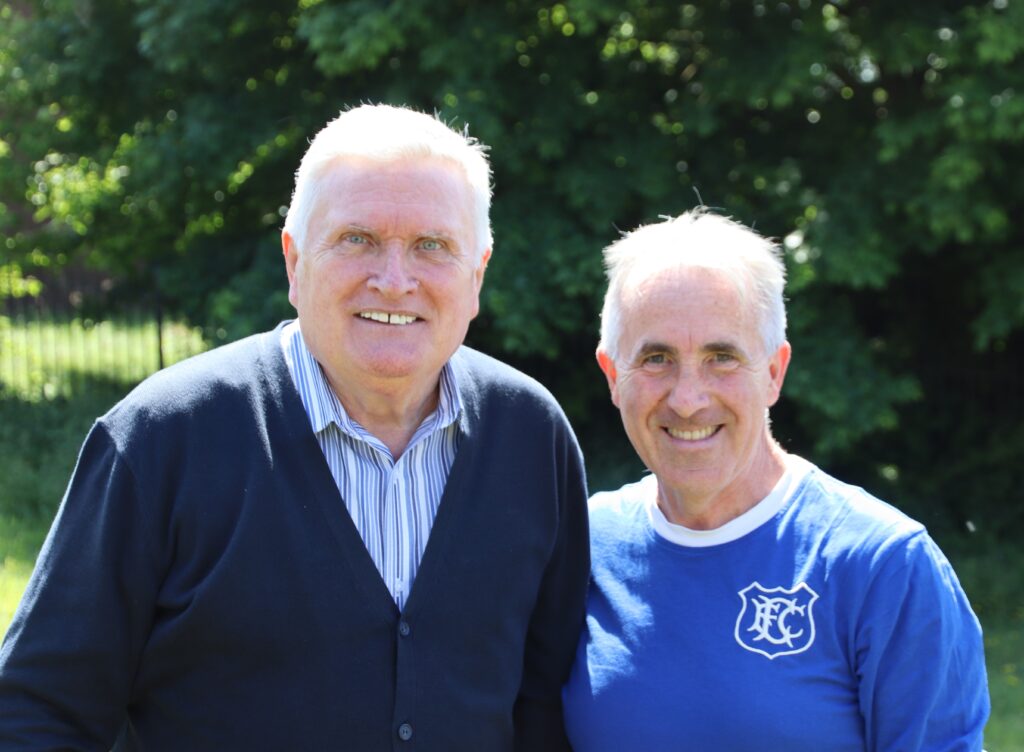
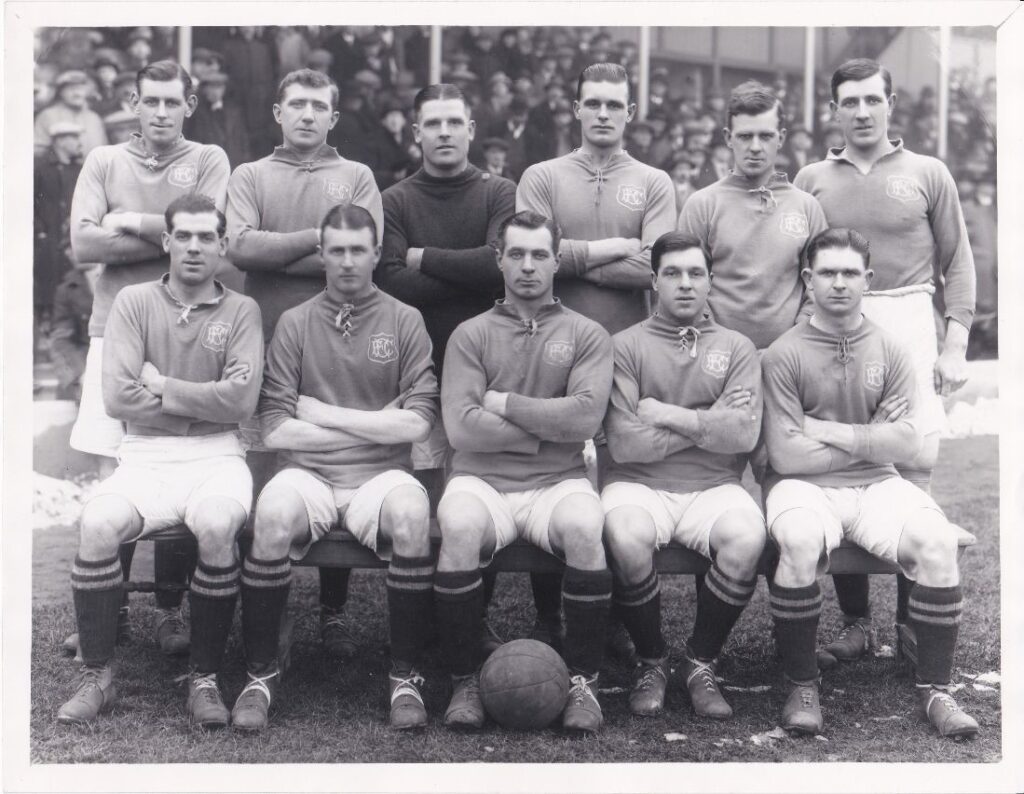
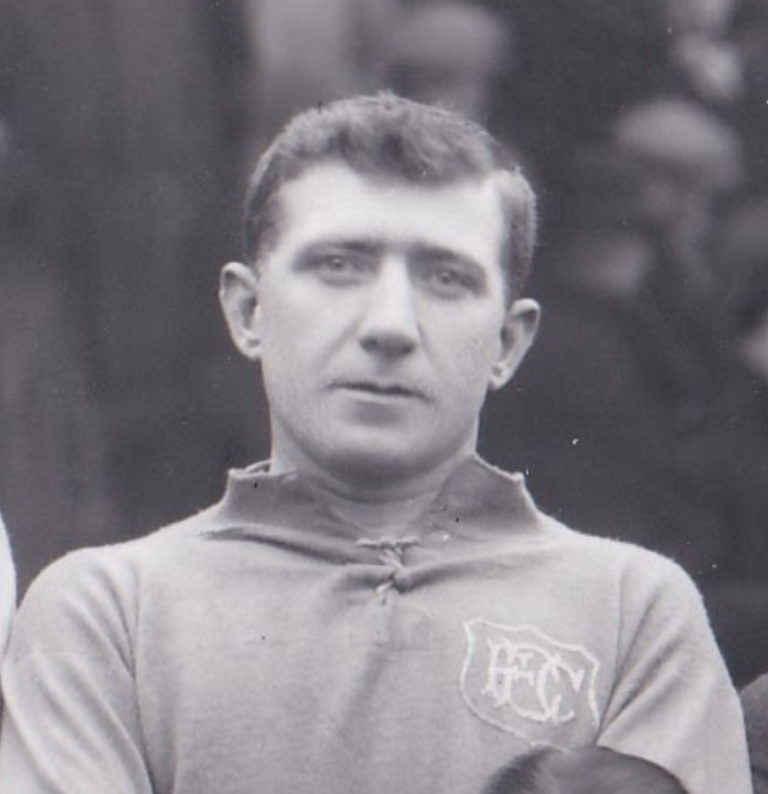
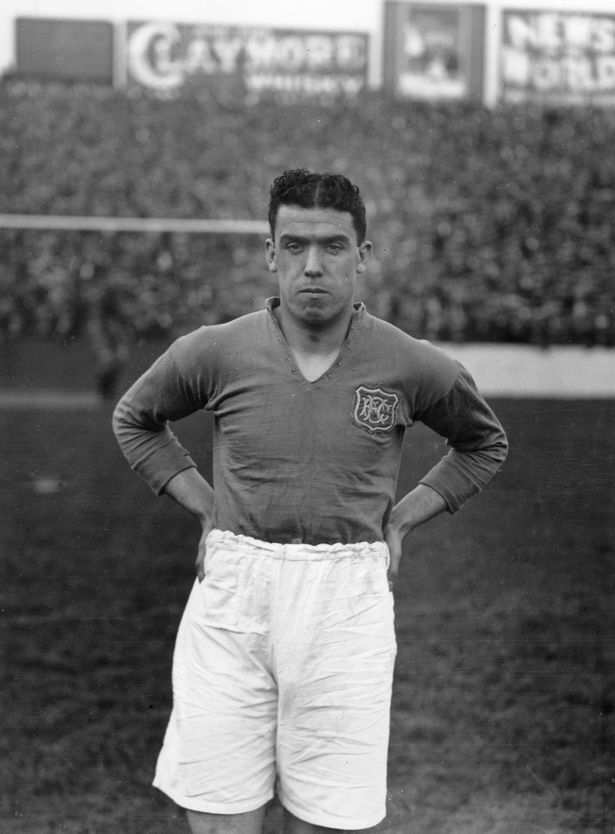
(Above: Tommy Fleetwood with the new crest in 1920, and Dixie Dean pictured before a match against West Ham United in 1928)
1928-29 was the final season a crest would be seen on Everton shirts until the 1970s. The following season saw
Everton switch to a modern kit – paler blue round neck shirts, with stripes on the cuffs. Sadly, it coincided with relegation, although Dixie Dean still managed 23 goals in 25 appearances. (It looks like his head is photoshopped 1930s style on this photo). The following season the promoted club again played in plain shirts, although the badged shirt was still used for training.
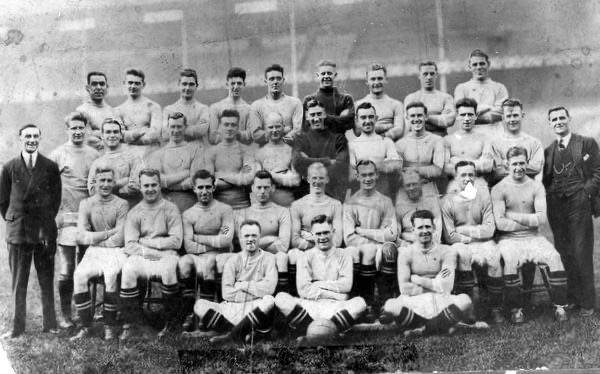
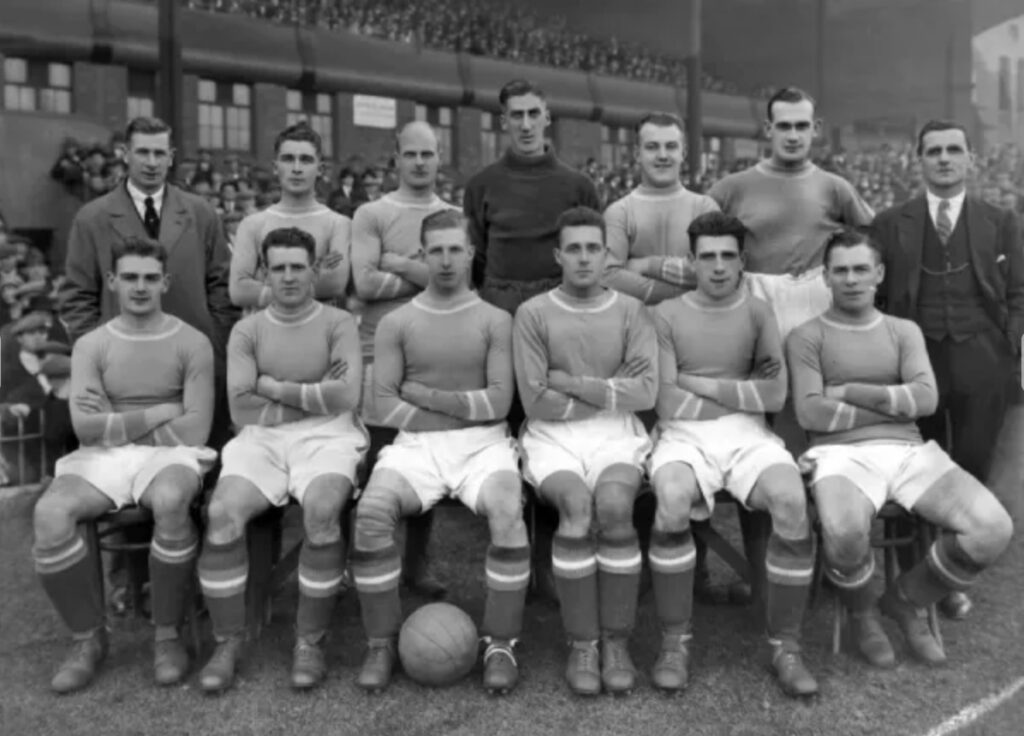
Back (left to right): Kennedy, Robson, Cresswell, Davies, White, Griffiths. T.Cook (trainer).
Front: Ted Critchley, Wheldon, Wilkinson, Martin, Jimmy Stein, O Donnell.
.
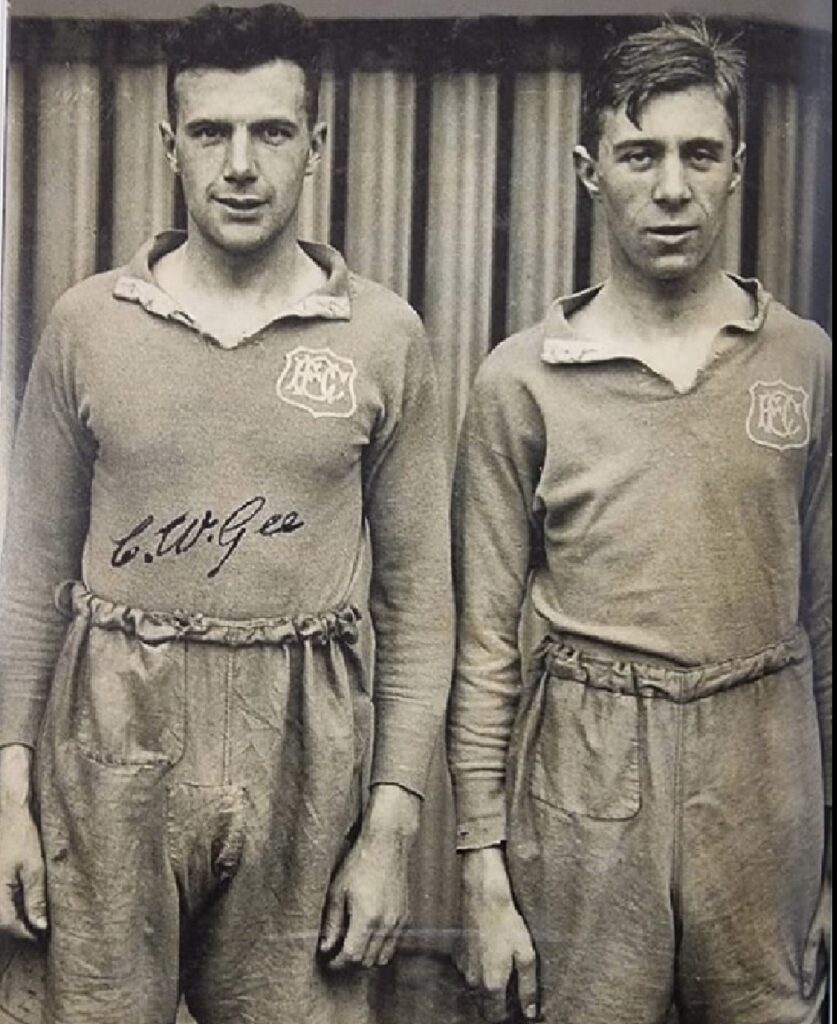
The shirt still in use; Charlie Gee and Cliff Britton in their 1930s training kit.
(David France/The Everton Collection)
………………………………………………………………………………………………….
The New Club Crest 1938
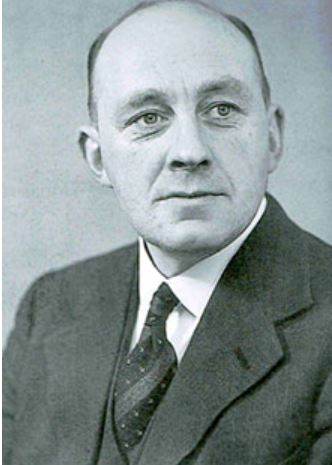
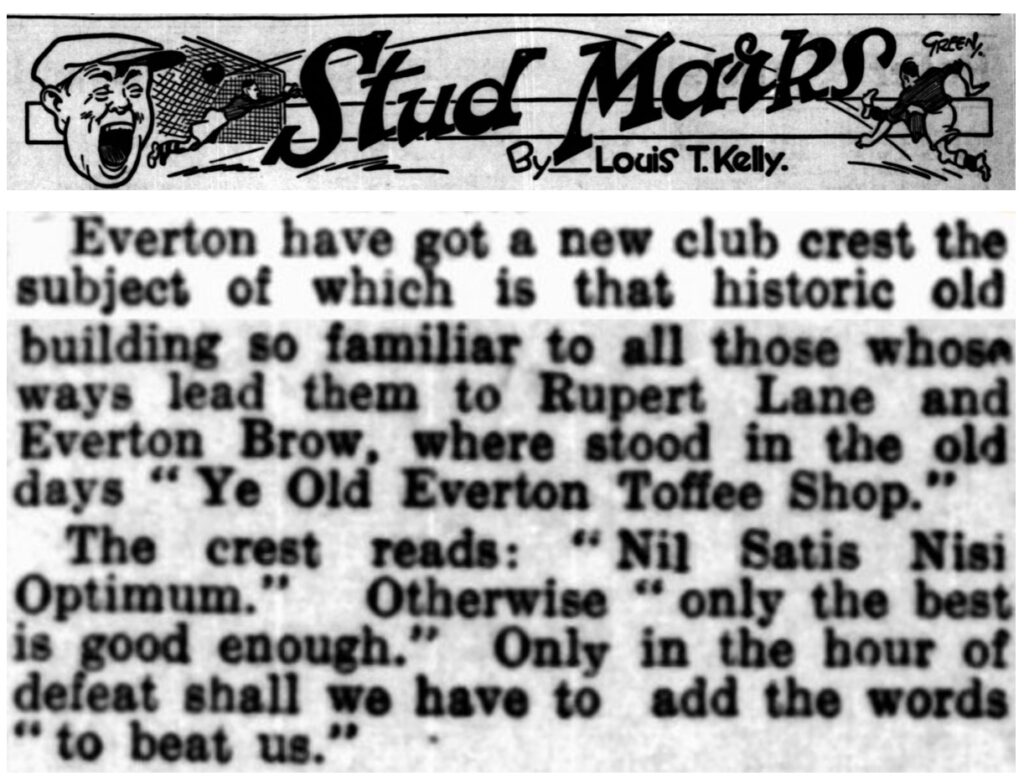
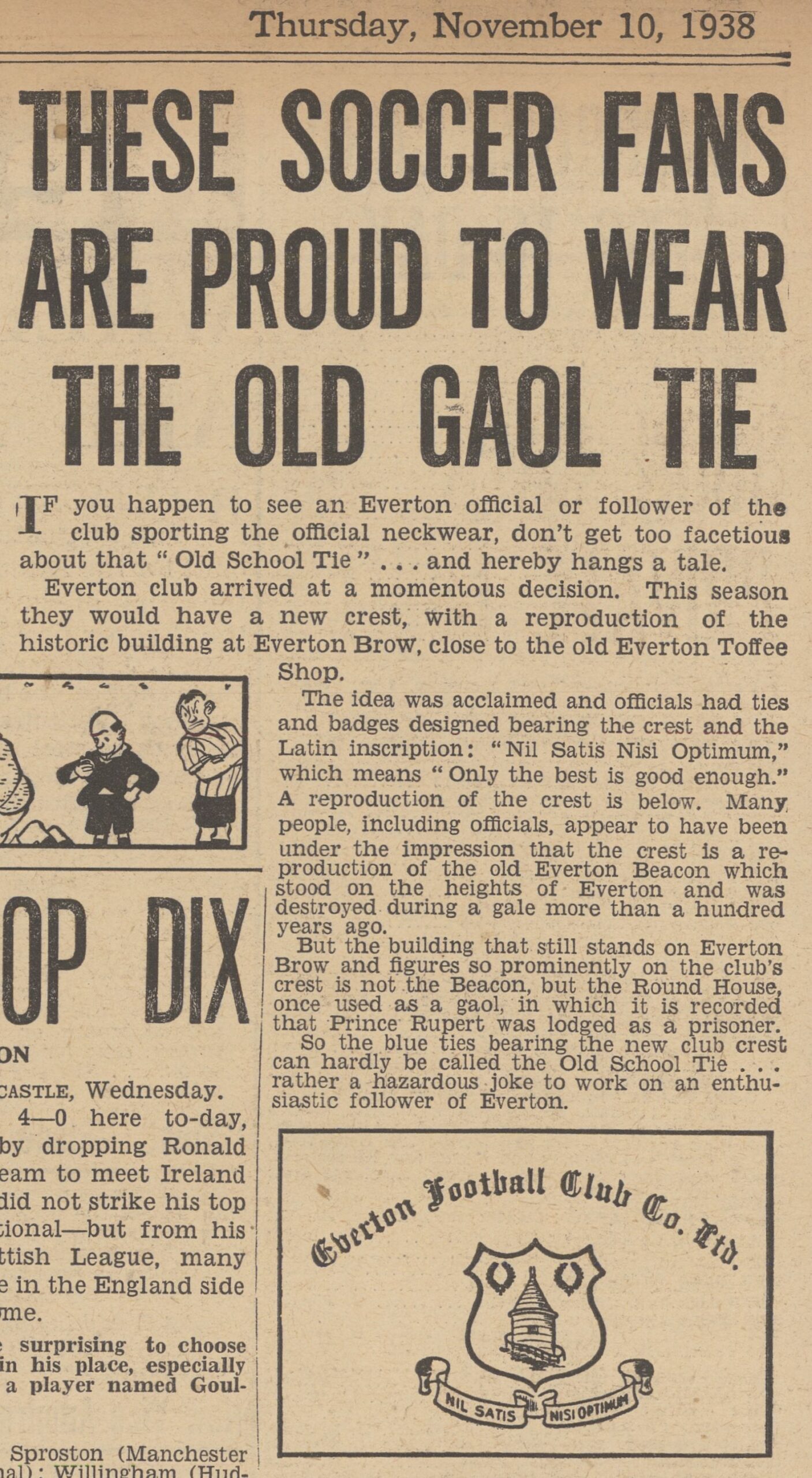
In 1938, the Everton Board discussed the idea of having new club ties featuring a crest that would be clearly identifiable to the club. Initially, the ties would be for Board members only, but this was soon scotched when it was realised the potential income to be made from club merchandise. This was still a time when the majority of fans, almost exclusively male, wore a jacket, shirt, and tie on the terraces.
Club Secretary, Theo Kelly, was tasked with coming up with a suitable design. “I was puzzling over it for four months,” Kelly later said. “Then I thought of a reproduction of the ‘Beacon’ which stands in the heart of Everton.” Of course, this was not the actual ‘Everton Beacon’ as it was long gone by 1803, although he may have seen a print or illustration, and as shown earlier, it was actually on Everton FC letter headings in the 1890s. The beacon Kelly was referring to was, of course, the Everton Lock-Up, which he would have been very familiar with. It was undoubtedly a local landmark – and as the Board had requested, would be clearly identifiable with Everton.
Kelly, or his graphic designer, decided with a measure of artistic licence, to give it the appearance of having a small look-out tower, and added a window and some form of railed staircase. To the enclosing shield were added Imperial Roman laurel wreathes. Known as the corona triumphalis (Crown of Triumph) they symbolised supreme victory and divine favour. This was the highest Roman military honour, a wreath of laurel or gold leaves awarded to victorious generals during a formal Triumphal procession. In keeping with the Roman theme, Kelly added an unfurled scroll bearing the Latin maxim Nil Satis Nisi Optimum – ‘nothing but the best is good enough.’ ‘
Just as he had taken inspiration from the local landmark, was it possible he had trawled back through a few programmes to find an idea for the motto? Take a look at this page from the Everton v Bolton programme of 27 November 1926. Under ‘Items Worth Recording’ is “Nothing But The Best” is due to the loyal supporters of our club. Now, that could just be a throwaway line used on a regular basis to keep any fanbase onside, but looking at it in the context of Kelly spending four months looking for inspiration, could this have been his source?
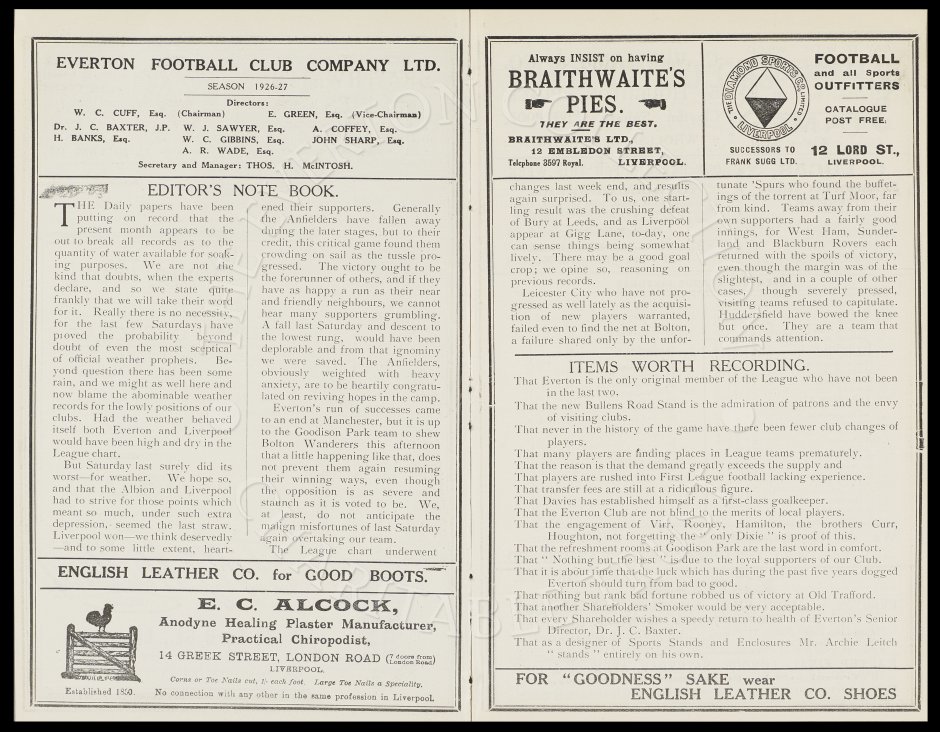
Under ‘Items Worth Recording’ (towards the bottom right), is “Nothing But The Best” is due to the loyal supporters of our club.’
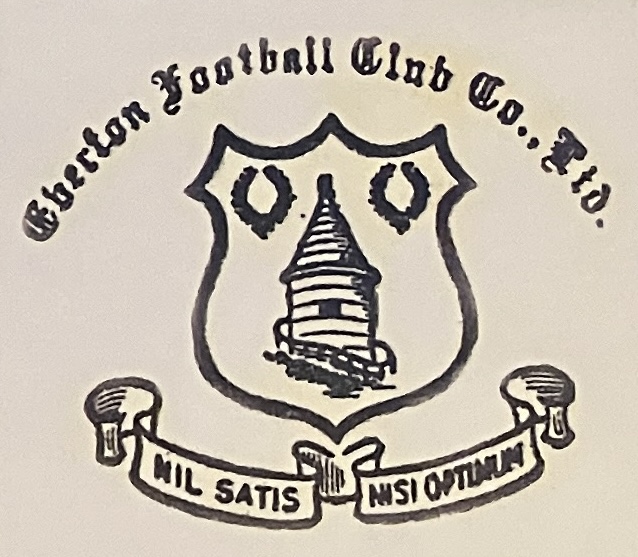

Club Crest: It was agreed that the Secretary make arrangements to have the new crest incorporated where required,
at the conclusion of the season.
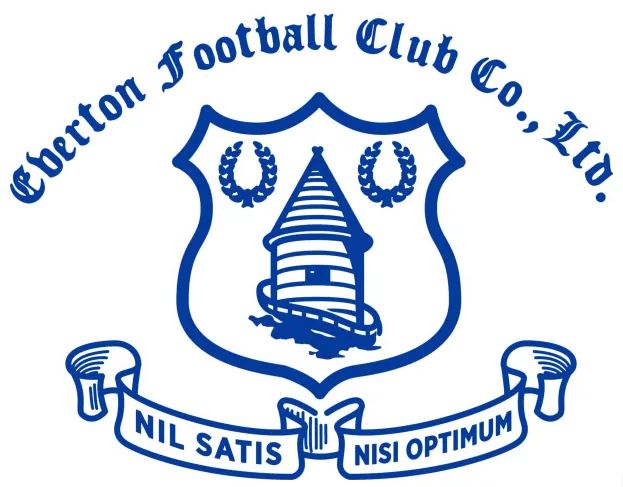
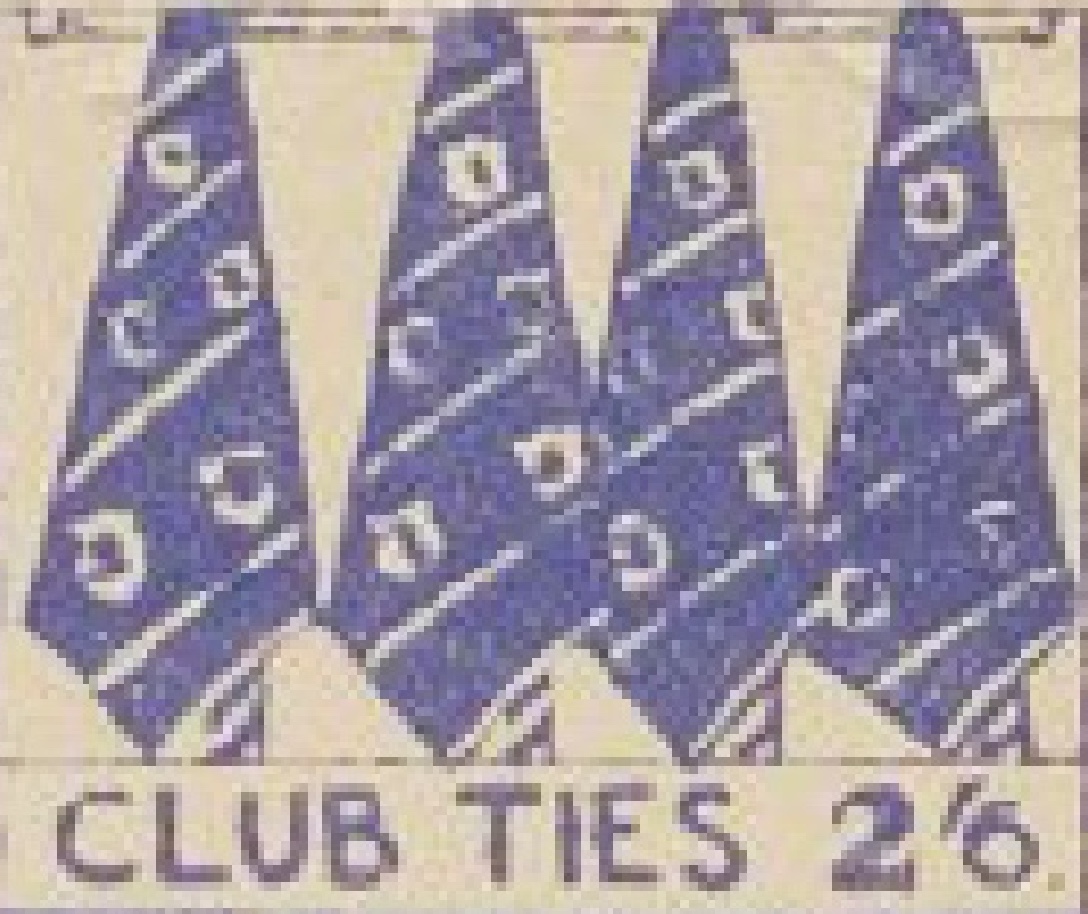
By March 1938, his design had be accepted, and the Board Minutes show Kelly was to get on with making arrangements to have the ties produced with the new crest by the end of the season. By the start of the new season – 1938-39 – small badges were also to be made available by the club. This was the extent of the marketing of the new crest, and by the start of the following season the country was at war, and there would be little time for such frivolities.
Given how ubiquitous the crest is today, appearing on all manner of merchandise and memorabilia, and official club paraphernalia and infrastructure, it is perplexing to the modern fan how the new crest barely raised a flicker of interest, and mainly consisted of a paragraph in the club programme. Even the circulated press release was just a footnote to more important matters on the field.
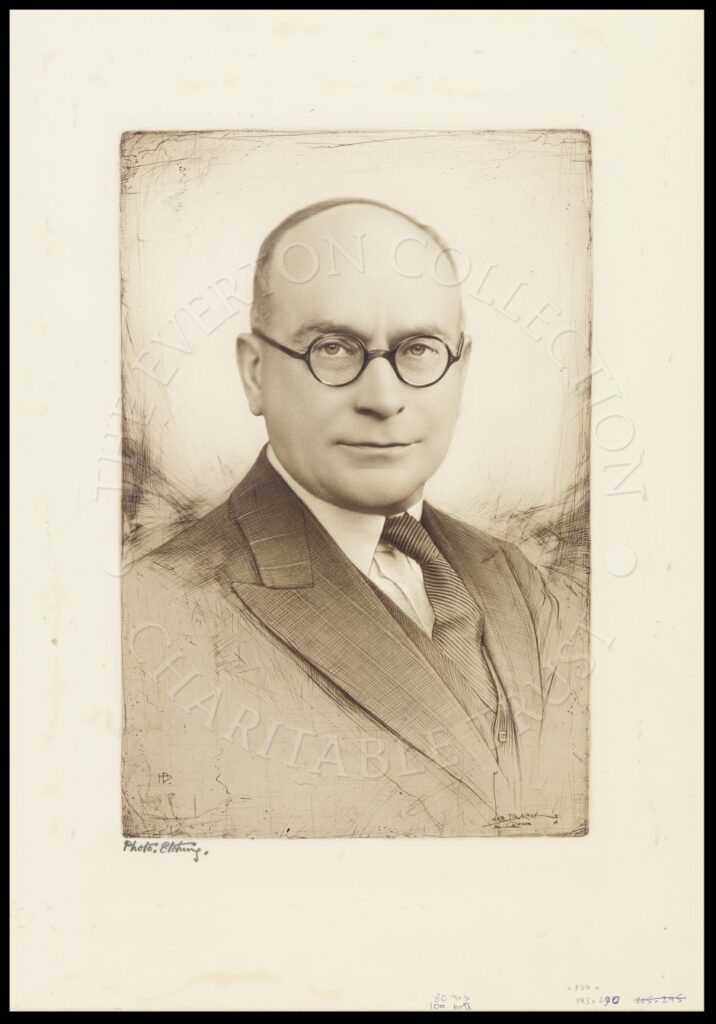
The ties were first worn by Kelly and Everton’s chairman, Mr E Green, on the first day of the 1938/39 season away at Blackpool.
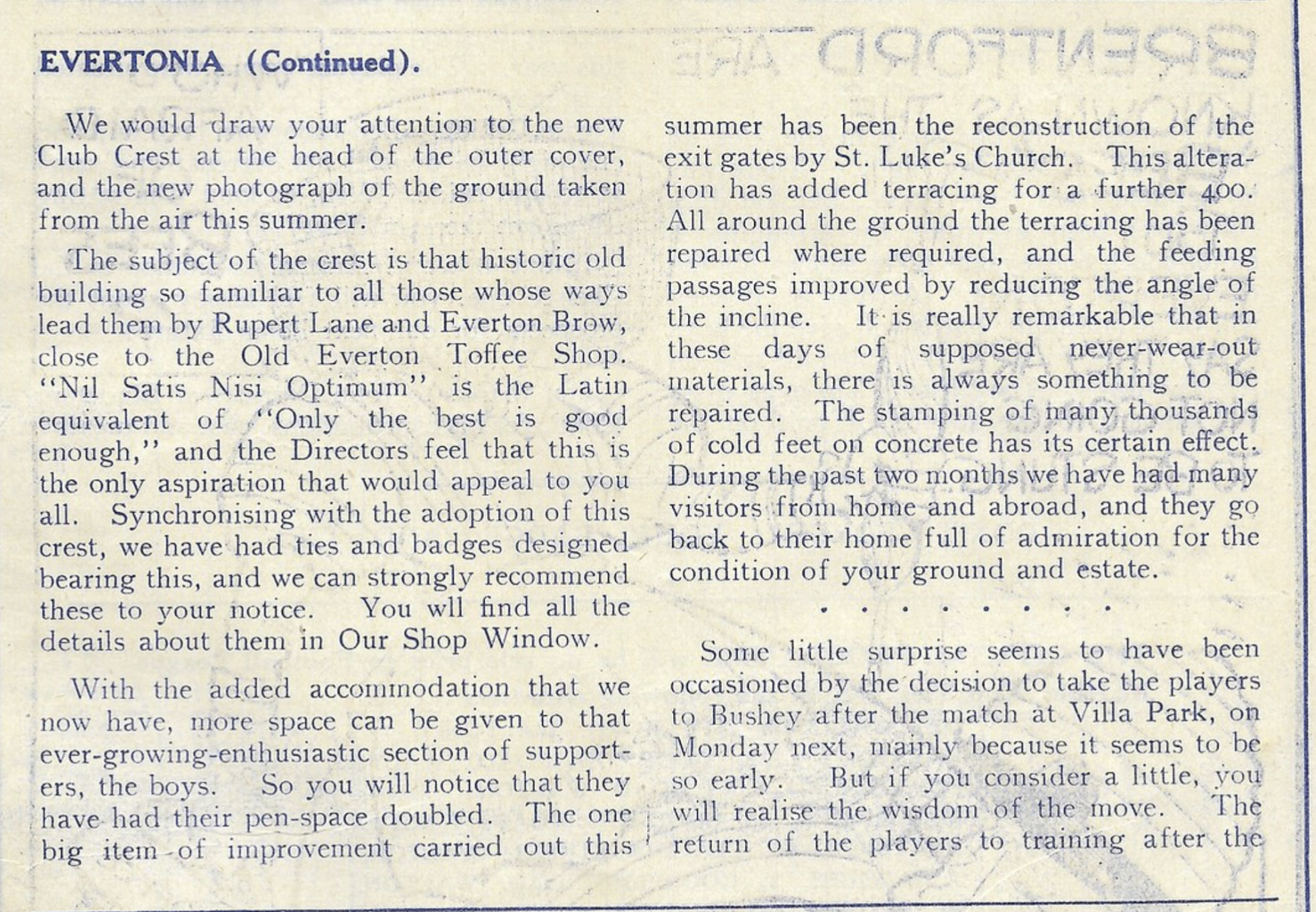
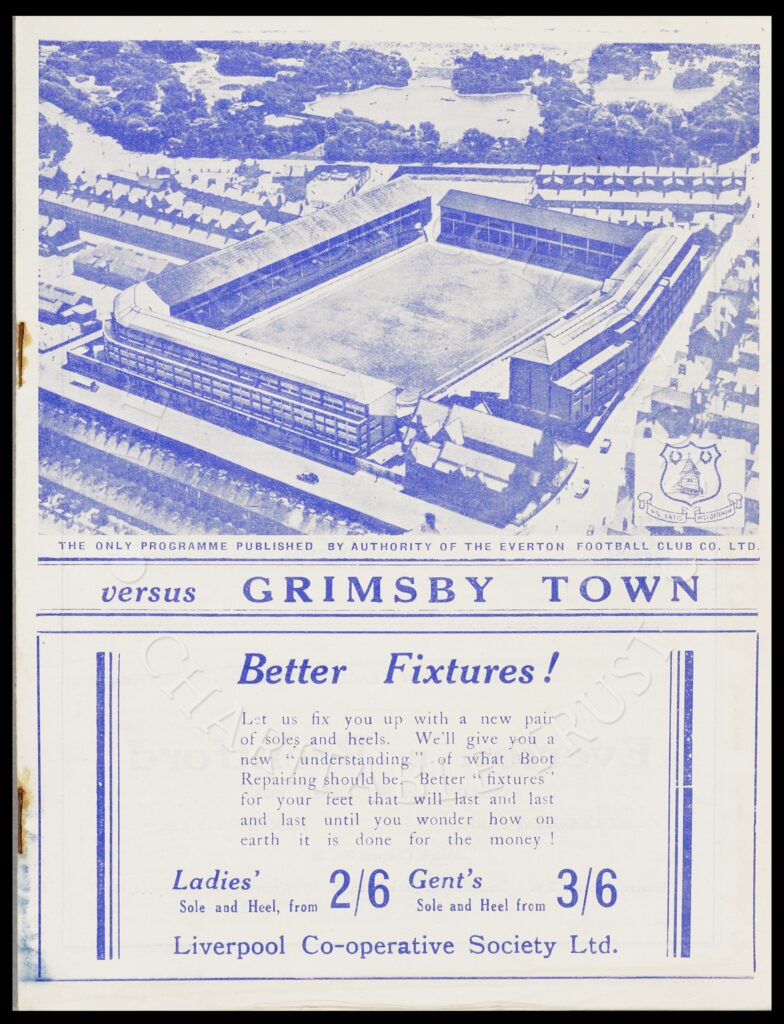
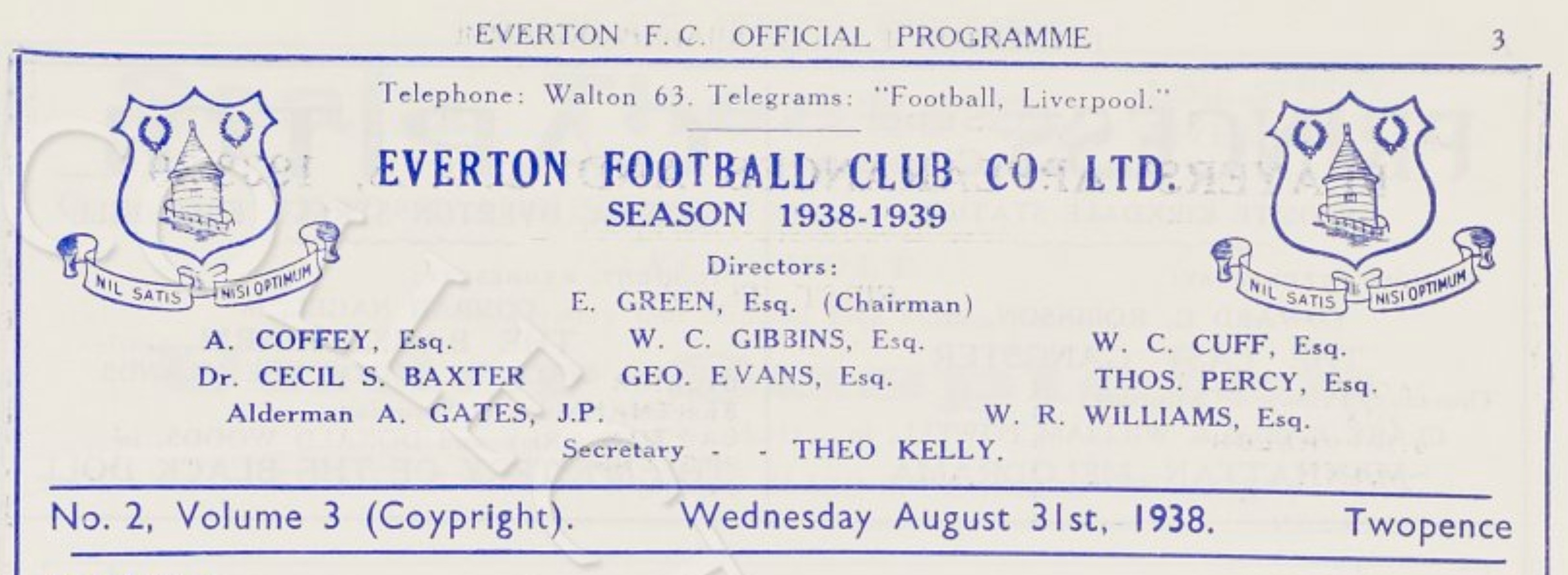
The first match day programme to feature to feature the new crest
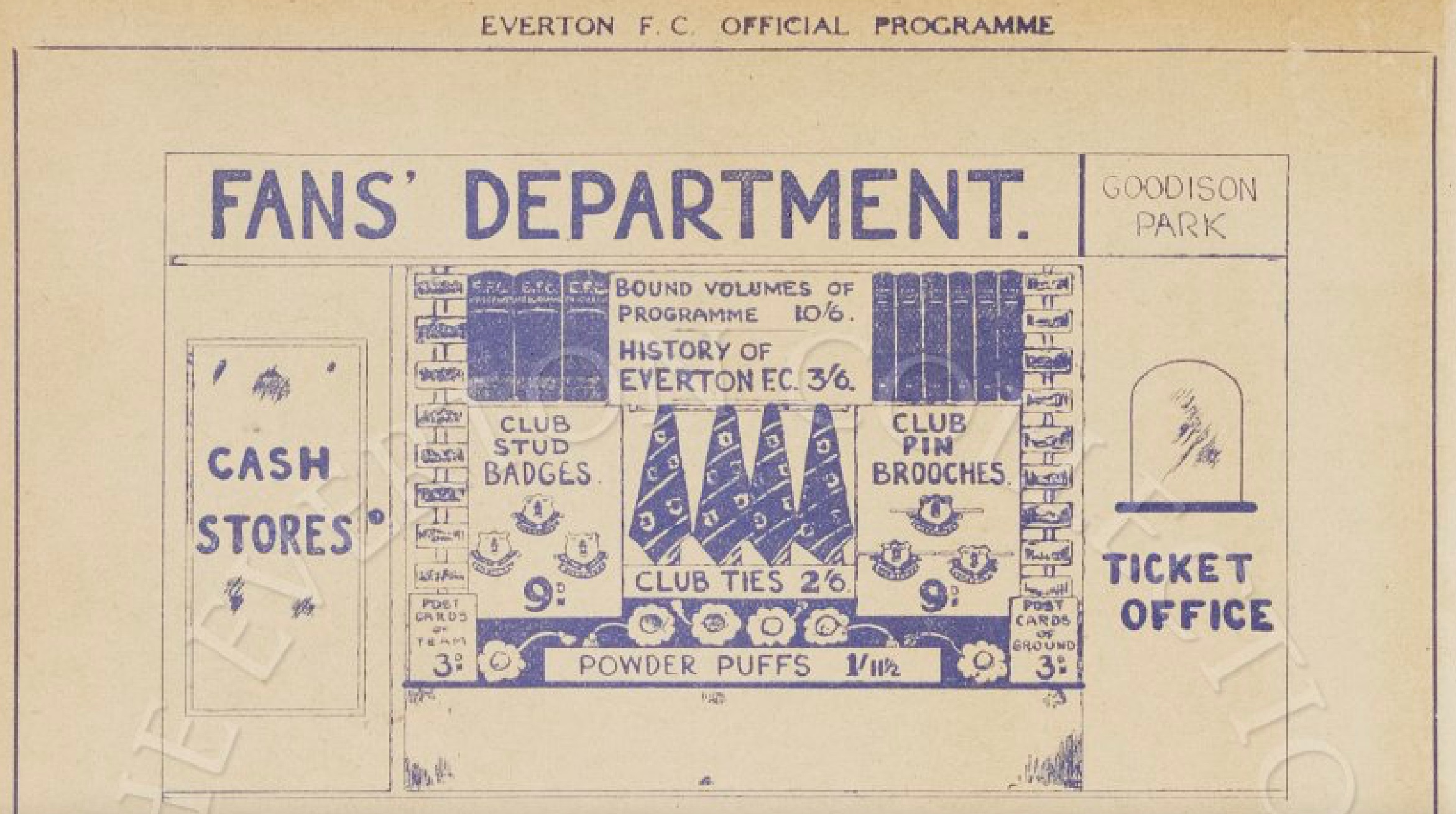
(All programme images from The Everton Collection)
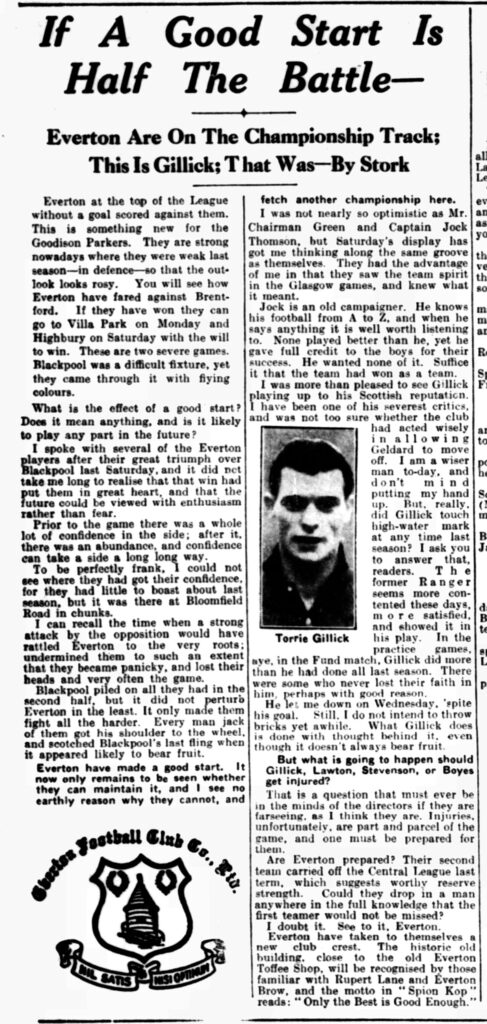
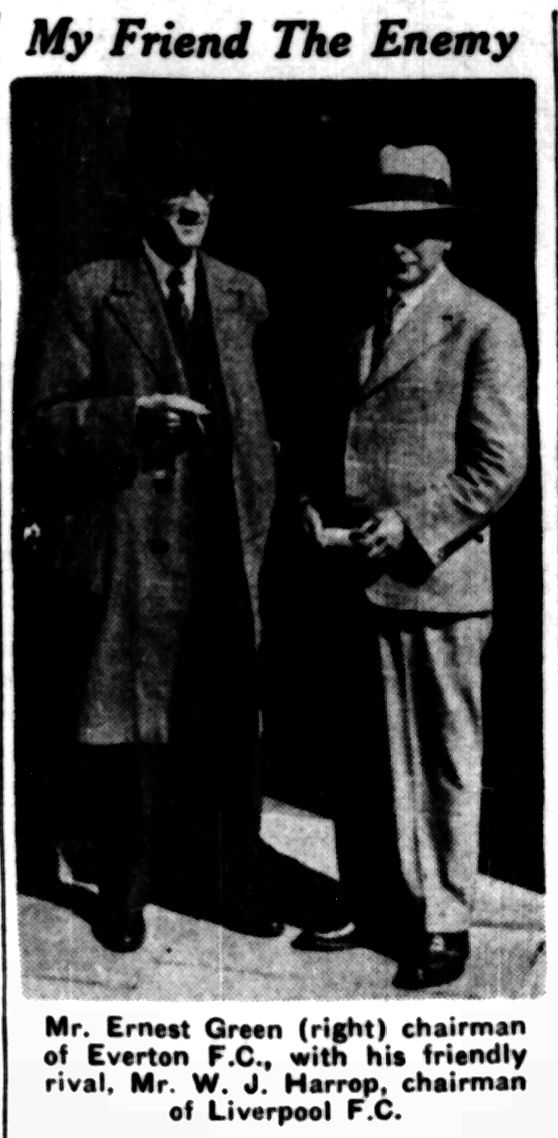
Could Chairman Ernest Green be sporting the new Everton tie? This inconclusive photograph was printed on the same page as the press release (left).
Liverpool Echo, 3 September 1938
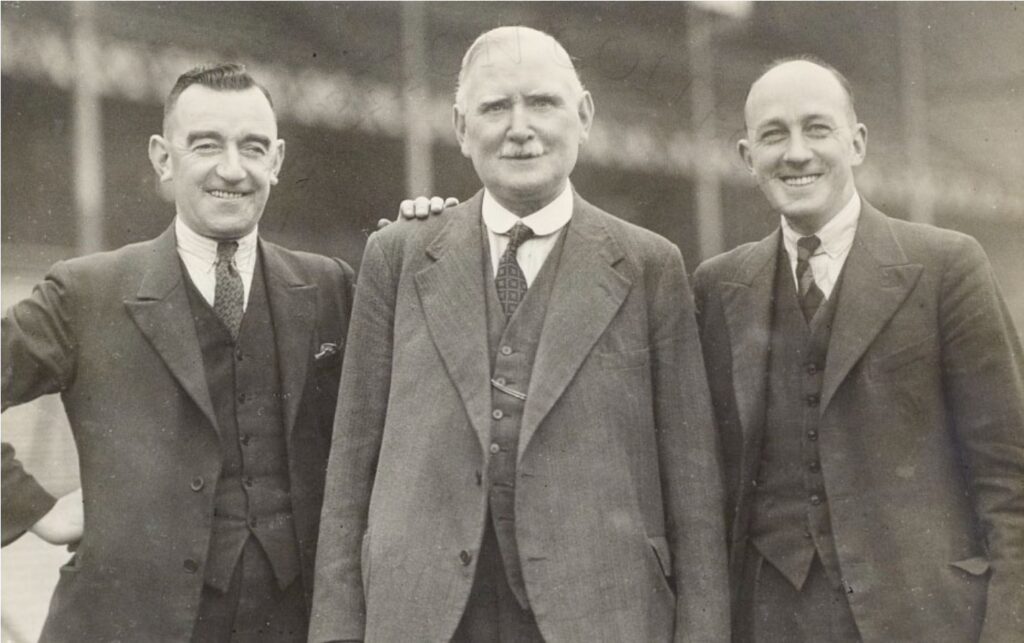
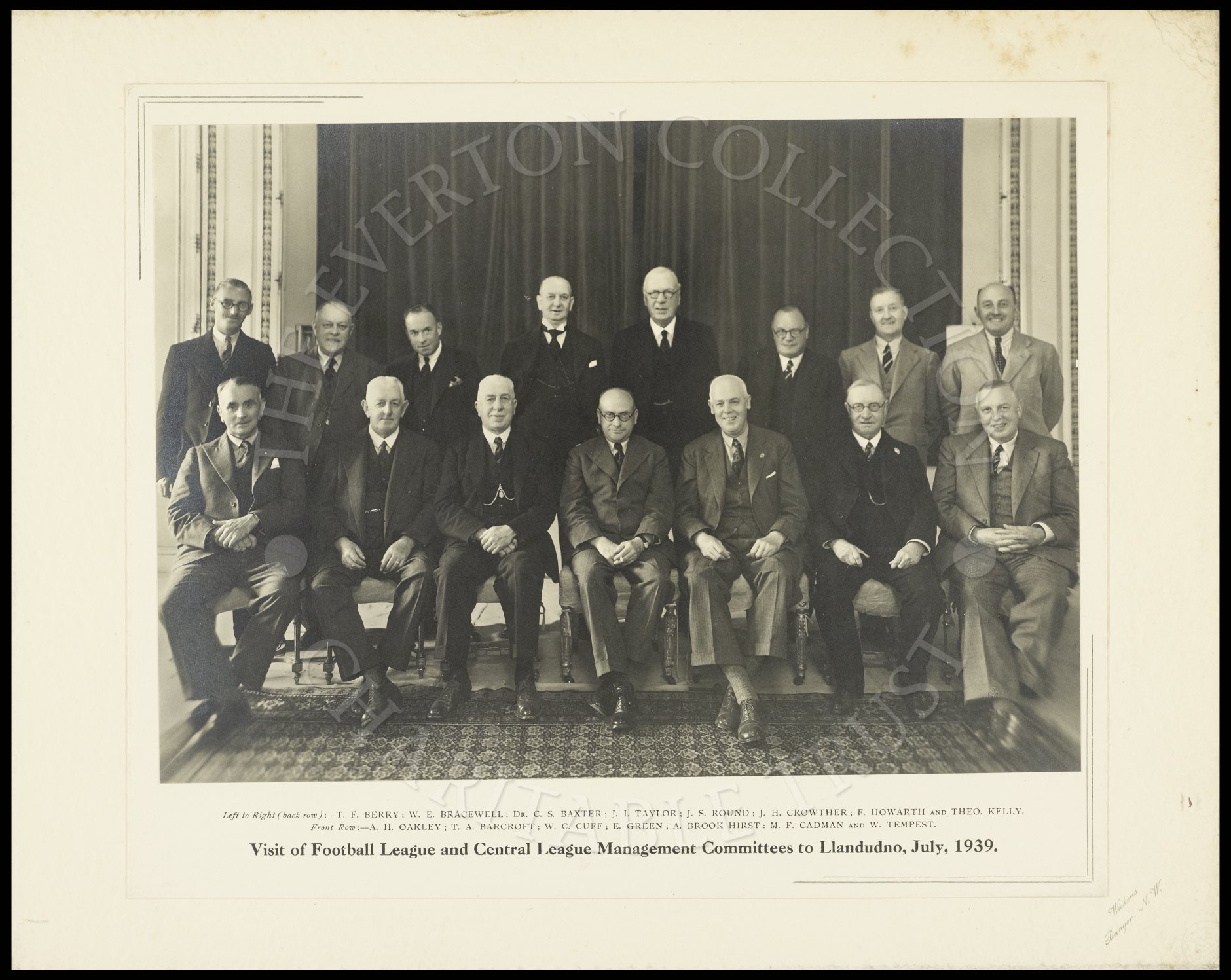
(The Everton Collection / Liverpool Record Office)
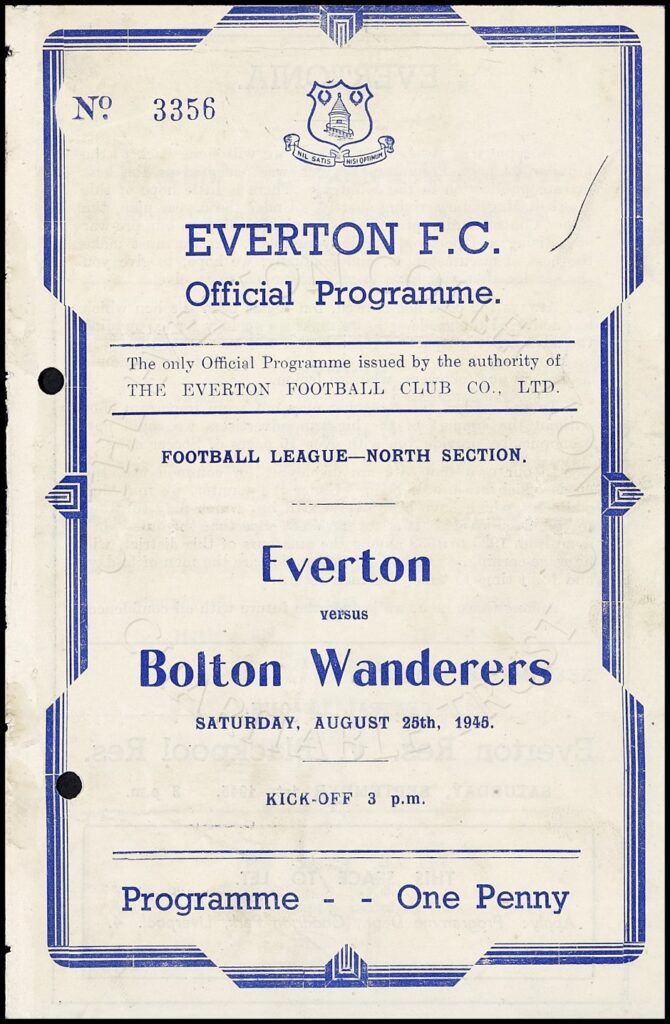
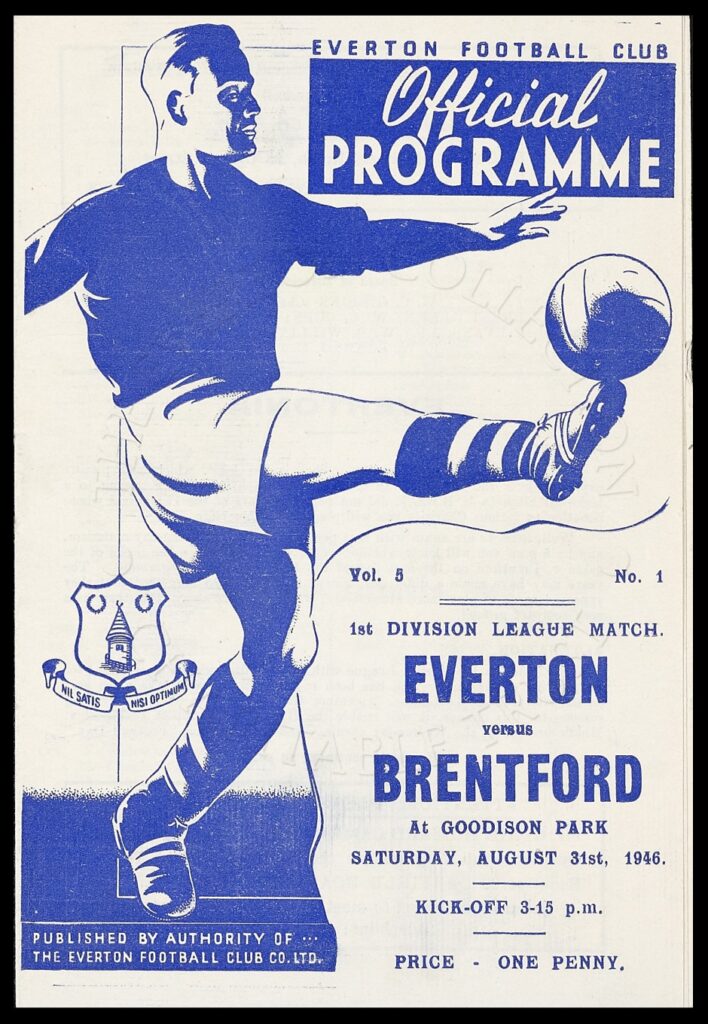
The crest was used on the front cover of the match programme immediately following the end of the war and the resumption of the league
…………………………………………………………………………………………….
The 1940s and 1950s
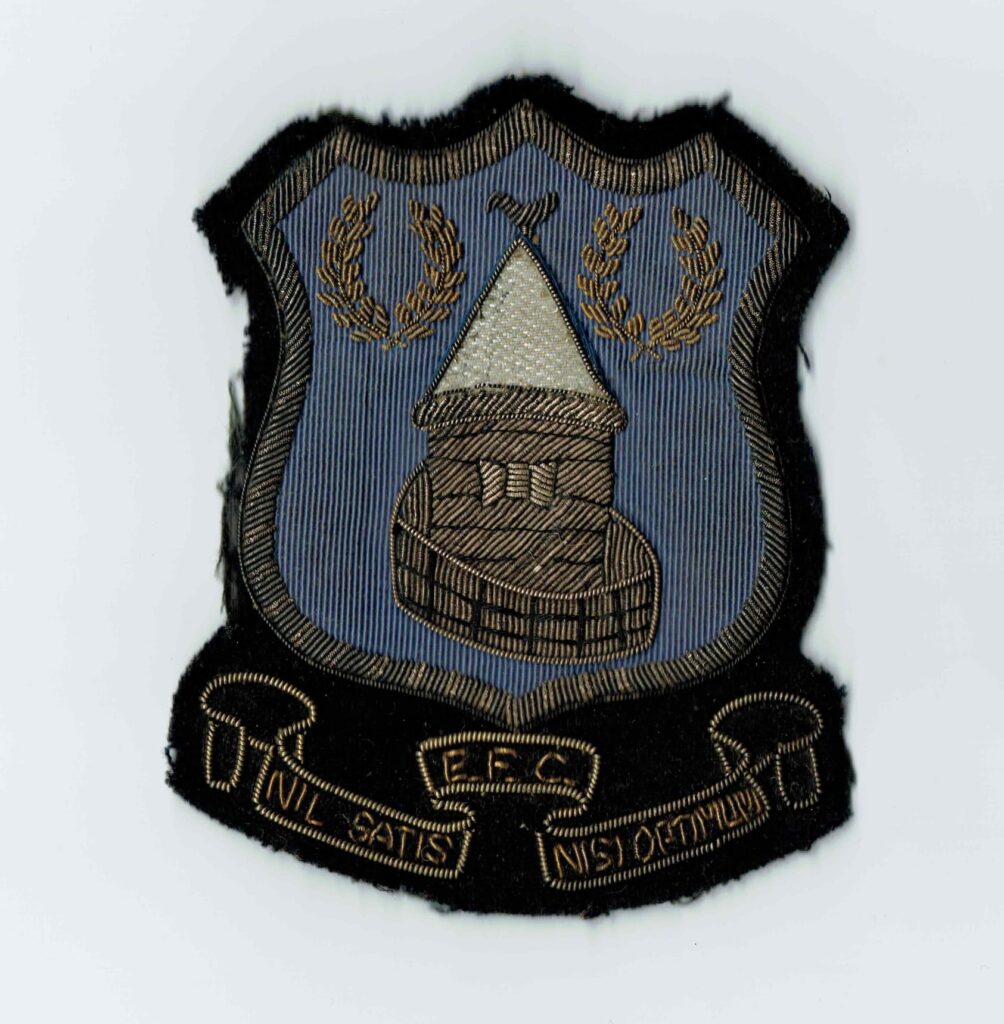
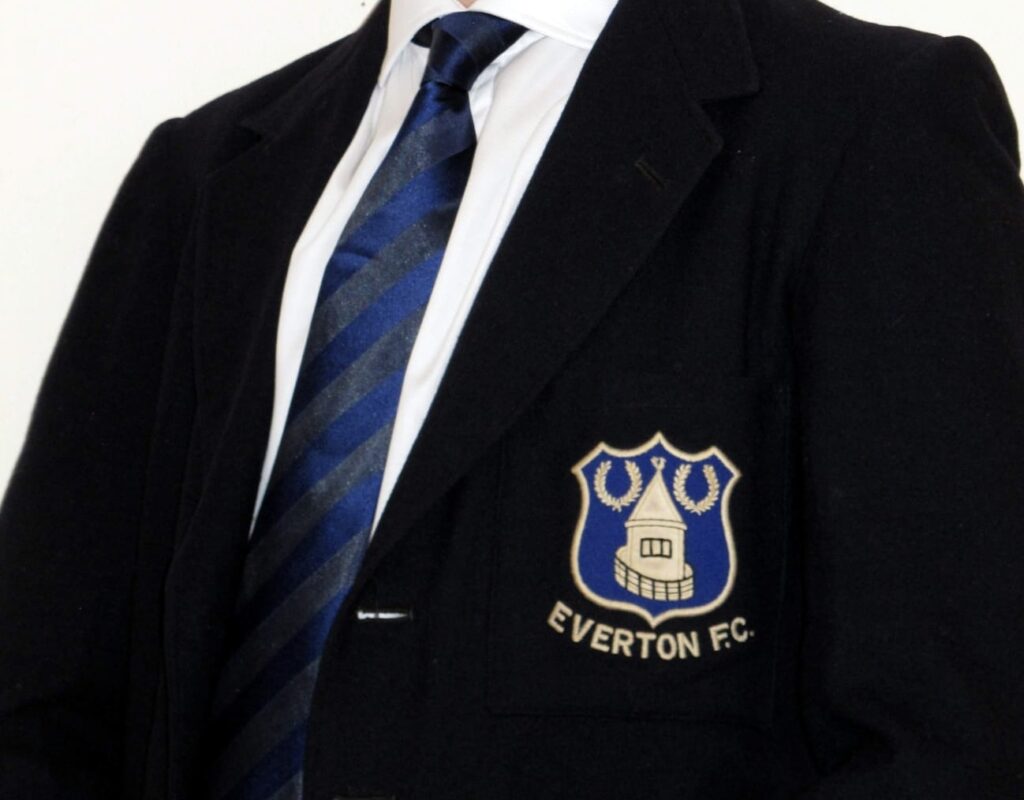
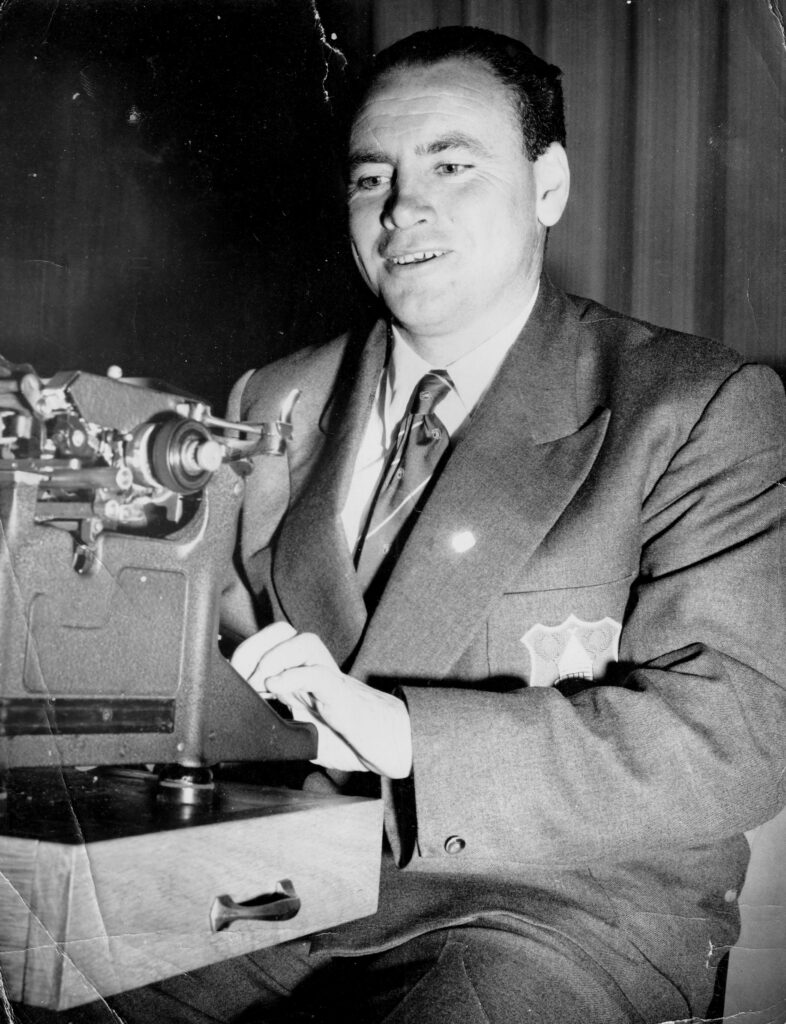
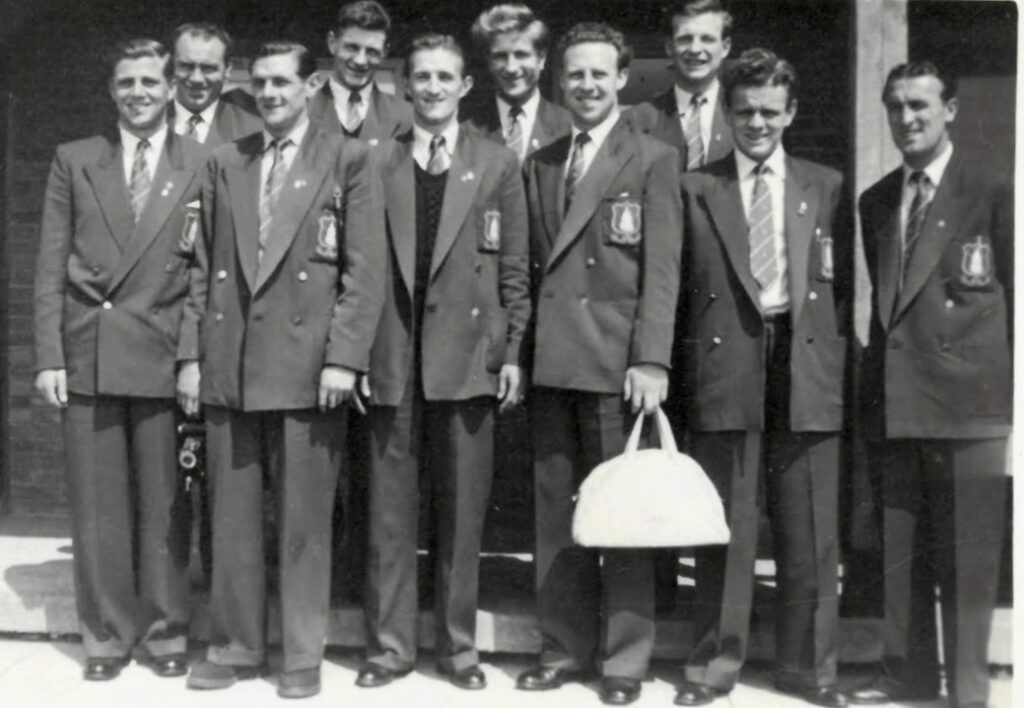
Although the crest would not feature on team jerseys throughout this period, it was adapted for use on club blazers, to the give team identity while travelling or on official engagements.
Below is the badge once worn by Everton striker Jimmy Harris, while right is that of T.G. Jones. (photos Rob Sawyer)
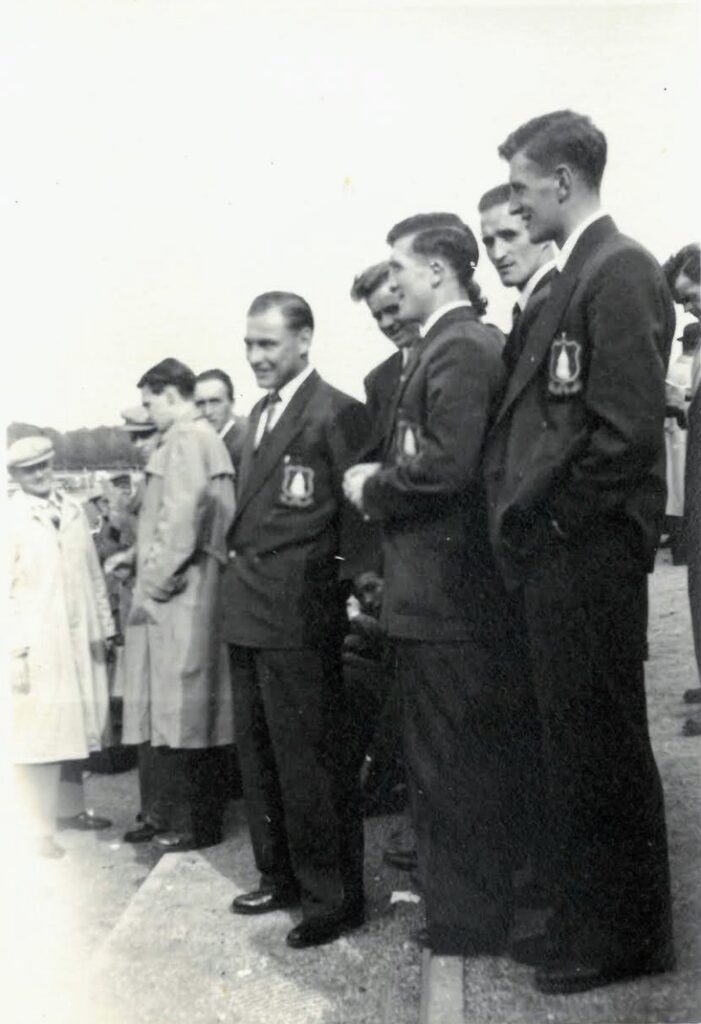
Left: Thought to be taken on tour in Sweden 1950.
Below: Peter Farrell at his typewriter, presumably writing his newspaper column c.1955
.
(photos: thanks to the Britton and Farrell families, and to Rob Sawyer for the copies)
.
…………………………………………………………………………………………….
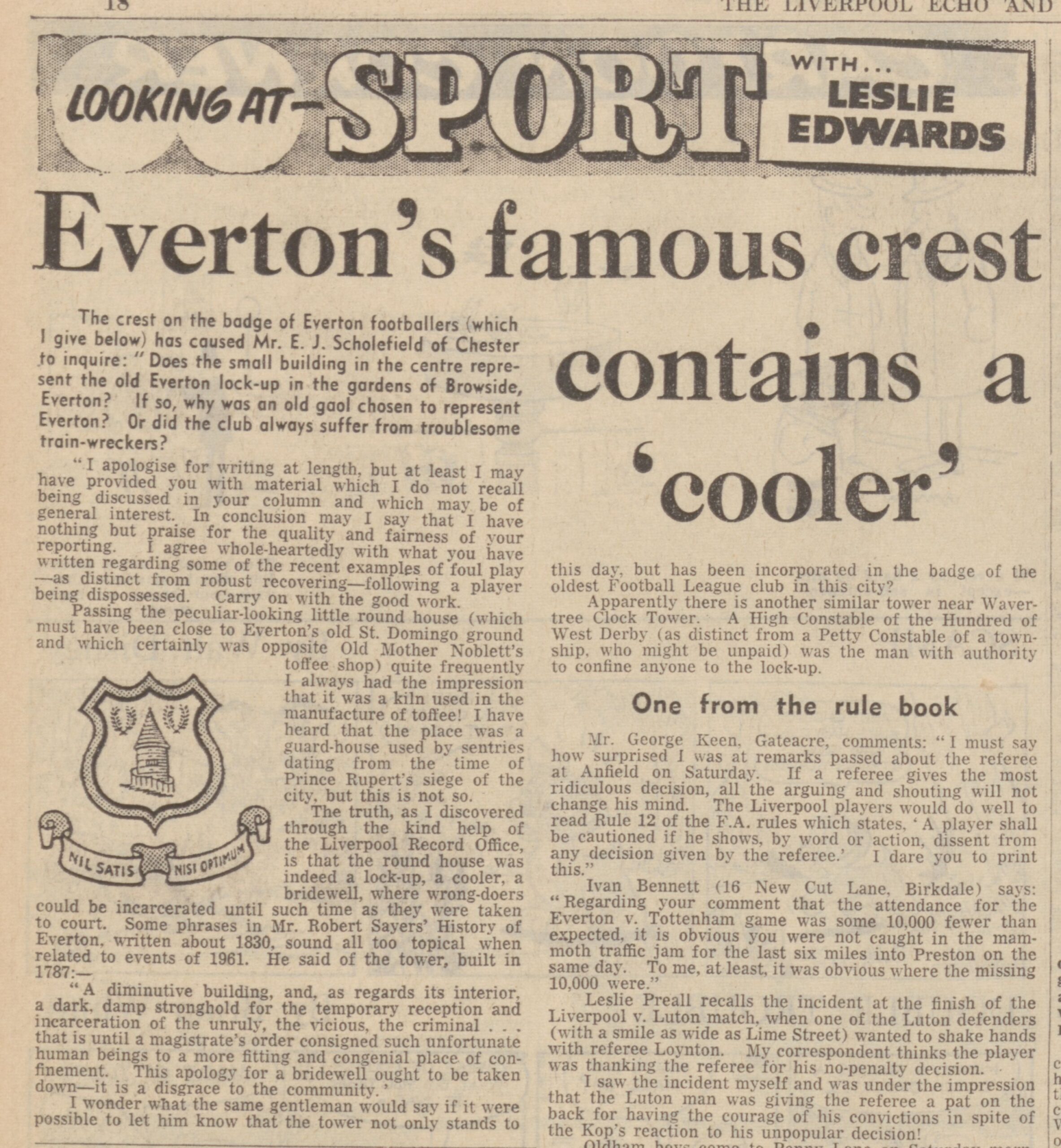
The story of the badge and crest would feature from time to time in the pages of the local press, including this article written twenty-three years after it was designed – and was still yet to appear on an Everton shirt – or to be seen all over Goodison Park, to the extent that it was by the time the final curtain came down in May 2025;
.
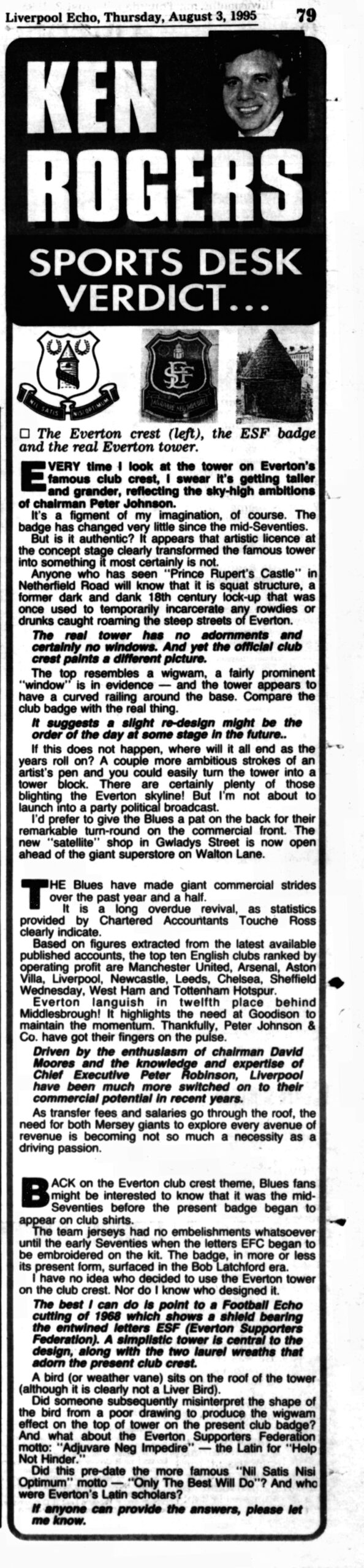
Over three further decades had passed when Ken Rogers featured a story in the pages of the Liverpool Echo where he was Sports Editor. Although he wrote, ‘I have no idea who decided to use the Everton tower on the club crest. Nor do I know who designed it,’ the facts were still little-known and seemingly lost in the midsts of time.
Ken is now chairman of Everton FC Heritage Society, and the full story is recounted by Ken, together with fellow presenter Rob Sawyer, where they even visit the former Everton village site to tell Evertonian’s the background about the origin of the crest.
Ken, who grew up just a ‘toffee throw’ from the the lock-up, also chairs the Friends Of Everton Park, and frequently has the key in his possession to allow visitors and fans the chance to go inside.
.
Everton Village and the Birth of Everton Football Club
.
.
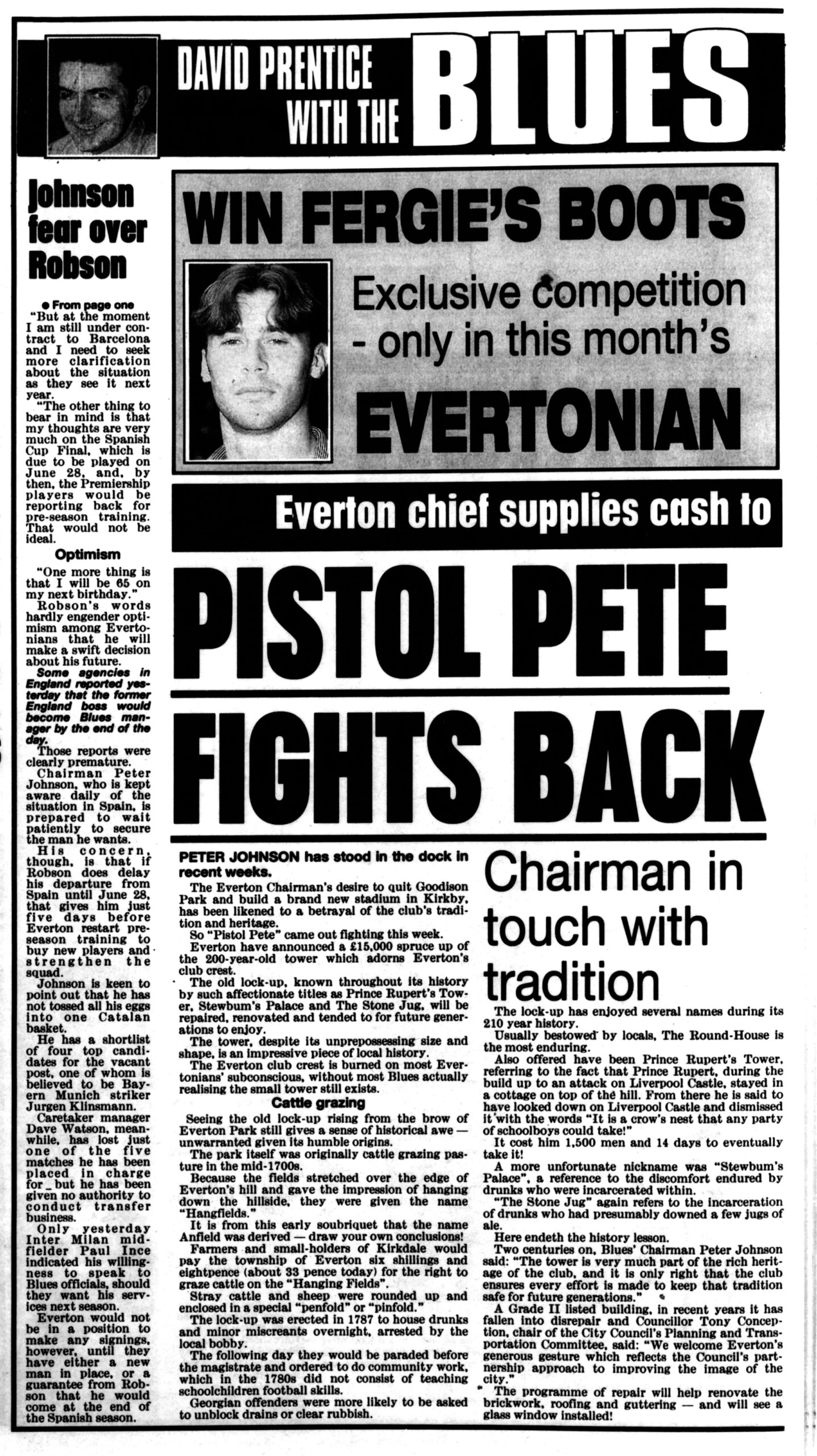
1997: Renovation
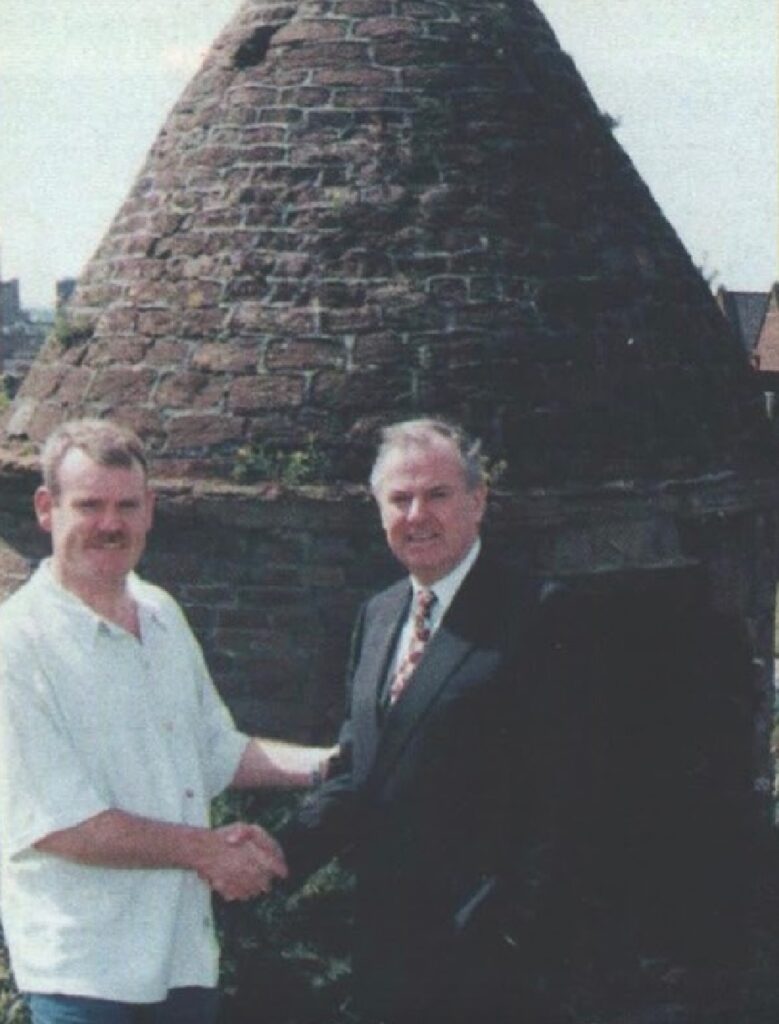
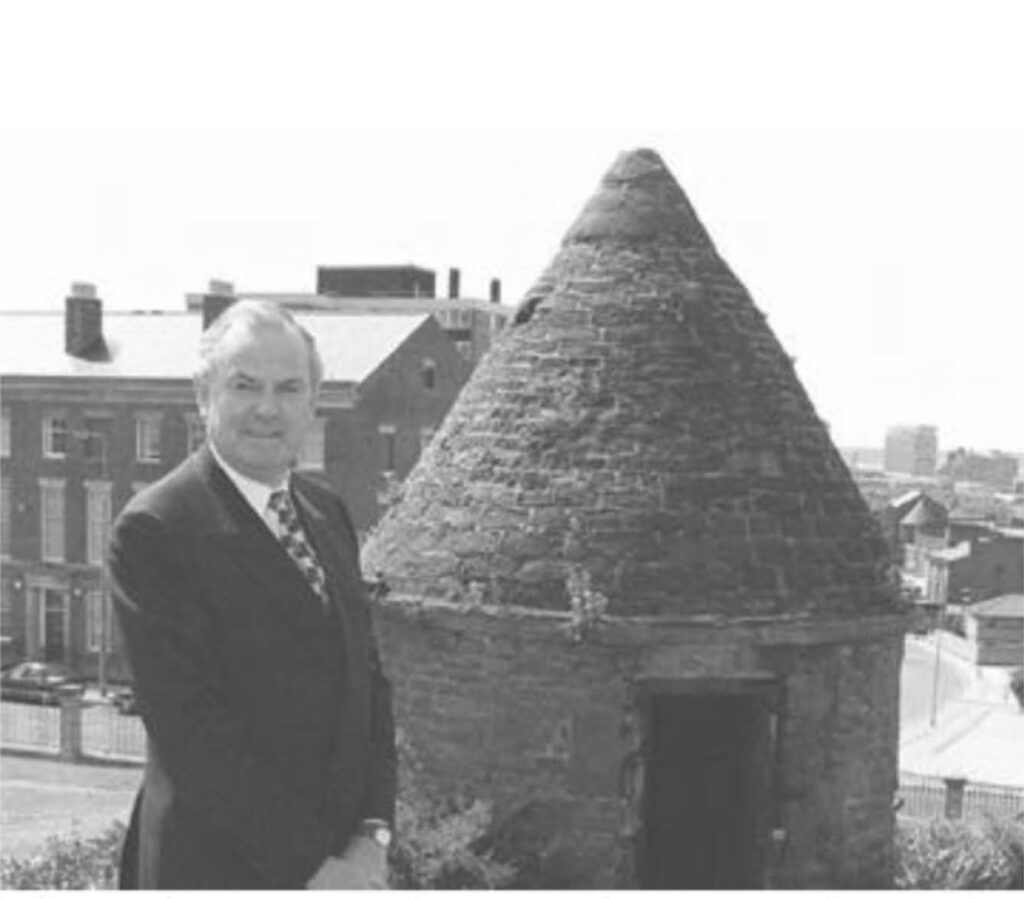
In 1997, the club chairman, Peter Johnson, announced (with what sounded like a P.R. exercise following the furore caused by his proposal to move away from Goodison to a new stadium in Kirkby) that £15,000 would be made available to renovate the lock up and spruce up the vicinity. Acting on an initiative by the West Everton Community Council, led by lifelong Blue Mick Gillon, Johnson told Dave Prentice of the Liverpool Echo, “The tower is very much part of the rich heritage of the club, and it is only right that the club ensures every effort is made to keep that tradition sake for future generations.”
Although a Grade II listed building, it had been allowed to deteriorate, and by that time it was being used by the council to store tools and implements used for the upkeep of the browside landscape. Councillor Tony Conception, chair of the City Council’s Planning and Transportation Committee, told the Echo, “We welcome Everton’s generous gesture which reflects the Council’s partnership approach to improving the image of the city.” The plan due to start at the end of May 1997, was to renovate brickwork, roofing and guttering and even add a glass window.

Another of Peter Johnson’s lasting initiatives was the club shop


‘Everton FC in Everton’ Day
It is ironic that Everton FC have never played in Everton, but it was at the former Queen’s Head Pub in Everton Village (facing Molly Bushell’s toffee shop) where the fledgling St Domingo’s Church football team, playing at that time in Stanley Park, took the momentous decision to become Everton Football Club.
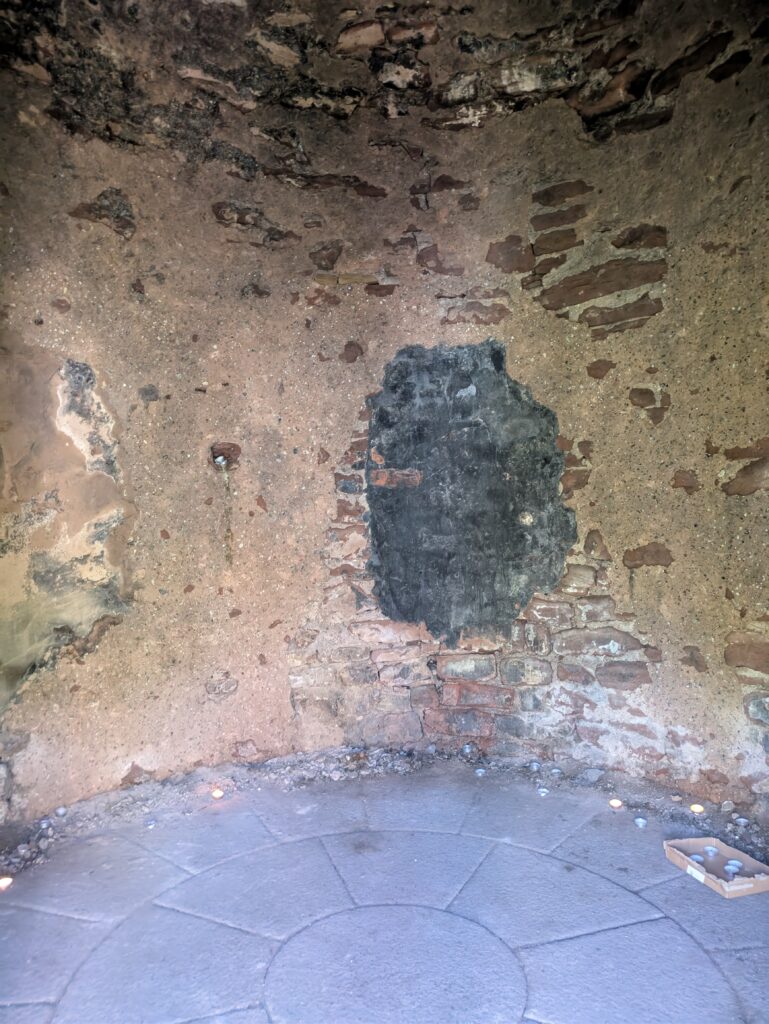
For the last few seasons, the Everton FC Heritage Society, in tandem with the Friends of Everton Park (FOEP), have opened up the Everton Lock-Up below Browside, for a very special ‘Everton FC in Everton Day.’ Expert historians from the Society were on site to interpret the football history relating to the Lock Up, which was candle-lit inside on the day, and guided tours given of the former village site.

USA Toffees Tour of Everton
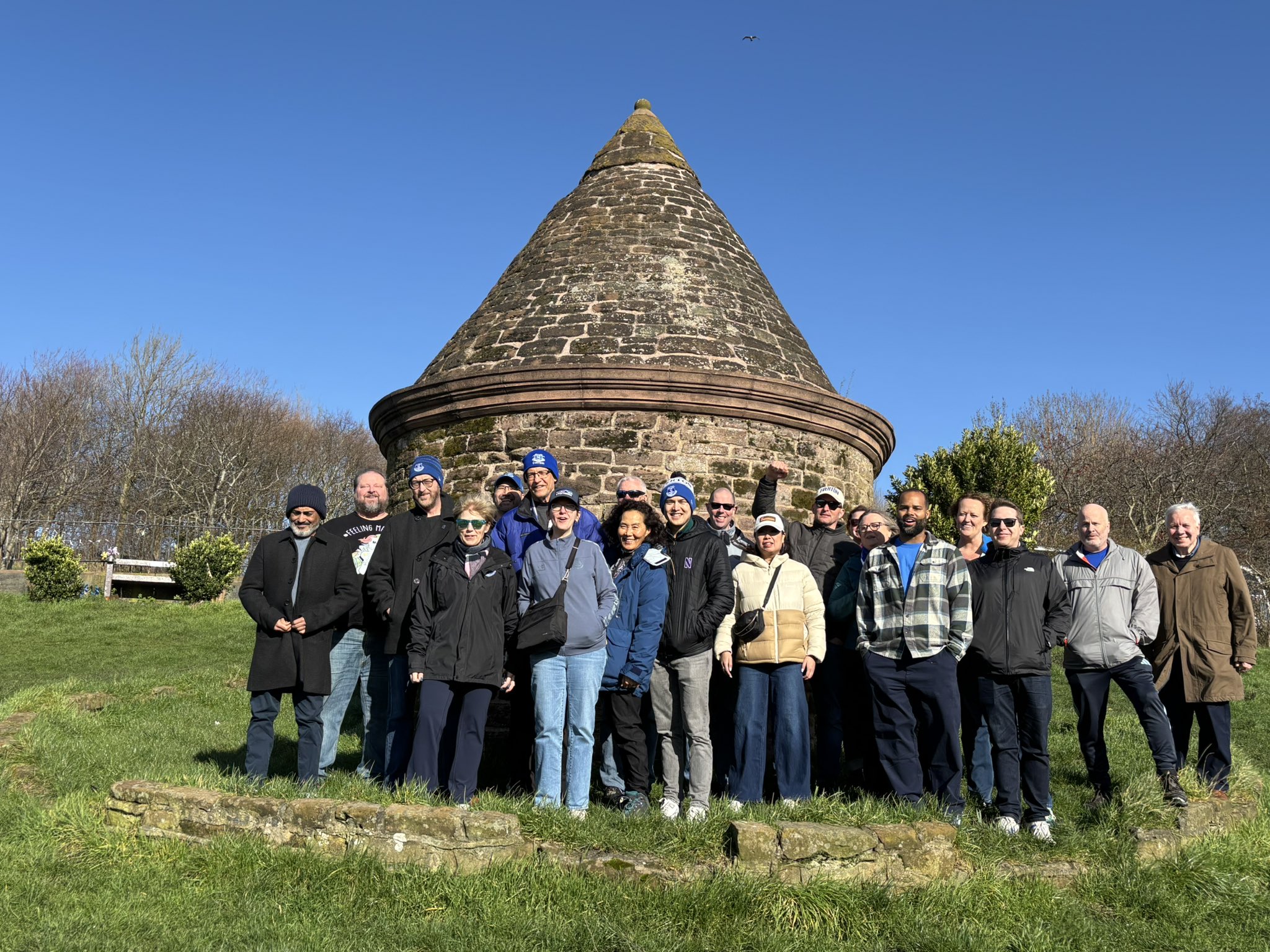
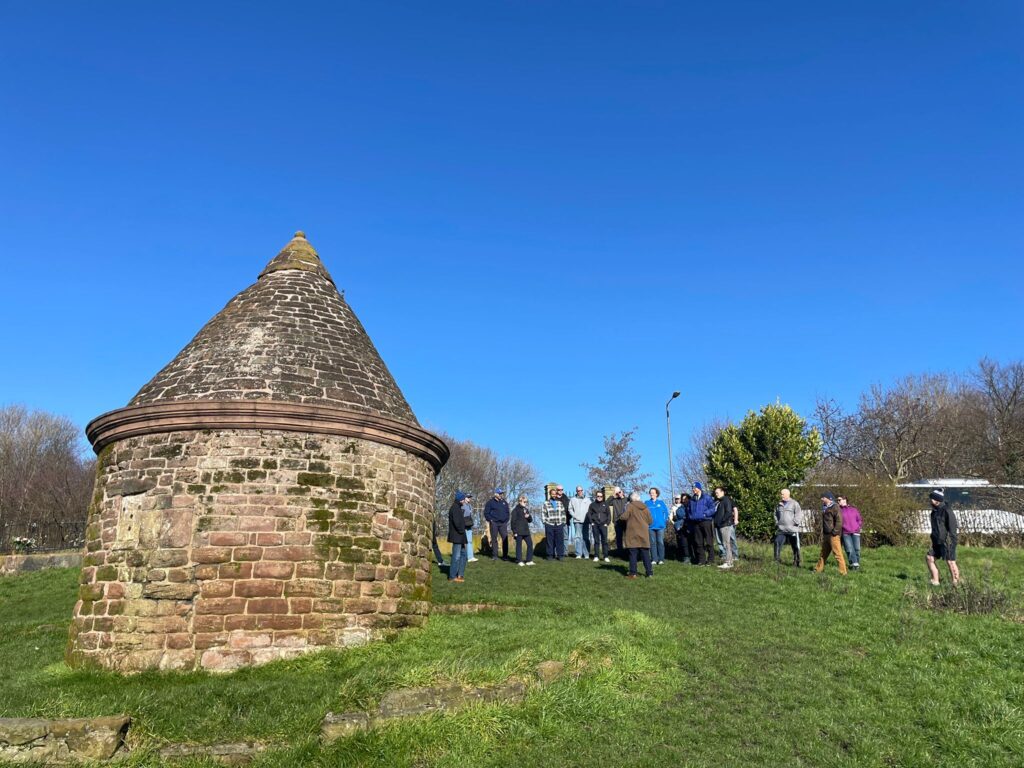
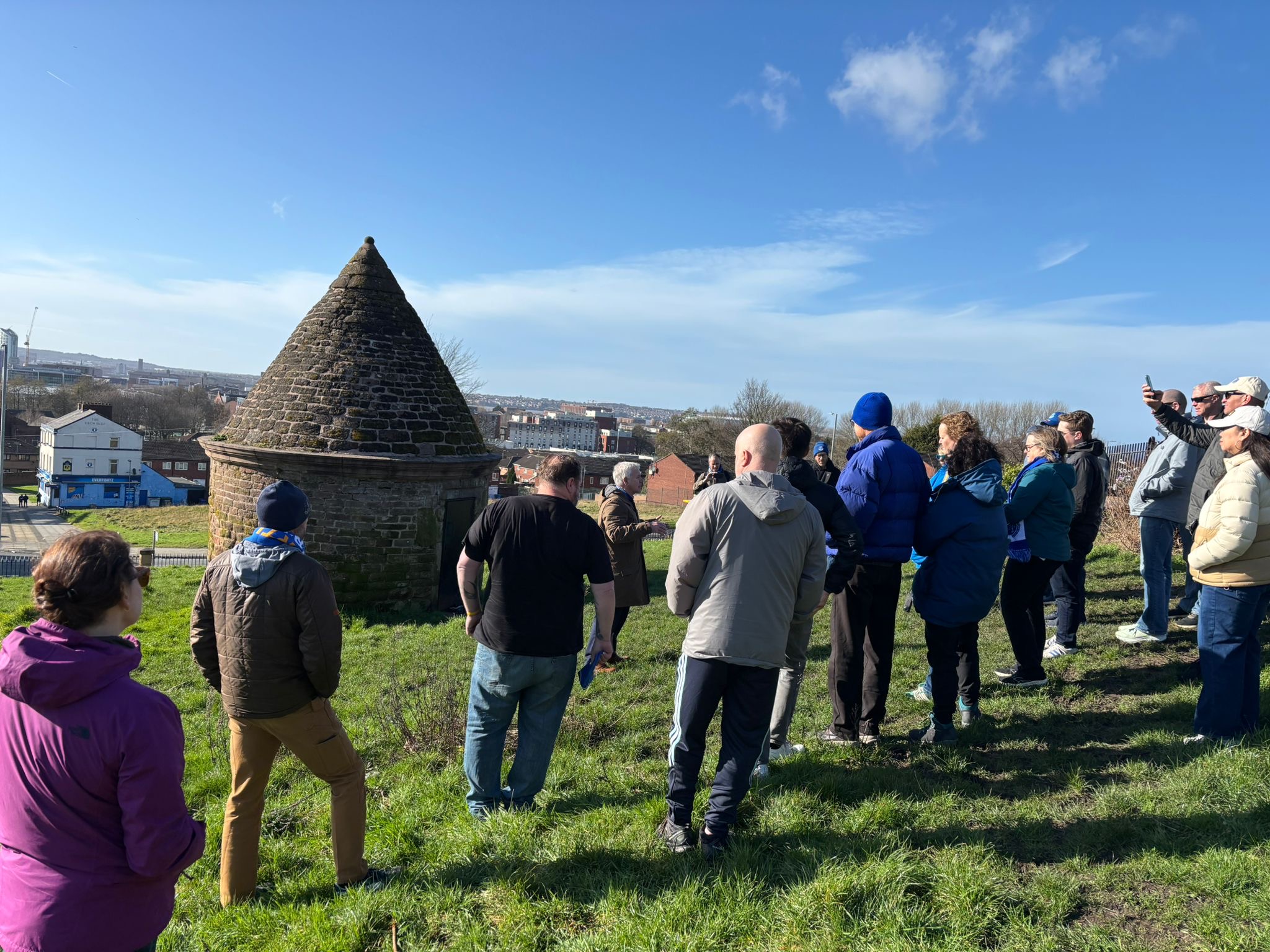
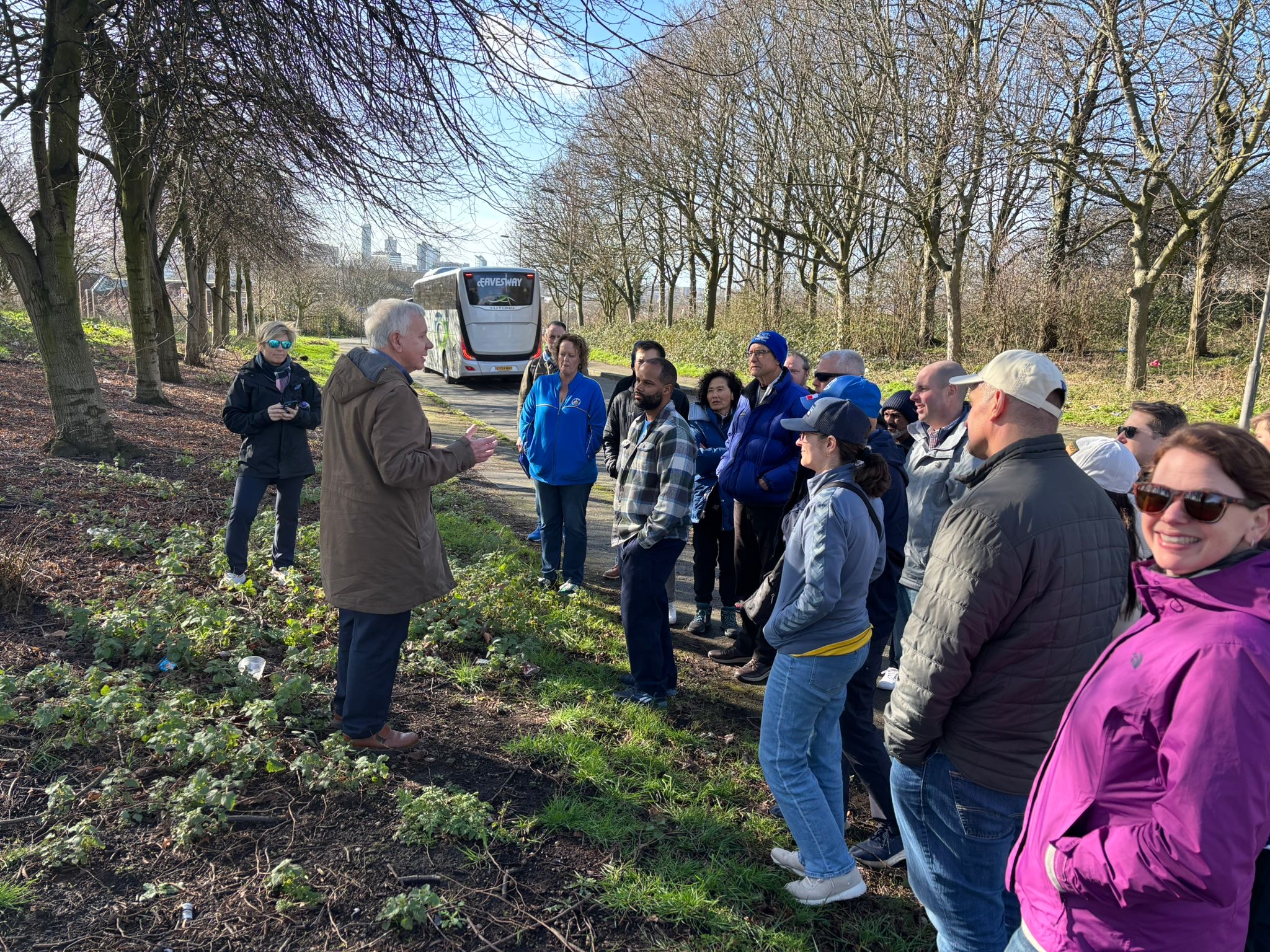
While over for the Everton v Manchester United game in February 2026, the USA Toffees organised a number of events for their touring party. On Sunday 22 February, they were given a tour of Goodison and the former Everton Village site, as well as the Lock-up, by members of Everton FC Heritage Society, including chairman Ken Rogers, HDS guide Jamie Yates, and Gaz Jones.
……………………………………………………………………………………………………………………
The Return of the Badge and Crest
1972-73
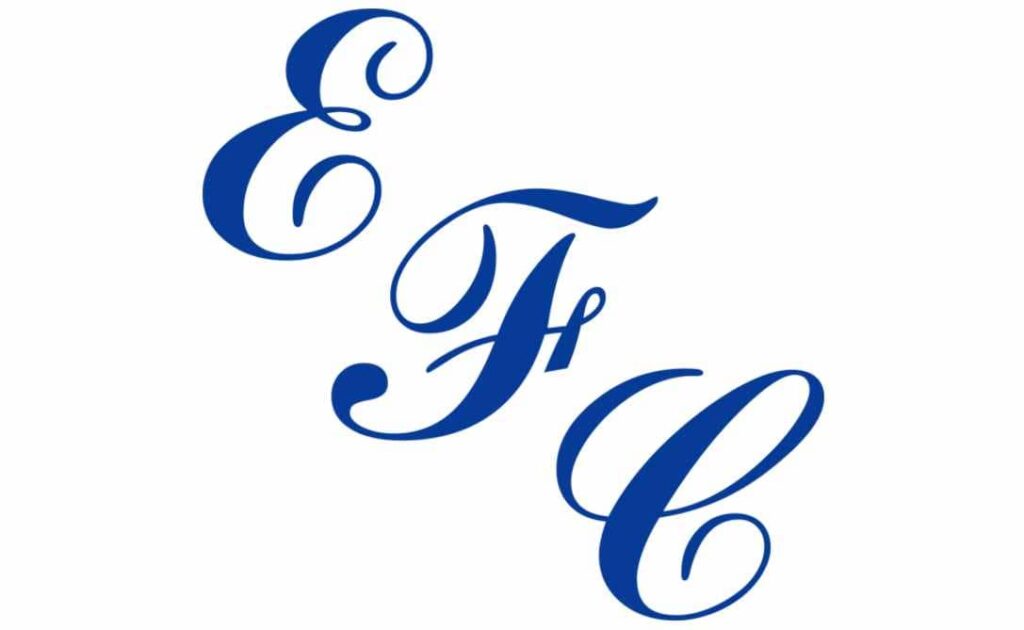
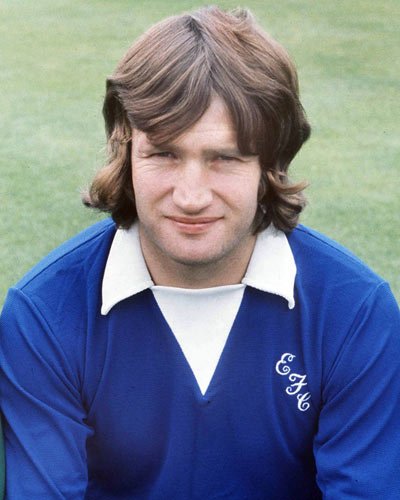
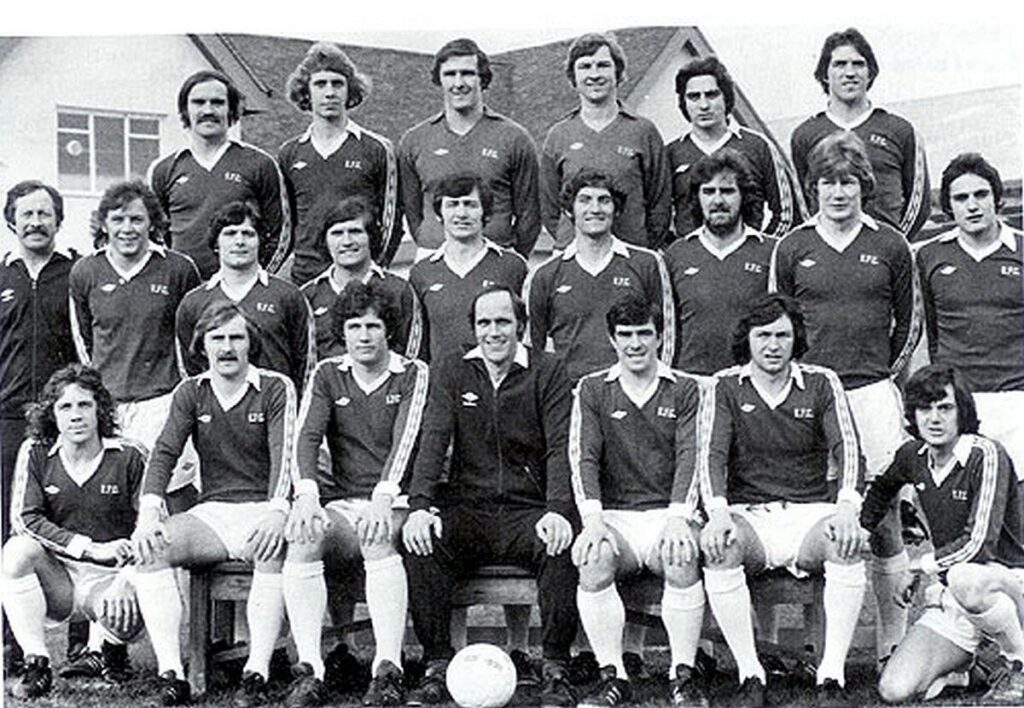
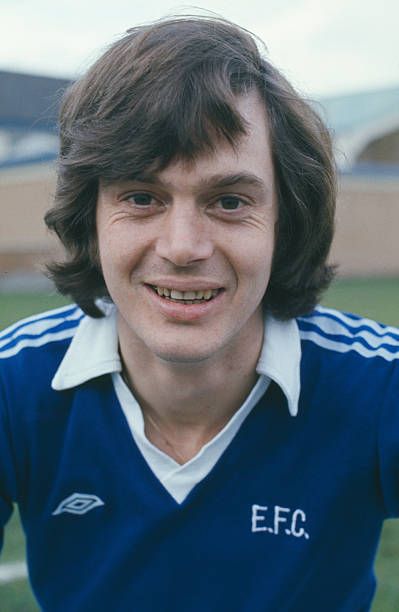
It was not until 1972 before any type of club-identifying mark was included on the Everton jersey, when white ‘EFC’ cursive letters were simply embroidered onto the shirt.
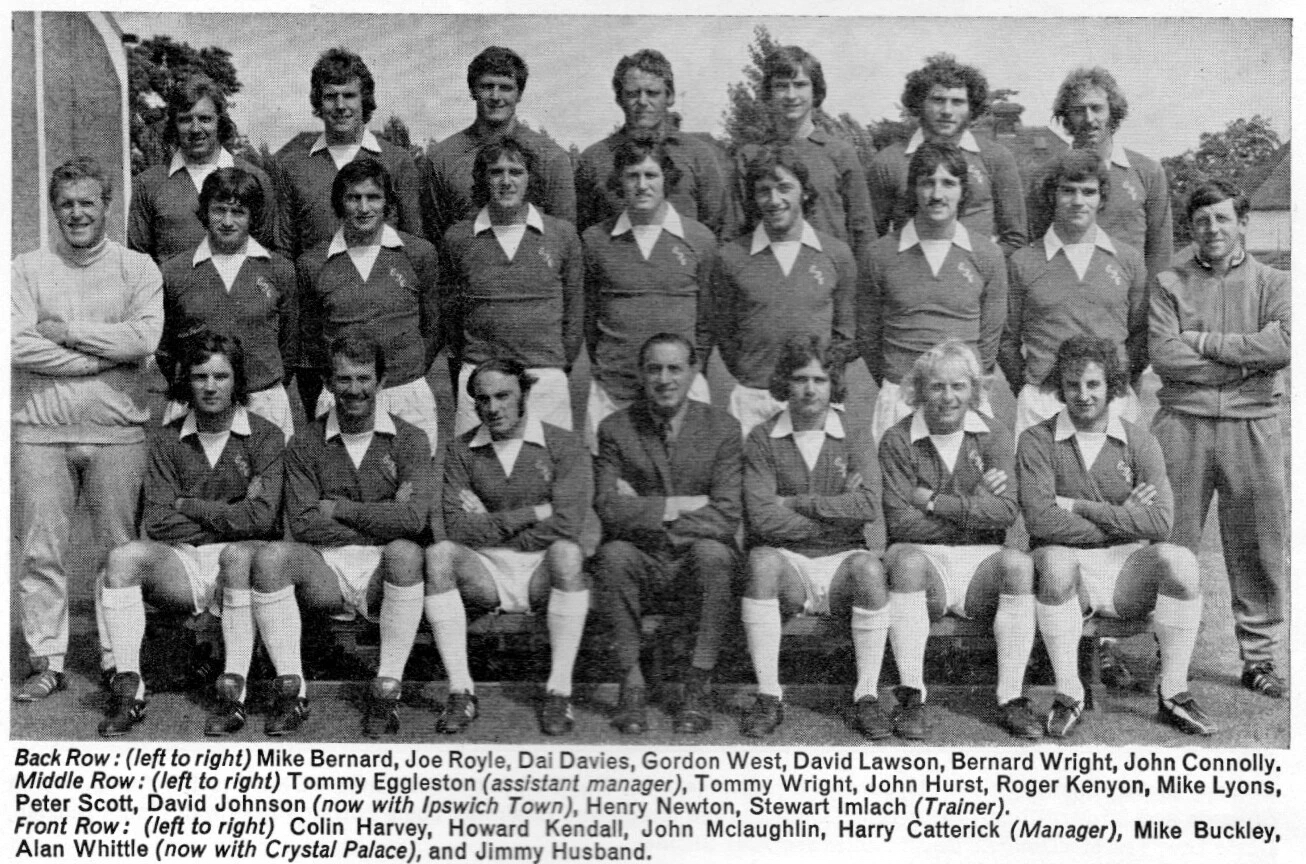
The first squad to sport a badge since 1930
1976-77
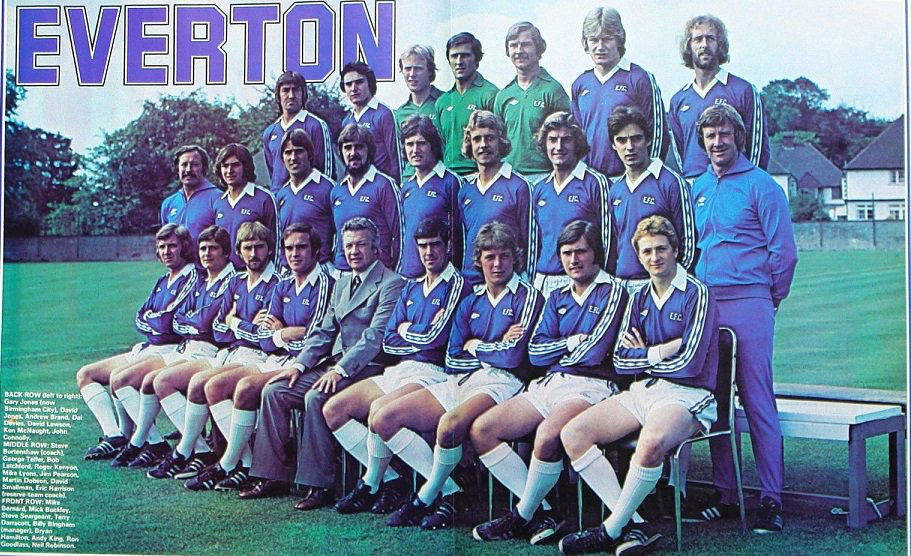
Four seasons later, with little imagination, a simplified, minimalist font was introduced instead, utilising capitals in a straight line.

1978/79
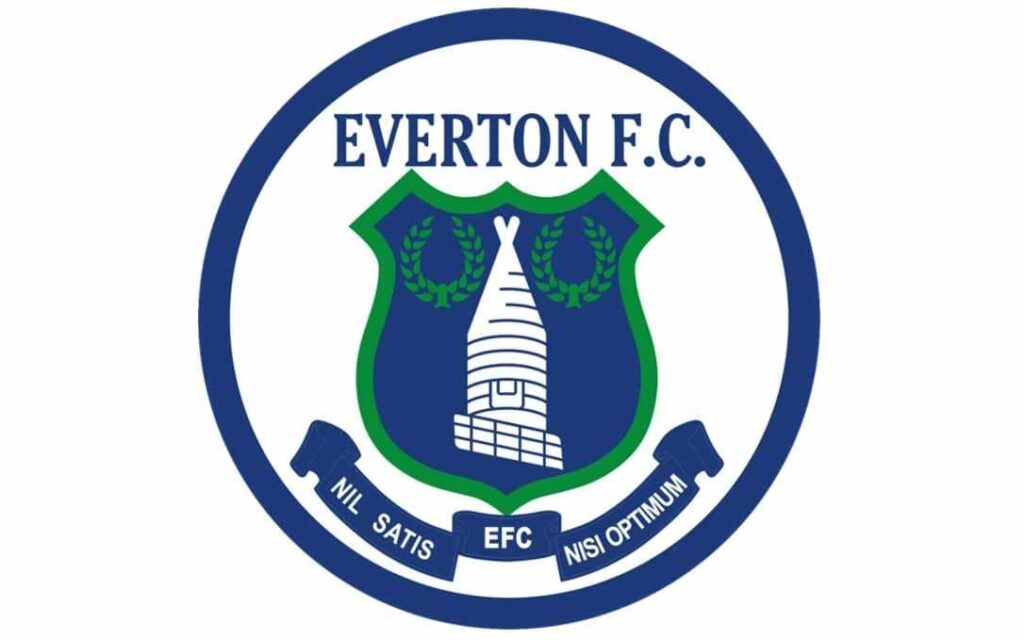
Finally, in the club’s centenary year, Theo Kelly’s crest made it onto the jersey for the first time since its design forty years earlier in 1938. Now taken to heart by every Evertonian, it has remained as the basic design right down to the present day, with slight modifications along the way. ‘Everton FC’ was placed in capitals on one line above the blue shield.
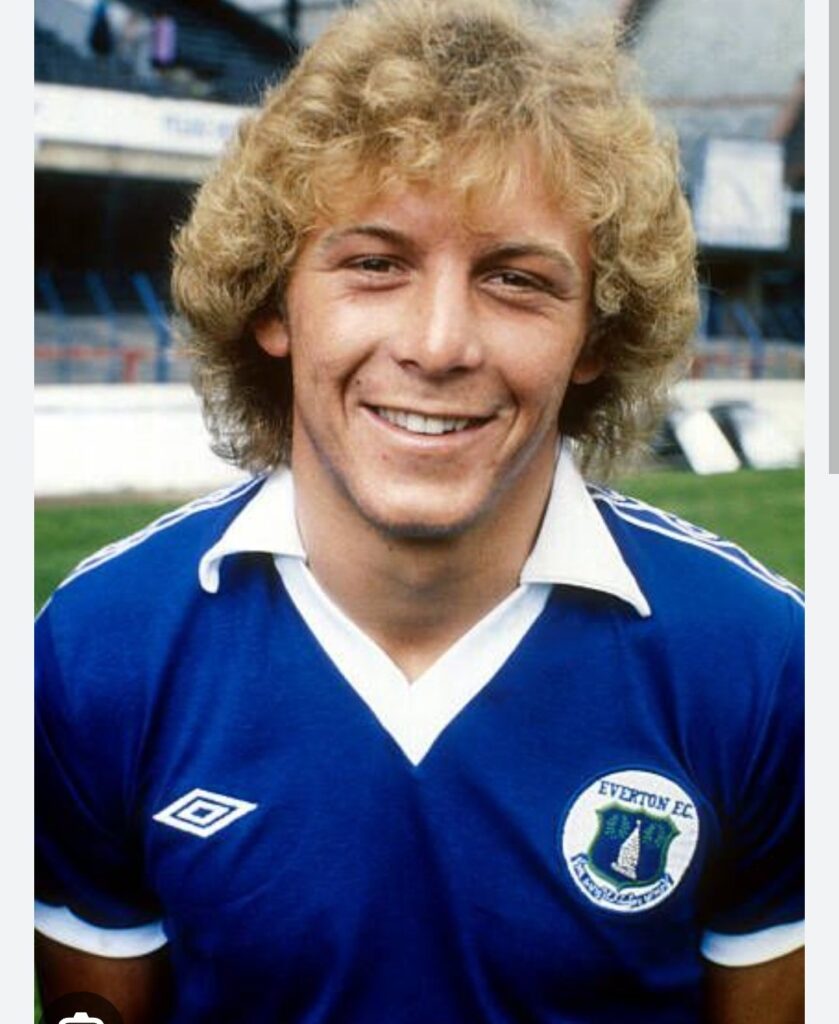
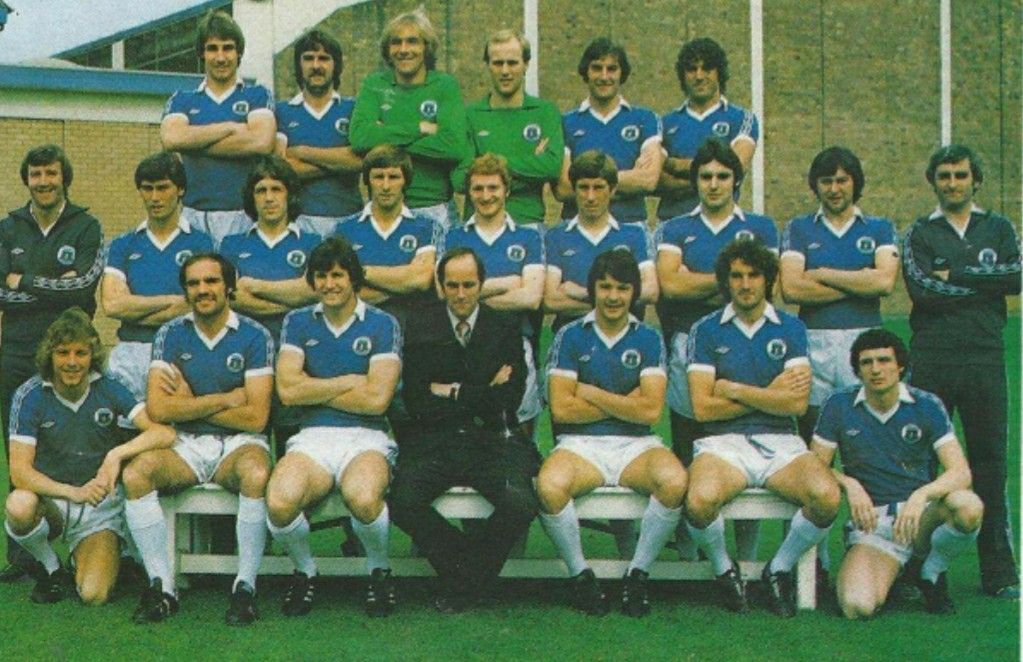
1982/83
A new design was introduced by Umbro in the final year of their contract for the 1982/83 season. The latin motto was dispensed with, as was the shield, leaving the lock-up and laurel wreaths intact in yellow within a white circular border.
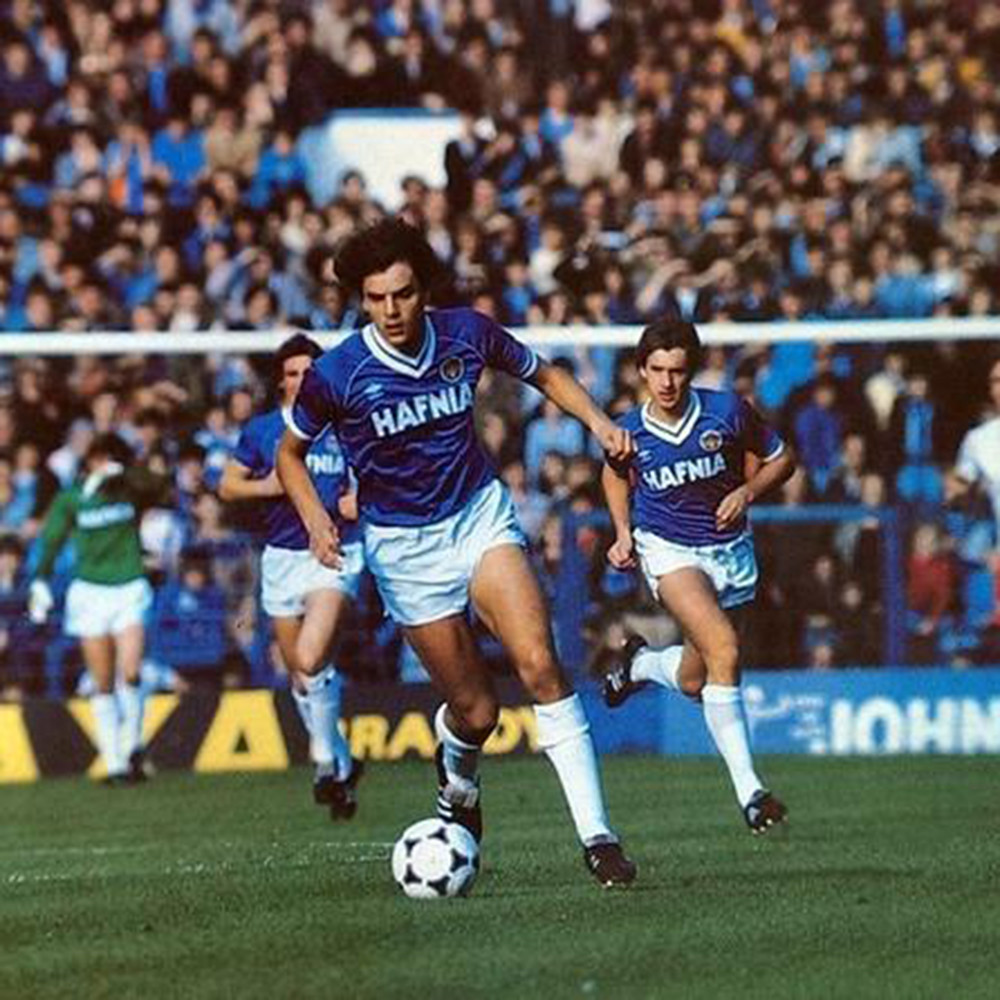
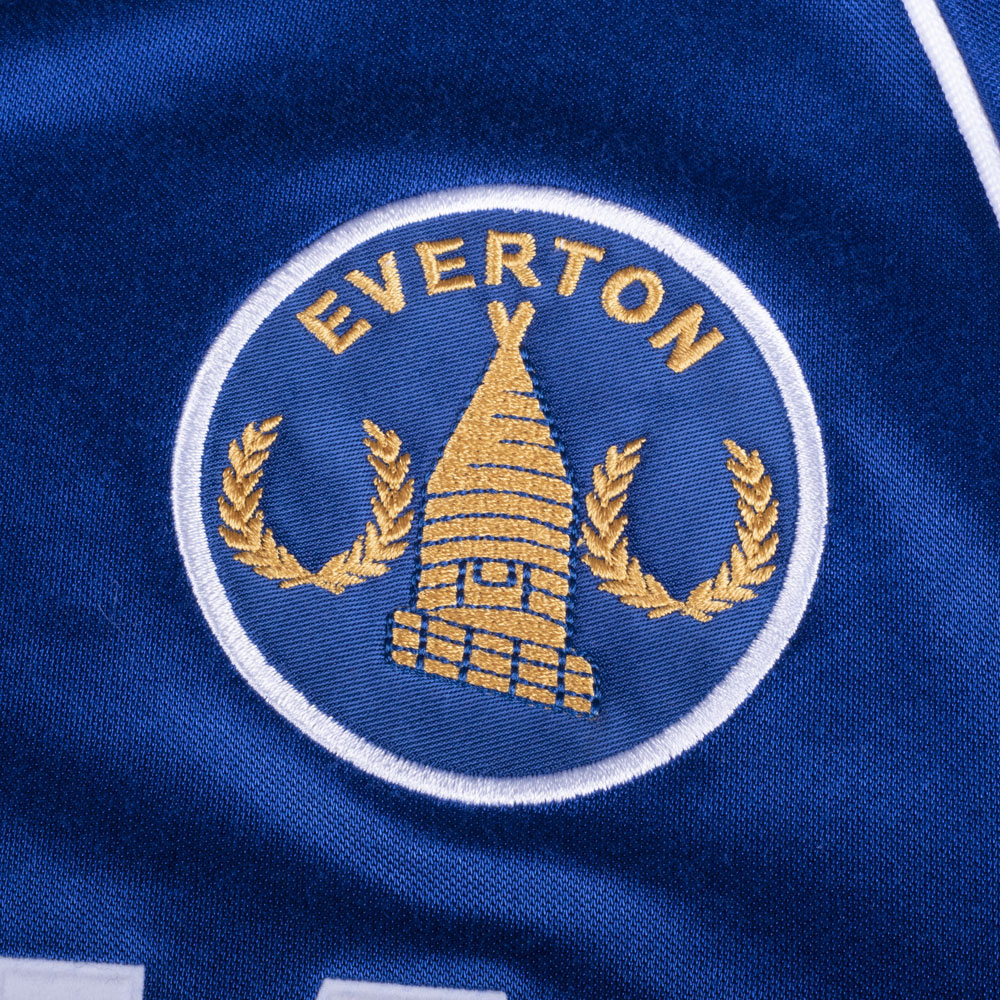
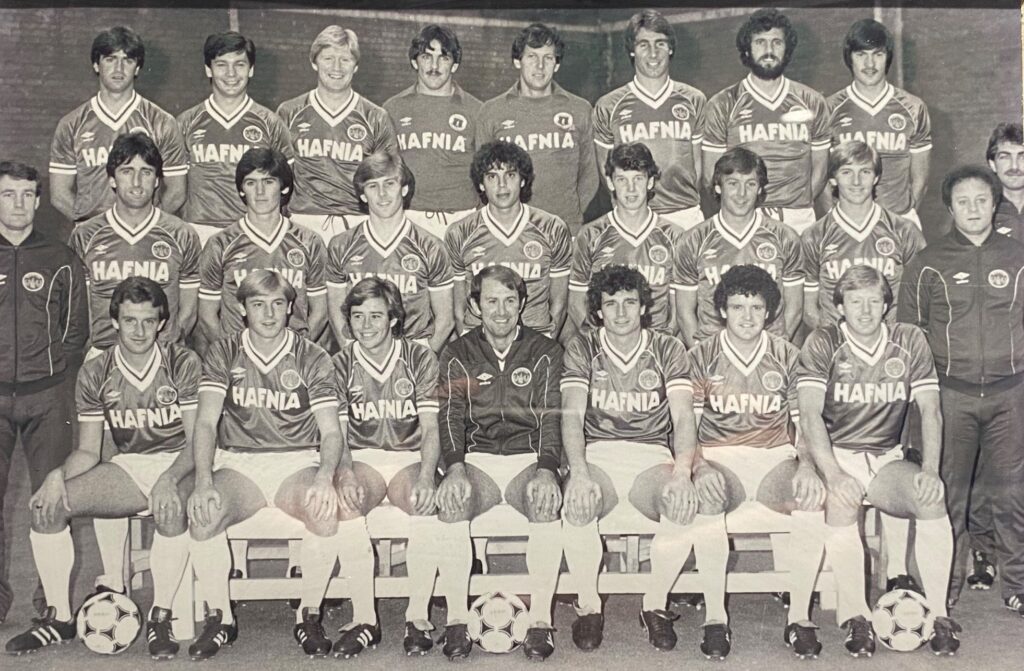
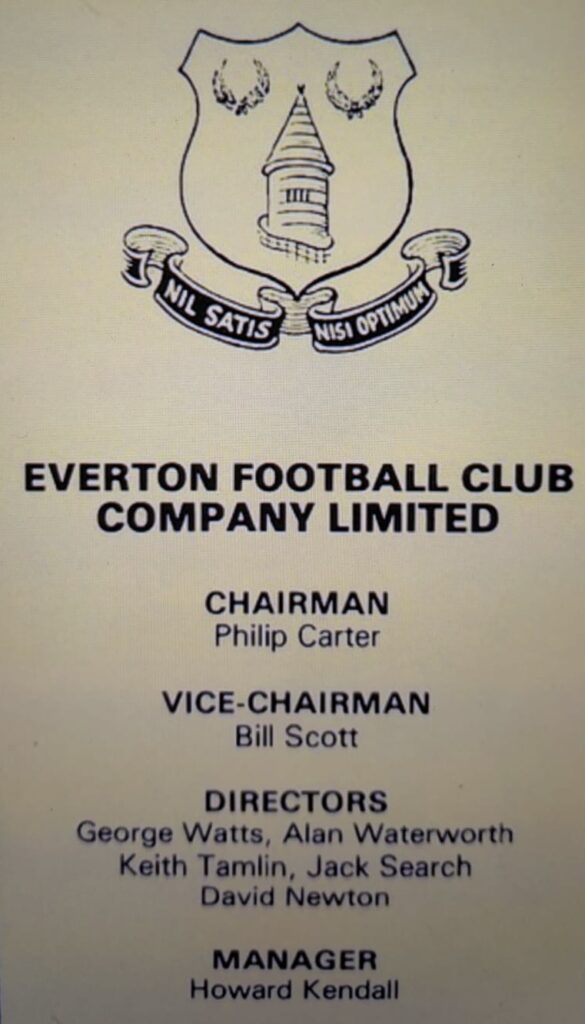
Although Umbro introduced a simplified crest on the shirt, the club retained the more traditional version on the club letterhead and in the match day programme. This would be a recurring trend throughout the changes made to the club jersey and infrastructure around the club.
(photo: Rob Sawyer)
.
1983/84
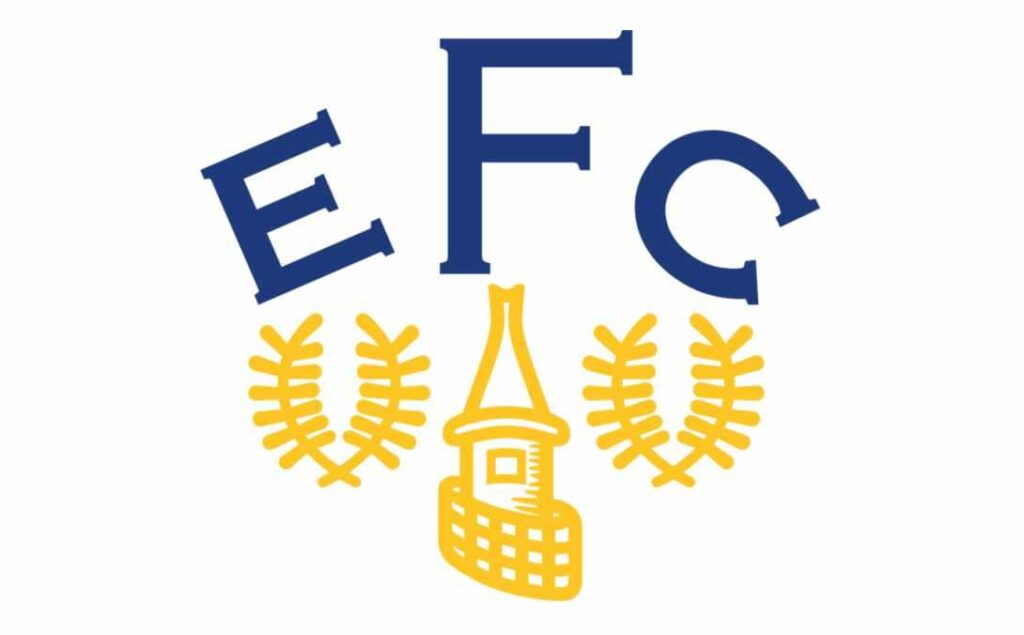
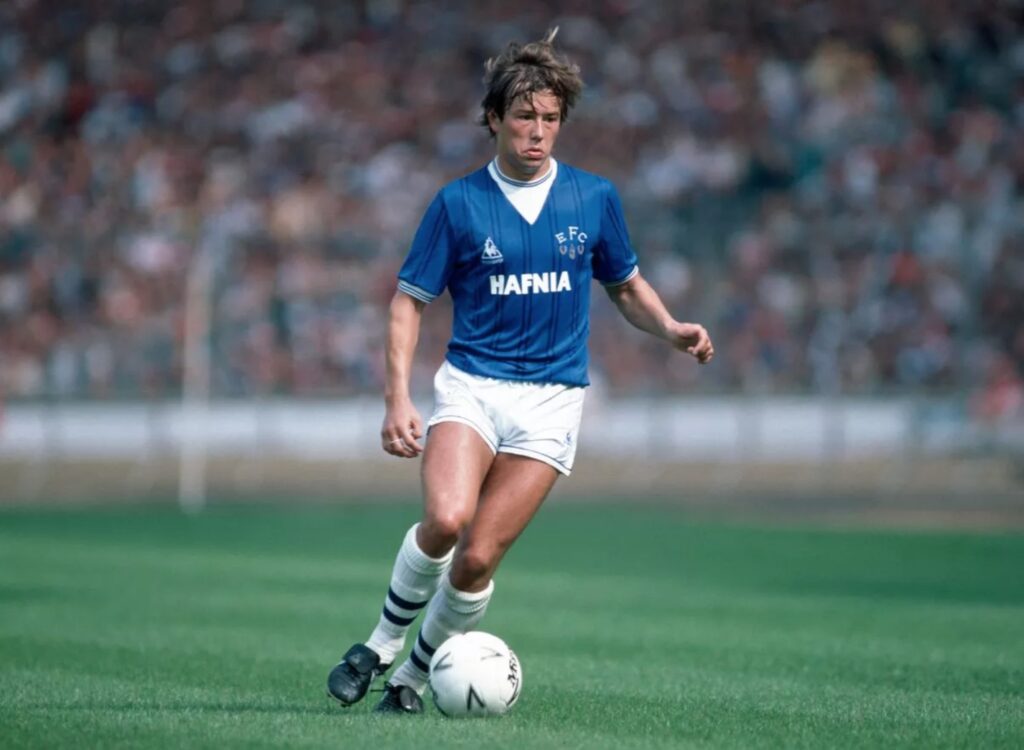
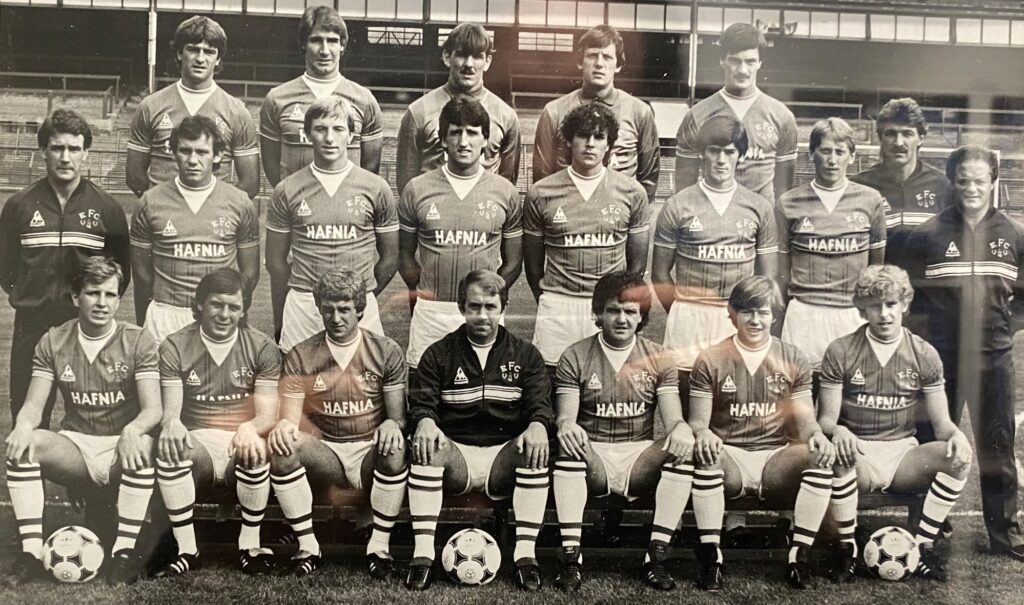
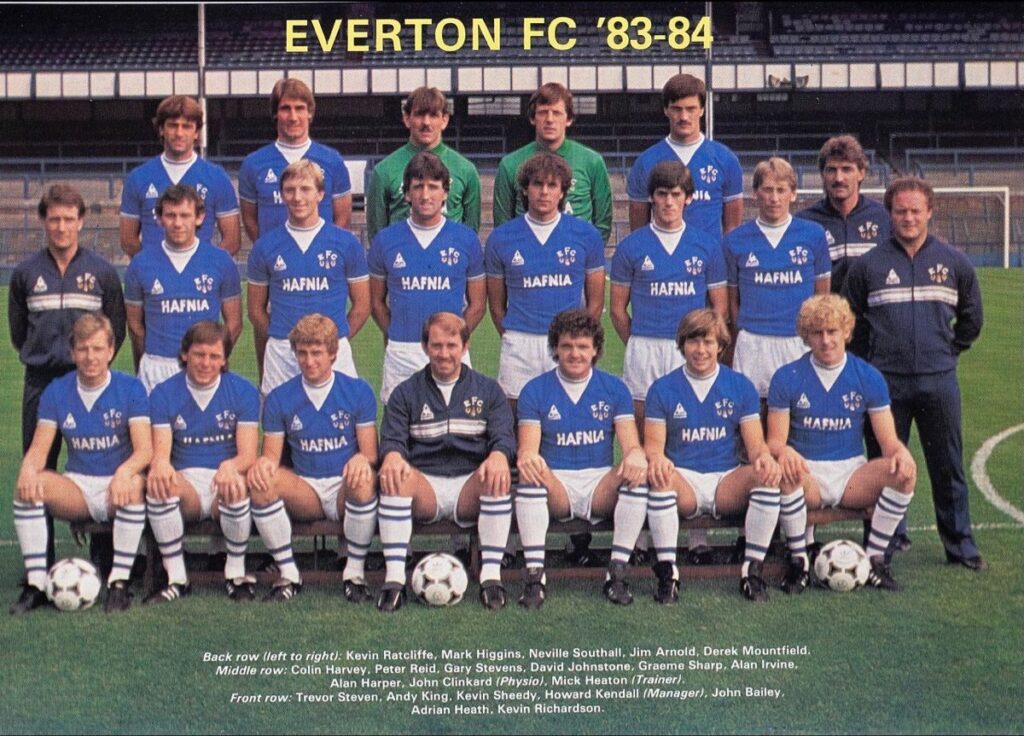
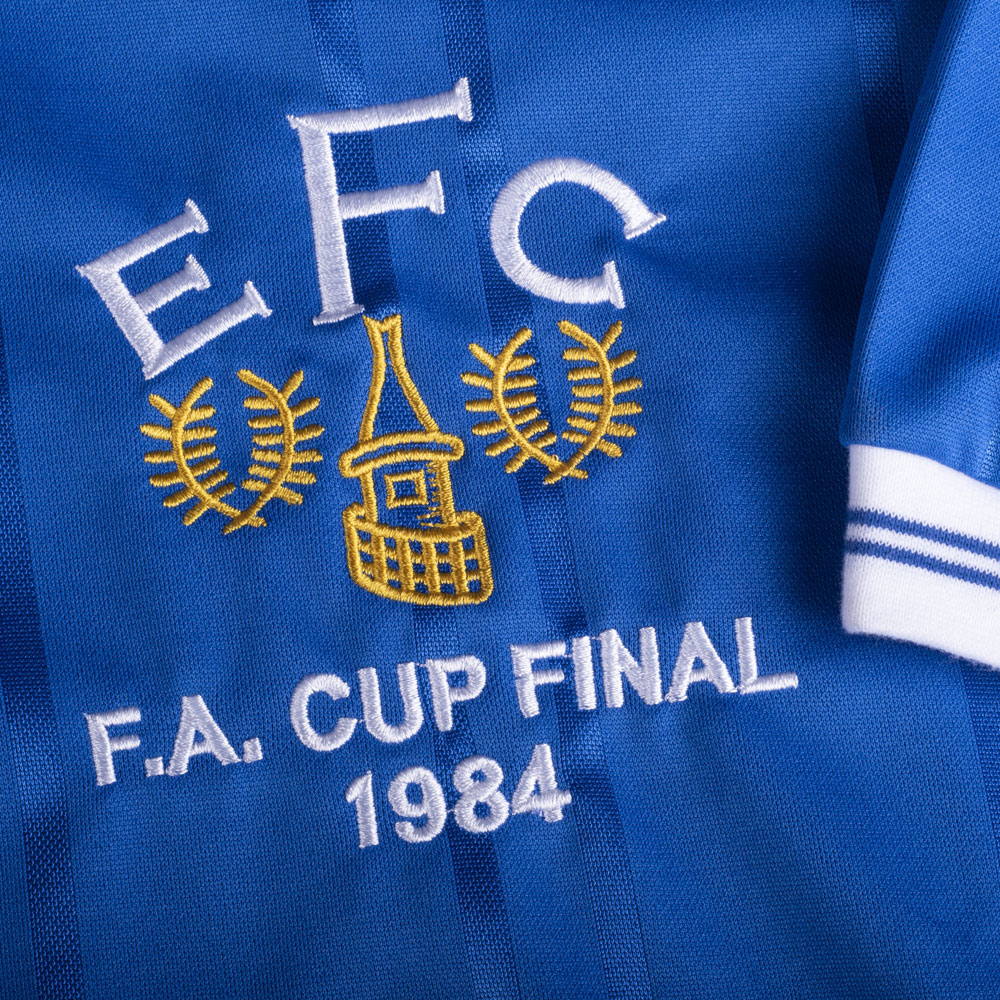
Everton’s kit supplier changed again in 1983, when Le Coq Sportif replaced Umbro, and introduced what many fans now regard as a design classic that featured narrow shadow stripes and a distinctive collar.
Their redesigned club crest, which would come to be identified with the Club’s most successful period, comprised the letters ‘EFC’ above a stretched Lock-up now with a spire-like roof, and with total artistic licence doubled the width of the mythical surrounding rail. Redesigned laurel wreathes were retained, but the surrounding border was removed, and the shield and motto omitted once more.
1991/92
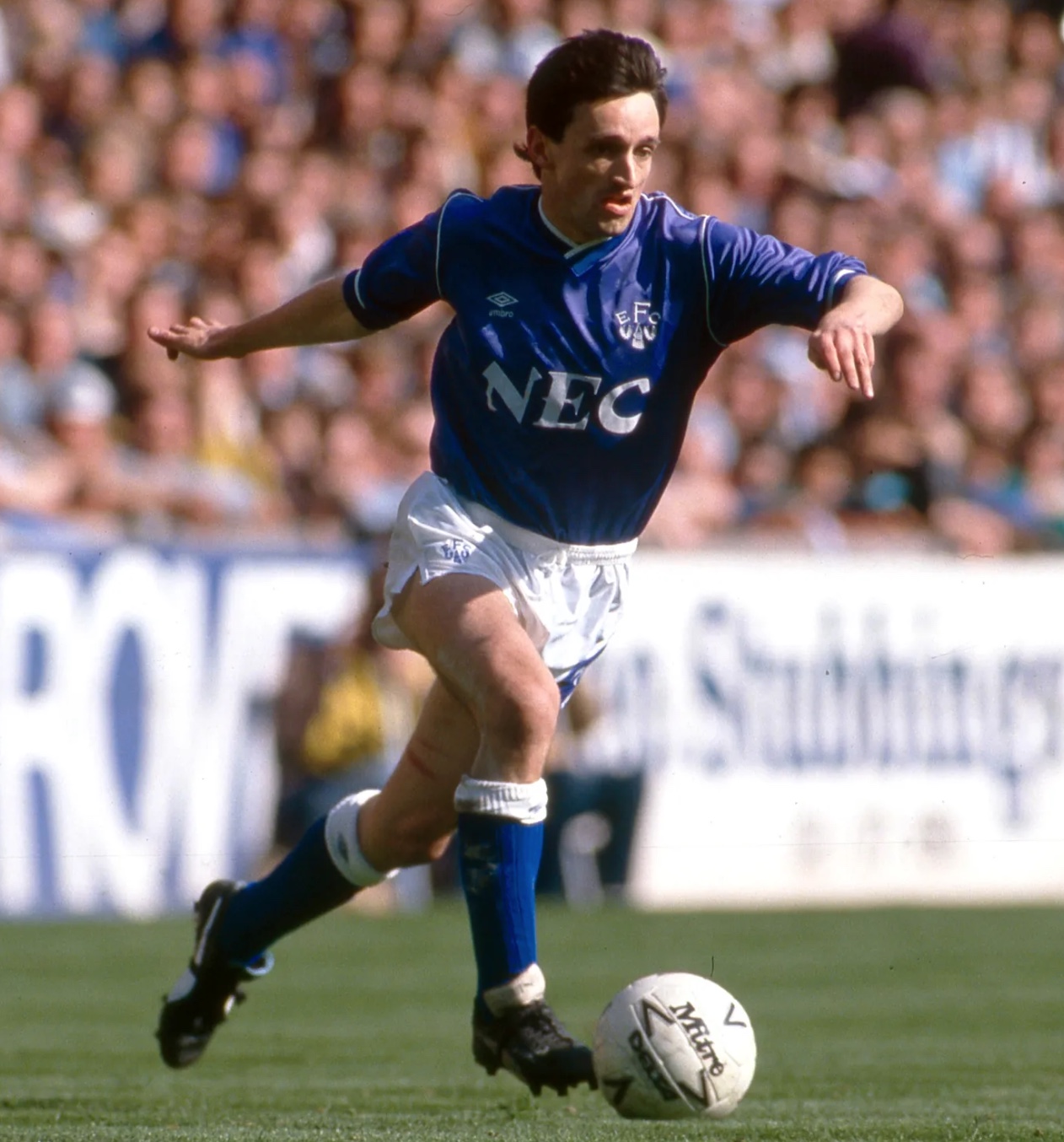
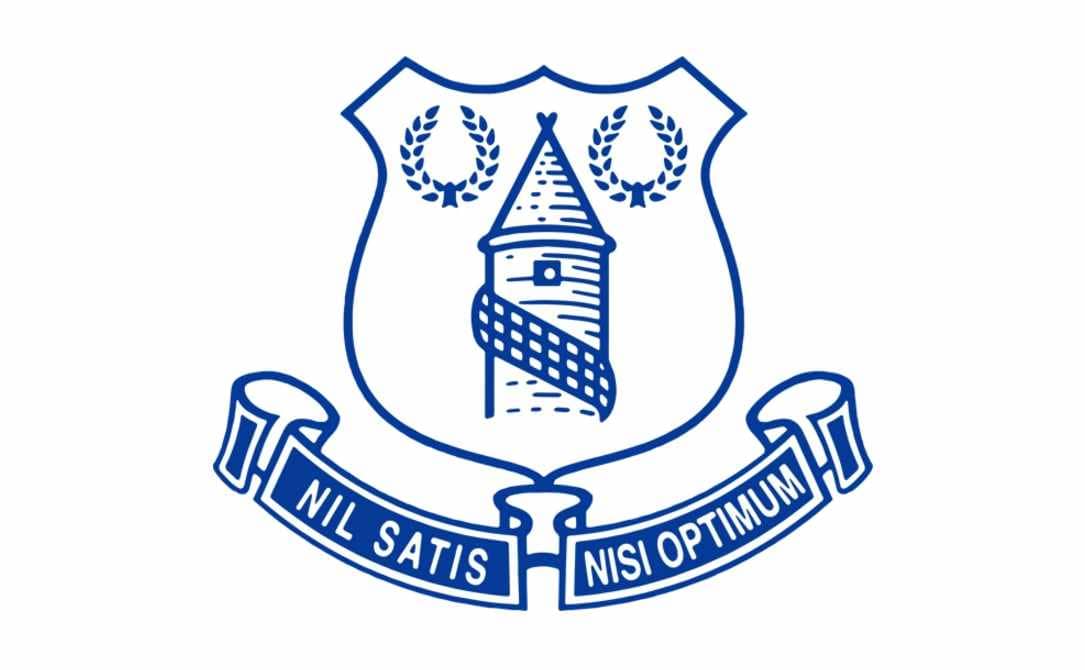
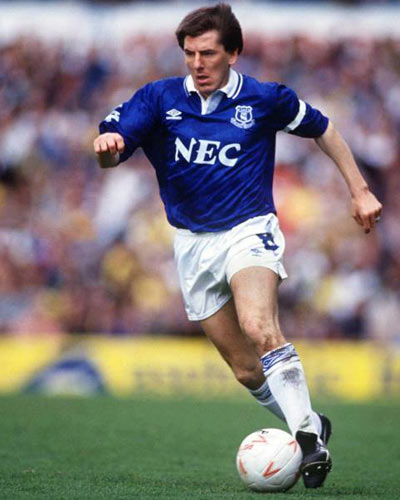
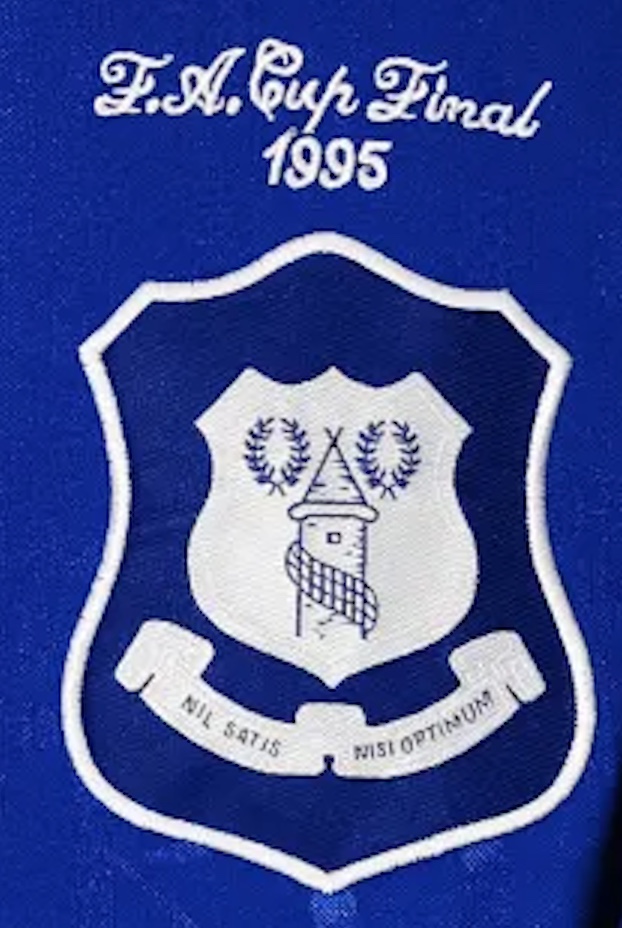
The change in design in 1991 saw the club return to a close representation of Kelly’s original image from 1938. The shield returned once more, as did the scroll bearing the latin motto Nil Satis Nisi Optimum motto in capital letters.
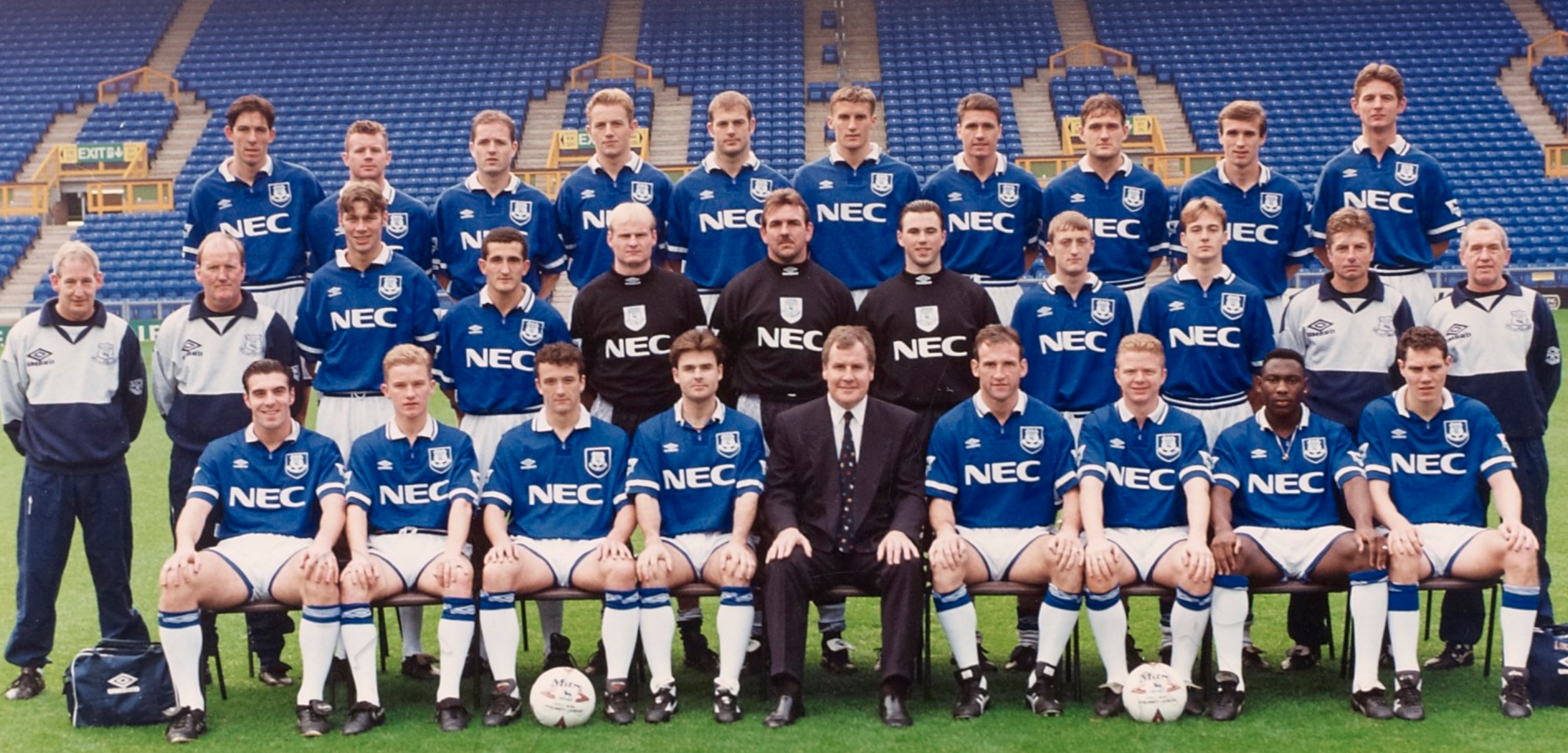
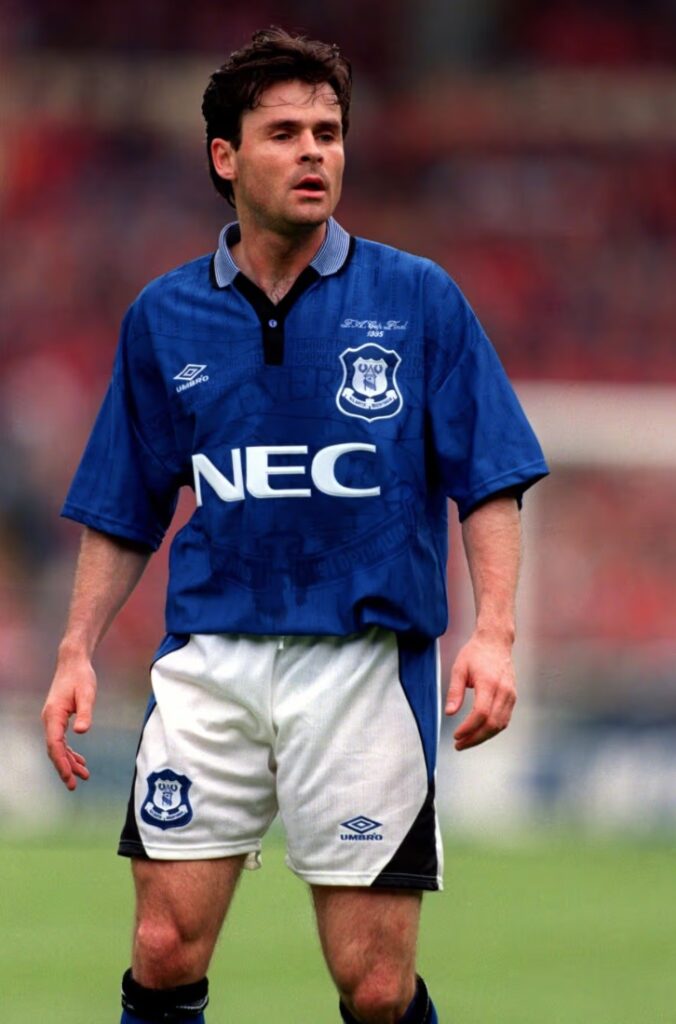
The crest was still in place when Everton won the FA Cup in 1995.
.
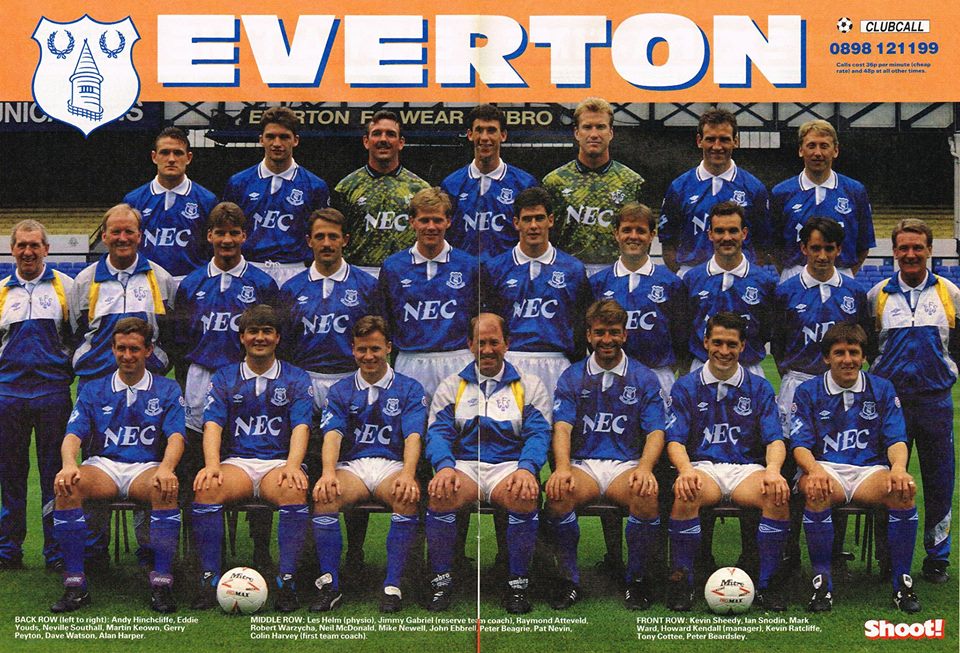
1994/95
In 1994/95 there was a slight modification when the badge was laid on a white background, but the elements within remained unchanged.
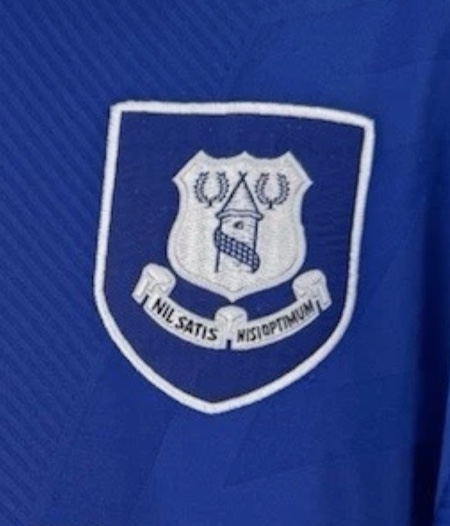
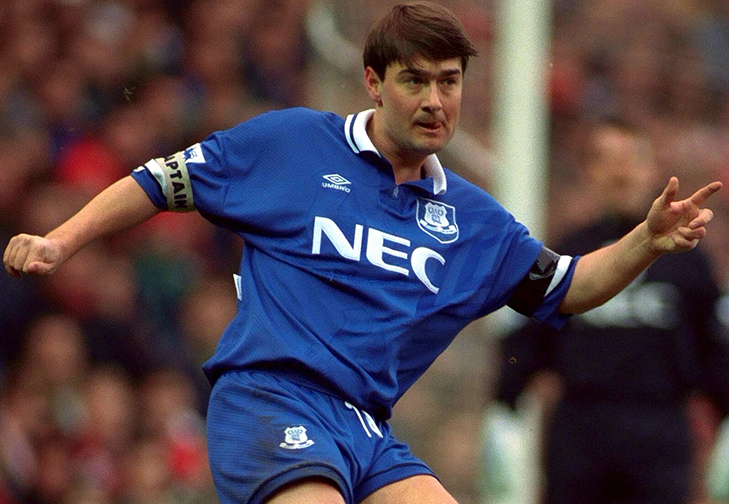
Ian Snodin – 1994
Again, a slight modification, this time to the border;
.
2000/2001
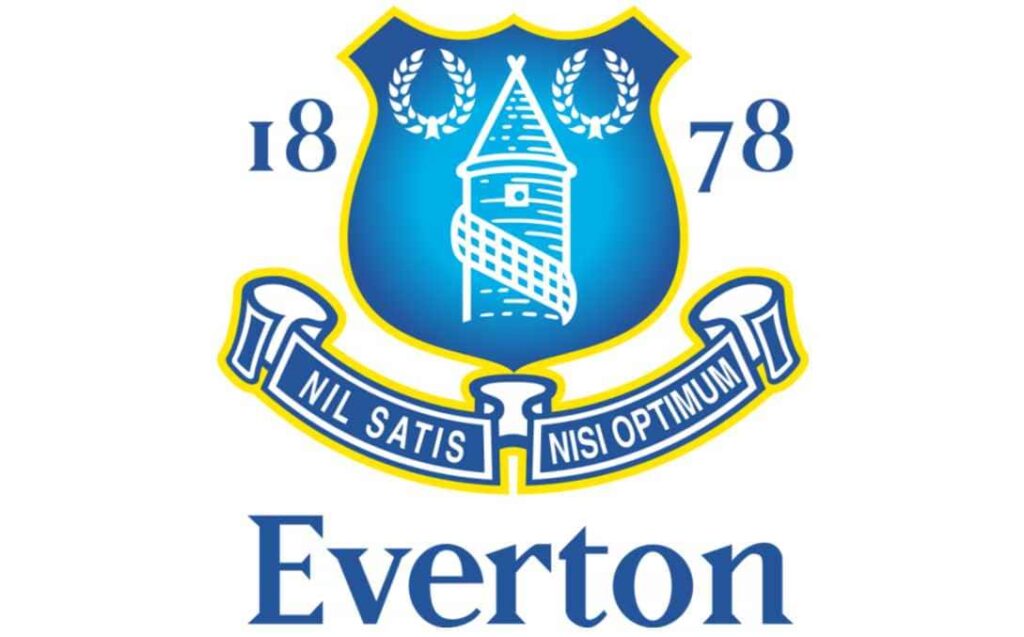
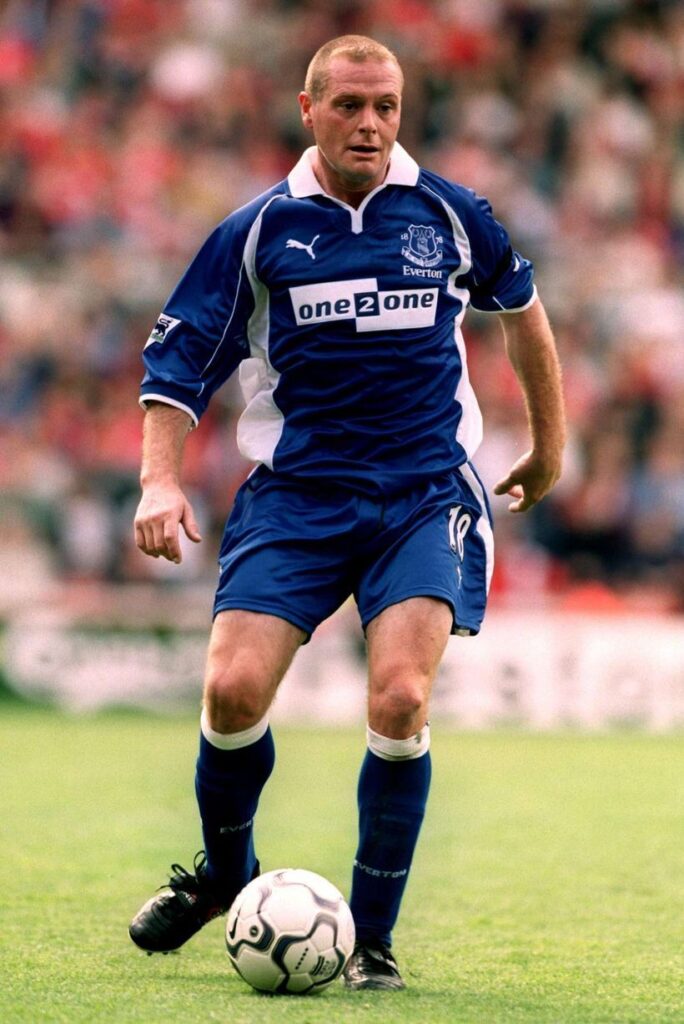
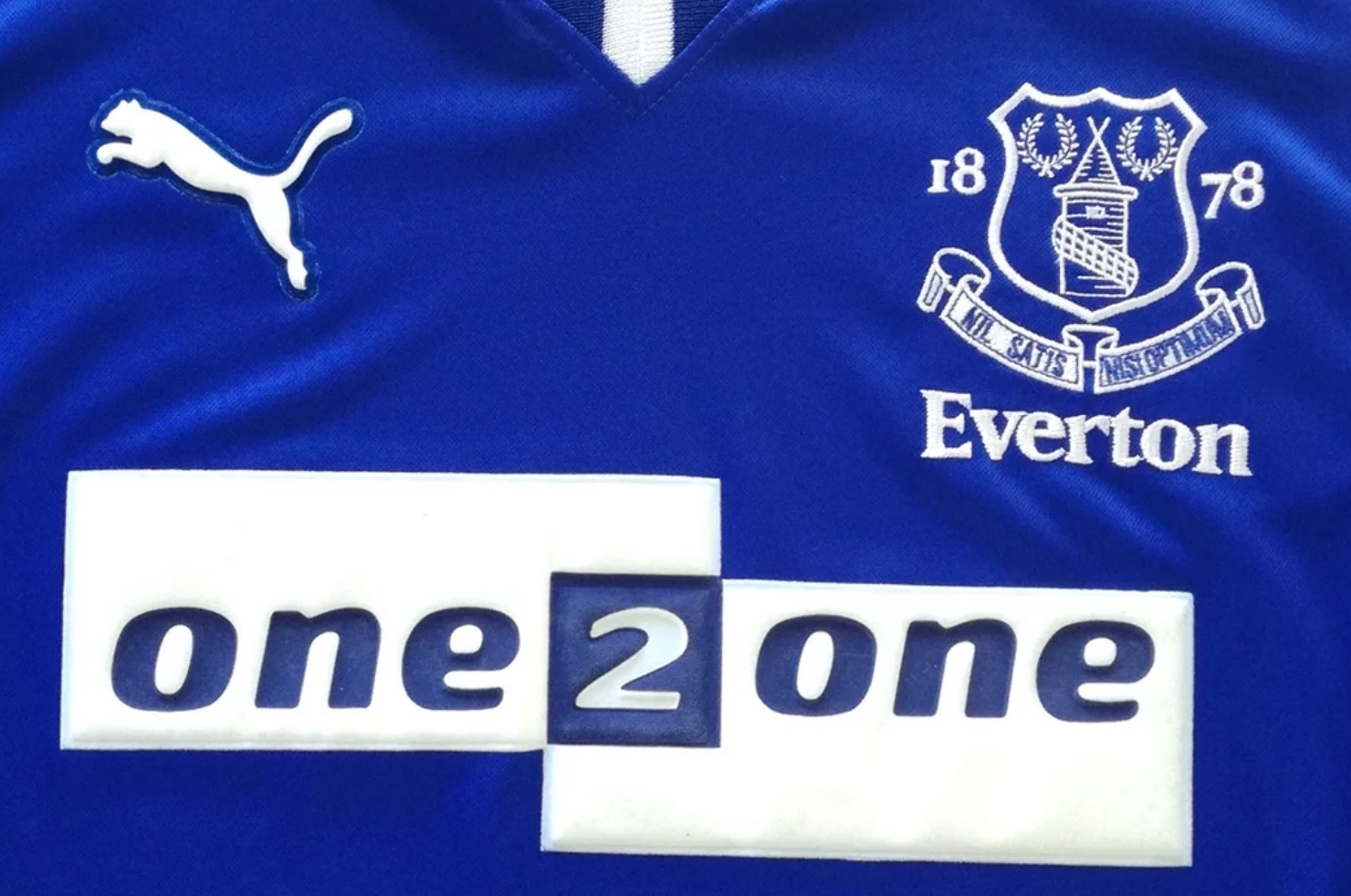
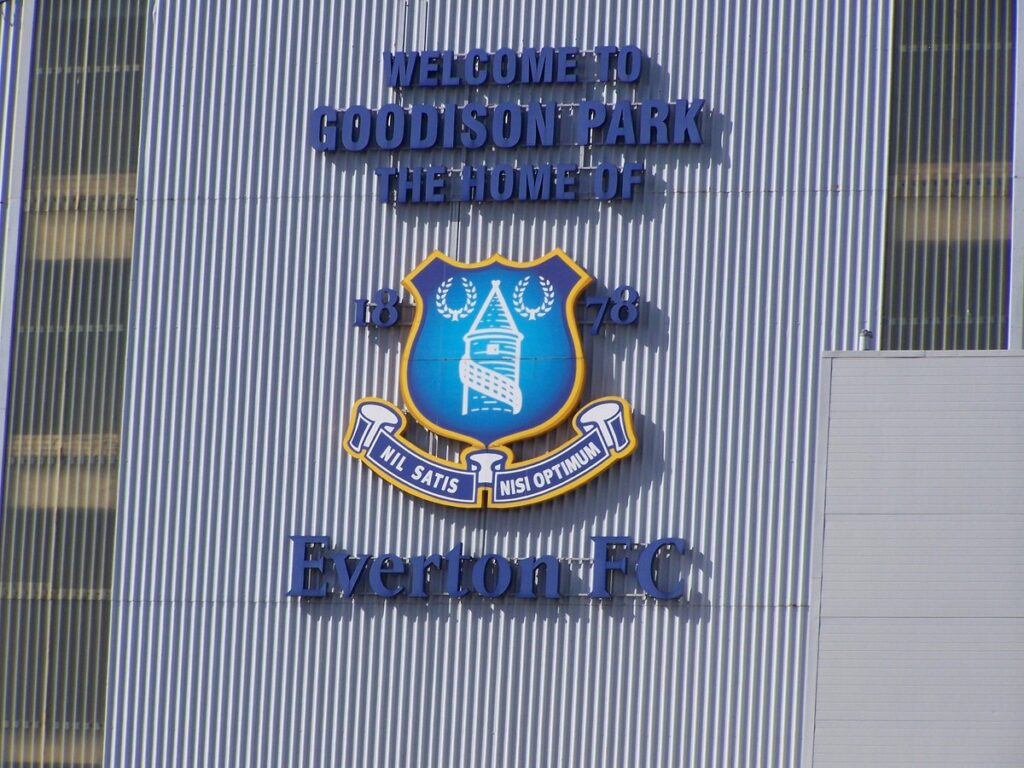
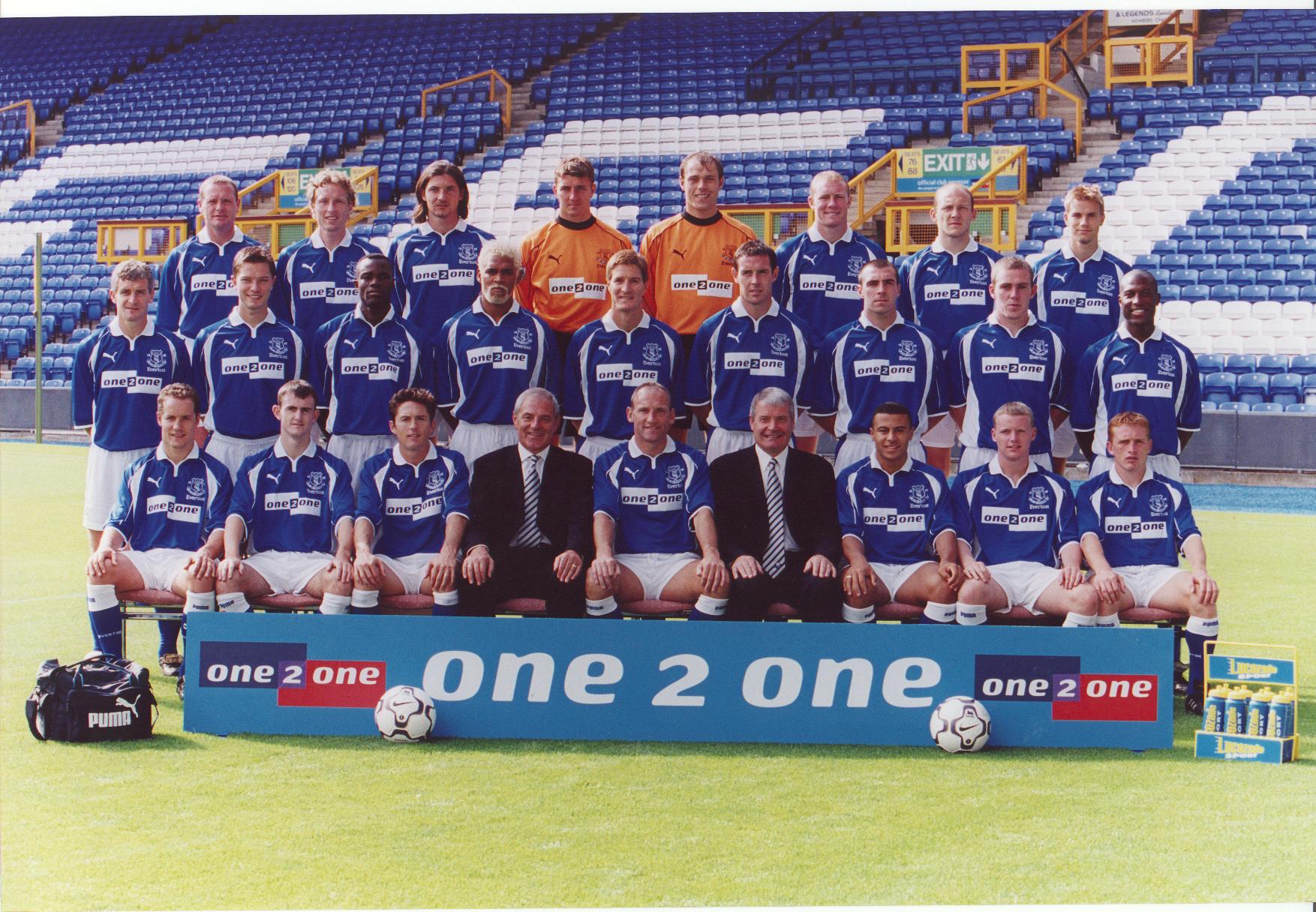
In 2000, this design was modified to add ‘1878′, the year the Club was founded, and the word ‘Everton’. The border was removed, while the background returned to blue, and depending on its usage, there were yellow edgings, although not on the jersey.
2013/2014
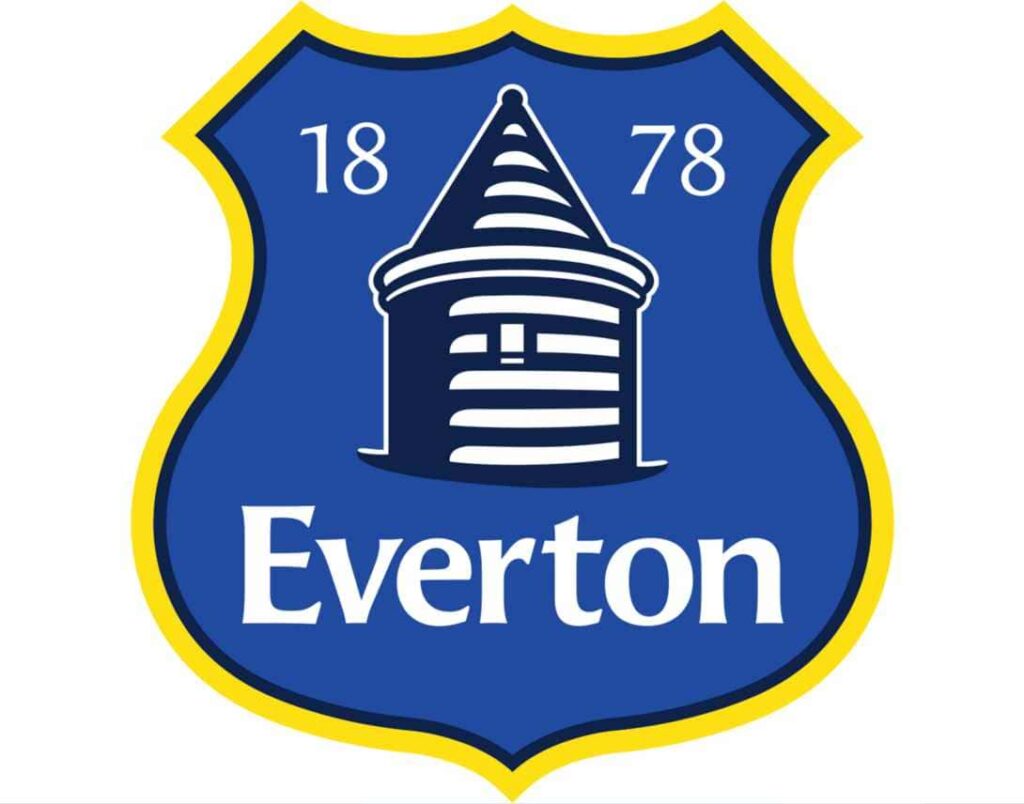
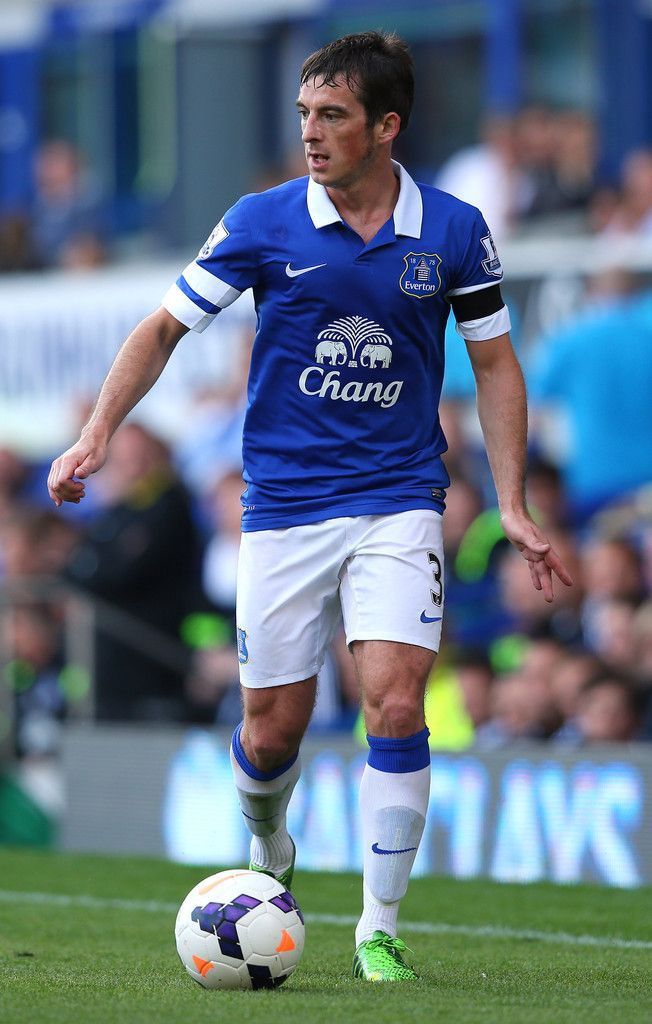
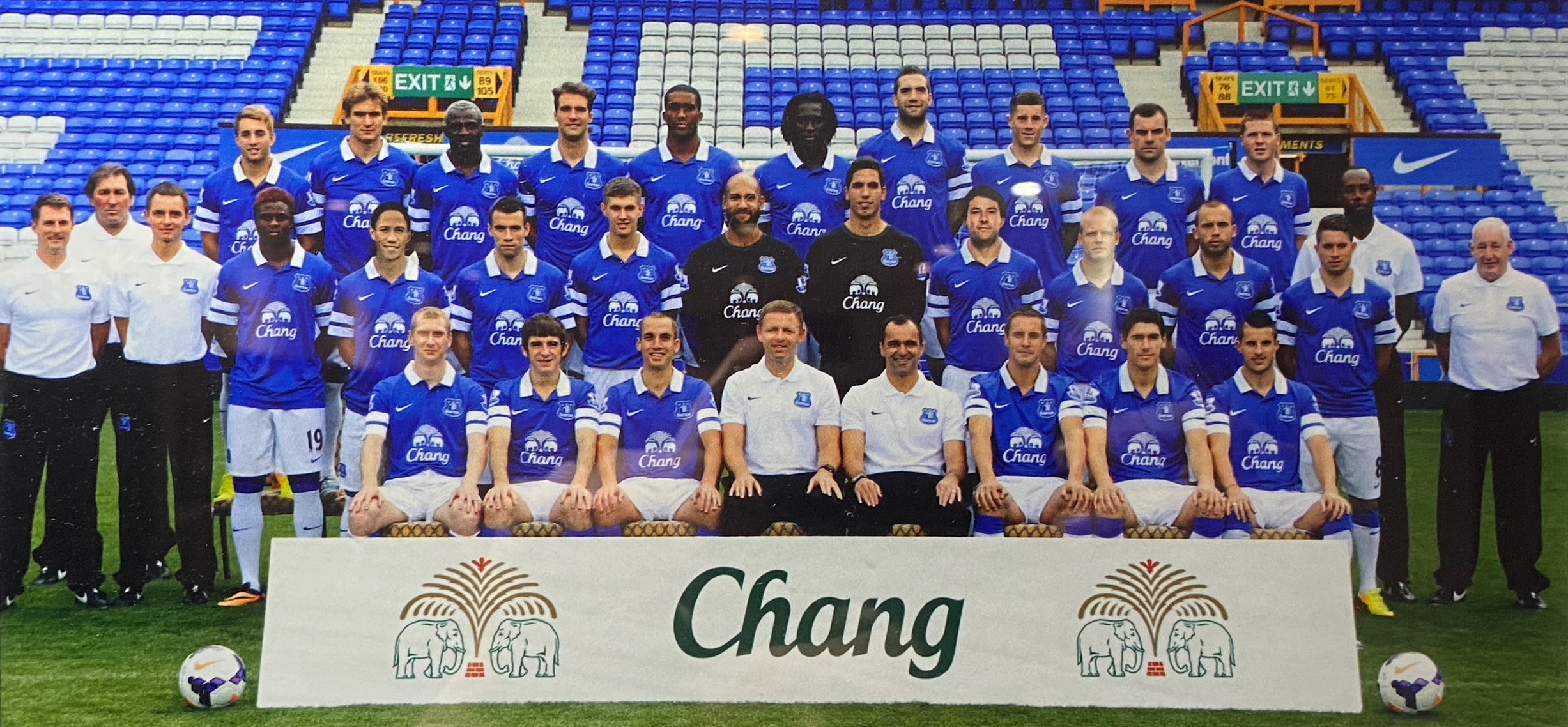
In 2013, a simplified crest appeared on shirts, which was undoubtedly the most controversial re-design since the badge began to appear in the 1970s. For a great many Evertonians, it deviated too far from the original Kelly crest of 1938. So much so, that a protest petition commenced online, which received 16,000 signatures just 48 hours after the crest had been officially launched by the club, eventually growing to 22,500. Ironically, the lock-up was closer to its actual appearance on browside, the squat shape being more accurate than previous representations, plus the non-existing rail, or staircase, had been removed. Andy Hunter in The Guardian reported that the club were accused by critics of betraying their traditions with this ‘embarrassing’ new badge, as it omitted two key features from the club secretary Theo Kelly’s original 1938 design – two laurel wreaths that represent the Olympian sign of success, and the club’s Latin motto ‘Nil Satis Nisi Optimum,’ and replaced by ‘1878’ and ‘Everton’ in white letters below the lock-up.
In a statement from the club, Goodison Park officials revealed that they had requested a new crest amid concern that the previous badge was “frequently misrepresented, had become increasingly difficult to reproduce in the digital age and often suffers from having key elements removed such as those ‘outside of the shield’ – namely ‘Everton, 1878 and Nil Satis Nisi Optimum.’
“It has also proved complex to replicate accurately on a number of retail ranges and other materials, resulting in a myriad of different colours and designs.”
Everton denied allegations that the ‘modern, cleaner and dynamic design’ was influenced by pressure from broadcasters, but admits its commercial partners, Kitbag and Nike, were consulted.
The club statement added, “Its simplified nature means it can be reproduced more effectively in the digital and retail arenas.”
However, just days later on 28 May 2013, the official club website had issued a grovelling apology and a statement promising to consult fans before agreeing on a new version for the 2014-15 season. Fans were informed that the unpopular new badge would still be used for the 2013-14 season because it was too late to reverse the process with the kit manufacturers.
But Everton accepted they were guilty of not consulting their fans, with their statement continuing;
“You have spoken to us loudly and clearly. We have listened. Several meetings and countless discussions have taken place. And, we have reached a decision; a decision that starts with an apology. We are sorry. It is clear that you wanted to be involved in the selection of our new club crest. We agree with you and we are sorry we spoiled so many weekends. We regret we didn’t ask every Evertonian about something that matters so much to every one of you.”
The club emphasised, though, that they “remained firm in the belief that the crest should be modernised.” The chief executive, Robert Elstone, said the consultation process had not gone as far as the chairman, Bill Kenwright, had wanted, and spelled out the club’s plans.
“Whilst the time-constraints of kit suppliers in particular present challenges, which inevitably means the version released on Saturday will be in operation for the 2013-14 season, we are determined to give our fans a greater say in how we represent the Club on our jerseys, at Goodison Park, and across media around the world.”
“In advance of the 2014-15 campaign, we are turning to you to help us shape and refine the badge we’ll adopt in the future. Evertonians from all sections of the fan-base will be pulled together in a fully transparent way. This group will conduct an in-depth review of all aspects of past and present Club Crests. The panel will then develop ideas and put forward suggestions to you. Evertonians will make the final decision.”
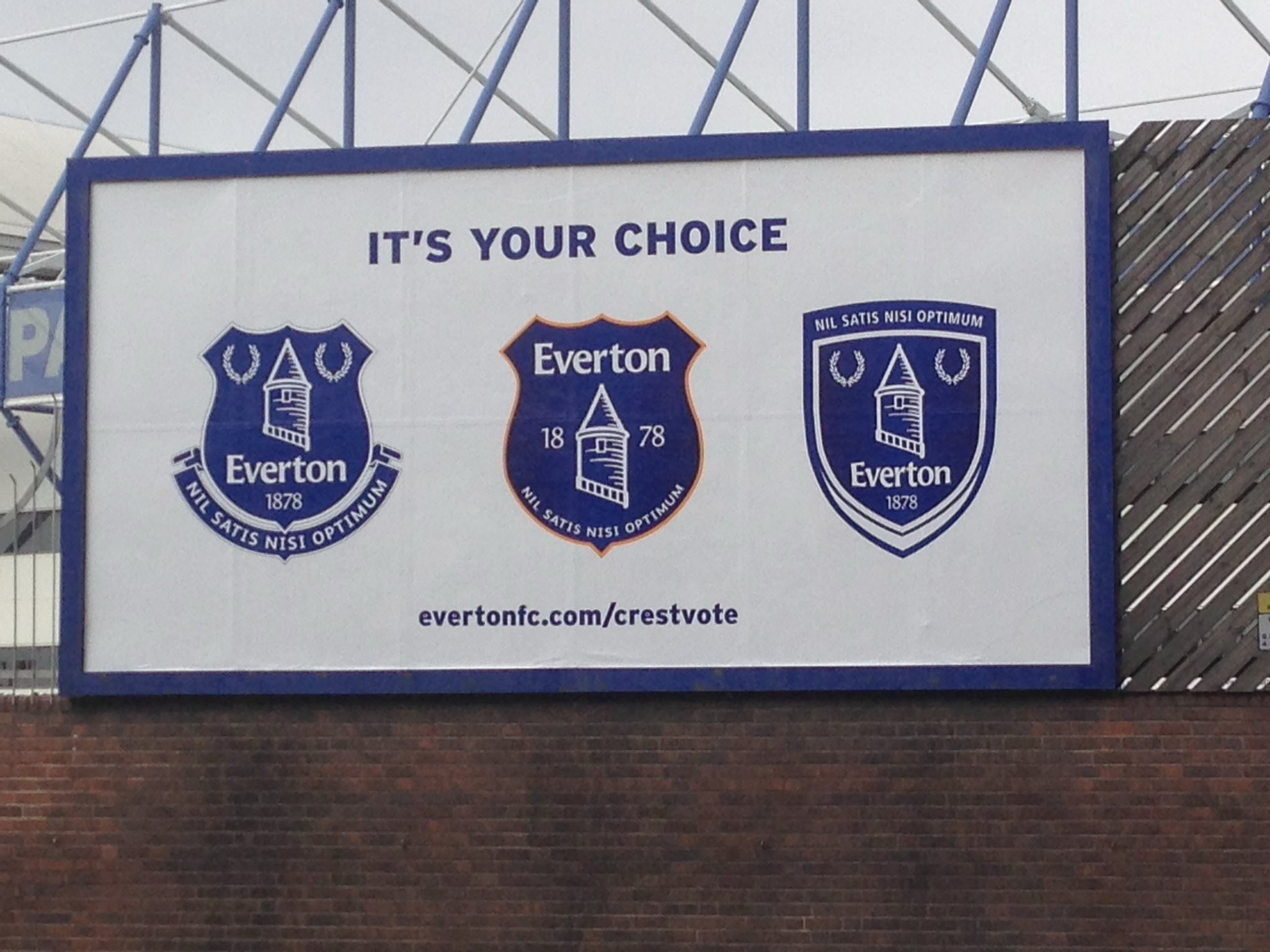
Following the wide-ranging consultation exercise, it resulted in the production of three new crests. Around 20,000 supporters took part in the process with the overwhelming majority voting for ‘version A.’ (See photograph below).
2014/2015 – Present
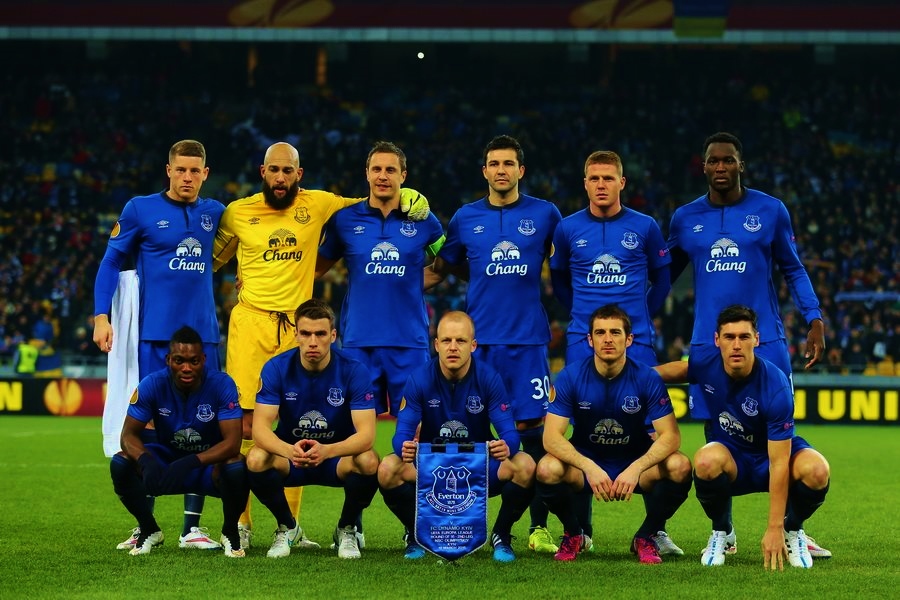
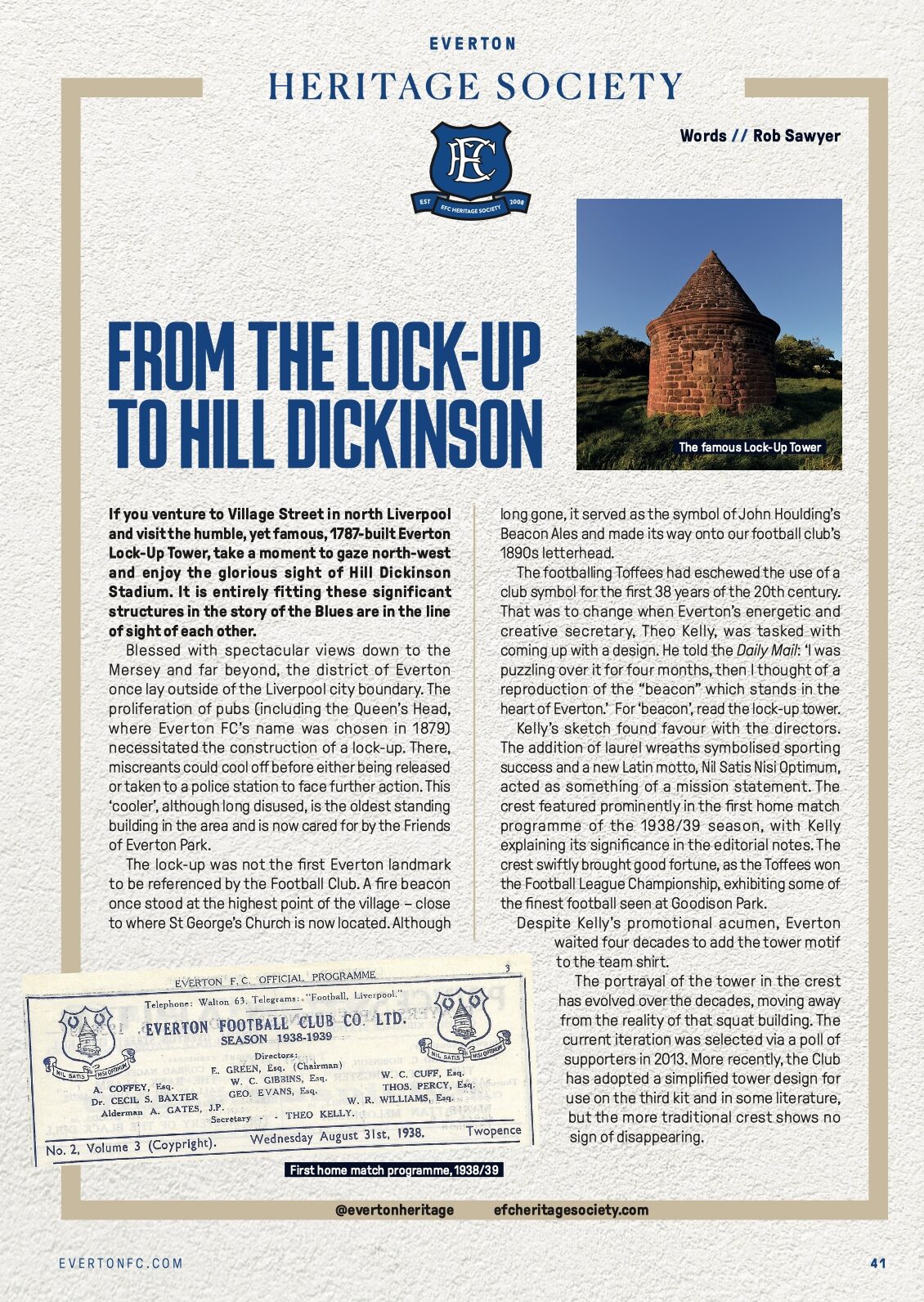
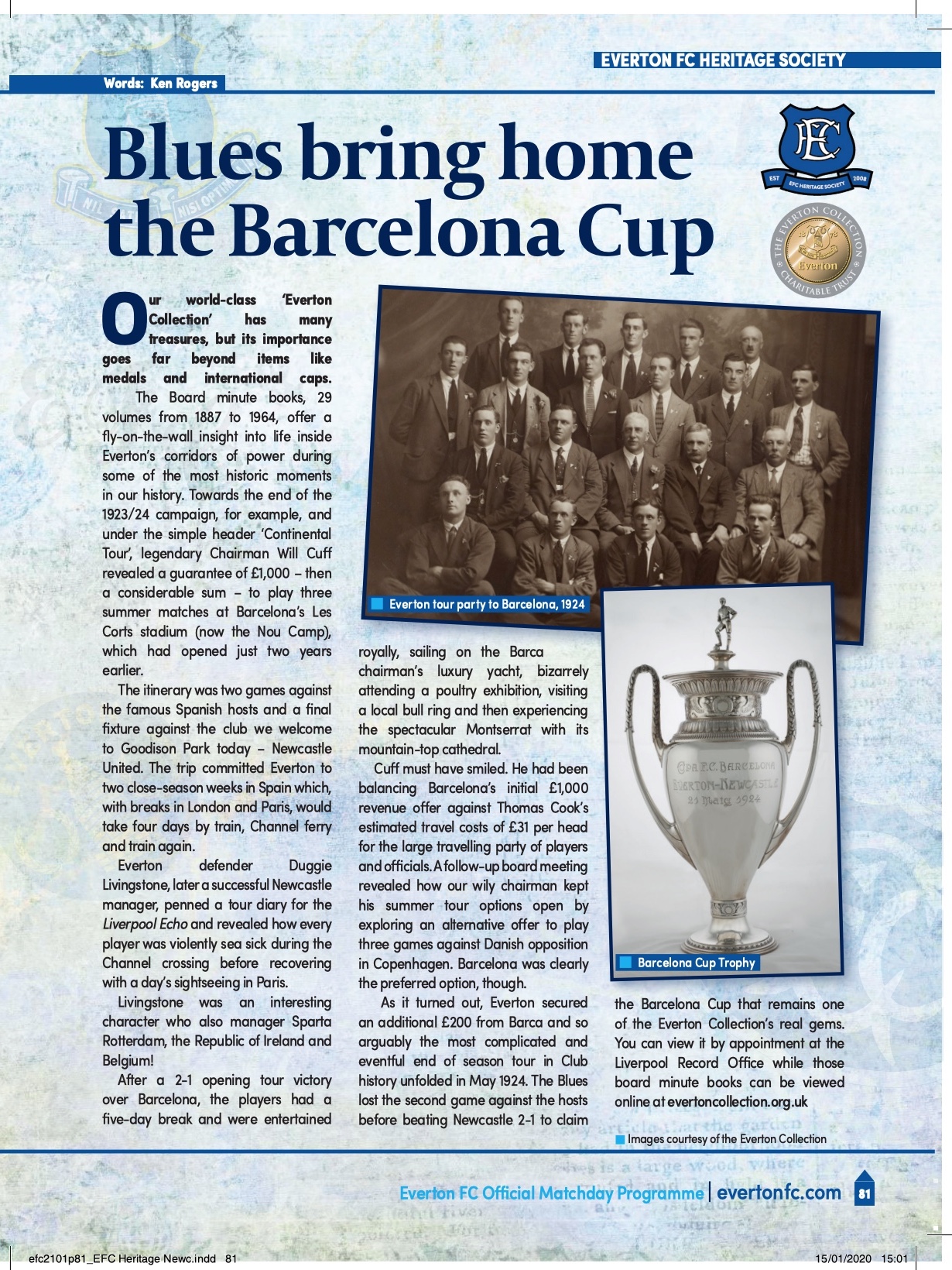
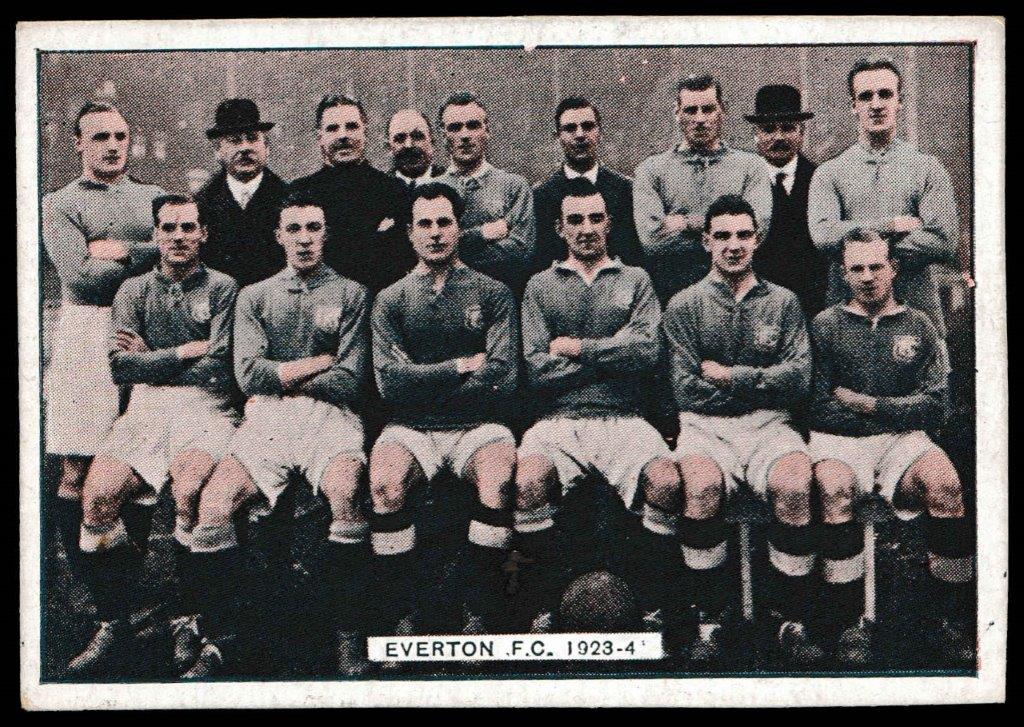
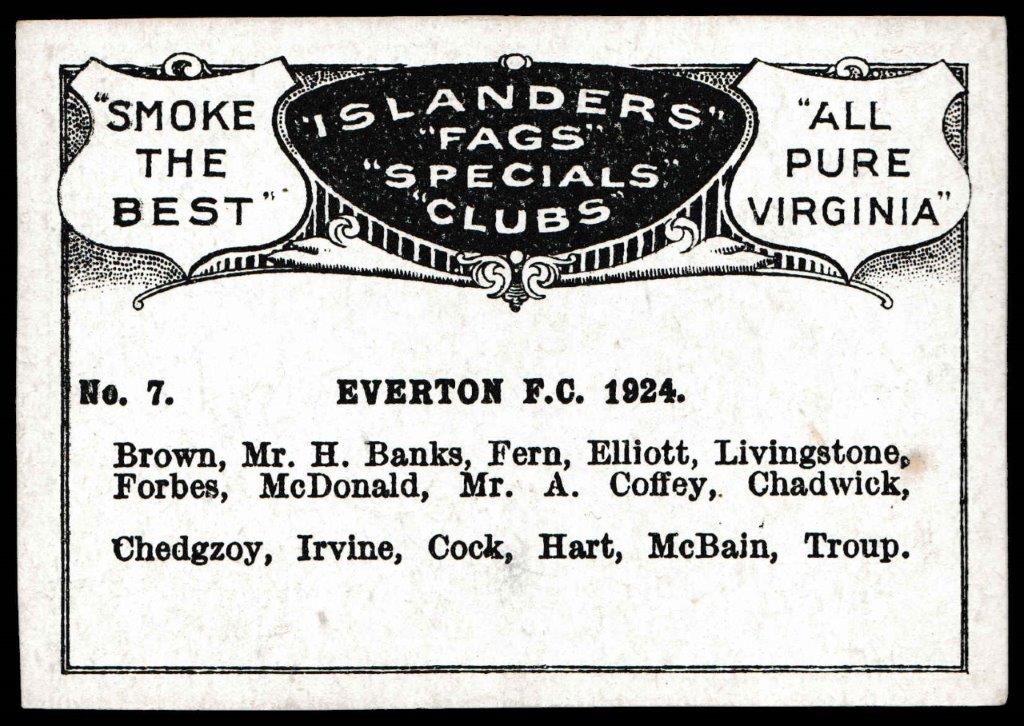
‘Version A,’ designed in 2014 was based on previous versions, restoring all the iconography of Theo Kelly’s 1938 design but with a modernised look. It featured a blue crest with the lock-up, the two wreaths, and the date of the club’s foundation in white. ‘Everton’ with ‘1878’ in thin traditional lines was placed on the bottom part of the shield. The scroll with the Everton motto in Latin was now arched to line the bottom part of the crest. Even the new strip was a throw back to an earlier design, taking inspiration from Everton’s 1924 Barcelona Cup kit (see programme feature and photos after the end of this article below).
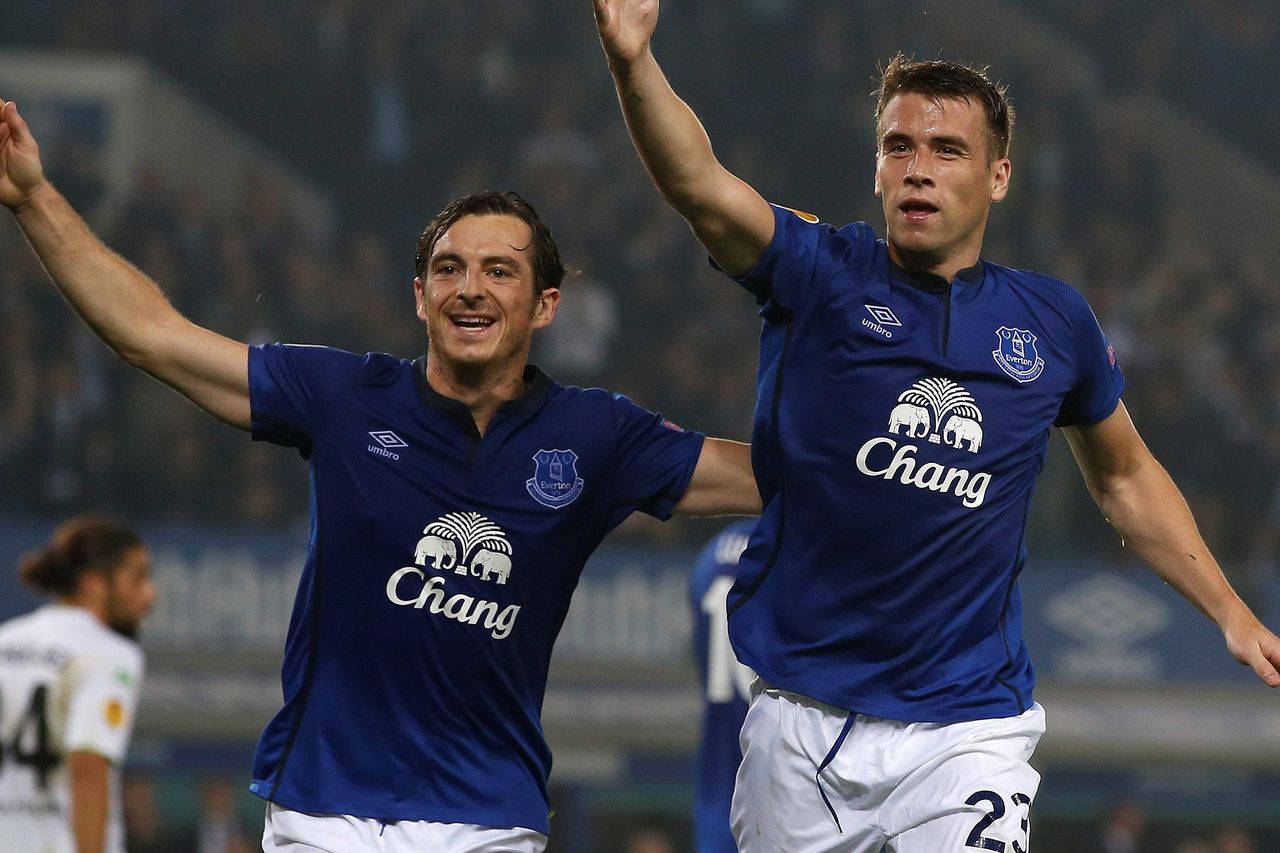
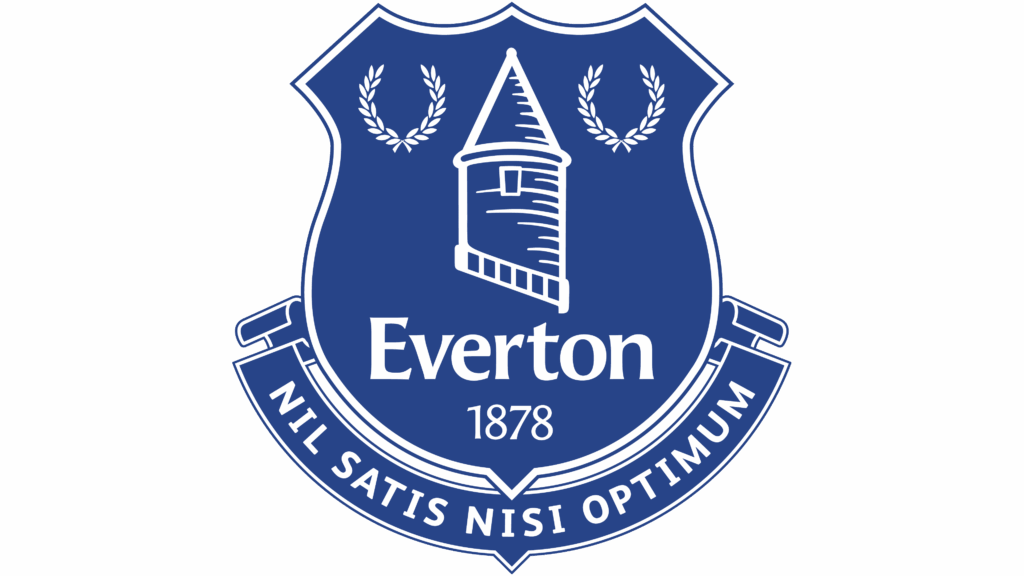
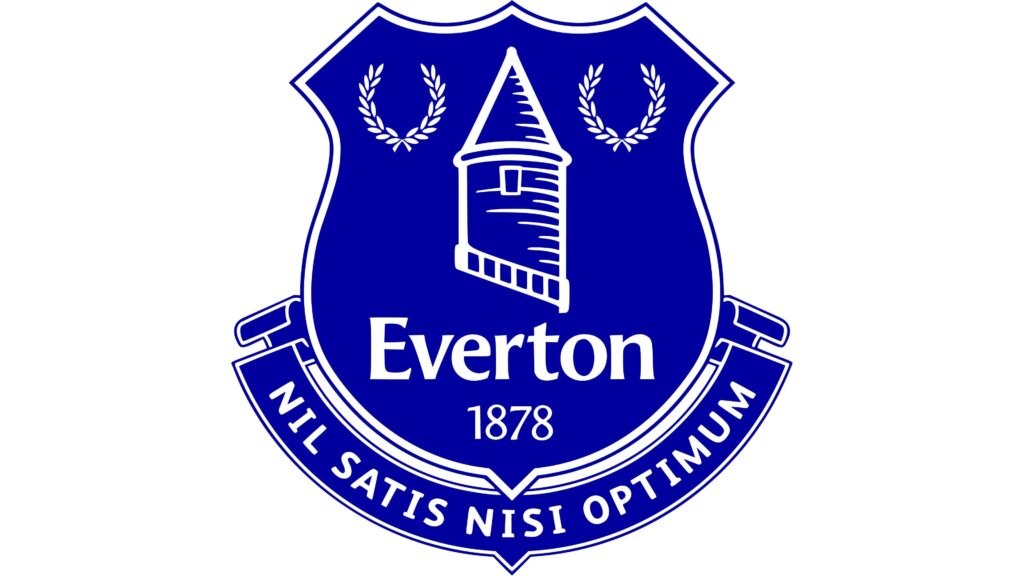
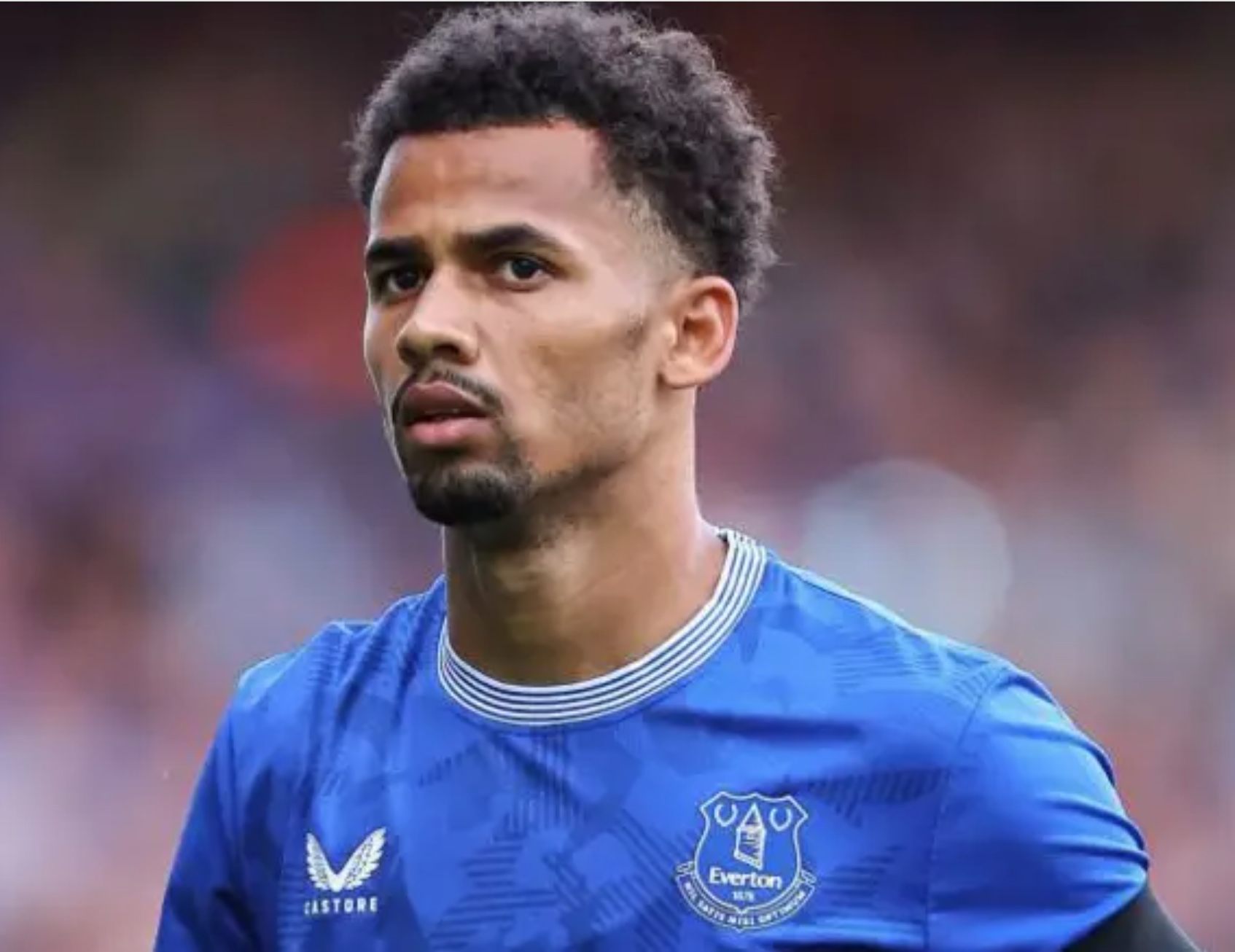
The present logo, introduced at the start of the 2021/22 season, is a more vivid brightening up of the previous crest and badge from 2014/15. All the elements were preserved unchanged.
………………………………………………………………………………………….
2025 – Present – Hill Dickinson Stadium
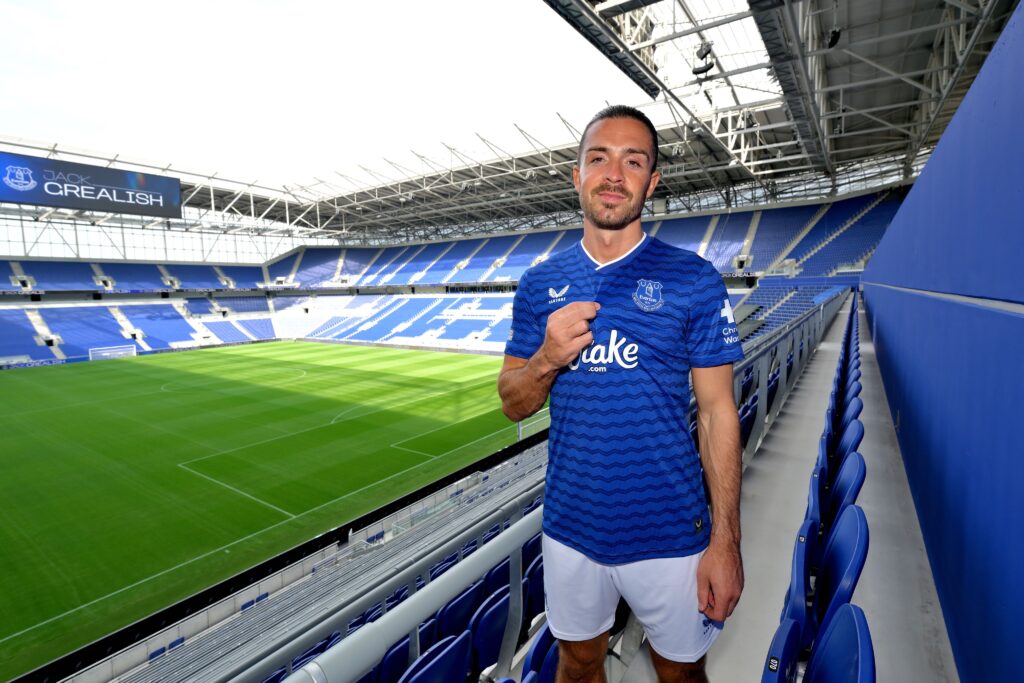
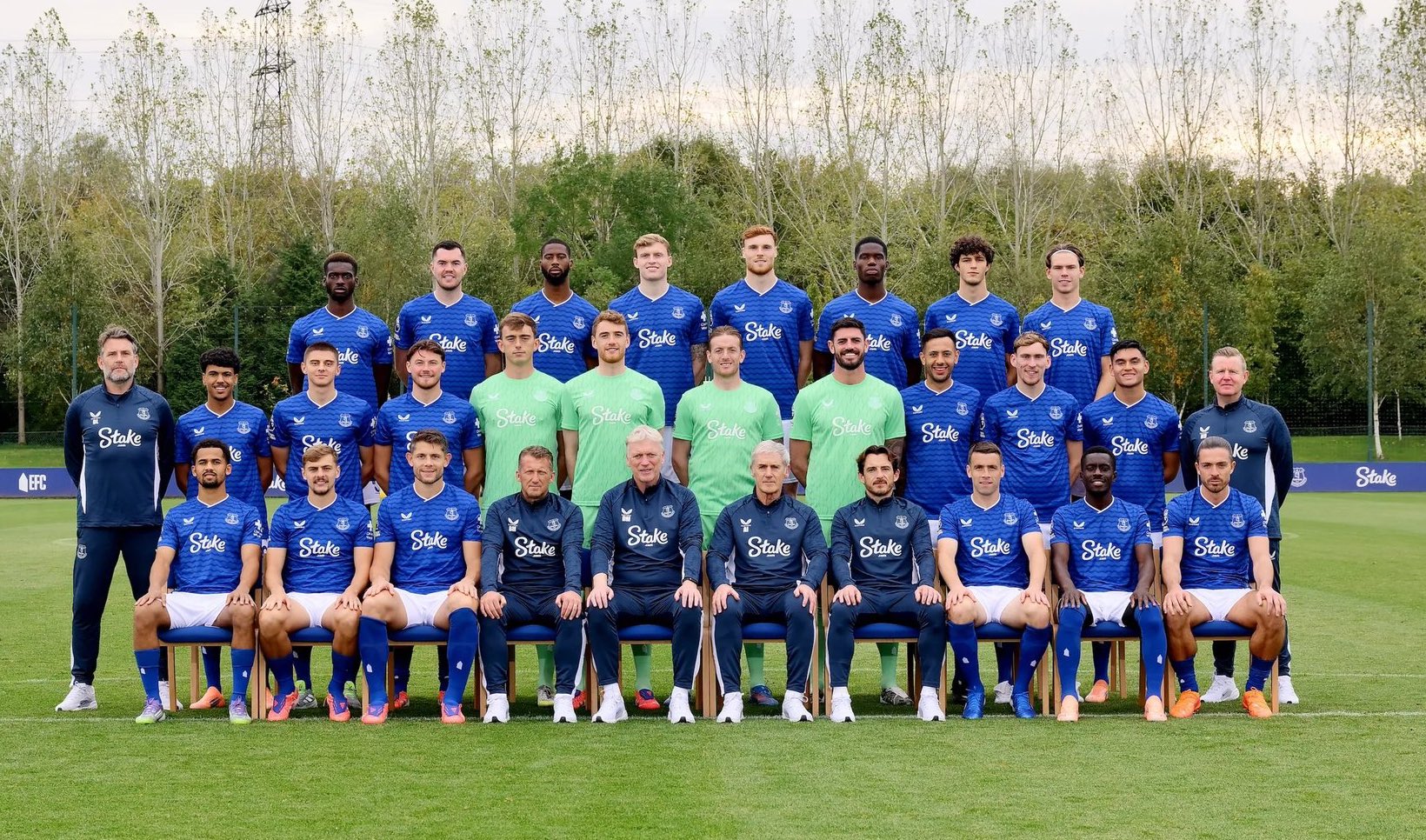
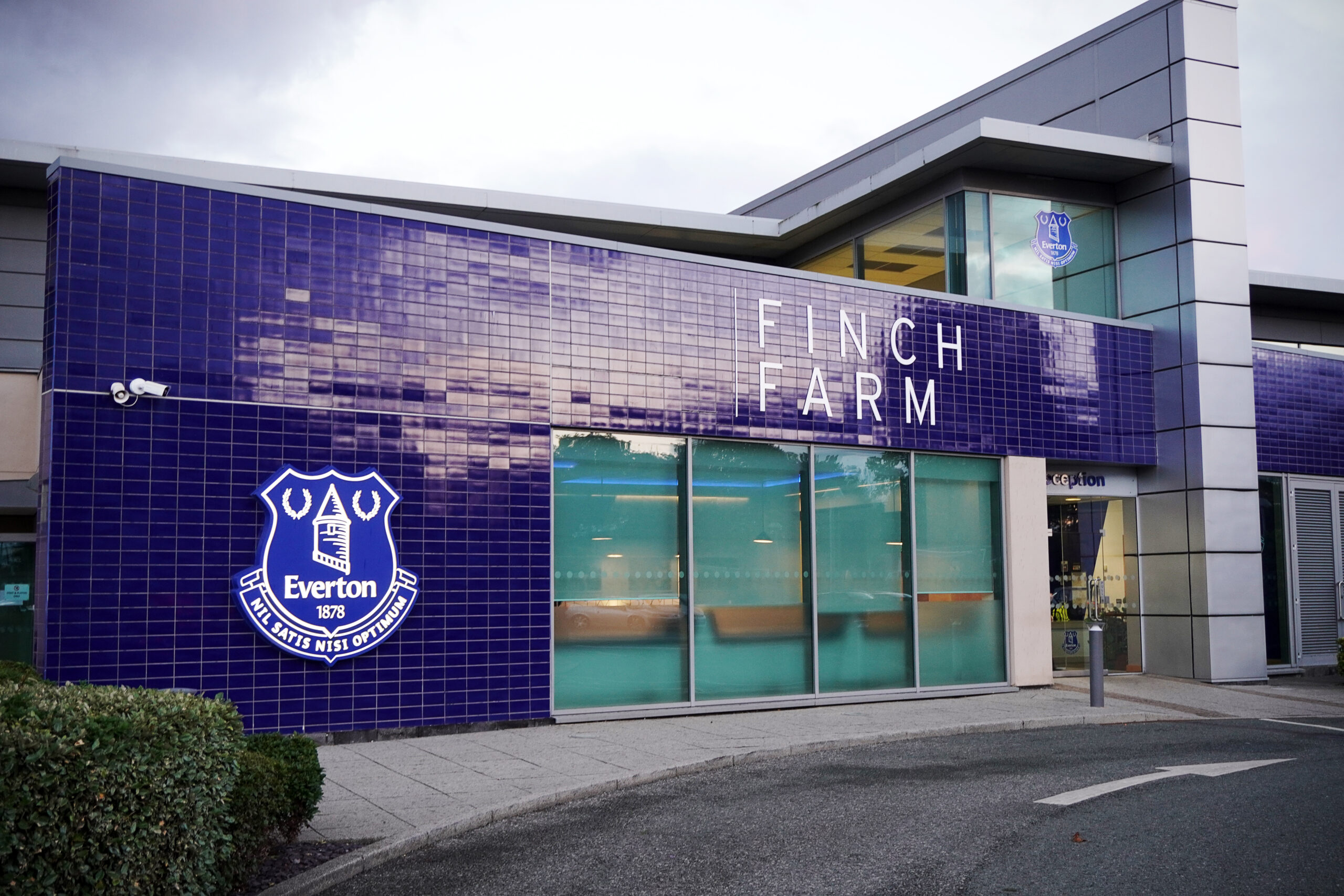
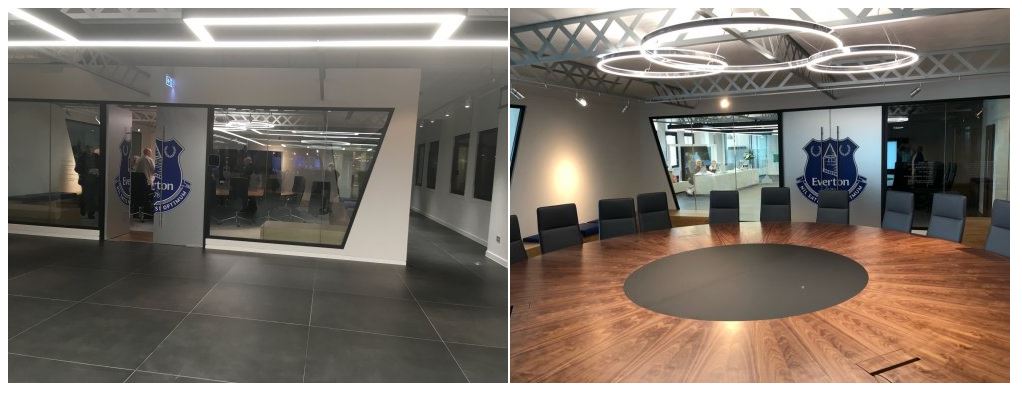
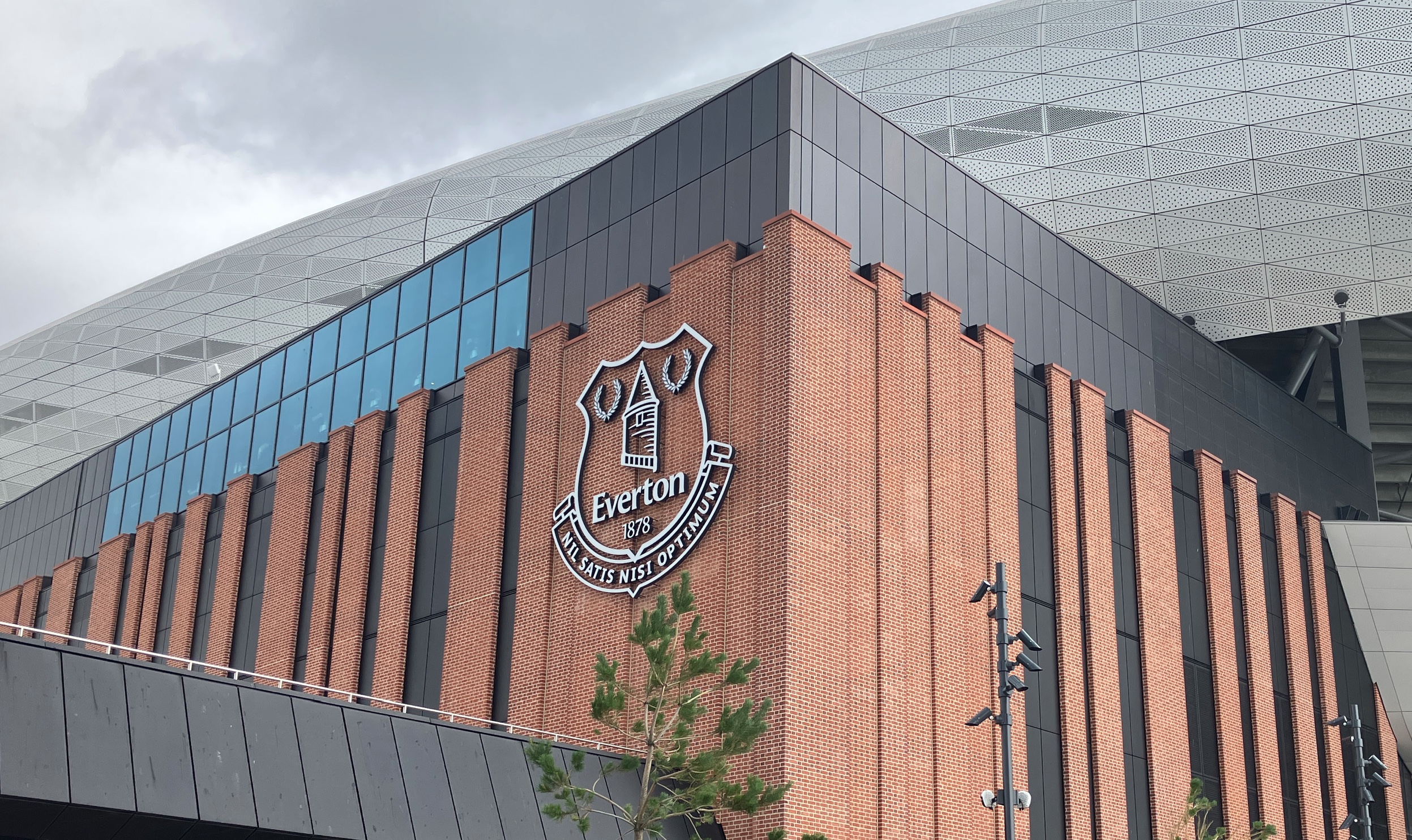
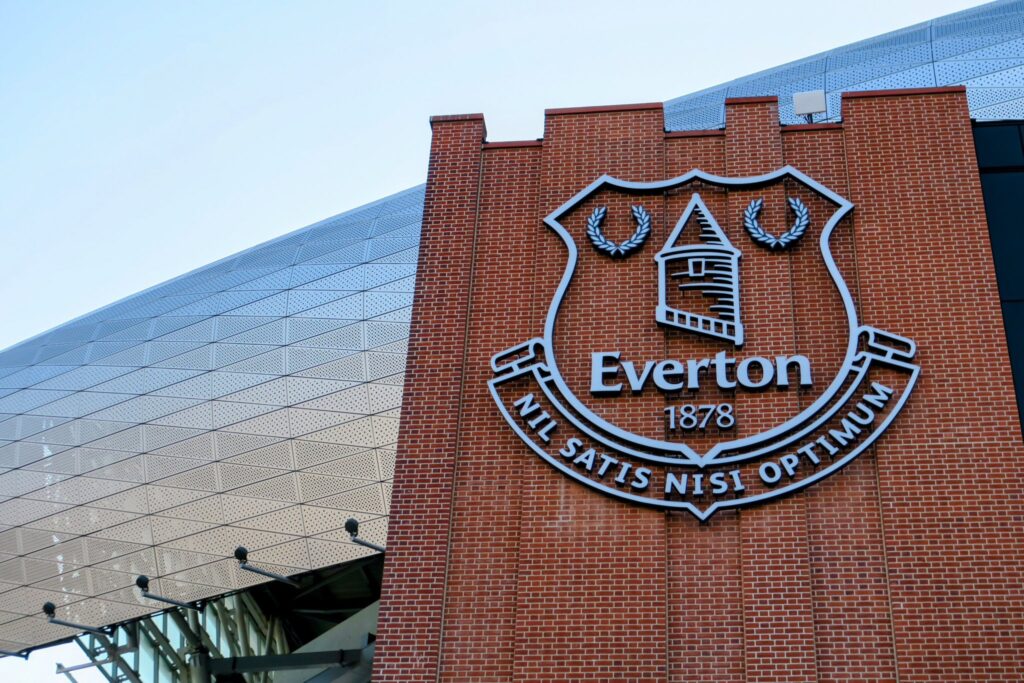
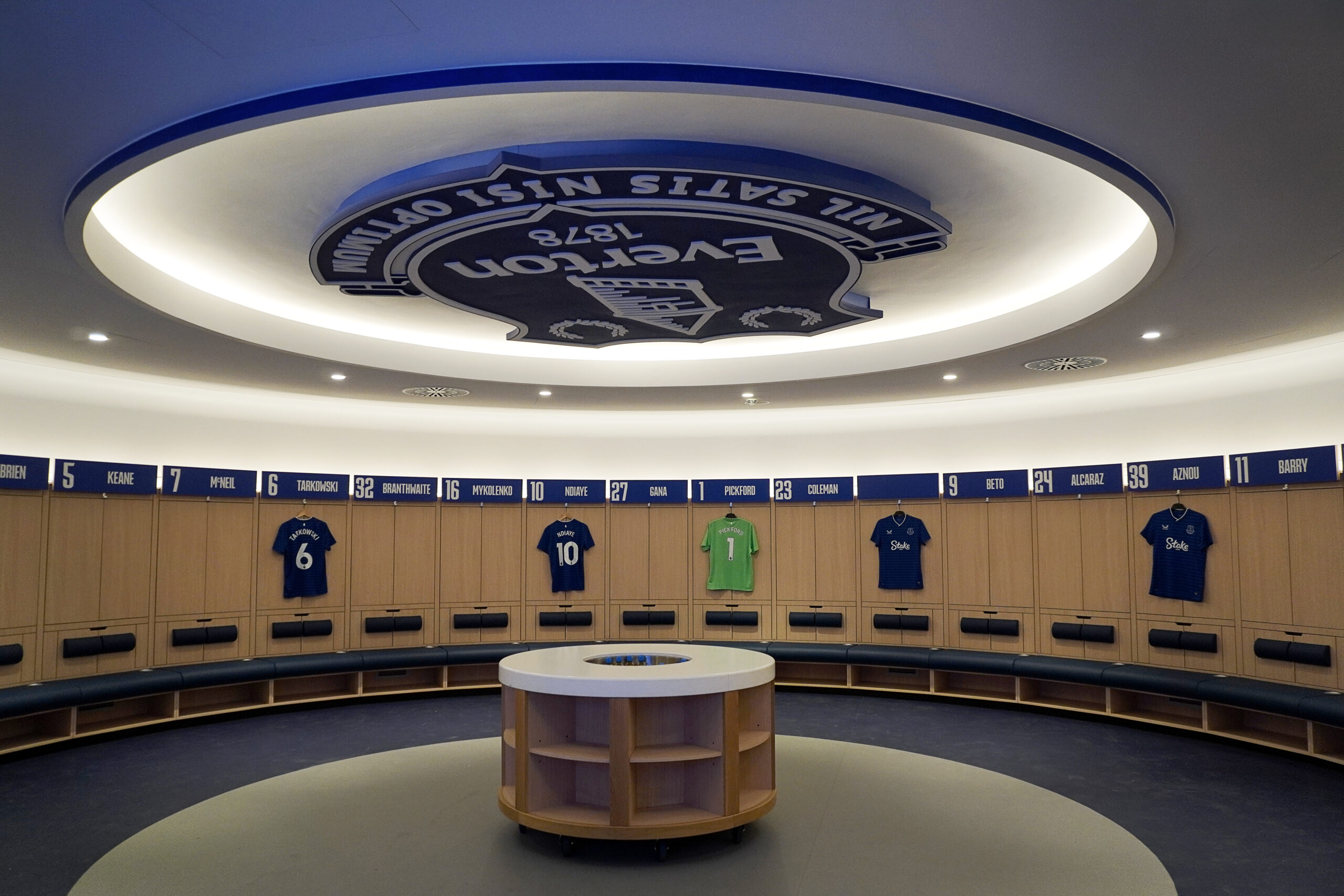
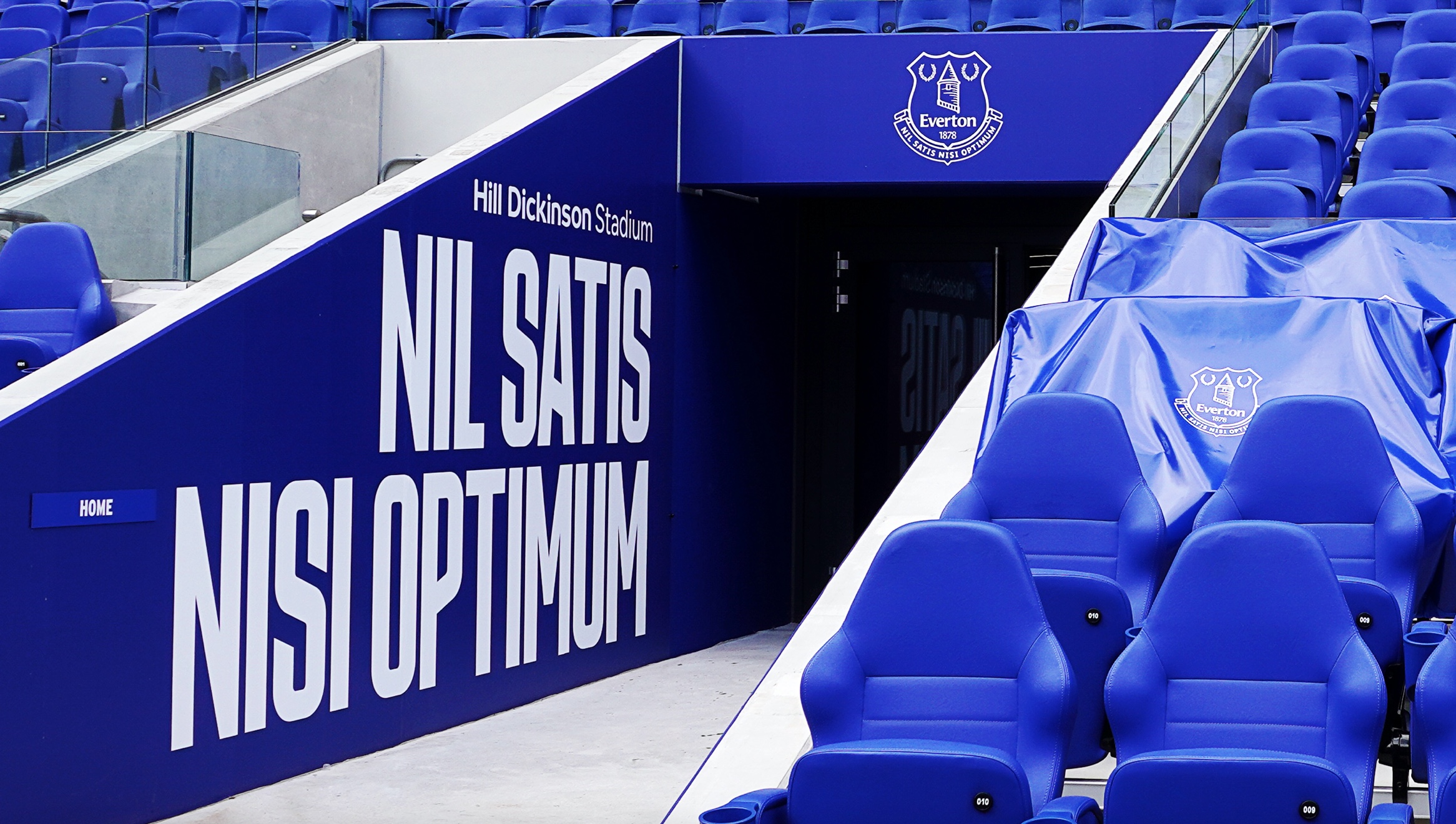
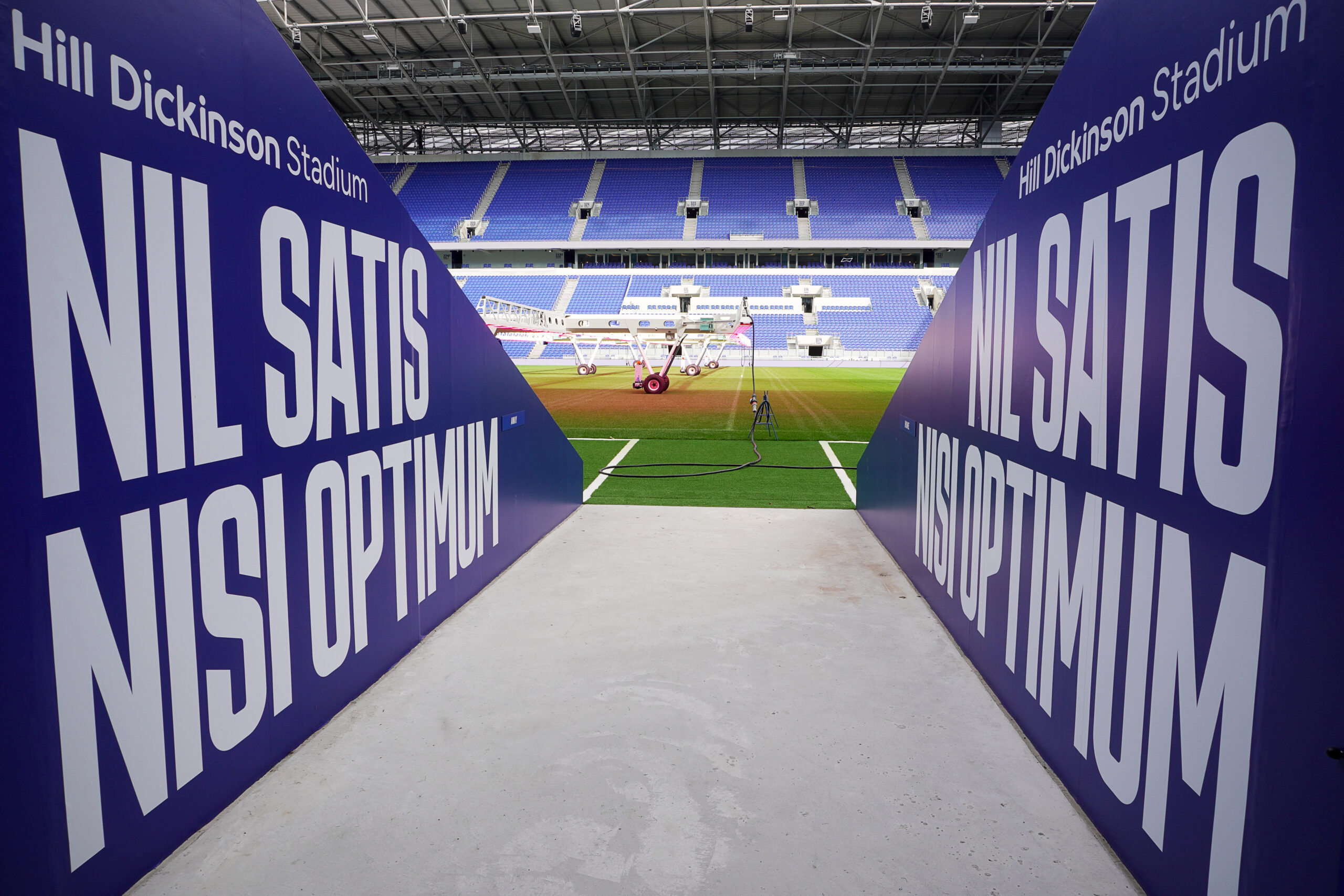
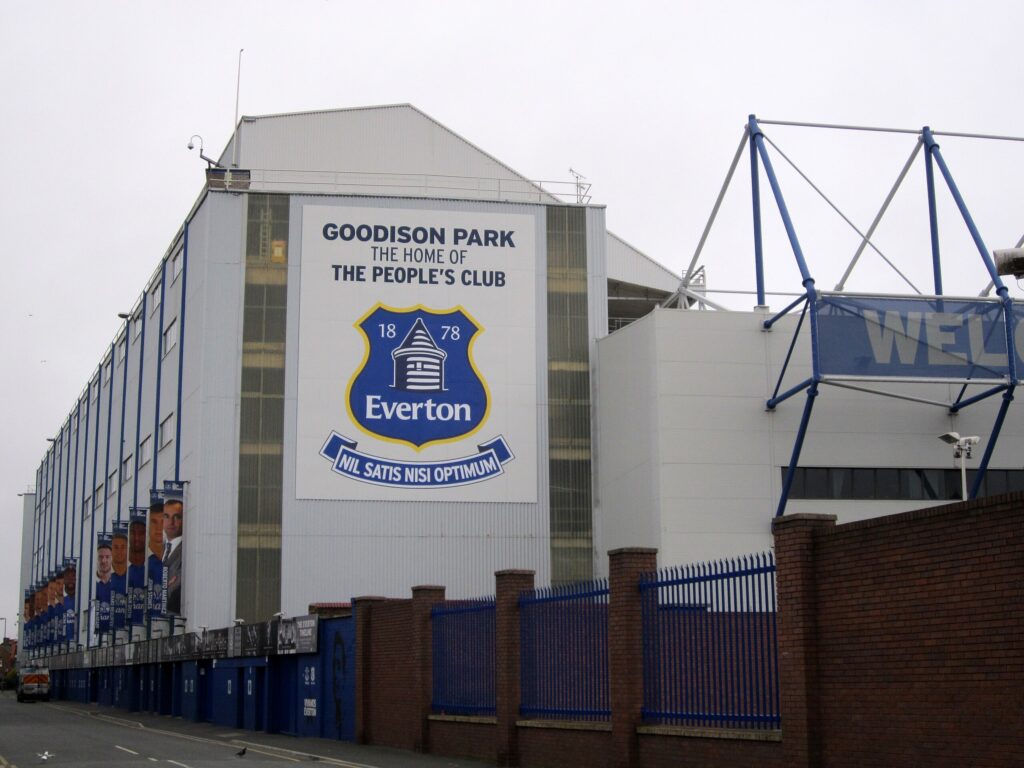
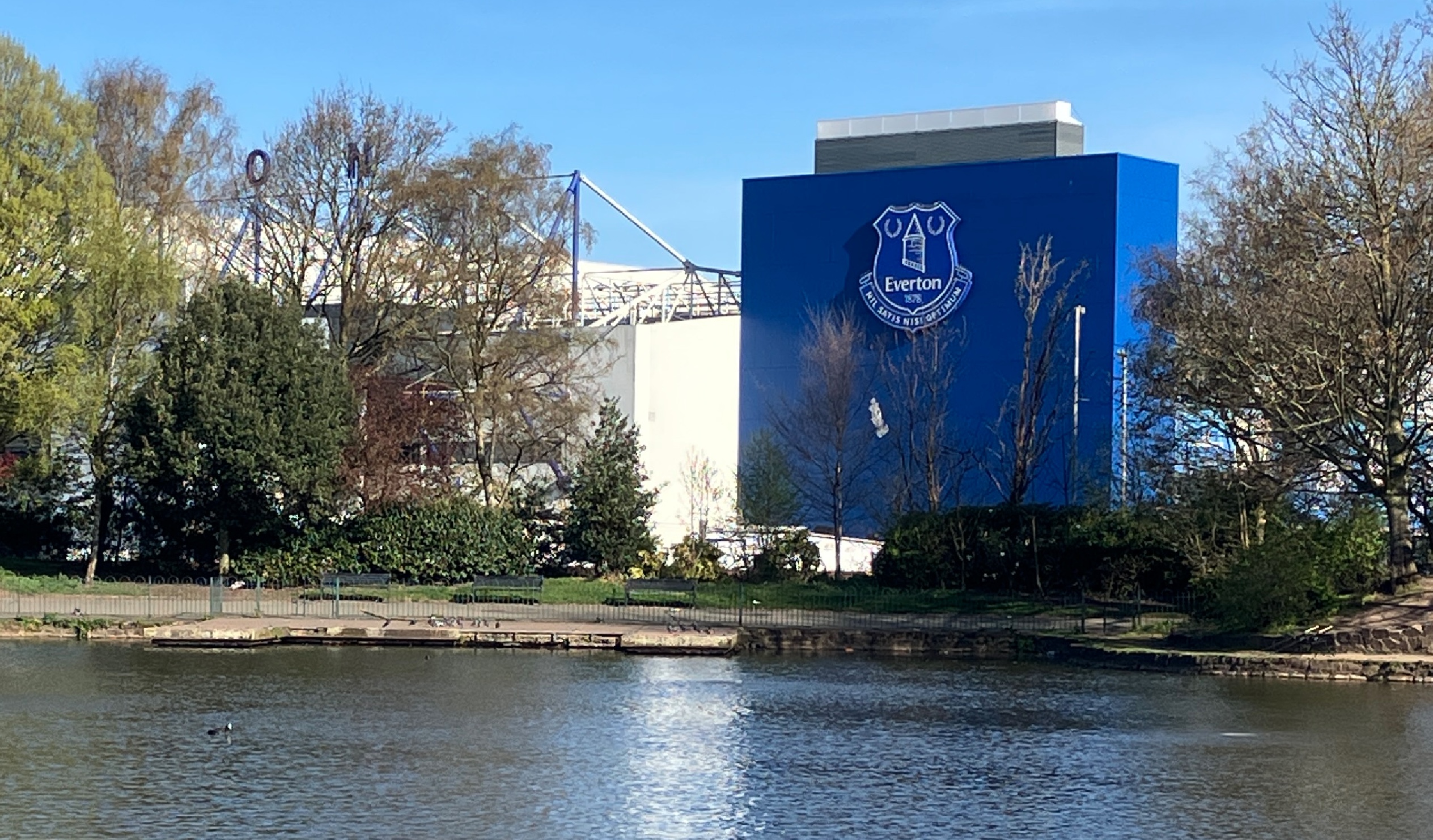
It seems fitting that Everton FC begin their new history at Hill Dickinson Stadium still proudly displaying the crest around the ground and on the shirt, closely reflecting the original design from 1938. Theo Kelly included all the right ingredients to provide a lasting legacy; the heraldic shield going into battle, the Roman iconography relating to the rewards of victory, and a motto reminding what is expected of its army. And the centre piece is still that modest edifice that continues to tie the club to the locality where their name was chosen – not forgetting their nickname – all within a few yards of each other. Little did those builders of the Lock-up (shown for the first time on that map of 1790), realise how their modest, functional structure would become internationally famous.
Meanwhile, on the opening game of the 1938-39 season, Secretary Theo Kelly and Chairman Ernest Green could be seen proudly wearing their Everton ties at Blackpool on 27 August 1938, displaying their new crest before the opposition. They could never have imagined what they had started, aptly reflected at the opening game of the 2025-2026 season, the first at the new stadium, where the players were greeted with over 50,000 flags bearing that iconic crest, to open a new chapter in the history of Everton Football Club.
The opening game at Hill Dickinson Stadium, Everton v Brighton – 24 Aug 2025
(Mike Royden)
——————————————————————-
Researched, compiled and edited by Mike Royden
Photo research by Mike Royden
Thanks to:
Paul Walsh
Rob Sawyer (proofing, additional photographs and advice)
Lewis Royden (Everton FC Heritage Society), photographs and advice
Ken Rogers, Brendan Connolly, David Prentice (Everton FC Heritage Society)
Mike Gow
Sources
Liverpool Echo / Football Echo
Liverpool Evening Express
Liverpool Daily Post
Billy Smith, BlueCorrespondent website
Steve Johnson, Everton Results website
Steve Johnson, Everton: The Official Complete Record
James Corbett, Everton Encylopedia
David France & David Prentice, Dr Everton’s Magnificent Obsession
Ian Ross & Gordon Smailes, Everton: A Complete Record, 1878-1988
Chris Goodwin, England Football Online website
The Everton Collection
………………………………………………………………………………………….
………………………………………………………………………………………….