Everton superfan, shareholder, unofficial official and arguably Everton’s oldest ever player and goalscorer!
Our story begins with a curious little column, part of a series written by the esteemed Liverpool Echo sportswriter Ernest ‘Bee’ Edwards and published on page six of the newspaper, on Saturday, 20 October 1934. The text is accompanied by cartoonist Allason Moscrop’s detailed caricature of Clarkson, resplendent in coat and hat with signature chrysanthemum on his lapel. It reads as follows:
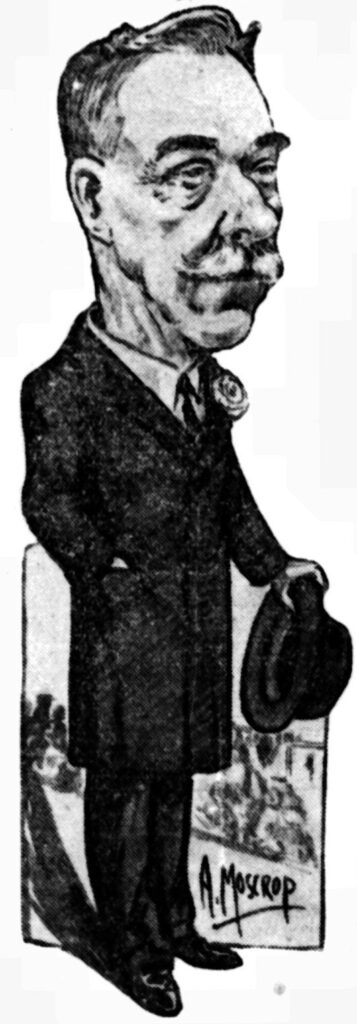
‘Here’s one of the real old scholars of football. Was with Everton when they started, followed them unfailingly for 57 years, when Everton started at Stanley Park, when they went to Priory-road, and will be with them to the bright end.
Name: Mr. George Clarkson, whom nobody knows or recognises by that name. “Bumper” is his proper name. Born of Blackburn parents, but himself out and out Evertonian.
Sort of unofficial official. Works for the club with no thought of picking up a fine position in his gala days of retirement. A lover of work and a worker for love – in the good name of sport. Followed Everton because it was traditional with them that they must put the game before themselves; players of the best quality only; buying the best has always paid Everton.
He used to play for the then famous Aintree Church, which produced the Balmers, Crelleys, &c. And later when the war was on and “Bumper” was near 50 years old, Everton ‘A’ played a game with the sojjers at Lathom. Two men failed to turn up, so the trainer was asked if he had a pair of eights. He had. And that’s how “Bumper” became outside right.
And against whom do you think he played? None other than Hanlon, former Everton back, and well-known at Bristol City back. Hanlon was Trainer Elliott’s relative and “Bumper” realised his poor chance, but arranged a plan of campaign. He would not hold the ball, he would place to his inside right, and then getting the return pass would push the ball straight forward. It worked famously and “Bumper” scored a goal. The colonel congratulated him after the game and inquired his name. “I’m Alec Latta,” said “Bumper,” hardly knowing what to say. “Put it there,” said the colonel.
And by the time the Everton team returned home, Billy and the late Harry Green were there to offer their congratulations to “Alec Latta.”
In many clubs you find an officious unofficial interloper, but here Everton have been blessed for many years with “Bumper” Clarkson’s kindly thought and earnest endeavour. You cannot mistake him in the shareholders’ stand – he’s the man with the flower. Typical Liverpudlian, good and sound of heart, may he live long to enjoy his peaceful retirement “with the old dutch.”’
EARLY YEARS
George Clarkson was born on 17 September 1869, the youngest of six children, in cramped court housing at 8 Collingwood Street, Vauxhall, between Scotland Road and Great Homer Street and now long lost on the site of the looped approach road to the Kingsway Tunnel. He was christened on 8 November that year at the newly consecrated church of St. James-the-Less, Kirkdale, at the south end of Stanley Road where it branches off from Scotland Road. The church was destroyed by Luftwaffe bombs during the May Blitz of 1941.
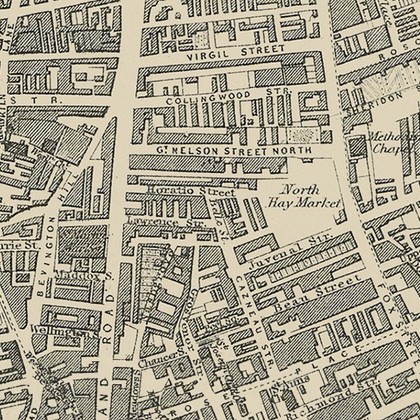
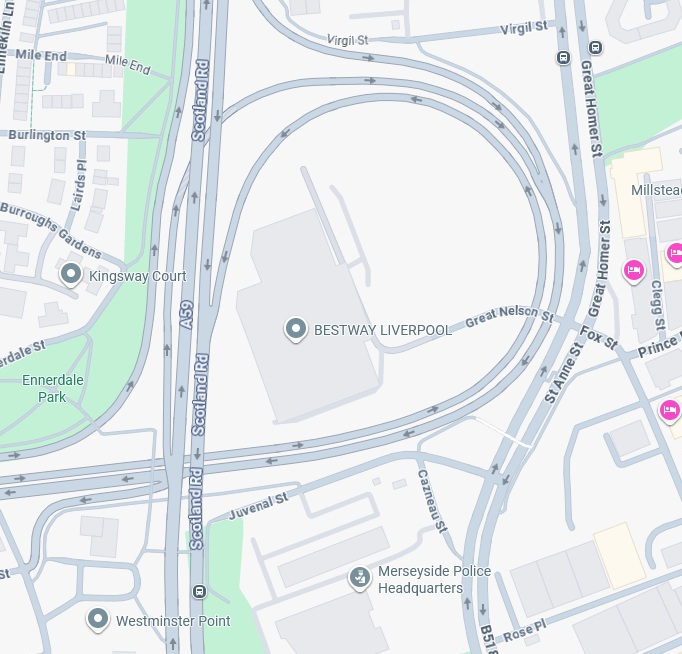
George’s parents were William Clarkson, a labourer born in Blackburn in around 1825, and Jane Blundell, who was born in Crosby in around 1830. Both William and Jane were illiterate at the time of their marriage at St. Nicholas parish church in Liverpool on 27 June 1852, each leaving a cross as their mark on the marriage certificate in lieu of a signature. William Clarkson died in February 1871, and, having remarried to a boilermaker called William Wainwright on 29 December 1872, Jane passed away in October 1876. Both were buried in unmarked public graves at Anfield Cemetery, leaving George Clarkson an orphan before his seventh birthday.
George Clarkson does not appear in either the 1881 or 1891 censuses and it isn’t difficult to conclude that his early years and journey to adulthood were a struggle. Four of his siblings, sisters Eliza and Mary and brothers Charles and William were married and had children of their own. Remaining sister Sarah Jane, who was born partially sighted, lived with and helped raise Mary’s family and was a much-loved aunt to her many nieces and nephews.
According to family accounts, young George spent much of his childhood, after his parents’ passing, in a children’s home or orphanage. The Liverpool Echo profile, plus anecdotal evidence from the Clarkson family, suggests that George may have become part of the church community, possibly even around the St. Domingo chapel in Everton at some stage, although the newspaper biography does suggest a connection to Aintree Church in his footballing days as a young man. There is a possibility that he may have taken part in some of the early cricket and football matches at Stanley Park as a boy, alongside the likes of future Everton FC directors and St. Domingo congregation members Alfred Wade and Will Cuff, who was a year George’s junior.
What we can be certain of is the fact that George Clarkson married Annie Walker in Kirkdale on 3 September 1896, exactly a fortnight before his twenty-seventh birthday. Annie was born in Anfield on 8 October 1867. George and Annie soon started a family; daughter Millicent (or Milly) was born on 17 October 1898, a son, William, arrived a year later, on 29 October 1899 but sadly died shortly afterwards, George Clarkson junior was born on 30 April 1904 and youngest child Margaret Florence ‘Dolly’ Clarkson, was born on 20 January 1907. Years later, George’s grandchildren had a running joke that their granny was in fact the snooty landlady at the Rovers Return on Coronation Street. Actress Doris Speed first appeared in the part of Annie Walker on the popular soap opera in 1960, and featured in over 1,700 episodes before retiring in 1983.
George, Annie and Milly were living at 44 Cherry Lane, Walton, across the railway line to the north-easterly boundary of Anfield Cemetery, at the taking of the 1901 census. Aged thirty-one, George was working as a general labourer.
By 1911 the family, with the addition of George junior and Dolly, had moved a few doors down to 18 Cherry Lane and George senior was working as a platelayer for the Liverpool and North West Railway, from their Bootle depot. Family understanding is that the ‘Bumper’ nickname was a legacy of George’s career working on the railway. The family were at the same address in 1921, with Milly seeking work as a dressmaker and George junior employed as a sheet metal worker for an A. Grant of 63 City Road, a few hundred yards north of Goodison Park. In 1921, the Clarkson family also had the care of a one-year-old baby by the name of Ernest James Gray Atkin. Having lost his own parents at such an early age, George’s commitment to family was understandably immense.
A Liverpool Evening Express report from 27 May 1924 suggested that the Clarkson family’s days on Cherry Lane were numbered:
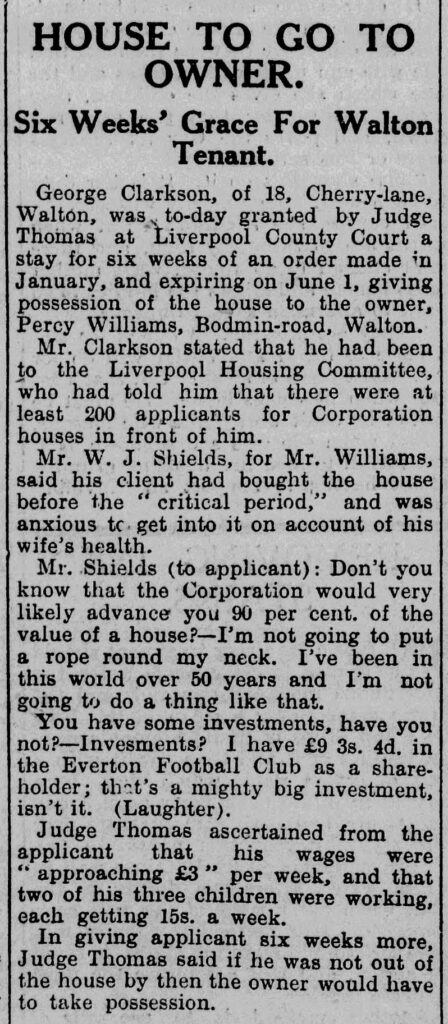
George’s family home may well have been at risk, but his investment in his beloved Everton FC – both literal and figurative – was not in doubt for a moment!
EVERTON FOOTBALL CLUB
The Everton Collection includes three items from the personal files of George Clarkson:
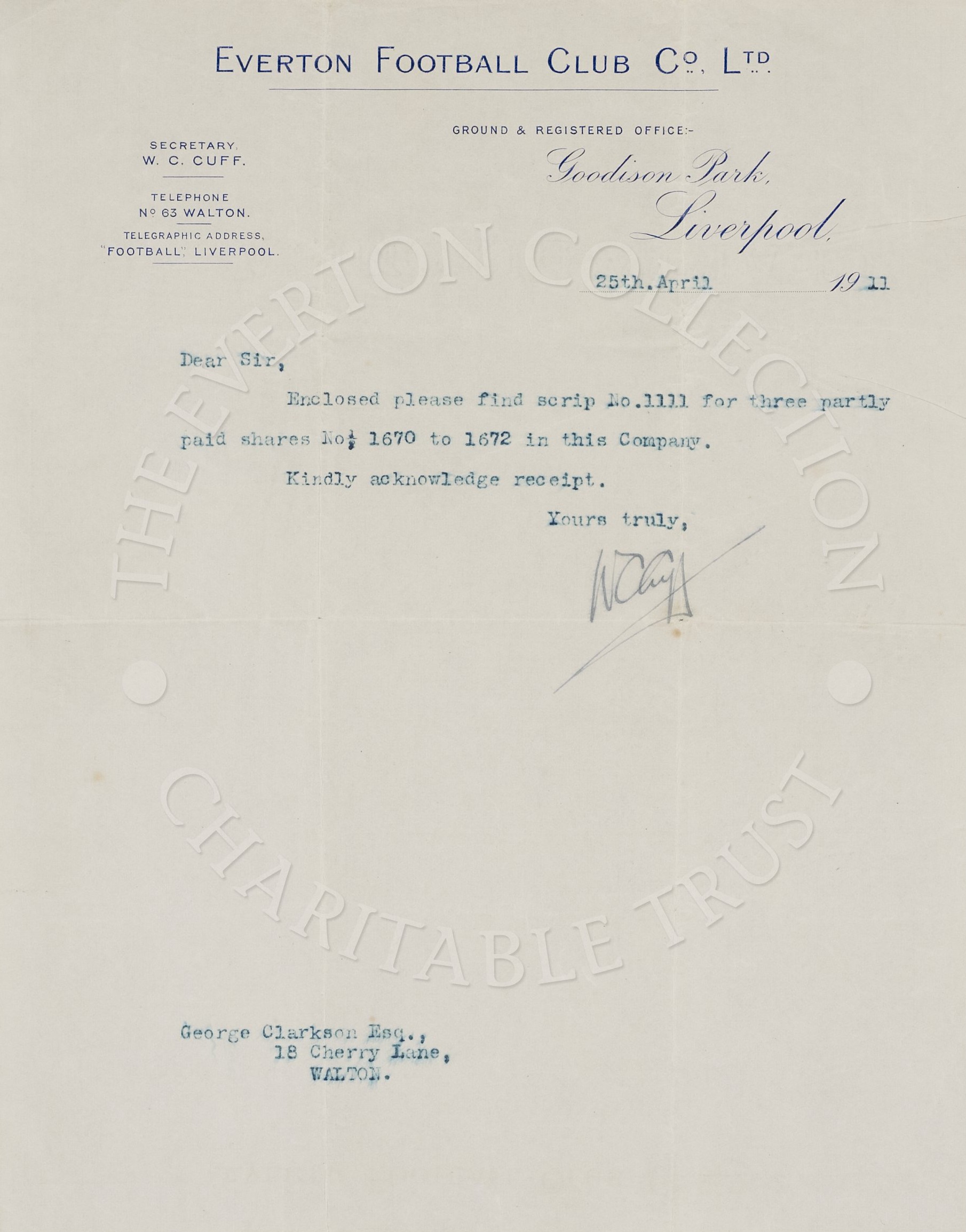
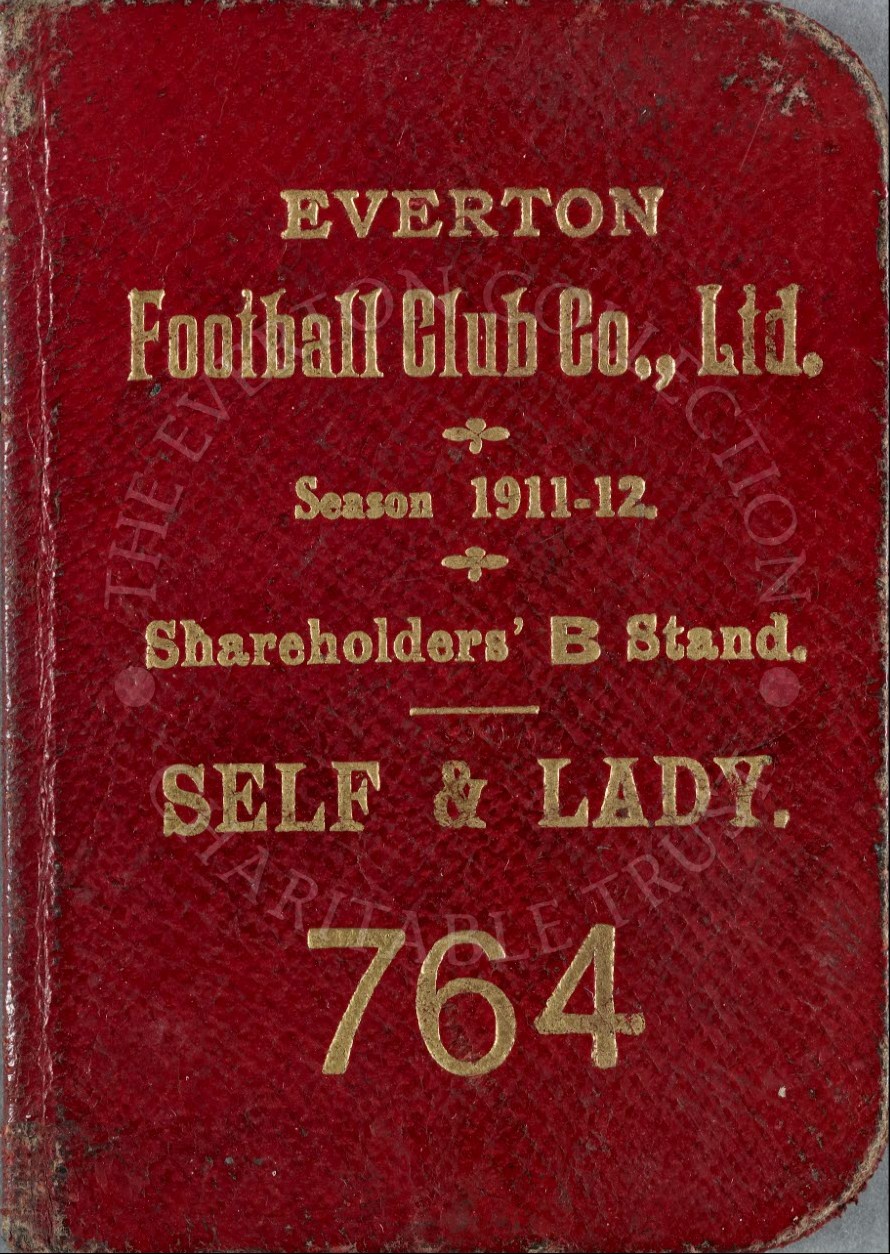
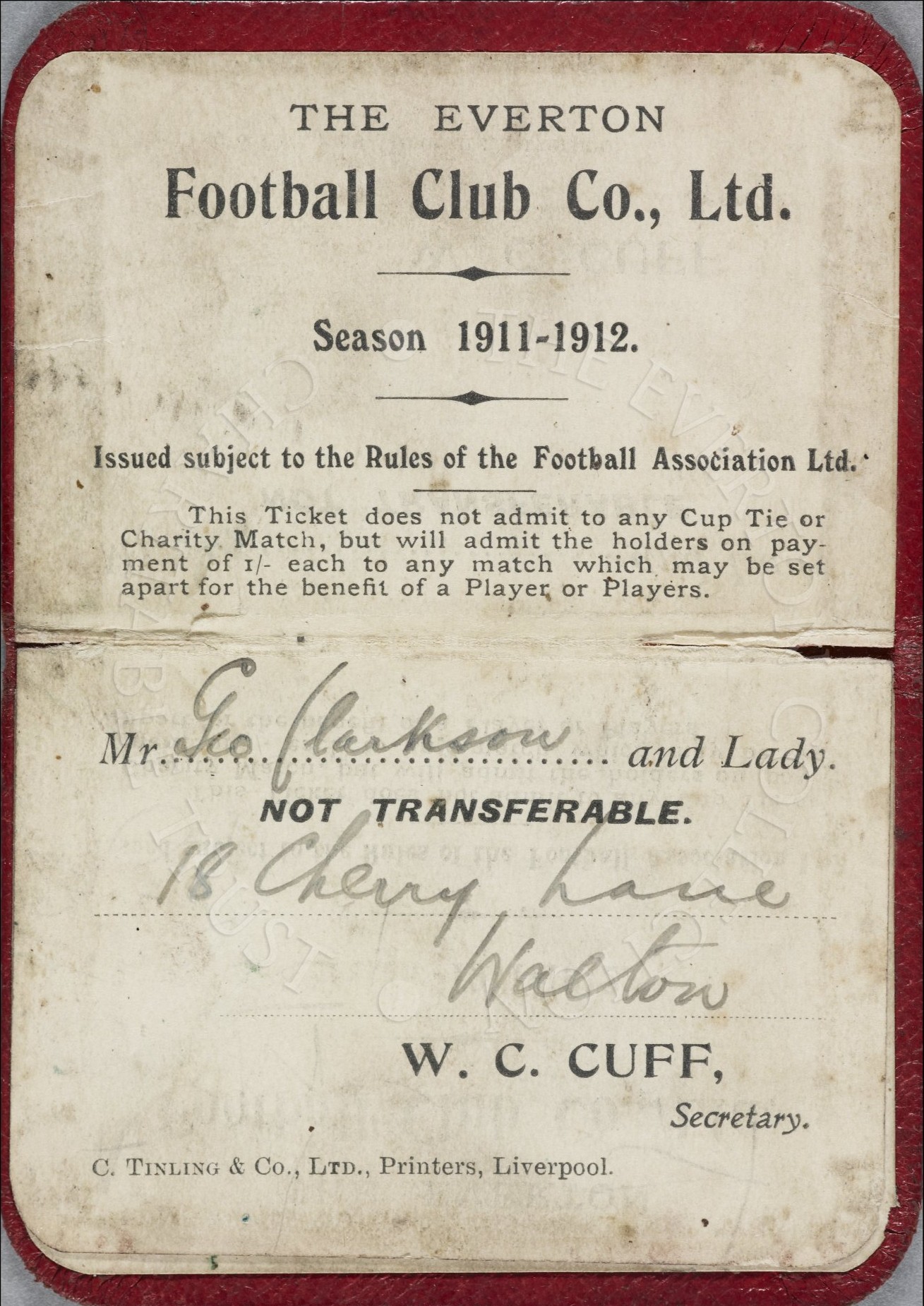
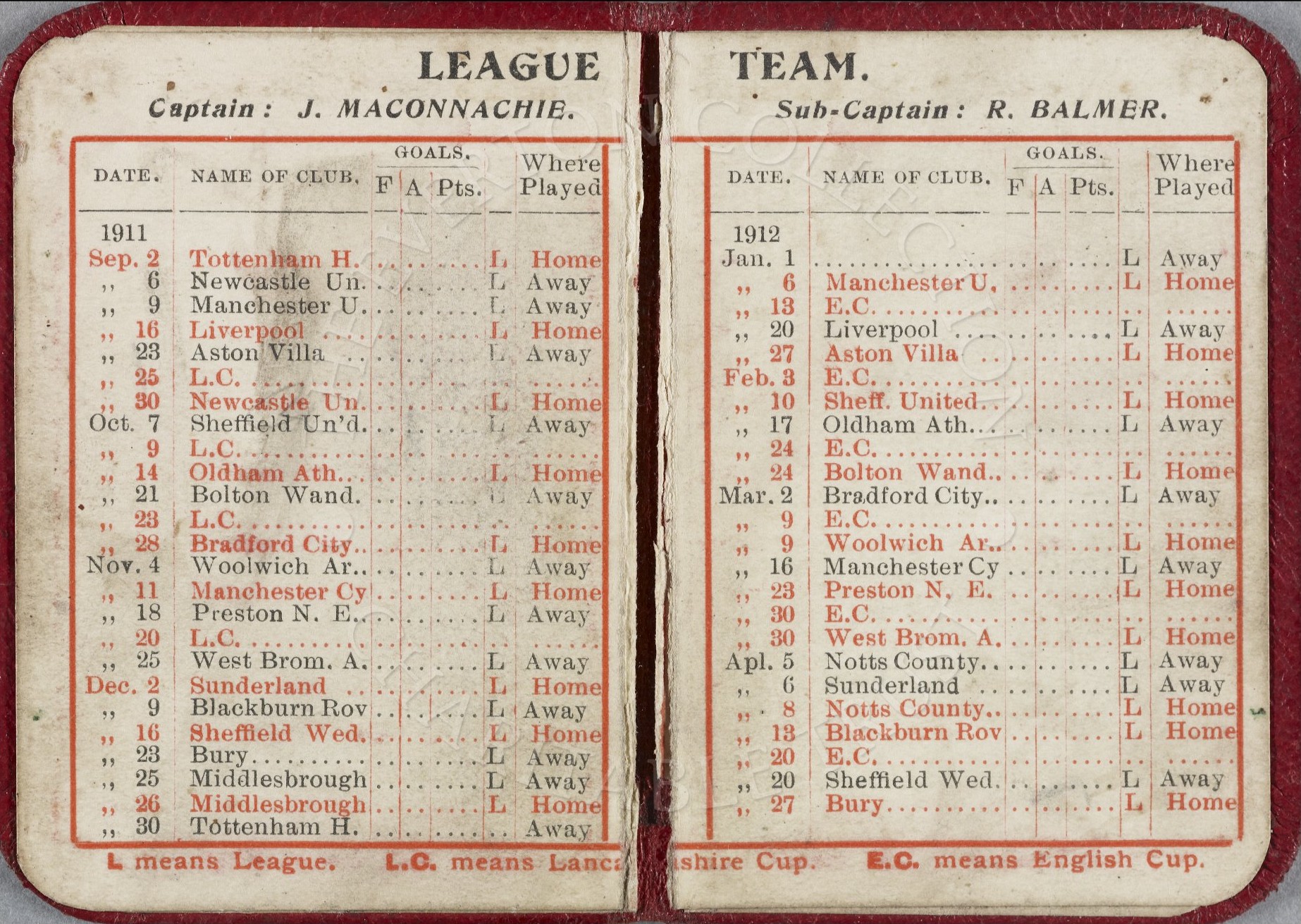
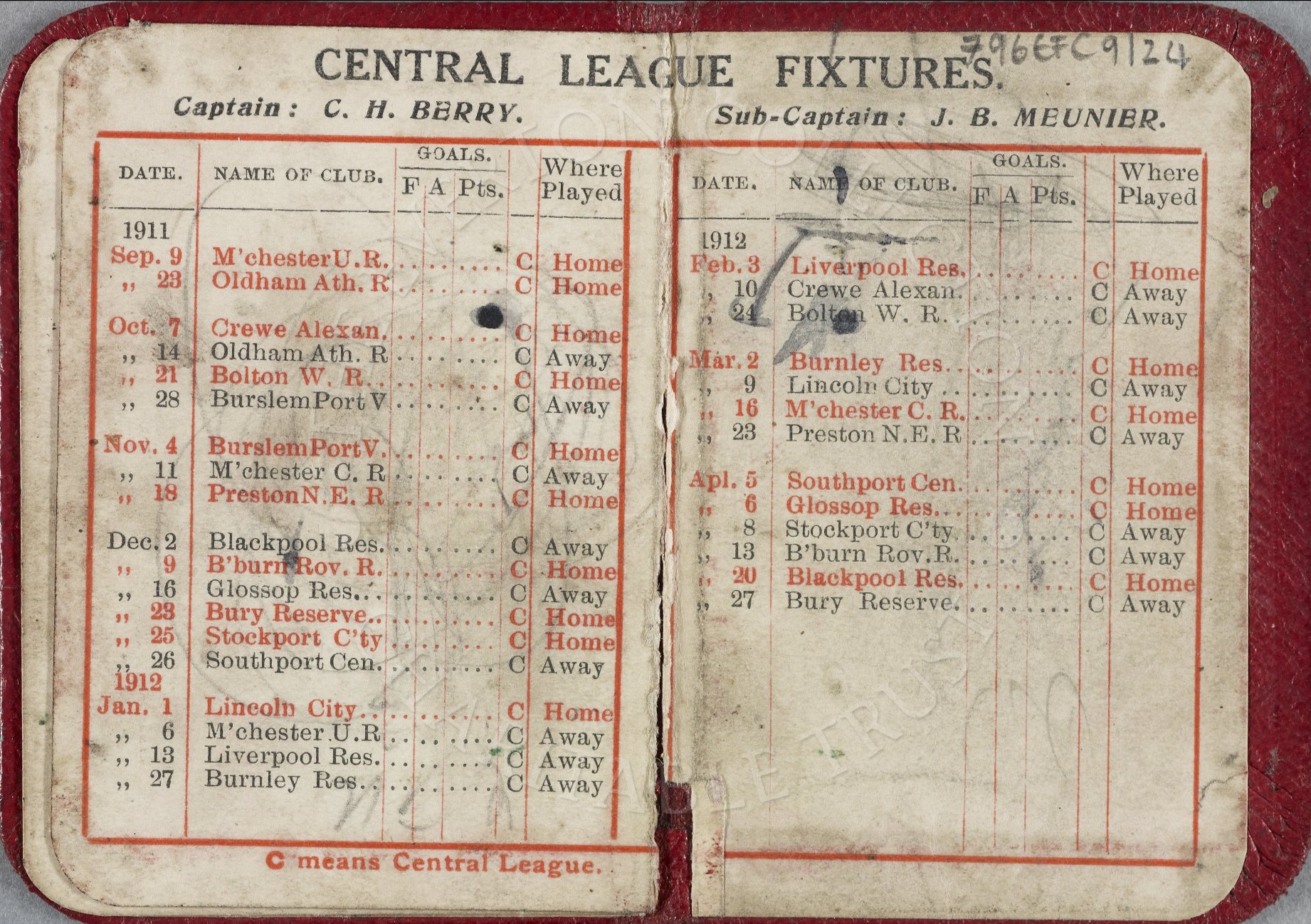
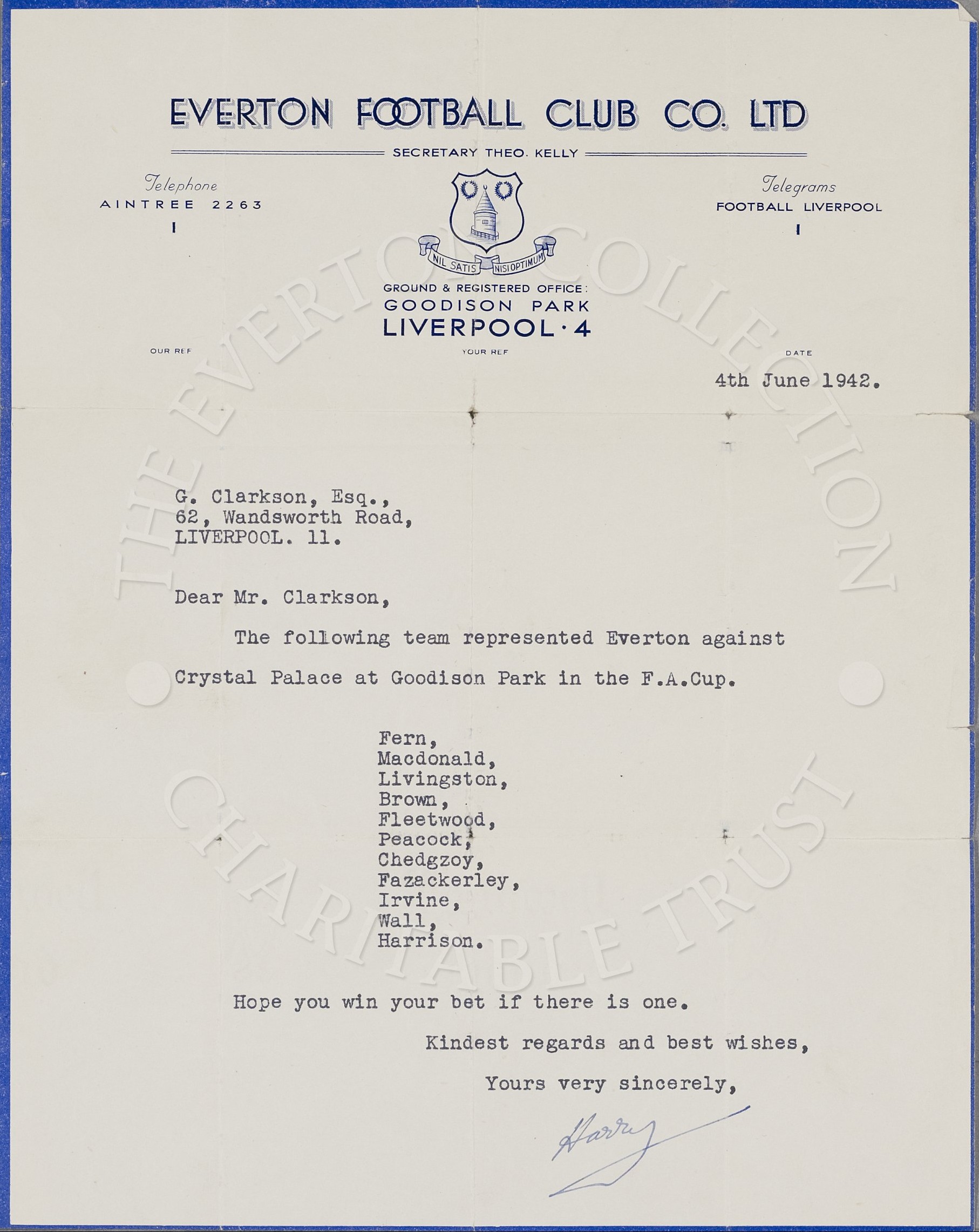
The letter is signed off with the line: ‘Hope you win your bet if there is one.’ Everton famously lost the match 0-6 at home to second division Palace. Rookie goalkeeper Ted Pope, grandfather of Adam Pope – a BBC Leeds journalist and stepson of long-serving director and early-1970s Everton FC chairman George Watts – had been prepared to make his debut for the Toffees that afternoon, but regular first-team custodian Tom Fern insisted on playing despite wearing heavy strapping on an injured arm. Note the Everton crest on the letterhead, which had only been designed by Club Secretary Theo Kelly four years previously.
In December 1911, nine months after purchasing his first set of shares in Everton Football Club, George Clarkson acquired three more, from club director Edward Askew Bainbridge (numbers 1696 to 1698). He registered them in the name of his seven-year-old son, George Clarkson junior. A further share was purchased in his wife Annie’s name in October 1915 and two more, also in Annie’s name, in November 1918, making a total of nine. Not bad going for an orphan boy from the Vauxhall slums.
According to Ernest Edwards in his profile on George, it was around the time of the First World War that ‘Bumper’ Clarkson managed to live the dream by donning a pair of football boots and playing for Everton, in an ‘A’ team game versus an Army XI at Lathom. Unfortunately, I can’t find a contemporary report on this match, though mention is recorded in the club minute books at a meeting on 12 December 1916 of ‘Saturday’s game at home and at Lathom Park.’ At the previous meeting on 5 December, the following Everton XI had been selected to face the Remount Depot:
‘v Remount Depot – Bromilow; Taylor, Dunn; Hesketh, Stewart, Dale;
Lloyd, Settle, Blair, Rigsby, Manley. Reserves: Peate, Challinor, Williamson.’
This might possibly have been the match where a forty-seven-year-old George Clarkson stepped in at short notice to play on the right wing for Everton. He must surely go down as the club’s oldest (unofficial) player and goalscorer.
George was never far away from events at Goodison Park and made it his business to share his opinions and experience. He was well known to everyone around the club and his ability to spot a player was not taken lightly. In fact, at an Everton board meeting held at the Exchange Station Hotel on 2 December 1919, a scouting report prepared by George Clarkson was read out to the assembled directors, which recommended two Runcorn players, Kane and Hughes.
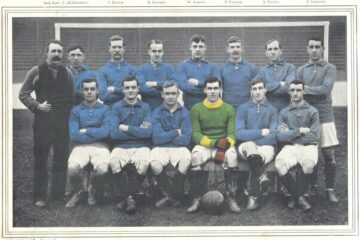
Nearly a year later, on 9 October 1920, Everton travelled across the Pennines to Leeds Road to face Herbert Chapman’s newly promoted Huddersfield Town. The Toffees returned victorious, bringing an end to Town’s unbeaten home record, thanks to Billy Kirsopp’s first-half goal. A team photograph taken before kick-off features George Clarkson sitting with the Everton team. George appears to have found himself directly involved in the matchday routine; perhaps helping carry equipment, assisting long-serving trainer Jack Elliott, or otherwise acting as some form of volunteer cheerleader.
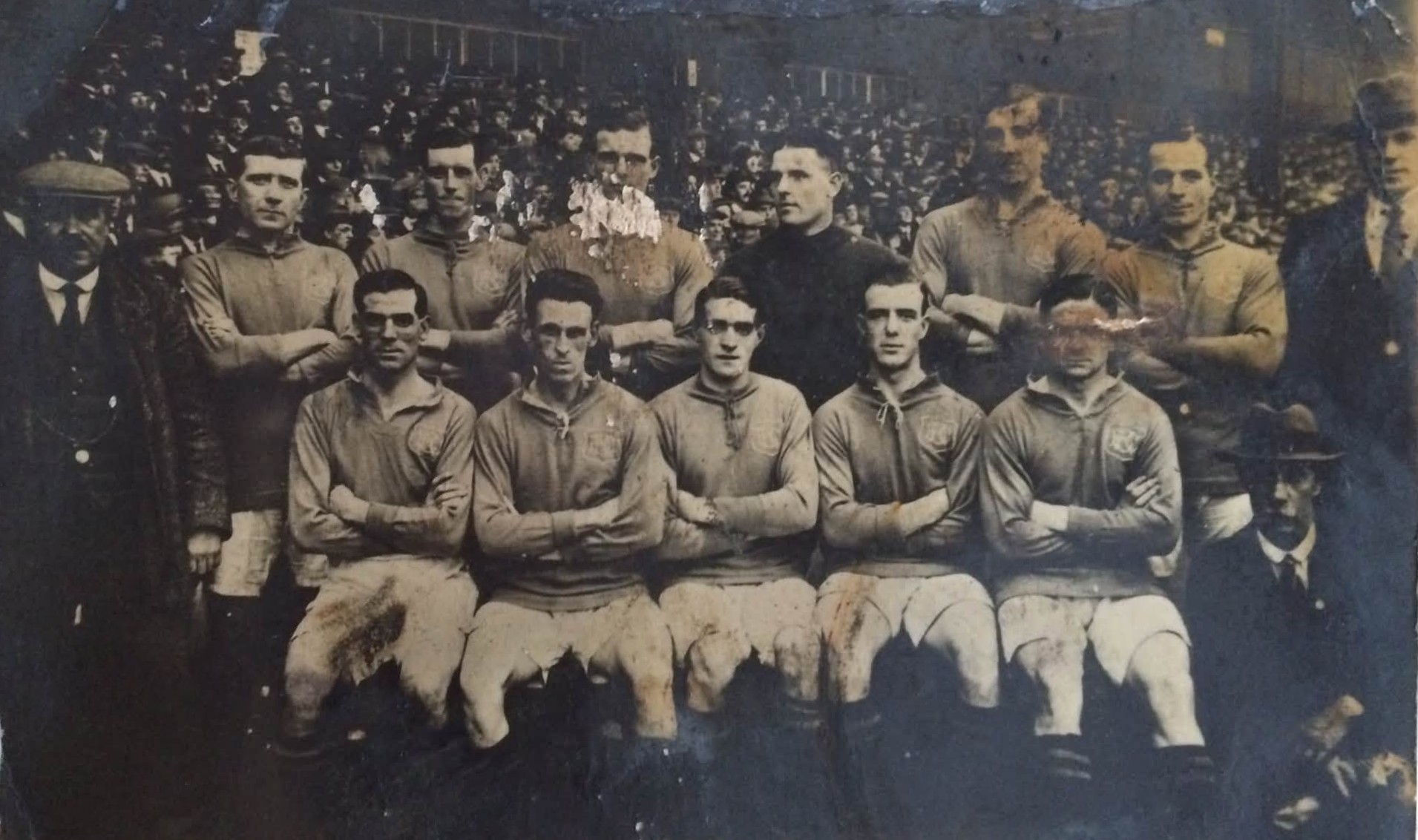
Apparently, the Everton directors were not entirely satisfied with this arrangement. Ten months later, on 16 August 1921 the following statement was noted in the Everton FC board meeting minutes:
‘G. Clarkson – The question of this man attending dressing room on match days was discussed and it was decided that in future no person other than officials of the club be admitted into the dressing room or training quarters.’
In May 1922, at an extraordinary general meeting of the Everton board and shareholders, George Clarkson voted in favour of members of the current board after a motion had been put forward to remove them from office. The motion failed.
A few years later, Ernest Edwards’ column ‘Bee’s Notes On Sport’ in the Liverpool Echo of 28 November 1927 opened with the line:
‘When Everton returned from Bury, they were puffing and blowing – in spite of the treatment received from Trainer Cooke and General George Clarkson! This was due to the fact that Richardson, the Bury goalkeeper, had shown his appreciation of the day’s pleasure by presenting them with cigars and a drop of something with which to wet their boots! Everton had been puffing and blowing in the game with Bury, and the reason of that was they ran up against a desperate side, and nailed them down successfully after a very fierce game, in which, after taking a lead of 3-1, they had to fight every inch of the way to prevent a draw.’
Everton won the match 3-2 on their way to the first division championship, Dixie Dean netting goals twenty-six and twenty-seven of his sixty goals and winger Ted Critchley converting what turned out to be the winner. It seems that, despite the Everton directors’ 1921 directive, George Clarkson was still very much involved in some capacity in and around the Everton team, despite never being recorded as an official employee of the club in any capacity.
Ernest Edwards’ profile was published in the Liverpool Echo a month after George Clarkson’s sixty-fifth birthday, at the time of his retirement from the railway. Five years later, at the Everton FC board meeting of 29 August 1939, the following paragraph was noted in the minutes:
‘G. Clarkson – It was agreed that the decision made by the directors in 1921, regarding this shareholder, should be strictly adhered to in the future.’
At the time of the recording of the 1939 Register for England and Wales, George and Annie Clarkson, plus daughters Millicent and Dolly, her husband Harold and young children Leslie and Philip, were living together at 62 Wandsworth Road in Norris Green. By now approaching his seventieth birthday, George was listed as a retired platelayer. He played a very active role in raising his grandchildren, particularly after his beloved wife Annie passed away on 14 April 1940, aged seventy-two and was buried at West Derby Cemetery. At the Everton FC board meeting on 16 April 1940, the transfer took place of three of George Clarkson’s shares in the club to director William R. Williams.
LATER LIFE
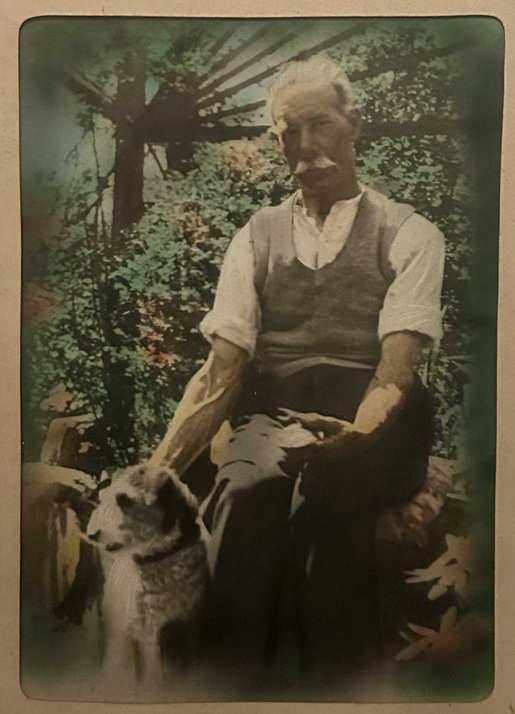
On Saturday 20 January 1945, in the penultimate season of wartime competition, Everton travelled to Edgeley Park, the home of Stockport County, and won by three goals to nil, thanks to a Harry Catterick strike and a brace from Stan Bentham. In his Liverpool Evening Express column ‘Pilot’s Sports Log’ of 22 January 1945, reporter Don ‘Pilot’ Kendall wrote:
‘We were late arriving at Stockport, and as the coach swung up to the ground there was quite a cheer from the congregated spectators. The gates had not been opened, but with the Blues’ arrival in went the people, 1,400 of them, and including some real Everton enthusiasts, among whom I saw Mr. George Clarkson, sporting what must have been the “father” of all chrysanthemums.’
In his seventy-sixth year, George Clarkson was still there, following Everton home and away. Among the most familiar of faces in the Evertonian crowd. And he had a few years left in him yet.
George ‘Bumper’ Clarkson died in hospital in Liverpool, aged eighty-six, on 18 June 1956. His last place of residence was 174 Morningside Road in Norris Green. He was buried with his beloved Annie at West Derby Cemetery on 22 June.
At the annual general meeting of Everton FC, held at Central Hall on Renshaw Street in Liverpool city centre, on 28 June 1956, the following was recorded:
‘The chairman referred to the death of Mr. A. N. Denaro, a director of the club, and two old shareholders, G. Clarkson and W. T. Searle, and the meeting stood in silence for a few minutes as a token of respect.’
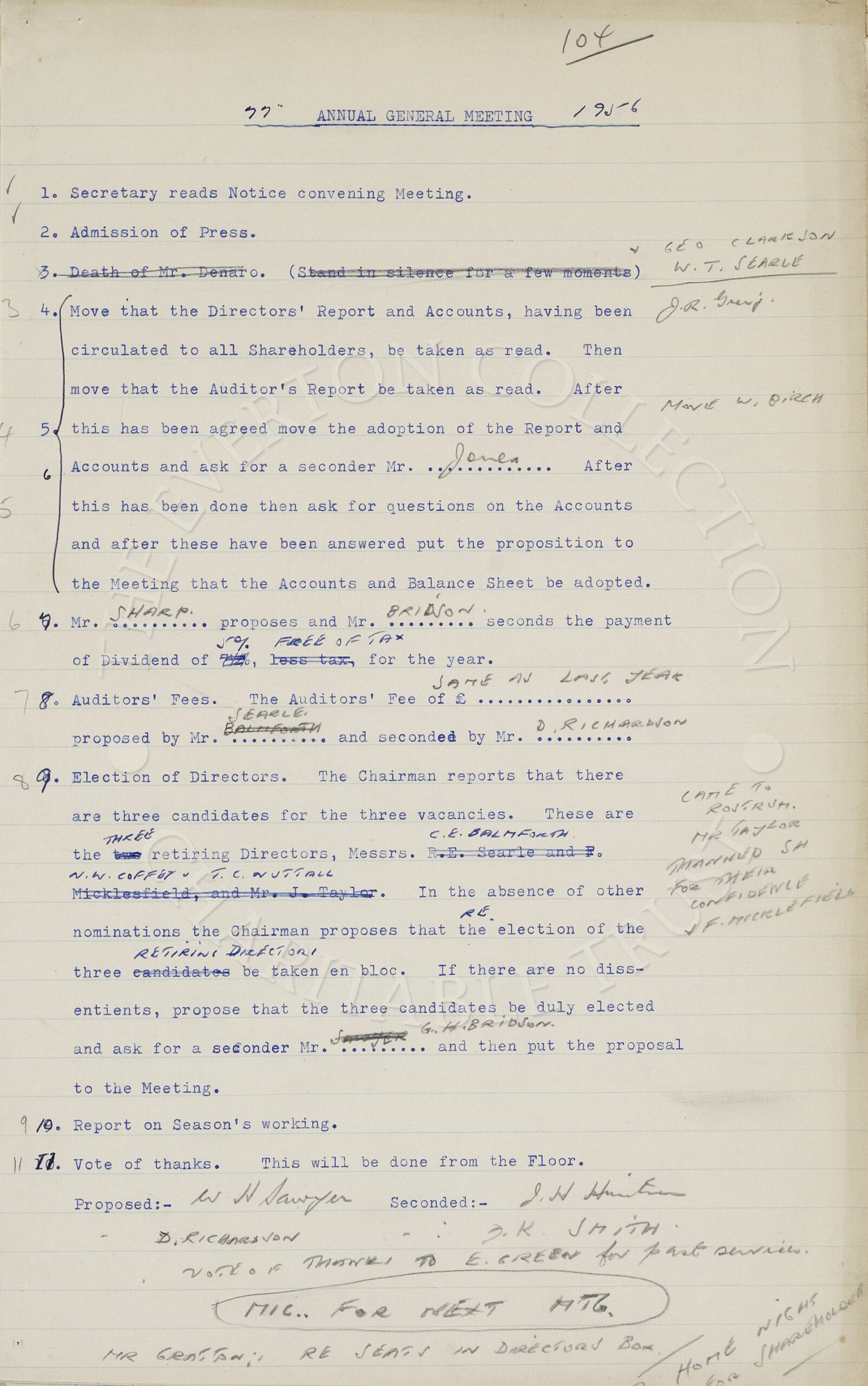
Despite George Clarkson’s unwillingness to fade into the background, it is telling that the Everton board chose to commemorate him alongside Alf Denaro and William Searle so poignantly. He was a well-known, respected and popular figure around the club and amongst fellow supporters. An Evertonian institution, instantly recognisable with trademark chrysanthemum in his lapel.
Milly Clarkson never married and lived a long life, passing away in Wallasey in 1979, in her eighty-first year. George Clarkson junior settled in Gloucestershire and died there in 1977. Dolly Clarkson married Harold Martin Ryan (1913-1999) in 1936. The couple had two sons, one of whom died in infancy. Their surviving son married and had three children.
Annie Clarkson’s three shares in Everton FC were sold to a J. H. Peter in October 1962. In May 1963, George Clarkson’s remaining three shares were transferred, one each, to his three children. Milly Clarkson sold hers to an Edward Owen Jones in January 1964.
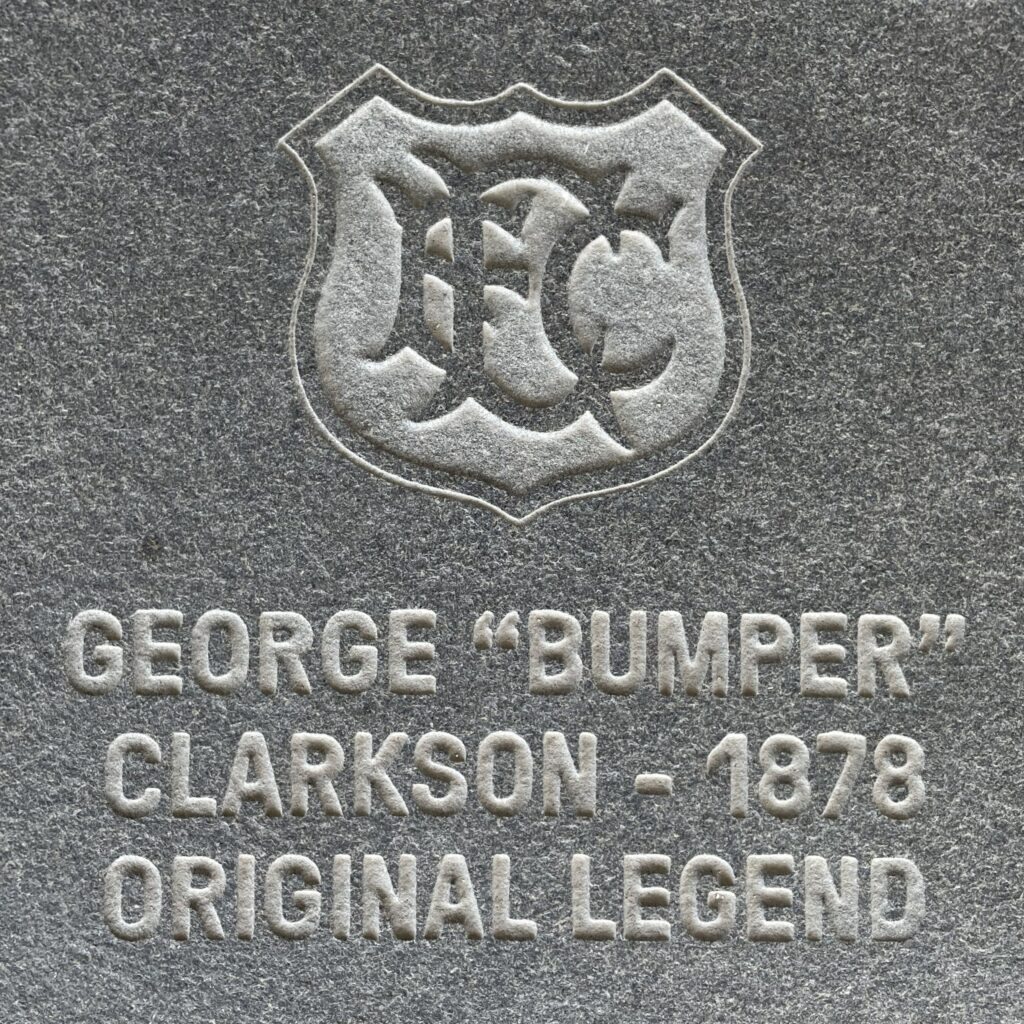
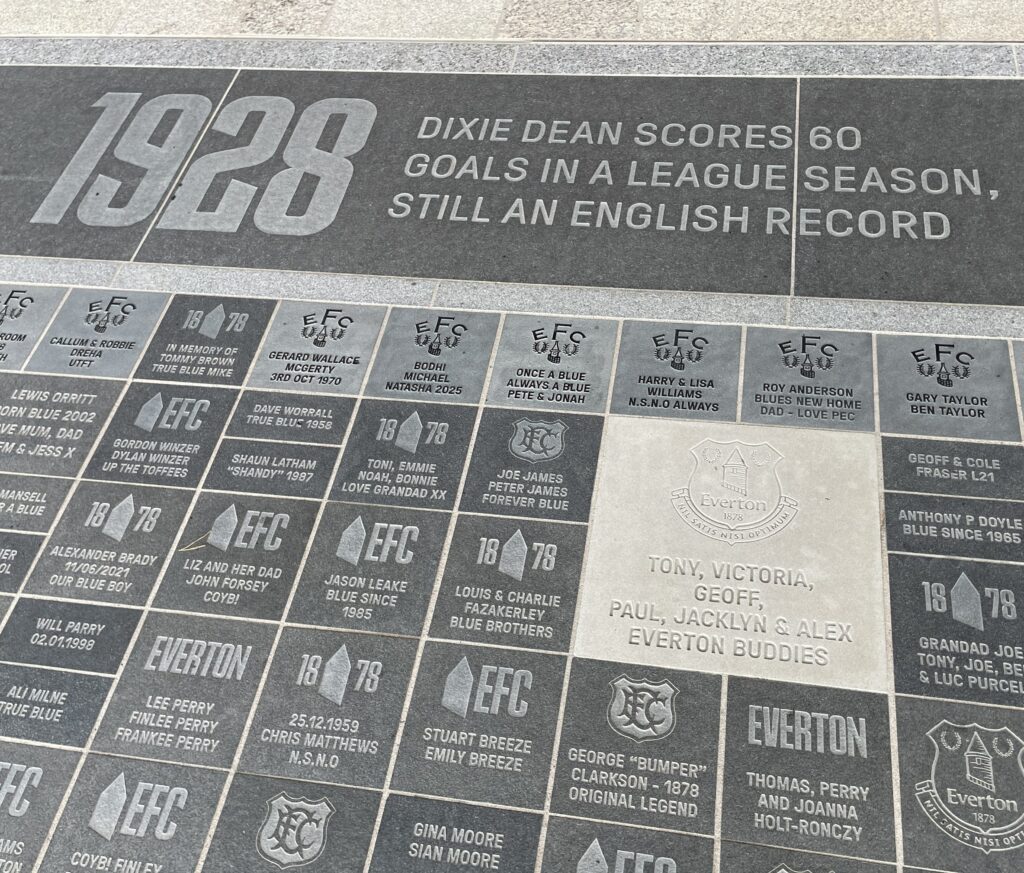
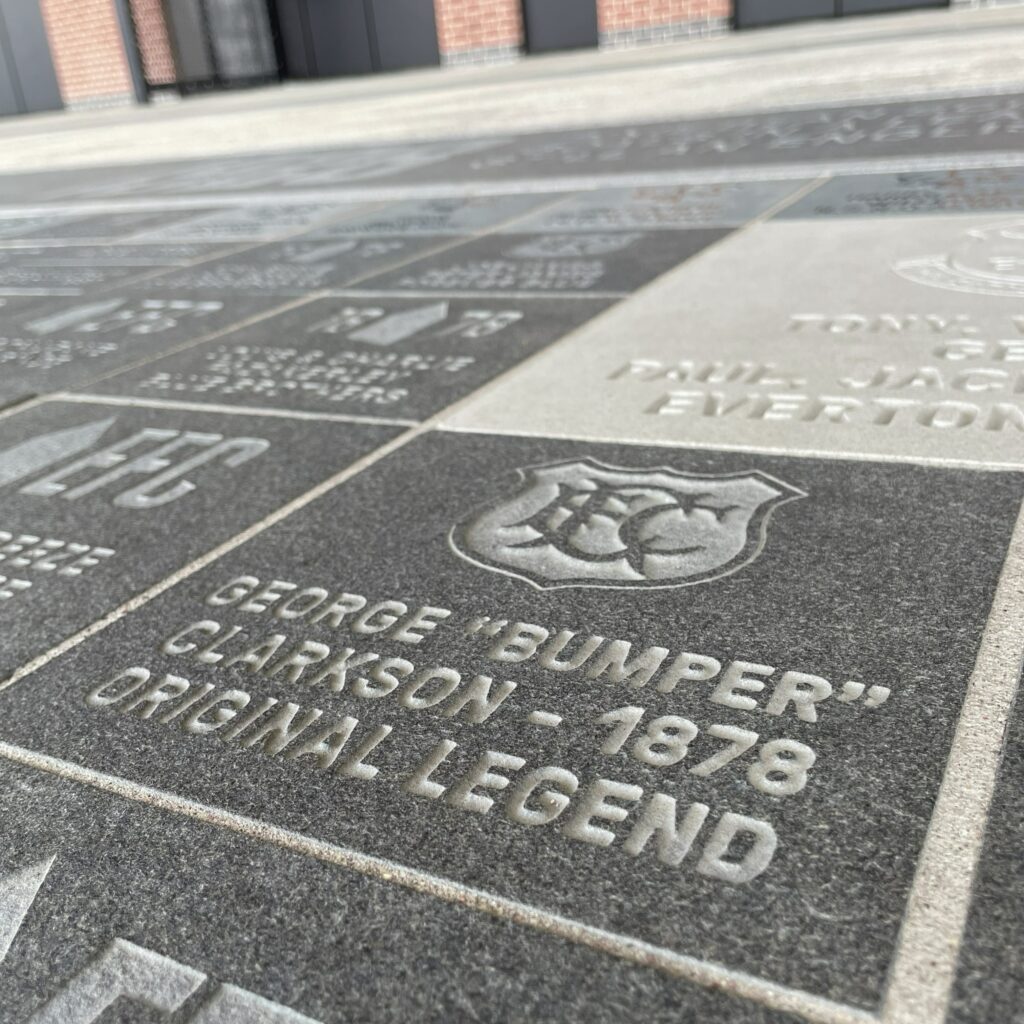
The Ryan family remain Evertonians to this day and Antony, George Clarkson’s great grandson, proudly purchased a stone on Everton Way at the club’s new Hill Dickinson Stadium in his great grandfather’s memory, complete with the vintage 1928/29 badge worn on the Everton FC home jersey. It is positioned appropriately, just a few rows beneath the timeline entry for 1928, which commemorates William Ralph ‘Dixie’ Dean’s historic sixty-goal haul, most (if not all) of which George Clarkson would have witnessed in person. The stone reads as follows:
Everton Way memorial stone photographs by Jamie Yates
ACKNOWLEDGEMENTS
The Everton Collection – www.evertoncollection.org.uk/home
Everton Results – www.evertonresults.com
The Liverpool Daily Post and Echo
Liverpool Evening Express
With special thanks to Ant Ryan, great grandson of George Clarkson, for sharing family stories and images.