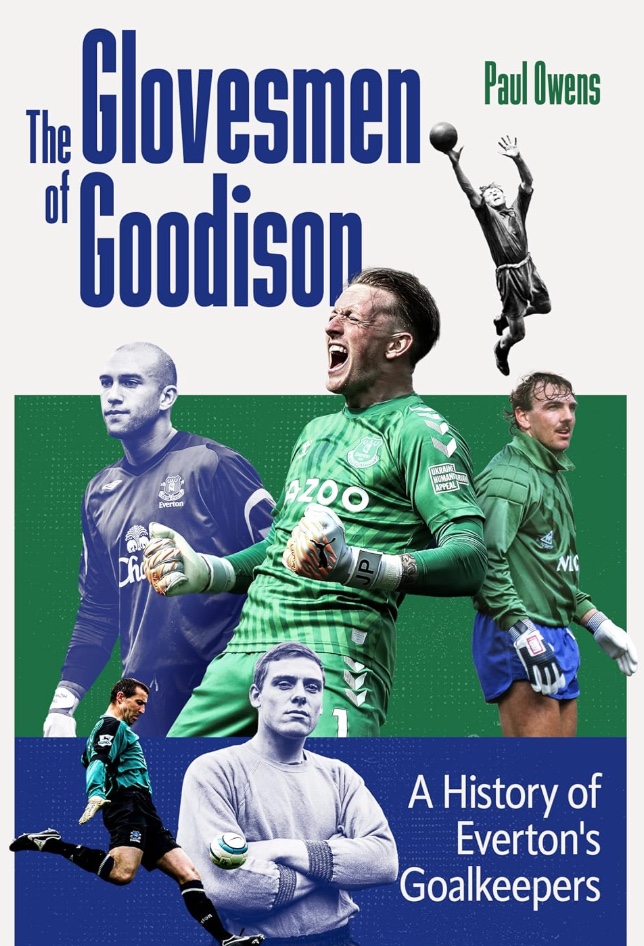
Paul Owens
The goalkeeping connections between Everton and Preston North End really are extraordinary. Indeed, it is difficult to think of two other clubs who have shared such a long-standing and prolific connection when it comes to a single position on the football field

In 1888/89, Preston became the first champions of England, having gone the whole of the inaugural English First Division season undefeated, winning 18 and drawing four of their 22 league matches. The following season, they successfully defended their title – finishing two points ahead of second-placed Everton, who pipped them to the top spot 12 months later. After winning the first two Division One titles, Preston would finish as runners-up in the next three seasons.

In goal for most of the Lilywhites’ games during that period was Welshman James Trainer, widely recognised as the most accomplished goalkeeper in Britain at that time and the first last line of defence to be named ‘The Prince of Goalkeepers’ – a moniker later bestowed on his compatriot and one-time Everton stopper Leigh Richmond Roose, whose daring style often saw him leave his goal-line and set off on weaving runs upfield – bouncing the ball all the way to the halfway line, basketball-style, before sending it towards the opponents’ goal.
Both Trainer and George ‘Harry’ Holdcroft, Preston’s FA Cup winning goalkeeper in 1938, had short spells on Everton’s books, though neither keeper made a first-team appearance for the Merseyside club. Trainer’s journey to Everton came about in somewhat bizarre circumstances. Born in Wrexham in 1863, the amateur was converted into a goalkeeper to help his hometown club defeat the Druids in the 1883 Welsh Cup final. However, later that year, the club was expelled from the FA Cup due to their goalkeeper insulting a referee. Subsequently, Trainer departed and became a member at Everton, playing in a few junior games before moving on to Great Lever, Bolton Wanderers and Preston North End. In later life, Preston’s two-time title-winning goalkeeper, who was also an accomplished baseball player, established an indoor soccer business at London Olympia, Sadly, the venture was unsuccessful and he died in poverty at the age of 52.

In the case of Harry Holdcroft, Everton’s four-figure-fee signing from Darlington in 1931, his path to the Goodison first-team had been blocked by the rise to prominence of a certain Ted Sagar, who was chosen ahead of Holdcroft at the start of the 1931/32 league campaign, after Billy Coggins, an ever-present throughout the previous Second Division title-winning season, had gone down with appendicitis that summer. At the end of Sagar’s first full season between the Goodison Park goalposts, Everton were crowned First Division champions and Holdcroft moved to Deepdale, where he became a crowd favourite and won two caps for England, as well as the aforementioned FA Cup. Two years before lifting silverware at Wembley, Holdcroft saved a penalty against Everton in the same competition – keeping out Tommy White’s spot-kick in Preston’s 3-1 third-round victory at Goodison Park in January 1936.

The first goalkeeper to make competitive appearances for both clubs was Jack Kendall, who played 23 times for Everton between 1924 and 1926, deputising more than competently for the luckless and often-injured Alfie Harland. After recovering from a knee injury that had ruled him out of selection at the start of the 1926/27 campaign, the Broughton-born keeper moved to Deepdale in May 1927 but managed just two league appearances in 12 months there before exiting Lancashire for old club Lincoln City. Undoubtedly, Kendall’s name is more synonymous with Peterborough United, where he became the first full-time professional in 1934.
Undoubtedly, links between the two sides’ goalkeeping departments strengthened when another Kendall, former Preston and Everton midfielder Howard Kendall, took over the reins at Goodison Park. One-third of Everton’s much revered Holy Trinity and at one time the youngest player to appear in an FA Cup final, having turned out for Preston aged just 17 years and 345 days in 1964, Kendall was appointed as Toffees supremo in 1981 after two seasons with Blackburn Rovers. In his first spell in charge at Everton, the Goodison boss loaned a couple of keepers to North End and sought out the expertise of one of Deepdale’s favourite sons when figuring out how to keep the incomparable Neville Southall on top of the world in 1985.


Unconvinced by the goalkeeping options available to him, Kendall signed two new keepers ahead of his first season in charge, namely Southall and Jim Arnold, the latter of whom had performed consistently well for Kendall during his time as manager at Ewood Park. At 22-years-old, and with just one season of professional football under his belt, Southall was seen as the longer-term option whereas Arnold was deemed the more experienced old-hand, who would allow the Welshman the time and space required to fulfil his incredible potential. Meanwhile, Eire international Jim McDonagh, former manager Gordon Lee’s goalkeeper of choice for most of the previous campaign, was allowed to return to Bolton Wanderers in part exchange for defender Mick Walsh. Moreover, having recovered from a nasty knee injury, Martin Hodge, the highly rated Southport-born keeper Lee had signed from Plymouth Argyle in 1979, was sent out on loan to Deepdale midway through the 1981/82 campaign.
While playing in the Everton first team, Hodge had certainly made an impression on a young David Prentice and made a save from Billy Bonds in the 1980 FA Cup semi-final at Villa Park which the former Liverpool Echo reporter describes as one of the best stops he has seen at a game: ‘It was voted third in the BBC’s very short-lived save-of-the-season competition. When the West Ham corner came in, Bonds rose majestically and it was one of those headers that as soon as it leaves the player’s head you think “God, we’re one-nil down”, but Hodge somehow managed to react quickly to make an incredible reflex save and parry the ball away to safety. For me, he was a very talented goalkeeper who was disposed of a little too early.’

At Preston, under the stewardship of Gordon Lee, Hodge continued to impress, in two separate loan spells. Towards the end of the Everton goalkeeper’s second stint at Deepdale, in April 1983, following an upturn in results for his struggling side, manager Lee told the South Wales Echo, ‘A lot of the credit must go to our goalkeeper Martin Hodge. He immediately inspired confidence with his safe handling, his domination of his area and his willingness to direct operations.’ After returning to Everton that summer, Hodge finally moved on permanently, to Sheffield Wednesday – performing brilliantly for the Owls and forcing his way into Bobby Robson’s thoughts ahead of the 1986 World Cup in Mexico. According to Hodge, missing out to the fit-again Gary Bailey as back-up to Peter Shilton in Robson’s squad that summer was the biggest disappointment of his career.
During the 1982/83 campaign, Martin Hodge wasn’t the only Goodison glovesman to spend time on loan at Preston. Earlier in the season, having lost his starting spot to Neville Southall, Jim Arnold had also been allowed to move to Deepdale on loan. With Preston facing a keeper crisis – regular stopper Peter Litchfield was out nursing a nose injury, which left 16-year-old apprentice Glen Campbell as their only available option – and with Hodge unavailable at that point as he was out on on loan at Joe Royle’s Oldham Athletic, Gordon Lee enquired about the availability of Arnold.

On his North End debut, Arnold kept a clean sheet in a draw at Huddersfield Town and a few days later saved a penalty from Tommy Tynan in another draw, this time at home against Newport County. Kendall had gone along to watch the game and had the following to say about his experienced goalkeeper: ‘Jim was brilliant and this performance will do his confidence a lot of good. We let him go on loan because he was feeling a little rusty playing in the reserves. I thought he had an excellent game last night.’ Just over a fortnight later, Arnold was back in the Everton first team, after the Blues’ harrowing 0-5 defeat in the Merseyside derby. Kendall saw it as the ideal opportunity to give Southall a break and get the swollen ulcerated toes the Welshman had been playing with for over 12 months sorted out. For the remainder of the 1982/83 campaign, Arnold was the man back in charge of the number one shirt at Goodison Park. On consecutive weekends in March 1983, he put in memorable performances at both Old Trafford and Anfield. More importantly, he also played a huge role in the development of Southall, who two years later was named the Football Writers’ Player of the Year and was widely regarded as the greatest goalkeeper in world football.

In his 2020 book Mind Games: The Ups and Downs of Life and Football, Southall paid tribute to his goalkeeping ally: ‘I learnt a lot from Jim Arnold. He got a groin strain but wanted to get fit, so he did nothing for the entire week and was passed fit for the Saturday, when he played really well. I was amazed at the mental strength that it took for him to avoid doing anything all week, when he was itching to train, and then be able to play that well at the weekend. I was totally different. I was an awful patient at the start of my career, going stir crazy. But Jim taught me to see things differently, to rest for good reason and trust the healing process.’
Another man who played a significant role in Neville Southall’s development – and another link to the Lilywhites – was Irishman Alan Kelly. Having made a record 447 league appearances for Preston, managed them and had a stand named after him at Deepdale, Kelly Senior is seen as ‘Mr Preston North End’ by many football supporters, but his role at Everton should not be downplayed or overlooked. Brought to the club in the summer of 1985 as goalkeeping coach and reserve-team manager, Kelly, who gained 47 caps for the Republic of Ireland between 1956 and 1973, told the Liverpool Echo that he couldn’t wait to start working with Southall: ‘Neville was named Footballer of the Year last season, but he still wants to work twice as hard and improve his game. He’s one of the best around and in one against one situations is fantastic. Clearly the staff at Bellefield have looked after him well and given him the right attitude.’

Under Kelly’s tutelage, Everton’s goalkeeper began to reach even higher levels – at Anfield in February 1986, he was nothing short of sensational in a 2-0 victory for the Blues. Manager Kendall, who had played with Kelly at Preston, told the Liverpool Echo, ‘We all know what a great goalkeeper Neville Southall was last season. I feel Alan has got a little bit more out of him, and that was never clearer than in Saturday’s derby. Alan is bringing out the best in him. Neville certainly responds to hard work. He hates missing training.’

(with Howard Kendall (back row, far left), and Alan Kelly, (goalkeeper on the left).
Veteran of Everton’s 1962/63 Championship side, Ray Veall, is on the front row far right)
However, severe dislocation of the ankle and ligament damage sustained on international duty just weeks later curtailed the Welshman’s season. Bobby Mimms, signed from Rotherham United at the end of the previous campaign, performed competently in Southall’s absence, keeping clean sheets in all of his first six league outings that spring. However, the league title headed back across Stanley Park after Liverpool put an unbelievable run together in the final few months that season. At Wembley in an all-Merseyside FA Cup final, Mimms was beaten three times as Liverpool rubbed salt in the wounds and captured a league and cup double at Everton’s expense.

A decade after that double disappointment, Mimms signed for Preston a month into the 1996/97 season – having collected a Premier League winners’ medal a year earlier for being part of Blackburn Rovers title-winning squad, a decoration which perfectly complemented the Division One winners’ medal he had picked up in 1987 for playing superbly well in Everton’s opening fifteen games of the 1986/87 season. At the end of a solid campaign between the Deepdale posts, Mimms moved to former club Rotherham United on a free transfer, with the Lilywhites putting their faith in young keepers Teuvo Moilanen and David Lucas. Incidentally, Lucas, who would go on to make 123 league appearances for Preston over a 10-year period, had made his first-team debut towards the end of the previous campaign – after first-choice keeper John Vaughan had been taken ill on the way to their game at Hartlepool and yet another Everton loanee, Australian Jason Kearton, had returned to Goodison Park following the expiry of his one-month spell at Deepdale as cover.
After retiring from playing, Mimms carved out an excellent career for himself as a goalkeeping coach, citing both Southall and Alan Kelly as major influences. He told me: ‘I have obviously taken a lot from the sessions I had with Neville at Everton and the coaches I worked with during my career, particularly Kells [Alan Kelly] and Terry Gennoe at Blackburn. I still use a lot of their drills today but what I really took from them was their delivery. They did what they did to bring the very best out of you, and not just force it out of you.’
Alan Kelly had also played a significant role in bringing Mike Stowell to Everton from non-league outfit Leyland Motors in 1985. After leaving school, Stowell signed a four year deal with BT, as an apprentice telecommunications engineer in Preston. After a trial at Deepdale, and playing for the reserves, he was offered a one year contract with North End, but turned the opportunity down, thinking his career at BT was a better choice. Less than a year later, Kelly offered the goalkeeper a trial at Goodison Park. In December 1985, Stowell signed professional forms and took on the role of understudy to Neville Southall for the five years he was at the club, making one first-team appearance, in the Simod Cup against Millwall – keeping a clean sheet in a 2-0 victory. In February 1990, less than six months before leaving Everton permanently for Wolves, Stowell spent a month on loan at Preston – as cover for their first-choice keeper, a certain Alan Kelly Junior, who had dislocated a finger in training. Kelly Junior, who went on to enjoy a stellar career and follow in his father’s footsteps, not only on the domestic front but also on the international stage – earning 34 caps for the Republic of Ireland, had guested for Everton in a youth tournament held in Italy in the summer of 1986, despite having made his full league debut for Preston the previous season. More on him later!

In September 2000, eighteen months before taking over at Everton, Preston manager David Moyes handed 16-year-old keeper Andy Lonergan his first-team debut, in a Worthington Cup defeat at Coventry City. Over the next decade, Lonergan would go on to make in excess of 200 appearances for his boyhood club and even managed to score a goal, when his long clearance bounced over fellow keeper Kevin Pressman in a 1-1 draw with Leicester City in October 2004.

Having ruptured his cruciate ligaments in 2005, Lonergan faced a lengthy spell on the sidelines, which resulted in boyhood Evertonian Carlo Nash joining Preston from Middlesbrough. In the 2005/06 campaign, Nash kept a club record 30 clean sheets for North End as the Lilywhites narrowly missed out on promotion to the Premier League. The Bolton-born keeper kept Lonergan out of the side until midway through the following season, when a public falling-out with manager Paul Simpson about a proposed move away from Deepdale let Lonergan back in. In 2008, after spells at Stoke City and Wigan Athletic, Nash signed for Everton as cover for Tim Howard. He made just one appearance during his two-year spell on Merseyside, in a UEFA Europa League dead rubber against FC Bate Borislov, but loved his time with the Blues, telling the Liverpool Echo: ‘When I was at Everton, it was probably the fittest I’ve been throughout my career even though I was coming towards the end. I felt I was the fittest I’ve ever been because I had the facilities. I still think I could have gone on a bit longer!’
Between January 2007 and February 2011, ‘Loners’ firmly established himself as Preston’s undisputed number-one keeper, winning the Supporters’ Player of the Year award in both 2009 and 2010. One of his many managers during that period, former Everton player and assistant manager Alan Irvine, believed his performances warranted an England call-up, while Irvine’s successor, Darren Ferguson, who turned down a bid from Premier League West Bromwich Albion for Lonergan’s services in 2010, claimed his goalkeeper was worth at least £20 million. During that period, he was constantly linked with a move to Goodison Park and a reunion with old manager Moyes. However, in football things often change very quickly, and, having lost his Preston first-team place to Everton loanee Iain Turner in the second half of the 2010/11 campaign, Lonergan exited Deepdale for Leeds United, not Merseyside, in July 2011 – despite having trained at Finch Farm that year as part of the Turner loan deal. Nevertheless, his association with Everton wouldn’t finish there.

After eight loan spells away from the club and just six first-team appearances, Iain Turner, a £50,000 signing from Stirling Albion in 2003, departed Goodison Park for good in 2011. Having taken Lonergan’s place in the Preston team during the aforementioned loan stint, Turner made the move a permanent one that summer. However, despite scoring with a kick from his own area against Notts County, the Scotland B’s solitary season at Deepdale proved to be an unhappy and injury-plagued one. After a loan spell at Dunfermline early in the new year, he was released at the end of the 2011/12 campaign.
In the 2012 close season, former Everton stopper Steve Simonsen, once tipped for full international honours following his move to Goodison Park from Tranmere Rovers in 1998, signed a one-year contract with Preston. The South Shields-born keeper had just been released by Sheffield United, for whom he had missed the decisive penalty in their League One play-off final against Huddersfield Town that May. Despite making a solid start at Deepdale, Simonsen’s time in Lancashire soon turned sour. Just days after sustaining a nasty cartilage injury in Preston’s 2-3 Johnstone’s Paint Trophy exit at Coventry in January 2013, the former England Under-21 international left the club by mutual consent. Two months later, he headed north, signing a short-term deal with Dundee, before spending two years at Rangers.

It is fair to say that nobody has played a more significant role in the rise and development of Jordan Pickford than his former goalkeeping coach at both Preston North End and Everton, Alan Kelly Junior. I will leave you all to check out Alan’s fabulous foreword and the opening chapter of my book The Glovesmen of Goodison; A History of Everton’s Goalkeepers to get a more comprehensive picture of Kelly Junior’s part in Pickford’s transition from a talented kid with bags of raw ability to arguably the second greatest keeper in Everton’s illustrious goalkeeping history – and certainly the club’s most important player of the last few decades. But, in brief, it was Kelly Junior, Preston’s goalkeeping coach at the time, who told manager Simon Grayson to take the Sunderland keeper to Deepdale on loan in 2015 – despite him conceding six goals while playing for Carlisle United against Preston towards the end of the 2013/14 campaign. After a year on loan at Bradford City, the Washington-born keeper and experienced coach worked together at Deepdale in 2015/16 – with the quality of Pickford’s performances impressing everyone, in particular the North End faithful.

Kelly Junior told me: ‘Straight away, he was fantastic. You talk to any Preston North End fan from that era and they will tell you that they would struggle to think of a better goalkeeper. At one point he kept seven clean sheets on the bounce. We went to Burnley, who were flying at the time, and won 2-0 and he made two outstanding saves in that game. He was an unbelievable shot stopper; he was coming for crosses, he was totally dominating his area and his distribution was at a level that nobody had ever seen before. Undoubtedly, he saw his time at Preston as his audition for the Premier League and not long after returning to Sunderland forced his way into the first team. He hasn’t looked back since. I knew even back then that he would end up playing for England.’
Incidentally, Pickford’s Preston arrival saw Jamie Jones, an Everton academy graduate who had departed Merseyside in 2008 and enjoyed six seasons at Leyton Orient before joining North End in 2014, go out on loan to Colchester United for three months at the start of the 2015/16 campaign. In his two years as a Preston player, Jones made just 20 appearances. At Lancashire rivals Wigan Athletic, the talented keeper enjoyed a more fruitful spell, making a total of 117 appearances for the Latics – winning promotion from League One in 2018 and enjoying a stint as captain there a couple of years later.
In the summer of 2017, after a season in the Premier League with his boyhood club, Jordan Pickford signed for Everton from Sunderland for a reported initial fee of £25 million. According to David Moyes, who had managed the Black Cats that season, it was he [Moyes] who told Everton chairman Bill Kenwright to bring the goalkeeper to Goodison Park. Before the year was out, Everton’s new keeper was reunited with Kelly Junior, who had been brought to the club by interim manager David Unsworth, another player with links to both clubs, following the sacking of Ronald Koeman and his backroom staff.
Speaking on The Everton Heritage Show in late 2025 (full programme below), Kelly Junior, who had attended Bellefield as a teenager and watched on in disbelief while Neville Southall pulled off a series of unbelievable saves from the likes of Adrian Heath, Graeme Sharp and Kevin Sheedy in his father’s training sessions, explained: ‘I have got a lot to thank David Unsworth for: one, for the belief that I could make a difference; two, to come to Everton and work for the club; and three, to follow in the footsteps of my dad, who had worked as goalkeeping coach at Everton in the mid-80s. I look back at my time at Everton with real love, affection and pride.’
And so he should. Over a seven-year-period, Kelly Junior and Pickford worked together on Merseyside and further improved the goalkeeper’s game, as Everton’s last line of defence became a real leader – pulling off ridiculous save after ridiculous save, reaching new levels with his performances and leading the club through some of its darkest and most troubled days. Chelsea. Leicester City (twice). Crystal Palace. Brighton. Bournemouth. Thank you, Alan. Thank you, Jordan.
For part of that period, Pickford was further supported by Preston old boy Andy Lonergan, who signed for Everton in 2021 and became part of what Kelly Junior called the ‘unseen engine room’. Kelly told me: ‘Although he never played a first-team game for Everton, Andy Lonergan fulfilled a vital role for our goalkeeping group and that was why I recommended him. He maintained the high standards of performance that we expected from the group, in much the same way as [fellow reserve keeper] Asmir Begovic did. Their experience and what they brought to the goalkeeping group was a huge part of what we did on the training ground every single day. Andy is a real diamond of a person, who, along with both Joao Virginia and young Billy Crellin – a 2022 signing from Fleetwood Town, was part of an unseen engine room we had in the goalkeeping department at Finch Farm. They set excellent standards in training and always showed a willingness to help the team in any way they could.’


Incredibly, the goalkeeping links between Everton and Preston North End do not end with the absorbing Alan Kelly Junior and Jordan Pickford storyline. In January 2025, returning manager David Moyes promoted academy goalkeeping coach David Lucas, the Scot’s one-time Deepdale teammate, to the first-team coaching squad to work with Everton and England’s number-one stopper, following the departure of Kelly’s successor, Billy Mercer, who had been brought to the club by Sean Dyche while Kelly recuperated from a knee-replacement operation eighteen months previously.

And in terms of the future? Well, Everton have two extremely promising young goalkeepers on their books with Preston connections. Nigerian Goodness Gospel-Eze joined the Toffees after impressing while playing for a North End junior side against Everton. In February 2025, the new recruit became the first Blues keeper to keep a clean sheet at the Hill Dickinson Stadium, after coming on in the second-half of the first test event there – a game against Wigan Athletic Under-18s. Another young goalkeeper the Blues have high hopes for is a Preston-born teenager with a very familiar surname: George Pickford, an 18-year-old keeper who has been with the club since the age of 11. In recent seasons, the talented goalkeeper has impressed in matches for both the Under-18s and Under-21s and in training sessions at Finch Farm with his namesake, who is no relation.

Could Everton have a Pickford between the posts long after Jordan has retired? Watch this space.
Paul Owens
……………………………………………………….
Acknowledgements
Thanks to the following for their support with this article:
Alan Kelly Junior
Dr David France OBE (Life President, Everton FC Heritage Society)
David Prentice (Everton FC Heritage Society)
Jamie Yates (Everton FC Heritage Society)
Rob Sawyer (Everton FC Heritage Society)
Trevor Edwards
Mike Royden – Picture research and web layout (Everton FC Heritage Society)
References
Owens, P., The Glovesmen of Goodison: A History of Everton’s Goalkeepers, (Pitch, 2025)
Southall, N., Mind Games: The Ups and Downs of Life and Football, (HarperCollins, 2020)
Royden, Lewis, The Everton Heritage Show (Programme 004, October 2025)
Liverpool Echo
The South Wales Echo