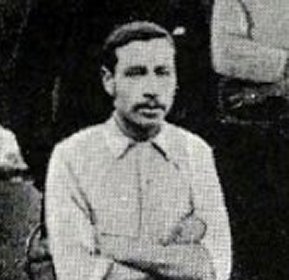
1878-1889

George Fleming: The Goalscoring Bank Clerk from Arbroath

George Fleming: The Goalscoring Bank Clerk from Arbroath

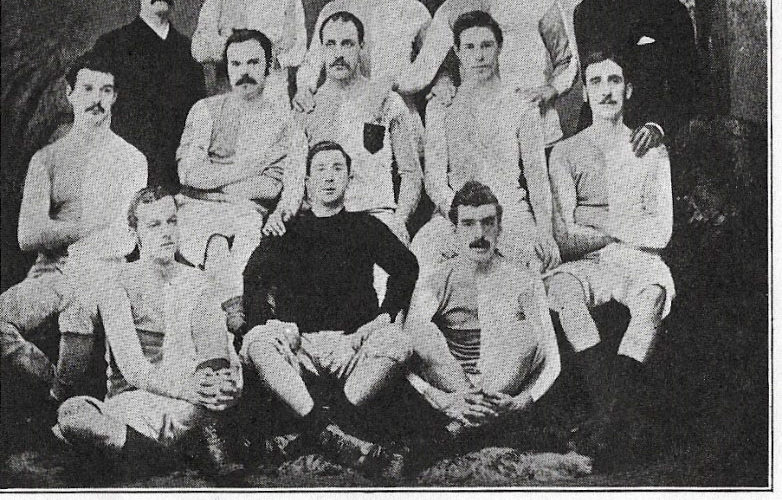
Scorer of the first goal for Everton FC in the newly formed Football League of 1888   It is the summer of 1887 and the Everton team poses at the Sandon Hotel with the trophy they had just won after beating Oakfield Rovers by five goals to nothing. Two of these goals had been scored by the man sitting left of the centre row who had recently moved to Merseyside from Scotland. His name was George Spink Fleming and he was destined to etch his name into the record books of Everton Football Club. Along with his twin sister Jemima,…
Read More
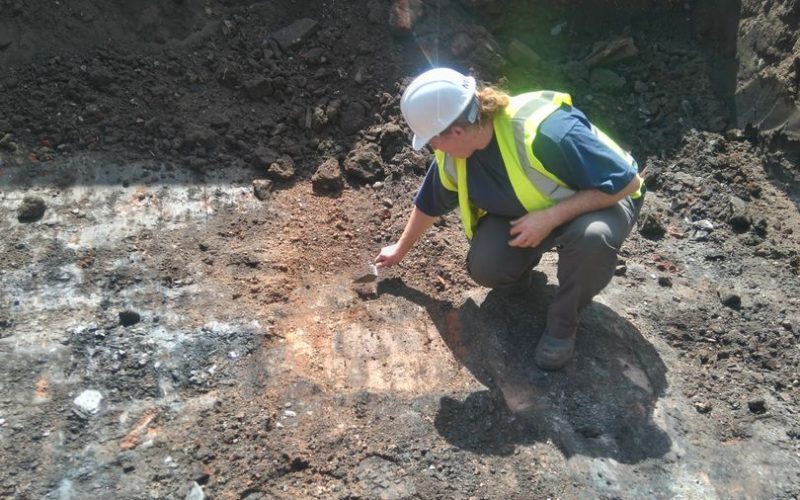
Queen’s Head Hotel Archaeological Excavations

Queen’s Head Hotel Archaeological Excavations

Hotel Confirmed as Everton F.C.'s first headquarters and the birthplace of big-time football on Merseyside Everton F.C.’s first secretary was the younger 26 years old John William Clarke, and not his landlord father John, who, down the years, had often been incorrectly credited with having had that historic role The Queen's Head Hotel has become part of Everton folklore regarding the events that took place within its walls and the decisions made that laid down the foundation of Everton Football Club. This historic venue is where St Domingo’s Football Club became Everton Football Club in November 1879, and in 2015…
Read More
Johnny Holt – Everton’s Little Devil

Johnny Holt – Everton’s Little Devil

Rob Sawyer "The undisputed king of centre-halves – a living object lesson of the superiority of brain over muscle." (Contemporary newspaper description of Johnny Holt) Time passes, and with it go first-hand memories of footballers who bestowed greatness on Everton. T.G. Jones is widely cited as the club’s finest centre-half, with the next generation of fans also holding Brian Labone in the highest of esteem. But let us not overlook Johnny Holt, the Little Devil – without equal in his era in the art of defending, and a bedrock of the First Kings of Anfield. John Holt entered this world…
Read More
The Stanley Park Three

The Stanley Park Three

The names of Marriott, Morris, and Pickering might not instantly come to mind when mentioning former members of Everton Football Club, but they played a major defensive role during their formative years on Stanley Park. The first of this trio to appear there was Thomas Marriott. He was born 4 February 1861 and was the third son of Mary and her husband, John, who worked as a cotton porter. The family were, at that time, living at 2 Duke Street, but by 1881 they were living in better surroundings at Grey Rock Street where Thomas was working as a clerk. He first played at full back alongside Tom Evans, from whose experience all three were to benefit, during the season of 1880-81 after which he was partnered by a man from the North East of England. Born in 1862, Richard William Morris was the son of John, a sergeant major…
Read More
International Football arrives on Merseyside

International Football arrives on Merseyside

The first international football match to take place on Merseyside occurred on 24 February 1883, when England took on an Irish side who were making their first excursion to mainland Britain. The match was arranged under the guidance of the FA secretary Charles Alcock, who decided to stage the game on the new home of Liverpool Cricket Club at Aigburth. He had attended Harrow Public School and would have been acquainted, through the 'Old Boy' network, with other Old Harrovians who lived on Merseyside. One such person was Percy Bateson. Born locally in 1862, Percy was the son of a…
Read More
Jack Keys and William Warmby — The Duo from Derby

Jack Keys and William Warmby — The Duo from Derby

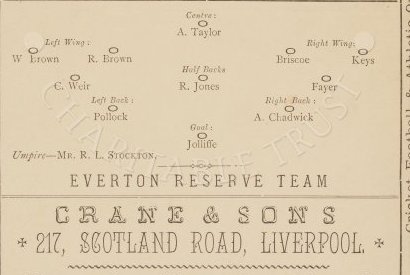
Jack Keys and William Warmby — The Duo from Derby In preparation for life in the Football League, Everton Football Club made several new signings during the summer of 1888. Two of them, Keys and Warmby, had joined from Derby County. Despite the fact that the local newspapers made no reference to their background, they were in fact related by marriage and had reached the Mersey seaport by two slightly different routes. William Henry Warmby was born in 1863 in South Yorkshire, where he began his football career with his local team, Rotherham Town. Some time around 1883 he moved…
Read More
In Search of John Houlding

In Search of John Houlding

This article is not intended either to praise or to condemn John Houlding for the role he played in the decision made by Everton Football Club to move away from Anfield. It is merely an effort to try and throw some light on this 'larger than life character' who played a big part in establishing the game of Association Football in his home town of Liverpool. Local records reveal that John Houlding was baptised on 4 August 1833 at St Martin-in the-Field church. He was the second of three sons born to Thomas Houlding, a cow keeper, and his wife…
Read More
John Roach, a Striker from Shropshire

John Roach, a Striker from Shropshire

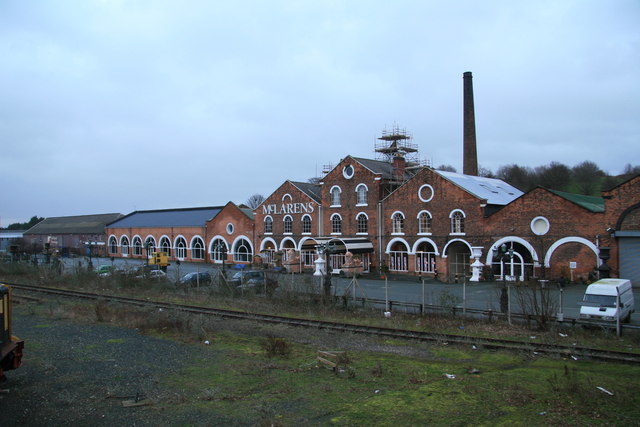
The main engineering works of The Cambrian Railway Company - today a grade two listed building - once employed many of the people who lived in the Welsh Marches town of Oswestry, and provided the local football team with several players. One such person, who also represented Everton, was John Roach. John Roach's home in LorneSt (left) and the Railway Works (far right) Born April 1863, he was the third child of Martin, a labourer, and his wife Bridget, who together had moved to Shropshire from their birthplace in the County Mayo across the Irish Sea. John had begun to work as a blacksmiths striker, in the foundry of the Cambrian Company, when he started playing football for the Oswestry White Stars, who shared a ground with the local cricket club. On 29 December 1883, the little Shropshire club found themselves in the limelight, having received a home FA Cup draw with the famous Queens Park club from Glasgow, who were renowned for playing quality football with…
Read More
Lewis the Fireman

Lewis the Fireman

When the Liverpool & District FA was formed in 1882, the officials turned for guidance to their more knowledgeable counterparts in North Wales, whose organisation had been formed some four years earlier. The members of the Everton executive thereafter, would make incursions into the Principality in search of experienced players they hoped would improve the standard of play at Anfield. One such man who caught their attention was William Lewis. Born in 1864 in Bangor, he was the third son of Edward, a stonemason, and his wife Margaret. The family home was at 72 Hill Street. According to the 1881 census, Billy had followed the male members of the family into the stonemason trade and had begun playing the association game with his local side Bangor. On 4 February 1884, Willie Lewis represented the North Wales FA against their counterparts from Liverpool, on what was the recently opened Bootle cricket enclosure on Hawthorne Road. He scored one of the goals as the game ended…
Read More
Albert Chadwick, the brother of Edgar

Albert Chadwick, the brother of Edgar

When Thomas Chadwick married Susanna Pilkington in 1865 at St Peter's church in Blackburn, both their families had a firm foundation in the grocery trade which enabled them to set up their own local outlet at 66 Darwen Street. It was here that their first child, Albert Llewelyn, was born 1 August 1867. The family then moved to a terraced house on New Park Street – while the business was expanded elsewhere – and it was here that a second child, Edgar Wallace, was born 14 June 1869. He was destined to become an early legend at Everton Football Club.…
Read More