
Ken Rogers

The historic lock-up tower at the heart of Everton FC’s famous badge will once again be open to the public next Saturday (9 May, noon to 2pm) as the Friends of Everton Park and members of the Official EFC Heritage Society come together to provide a candlelight insight into the remarkable history of this famous structure that has stood below Brow Side for 239 years.
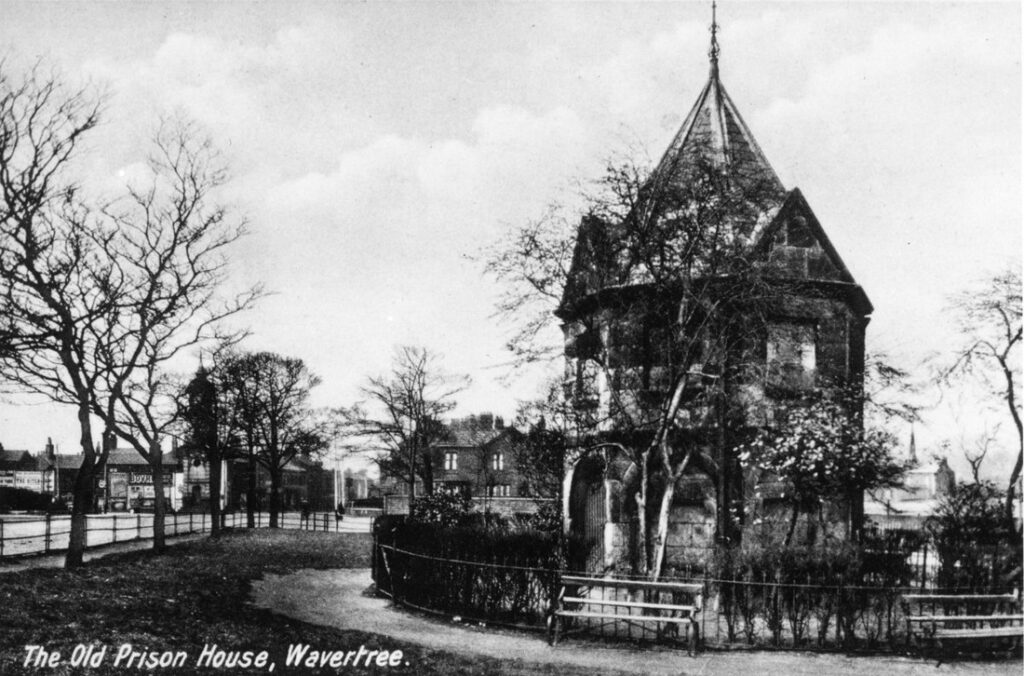
The Lock-Up, often wrongly referred to locally as Prince Rupert’s Castle, was built in 1787, one of just two such village structures in the city, the other being in Wavertree.
To clear up the incorrect Prince Rupert tower tag, the flamboyant Royalist leader brought his 10,000 strong Royalist army to Everton Ridge in 1644 during the English Civil War. He strategically used the elevated site with its uninterrupted views to plan his attack on Liverpool below, occupied at that time by Parliamentarian forces. Rupert ultimately looted and plundered Liverpool’s treasures before quickly marching on.
The Lock-Up would not be built for another 143 years, a visible and physical deterrent for miscreants who might have had one too many drinks in one of Everton’s village inns, overstaying their welcome in the pretty village on the hill.
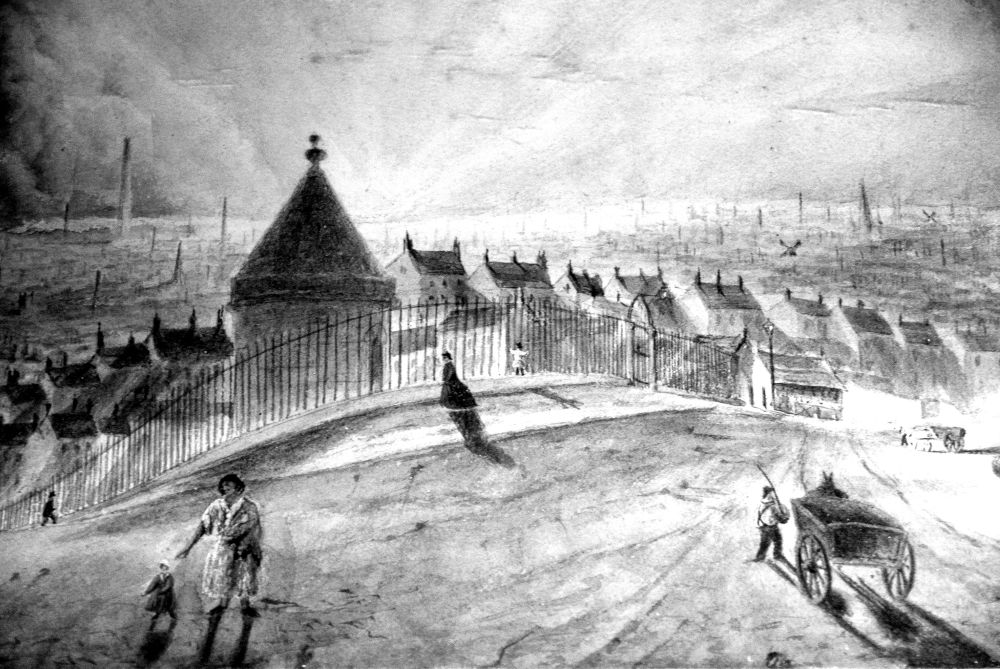
This 1869 drawing is by J. Charter.
It would be at one such local pub, the Queen’s Head in Everton Village, that the increasingly popular St Domingo’s football team, playing in Stanley Park at that time, met in November 1879 to decide on a new name. They could have opted for Walton, Anfield or even Liverpool, but instead chose Everton FC to maintain a powerful district link with their Methodist Connexion Chapel on Breckfield Road North.
While EFC have never actually played in Everton, it is fitting that the new dockside Hill Dickinson stadium is clearly viewable from the Lock-Up Tower. The club is extremely proud of its district links and fully supportive of next Saturday’s ‘Everton in Everton’ gathering.

The link between club and district took on a whole new meaning in 1938 when a new crest was commissioned by the board. Manager of the Day, Theo Kelly, was tasked with the job of producing a meaningful design with the tower at its heart inside a shield. Originally a graphic designer, Kelly opted for a measure of artistic license.

Mike Royden, deputy chairman of the EFC Heritage Society, explains how Kelly made the actual squat tower look slightly taller while adding a curving staircase (which it never had). Victorious Roman laurel wreathes were placed either side of the pointed roof and, for the first time a motto was included across the bottom, the Latin ‘Nil Satis Nisi Optimum’ – which translates to ‘Nothing But The Best’.
Where did the latter come from? Royden’s research offered intriguing food for thought. Had Kelly been trawling through some old club programmes for inspiration? Twelve years earlier, in November, 1926, an editor’s note in the Everton v Bolton programme gave a list of ‘Items Worth Recording’. Amongst these was the logic that ‘Nothing But The Best is due to the loyal supporters of our club’.
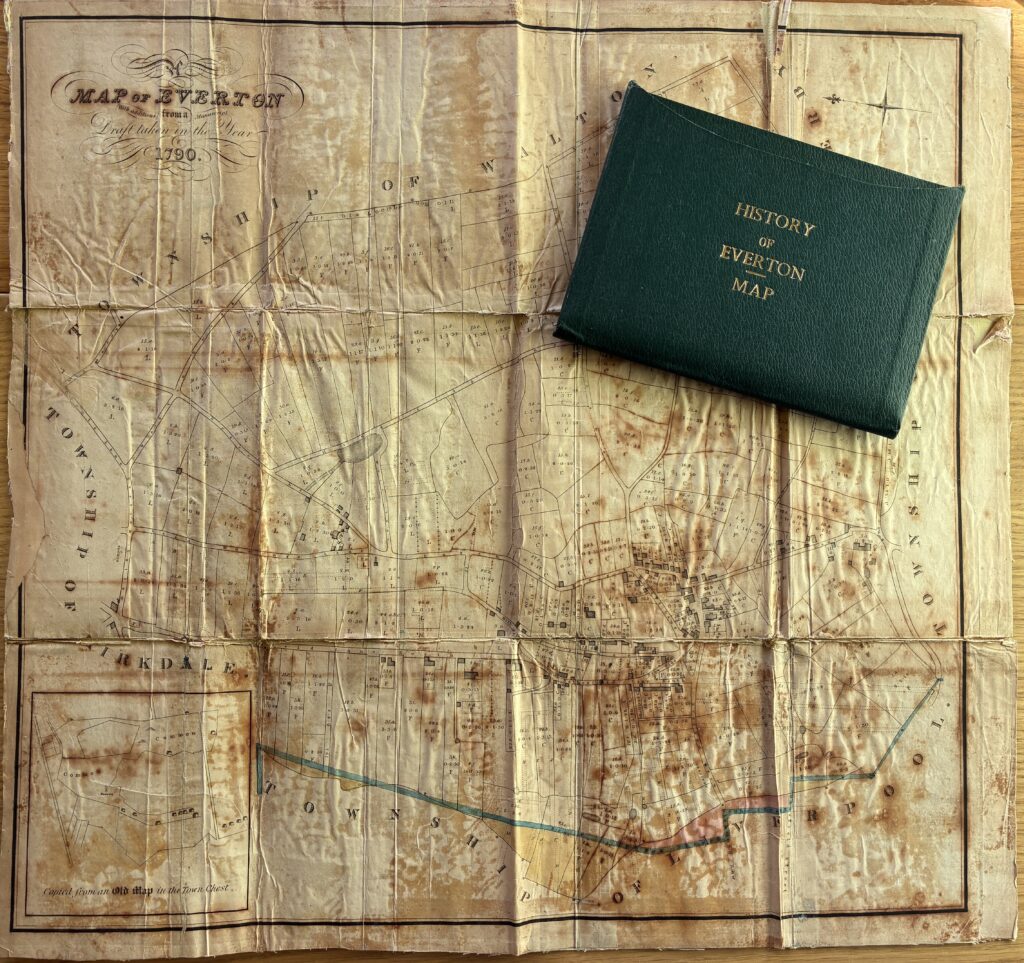
Mapping the Lock Up and the History of the Everton Crest
by Mike Royden
All you want to know about the Lock-Up, the Everton crest and its use on team shirts throughout the club’s existence.
.
Royden observes that this could have just been a throwaway line used on a regular basis to keep the fanbase onside, but could it have been Kelly’s source as he looked for an inspirational sign-off for the new crest he was tasked to produce all those years later? It’s an intriguing thought, heightened by the fact that Everton were ‘the best’ in that subsequent 1938/39 season, winning the League Championship before the Second World War abruptly stopped top-flight football in the UK.
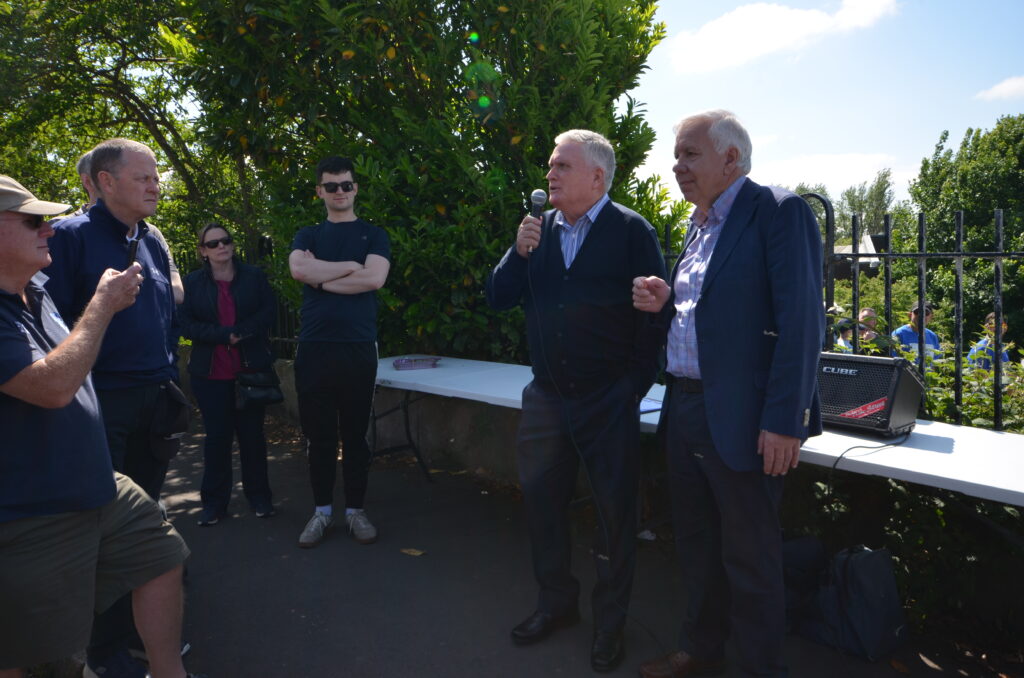
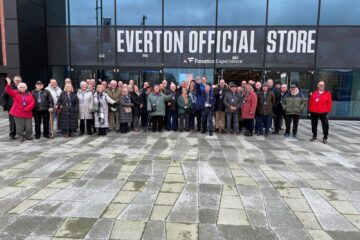
It’s intriguing thoughts like this that will be at the heart of next Saturday’s ‘Everton in Everton’ day at the Lock-Up Tower (12-2pm). In Ken Rogers’ unavoidable absence, historian Mike Royden and Everton FC tour guide Jamie Yates, will be there to talk about the history of the lock-up, and walk anyone who is interested up the famous Village Street to the site of the Toffee Shop, and the former Queens Head Hotel, the birthplace of big time football on Merseyside.
Knowledgeable researchers and statisticians from the Official EFC Heritage Society will answer any history questions and the Friends of Everton Park will be opening the Lock-Up Tower to reveal its own special story. We look forward to seeing you then.
Taken from Lost Tribe of Everton & Scottie Road, Liverpool Echo column, 2 May 2026
by Ken Rogers
I would dearly love to be there on Saturday, 9th but I have another event on in the afternoon which would mean having to leave Everton before 1.00pm. Just a point, as the other lot are playing Chelsea on Saturday, I think at lunchtime, will there be a vast number of cars around taking up “our” spaces in and around Village Street?
I am the guy who once brought my painting of the Brow, featuring the lock-up and the toffee shop. It now features on the EFC Heritage website. I don’t know what to do for the best, TBH.
Good luck on Saturday, whether I come or not.
Hello Ray, Apologies we didn’t see this until the following day. We do remember you and your painting though. There’s always next year!
Regards