1878-1889

Only Once a Blue (Part 4): Frederick Greaves Heaton

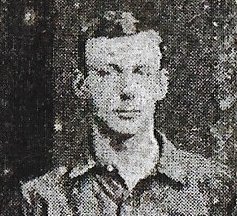
During the 1881-82 season, Everton were faced with a number of injuries to players and selectors were forced to cast their net wider in order to strengthen the team for an away fixture against Northwich Victoria. This process led them to enlist the help of Frederick G Heaton. Heaton was born in 1858, near the Staffordshire town of Leek, where his father Edwin was a land agent. Frederick, was the fifth child born to his wife Elizabeth, and were shown on the 1861 census living at Basford Villa, Chaddesden. Frederick first appeared playing football, under the rules of Staffordshire FA,…
Read More
Charles Munroe Lindsay, an Everton Goalkeeper

Charles Munroe Lindsay, an Everton Goalkeeper

In the year of 1871 the FA rules were reformed and it was decided that only one designated player was allowed to handle the ball in order to prevent it from entering the framework of the goal. This player was, from this point onwards, to be known as the designated goalkeeper. It was a hazardous position to play in because the rules  did not as yet prevent the man chosen from being “brought to ground” – with or without the ball – or surrounded and barged by opposing forwards. These rules were still in force when, in 1883, Everton found…
Read More
Only Once a Blue -Part 2: Egerton Stewart-Brown

Only Once a Blue -Part 2: Egerton Stewart-Brown

Only Once a Blue. Part 2: Egerton Stewart-Brown When Everton Football Club signed Dominic Calvert-Lewin from Sheffield United, he became their first player to be officially registered with a double-barrelled surname since Benjamin Howard-Baker in 1920. There is, however, another man who played for Everton before official records began who also had a hyphenated surname. He actually made a guest appearance during Everton's days at Anfield. Egerton Stewart-Brown, far left, with Liverpool Ramblers. On the far-right is J Bruce Ismay, the future Chairman of the White Star Shipping Line Egerton Stewart-Brown was born 31 January 1862, in the township of…
Read More
The History of Bramley-Moore Dock

The History of Bramley-Moore Dock

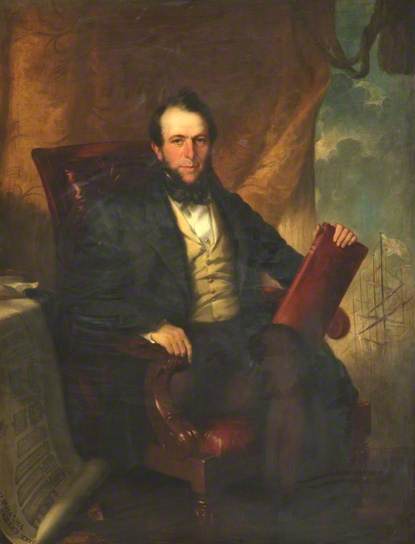
  Evertonians are justly proud of their heritage, and as it has been with Goodison, so it will be with Bramley-Moore Dock.  As it celebrates its 170th anniversary this year, what are the origins of the site of Everton’s proposed new stadium? The dock takes its name from John Bramley-Moore (pictured), who was born in Leeds in 1800.  As a young man he went out to South America, spending several years as a merchant in Rio de Janeiro.  By 1830 he was clearly upwardly mobile, marrying Seraphina Hibernia, the daughter of William Pennell, British consul-general for Brazil.  In 1835, Bramley-Moore…
Read More
Frank Sugg – A Great Sporting All-Rounder

Frank Sugg – A Great Sporting All-Rounder

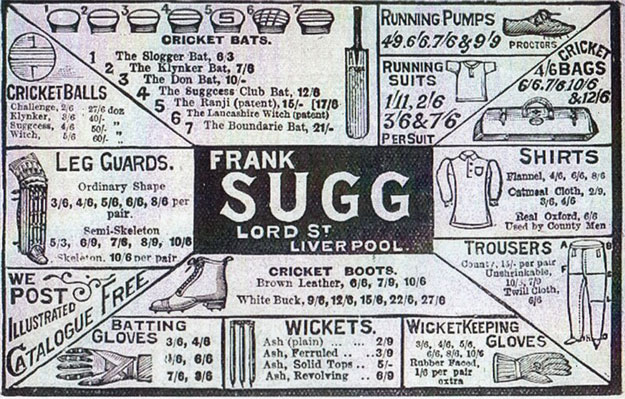
As a child, a shopping trip to nearby Stockport was not complete without a visit to the Sugg Sport emporium in the Merseyway Shopping Centre. Back then I was blissfully unaware of the link between the family giving its name to the Yorkshire-based retail chain and Everton FC. Frank Howe Sugg, like Jack Sharp and Harry Makepeace, was a notable footballer-cum-cricketer on Everton’s books. Born in Ilkeston, in 1862, Frank was raised in Pitsmoor, Sheffield from the age of four, along with his elder brother, Walter. The boys’ parents had designs on them following their father, Hubert, into the legal…
Read More
Stevenson of Kilmarnock

Stevenson of Kilmarnock

The Final Journey of an Everton Blue Signed during the pre-Football League era, Robert Stevenson returned eventually to live in his native Scotland but spent the last days of his life in Liverpool. He was born January 1861, at 34 Ardeer Square in the Ayrshire coastal town of Stevenson and was the seventh child of George, a coal miner, and his wife Margaret. The 1881 census found the family living in Kilmarnock at 52 Low Glencairn Street. Robert was employed as a grocery assistant. It is around this time that he began serving an apprenticeship as an engine fitter and…
Read More
William Henry Briscoe

William Henry Briscoe

Having begun his career on Stanley Park, Liverpool-born William Briscoe first appeared in the Everton line up during their inaugural season in the Football League 1888-89.  Born 24 May 1866, he was the second of three children of parents William senior and his wife, Ann. The 1871 census recorded Ann and the three children boarding with the Kelly family at 15 Brisbane Street in Kirkdale, where she declared herself to be a ship steward's wife. The family later found a home of their own at 75 Windermere Street, where William junior, after finding work as a railway clerk, began playing…
Read More

Welcoming Old Friends…

      Burnley's game at Goodison Park on 1 October 2017 was the only top-flight fixture that weekend featuring two founder members of the Football League Burnley began life playing under the rules of Rugby School but switched to the association code following an invitation from the local cricket club to join them at their established home of Turf Moor. The Burnley footballers first played there in 1883, which means only Preston North End have occupied their home ground for longer in English football. Burnley were soon given a shock introduction to the realities of the association game when, in October…
Read More
In Search of the First Everton Stalwart

In Search of the First Everton Stalwart

Rain was falling heavily as I left the train at New Brighton railway station in search of a former Everton captain who I had discovered was buried in Rake Lane cemetery, Wallasey. The person, whose last resting place I was searching for, was George Dobson. I knew he had died in 1941 but, as I had no grave number, I searched for over an hour without success before, wet through, I started to head for home. However, as I passed through the main gate, I noticed the resident stonemason's office and knocked at the door. My luck was in. I…
Read More

The Man Who Coached Everton to Their First League Title

It is the summer of 1891 and the players of Everton Football Club proudly pose with Football League championship trophy which they had recently won for the first time. The club executives, who were at that time in charge of team selection, must take much of the credit for this triumph because of their clever dealings in the transfer market. The extra players they had brought in had proved to be good enough to carry off the championship after finishing second in the previous season. Their fitness and welfare, however, had been placed in the hands of a former Everton…
Read More