Jamie Yates
Author’s Note: Spelling of the surname Dalgliesh varies across publications and official records, appearing as Dalgliesh or Dalgleish interchangeably. For clarification I have quoted sources verbatim throughout this article. George’s family employ the ‘Dalgliesh’ spelling. Finding the right George Dalgliesh was no easy task and took a couple of false starts. There was a George Dalglish born in Liverpool in 1922. It wasn’t him. Next came George Robert White Dalgleish, born in Edinburgh in 1924, a Civil Engineer and son of a prominent Church of Scotland minister. Close, but no cigar.
And then there he was. We were up and running. Which had to be quick if we wanted to keep up with our George!
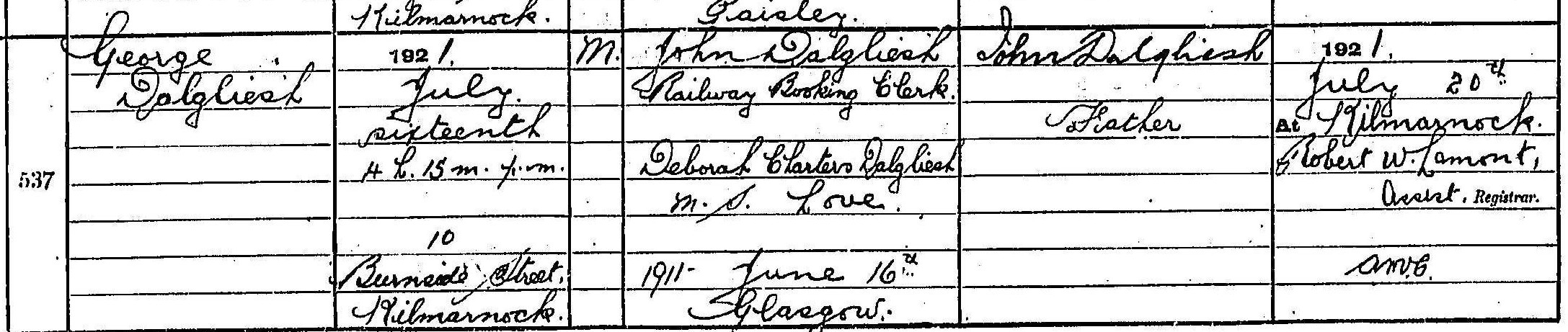
George Dalgliesh was born at 10 Burnside Street, Kilmarnock, Ayrshire, on Saturday, 16 July 1921. On that day, over 400 miles away in London, the sixth annual Aerial Derby was staged. This high-profile air race was first held in 1912, where a group of competitors flying various aircraft navigated a circuit starting and finishing at Hendon Aerodrome, navigating via Hertford to the north, Epping and West Thurrock to the west, Epsom to the south and Kempton Park to the east.
The 1921 edition was due to feature a record twenty competitors and was sponsored by the Royal Aero Club, with a £500 prize for the winner (over £30,000 in 2026). Tragically, Harry George Hawker, a famous Australian aviator, died in a crash during practice for the event. The unfortunate Hawker had been denied permission to compete by the War Office in the 1919 ‘Victory’ edition of the race, held after the competition had been suspended during the First World War, and disqualified for not crossing the finishing line properly in the 1920 contest.

On the day, a further five entrants were unable to start for various reasons, leaving a field of fourteen competitors. The race was won by J. H. James, piloting his Gloster Mars 450 horse-power Napier Lion, in a time of one hour eighteen minutes and ten seconds. The competition ran for another two years, before the 1924 event was cancelled due to high winds, and the Aerial Derby was no more.
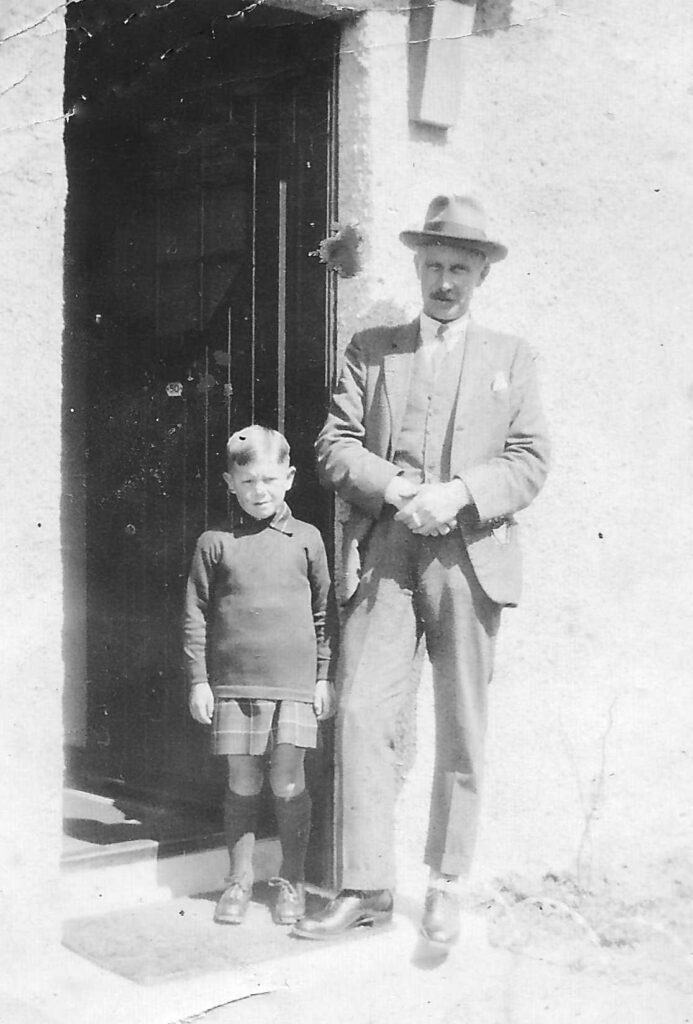
Meanwhile, up in Scotland, wee George Dalgliesh would have been up and about, toddling around, blissfully unaware of the adventures he would have on the wings of a football pitch and in flight as a Royal Air Force pilot in years to come.
George and his sister Margaret (born in 1912) were the children of John Dalgliesh (1883-1967), a clerk with the London, Midland and Scottish Railway, and Deborah Charters Love (1884-1944). John and Deborah were married on 16 June 1911 at the Hotel Balmoral on Sauchiehall Street in Glasgow. The Dalgliesh family moved north from Ayrshire to Inverness in 1927 and John was employed there for the rest of his career as chief booking clerk at Inverness Station. He also served for over thirty years as an elder at Ness Bank Parish Church and was a keen bowls player.

Within a few years of the Dalgliesh family settling in Inverness, school sports day reports from the Inverness Courier in the summers of the early 1930s were strewn with mentions of a talented scholar and prodigious young athlete by the name of George Dalgliesh.
The Inverness Courier of 25 May 1934 included the following preview:

‘INVERNESS SCHOOLS’ FOOTBALL MATCH

At Inverness Thistle Park tonight an interesting game should be witnessed, when a team chosen from the Central and Merkinch schools opposes one picked from the High and Farraline Park Schools. These games are held annually, and those who were present at former ones were agreeably surprised at the high standard of football served up. The proceeds of this match augment the funds of the Schools’ Football League, which fosters the game among the schoolboys in town.’
Among the forward line and just a couple of months shy of his thirteenth birthday, George Dalgliesh was one of five boys from Inverness Central School in the line-up.
The Inverness Courier edition of 1 June 1934, reported on the Central School sports day that year, held at Telford Street Park, a playing field where George would soon be making an even bigger name for himself;
‘Varied events were witnessed, but the most thrilling was the three hundred yards race for boys and girls. George Dalgleish, who figured prominently in most of the competitions, carried off the honours in the boys’ race.’
As well as the 300-yard race, George won the 100-yard flat race for boys over twelve, came second in the three-legged race with Ewen Davidson, third in the high jump and won the wheelbarrow race, once again with the help of his pal Ewen. In recognition of his sporting prowess, George was crowned ‘boy champion’ at the end of year school awards ceremony. The following summer, George competed in the summer games in the 300-yard race for former pupils and came third.


George’s big sister Margaret married John Collins Maclean in Inverness in 1939. By this time her now eighteen-year-old brother was still competing in junior athletics competitions, but had also established himself as a favourite with the fans of Inverness Caledonian Football Club, or Caley, as they were known locally;
‘Congratulations to George Dalgleish on winning the Inverness Boys’ Brigade sports championship for the second year in succession. George, of course, is better known as the clever outside-right of Inverness Caledonian.
His ability as a runner stands him in good stead on the football field, and during last season he was regarded as one of the leading forwards of the younger school in the north. He has not signed on for Caley, but he is expected to be back in his old position.’
Aberdeen Evening Express, 19 July 1939
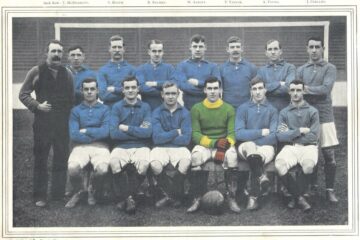
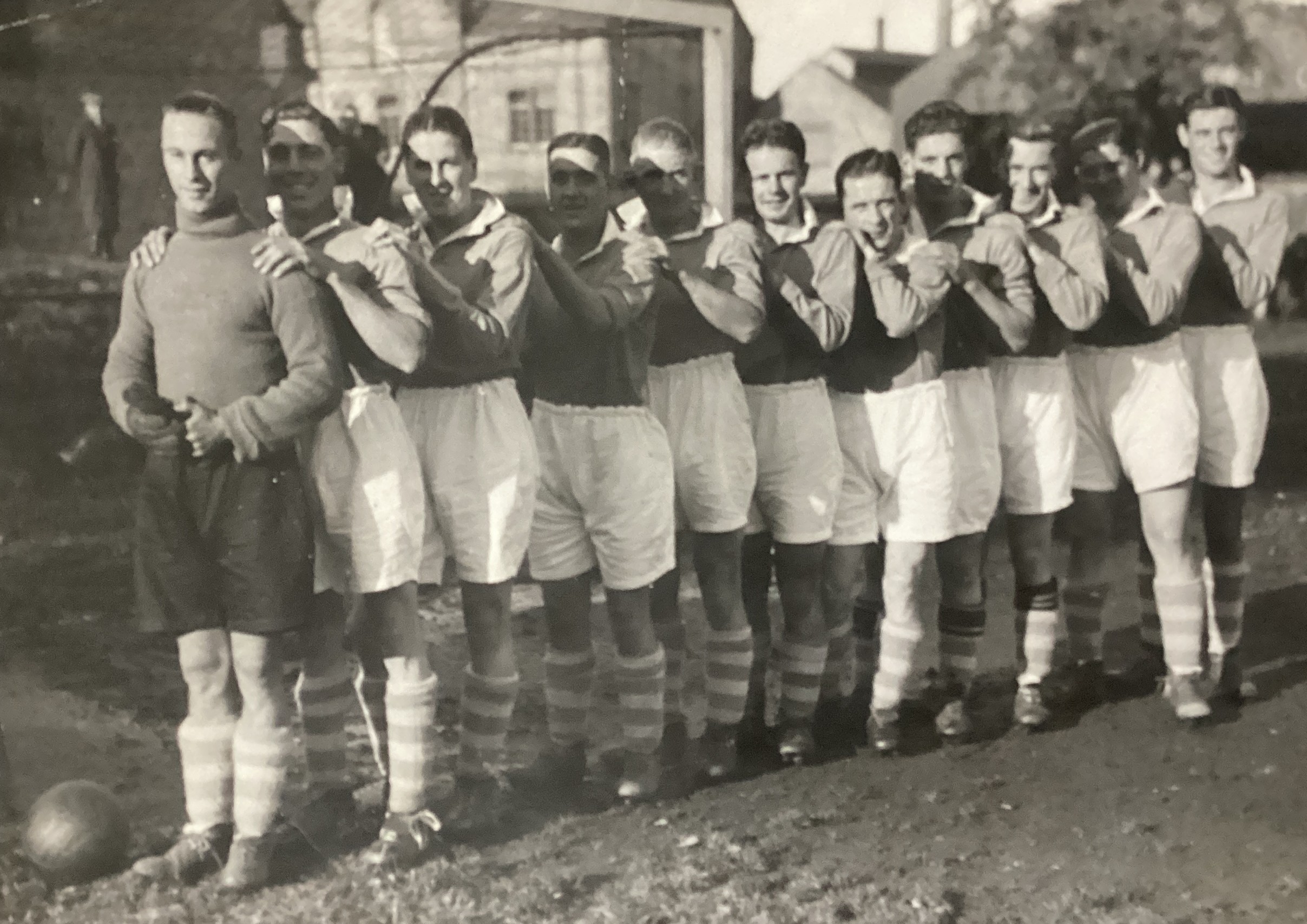
Caley played their home matches at Telford Street Park – site of the many athletic feats of George Dalgliesh’s youth – resplendent in royal blue shirts, white shorts and royal blue socks.

George was clearly making a name for himself with his footballing endeavours, as he was selected to play for a Highland League Select XI versus an Army XI in 1939.
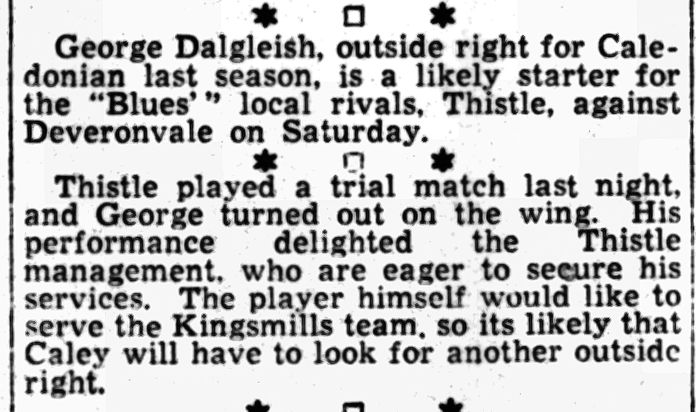
Rumours began to emerge around this time that the talented young winger was on the brink of making a controversial move;
‘George Dalgleish, outside right for Caledonian last season, is a likely starter for the “Blues” local rivals, Thistle, against Deveronvale on Saturday.
Thistle played a trial match last night, and George turned out on the wing. His performance delighted the Thistle management, who are eager to secure his services. The player himself would like to serve the Kingsmills team, so it is likely that Caley will have to look for another outside-right.’
Aberdeen Evening Express, 10 August 1939
Another local publication picked up on the story the following day:

Alas, any indecision on George’s part over which football team he would prefer to represent during the 1939/40 football season, would soon pale into insignificance. On 3 September 1939, Britain and France declared war on Nazi Germany, and competitive football across Europe was put on hold for what turned out to be the next seven years.
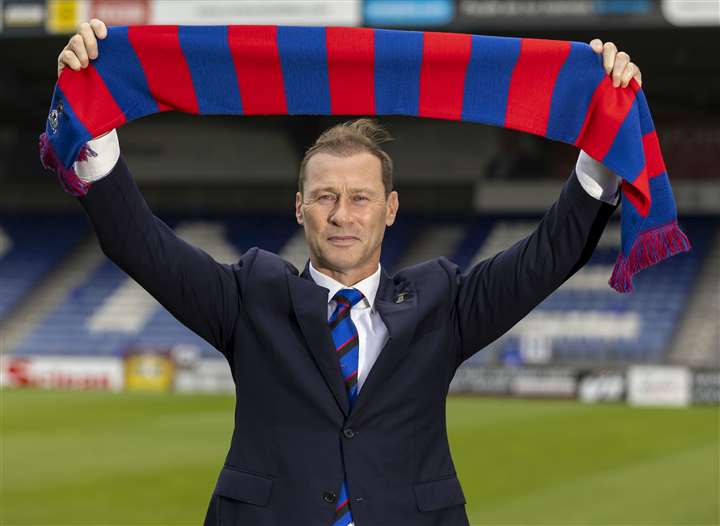
Fast-forward half a century to 1994, and plans to expand membership of the Scottish Football League saw a controversial merger of long-established Highland League clubs Caley and Thistle, to form a new one, Inverness Caledonian Thistle F.C., with the aim of increasing the chances of a club from the region securing a Scottish League berth for the first time in the history of the competition. Thirty years on from the merger, for a few months of the 2023/24 season, former Everton striker Duncan Ferguson would serve as manager of the club until being made redundant as the club unfortunately nose-dived (aviation pun intended) toward administration.
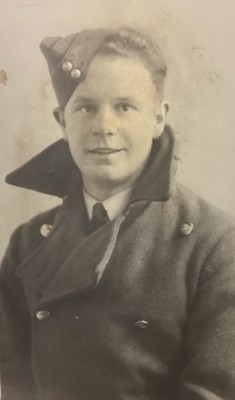
To return to 1939, George Dalgliesh could never have expected that he would be in his mid-twenties by the time the next round of competitive football fixtures kicked off in England and Scotland. Not to mention becoming a Royal Air Force pilot with thousands of air miles under his belt. Any dream he had of making it as a professional footballer must have been in tatters. Little could he have imagined that at the end of the conflict he would sign a playing contract with one of the most famous football clubs in England.

A nineteen-year-old George Dalgliesh enlisted with the Royal Air Force in 1940. He rose to the rank of Flight Lieutenant and served as a rear gunner on many nerve-shattering missions during fifteen years of exemplary service.
A photograph from August 1940 proves that George did manage to continue playing football wherever possible during the conflict. The game proved a vital means of boosting moral as well as providing a break from the atrocities faced by troops on a daily basis. One photograph from the Dalgliesh family archive shows George standing proudly alongside the famous Queen of the South player John ‘Jackie’ Oakes (1919-1995), who, like George, plied his trade as a winger.
George labelled the photograph on the back:
‘At R.A.F. Wick with Jackie Oakes (Queen of the South) – the good-looking one is on the left!’

Jackie Oakes was born on 6 December 1919 in Hamilton, Lanarkshire, but began his football career as a sixteen-year-old with Wolverhampton Wanderers under Major Frank Buckley. Oakes never made a first-team appearance at Molineux, and returned to Scotland just a year later in 1936, to join Queen of the South. He made his professional debut versus his hometown club, Hamilton Academical.
Having established himself in the team as a left-footed right-winger, Oakes scored Queen of the South’s opening goal in their first ever win over Glasgow Rangers, during the 1937/38 season. He was a key part of the team which finished sixth in the top-flight in the 1938/39 season. Oakes earned international recognition in the form of an unofficial wartime cap for Scotland in a 3-2 friendly win versus Belgium, at the Stade du Daring Club in Molenbeek, Brussels, on 6 January 1945. Corporal John Oakes started on the right-wing, future Everton striker Jock Dodds played at centre-forward, and Liverpool legend Billy Liddell played on the left-wing for Scotland. Like George Dalgliesh, both Dodds and Liddell were serving with the Royal Air Force. Perhaps George was there to watch.
At a meeting of the Everton directors held at the Exchange Hotel in Liverpool on Tuesday, 25 September 1945, a note was made to keep an eye on ‘Oakes of Queen of the South.’ Everton stalwart of the 1930s, and Scottish international half-back Jock Thomson, who was employed as a coach by the club in 1944 and also undertook regular scouting missions, made his appreciation of Oakes’ talents clear to the board of directors. At a meeting held on 16 October 1945, Theo Kelly was instructed to travel north to watch Oakes in action, with full powers to make an offer to Queen of the South for the player’s services.
Upon his return from Dumfries, Theo Kelly confirmed that he too had been impressed by Oakes’ performance and that Queen of the South were now considering a £2,000 bid from Everton. After resolving to limit any offer to £3,000, the Everton directors made an about turn at a meeting held on 6 November 1945, and agreed to up the overall bid to £3,250. Queen of the South held out for more, then claimed that they had received a better offer from a rival club, before a letter arrived at Goodison Park in time for the meeting of 8 January 1946, stating that Oakes was not prepared to move to England at this point. The following was reported at a meeting of the Everton board held on Tuesday, 5 March 1946:
‘OAKES – It was noted that this player was now agreeable to joining our club. Secretary was instructed to proceed North, find out the true situation and report back to the board.’
Theo Kelly reported back on his trip to Carlisle the following week. He had only managed to speak to Oakes on the phone and been informed that the player had, after all, decided to remain in Scotland. A further twelve months passed before Jackie Oakes’ name again cropped up in a brief reference in the minutes of an Everton board meeting held on 4 February 1947:
‘Mr. R. Bentham flatly turned down Oakes.’
Within days Jackie Oakes was a Blackburn Rovers player, apparently having turned down Manchester City to finally move south to Lancashire. He arrived at Ewood Park as part of a £26,000 triple signing alongside Jock Weir and Frank McGorrigan. A month later, Oakes scored his first goal for Blackburn versus Liverpool in a 2-1 defeat at Anfield on 8 March 1947.
Jackie Oakes faced Everton for the first time in his career on the opening weekend of the 1947/48 season, lining up on the left flank at Ewood Park on Saturday 23 August. Everton returned home to Merseyside with a 3-2 victory under their belts, Oakes’ wartime international teammate Jock Dodds opening the scoring for the Toffeemen. In the return fixture at Goodison Park on 20 December, Oakes, this time playing on the right-wing, equalised for Rovers early in the second half before three goals in fifteen minutes from Jackie Grant, Wally Fielding and Peter Farrell earned Everton a 4-1 win.
At the end of the season, Blackburn Rovers finished second from bottom of the table, and were relegated to the Second Division. However, Oakes made an immediate return to the top-flight with Manchester City, now under the management of none other than Jock Thomson. They faced Everton three times in a fortnight over Christmas and New Year in successive 0-0 league draws, plus a 1-0 F.A. Cup third round defeat at Goodison Park. Oakes final appearance against Everton came in another goalless draw, at Maine Road, on 7 September 1949. City were relegated at the end of the 1949/50 season.
Oakes stayed on at Maine Road for the 1950/51 season in the Second Division, before returning to Queen of the South in summer 1951. Over his two spells at Palmerston Park, Jackie Oakes made 457 appearances – including a starring role aged forty – in a 7-1 win over Queen’s Park on Boxing Day 1959. The Queen’s Park consolation goal that day was scored by a teenage striker called Alex Ferguson who later made his name as manager of Aberdeen and Manchester United.
It is unclear precisely when the eye of an Everton scout was first caught by the lightning wing play of George Dalgliesh, but an entry from the Everton Football Club minute book archives, pertaining to a meeting of the Everton board of directors held at the Exchange Hotel in Liverpool city centre on the evening of Tuesday, 2 October 1945 – just a week after the club had first discussed a move to sign Jackie Oakes – reads as follows:
‘J. Cookson and G. Dalgleish – It was reported that these players had signed professional agreements.’

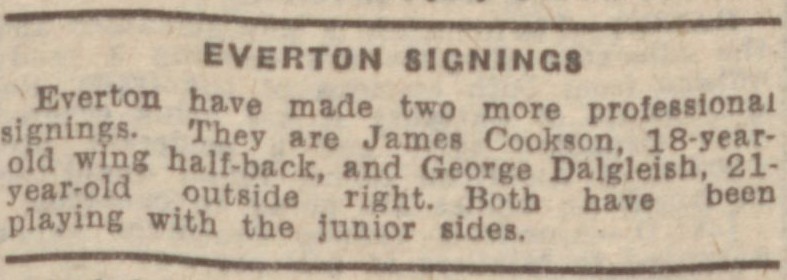
In truth of course, George was twenty-four years of age by this point. Both Cookson and Dalgliesh played for Everton Reserves against Aston Villa Reserves at Goodison Park just a few days prior, according to a line-up published in the Liverpool Evening Express of Thursday, 27 September 1945.
A single family artefact survives as proof positive of George Dalgliesh’s engagement with Everton. A postcard was sent from the Secretary of Everton Football Club, Mr. Theo Kelly, postmarked ‘Liverpool, 8pm, 12 December 1945’, to ‘George Dalgleish, ‘A’ Camp, Officer’s Mess, 61 M.U., R.A.F. Handforth, Cheshire’.
‘61 M.U.’ was a Royal Air Force maintenance unit and stores depot which was established in Handforth, near Wilmslow on the outskirts of Stockport, in 1939. The officer’s mess, where George Dalgliesh was living at the time, was situated on Grove Lane in Cheadle Hume.
The printed postcard, complete with an early rendering of Kelly’s 1938 Everton Football Club badge design, requested George’s attendance at Goodison Park at 11.45am on the morning of Saturday, 15 December 1945, to board a coach to Staffordshire and play for Everton Reserves versus Stoke in a Central League fixture.
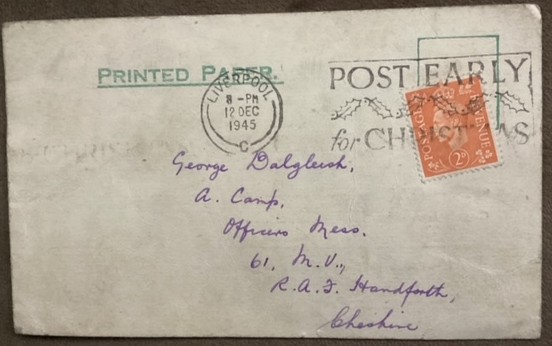

George responded in the affirmative and played on the right-wing as Everton won the match 3-2, as reported in the Staffordshire Sentinel newspaper that afternoon. A Liverpool Echo report of the same day failed to provide team details, but did report on the match itself:
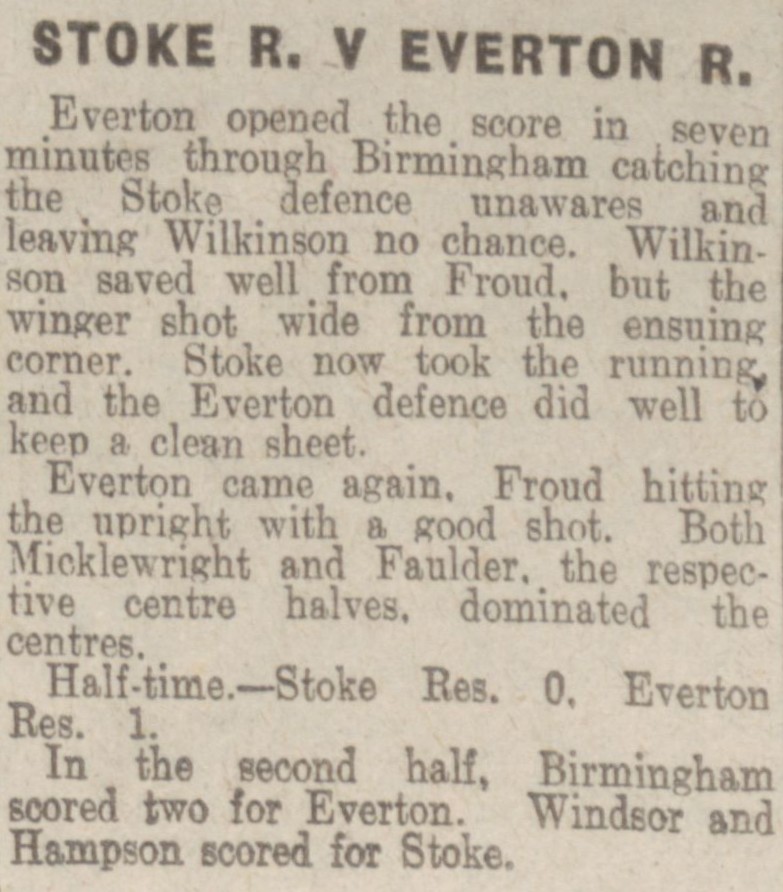
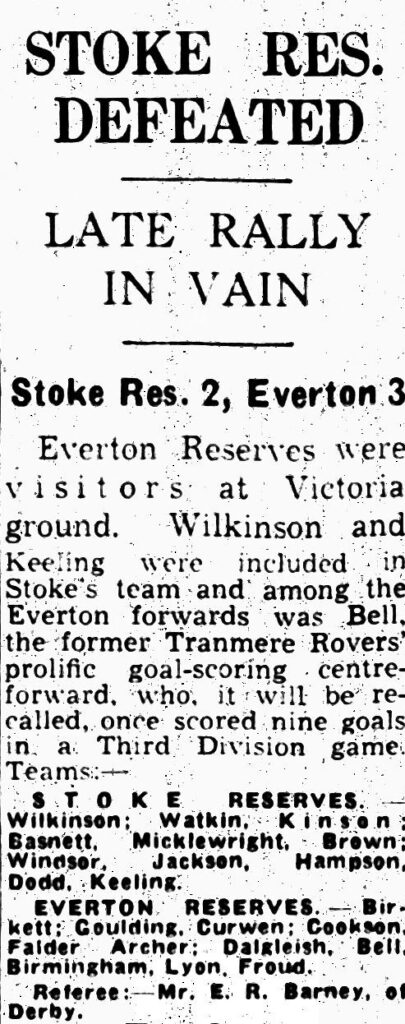
No specific mention of George Dalgliesh, but a hat-trick for any centre-forward suggests that he received excellent service from his wingers. The centre-forward in question, C. Birmingham, was only ever mentioned twice in the Everton minute books. The first entry appeared in notes from a meeting of Tuesday, 18 December 1945, immediately after his hat-trick at Stoke:
‘C. BIRMINGHAM – Secretary was instructed to make enquiries re: this C.F.’s immediate future and report back.’
The requested feedback was provided at the meeting of Tuesday, 8 January 1946:
‘C. BIRMINGHAM – Noted that this player would be resuming his Civil Employment with Messrs. Chas. Birchall and had 18 months to go to complete his time, and would continue to serve as an amateur for a while, at least.’
This suggests that Birmingham was also on national service. The football record books indicate that the man in question was Liverpool-born forward Charles Henry ‘Charlie’ Birmingham (1922-1993), who was still on Everton’s books as an amateur in January 1946, but signed for Tranmere Rovers later that year. Birmingham played twice for Rovers during the 1946/47 season, scoring once. He moved to Macclesfield Town and scored six goals in ten matches for the Silkmen, before drifting away from the professional game.
The ‘Bell’ listed on Everton’s team-sheet was former Tranmere Rovers striker Robert ‘Bunny’ Bell. Bell scored 102 goals in 114 league appearances for Rovers, before signing for Everton in 1936 as back-up for the veteran William Ralph ‘Dixie’ Dean and his teenage goalscoring protégé Tommy Lawton.
All was not well at Goodison Park at this point. The resumption of competitive league football was still almost a year away, founder member and club stalwart Will Cuff was engaged in a bitter dispute with his fellow directors and another minute book entry reveals that Tommy Lawton, now Everton’s undisputed star number nine in place of the departed Dixie Dean, had submitted a transfer request the week before Dalgliesh and Cookson signed professional terms with the club.
The Everton squad was threadbare after seven years of wartime football, and a huge turnover of players would occur in the seasons that followed. The club suffered relegation for only the second time in its history in May 1951, not returning to the top-flight for three long years.
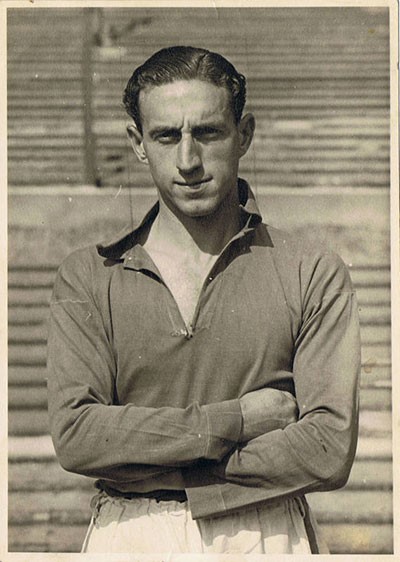
Jimmy Cookson, the 18-year-old wing-half signed by Everton on the same day as George Dalgliesh, managed to earn one first-team call-up during that 1945/46 season, the final year of the wartime regional leagues, coincidentally once more in a 3-2 win over Stoke City, only this time at the Victoria Ground.

Everton’s first goal against Stoke that day was scored by Sid Rawlings, an experienced outside-right signed from Millwall who comfortably established himself ahead of a rookie like George Dalgliesh in the pecking order before losing his place to Alec Stevenson in the spring of 1946.
Rawlings made two first-team appearances for Everton, both in the F.A. Cup. The competition was relaunched post-war with the introduction of two-legged third round ties taking place in January 1946. Everton were drawn to play Preston North End and went down 3-2 on aggregate. Bill Shankly netted the decisive goal, a penalty, three minutes from the end of extra time in the second leg at Goodison, Everton striker Harry Catterick having opened the scoring in the first game at Deepdale. Shankly and Catterick’s rivalry would of course resume from opposing dugouts on Merseyside throughout the 1960s.
Jimmy Cookson, whose father had objected to the Everton board offering his son professional terms in 1945, remained under contract at Everton until 1950 without ever making a competitive first-team appearance.
On Tuesday 9 April 1946, at another meeting held at the Exchange Hotel, an entry from the Everton minute books details club directors signing off on George Dalgliesh being granted a free transfer with a handful of wartime league fixtures still to play in the season.

With that, George’s Everton adventure as Royal Air Force gunner-cum-professional footballer was over. A few months playing reserve team football for a down-on-their-luck Everton probably seemed pretty tame fare in comparison to the challenges he faced on daring missions flying over Europe and beyond!
Note: According to The Grecian Archive, an online resource dedicated to the history of Exeter City Football Club, George Dalgliesh also played once for Exeter in a Division Three South (South of the Thames) home fixture versus Bournemouth and Boscombe Athletic at St. James’ Park at some point in October 1945.
From a personal perspective, George was already familiar with Merseyside prior to his brief stint on the books at Everton. He married Birkenhead-born Irene Bennett in the early months of 1945 at Birkenhead Registry Office, resplendent in full R.A.F. uniform.

After the war ended and following his release by Everton, George was stationed at R.A.F. Melksham, near Trowbridge, Wiltshire – an air force base notable for the fact that it had no runway. There Irene gave birth to a daughter, Lynne, in 1947, and a son, Roger, in 1949.
George’s next posting was to Egypt, and once more he took his family with him. Looking back on her childhood experience in North Africa, George’s daughter Lynne remembered that ‘the populace was mesmerised by my platinum blonde hair!’
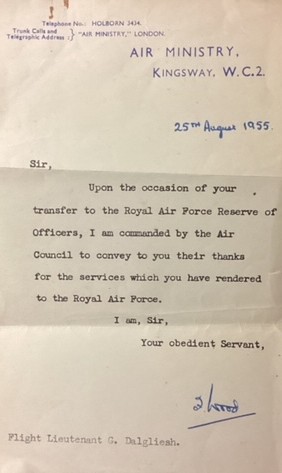
George Dalgliesh served with the Royal Air Force for fifteen years, before he was demobilised and placed in the Reserve. He received the following letter from the Air Ministry in London confirming this:
The family spent a number of years living in Canada in the 1960s and 1970s and Lynne Dalgliesh settled in Ontario where she raised a family of her own. George and Irene returned to Inverness in the 1980s, to a house just two miles from where George grew up. He enjoyed a return to his roots as a local sporting champion once more, this time on the bowling green.

An article published by the Highland News Group in February 1985, provides a little further insight into the nature of George’s wartime heroics:
‘WARTIME MEDAL FOR HERO GEORGE – 40 YEARS ON!
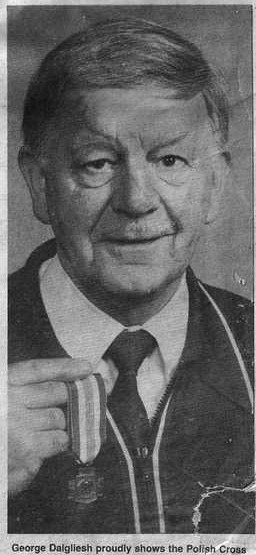
As a young sergeant in the Royal Air Force during the last war, Inverness man George Dalgliesh was involved in flying over Poland and dropping supplies to the beleaguered Polish troops in Warsaw.
It was just one of the hazards of war to George but a letter through the door of his home at 14 Balnakyle Road the other day brought memories of those dangerous ‘sorties’ flooding back.
And the letter, from the Polish Home Ex-Servicemen Association, told him he was due a medal, no less than the Polish Home Army Cross…
“I was quite flabbergasted,” admitted George (63).
“I remember it well. I was with 178 Squadron and we flew from our base at Foggia in Italy to drop supplies to the Polish Army, guns, food, etc., in September, 1944.”
George, who served 15 years with the R.A.F. and attained the rank of Flight Lieutenant, is rightly proud of his new Army Cross – he has also received a certificate – and marvels at how the Polish authorities must have gone to considerable trouble to trace him.
“It brings back memories of those hazardous days and I shall always treasure it,” he says with a broad grin.’
Highland News Group, February 1985
George was invited to Downing Street by then Prime Minister Tony Blair to accept the medal, but was unable to accept the offer due to health issues.
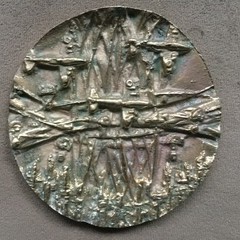
In 1994, after forty-nine years of marriage, Irene Dalgliesh passed away aged seventy-two. Four years later, George married for a second time, to Mary Kerr.


George Dalgliesh died aged ninety-two on 8 July 2013. He was laid to rest with his parents, John and Deborah, sister Margaret, and her husband John, at Tomnahurich Cemetery, on Glenurquhart Road in Inverness (the street upon which the Dalgliesh family lived when George was a boy).

(continuing in the family tradition of sporting excellence, by becoming Women’s Super Seniors Champion at Brantford Golf and Country Club, Ontario, in 2024)
Remembering her father, Lynne Dalgliesh marvels at his bravery:
‘Dad was a rear gunner, can you imagine being surrounded by the Luftwaffe at twenty years of age? How he lived to ninety-two is amazing, I think the memories of bombing innocents haunted him.’
George Dalgliesh may not have made a major impact in the storied history of Everton Football Club, but as Evertonians we can take pride in the knowledge that we once had a decorated war hero on the books.
___________________________
Further Notes:
George Dalgliesh was mentioned several times over the years in the London Gazette:
Edition of 5 December 1944:
‘2nd Oct. 1944. 949723 George DALGLIESH (187360).’
Edition of 4 May 1945:
‘2nd Apr. 1945. G. DALGLIESH (187360).’
Edition of 9 September 1947:
’PHYSICAL FITNESS BRANCH
Appointment to commission.
As Flying Officer, extended service (four years on the active list)*:
George DALGLIESH (187360). 24th July 1947 (seniority 17th Apr. 1947).’
Edition of 20 September 1955:
‘Transfer to reserve.
Flight Lieutenants: G. DALGLIESH (187360) 16th Sept. 1955.’
178 Squadron was an R.A.F. bomber unit which was based in Egypt, Libya and Italy during the war. The aircraft flown by the unit were Consolidated B-24 Liberators, heavy American bombers designed by Consolidated Aircraft in San Diego, California. 178 Squadron arrived at Foggia, Italy in March 1944 and spent months dropping supplies for the besieged Polish Home Army in and around Warsaw. The unit did of course have a football team, led by Flight Lieutenant George Dalgliesh.


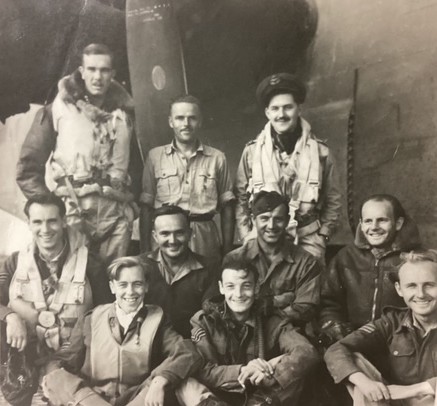
A flight schedule published on Ancestry.com lists a troop of American military staff and soldiers and R.A.F. officers, including a 32-year-old Flight Lieutenant George Dalgliesh, travelling on 31 January 1954 from Westover Air Force Base in Massachusetts to Frankfurt, Germany, via a stop at Prestwick Airport – not far from George’s Kilmarnock birthplace – to drop off the British contingent.
___________________________
Acknowledgements:

With huge thanks to George Dalgliesh’s daughter Lynne Stewart and his nephew George Maclean for invaluable help with biographical detail and images from the family archive.
Also, in memory of Roger Dalgliesh who passed away in 2023 just prior to my starting this research.
Thanks to Mary Dalgleish for helping along the way to finding George by writing back to rule out her father George Robert White Dalgleish (1924-2005) from the search.
The Grecian Archive – Exeter City Football Club historical website.
Inverness Caledonian Thistle Football Club website.
Information on the 1921 Aerial Derby from: A Fleeting Peace
The British Newspaper Archive (via FindMyPast).
Scotland’s People.
Ancestry.com.