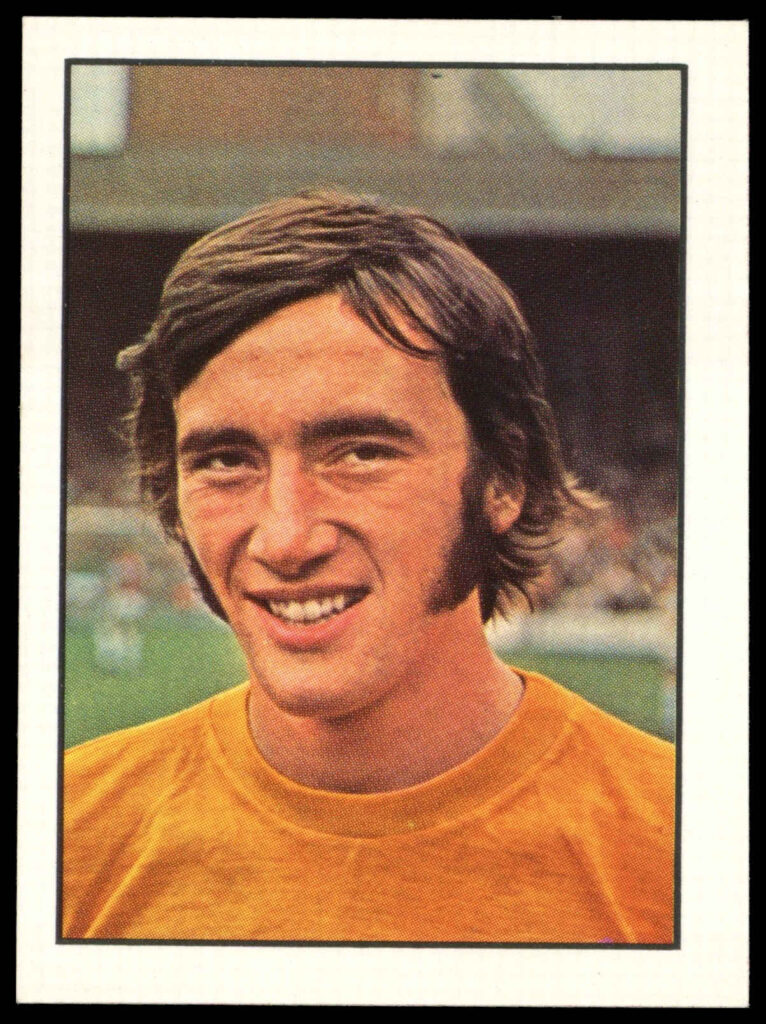
Keith Williams: A Goalkeeper’s Tale
Jamie Yates
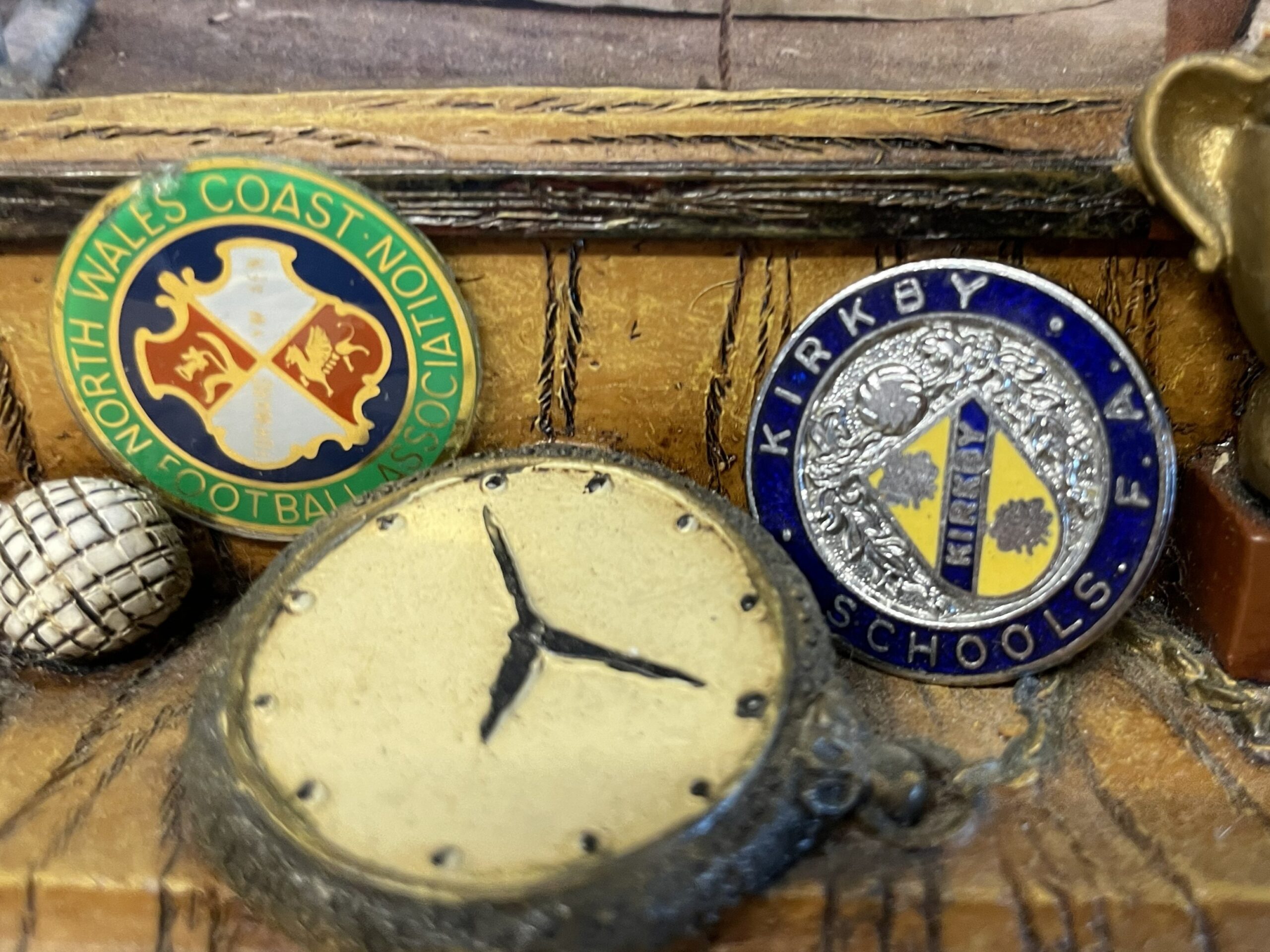
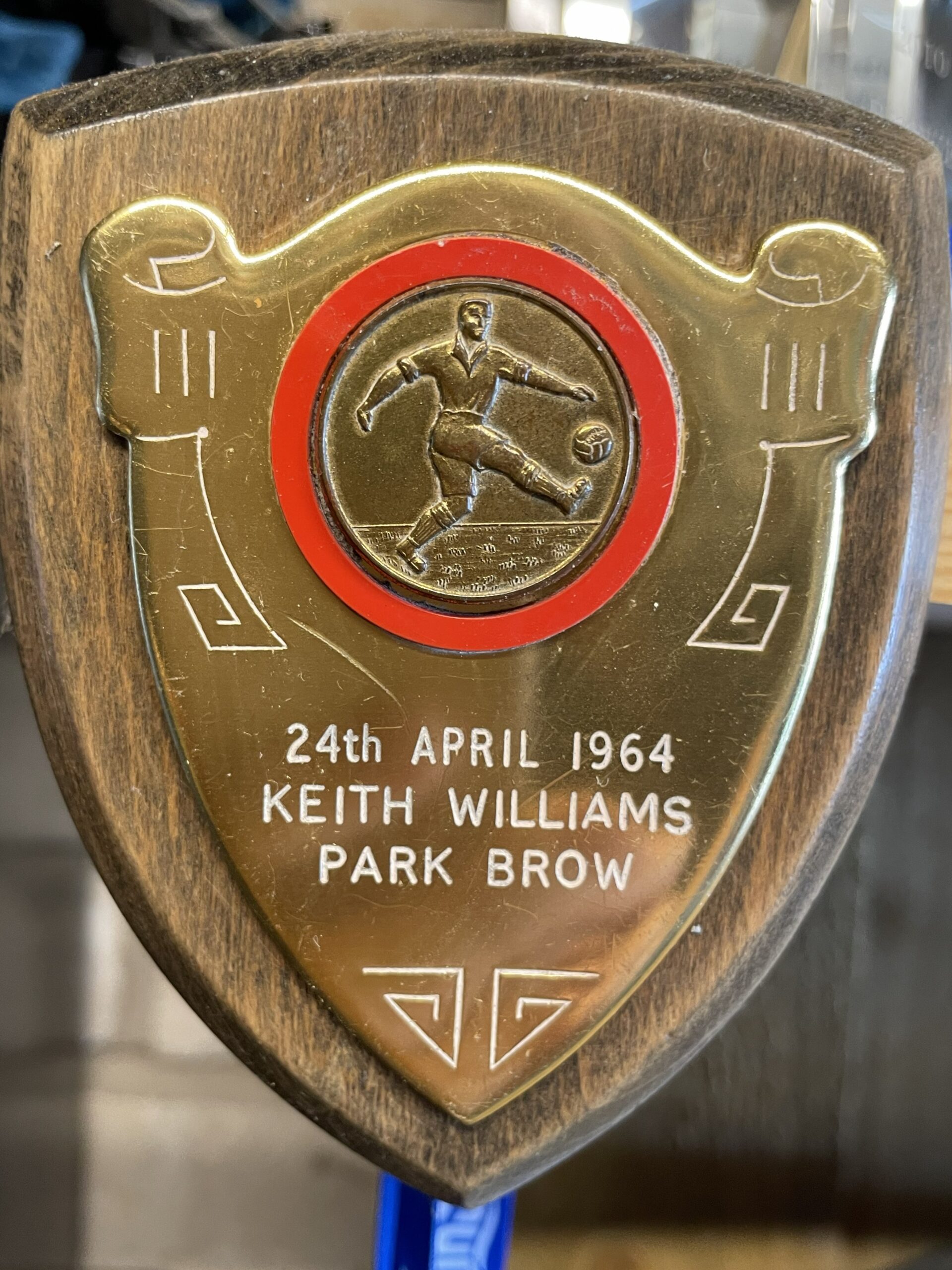
Keith Williams was born at home, 21 Max Road in Knotty Ash, on 21 September 1952. Due to his father Oswald’s ill health, the Williams family relocated to Kirkby to live with his aunt Violet during the ‘Big Freeze’ of winter 1962. Everton Football Club were midway through their 1962/63 League Championship winning season at the time, and the extreme weather conditions caused much consternation as fixtures were cancelled up and down the country over the festive period. Keith attended Park Brow Junior School in Kirkby where he started taking his football a little more seriously. He lined up at centre-forward for Park Brow, before moving to Brookfield Secondary School for whom he played as a wing-half.
EARLY LIFE
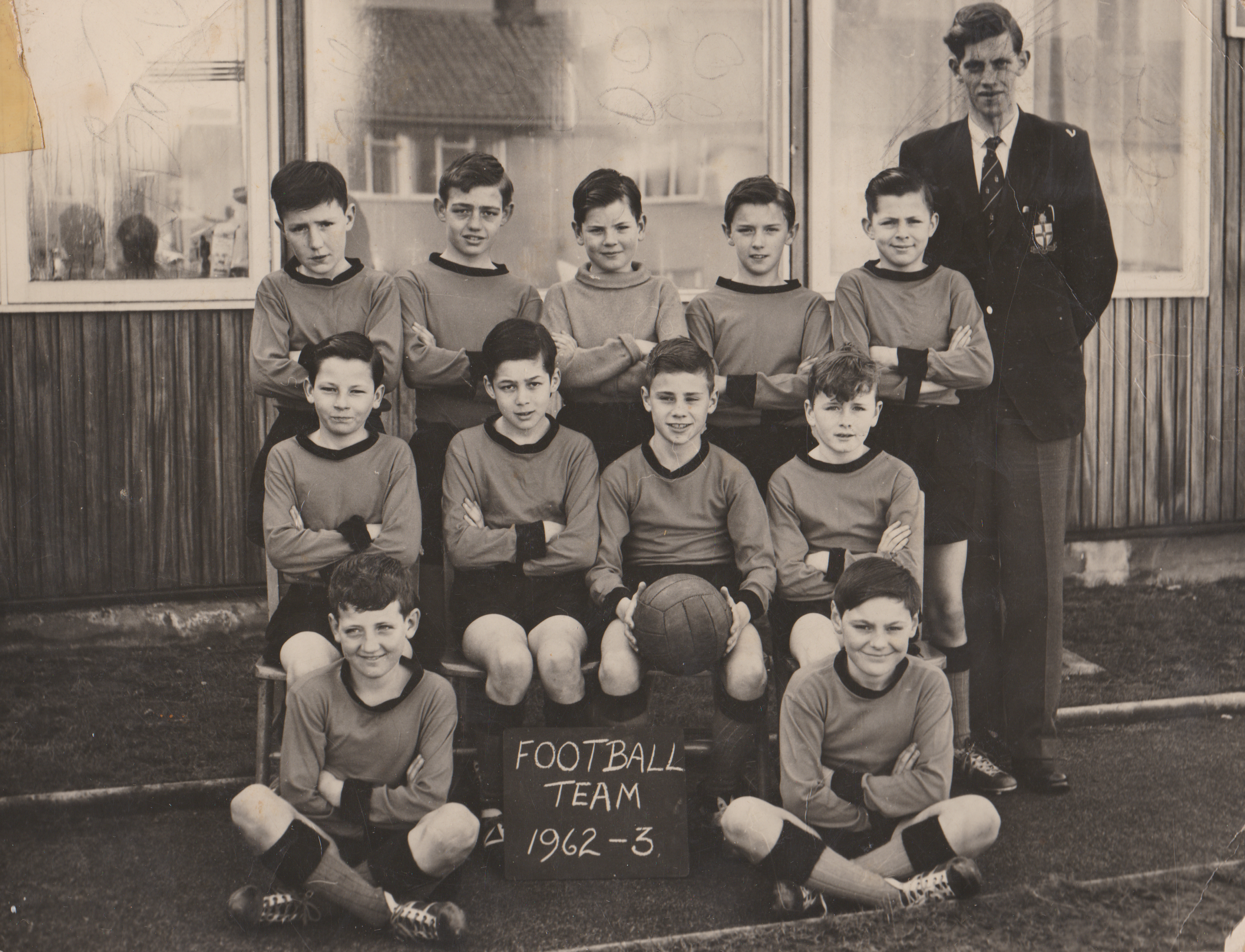
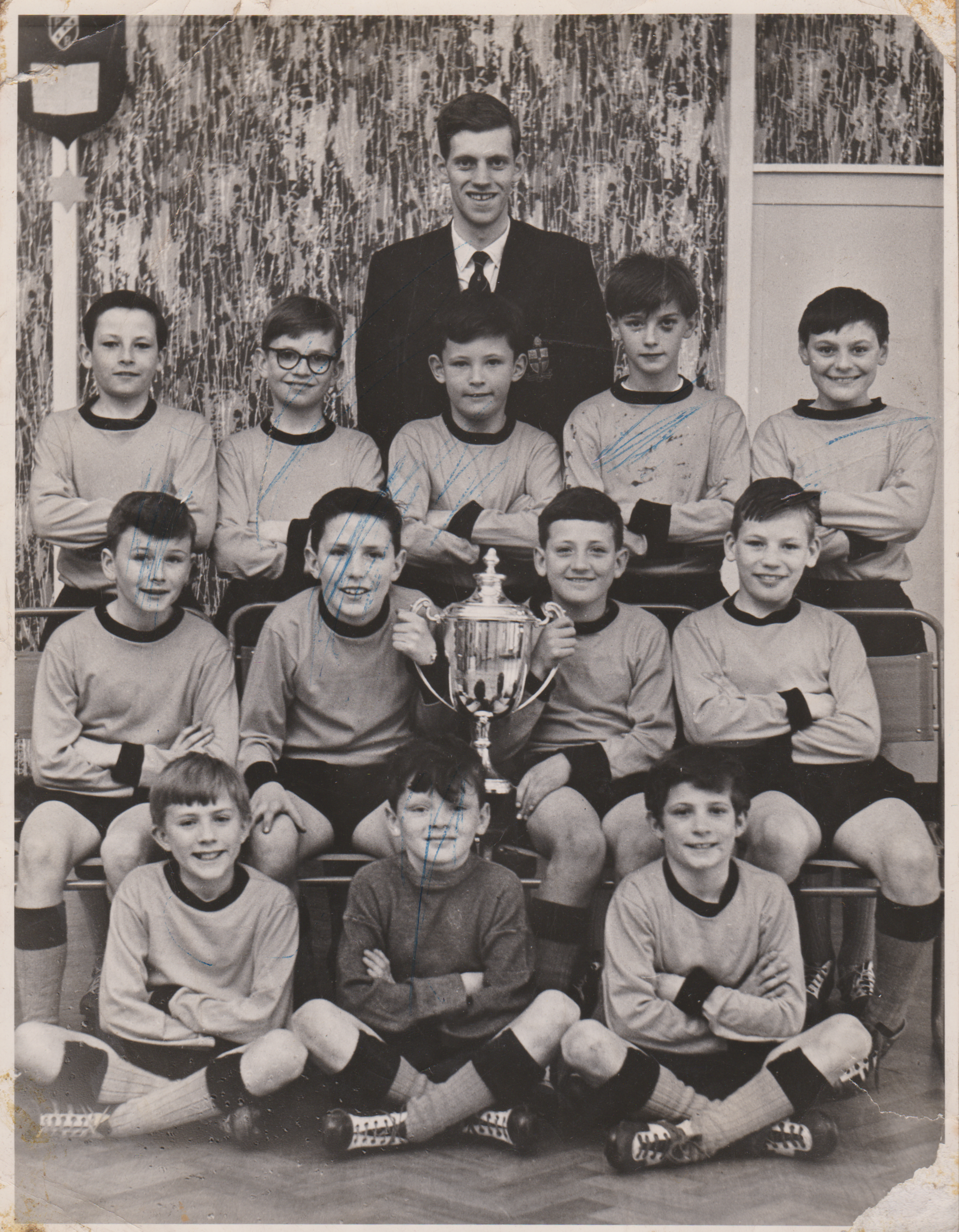
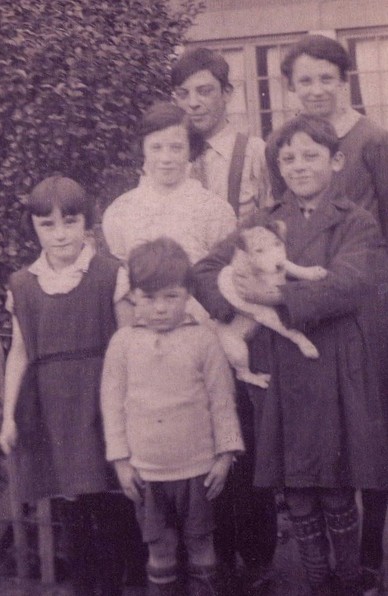
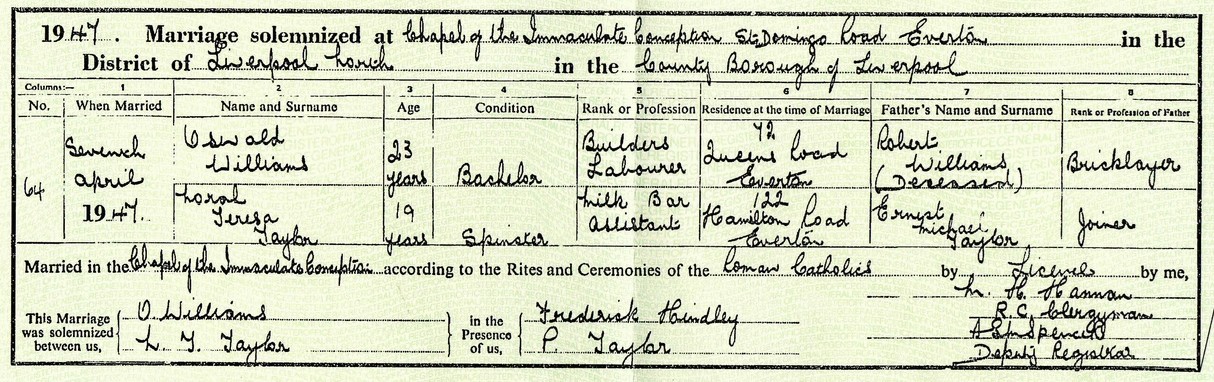
Keith’s parents, Oswald Michael Williams, a painter and decorator and Second World War veteran, married Norah Teresa Taylor at the Chapel of Immaculate Conception on St. Domingo Road, Everton, on 7 April 1947. Keith’s mother, Norah, was one of eleven children, ten of whom survived to adulthood, ensured Keith and older brother Michael grew up surrounded by a large extended family. Oswald and Michael were both keen Liverpool supporters, whereas Keith played football most weekends from an early age and didn’t particularly follow either Everton or Liverpool closely.
As it happened, Keith attended more games at Goodison Park than at Anfield as a boy, and always in the infamous Boys’ Pen in the corner of the lower Gwladys Street and Bullens Road stands – a chastening rite of passage experience for many a young Evertonian in its day! Michael Williams later joined the police force and retired as an Inspector in the Serious Crime Squad with Merseyside Police. He played five-a-side football at the Vernon Sangster sports centre in Stanley Park, alongside former Liverpool and Everton winger Johnny Morrissey.
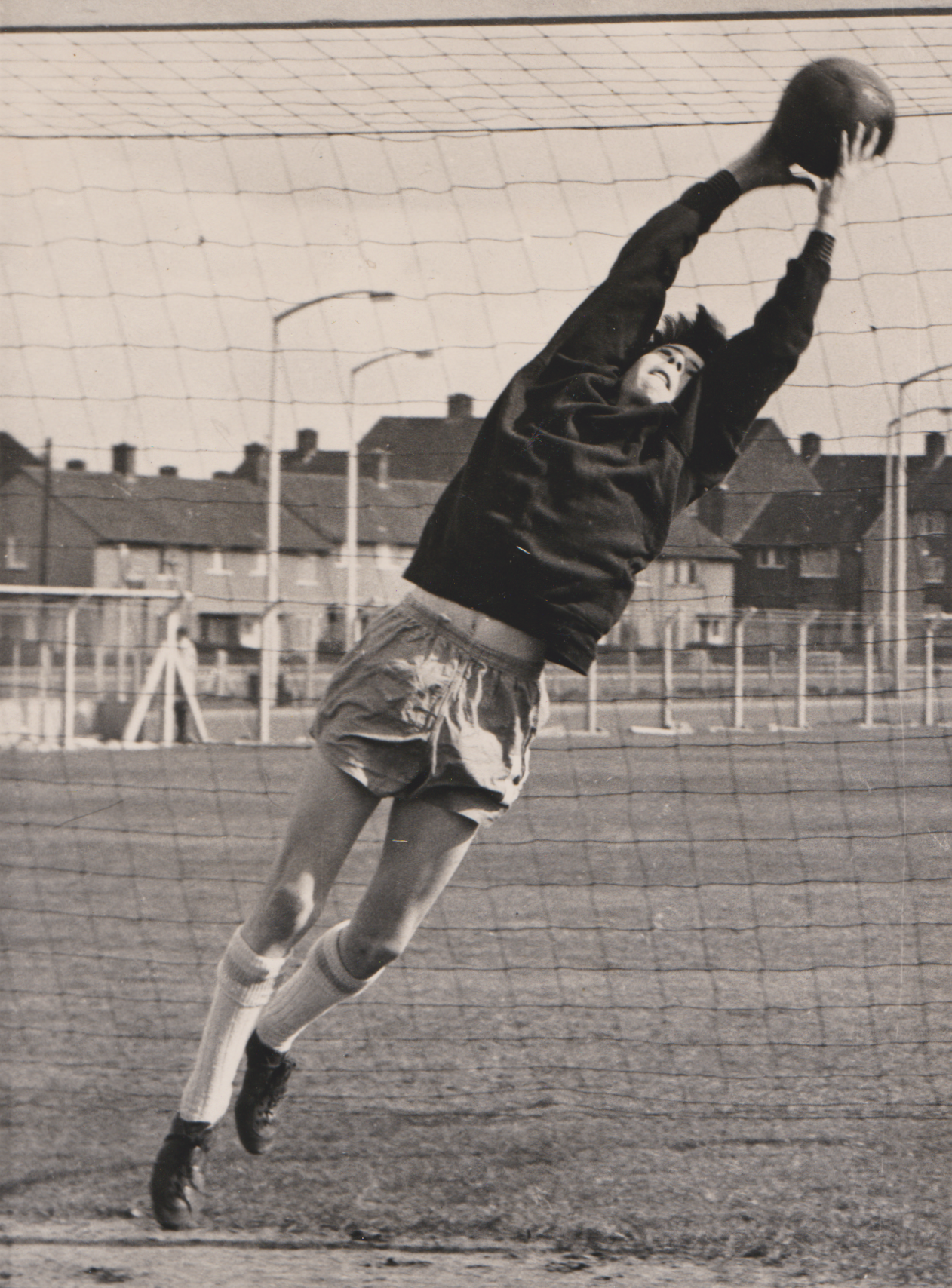
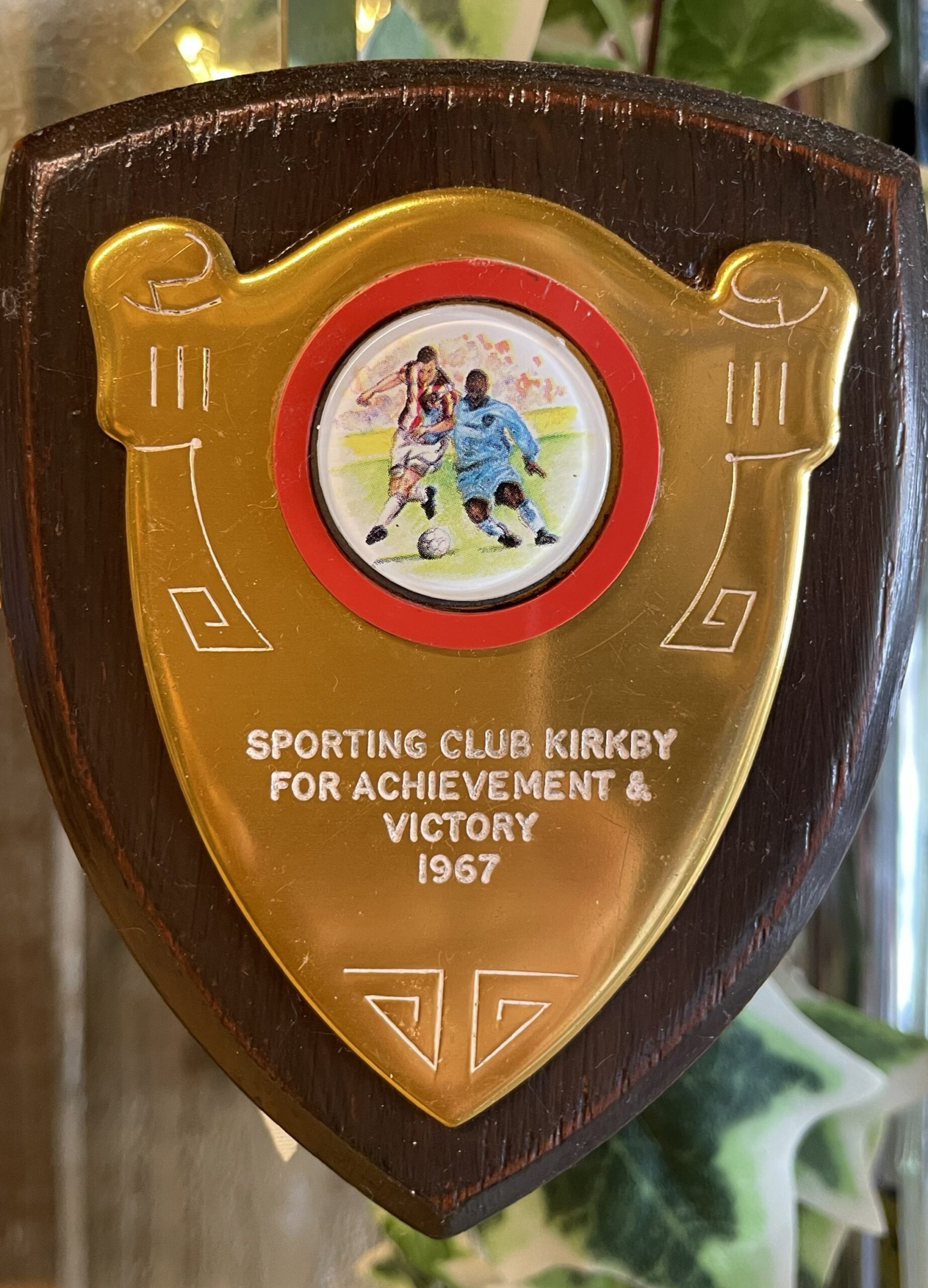
It wasn’t long before Keith was called up to represent Kirkby Boys. A lad called Peter Scott who was only two days older than Keith, was the first-choice striker at the time. It was at this point, aged thirteen or fourteen, that Keith Williams began to play in goal regularly. He had often served as goalkeeper at the behest of his older brother during childhood kickabouts in the long garden at home, and found he had a natural aptitude for life between the sticks.
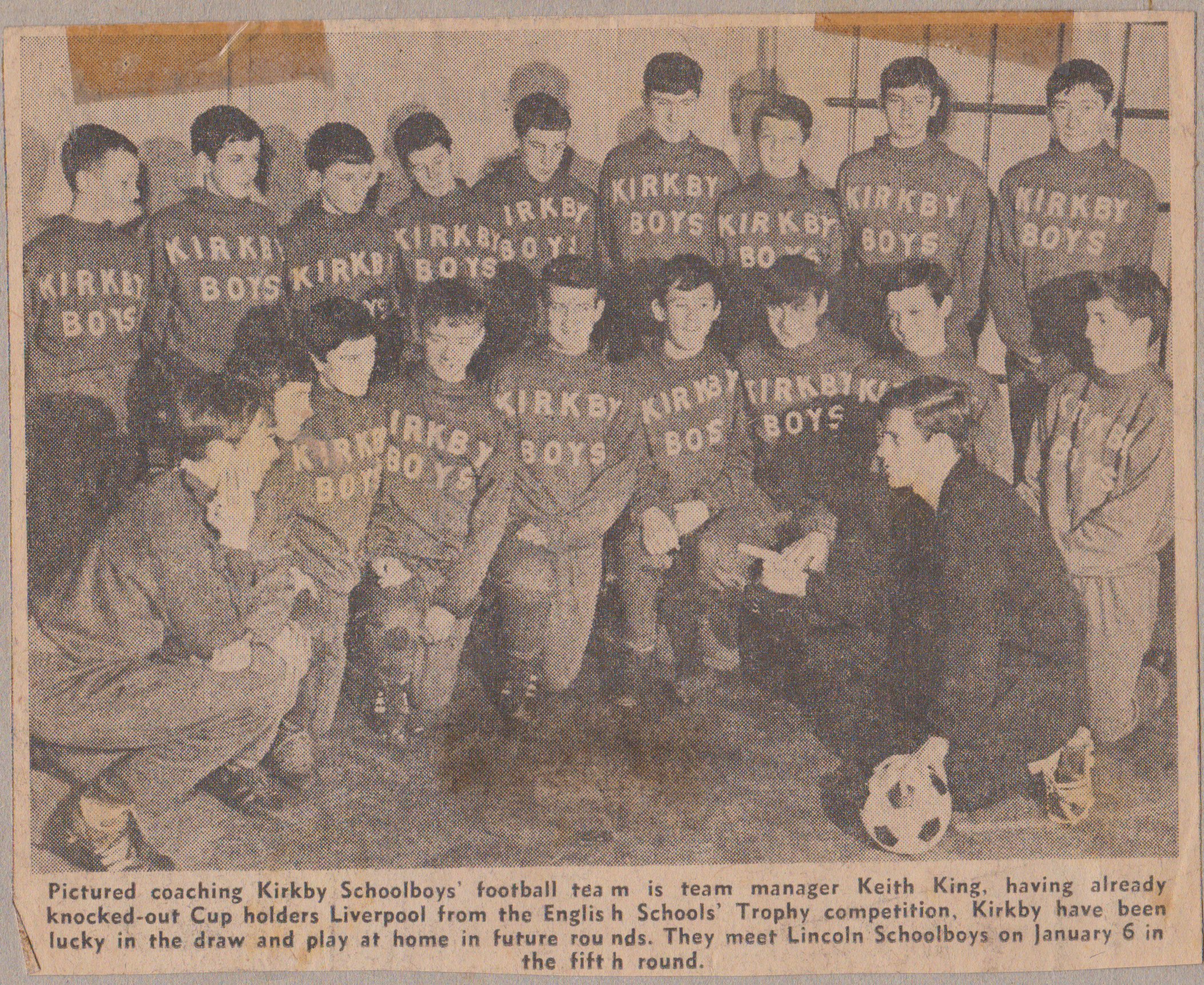
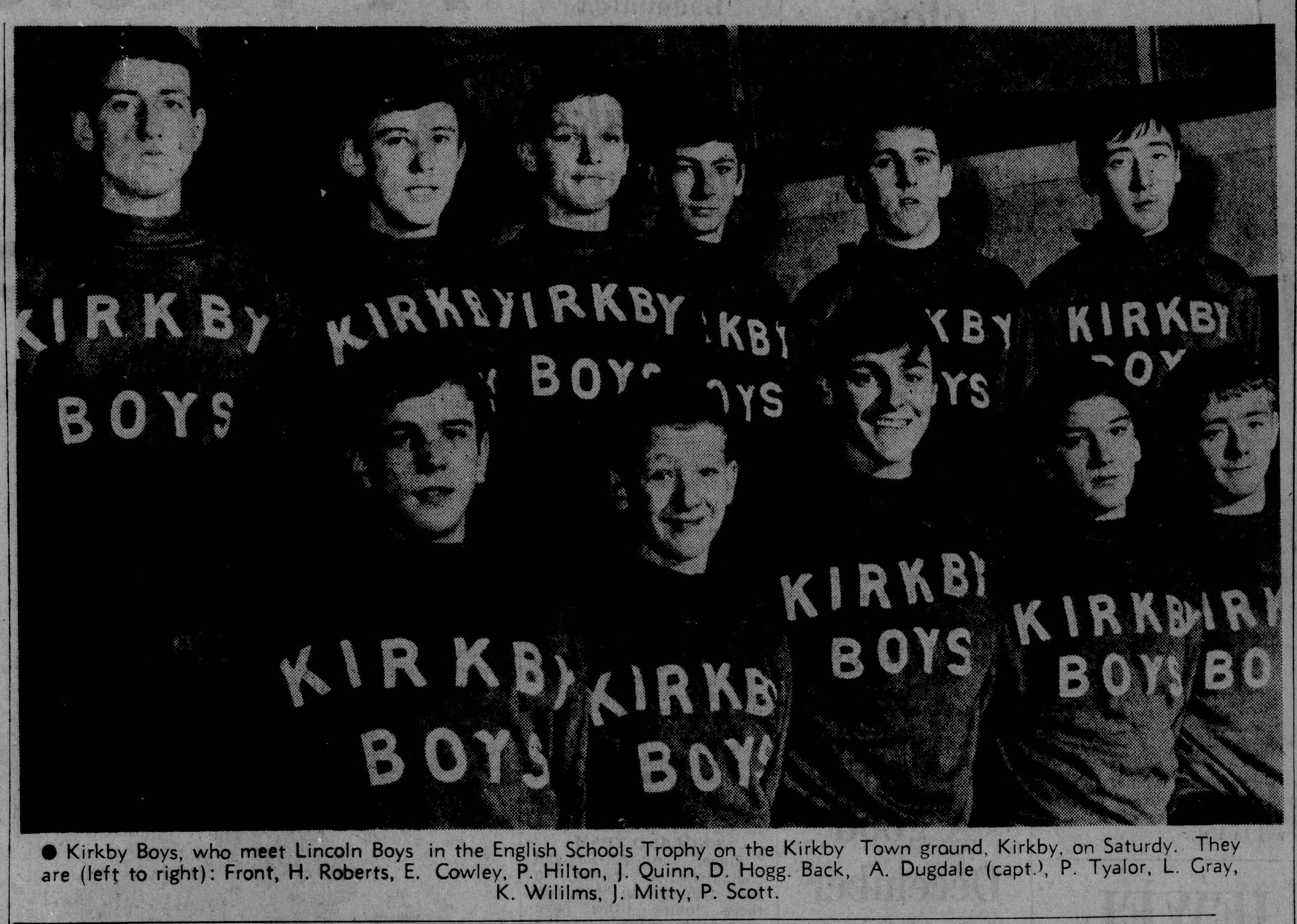
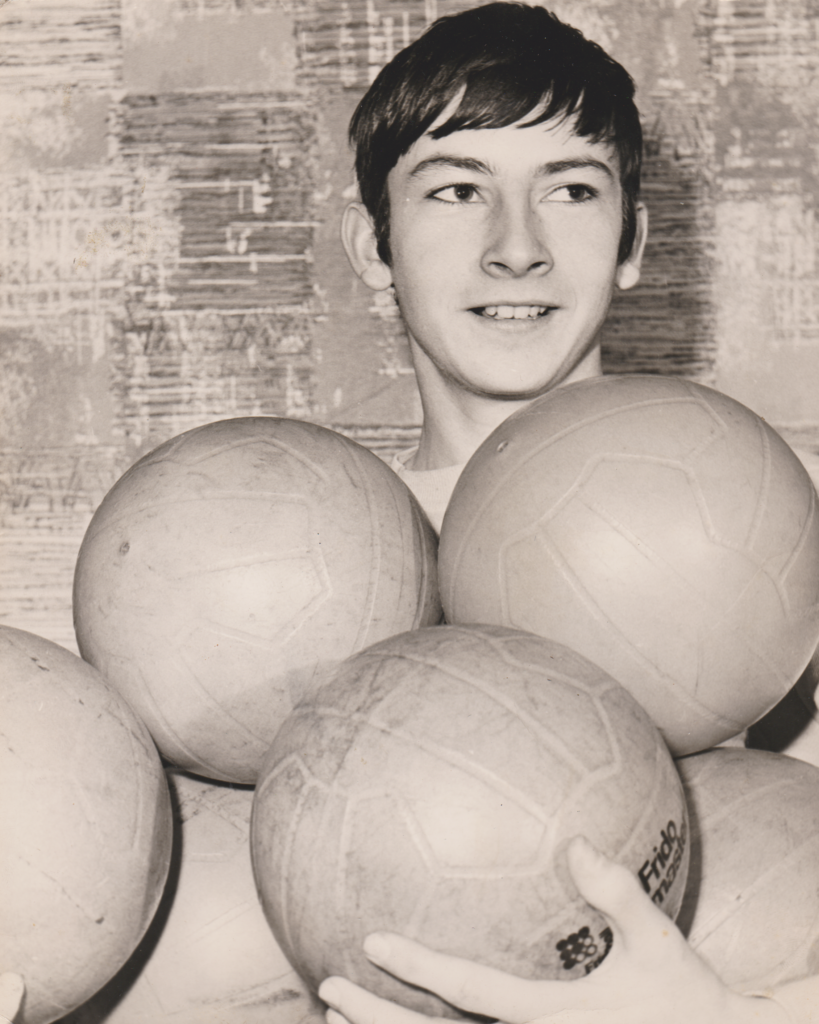
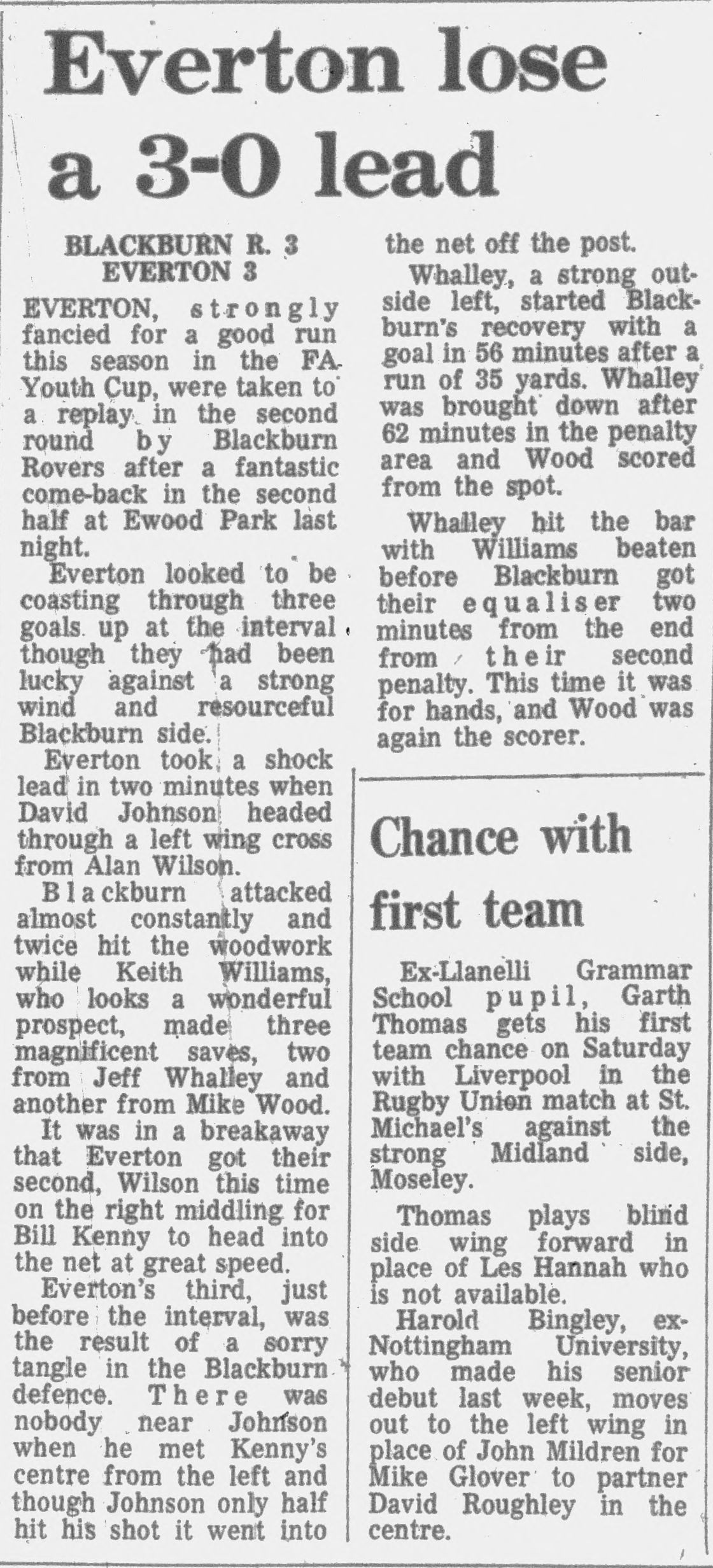
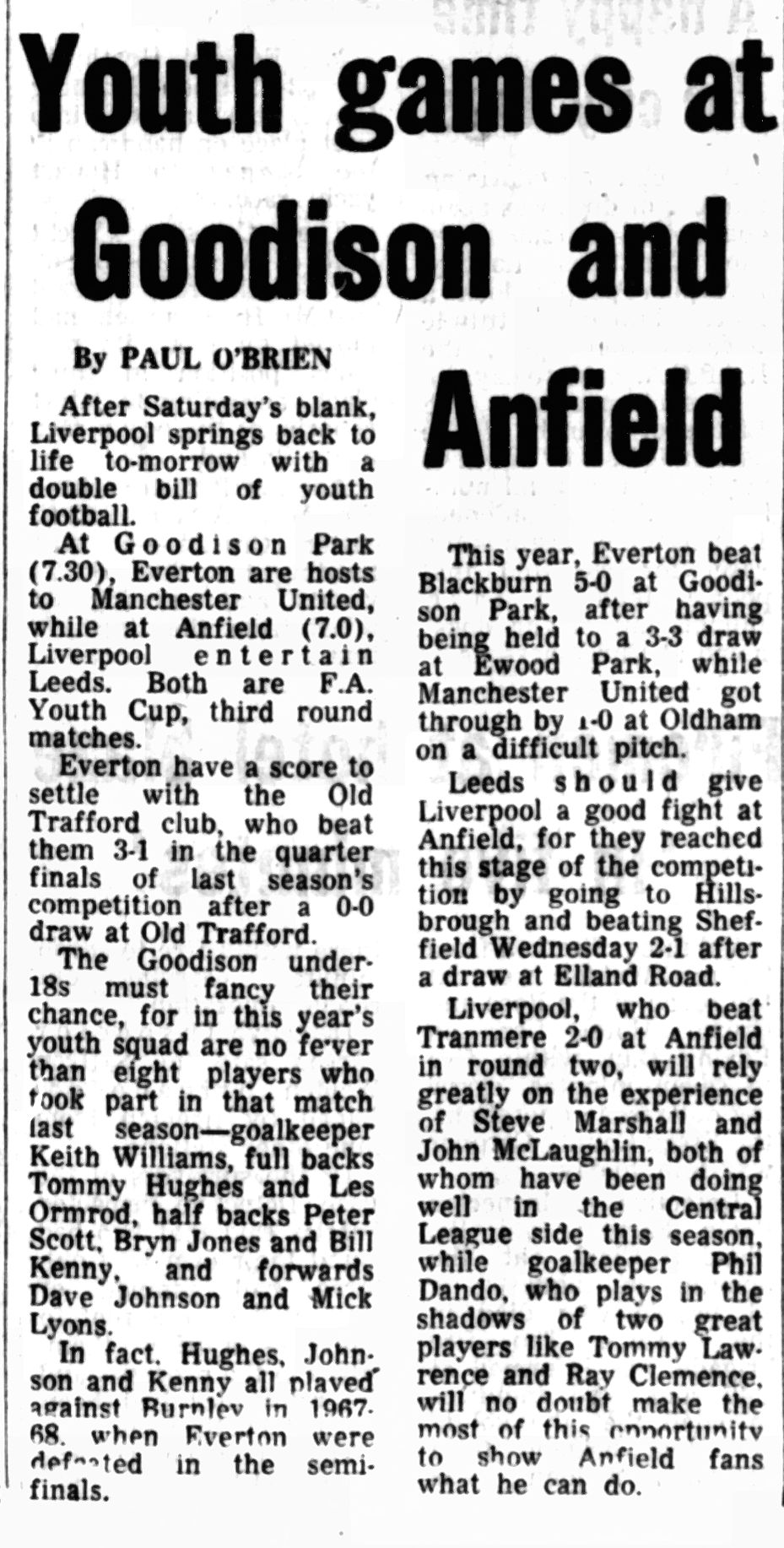
Liverpool Echo, 20 January 1968
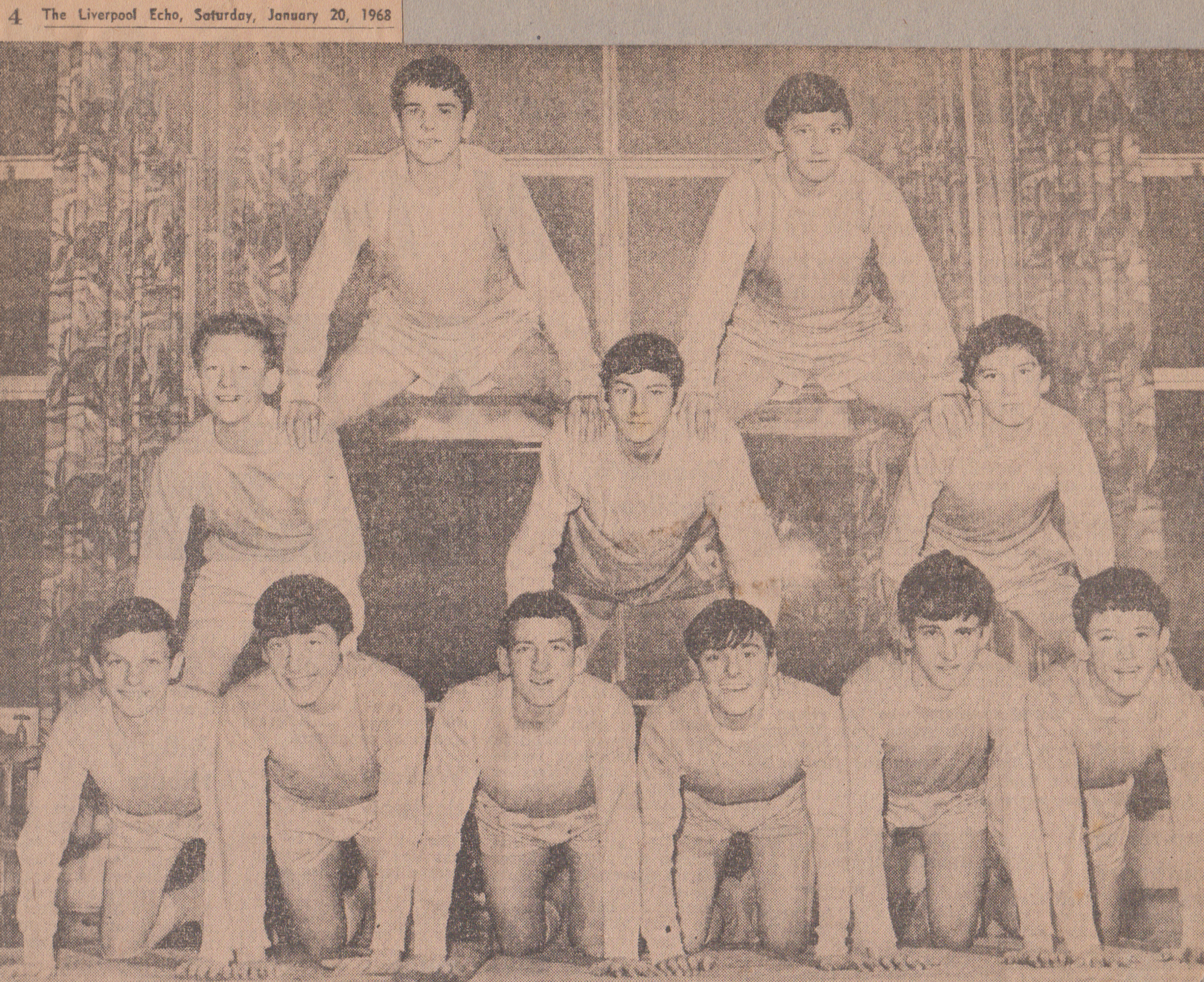
Liverpool Echo, 20 January 1968
Kirkby was a hotbed of football talent in the mid-late 1960s, and professional clubs from across the country kept a close eye on this rich production line. In spring 1968, Coventry City’s scout in the north of England, Alf Walton, who organised huge training days across the North West in order to assess the best young talent, was quick to sign Keith’s teammate, defender Alan Dugdale, to apprentice terms.
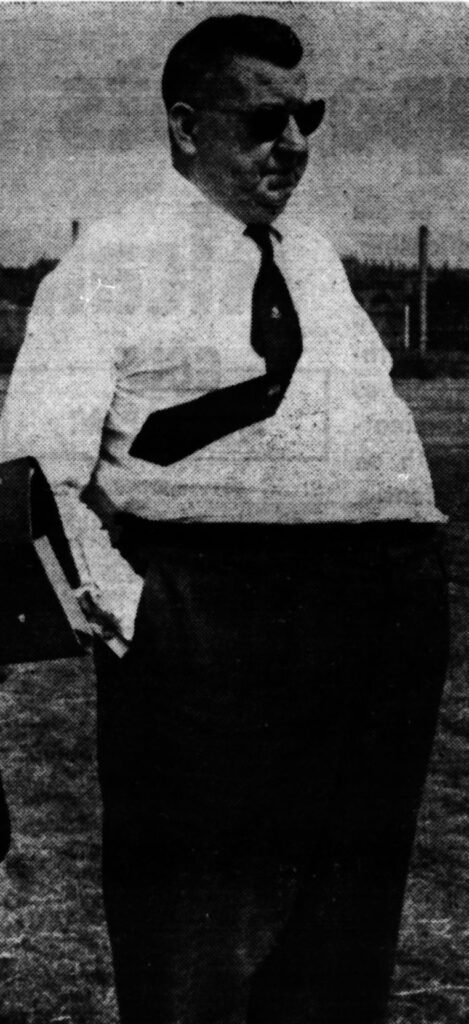
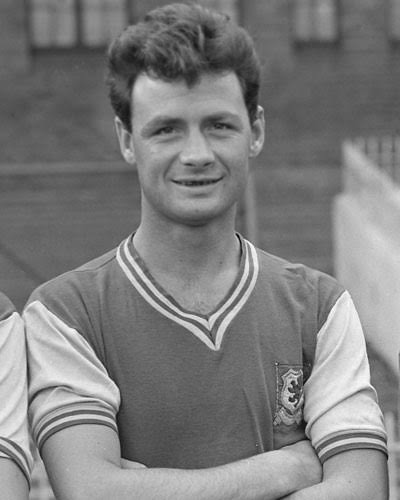
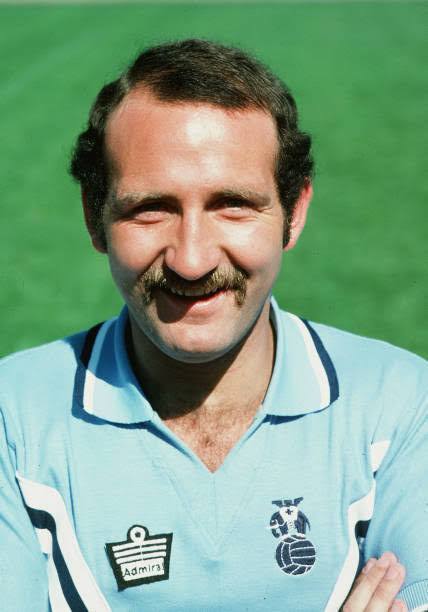
Alan Dugdale would go on to represent England at youth level and make 142 league appearances for Coventry, before spells at Charlton, Barnsley on loan and Tulsa Roughnecks in the North American Soccer League. Alan’s uncle Jimmy Dugdale also had a successful football career, notably with Aston Villa, and his older brother Ken played for Wigan Athletic and managed the New Zealand national team.
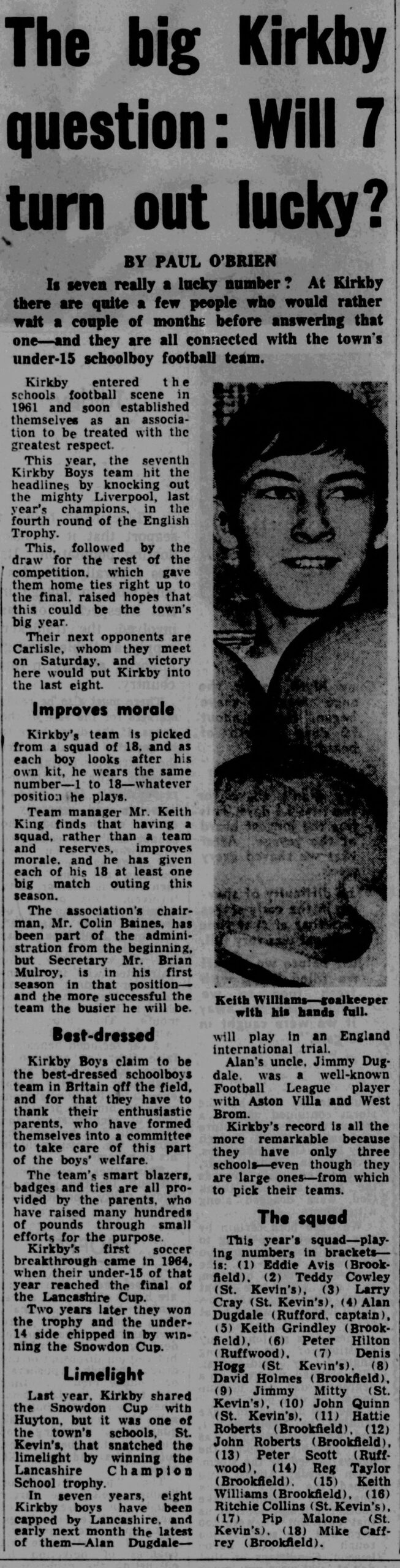
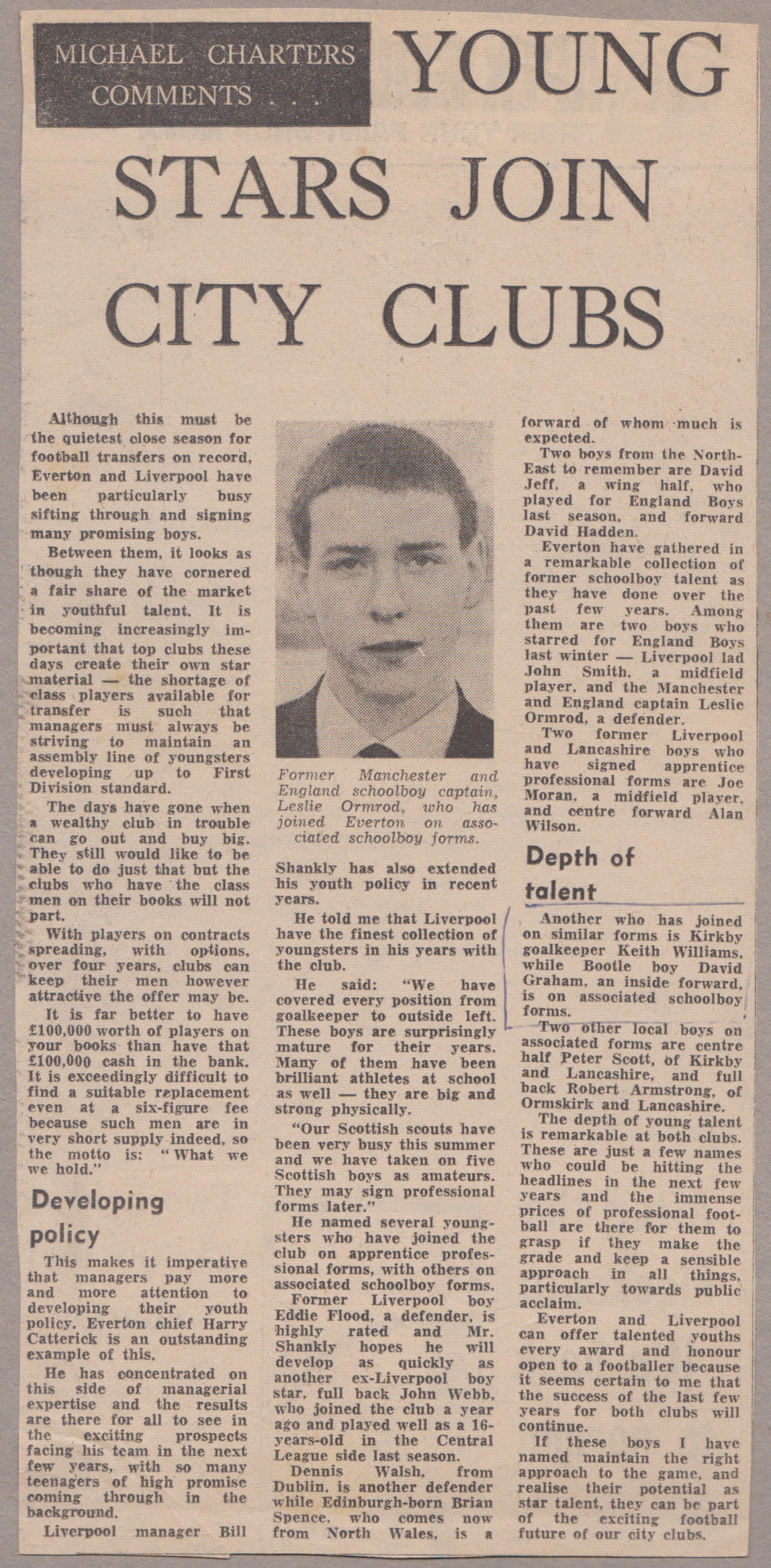
(Above left): Liverpool Echo, 23 January 1968; (Above right) Liverpool Echo, April 1968
Alf Walton also visited Keith’s family home at 106 Broad Lane to offer him an apprenticeship with Coventry. Keith remembers Mr. Walton as ‘a big fella – his fingers cracked when he shook my hand!‘ but unfortunately for Coventry City, he was out of luck on this occasion. On 18 April 1968, aged fifteen-and-a-half, Keith Williams committed his future to Everton Football Club.
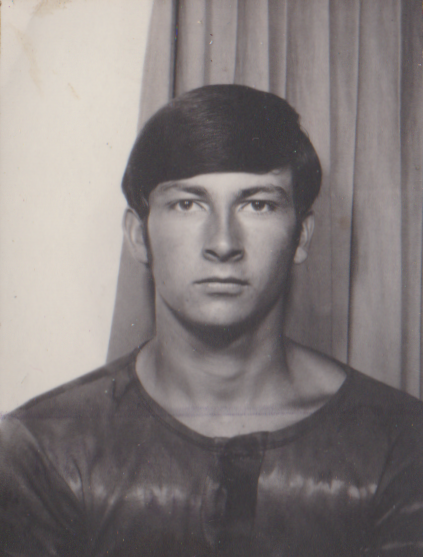
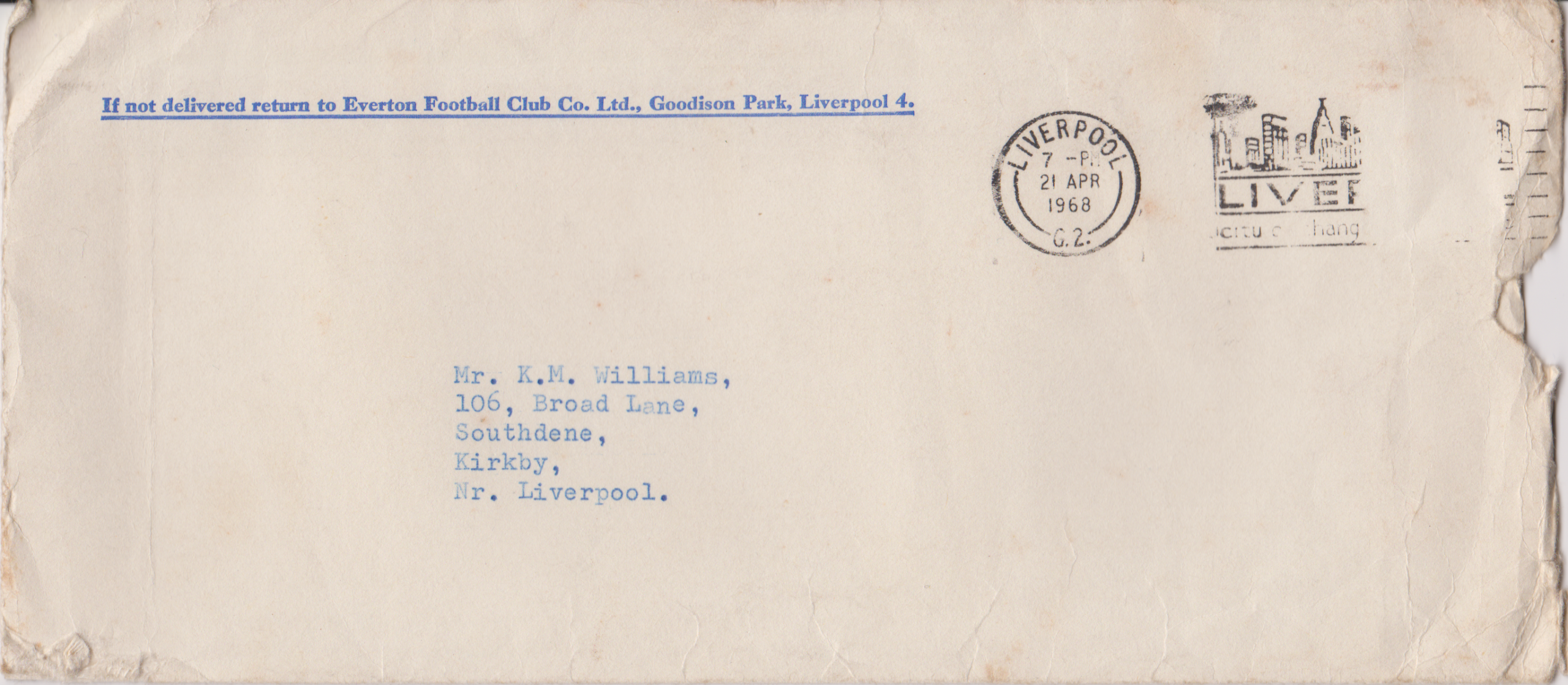
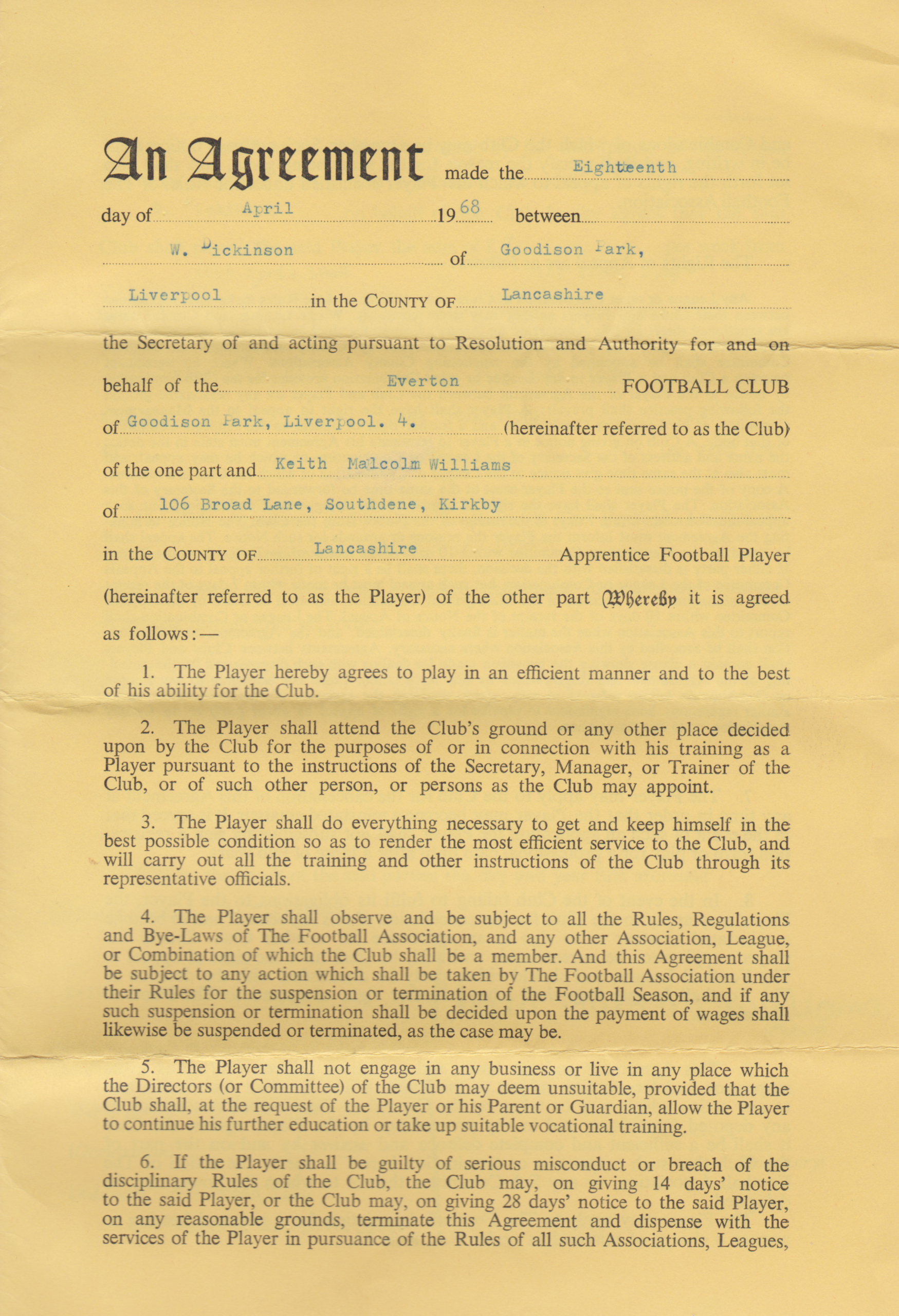
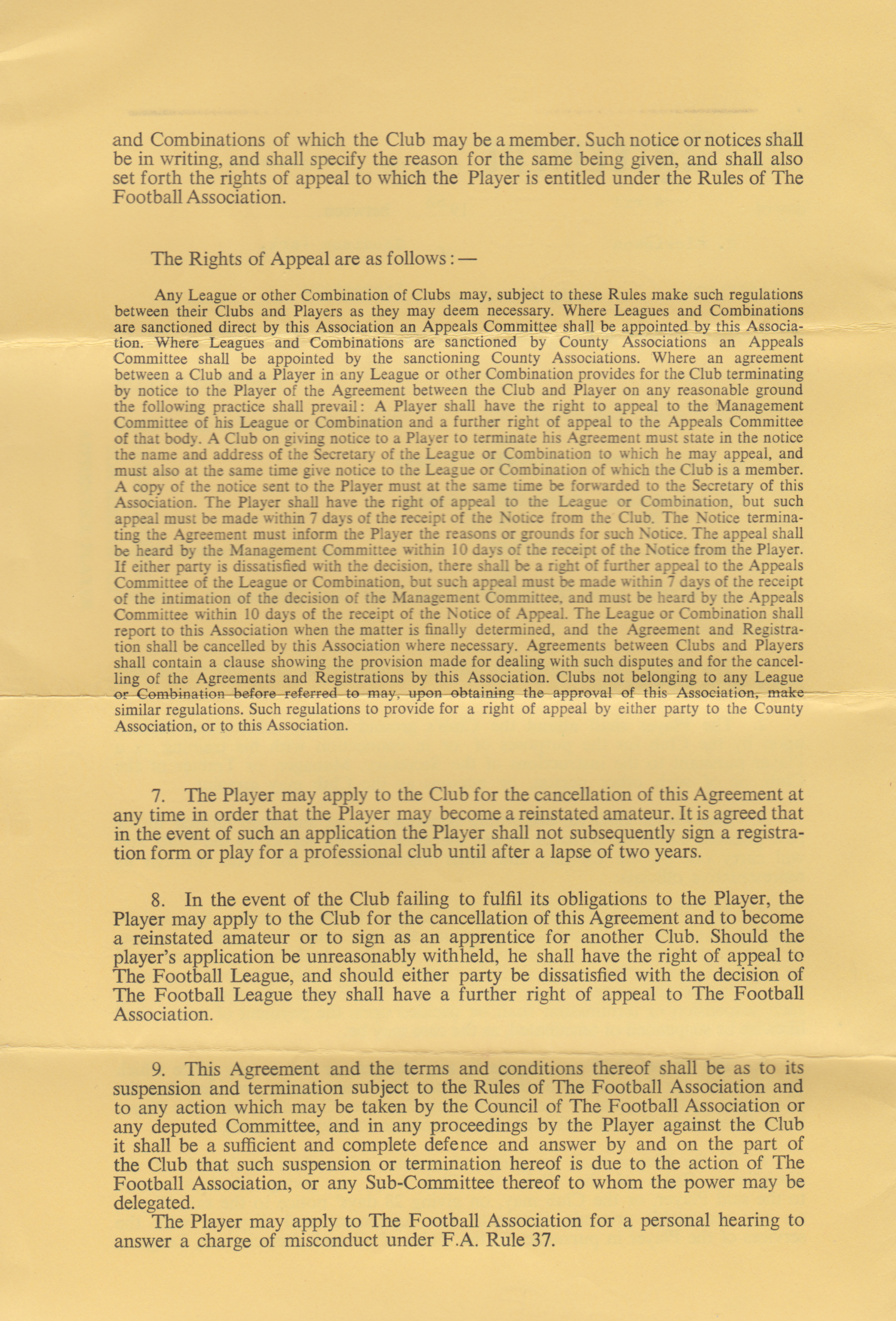
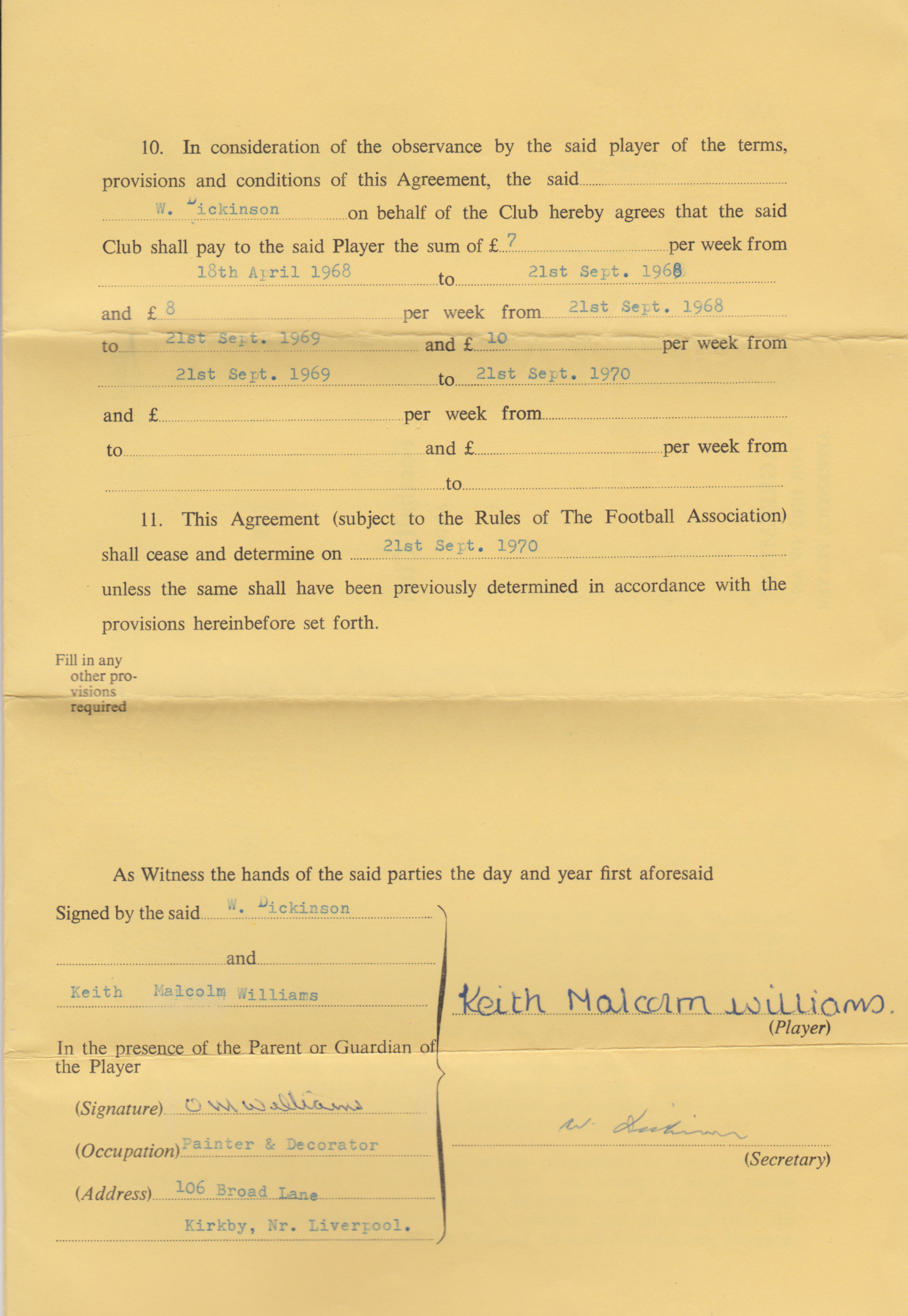
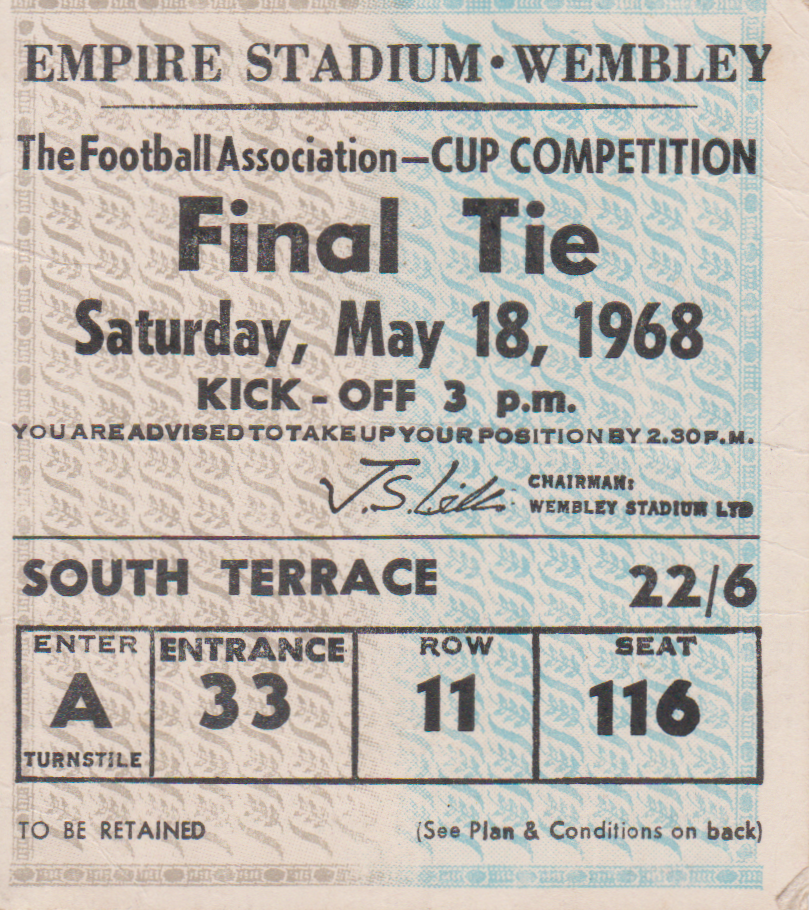
Exactly a month later, a fresh-faced Keith was whisked down to London alongside the rest of the Everton youth and reserve team squad players to attend the 1968 FA Cup Final between Everton and West Bromwich Albion. Try as they might, a frustrated Everton, who had dismantled the Baggies 6-2 at The Hawthorns on 16 March, couldn’t find the net in the scorching heat at Wembley, and succumbed to a lone Jeff Astle goal after extra time.
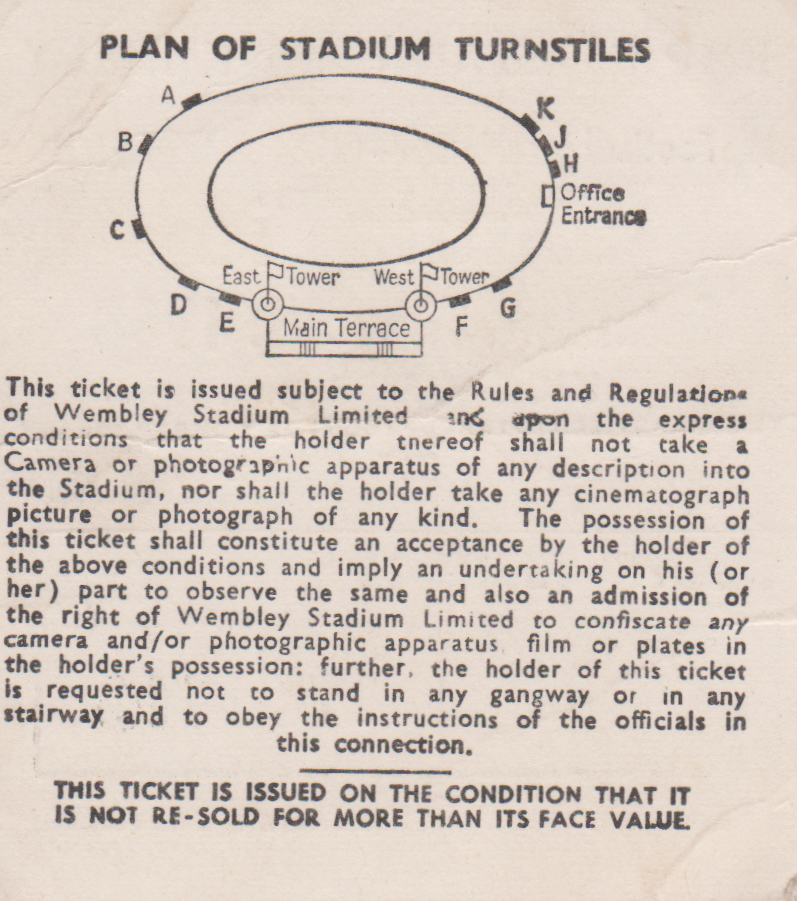
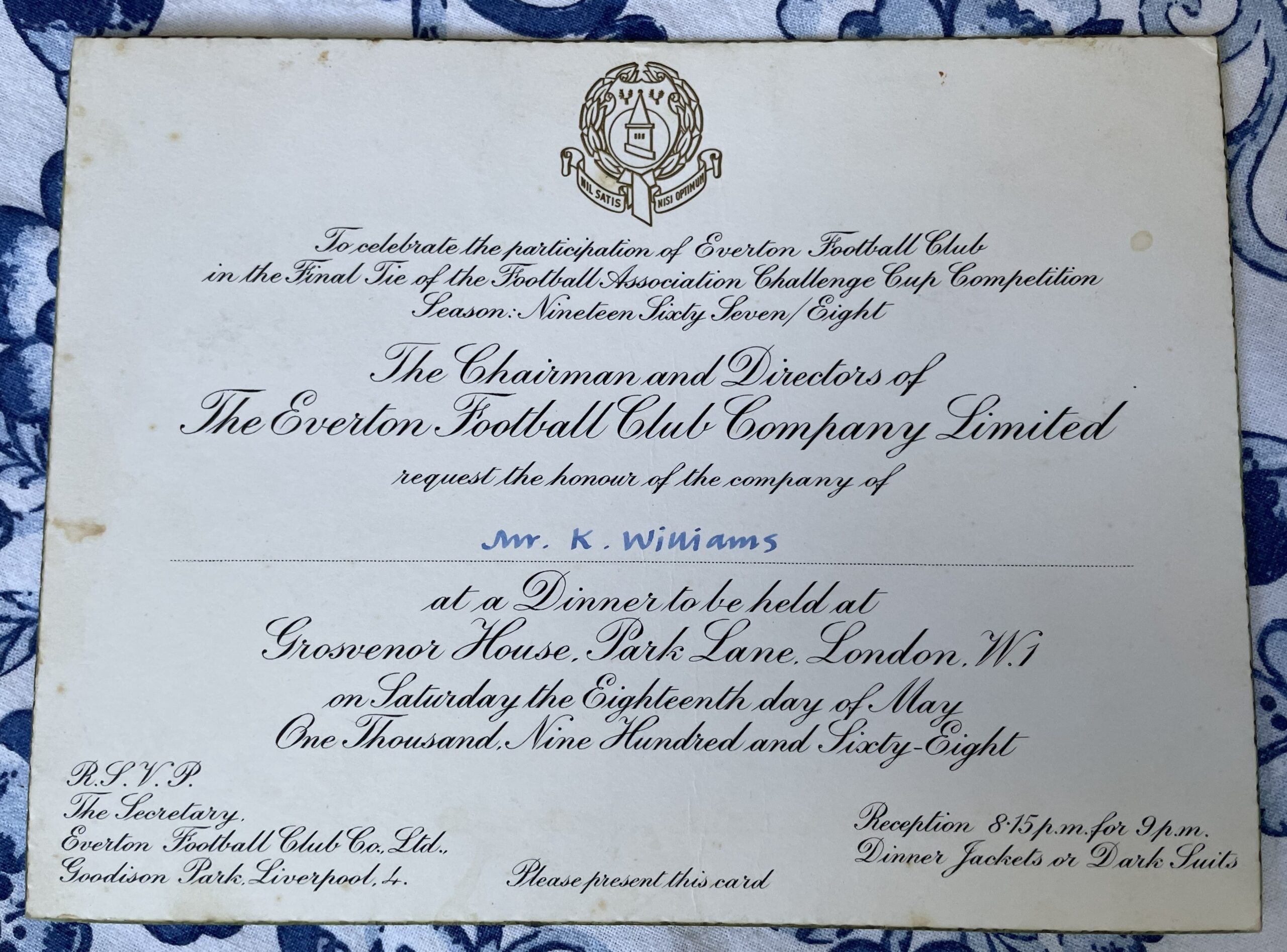
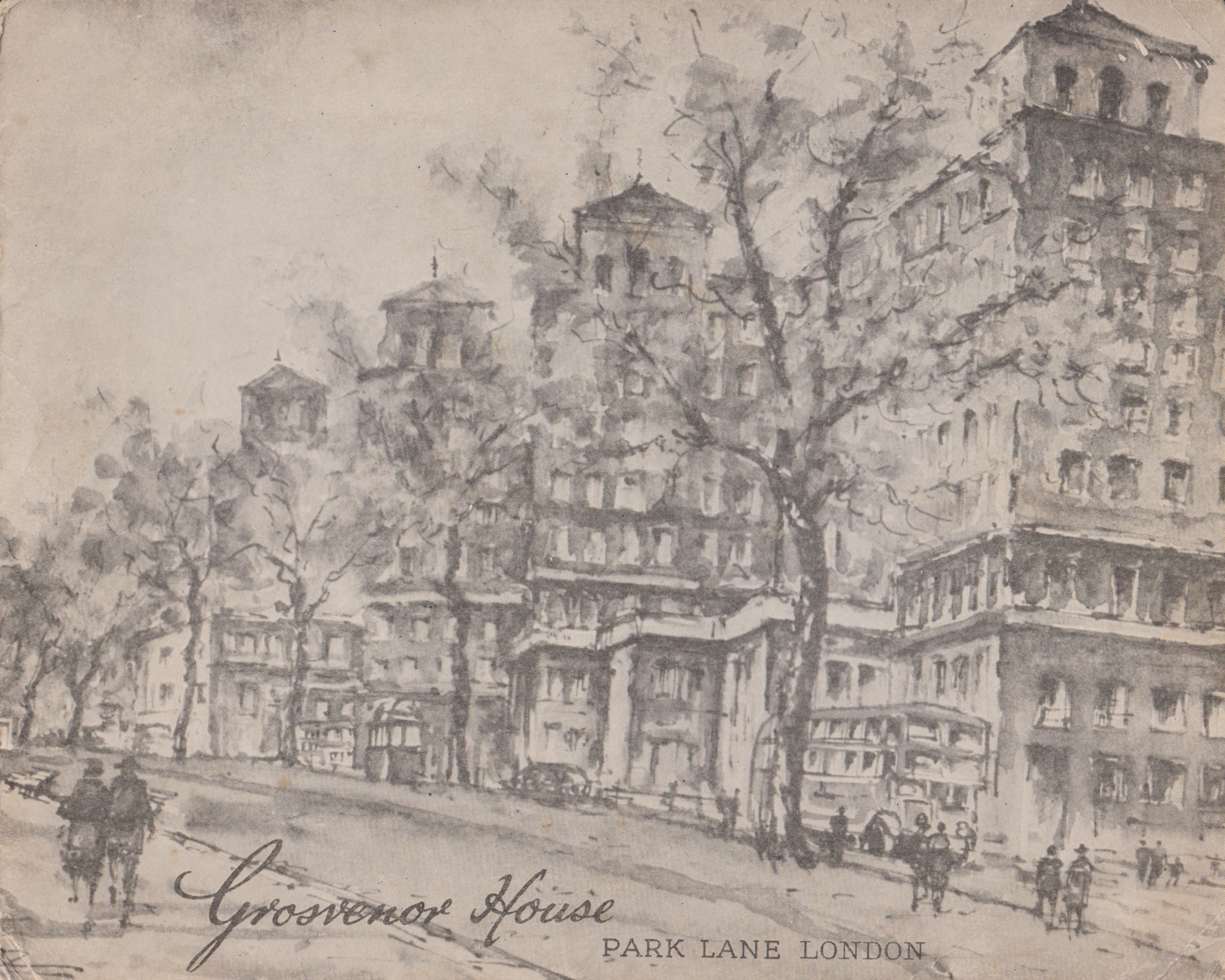
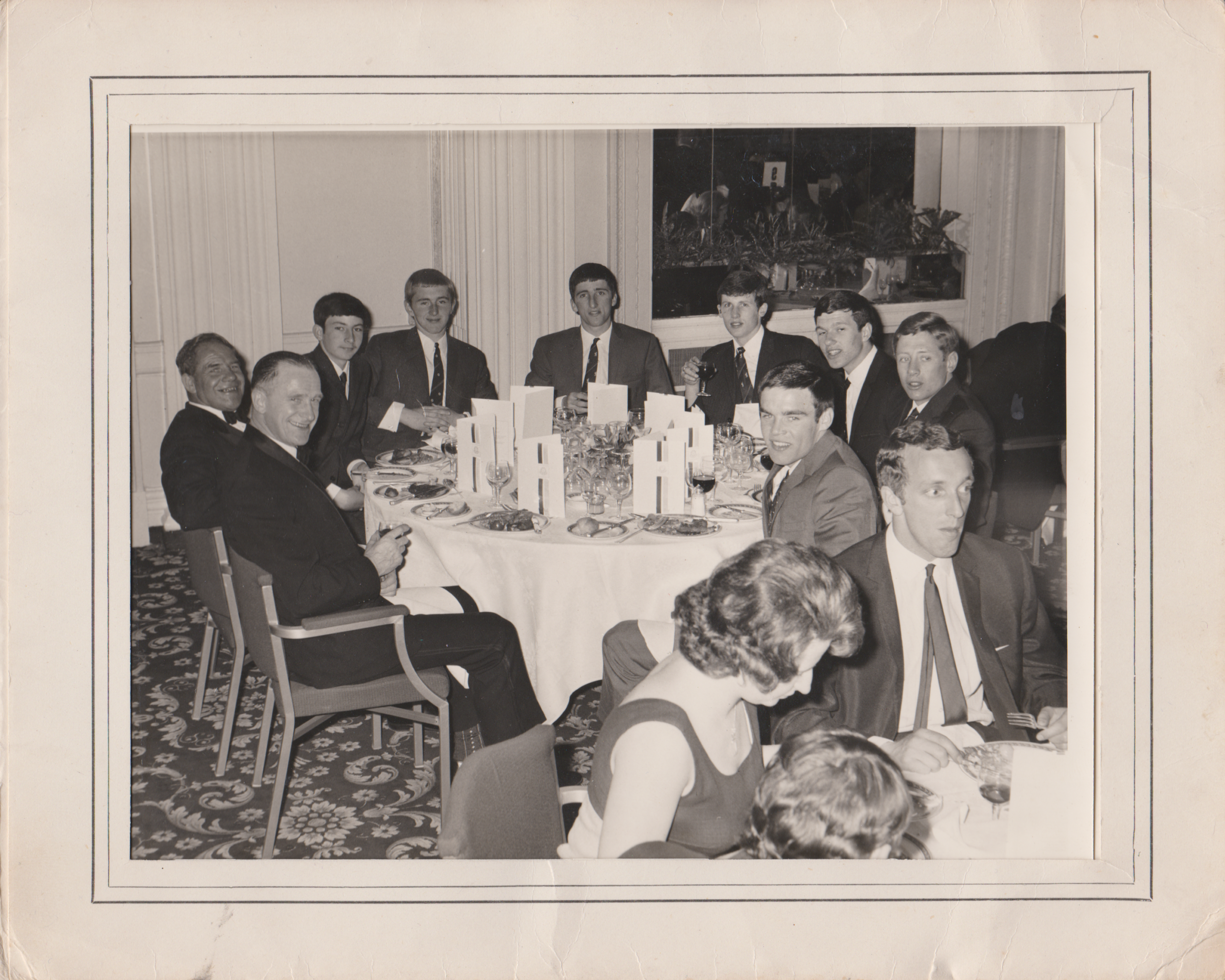
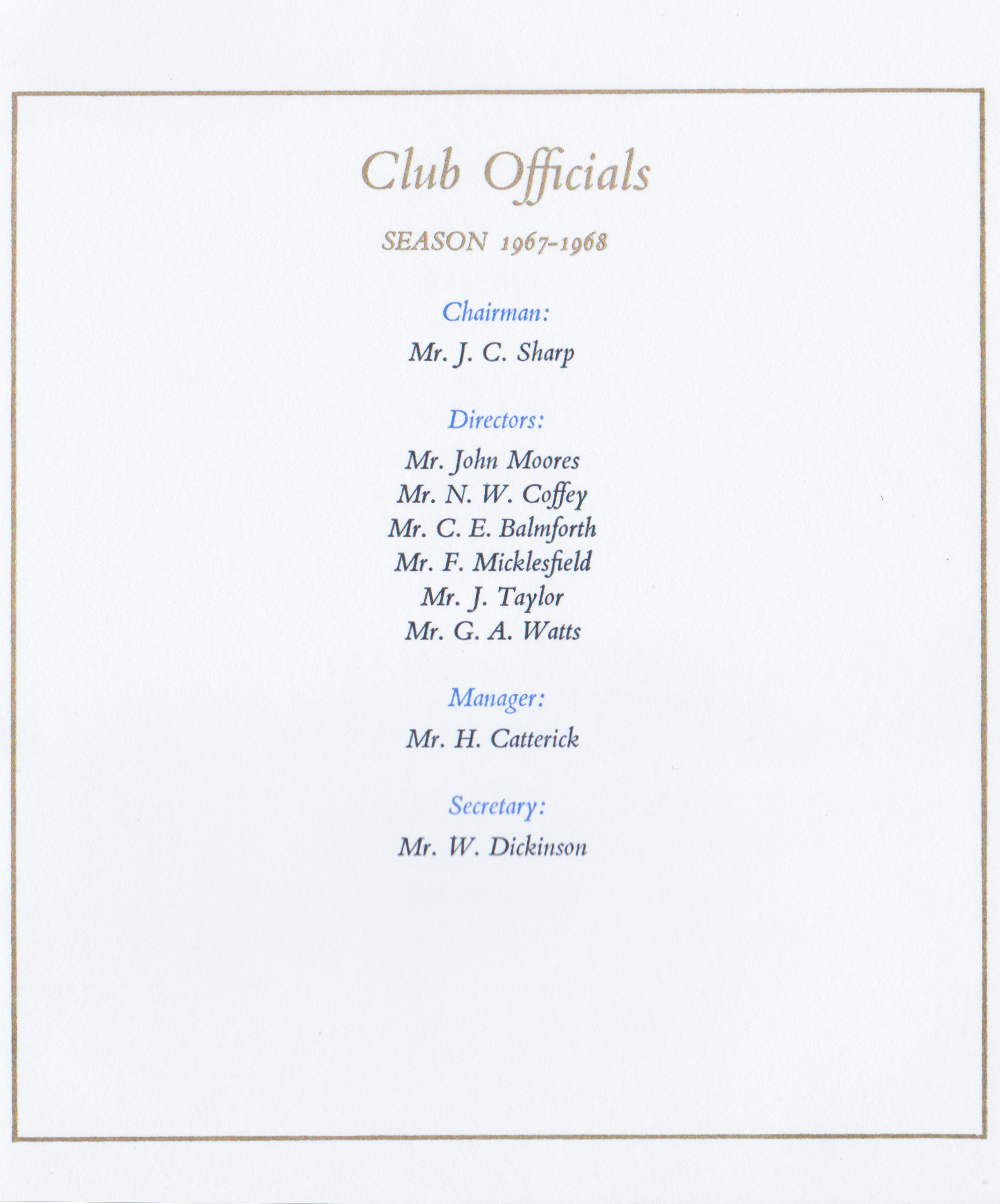
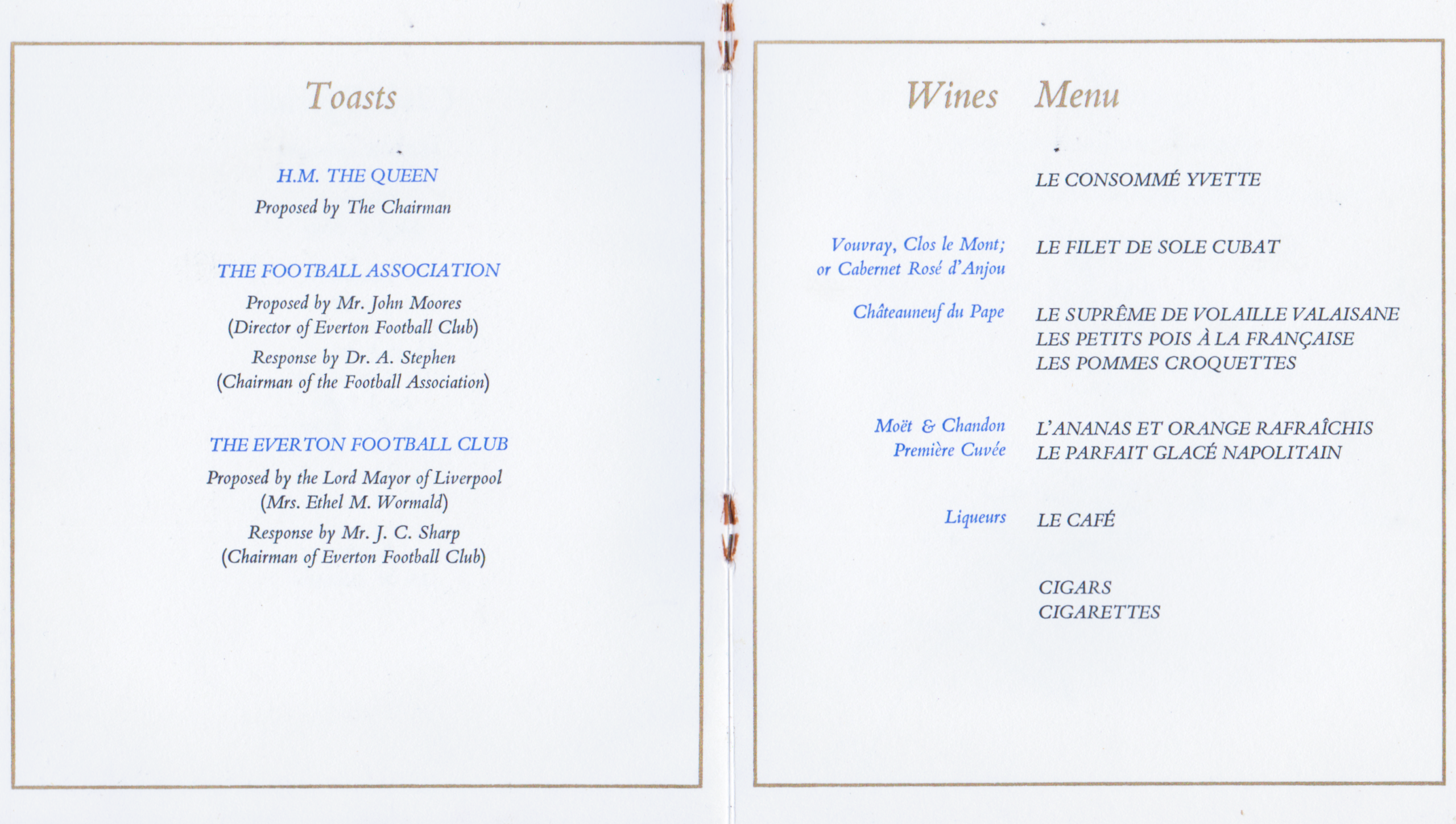
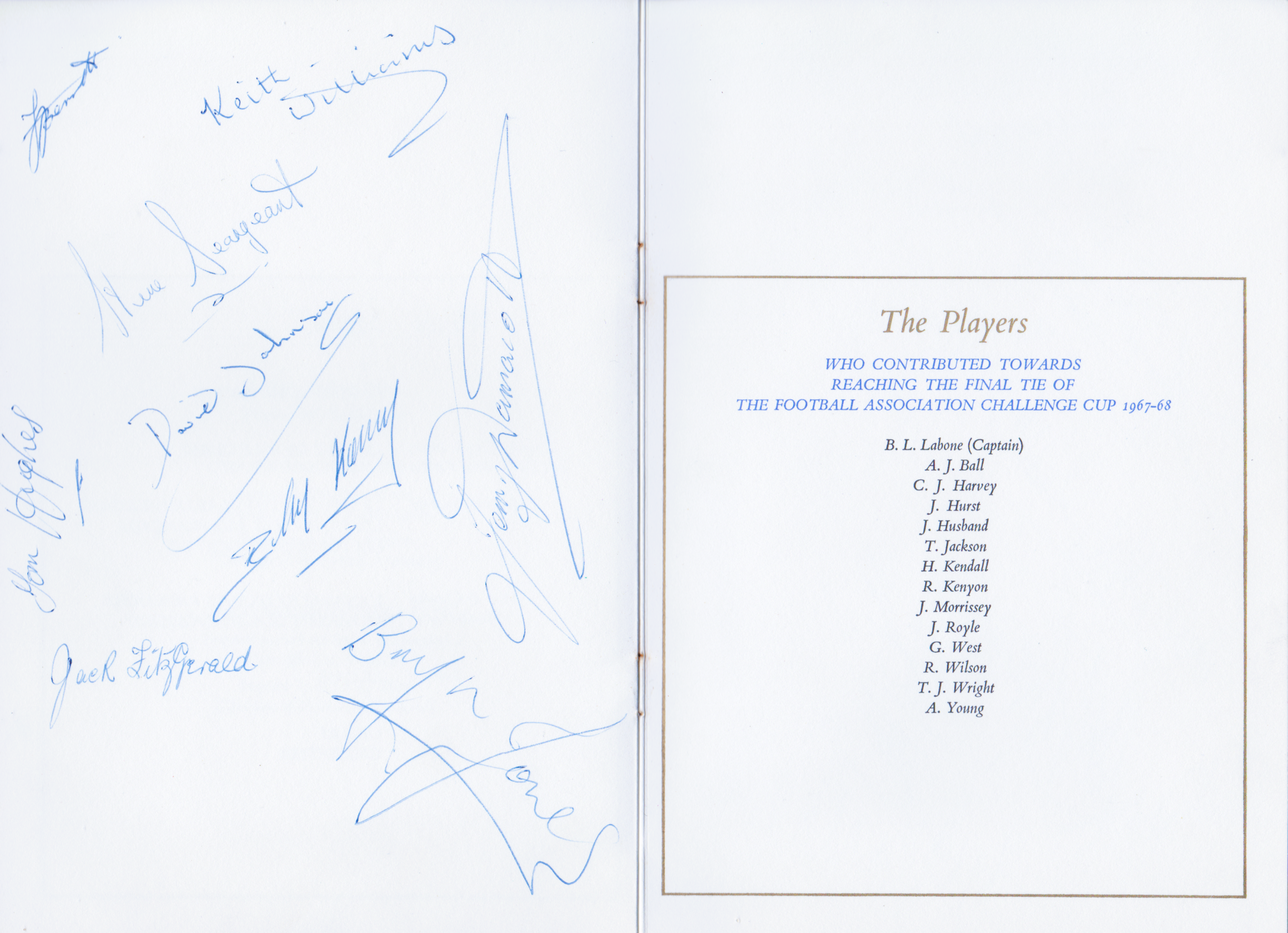
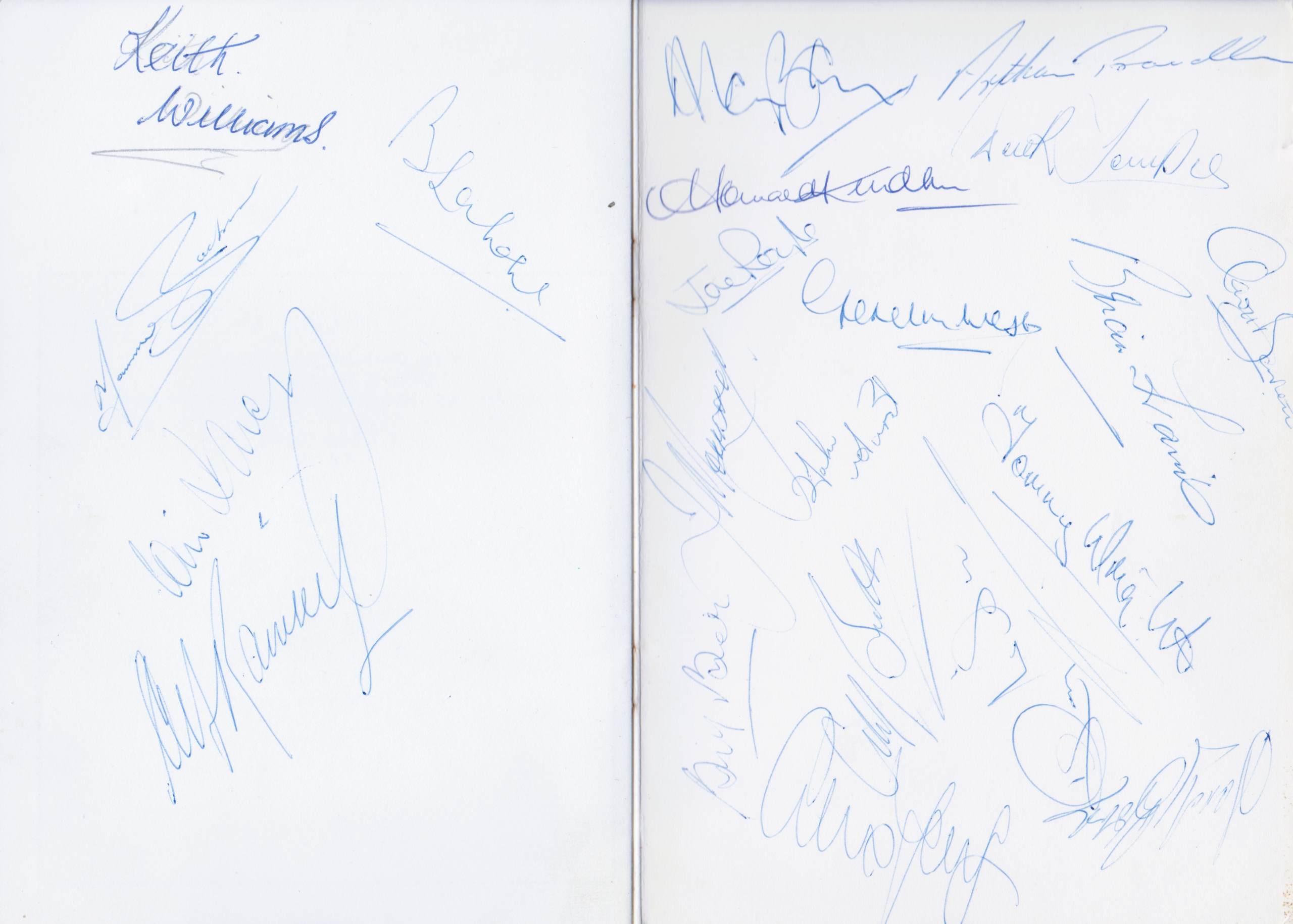
That evening Keith found himself sat at a table with fellow Everton youngsters David Johnson and Terry Darracott at the post-match banquet at the Grosvenor House Hotel on Park Lane, London. He was surrounded by the Everton first team, manager Harry Catterick and his coaches, Everton owner John Moores and chairman Jack Sharp junior, and the other Everton directors, Dr. A. Stephen, Chairman of the Football Association Mrs. Ethel M. Wormald, Lord Mayor of Liverpool, former Everton stars including Brian Harris, Alex Scott, and none other than England’s World Cup winning manager himself, Sir Alf Ramsey. Having tucked into a gourmet meal and listened to toasts to Her Majesty Queen Elizabeth, the Football Association and Everton Football Club, young Keith was sure to get his menu autographed by every one of the football superstars he suddenly found himself dining alongside.
What an introduction to the world of big-time football!
EVERTON APPRENTICESHIP
I first spoke to Keith in spring 2026, and he recalled his early days clocking in at Bellefield under Harry Catterick’s notoriously strict regime, sharing facilities with the First Division stars he had watched from the Boys’ Pen months earlier. He kept a keen eye on his goalkeeping role models in particular:
‘Andy Rankin, with his Beatle haircut, was my idol. Tommy Lawrence, ‘the Flying Pig’ was playing for Liverpool at the time, and Jim Furnell had before him.’
Keith made his Everton debut for the ‘B’ team versus Tranmere Rovers at the end of the 1967/68 season. This was particularly memorable for the fact that he played in a royal blue shirt that day, at centre forward. A lad called John Salt had been first choice ‘B’ team goalkeeper that season and was rewarded with his place in the team until the end of the season, meaning young Keith Williams had to wait for his chance to pull on the green number one jersey.
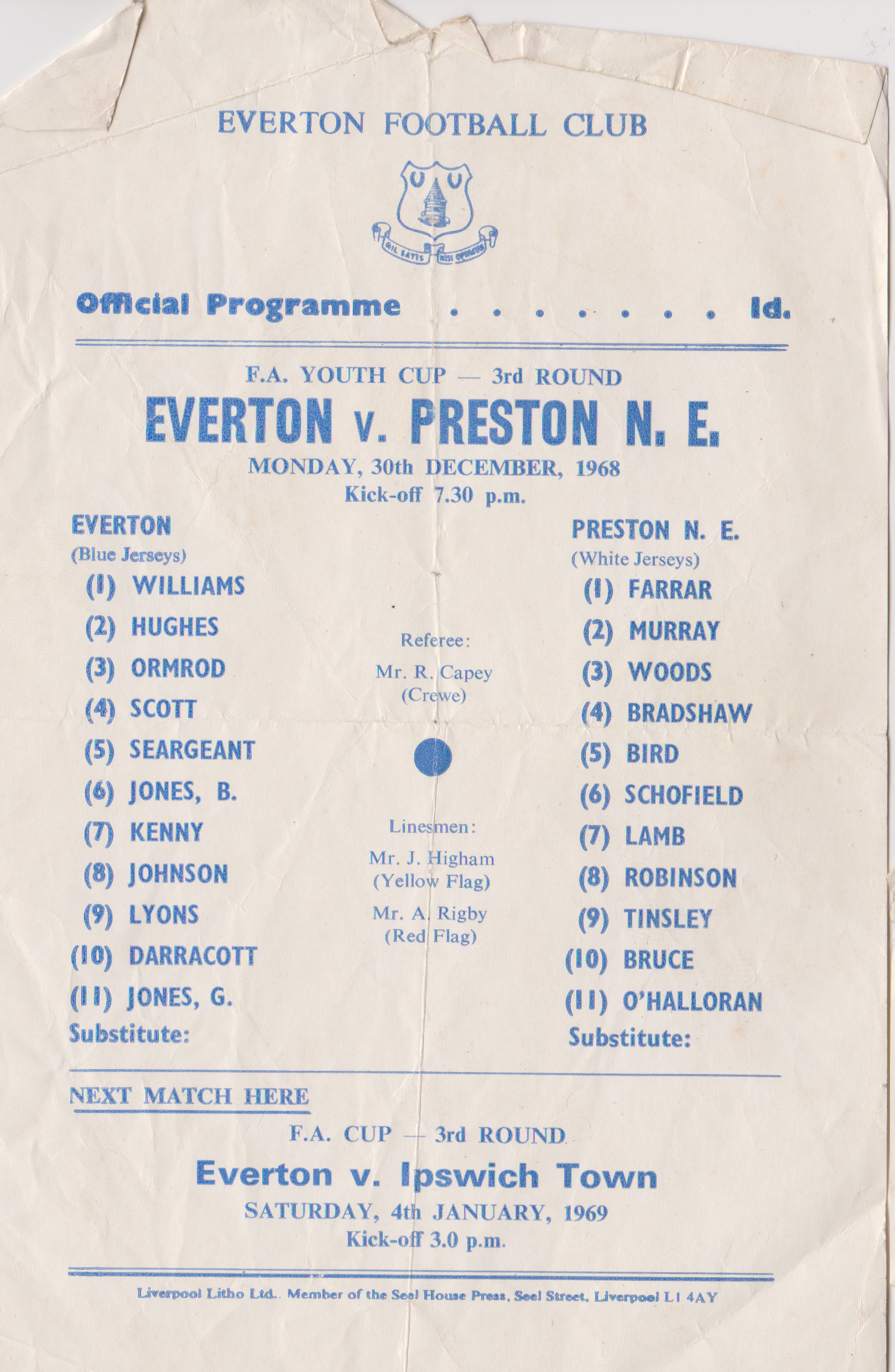
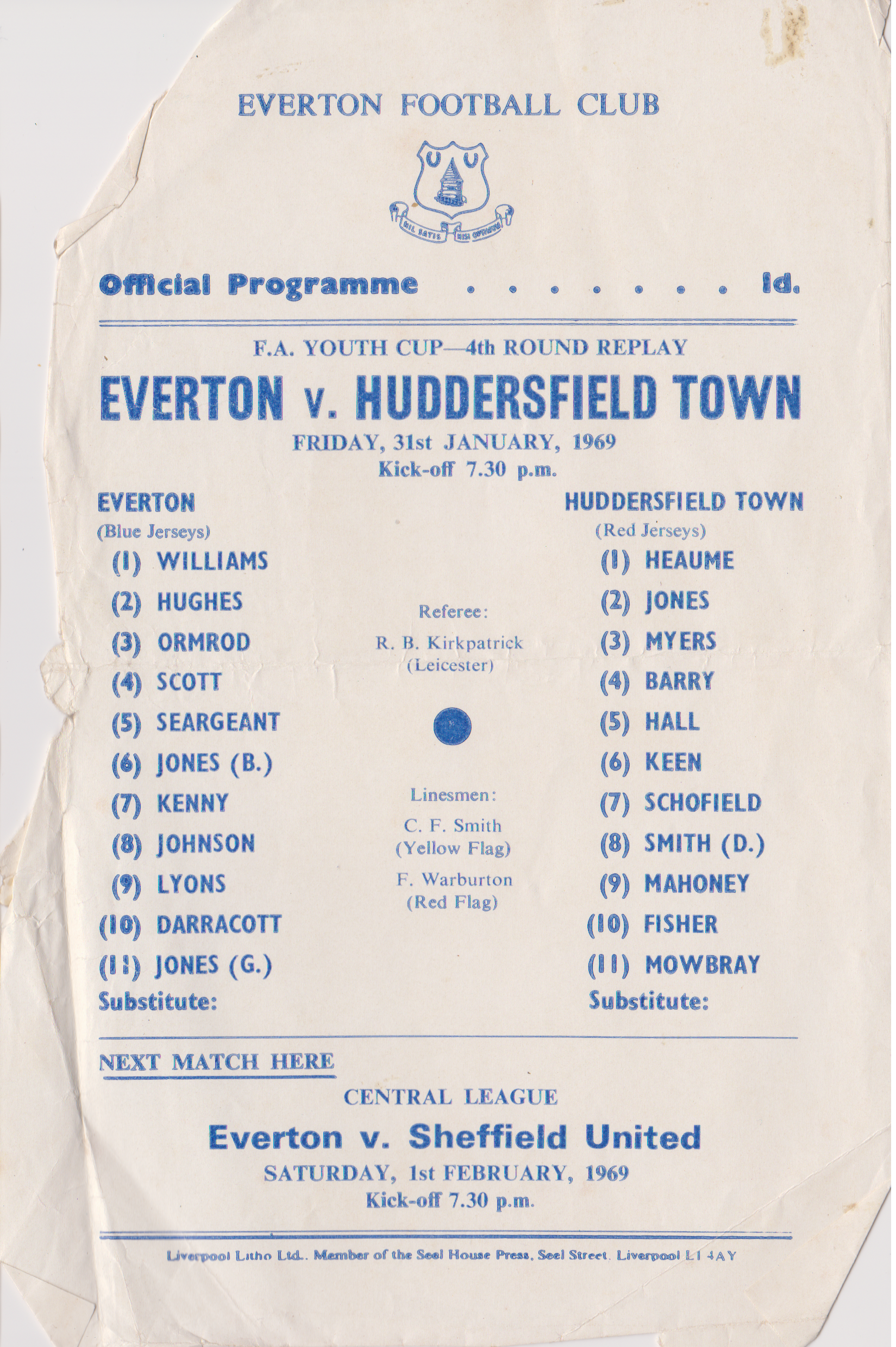
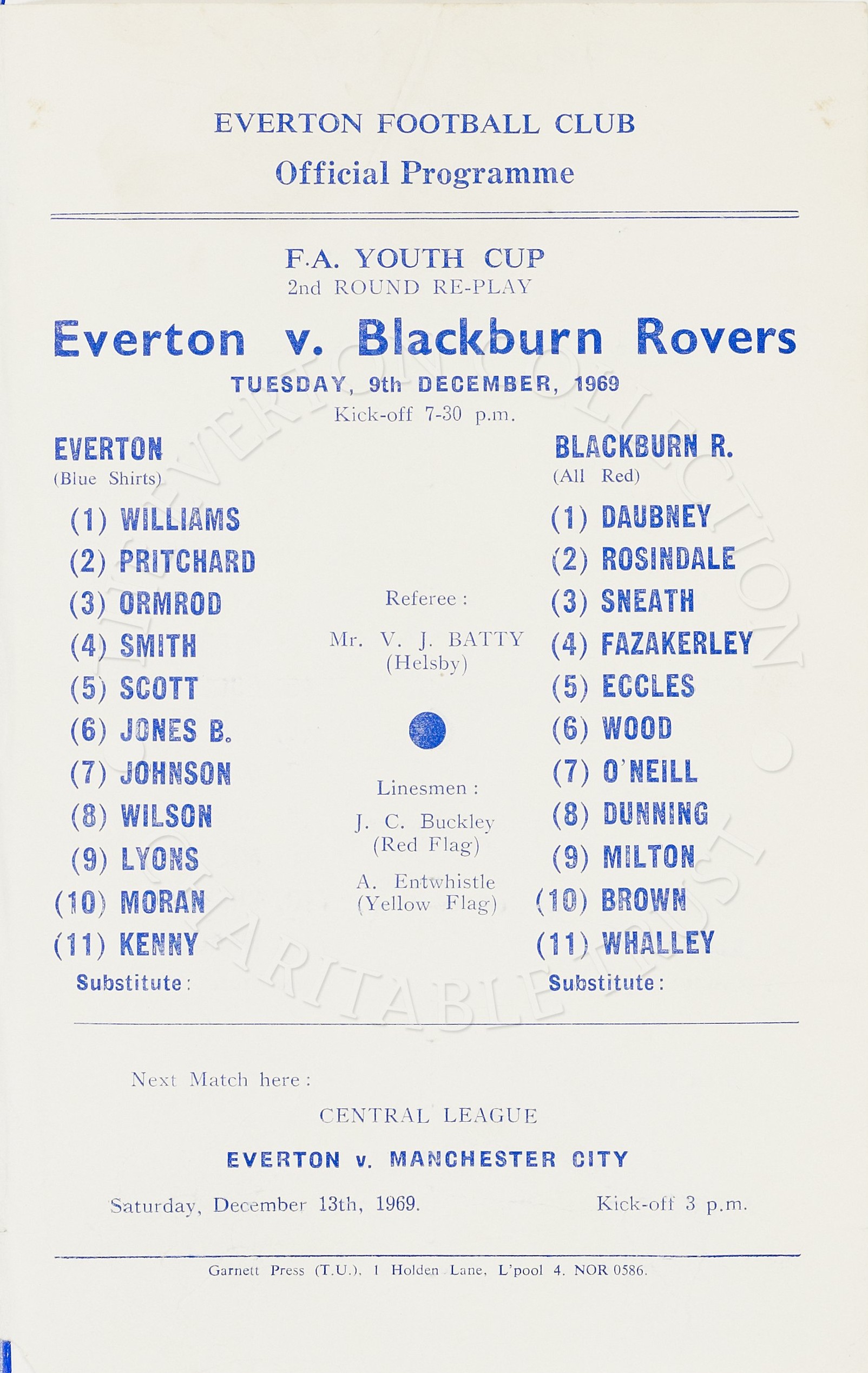
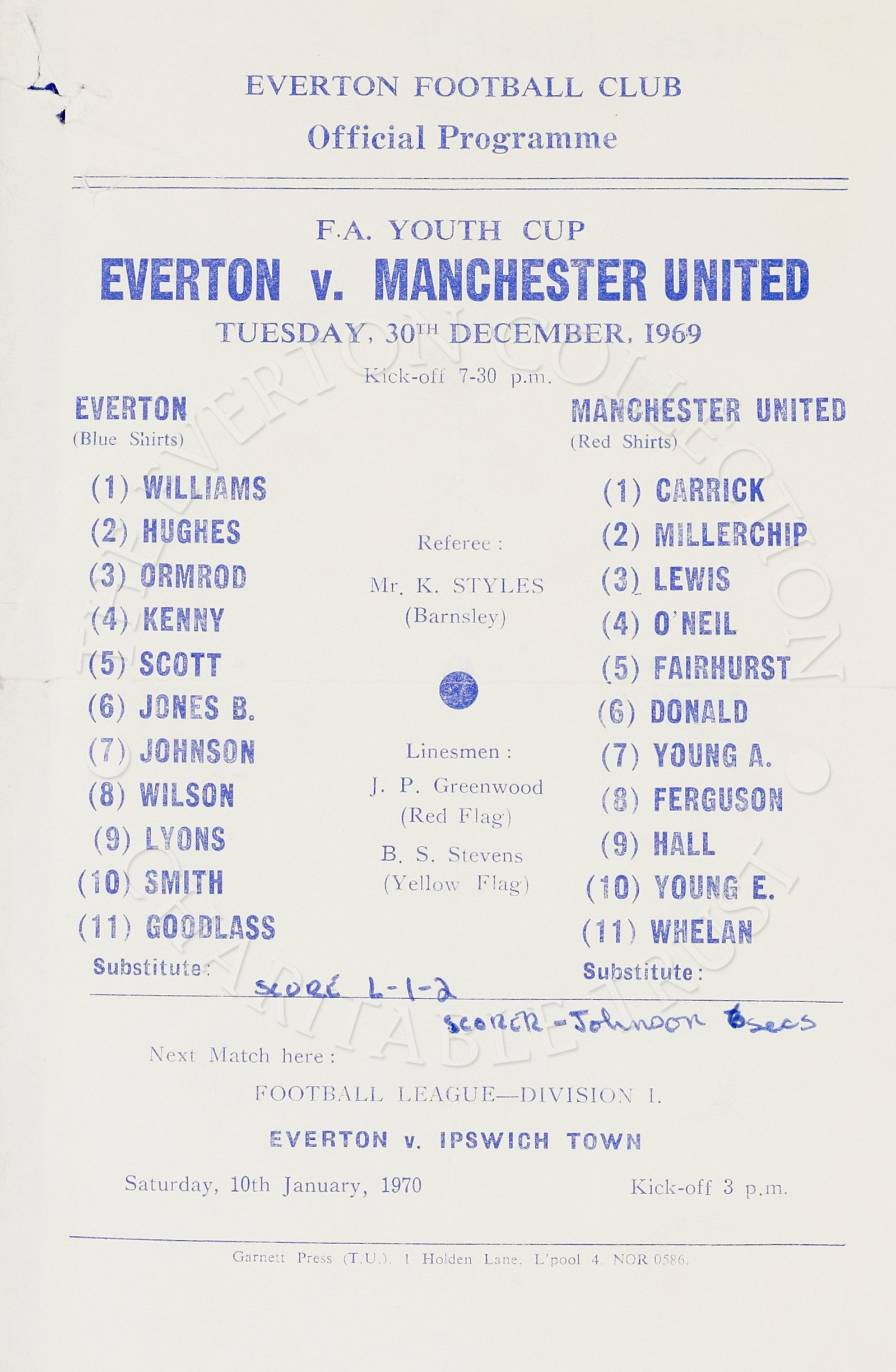
FA Youth Cup programmes from 1968/69 and 1969/70, featuring Keith Williams in goal for Everton:
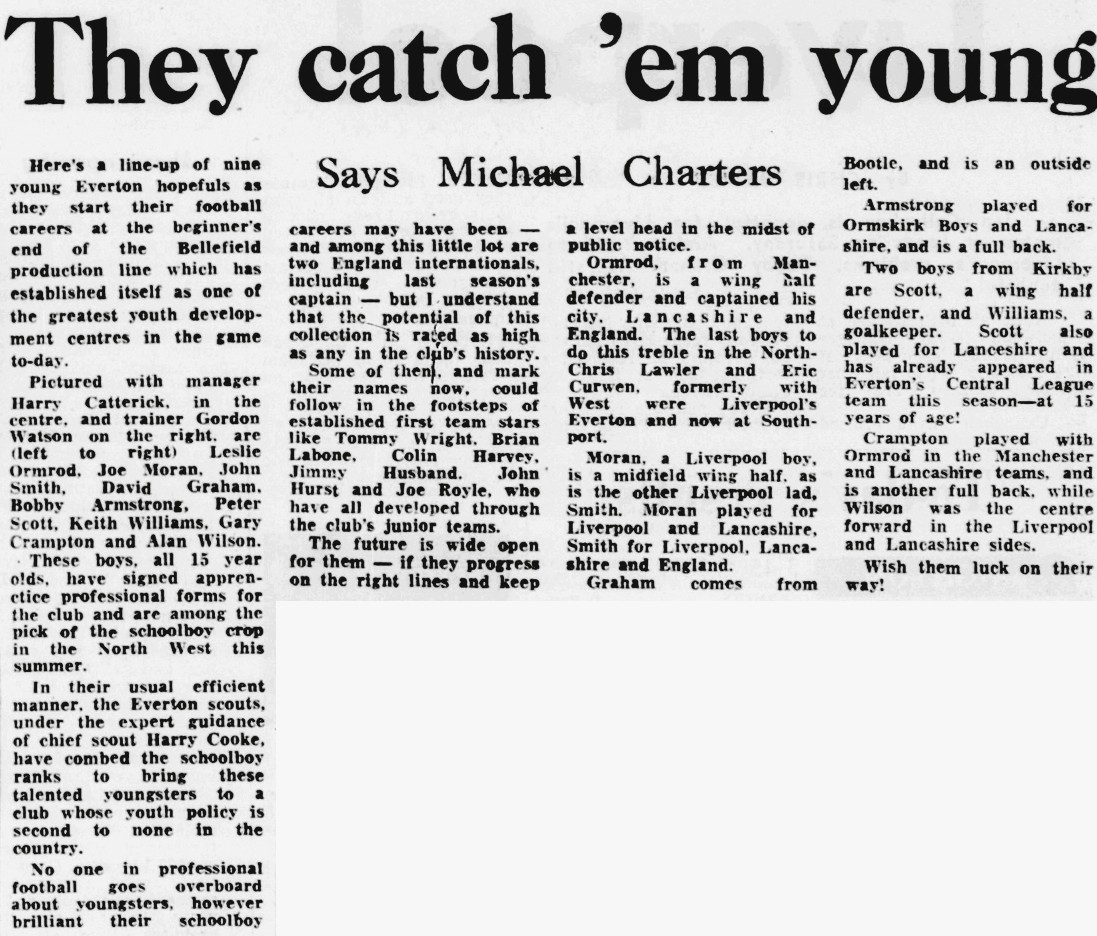
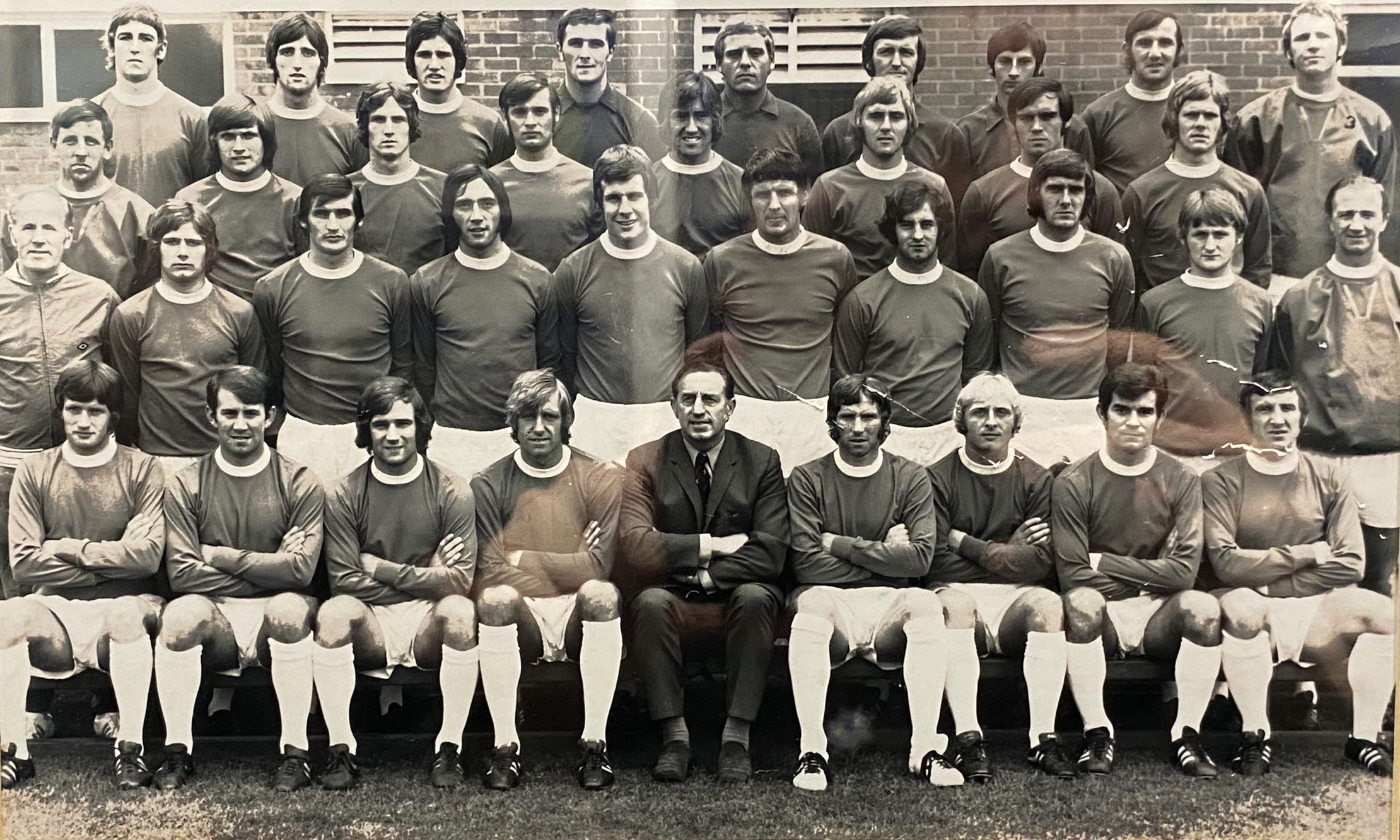
Everton Football Club; 1968 intake of fifteen-year-old apprentices (left to right):
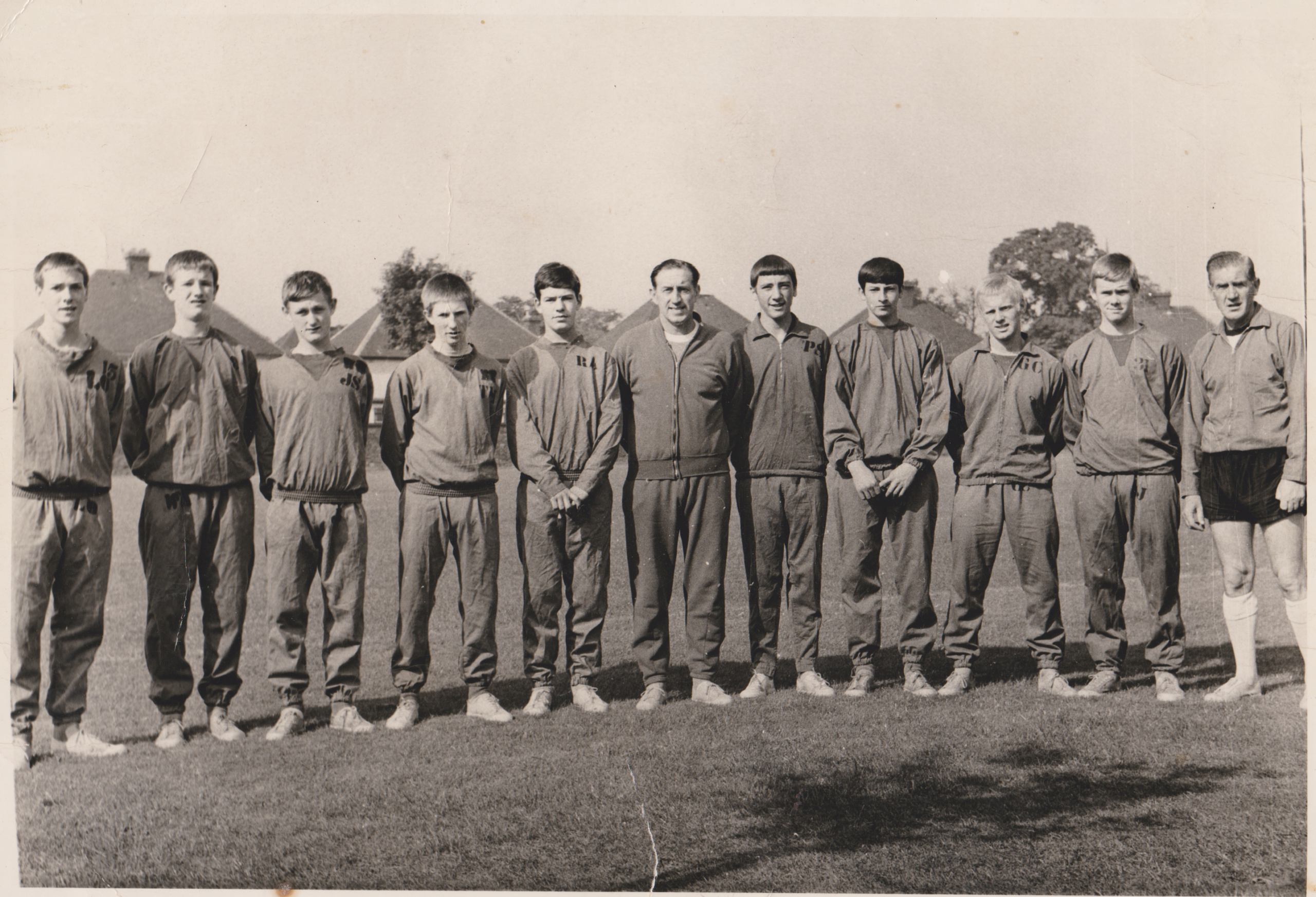
Leslie (Les) Ormrod – wing-half; captain of Manchester, Lancashire and England Schoolboys; not offered a pro contract; later played for Stockport County, Northwich Victoria and Macclesfield Town.
Joseph (Joe) Moran – wing-half; Liverpool and Lancashire Schoolboys, not offered a pro contract; later played non-league football on Merseyside while working as a mechanic. Died in 1992.
John Smith – wing-half; Liverpool, Lancashire and England Schoolboys; nickname ‘Tigsy.’ Two first team appearances for Everton; later played for Carlisle United and Southport.
David Graham – outside-left; Bootle Schoolboys; David’s mother won the football pools while he was an apprentice at Everton and bought him a grocer’s shop off Walton Road.
Robert (Bobbie) Armstrong – full-back; Ormskirk and Lancashire Schoolboys; ordered to lose weight by Harry Catterick and was never the same player afterwards. Not offered a pro contract and later made played in non-league.
Harry Catterick (1919-1985) – former Everton striker and Everton manager (1961-1973).
Peter Scott – right-back/wing-half; Kirkby Boys and Lancashire Schoolboys. Played in the Central League aged fifteen. Fifty appearances for Everton first team, two goals; later played for York City, Charlton Athletic and Aldershot. Ten Northern Ireland caps. Died in 2024.
Keith Williams – goalkeeper; Kirkby Boys; two years as a professional at Everton; later career details to follow.
Gary Crampton – left-back; Manchester and Lancashire Schoolboys; not offered a pro contract; later played for Bradford Park Avenue.
Alan Wilson – centre-forward; Liverpool and Lancashire Schoolboys. Made five appearances for the Everton first team; later played for Southport and Torquay United.
Gordon Watson (1914-2001) – former Everton player who served as amateur and ‘B’ team coach under Harry Catterick, before working in the club shop and on early stadium tours at Goodison Park.
William (Harry) Cooke (1924-2012) was Chief Scout at this point. The rest of Catterick’s coaching team comprised of Wilf Dixon (1919-2014), Stuart Imlach (1932-2001), Tommy Casey (1930-2009) and Arthur Proudler (1929-2000). There was no dedicated goalkeeping coach or specific goalkeeper training at any point during Keith Williams’ career at Everton.
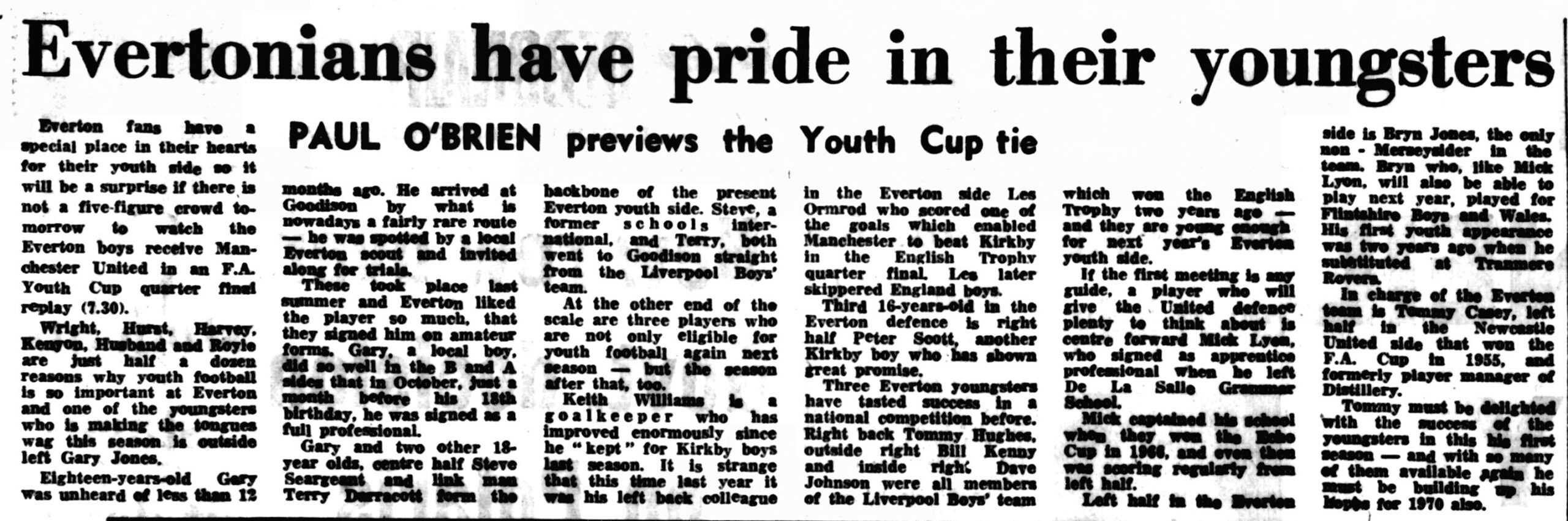
Starting with the ‘B’ team during the 1969/70 season, during which the Everton first team memorably stormed the League Championship, Keith worked his way up to the ‘A’ team and Reserves. He has fond memories of the celebrations after Everton clinched the league title after beating West Bromwich Albion 2-0 at Goodison Park on the night of Wednesday, 1 April 1970. Club captain Brian Labone, who missed the run-in through injury, gathered up all the leftovers of champagne in the dressing room after the match and filled glasses for all the apprentices. He insisted the first team drink a toast to them for their part in cleaning the dressing rooms and organising the kit throughout the season, a touch of class from one of football’s all-time great gentlemen.

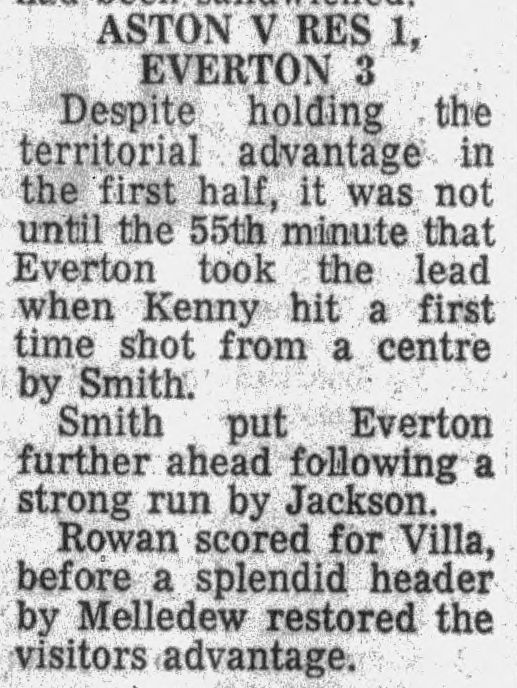
Learning from mistakes and developing a thick skin is vital in the evolution of a young goalkeeper. Keith has a vivid memory of conceding a soft goal in a reserve team game at Villa Park in September 1970. The normal procedure in those days when goalkeepers could pick up the ball from a back pass, was that the goalkeeper would pick it up from one full-back and immediately switch play by throwing it to the opposite full-back. That day, as the ball was rolled back to Keith from his right-back, he looked across to check the left-back was in position to receive the ball. In that split second the ball went through his legs and into the net. Years later Keith found a report on the game, having always believed he had let his teammates down badly. It turned out that he had completely forgotten the fact that Everton won the match 3-1!
The Everton line-up was as follows: K. Williams, F. Darcy, A. Styles, B. Labone, T. Jackson, W. Kenny, A. Wilson, S. Melledew, S. Seargant; sub: Westburgh.
Who’d be a goalkeeper?!
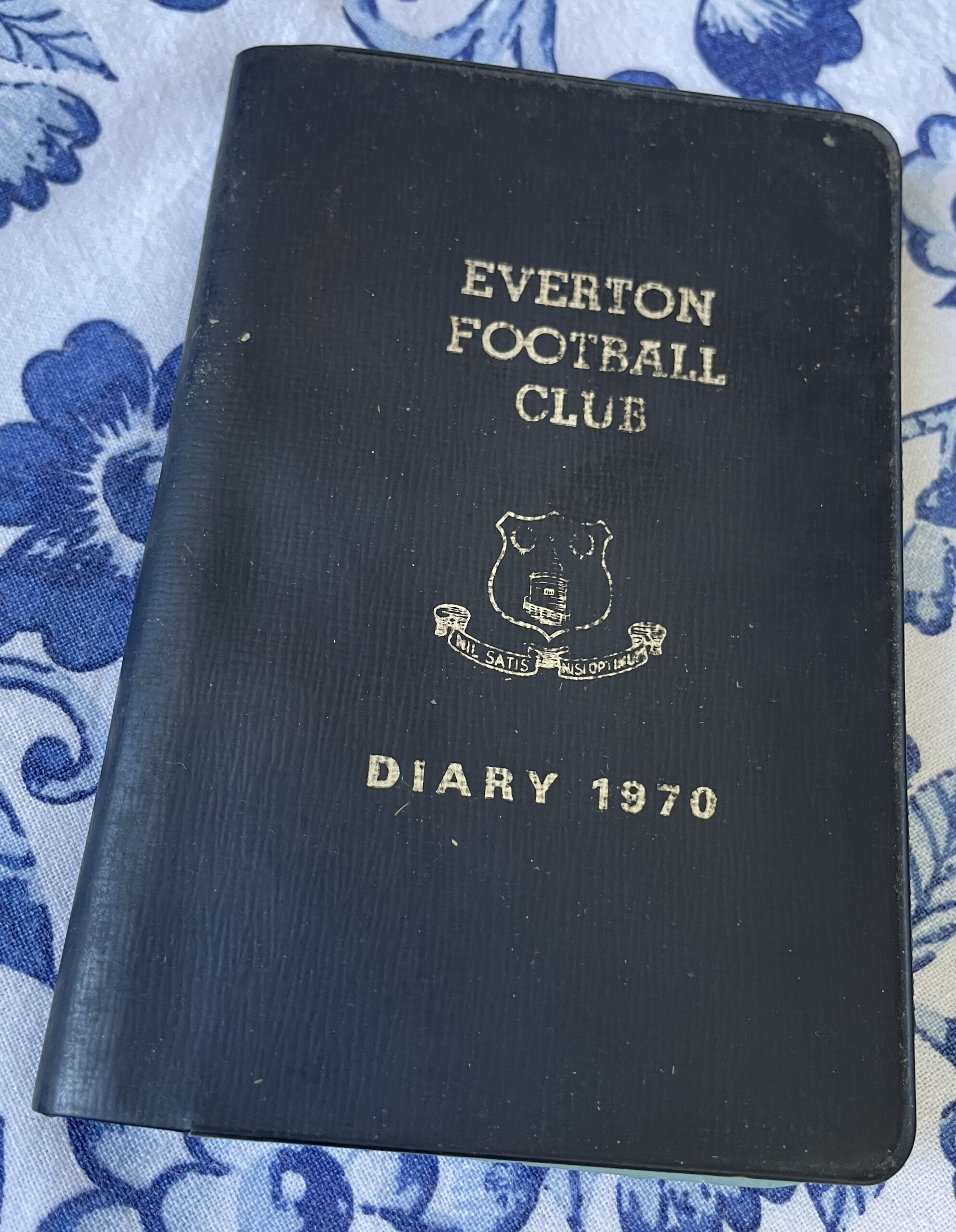
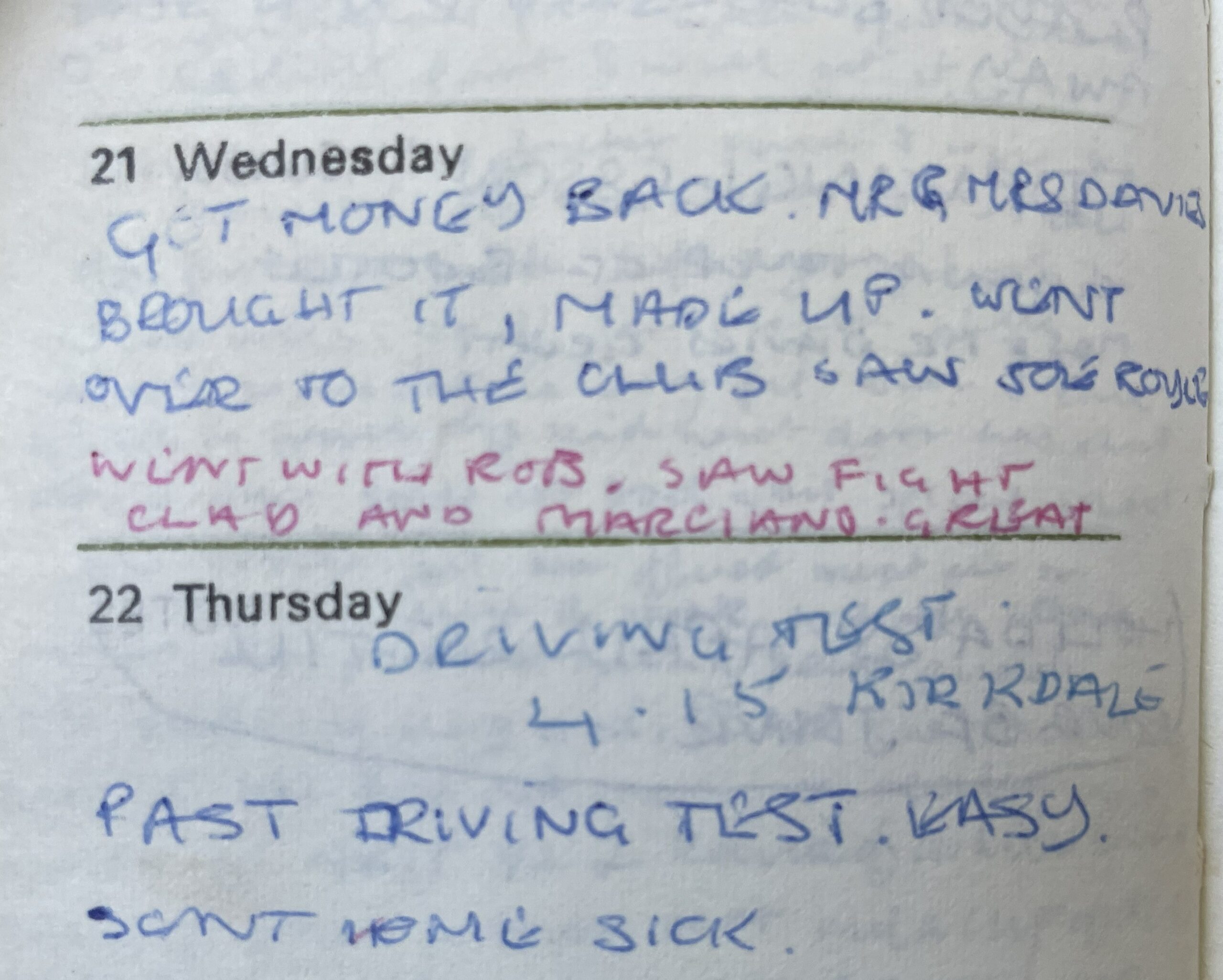
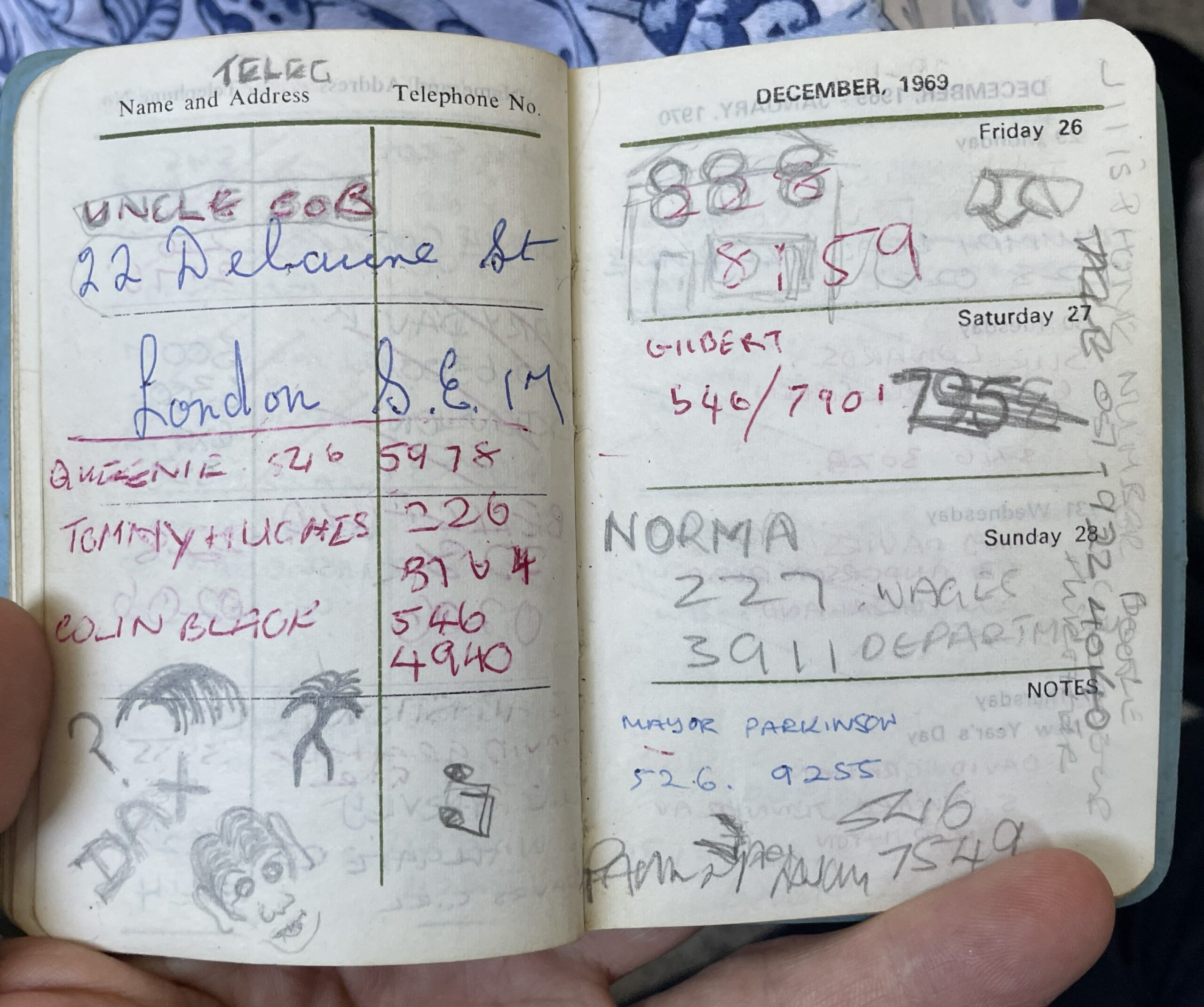
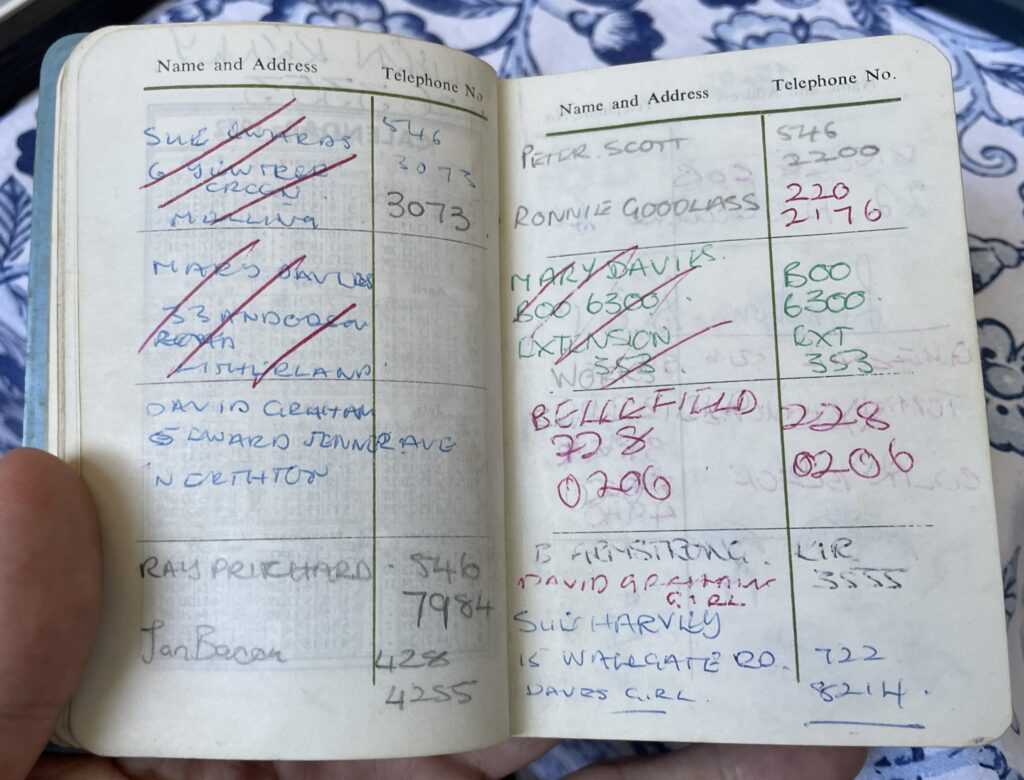
.
FIRST TEAM BREAKTHROUGH
Life wasn’t always easy going at Bellefield during this era and Keith was not alone in not getting on with coach Stuart Imlach, a former Nottingham Forest and Scotland winger. Several players fell out with Imlach throughout the period Keith was at the club, some even coming to blows with the coach. Stan Osborne, a friend of Keith’s who served his own Bellefield apprenticeship in the year group below, also discusses this in his book Making the Grade, which details his own Everton experience.
During the 1970/71 season, long-serving Everton custodian Gordon West spent a lengthy spell out of the first team after making a few high-profile mistakes and incurring the wrath of the Goodison Park crowd. West had flicked a ‘v’ sign at supporters, had an altercation with Sandy Brown, and was dropped after Everton won the first leg of their European Cup tie with Keflavik 6-2 at Goodison on 16 Sept 1970. West scored an own goal which gave the Icelandic part-timers the lead during the match, and his place taken for the next five months by understudy Andy Rankin.
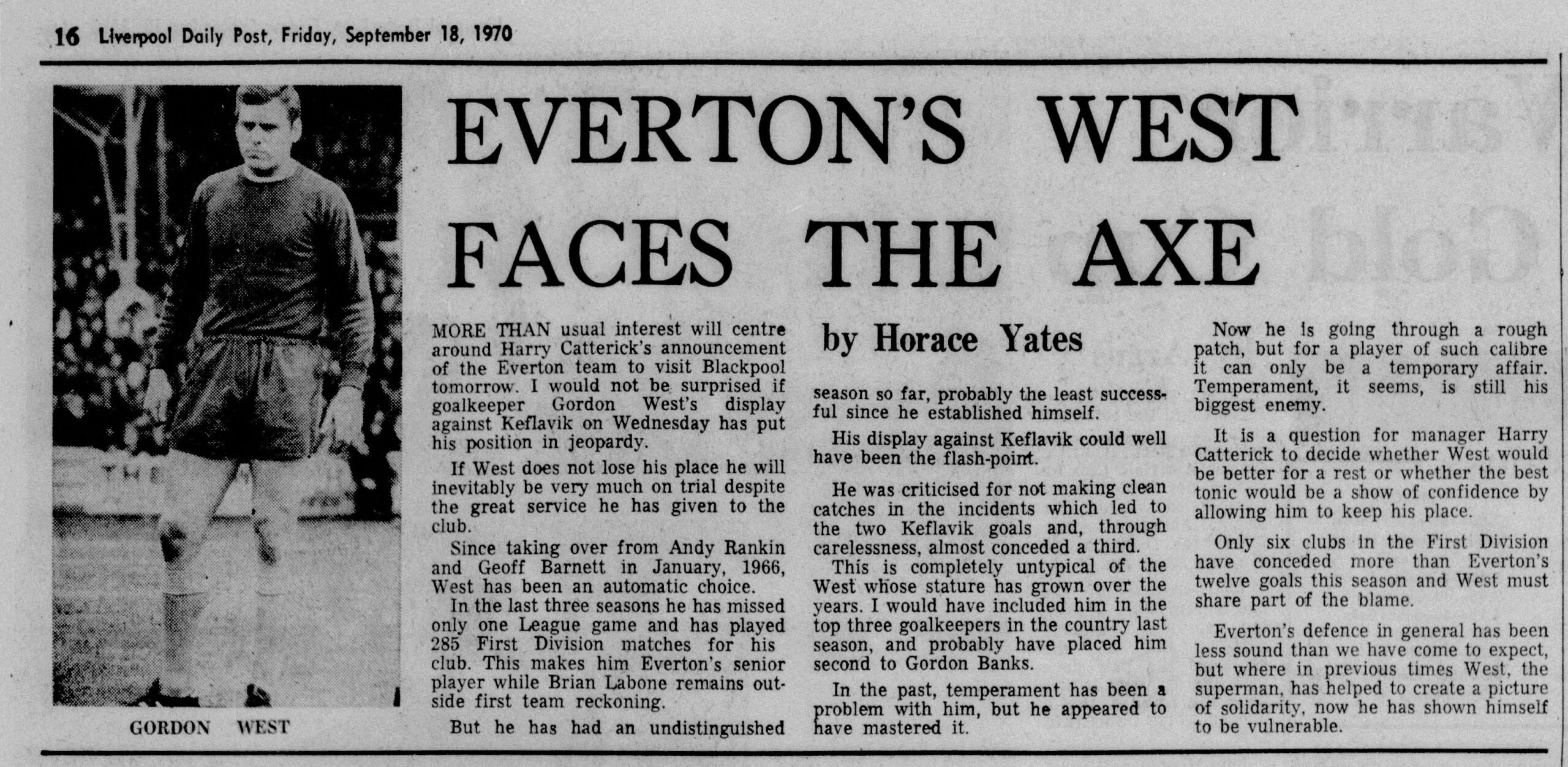
On 29 September 1970 the Liverpool Echo reported the following team news prior to the second leg of the European Cup tie with Keflavik, to be played at the Laugardalsvöllur stadium in the Icelandic capital, Reykjavik the following day:
‘Mr. Catterick has decided to give 18-years-old goalkeeper Keith Williams his first trip with the seniors – and the Kirkby boy will have something to remember with it being a European occasion. Willams has been impressing the Everton coaches with his form in the ‘A’ team, and occasional match with the Central League side. He played for Kirkby and Lancashire Boys* before joining Everton from school, and will be substitute to Andy Rankin tomorrow.’
*Keith pointed out to me that he never actually played for Lancashire Boys: ‘although I should have!’
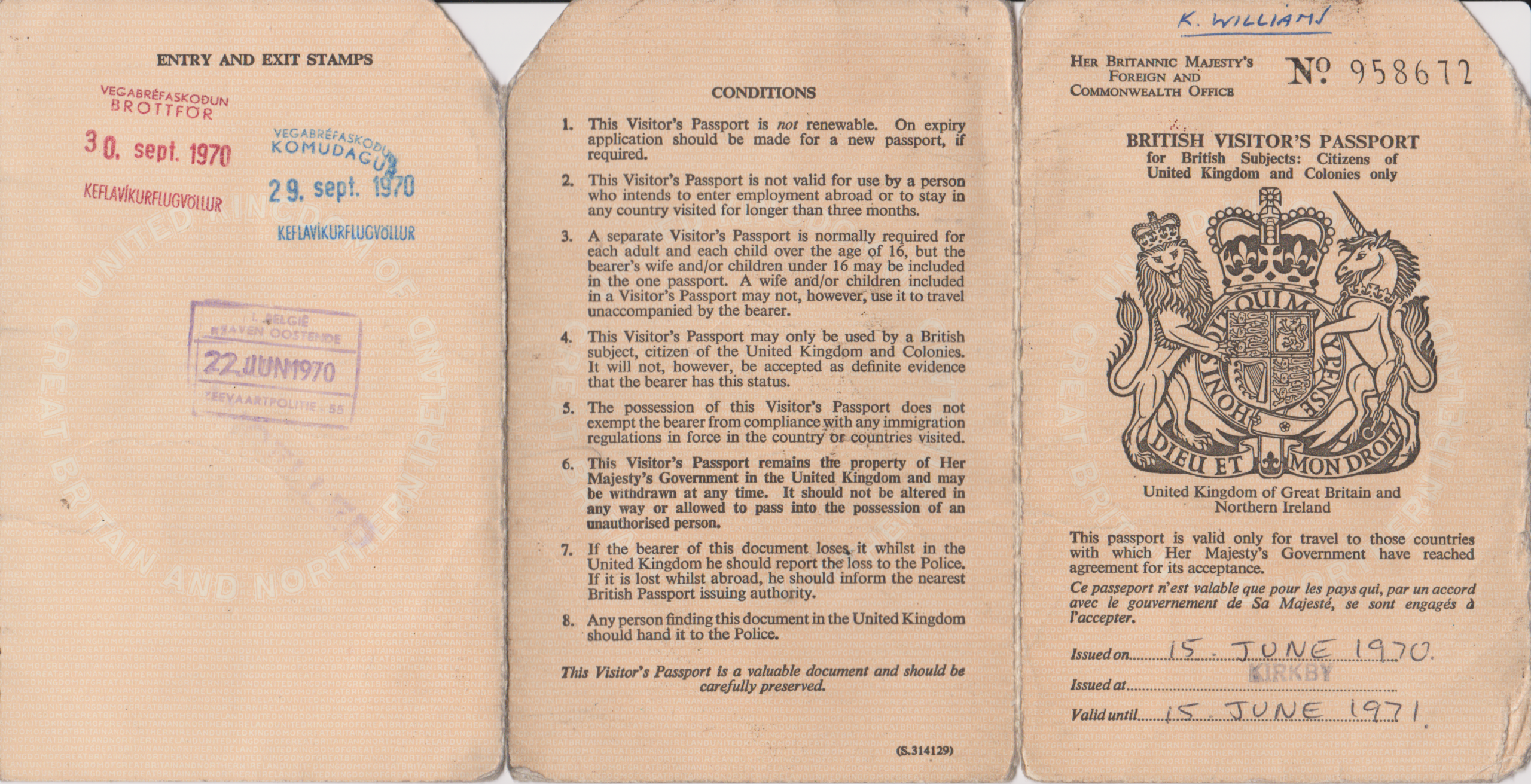
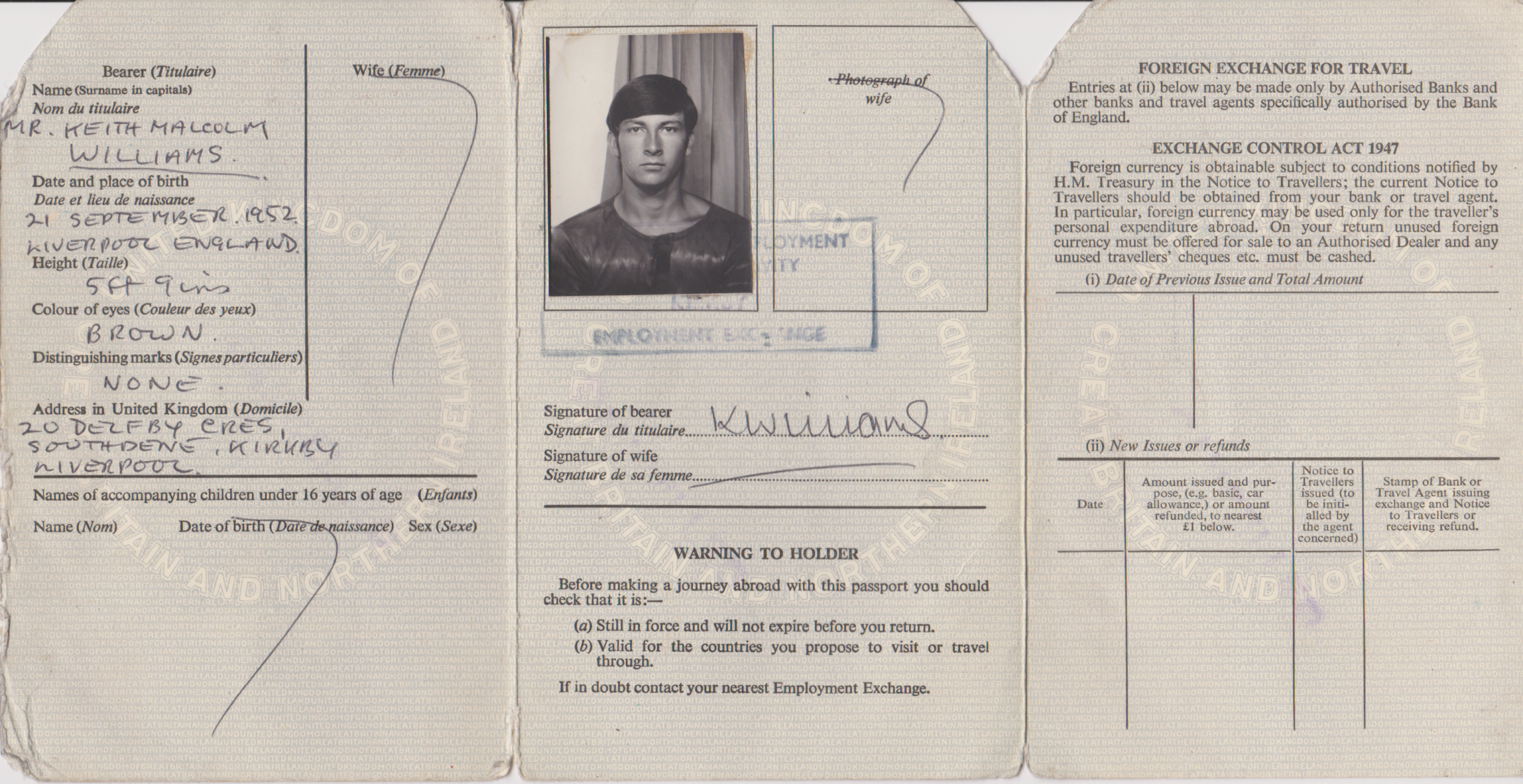
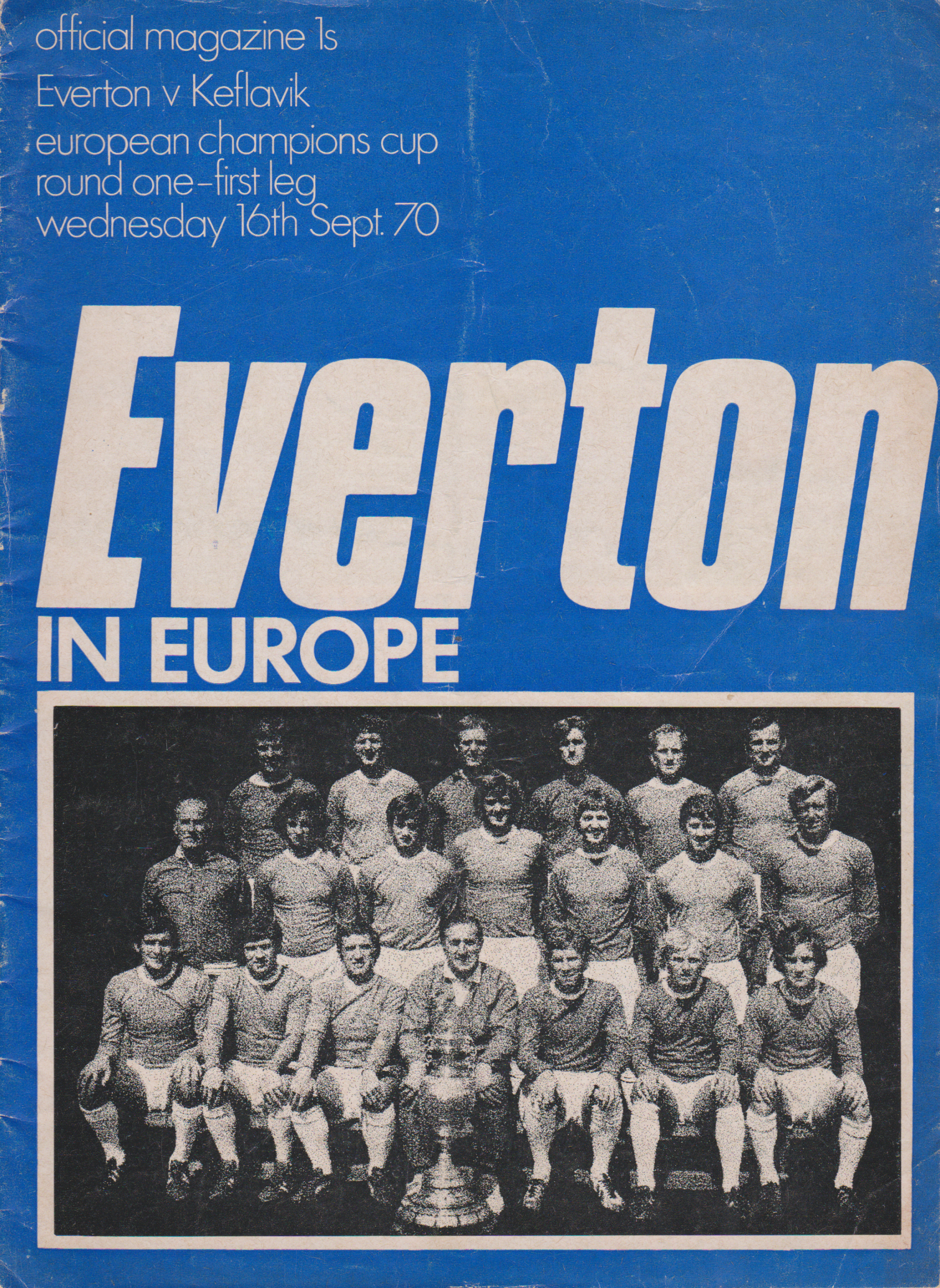
At just eighteen years of age, Keith Williams travelled to Iceland with the first team for the return fixture in Reykjavik on 30 Sept 1970 and sat on the bench as Everton won the game 3-0. Pictures were published a subsequent Everton home programme showing manager Harry Catterick and the players inspecting the puddle-strewn quagmire of a pitch prior to the match. As Keith recalled:
‘It was bloody freezing!’
Everton v Keflavik home and away programmes, September 1970:
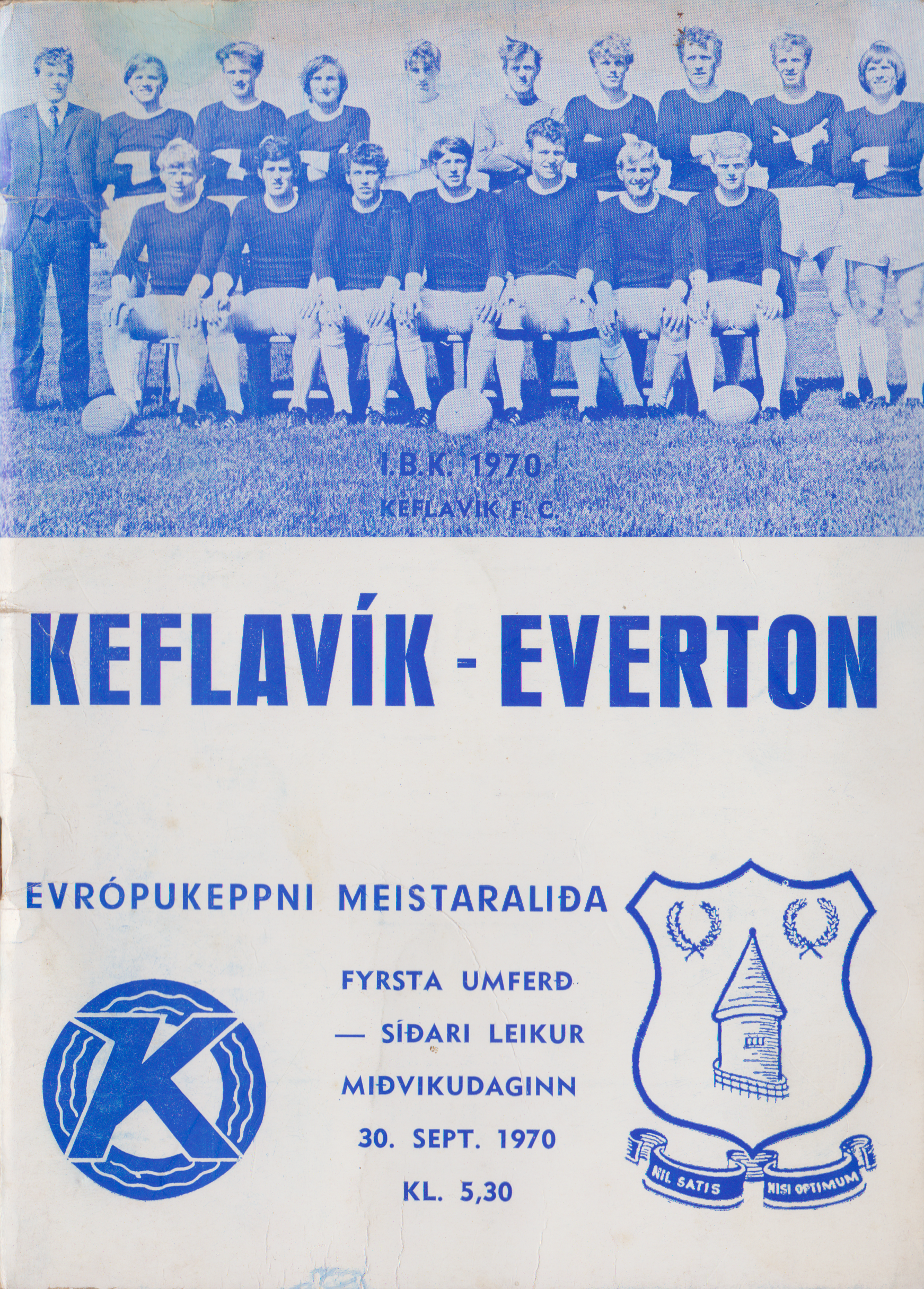
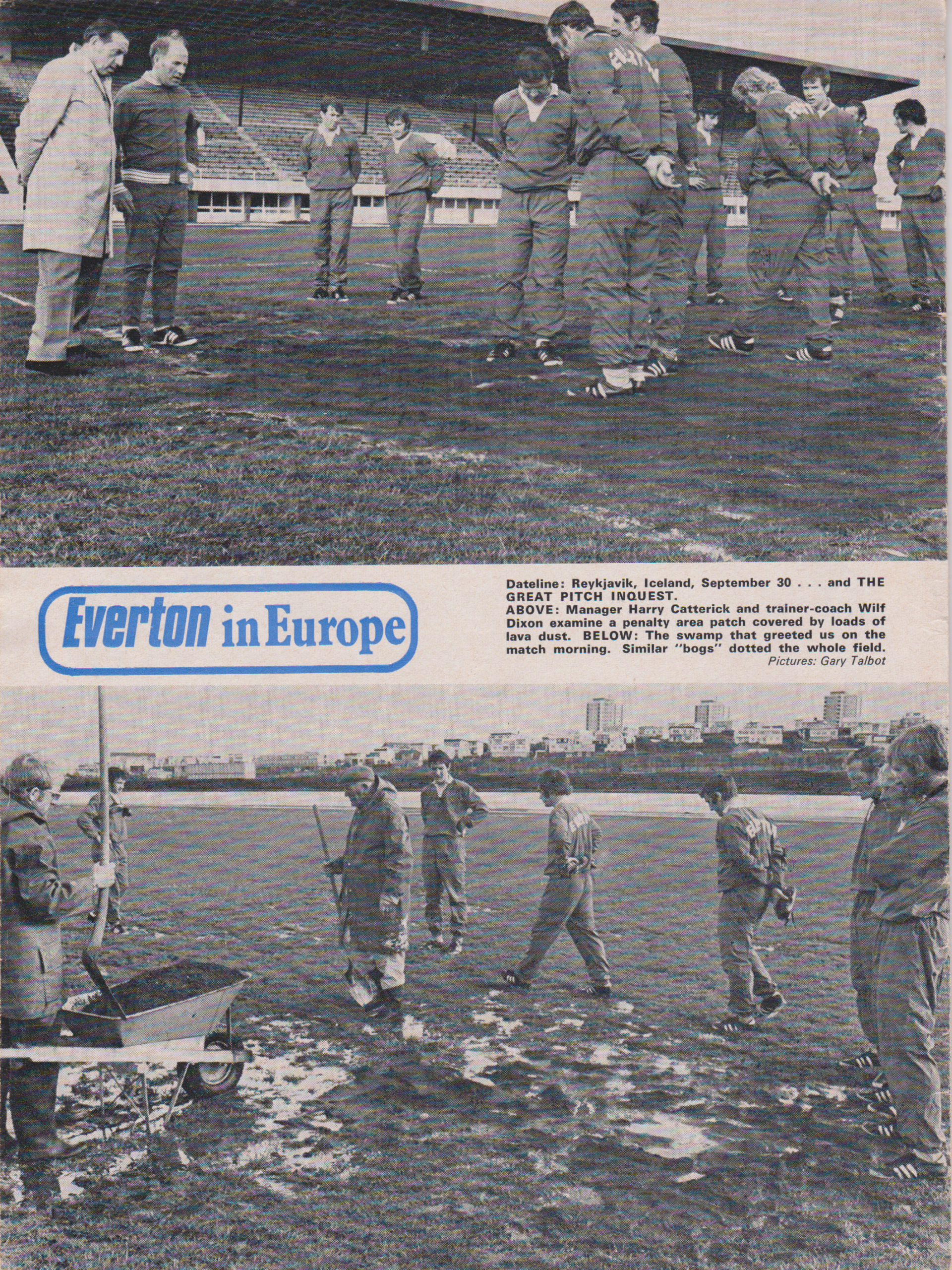
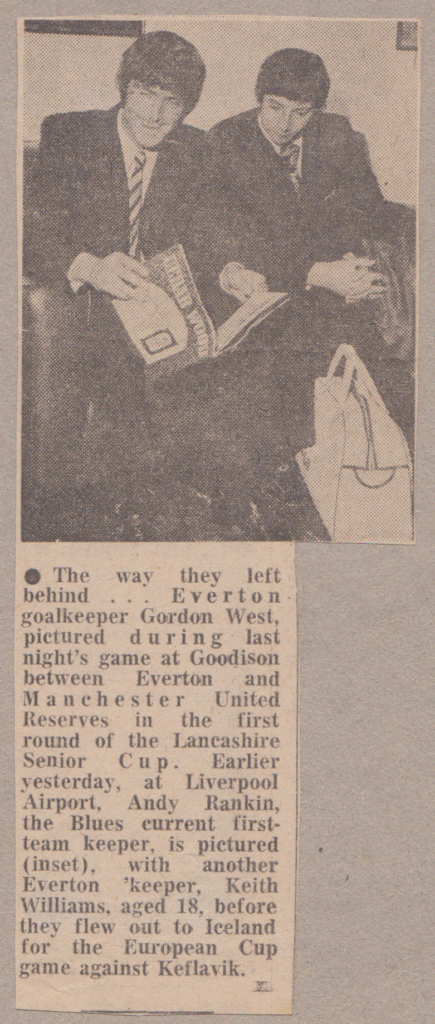
On the flight home from Iceland the players were drinking on the plane. Johnny Morrissey, who was famously a ‘tight bugger,’ bought Keith a glass of Drambuie and instructed him in no uncertain terms:
‘Make sure you tell all the lads I bought you a drink!’
Upon arrival back in England, Keith’s luggage appeared to have gone missing. It had in fact been hidden by teammates. Star midfielder Howard Kendall waited behind to make sure the young goalkeeper retrieved his belongings and got back safely to the waiting team coach. As luck would have it, due to the delay, Keith and Howard were escorted by airport staff through a side door and directly to the coach, while the rest of the squad were still waiting to come through customs.
The following week Keith plucked up the courage to visit Harry Catterick’s office and ask him when he would be paid his £10 win bonus for the Keflavik match. In his famously brusque manner Catterick told him his young goalkeeper that he was not eligible as he had not been in the matchday squad for both legs of the tie!
At this time England star Alan Ball was earning £100 per week, and centre-forward Joe Royle £80 per week. A fortune to some at the time, but not in comparison to twenty first century footballers. An England international by 1971, Royle supplemented his income by trading used cars.
.
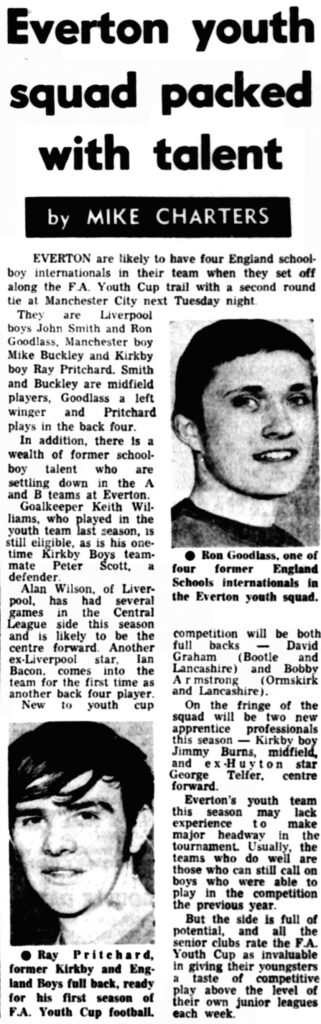
Liverpool Echo, 28 November (left) and
1 December 1970 (below)
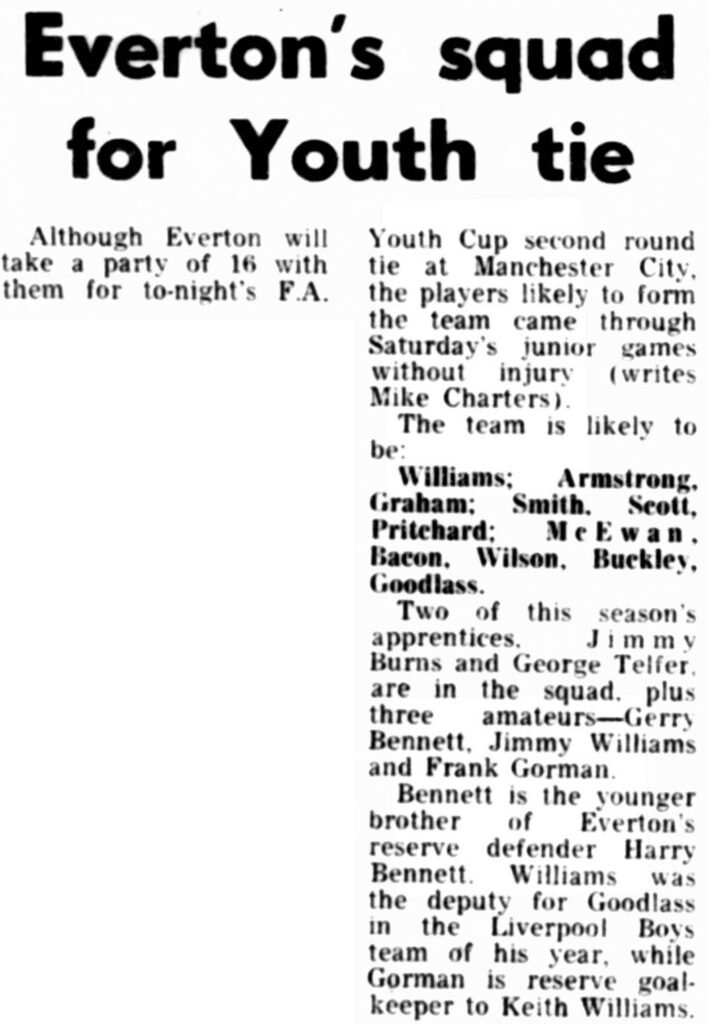
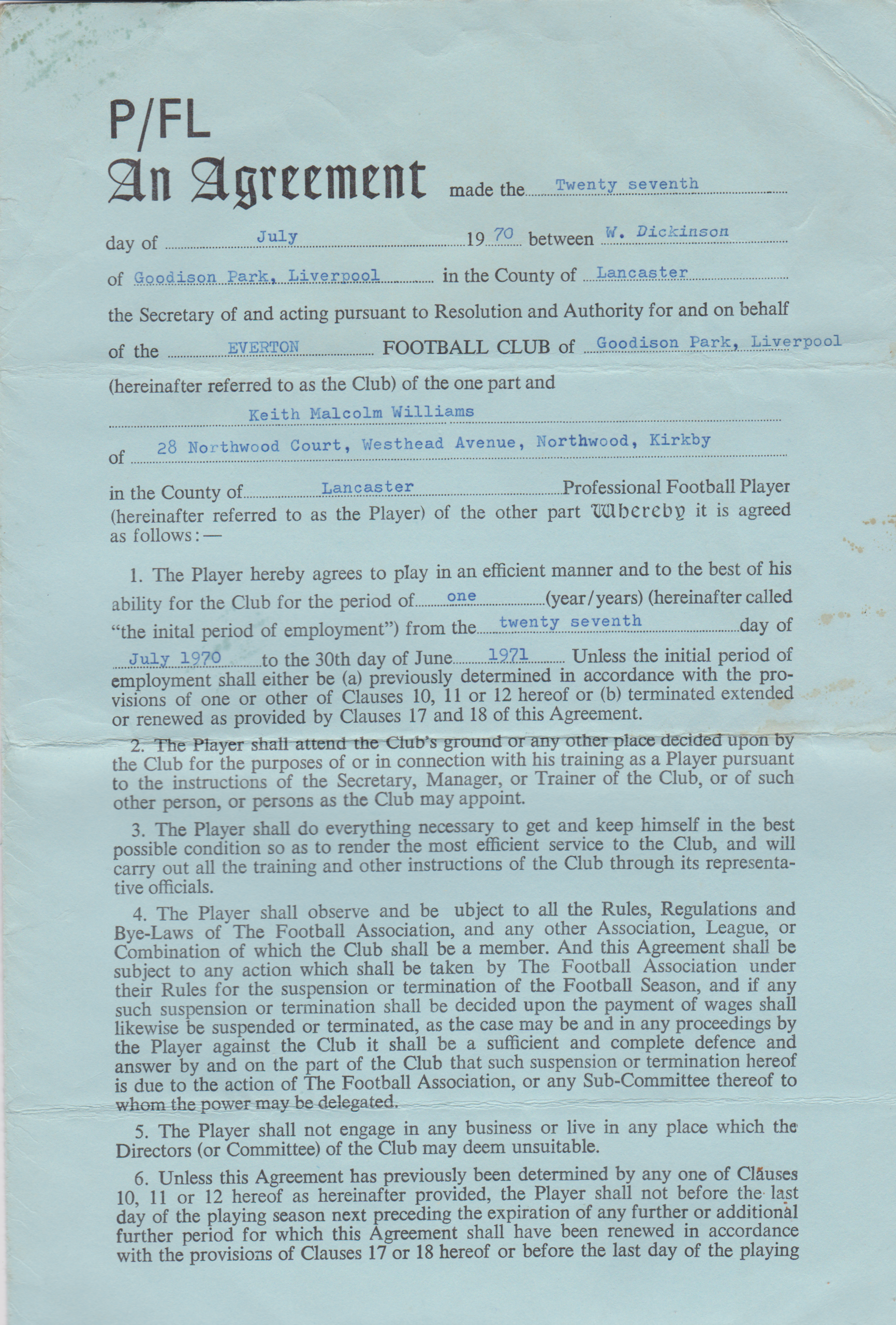
On 12 July 1971, aged eighteen years and nine months, Keith Williams put pen to paper on his first professional contract with Everton Football Club. Having already spent time in and around the first team squad while still an apprentice, as well as earning praise in the local press, the future looked bright for the young goalkeeper.
First page of Keith Williams’ first professional contract, 27 July 1970, plus special clauses:
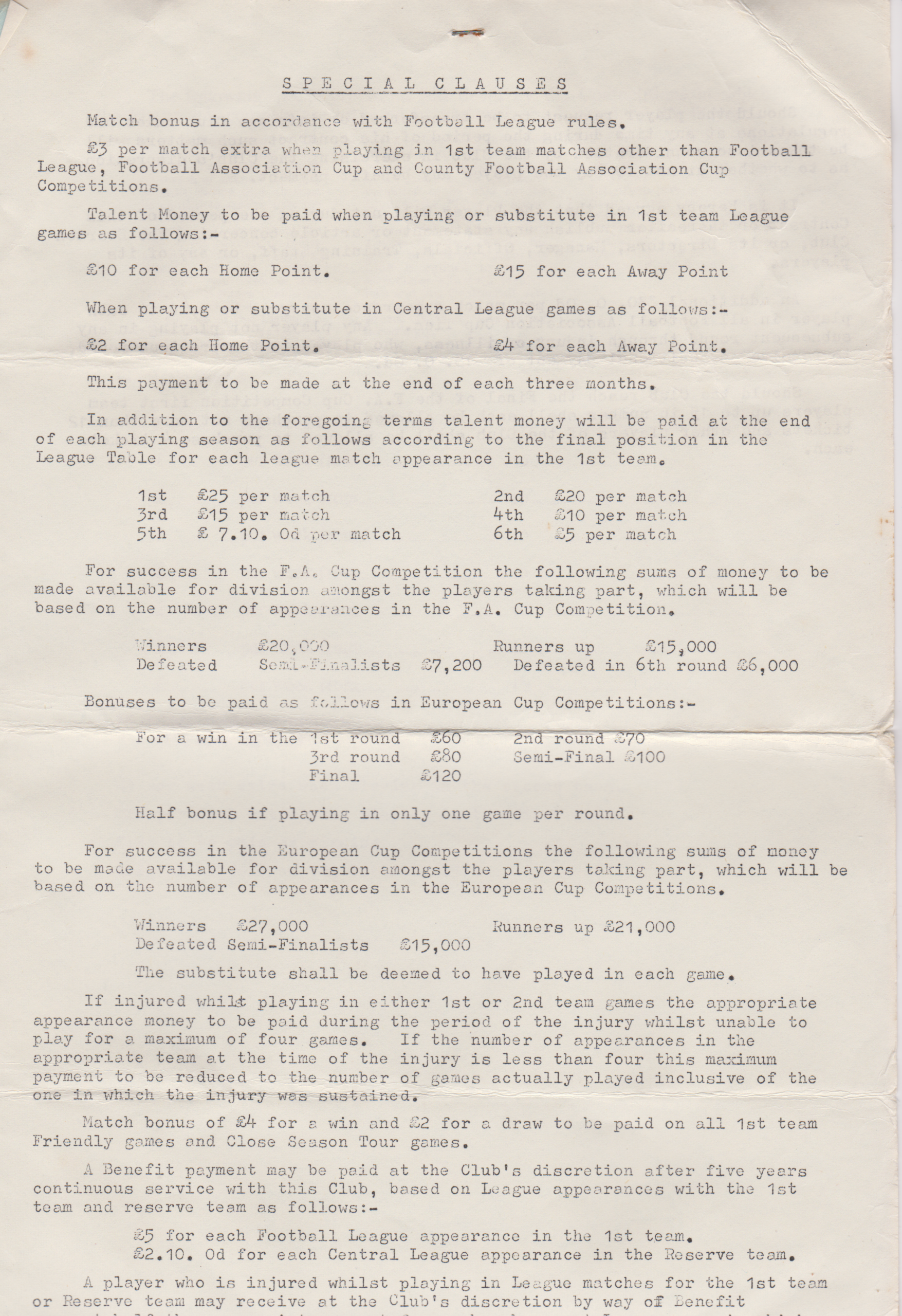
Everton’s reserve team finished sixth in the Central League in 1968/69, fifth in 1969/70, third in 1970/71, during which Keith made 38 appearances, and second in Keith Williams’ final season, 1971/72. They lost to Manchester United in the quarter-final of the F.A. Youth Cup in 1968/69, and made the quarter-final of the Lancashire Senior Cup in 1970/71.
Keith saw consistency, handling and the fact that he rarely made mistakes as his greatest strengths as a goalkeeper. He extended his professional contract with Everton for a further year on 12 July 1971, but was already beginning to feel somewhat disillusioned as to his future with the club.
.
LEAVING EVERTON
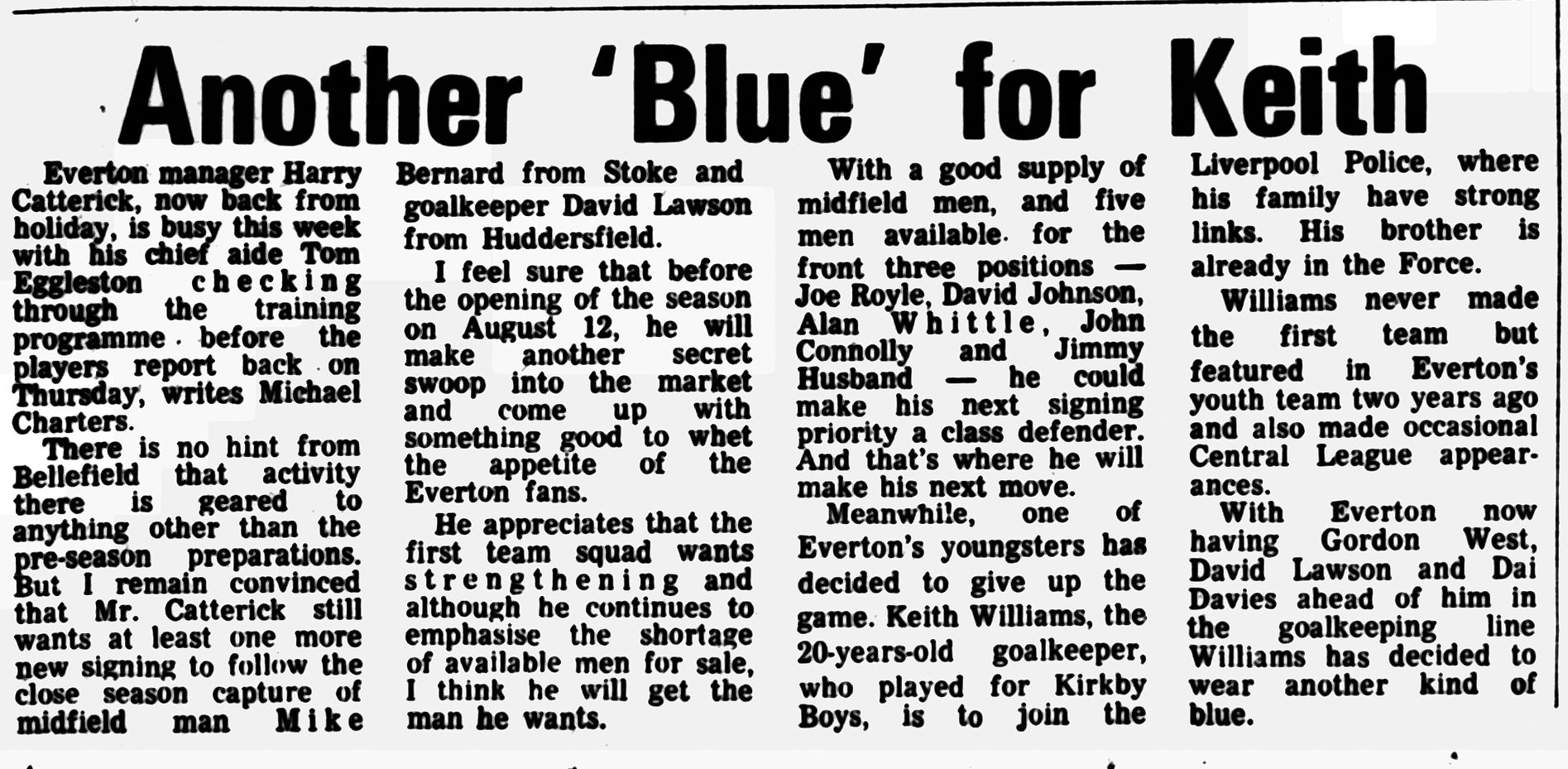
Frustrated by the sale of his hero Andy Rankin, despite the decline of Gordon West, and Catterick’s purchase of inferior replacements, as Keith saw it, in Dai Davies (signed in December 1970) and David Lawson (a British record transfer for a goalkeeper) in June 1972, Keith knew his time at Everton was up. He handed in his resignation in spring 1972, once more boldly marching up to Catterick’s office overlooking the Bellefield training pitches to do so.
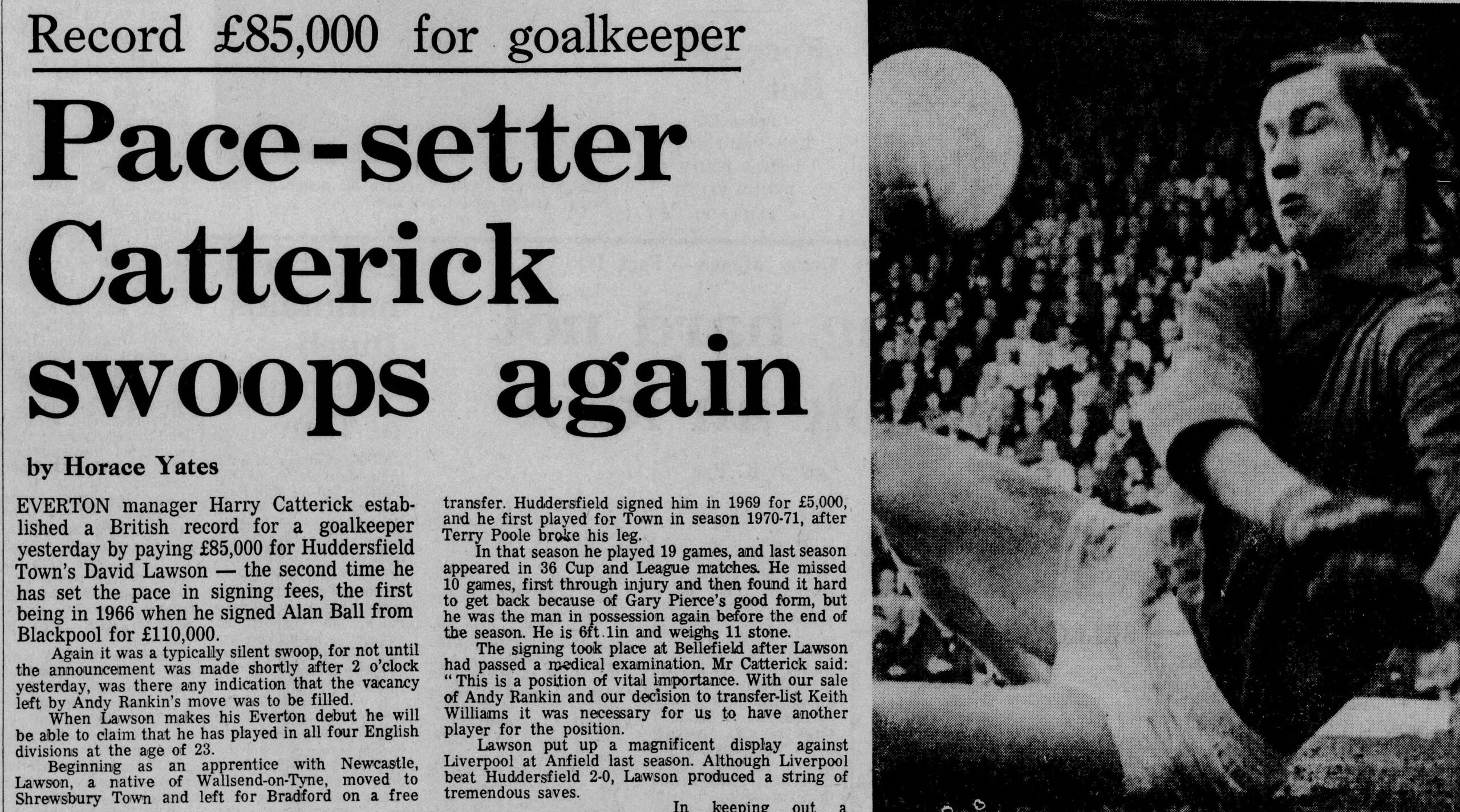
Keith had been performing well in the Everton reserve team. Welsh under-21 international Dai Davies had signed, but then taken time off to get married, while Keith continued to excel. Once Davies returned, he went straight into the reserve team in Keith’s place. After David Lawson joined, Keith, still aged only nineteen and a half, decided it was time to move on. Catterick granted him a free transfer without hesitation, instructing Everton to pay him two weeks wages and stating in the press that the club had made the decision to ‘transfer-list Keith Williams.’
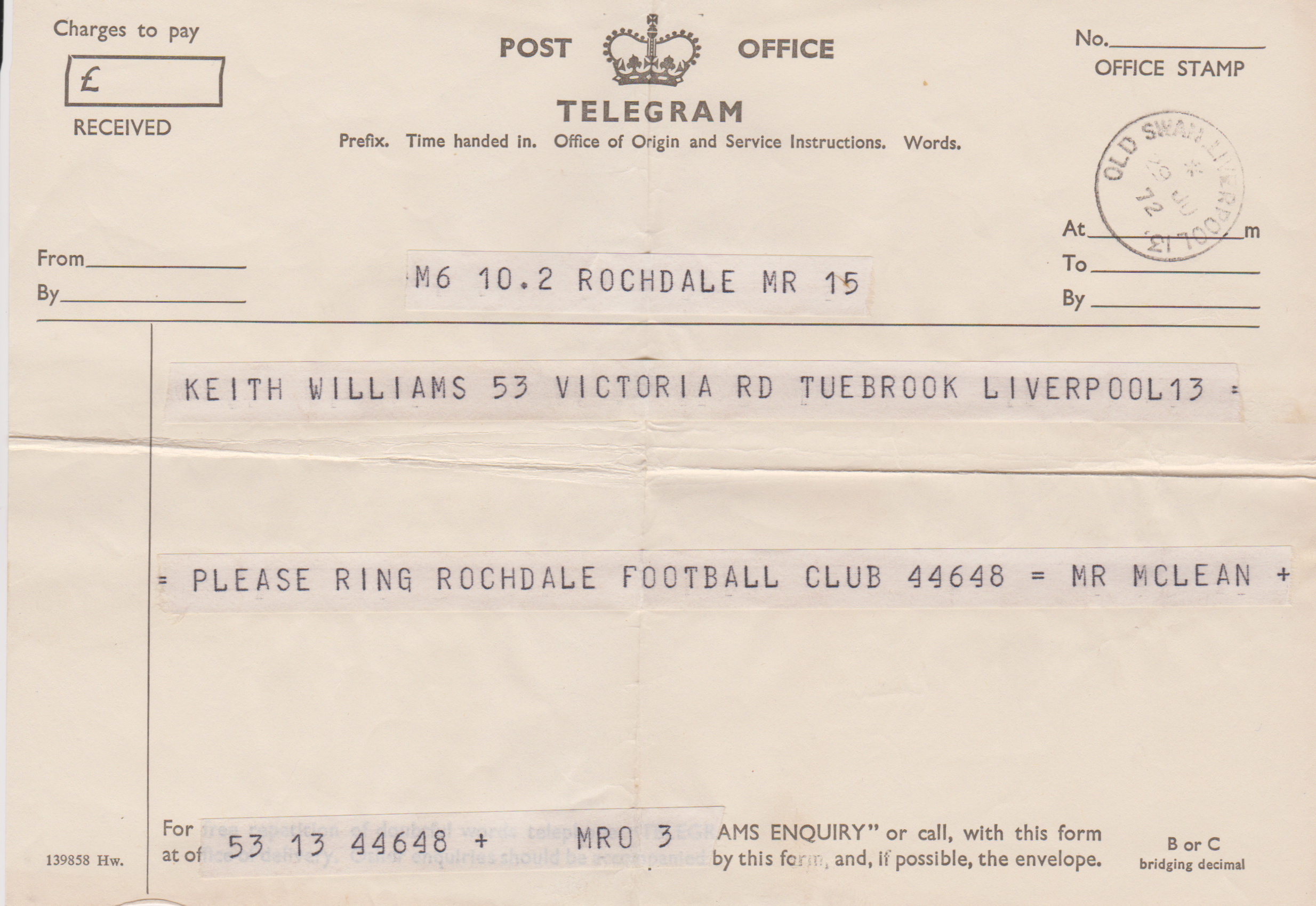
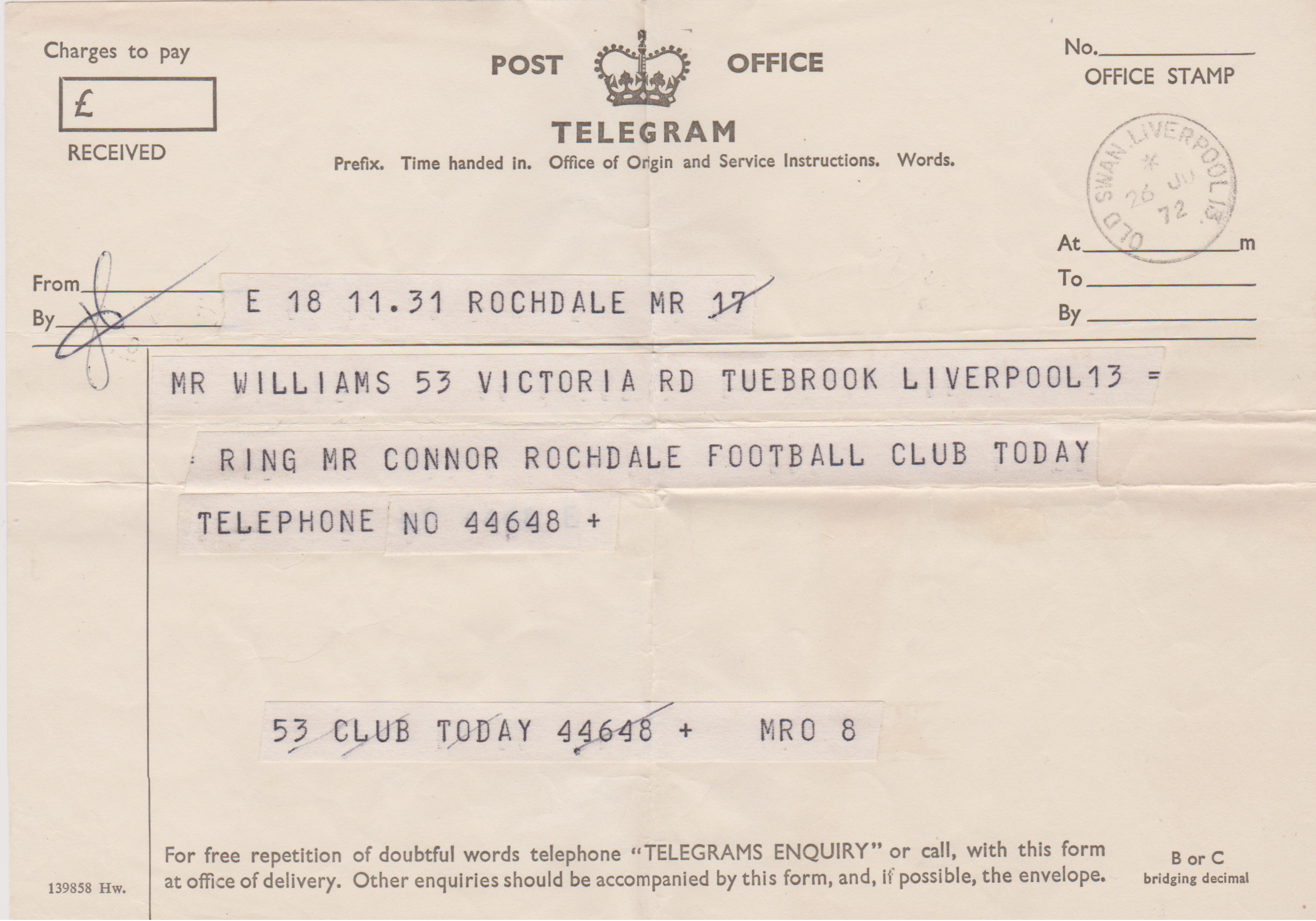
Southport were immediately rumoured in the local press to be interested in signing Keith, and Rochdale also made enquiries via telegram (below), but Keith, who had married Jill and started a family, was keen to remain closer to home and find secure employment.
.
LIVERPOOL AND BOOTLE POLICE FORCE
Keith’s older brother Michael was an officer with the Liverpool and Bootle Police force, a merger of the Liverpool City Police and Bootle Borough Police, which was only in existence from 1967 until 1974. A recruitment drive was in progress, and Keith signed up on 4 August 1972, undertaking three months of training. The force football team was in desperate need of a goalkeeper and Keith slotted into the team alongside Neil Ablett, father of future Liverpool and Everton defender Gary.
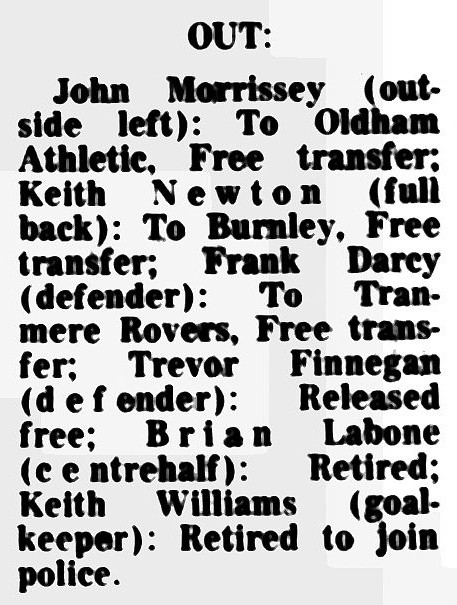
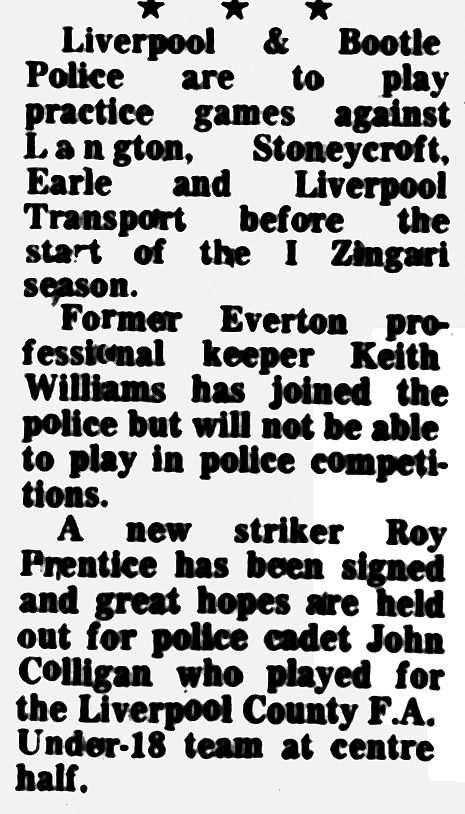
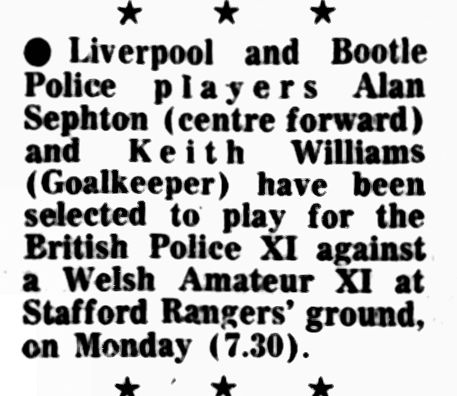
(far left) Liverpool Echo, 12 August 1972; (centre) Liverpool Echo, 26 August 1972; (right) Liverpool Echo,
18 November 1972
.
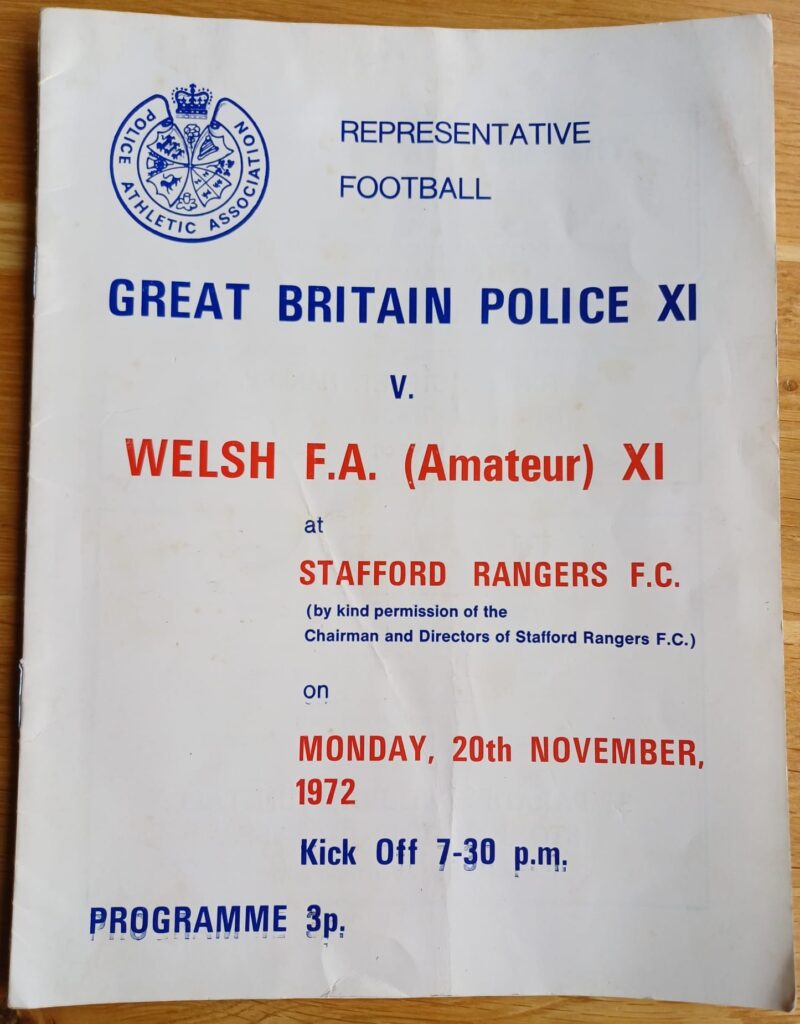
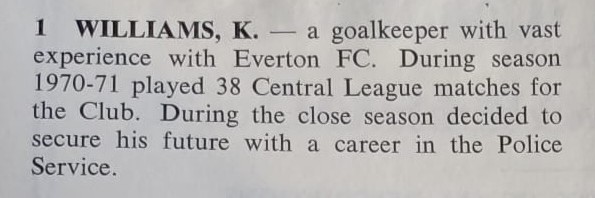
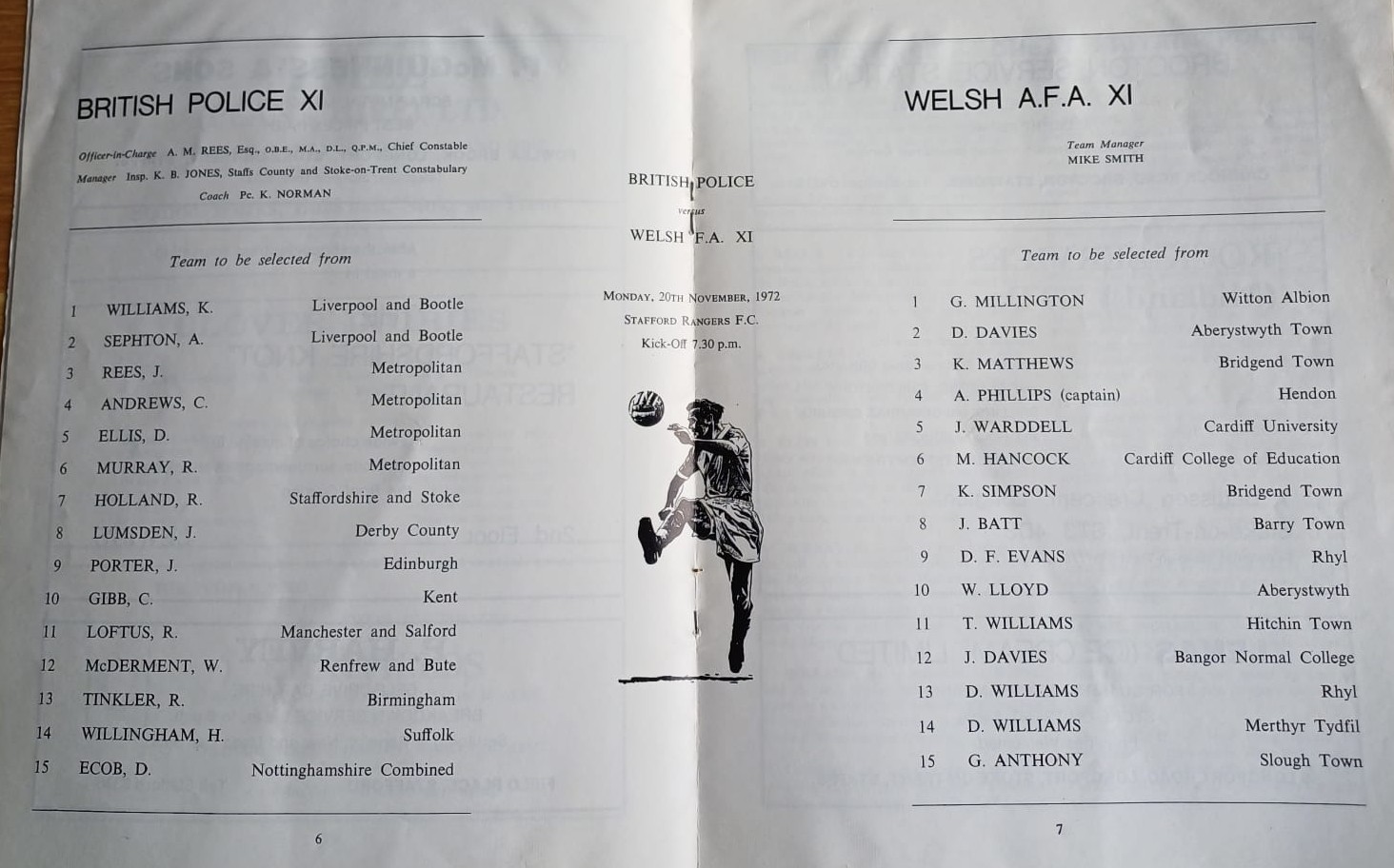
After impressing for the Liverpool and Bootle Police team, the Liverpool Echo of 18 November 1972 reported that Keith had been selected to play alongside his Liverpool and Bootle colleague Alan Sephton for a Great Britain Police XI against a Welsh Football Association (Amateur) XI at the ground of Stafford Rangers Football Club.
After the match, Scotland Yard got in touch with Keith and asked if he would consider a transfer to London to play for their football team. Scotland Yard’s football facilities were top class, and the team was run pretty much like a professional club. Keith requested a house as part of the offer but was only offered a flat. He chose to remain in Liverpool, and left the police shortly afterwards, having served for eight months.
On a side note, while talking about our respective musical taste, Keith mentioned his father had been a big fan of Perry Como. I replied by stating that I too like a lot of the old crooners and learned to sing with my grandfather while watching his favourite movie Paint Your Wagon – a western comedy musical starring Clint Eastwood, Lee Marvin and Jean Seberg, and notable for the song Wand’rin’ Star which went to number one in the United Kingdom in March 1970 shortly after the film came out. Keith recalled going to watch the film at the Carlton Theatre, near where he lived at 53 Victoria Road in Tuebrook.
WREXHAM
After his brief sojourn with the police, Keith’s own footballing equivalent of Lee Marvin’s nomadic character Ben Rumson’s wanderings were about to begin as he set off on an odyssey of clubs on either side of the Welsh border.
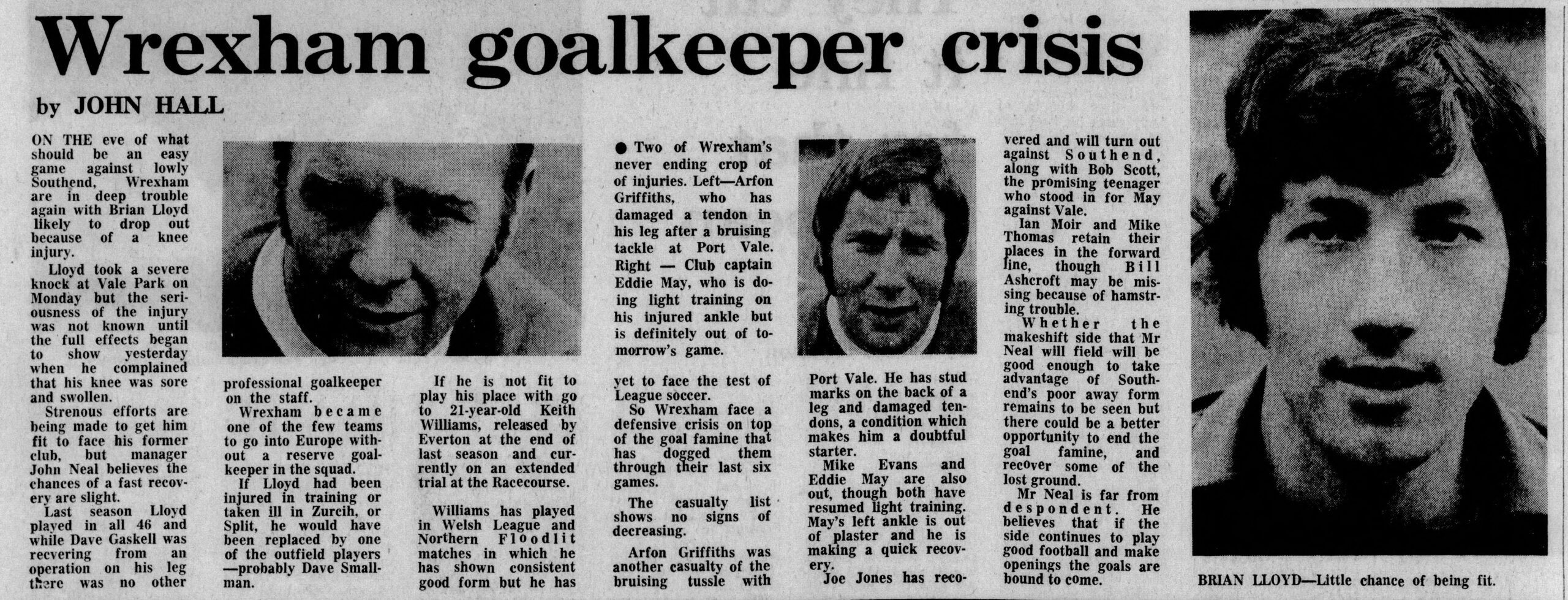
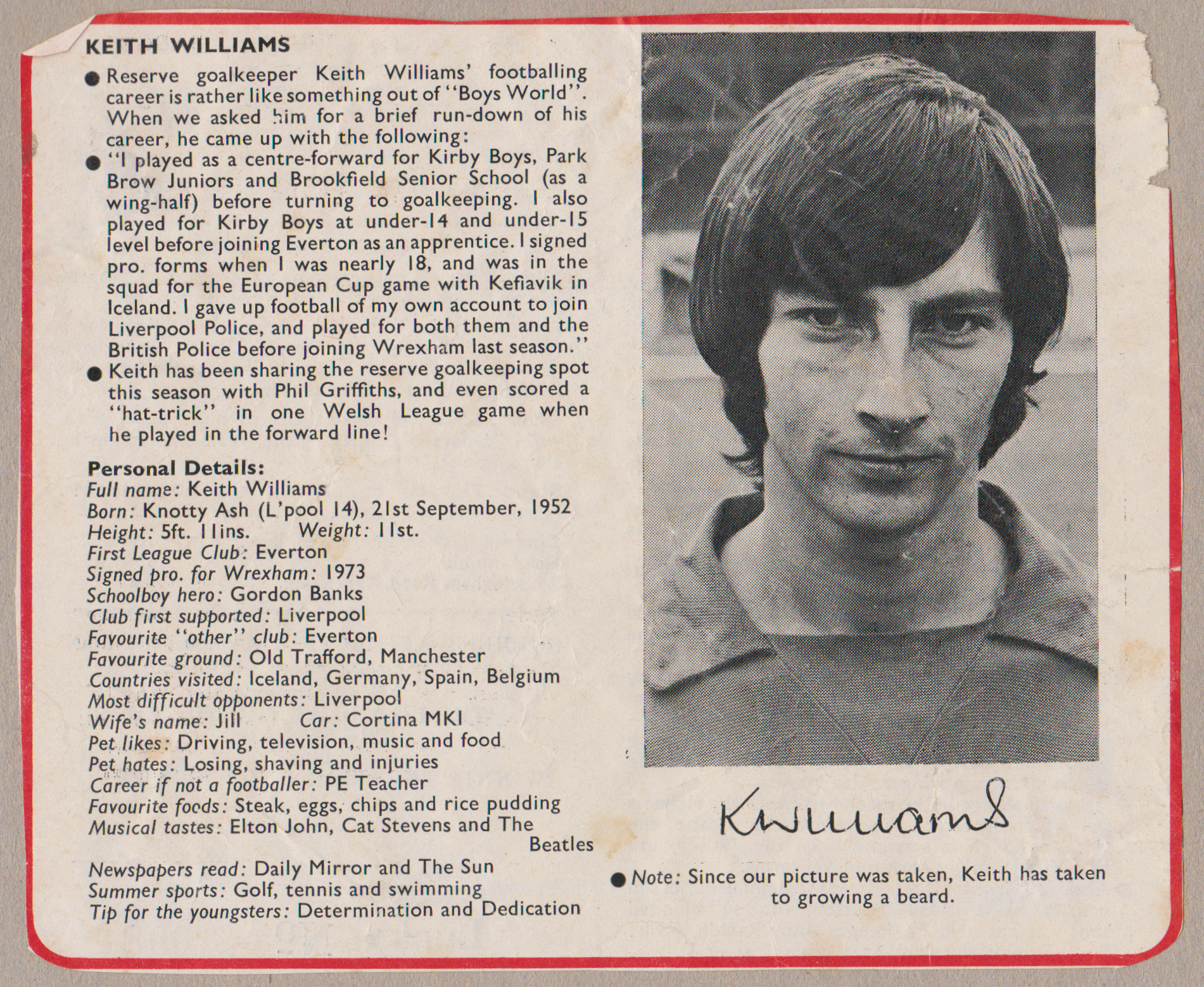
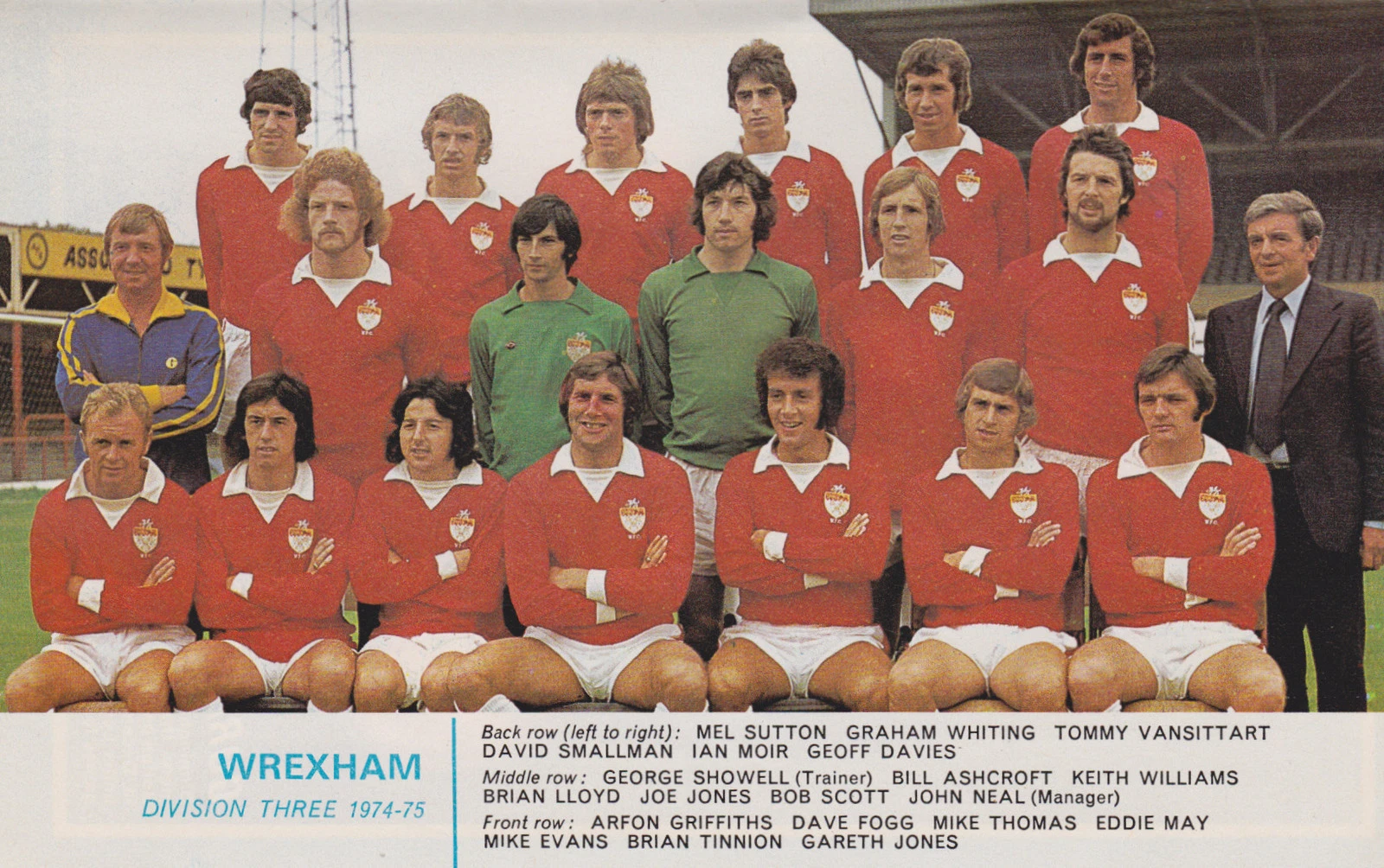
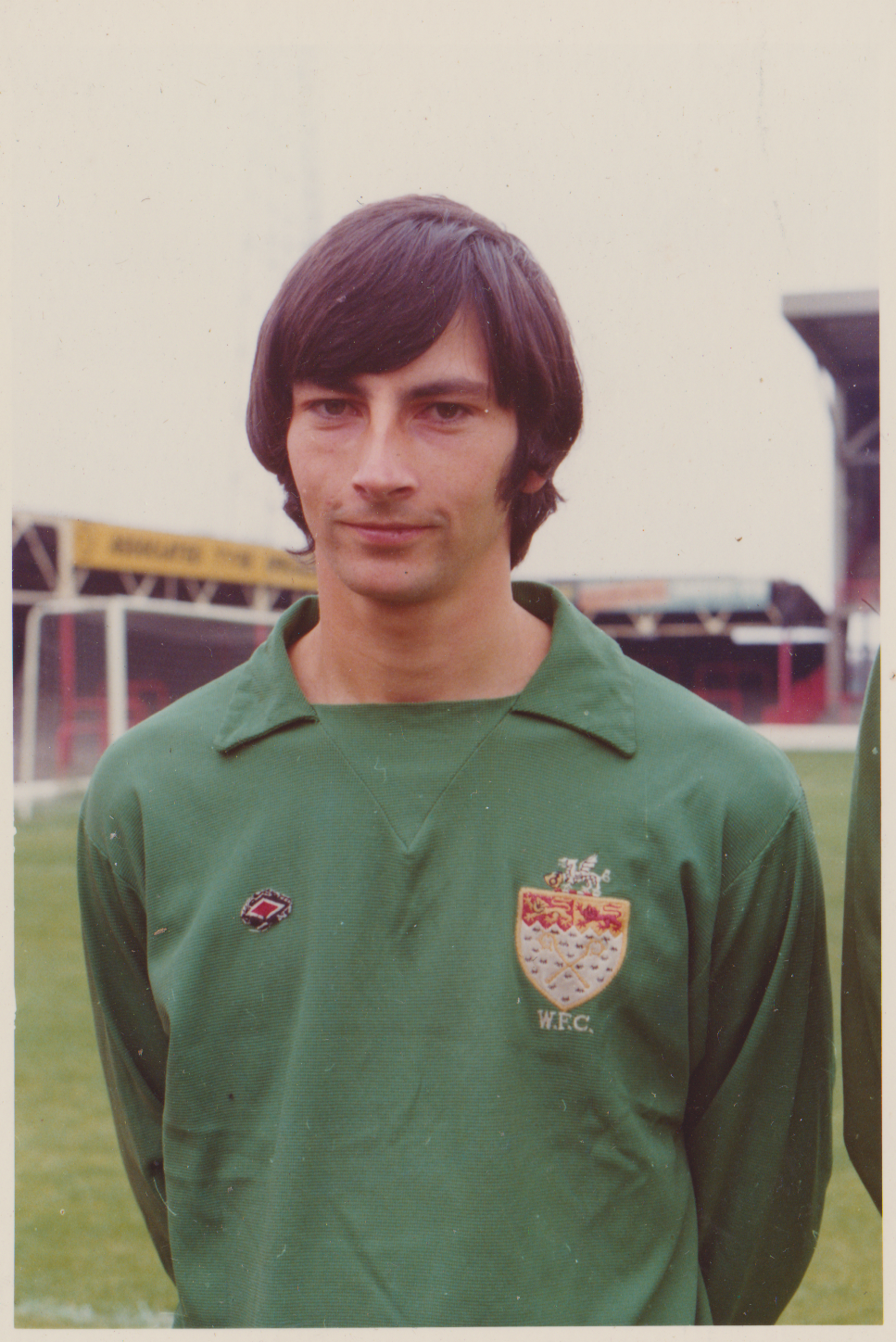
The manager of the British Police team Keith Williams represented, recommended him to the Wrexham manager John Neal, and Keith was invited on an extended trial at the club, where he played for the reserve team in Welsh League and Northern Floodlit matches. The English Third Division club’s first-choice goalkeeper Dave Gaskell, a former Busby Babe at Manchester United (he was not on the fateful trip to Munich in 1958), was struggling with his eyesight and back-up custodian Brian Lloyd, a qualified architect, was struggling with injury early in the 1973/74 season. Lloyd had a friend in the police who supplied him with cotton gloves which he occasionally wore in matches.
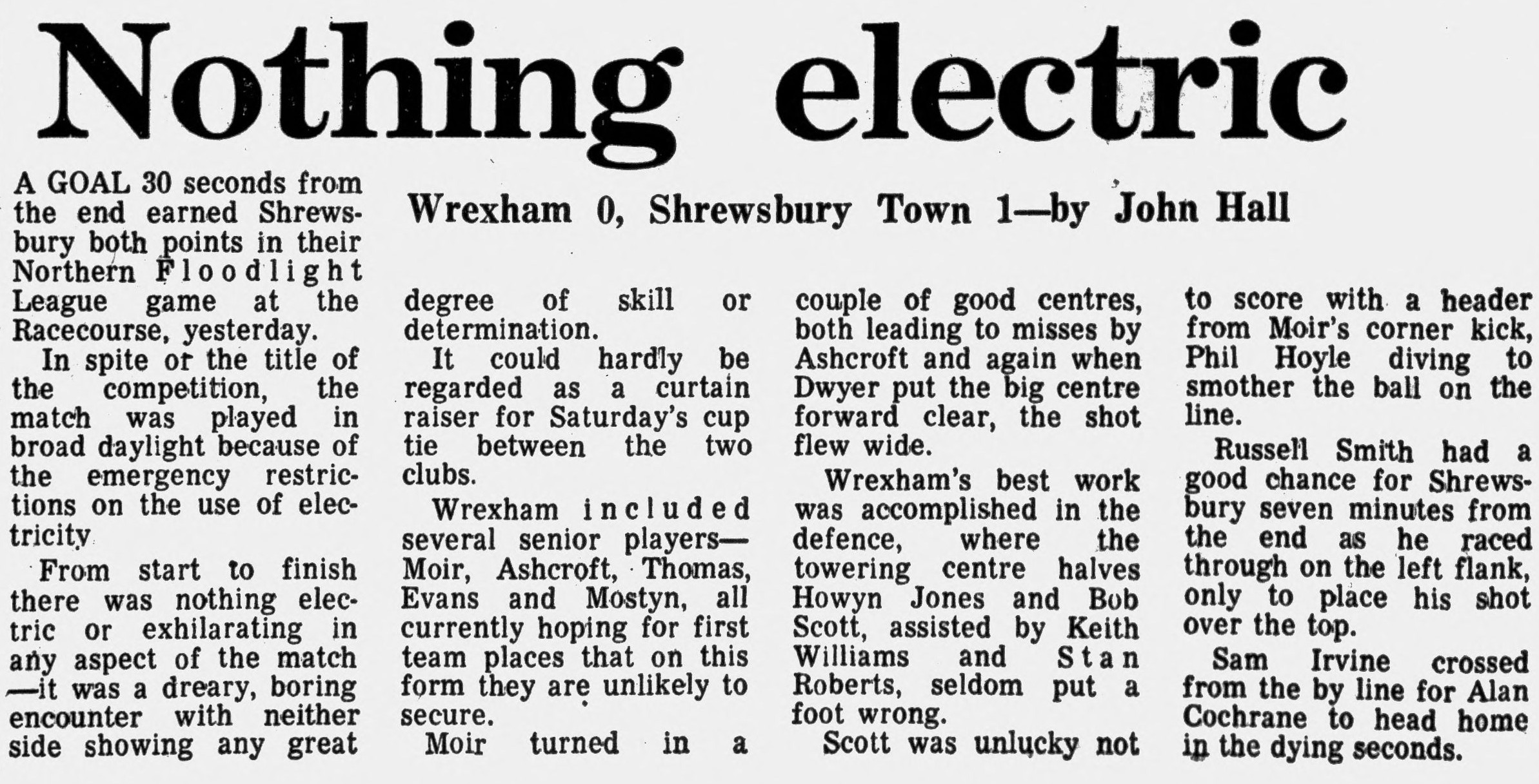
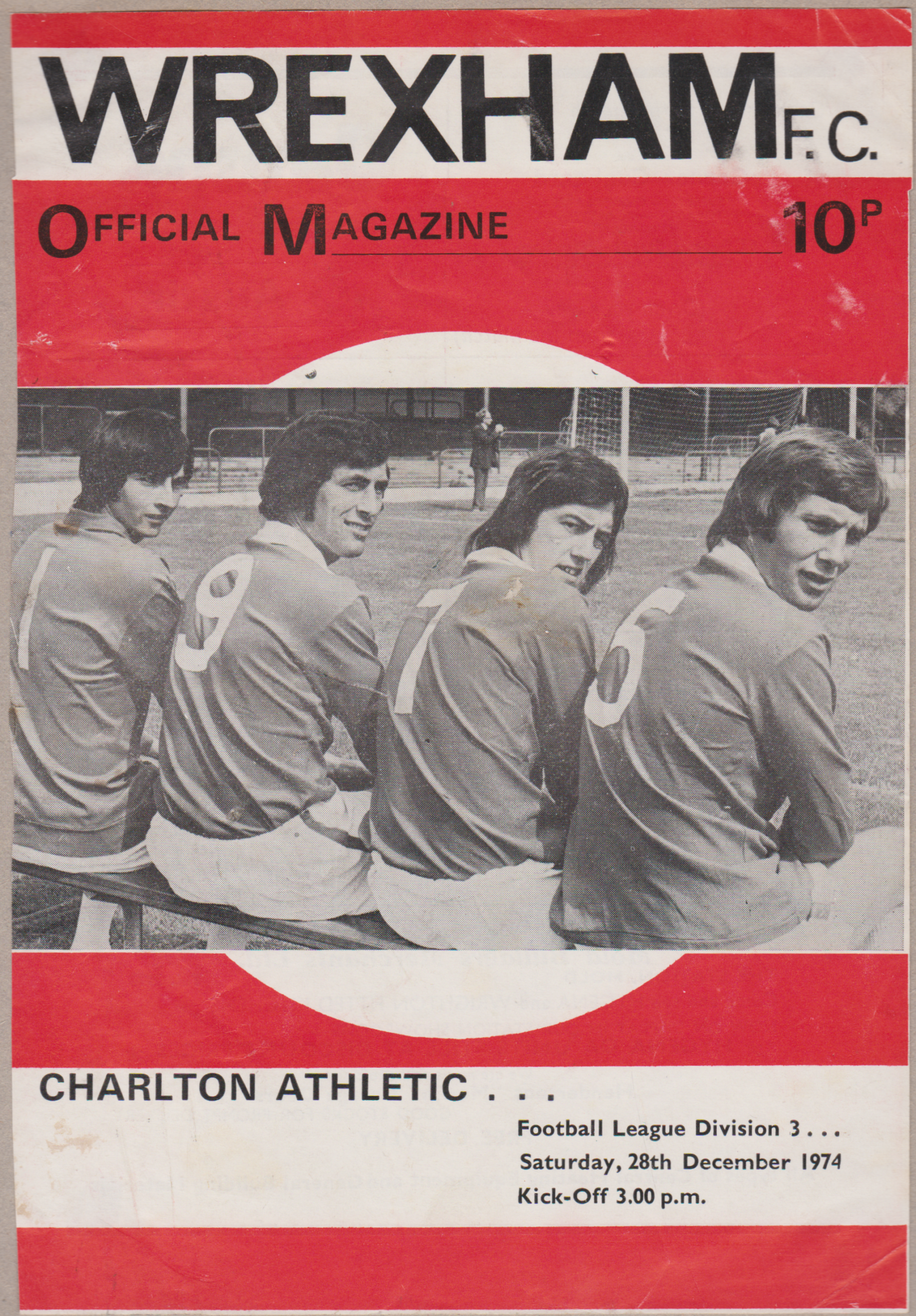
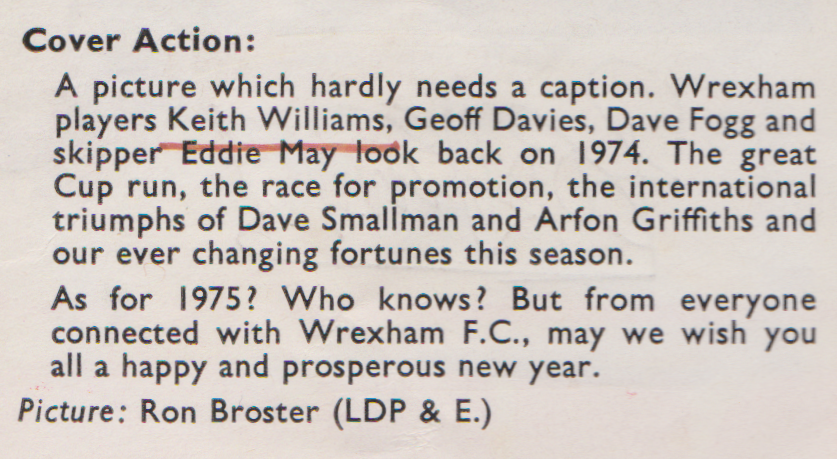
Keith played for Wrexham reserves for two years (1973-75). He was at the club alongside future Everton players Mickey Thomas and David Smallman (who was a volunteer back-up goalkeeper during the injury crisis) and future Liverpool player Joey Jones. Another clubmate and close friend was fellow Liverpudlian, striker Graham Whittle, the younger brother of Keith’s former Everton colleague Alan. Graham Whittle played more than 300 times for Wrexham (1970-81). Dave Fogg, also a Scouser, who had been playing as an amateur for Wrexham, turned professional just before Keith joined, having broken through to the first team at the same time as Joey Jones. Fogg would serve as a youth coach at Everton in the 1990s.
While at Wrexham, Keith faced a young Neville Southall playing in goal for Llandudno Swifts several times. He fondly recalled what a strong impression the future Everton legend made:
‘He was only fifteen or sixteen years old at the time, small, lithe but brilliant. Very agile and athletic.’
Wrexham reserves gave the young goalkeeper from Llandudno plenty of practice, beating them by double-figure scorelines, but it was obvious even then that Southall was a special talent.
Keith occasionally played as a midfielder or striker for Wrexham reserves, once scoring a hattrick versus Rhos Aelwyd. Much to his frustration, the local newspaper reported that ‘Dangerman Des Roberts’ had scored the three goals. Keith’s fellow goalkeeper Roberts had left Wrexham a year earlier!
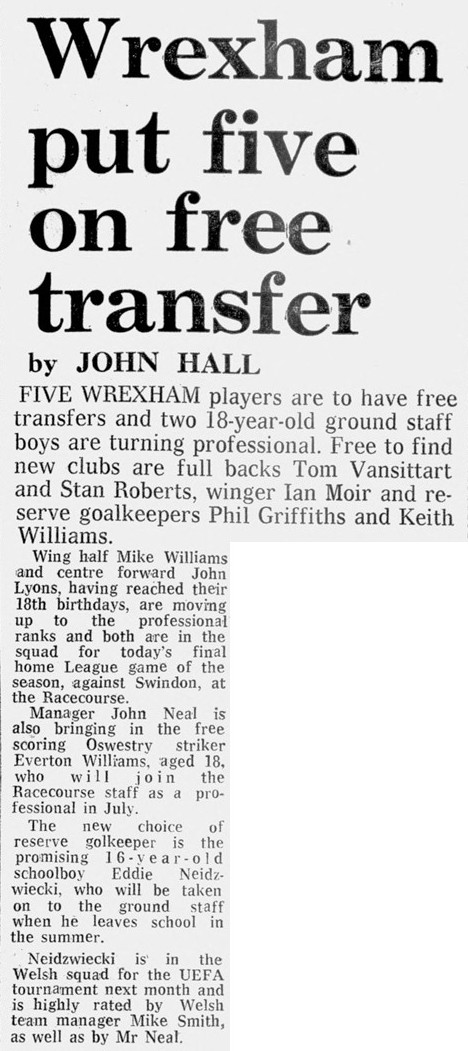
Once again, the harsh reality of life as a professional footballer reared its head. Having received assurances about his future from manager John Neal, Keith gave up his council house in Liverpool and relocated to Wrexham during the 1974/75 season. At the end of the season Neal abruptly released him, promoting 16-year-old Wales youth international goalkeeper Eddie Neidzwiecki to the reserves.
.
OSWESTRY TOWN
Keith Williams’ Oswestry Town contract, 16 August 1975:
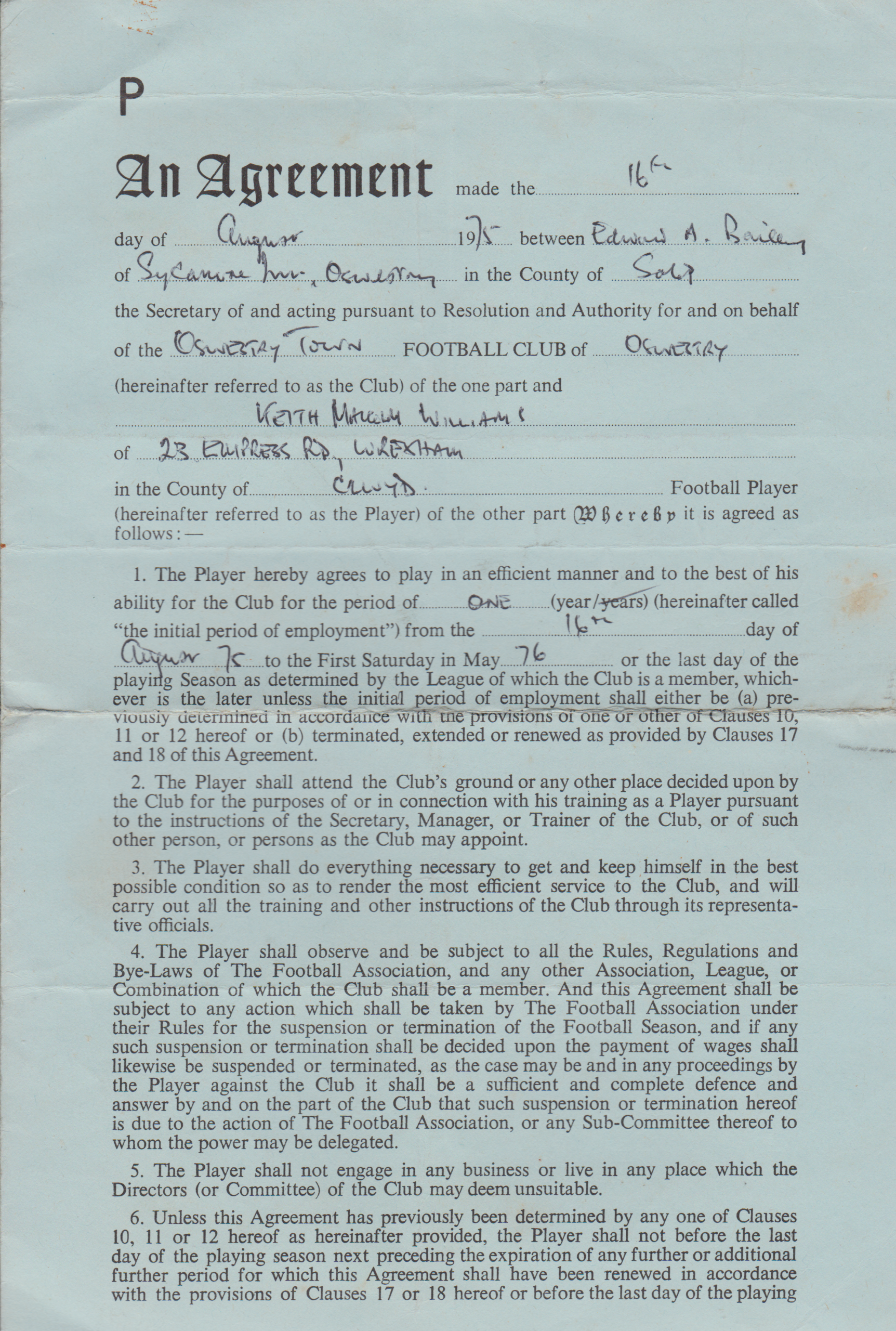
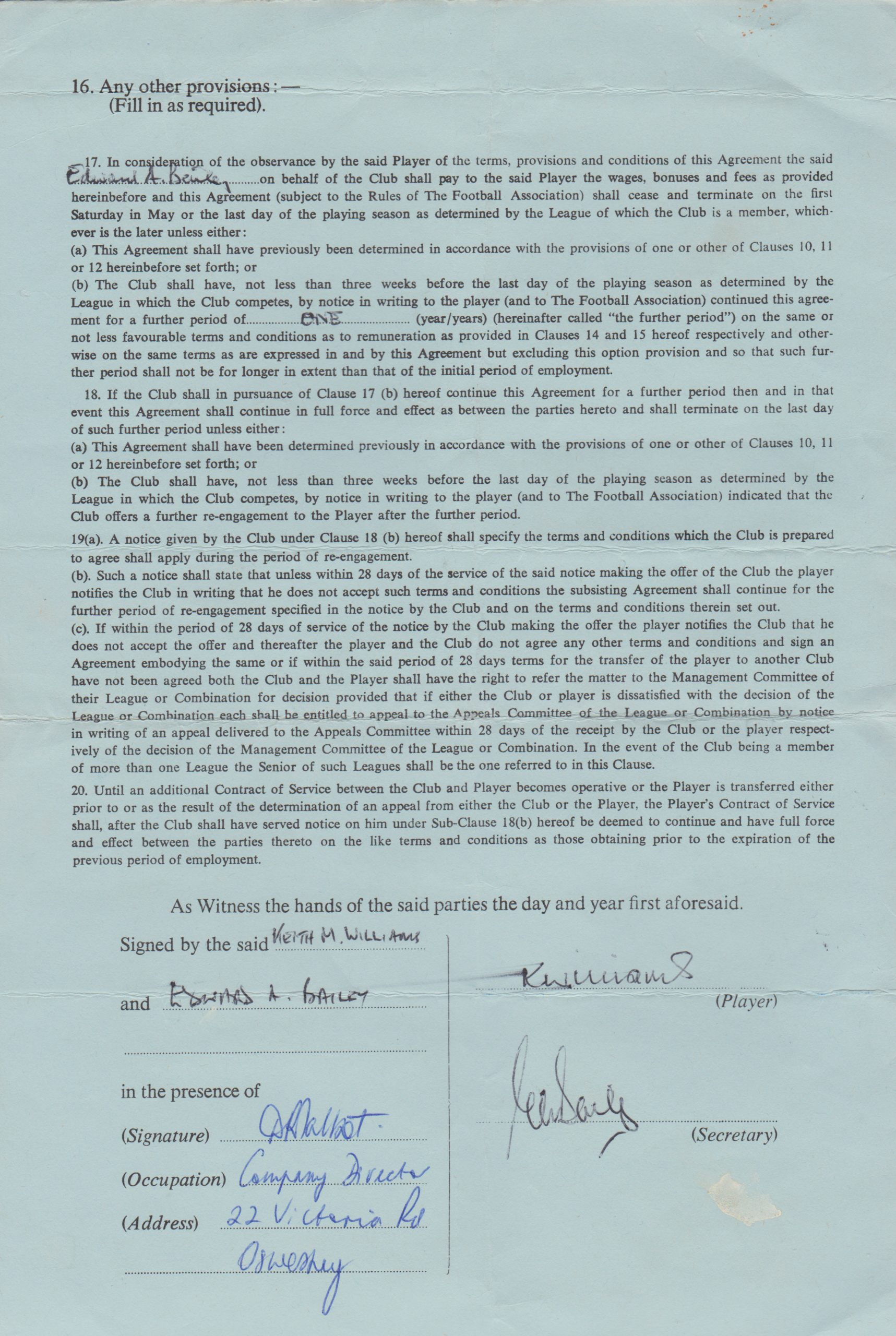
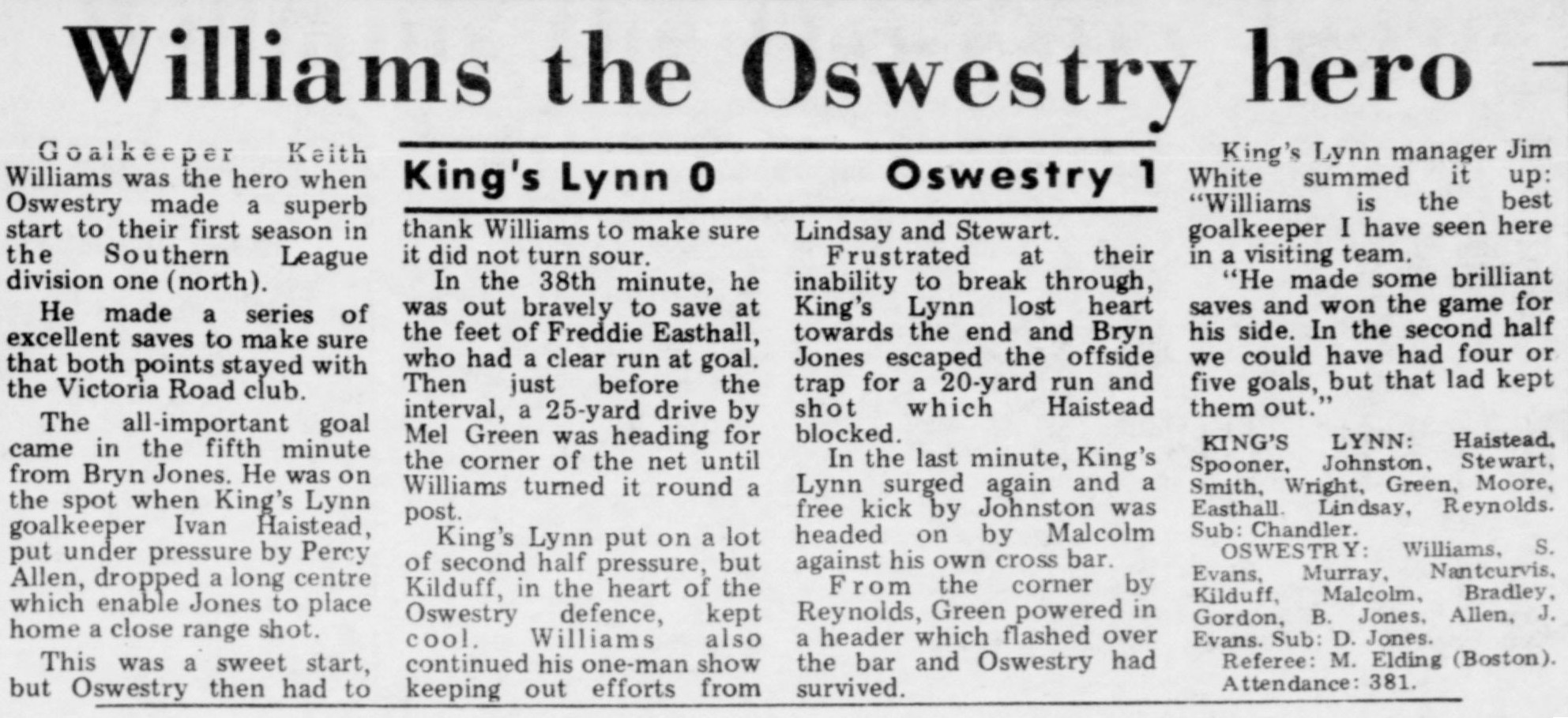
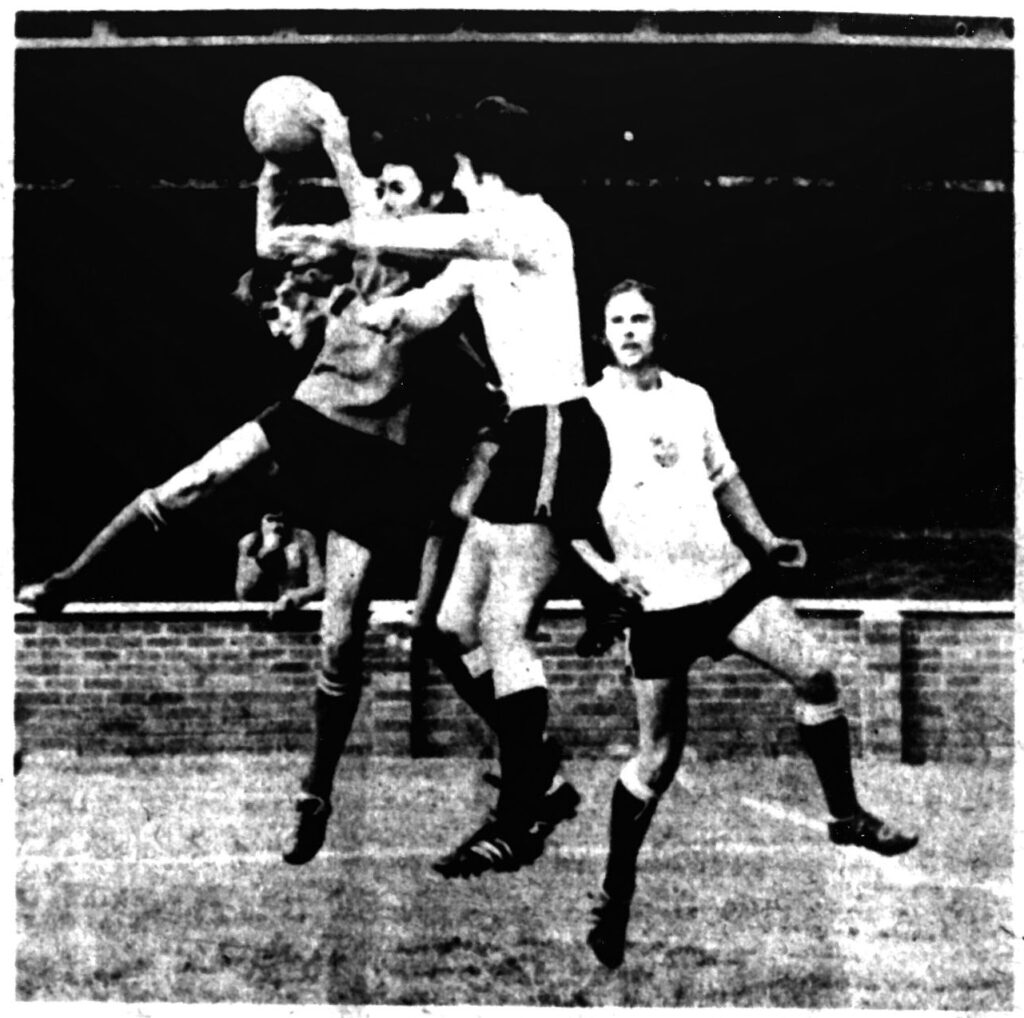
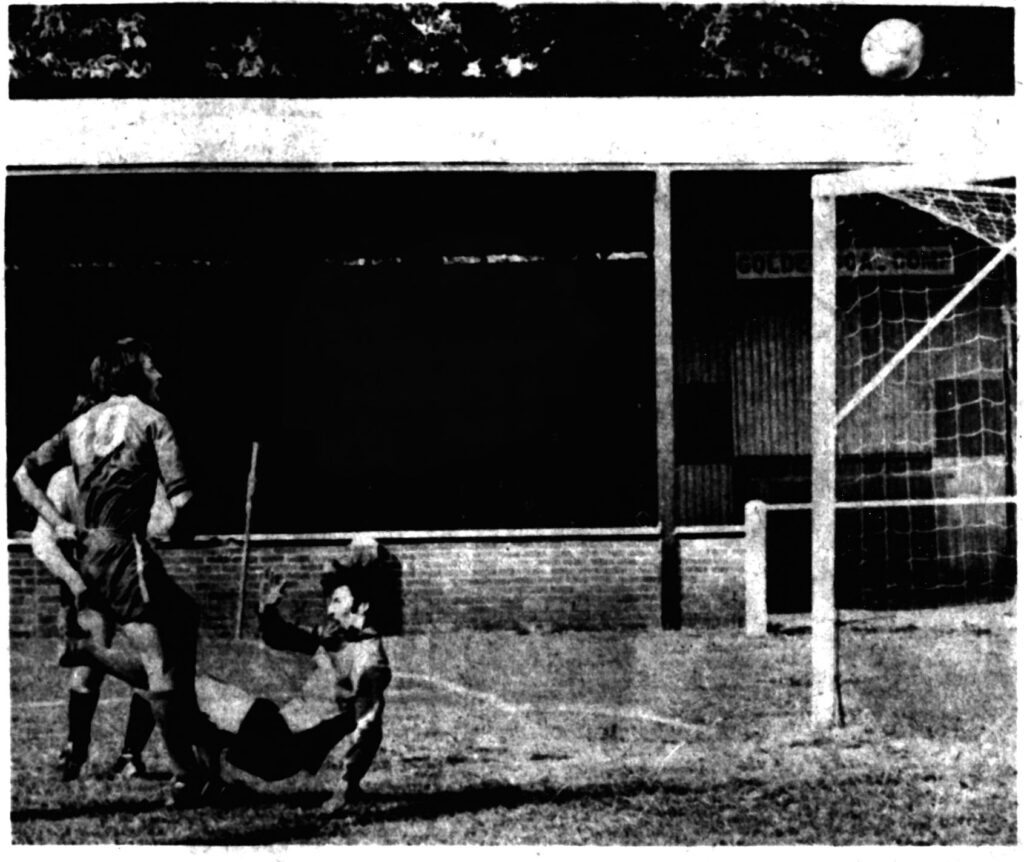
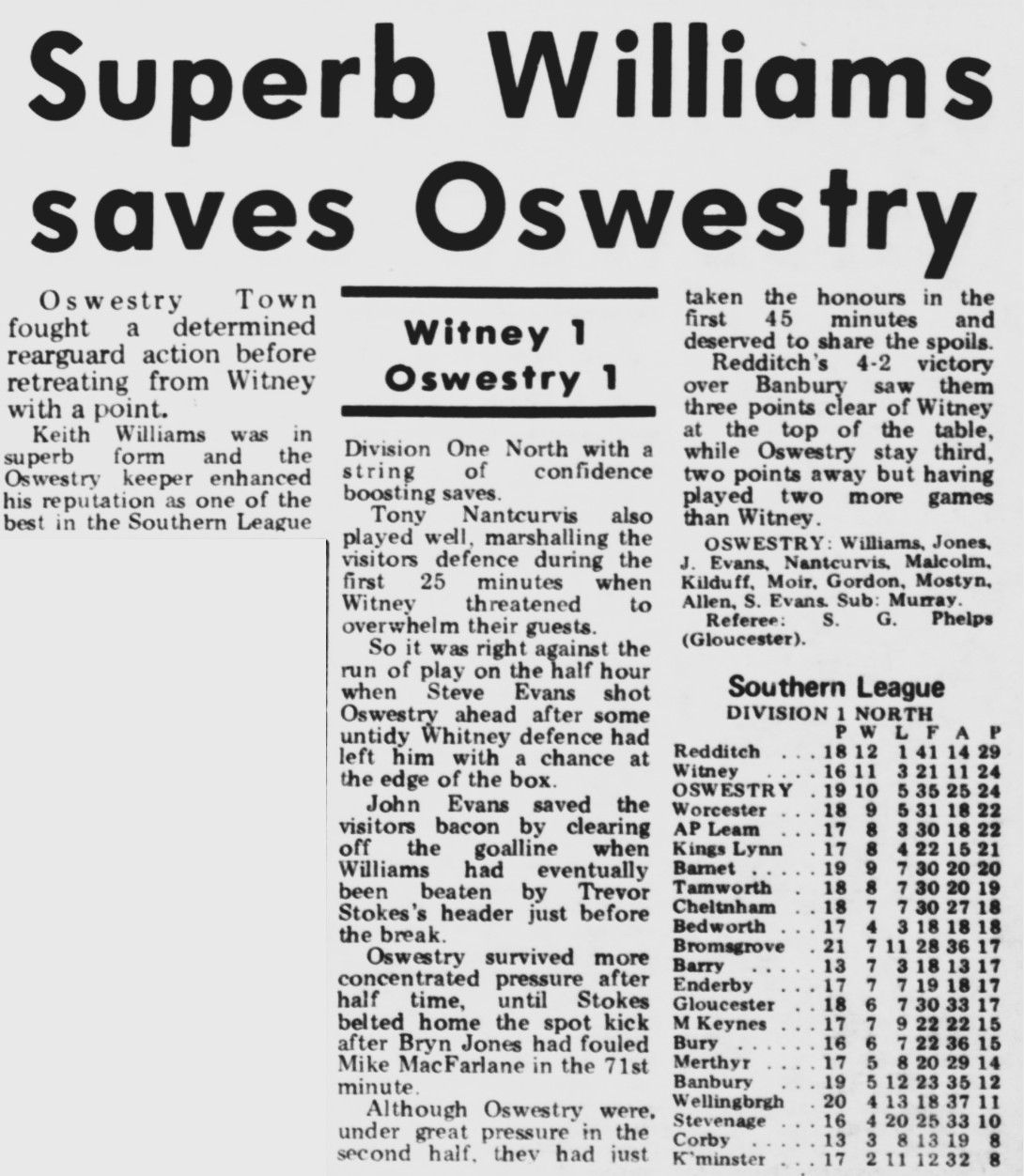
Keith Williams signed for Oswestry Town on 16 August 1975. The following day he made his debut at King’s Lynn, starring in a 1-0 victory. The Shropshire Star headline in the 18 August issue read ‘Williams the Oswestry hero’ and the opening lines of the match report read as follows:
‘Goalkeeper Keith Williams was the hero when Oswestry made a superb start to their first season in the Southern League division one (north). He made a series of excellent saves to make sure that both points stayed with the Victoria Road club.’
After the match King’s Lynn manager Jim White paid a glowing tribute to Keith’s performance:
‘Williams is the best goalkeeper I have seen here in a visiting team. He made some brilliant saves and won the game for his side. In the second half we could have had four or five goals, but that lad kept them out.’
Looking back, it was during the first half of the 1975/76 season at Oswestry Town that Keith believes he enjoyed his most consistent period as a goalkeeper. He was also employed by the club as promotions manager. Unfortunately, all was not well behind the scenes at the Shropshire club.
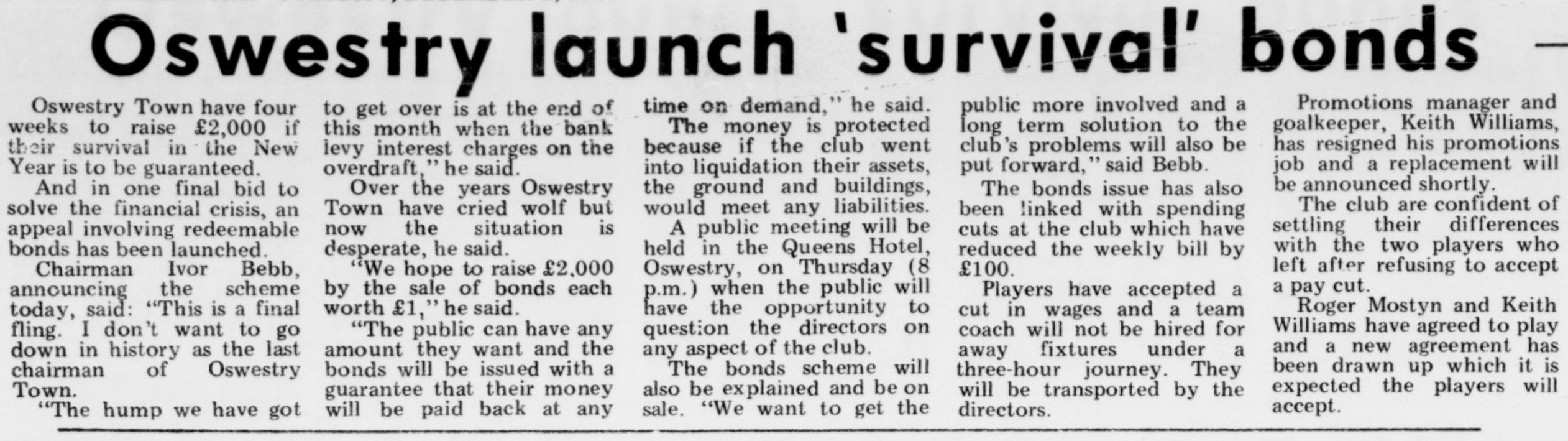
Keith’s time in Shropshire was cut short at Christmas 1975, as financial uncertainty engulfed the club. After initially going on strike over pay and conditions, having accepted a wage cut and resigning from the promotions role he had been engaged with at the club, Keith refused to play in a home match against Gloucester City and asked to be released.
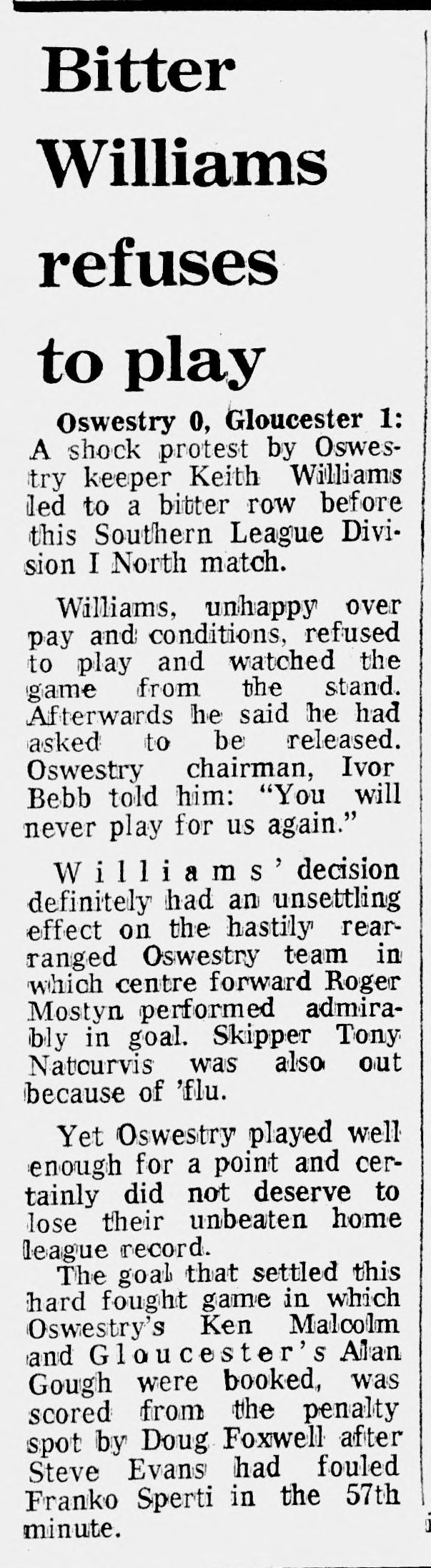
After Gloucester won the match 1-0, with striker Roger Mostyn in goal for Oswestry, club chairman Ivor Bebb was quoted in the Liverpool Daily Post (Welsh Edition) of 22 December 1975 as having told Keith: ‘you will never play for us again.’ As Keith had shown as a youngster at Everton when confronting no less an authority than Harry Catterick, he was not afraid to stand up for what he believed in and speak his mind.
.
RHYL
Keith signed for Cheshire County League side Rhyl in late July 1976, having been recommended to the club by his old Wrexham teammate Brian Lloyd. He had turned down a move back to the English Third Division with Walsall that summer, preferring to stay closer to home. The club helped him get a job and offered him a flat to live in, and he signed alongside three of his former Oswestry teammates, including striker-cum-goalkeeper Roger Mostyn. Llandudno-born winger, Gerry Humphreys, a professional on Everton’s books when Keith started his apprenticeship, was also a teammate at Rhyl.
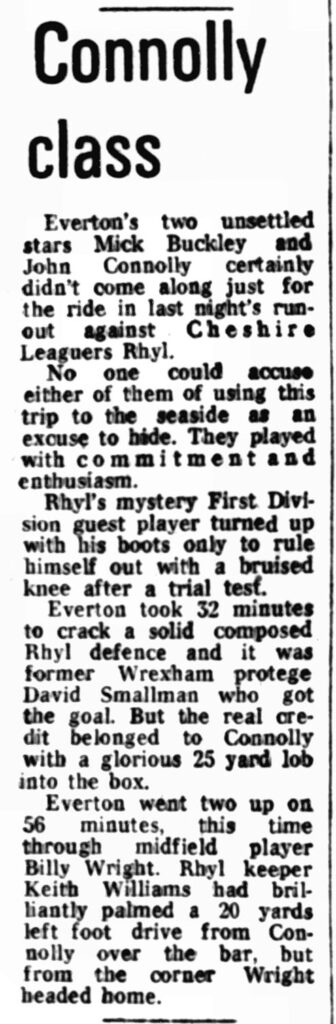
After making his debut for Rhyl in a friendly against local rivals Bangor City on 4 August, Keith lined up the following week against, of all clubs, Everton. The Toffees won 2-0 thanks to goals from another old Wrexham acquaintance, Wales striker David Smallman and Billy Wright but the Liverpool Daily Post match report on 12 August 1976 ended with the following:
‘Rhyl keeper Keith Williams had brilliantly palmed a twenty yards left foot drive from Connolly over the bar, but from the corner Wright headed home.’
The Liverpool Echo of 21 August was full of praise in its report on Rhyl’s home match with Horwich RMI:
‘It was then the turn of Rhyl ‘keeper Keith Williams to save his side, with a magnificent one-handed stop.’
And sympathetic as Keith faced a barrage at Winsford United just days later. Winsford ran out 8-2 winners, but:
‘…the visitors were more unlucky than unskilled… in fact the Rhyl side looked accomplished in most departments and none more so than goalkeeper Keith Williams who, despite the scoreline, pulled off some great saves.’
A ‘brilliant fingertip save’ by Keith Williams in a 3-1 win at New Brighton in October helped Rhyl into the third qualifying round of the F.A. Cup, where bad luck cost both goalkeeper and team in a replayed tie with Northwich Victoria.
1 September 1977
A week later, Keith kept a clean sheet as Rhyl beat his old club Oswestry Town 2-0 to progress in the F.A. Challenge Trophy. He was highlighted as ‘one of the few successes this season’ in a Liverpool Echo report on 17 December 1976, in a report which stated he was struggling with hip injury and facing a fitness test prior to Rhyl’s game at Formby. In January, Keith missed a game against another of his old clubs, Wrexham, because of work commitments.
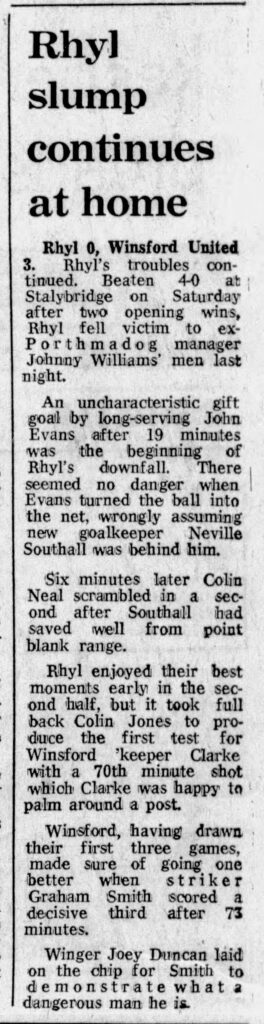
At the start of the 1977/78 season, Keith was joined in the Rhyl team by a striker with the same surname as him and a rather familiar Christian name, in Jamaican striker Everton Williams. Around this time, Keith injured his finger after trapping it in a door. His understudy Jim Crinigan struggled in Rhyl’s match at Stalybridge Celtic and manager George McGowan brought in additional cover, as was reported in the Liverpool Daily Post (Welsh Edition) on 3 September 1977:
‘Good news is that first-choice ‘keeper Keith Williams is fit again after a finger injury and takes over from new signing Neville Southall.’
Rhyl’s rookie goalkeeper, on loan from Bangor City and a fortnight short of his twenty-first birthday, had made his Rhyl debut days earlier on 31 August in a 3-0 home defeat versus one of his future clubs, Winsford United. At the end of the season Neville Southall signed for Conwy United.
In the late-1980s, Keith visited Everton’s Bellefield training ground to meet his old friend Mike Lyons, with whom he used to share lifts to training. Neville Southall walked in at one point and Lyons pointed to Keith and asked Neville if he recognised him. The best goalkeeper in the world replied: ‘That’s Keith Williams!’
With Rhyl continuing to struggle, manager George McGowan left the club in early October 1977 and reserve team coach Eddie Garrett was placed in temporary charge.
Later that month Bangor City knocked Rhyl out of the F.A. Cup despite a man of the match display from Keith Williams, before Conwy United knocked them out of the Welsh Cup on penalties just days later.
Former Liverpool players Ron Yeats and Tony Hateley arrived as player-manager and player-coach in December, but Keith did not get on well with either of them. He sustained a shoulder injury in January and American goalkeeper Marine Cano, a former teammate of Yeats at Los Angeles Skyhawks, was drafted in for a few matches as cover. Kevin O’Brien, another former Everton apprentice and future youth team goalkeeping coach back at Everton, was signed by Ron Yeats from New Brighton in March 1978 and Keith, still recuperating from the shoulder injury, never played for Rhyl again.

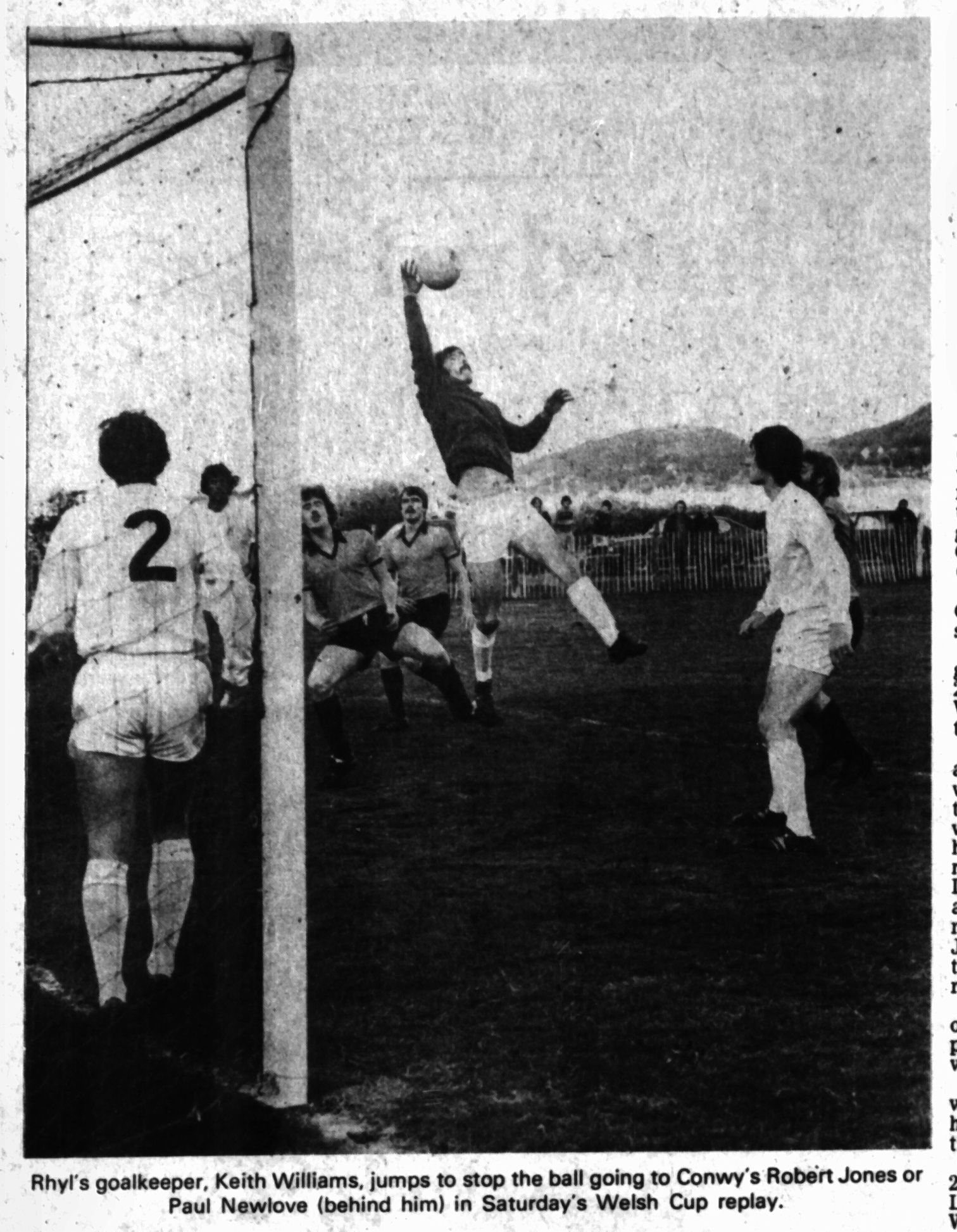
‘Williams stars as tenacious Rhyl hold out – A mixture of good luck, tenacious defence
and brilliant goalkeeping kept the goal hungry Chorley forwards at bay on Saturday.’
(above) North Wales Weekly News, 3 November 1977
(Conwy United won 7-6 on penalties in the Welsh Cup second round replay)
.
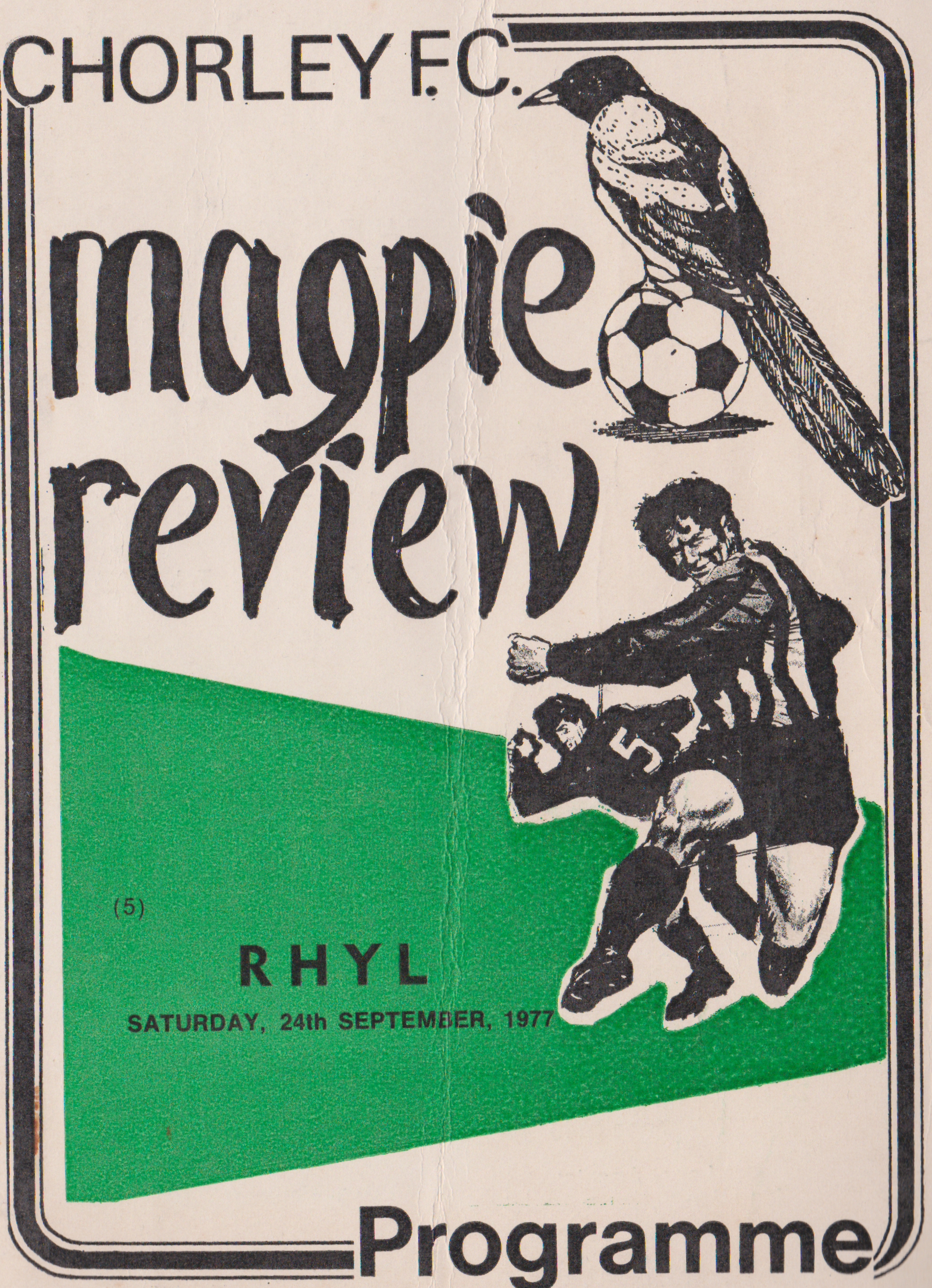
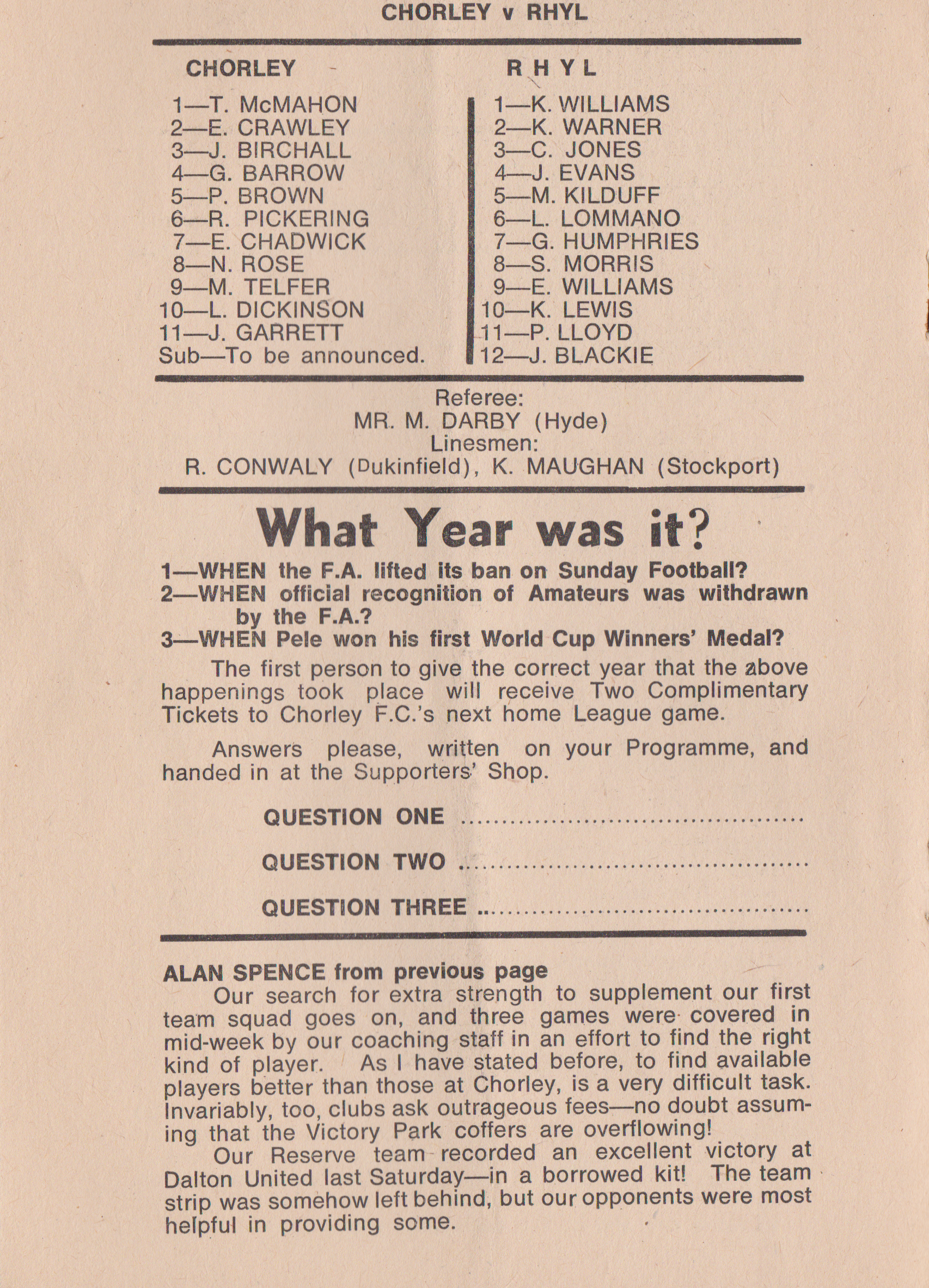
Chorley versus Rhyl programme, 24 September 1977:
.
CAERNARFON TOWN
The next stop on Keith Williams’ odyssey of North Walian clubs was the reigning Welsh League champions, Caernarfon Town. He was signed in June 1978 by the club’s new manager (and Keith’s fellow former Rhyl man) John Evans. After two seasons in a struggling side at Rhyl, it must have been a pleasure to keep goal for a team which cruised to another first-place finish and a first league title of his career. Keith could have pulled up a deck chair and asked a ballboy to fetch him a cuppa in November, as his teammates racked up an astonishing 13-0 lead on the home ground of the hapless Llandudno Swifts – their third double-digit defeat in a row (including a 13-0 home win for Caernarfon a fortnight earlier!).
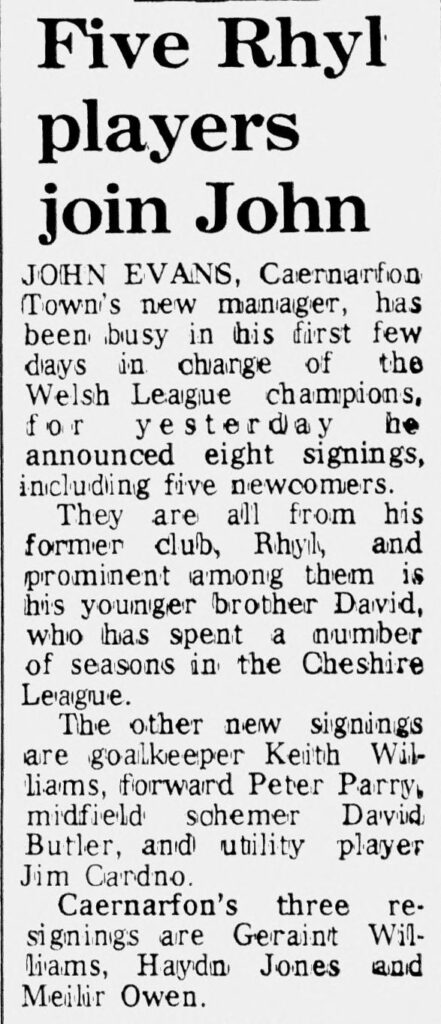
and (Welsh Edition) 4 September 1978 (right)
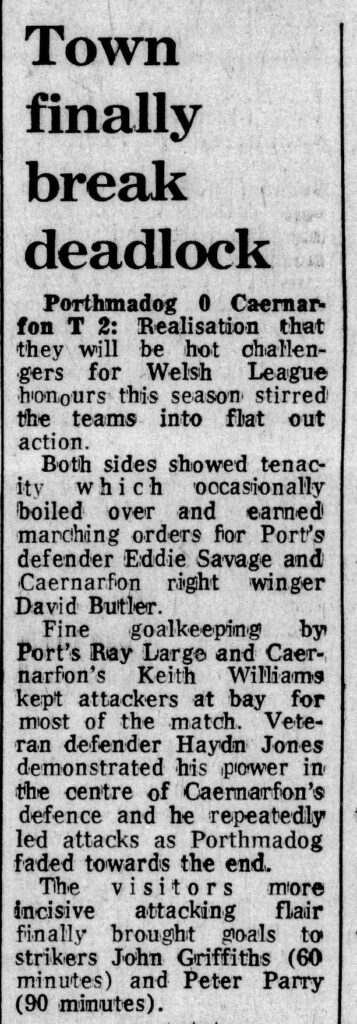
After finishing first and second in consecutive seasons in the Welsh Football League North, Caernarfon Town successfully applied to join the Lancashire Combination in the English football pyramid in 1980. They were promoted as champions to the Northwest Counties League (NWCL) Division 2 in 1981/82 and went up as runners-up to the NWCL Division 1 at the end of the 1982/83 season, Keith’s last with the club. They also reached the semi-finals of the Welsh Cup in 1983, losing 2-0 on aggregate over two legs to Football League Division 3 club Wrexham, who went on to lose 2-1 in the final to Shrewsbury Town. Below are details from the first leg, at The Oval:
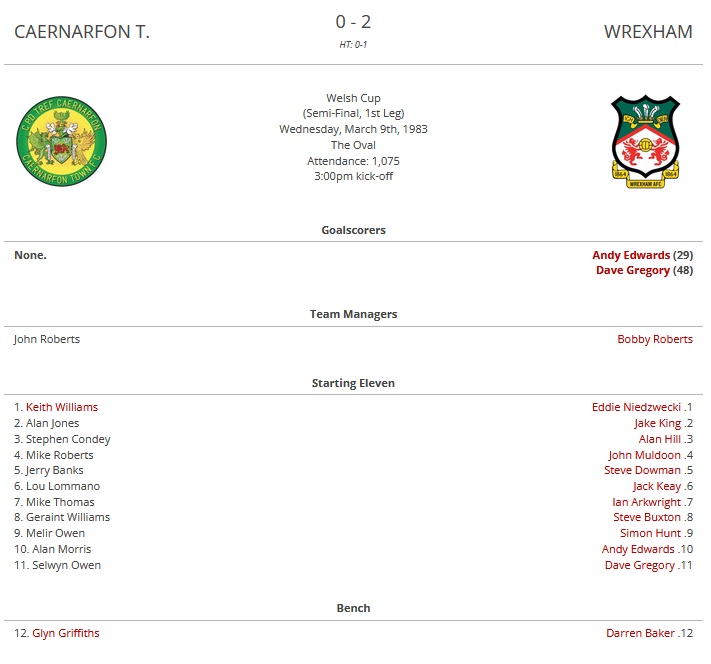
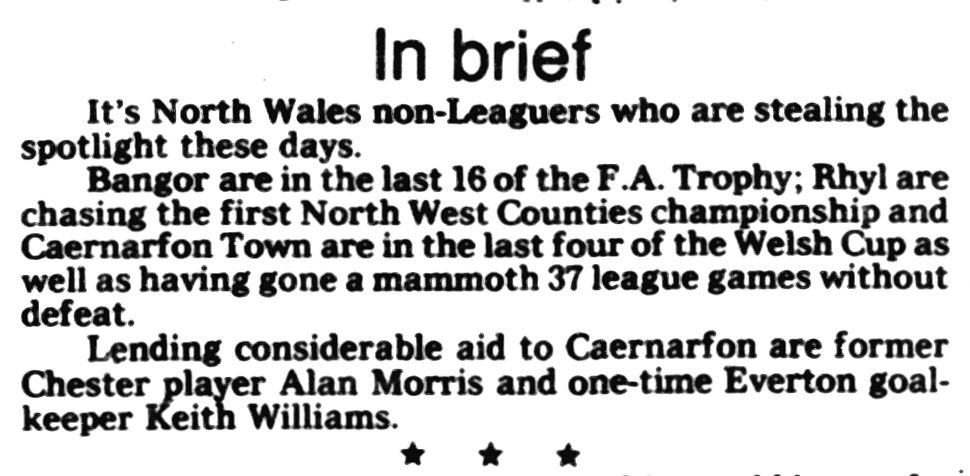
.
COLWYN BAY
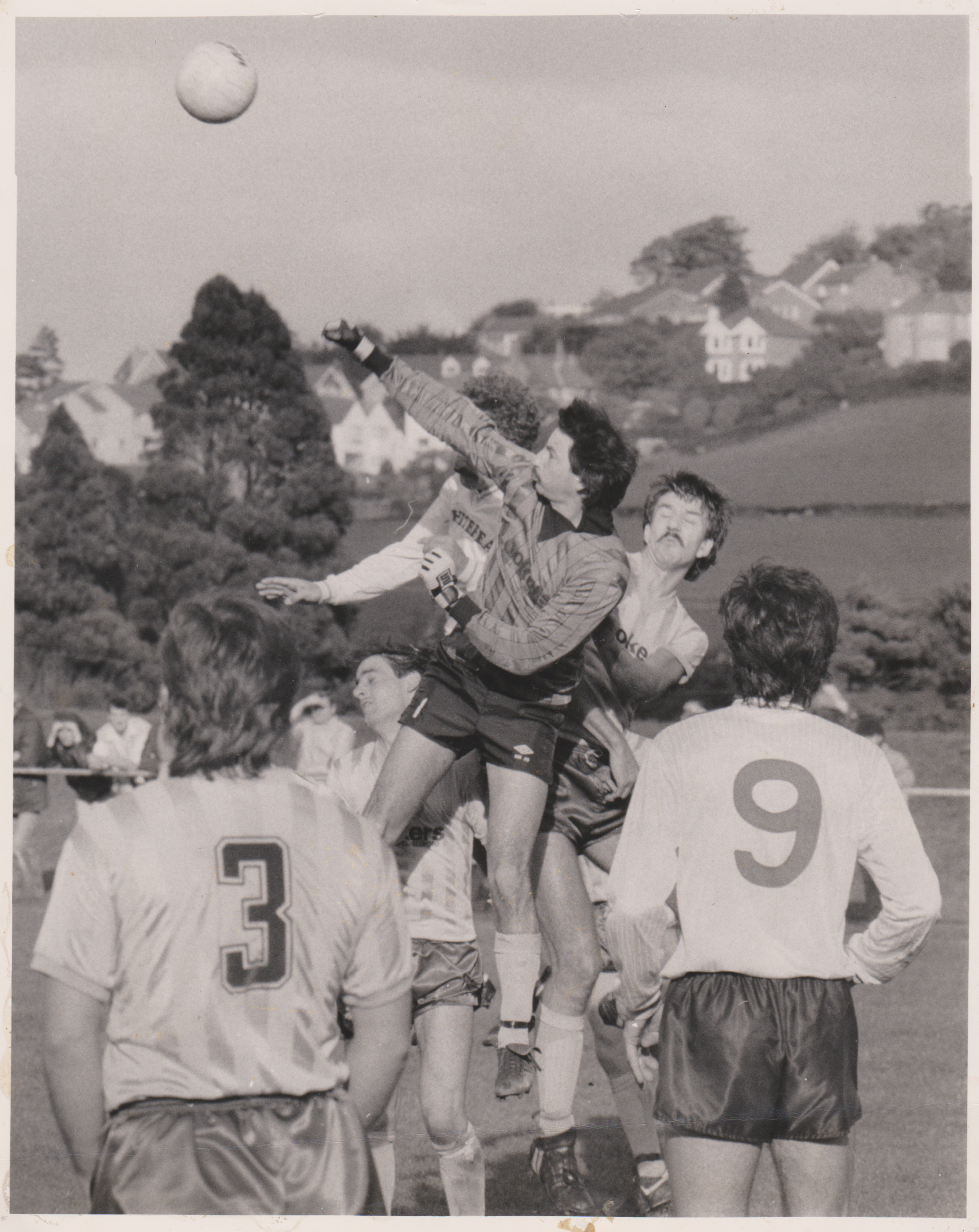
After five outstanding seasons at Caernarfon, Keith moved on one last time, thirty miles east along the North Wales coast to Colwyn Bay where he played under his fellow Everton apprentice from the late 1960s – and ex-Colwyn Bay player – Bryn Jones. Back in his Bellefield days, Keith remembers Bryn Jones being sent for boxing lessons by Harry Catterick with the aim of ‘toughening him up.’
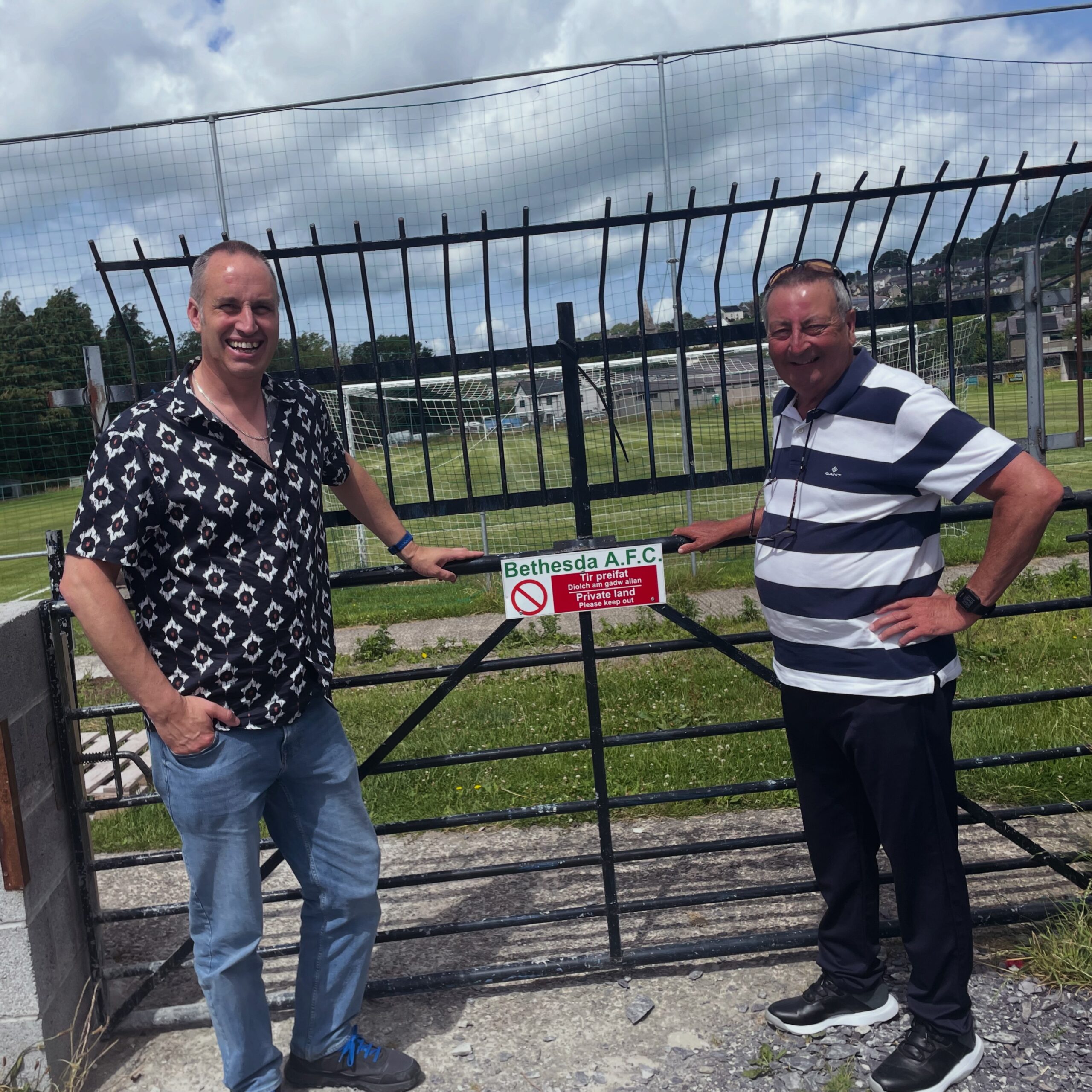
By day Bryn Jones ran a butcher’s shop on the old coast road at Shotton, near Queensferry, which supplied the club’s matchday meat pies. Notable customers included former Everton great Kevin Ratcliffe and Roger Speed, father of Gary. ‘Bryn the Butcher’ managed Colwyn Bay for thirty years (1981-2001), leading them from the old Welsh League (North) all the way to the Premier Division of the Northern Premier League. According to an article published in the Independent in November 1995, Jones took the club ‘from glorified park football at Bethesda and Blaenau Ffestiniog to highly competitive fixtures before four-figure gatherings at Barrow and Boston.’
Keith Williams’ new teammates at Colwyn Bay included striker Steph Rush, brother of Liverpool’s Ian, who had a two-week trial with Leeds United which Keith recalls improved his touch immensely, and midfielder Jimmy Smith, another former Everton apprentice.
Colwyn Bay reached the quarter-final of the Welsh Cup in 1987/88, losing on penalties to Caernarfon Town, who in turn were beaten in the semi-final by eventual winners Cardiff City.
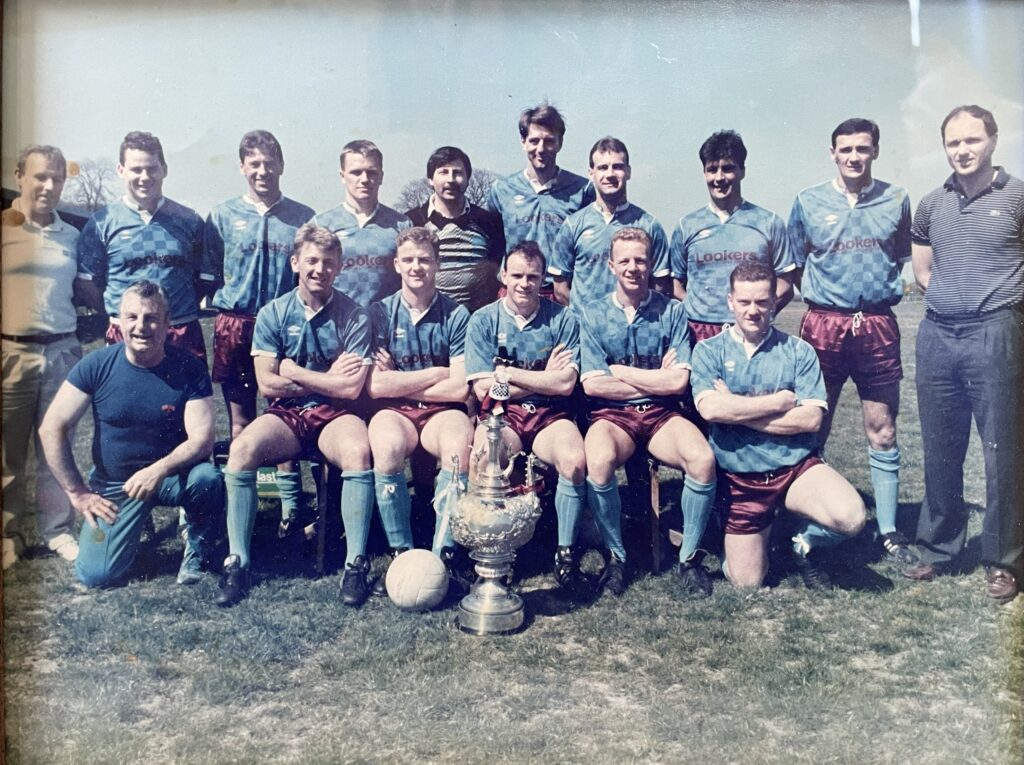
Keith Williams retired, aged thirty-six, at the end of the 1988/89 season, when Colwyn Bay finished for the second successive season in fourth place in Northwest Counties League Division One, and won the NWCL Challenge Cup, beating Warrington Town 3-0, thanks to a Steph Rush brace and a penalty from captain Dave Brett, in the final at Gigg Lane, the home of Bury Football Club, who gave Neville Southall his big break in the Football League.
.
LATER LIFE
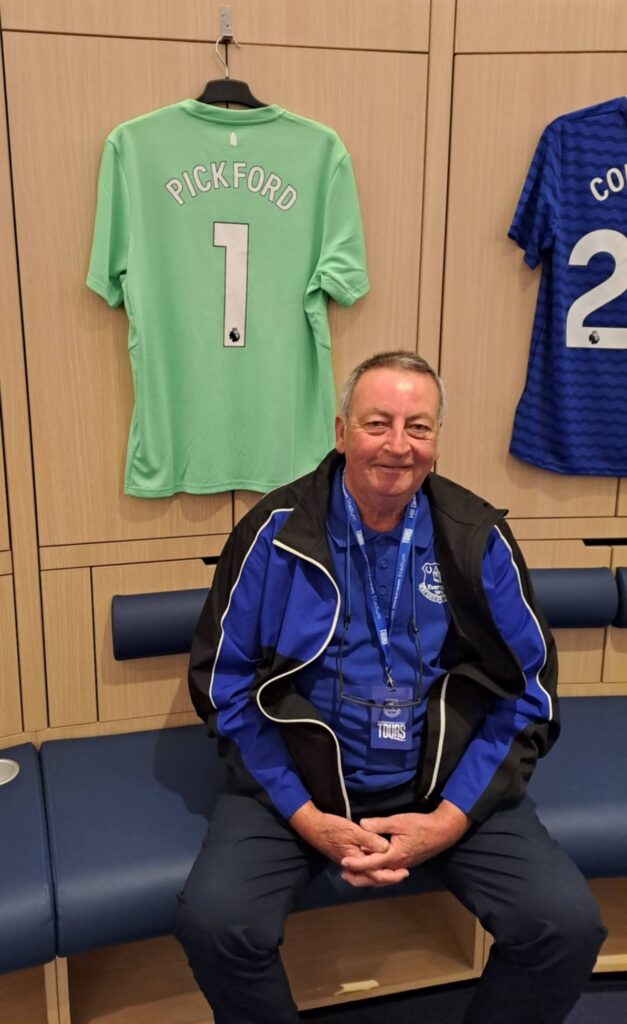
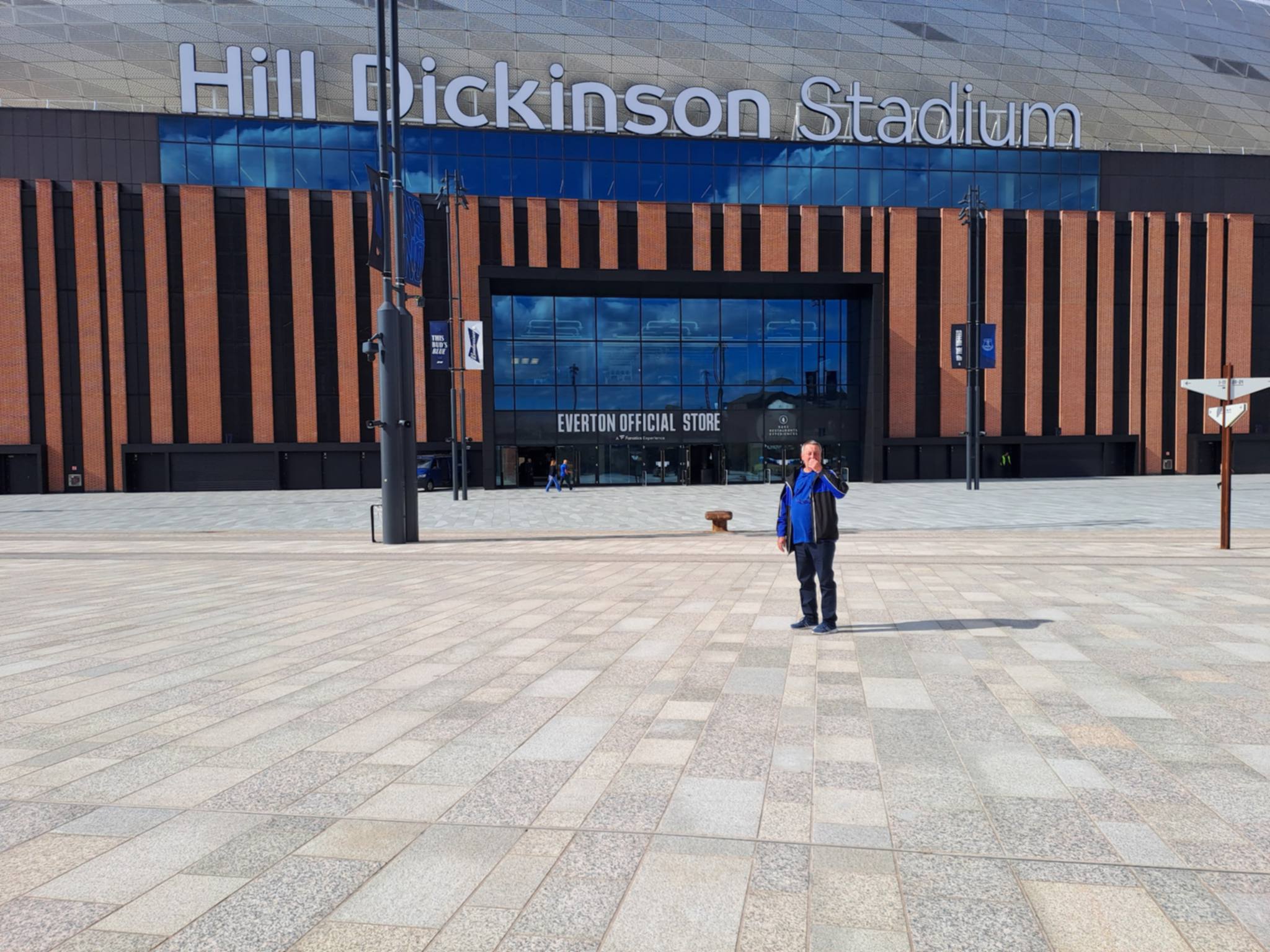
Keith and his wife Judith are happily settled in Colwyn Bay. They still follow Everton and went on a tour of Goodison Park during the final season. They have also experienced the tour at Hill Dickinson stadium. Keith enjoys playing golf and the couple have spent a lot of time in Spain.
Alongside keeping goal, Keith worked for the gas board for twenty-six years. Judith and her then husband ran a butcher’s shop in the village of Glan Conwy, just outside Llandudno, which led to another unlikely Everton connection, as Keith explained:
‘Everton director Norman Coffey and his wife lived in Craigside, Llandudno. Norman was passing the shop one day and saw the shop van was blue and white. He called in to ask if they were Evertonians. They became friends and Judith used to deliver meat to their house. Hence our later being invited to watch a couple of games at Goodison Park in the directors’ box.’
Norman Coffey ran A. and J. Coffey, Ltd., provision merchants, the business of his late father, Everton FC director Andrew Coffey, who served on the Everton board for thirty years (1912-1942), including two brief terms as chairman. Norman was voted onto the Everton board in 1948 and served for over twenty years, including Keith’s time as an Everton player. Long-serving Everton secretary and chief executive Jim Greenwood was managing director of A. and J. Coffey, Ltd., for several years. It was this connection which led to him being put forward for the club secretary post at Everton in 1975.
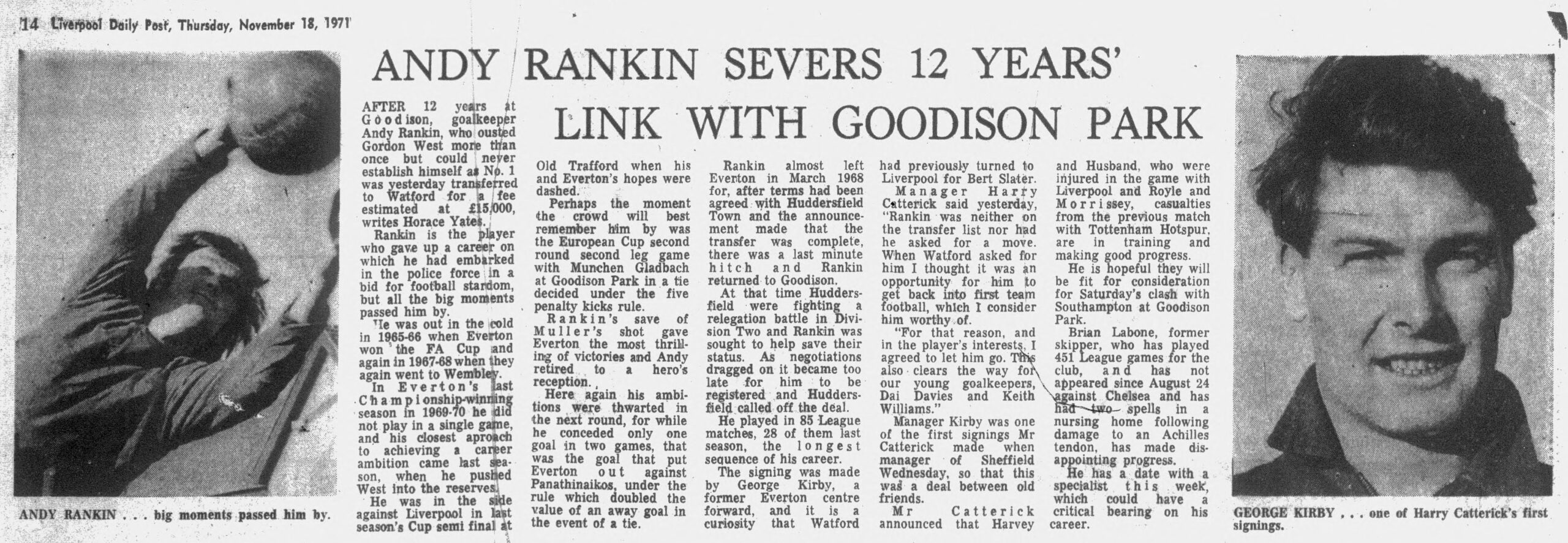
Looking back on his time at Everton, Keith recalled that it was difficult watching a great team break up. He felt that Harry Catterick, who “was not a people person” signed too many inferior replacements for truly great players in the years after the 1970 League Championship win. At the same time, he could never understand the club selling the likes of Alan Ball, who went on to play at the top for years afterwards at Arsenal and Southampton, Andy Rankin who ended up player of the year at Watford, and who Keith rated as ‘technically a better goalkeeper than Gordon West,’ and young striker David Johnson who went on to star for Ipswich Town, Liverpool and England.
Keith remembered good friends like Stan Osborne, who was a year younger than Keith and later moved to Walsall where he became a headmaster. Another youngster who joined Everton from Kirkby Boys around the same time as Keith and Stan was Paul McEwan, a talented right-winger who also played for Lancashire Boys. Paul later became a golf professional at Birchwood near Warrington. One day a delivery driver turned up at the clubhouse, an older guy not looking in the best of shape. Paul McEwan realised it was former Everton coach Stuart Imlach, someone he and many others had never got on with at Bellefield. Having sympathy for him, he gave him some golf lessons.
When Howard Kendall appeared at a sportsmen’s dinner in Colwyn Bay in 2015, Keith had a chance to speak to him about their days at Everton. He asked Howard what he thought about the likes of Wayne Rooney earning wages in modern times, compared to the what the Holy Trinity midfield of Kendall, Colin Harvey and Alan Ball earned between them in the 1960s. Howard’s response was that, if the clubs are willing to pay it, then players are entitled to the going rate.
In terms of modern goalkeepers, Keith thinks Jordan Pickford is really maturing and eliminating the mistakes he made as a younger ‘keeper. He rates Aston Villa’s Argentina international Emiliano Martinez very highly.
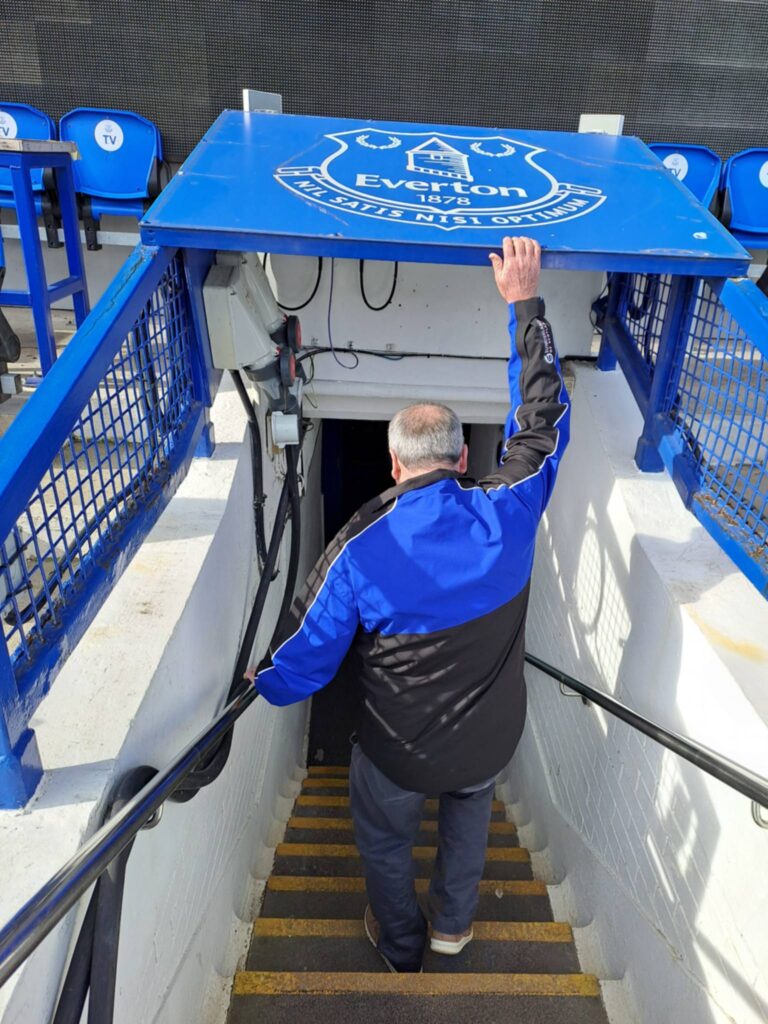
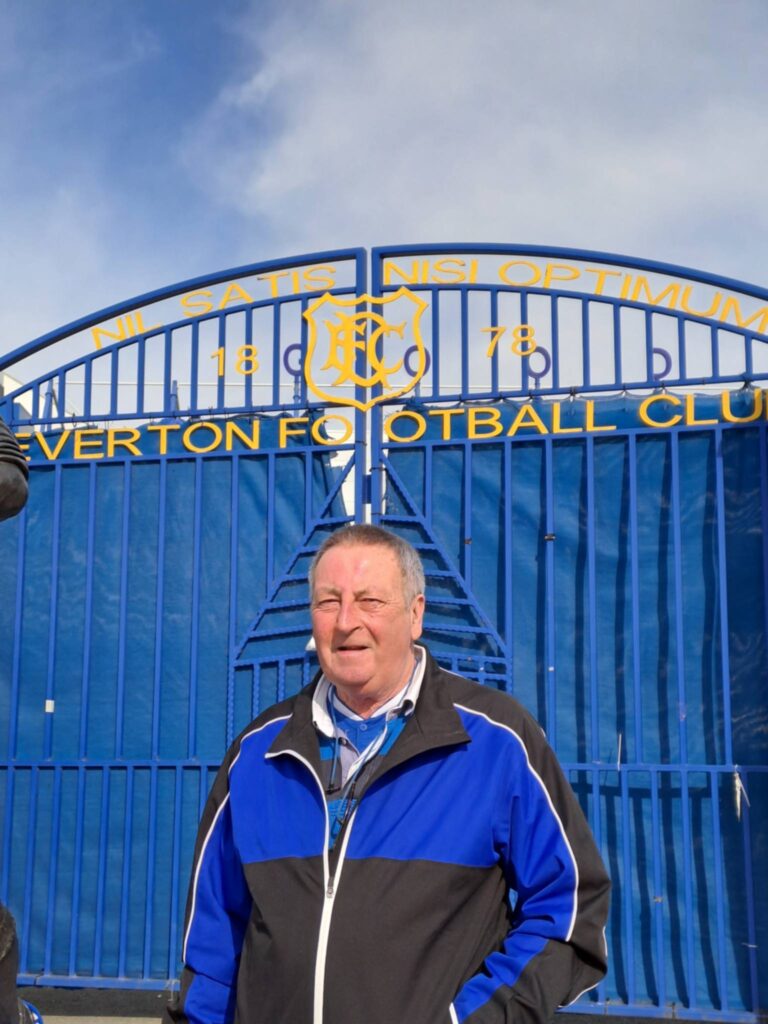
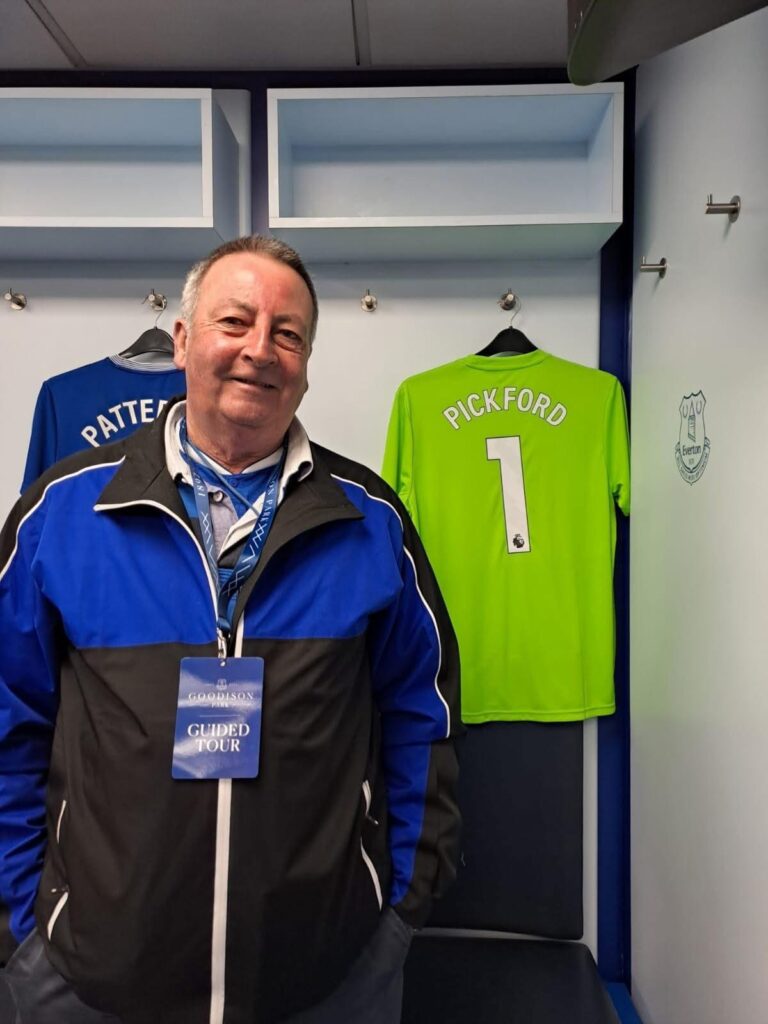
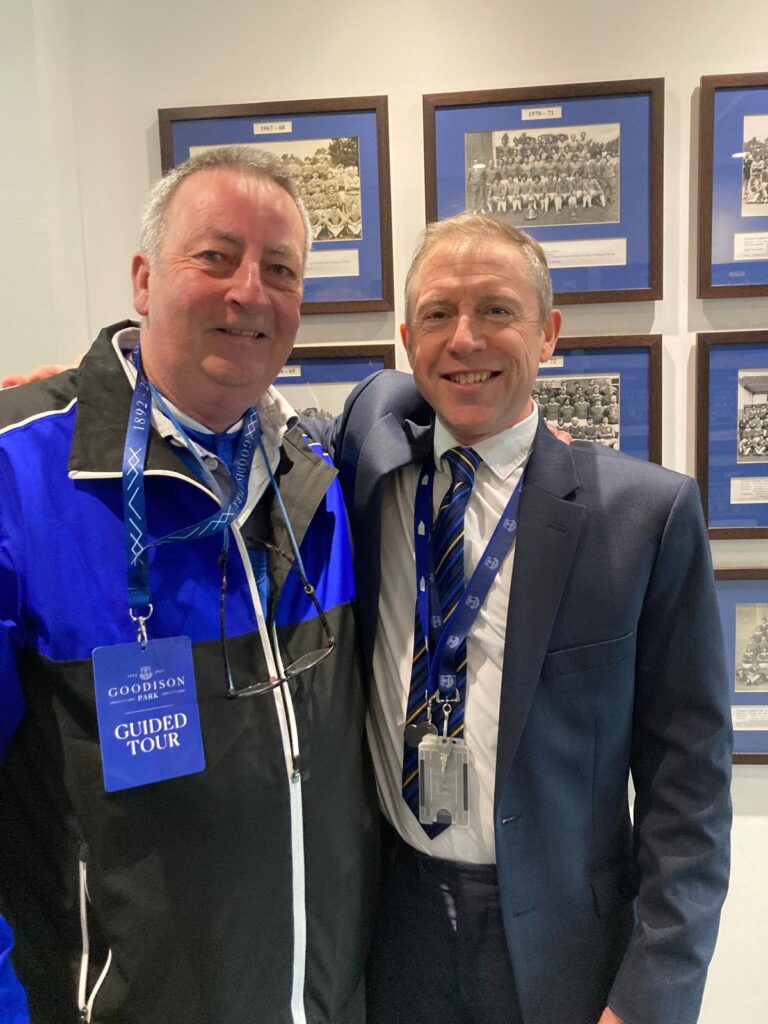
(above) Keith Williams visiting Everton’s Goodison Park 2025, and posing with tour guide Tony Turner

.
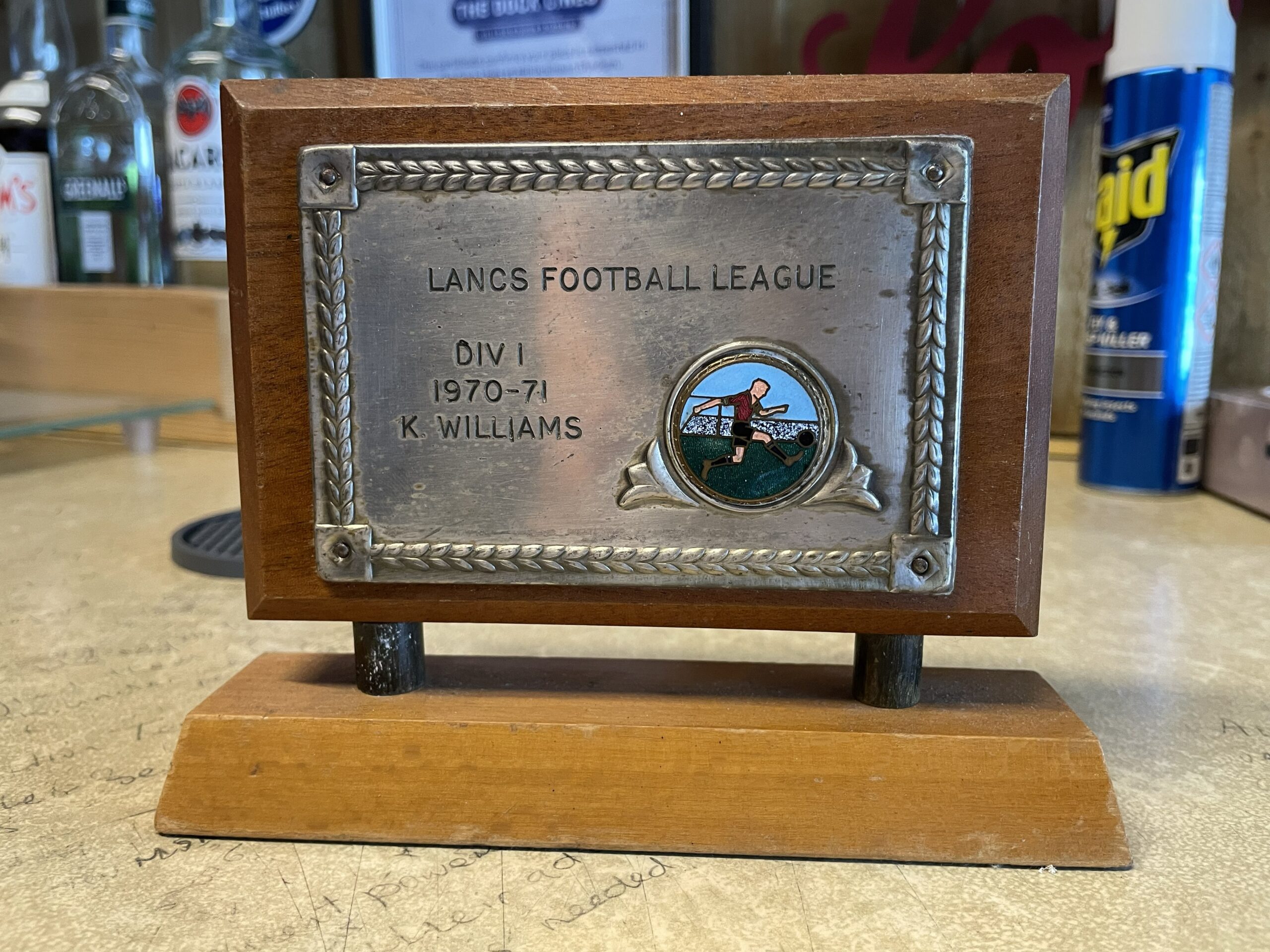
.
******************************
.
NOTES:
Keith Williams of Kirkby Boys, Everton, Wrexham, Oswestry Town, Rhyl, Caernarfon Town and Colwyn Bay is not to be confused with a 1980-1990s Liverpool amateur leagues goalkeeper and penalty-scoring sensation also called Keith Williams! Nor with Wirral-born 1950s striker Keith Williams who also came through Everton’s youth ranks but never made the first team. That Keith Williams later averaged more than a goal every other game over four seasons with Tranmere Rovers, before spells at Plymouth Argyle and Bristol Rovers. He later emigrated to South Africa.
Laurie McNichol was another apprentice who joined Everton from Northumberland Boys in 1972. A talented forward, Laurie suffered major injuries which cut his time at Everton short and he returned to the Northeast, where he played for Ashington. During his time at Everton, Keith and his wife Jill were renting a flat from a Mrs. Leslie at 53 Victoria Road, near the Carlton Cinema in Tuebrook. Keith helped Laurie rent a room at the same address and suggested to Harry Catterick that Mrs. Leslie would make an ideal landlady for Everton apprentices and young professionals. For some years thereafter the Leslie family provided accommodation for young Everton players. The Leslie’s son Steven was a big Evertonian and Keith once took him for a tour around Bellefield.
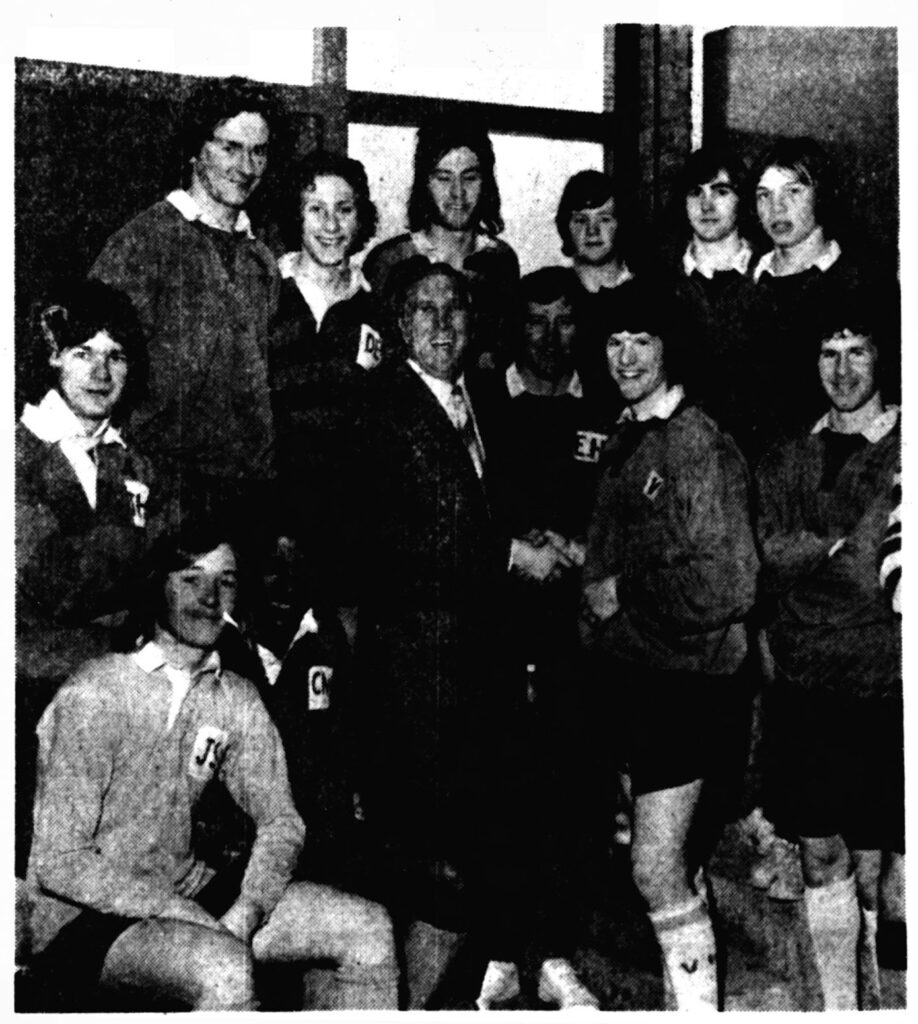
Liverpool Echo, 20 January 1973
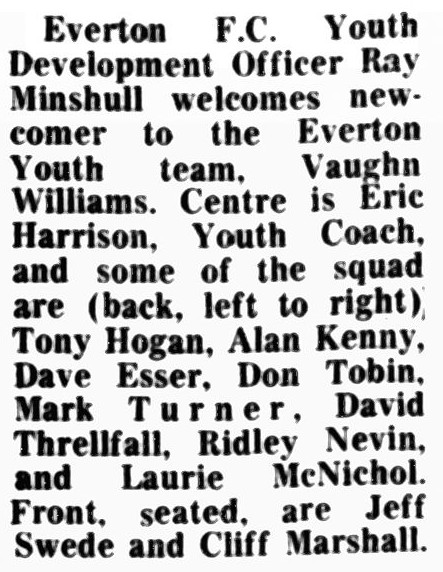
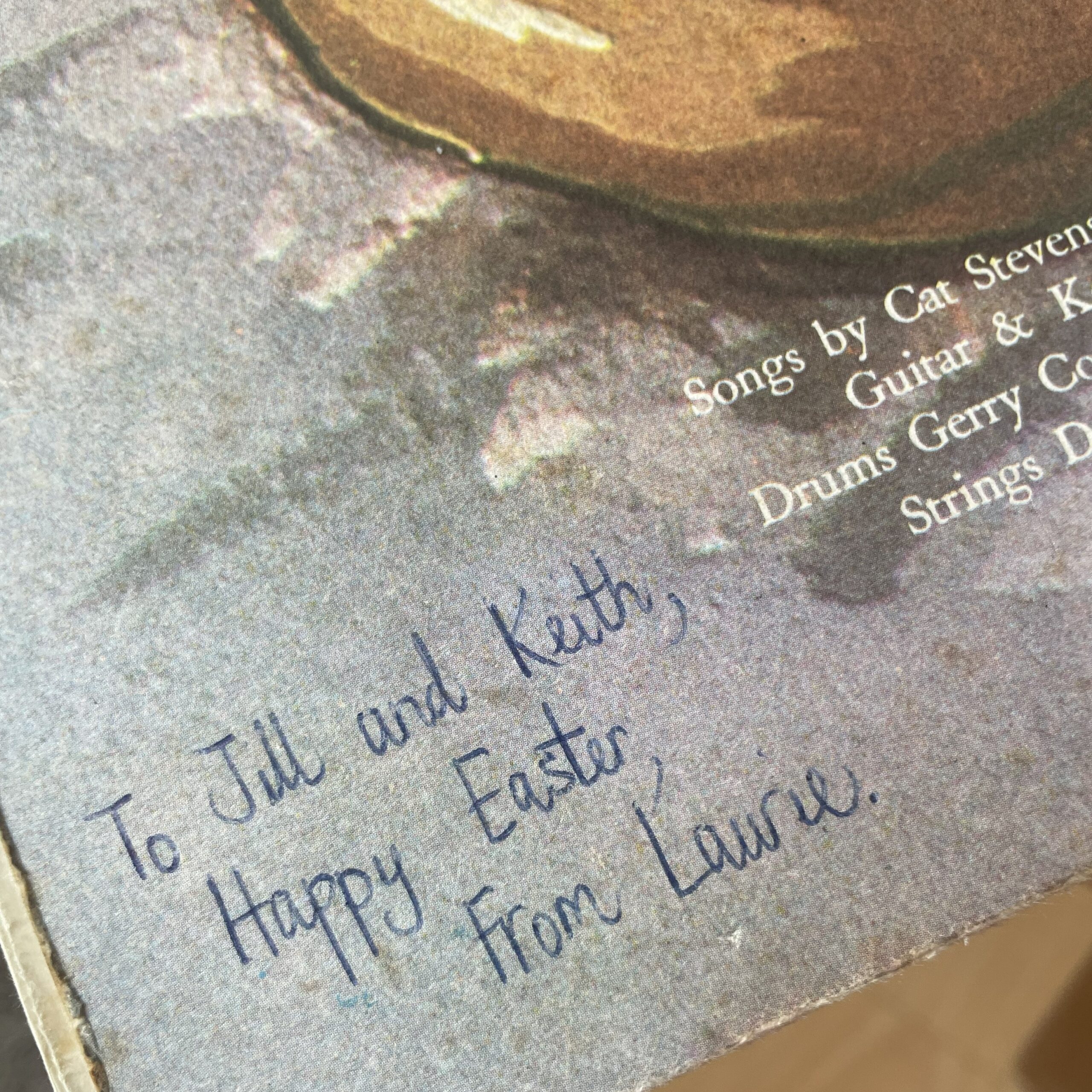
As mentioned earlier in this article, while we were talking the subject switched to music and I mentioned that one of my favourite songs was Lee Marvin’s Wandrin’ Star from the movie Paint Your Wagon – a film I used to watch with my grandfather, and which Keith remembered going to see in Tuebrook when it was released in 1970. Wandrin’ Star reached number one in the UK hit parade on 7 March 1970 and stayed there for three weeks, preventing The Beatles’ final single Let It Be from topping the charts. Laurie McNichol presented Keith and Jill with a copy of Cat Stevens’ 1971 LP Teaser and the Firecat as a gift one Easter, and Keith kindly gave it and a few of his other LPs to me when my daughter Enid and I visited Keith and Judith in Wales in July 2026.
Acknowledgements:
With huge thanks to Keith and Judith Williams for your time and patience and for getting back to me when I put out a few feelers online to try and track Keith down and tell his story. It has been such a pleasure to meet and get to know you and thank you for bringing all those wonderful mementos of Keith’s football career – plus the nicest biscuits ever! Looking forward to seeing you both again soon! Diolch yn fawr!
Thanks also to my mate Tony Turner for remembering meeting Keith and Judith on their tour of Goodison Park and for asking great questions when they visited my flat in May 2026.
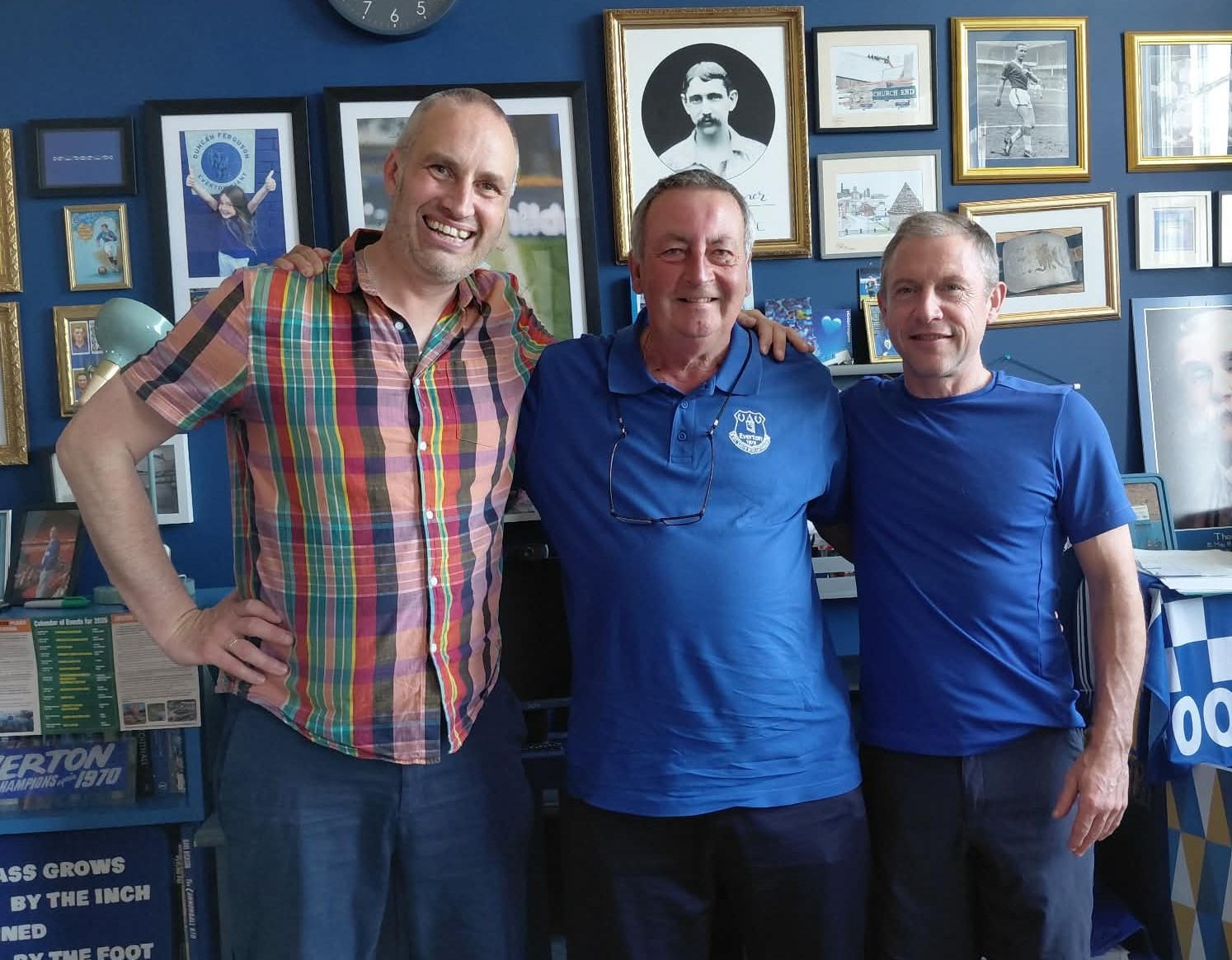
I owe a debt of gratitude to Dr. David France for enlisting my help with some research which led me to the story of Keith Williams’ freezing half to death on the bench in Reykjavik in September 1970, without this prompt I may never have looked for Keith or written this article. I checked my good friend and goalkeeping aficionado Paul Owens’ brilliant book for any additional information and set off on my quest to find Keith – thanks so much to the Merseyside Police Friends Facebook page for sharing my message and helping me track him down!
With thanks also to Stan Osborne for a great chat about the late-1960s/early-1970s era at Bellefield.
Bibliography:
Owens, Paul, The Glovesmen of Goodison: A History of Everton’s Goalkeepers’ (Pitch Publishing, 2025)
Osborne, Stan, Making the Grade (Legends Publishing, 2014)
The Everton Collection.
Liverpool Daily Post & Echo
Lynn Advertiser
Shropshire Star
Various Wrexham, Oswestry, Rhyl, Caernarfon Town and Colwyn Bay matchday programmes.
Check out this fantastic article by Phil Shaw (The Independent, 28 November 1995) on Bryn ‘The Butcher’ Jones and Colwyn Bay FC:
https://www.independent.co.uk/sport/jones-the-meat-seeks-carveup-1584124.html
In memory of Keith’s friend, Kirkby Boys teammate and fellow Everton apprentice Peter Scott who made fifty first team appearances for Everton Football Club between 1970 and 1975, scoring two goals (his first past a certain David Lawson of Huddersfield Town in December 1971), before spells at Southport, York City and Aldershot. He also won ten caps for Northern Ireland. Peter passed away on 20 December 2024, aged 72.