David France
In the summer of 2026, it was reported that Everton planned to reinforce its academy programmes to develop more homegrown talent. Perhaps easier said than done because the Merseyside giants have relied heavily on the recruitment of new players through transfers, sometimes for British record fees, since the introduction of nationwide competitive football in 1887.
Some background about early youth development
Even earlier, following the amalgamation of local clubs with St Domingo’s in 1879, the club accommodated surplus enthusiasts in a third-team consisting mainly of 15- and 17-year-olds. The earliest recorded youth team fixtures were against the first-teams of Burscough, Haydock, Golbourne and Liverpool Rovers at Stanley Park in 1882.
With the advent of professionalism in 1885, Everton adopted a systematic approach of scouting (in which candidates were identified by regional experts and assessed by the club’s directors) and recruiting established players mainly from the football hot-beds in the North East of England, Central Lancashire and Scotland. By and large, the transfer market-oriented approach continued for 120 or so seasons.
With the first-team enjoying life in the Football League First Division and the second-team in the Lancashire Combination (prior the formation of the Central League), Everton entered its third-team (A team) – composed mainly of local youngsters – in the Liverpool County Combination for the 1909/10 season before withdrawing and rejoining in 1921/22 with the fourth-team (B team) taking part in the Bootle JOC League.
Then in 1956, the club transferred its allegiance to the Lancashire League with its A team in Division I and B team in Division II (age limit of 21). The fifth- team (C team) continued in the West Cheshire League with the club’s Colts, which were established during the Second World War. playing friendlies.
While the focus on youth development increased with Everton participating in the FA Youth Cup in 1952, the introduction of chairman John Moores’ cheque-book resulted in the Merseyside Millionaires and re-established its preference for acquiring proven stars mostly from Scotland in the wake of the abolition of the maximum wage south of the border.
However around 1963, under the stewardship of manager Catterick and Moores, Everton reinforced its youth recruitment initiatives to operate in parallel with its ability to break transfer records. As well as an expanded scouting network across the United Kingdom and Ireland, Ray Minshull was appointed Everton’s first Youth Development Officer in 1971.
Research findings – homegrown players since 1887
The first homegrown players to appear in nationwide competitions were Mike Higgins (a popular star of the pre-League era) and Joey Murray. Even in 1887, the club relied on importing established players from elsewhere. In fact, only 27% of all 978 first-teamers have been homegrown youths. Predictably, they accounted for about 26% of all senior appearances in the FA Cup since 1887 and League since 1888.
Nonetheless, the stream of homegrown youngsters was steady with them making debuts in 82% of all seasons since 1887/88. The most senior appearances were made by Brian Labone (534), Kevin Ratcliffe (493), Mike Lyons (473), Leon Osman (433), Tommy E Jones (411) and John Hurst (411). Other contributions were fleeting with around 26% making just one or two first-team outings. But on average, a homegrown first-teamer featured in 61 games during his Everton career.
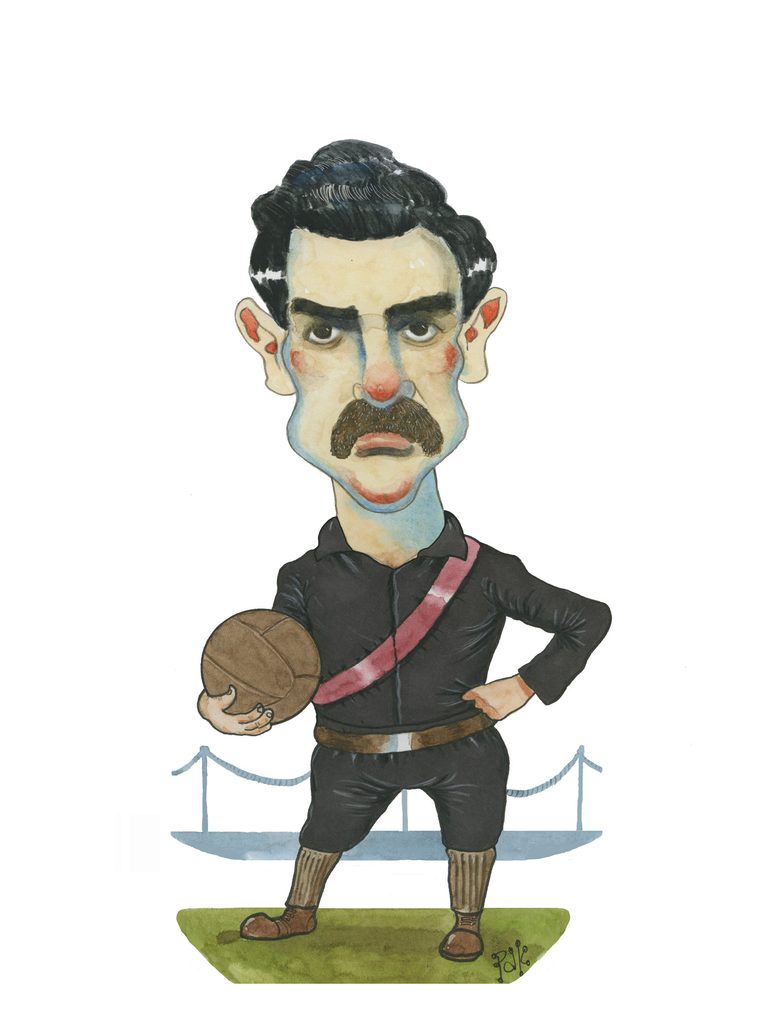
Mike Higgins
About Mike Higgins … The club’s longest serving players prior to the start of the Football League, Higgins was employed as an upholsterer in Bootle when he joined the club as an 18-year-old amateur in mid-1880. Originally a forward, he occupied nine positions – including goalkeeper – at one time or another. The trailblazer made his debut against Darwen in late-1880 and was part of the teams that won the Liverpool Cup in 1884, 1886 and 1887. Despite setting a club high of 188 pre-League outings, Higgins played his only League game at Aston Villa in September 1888.
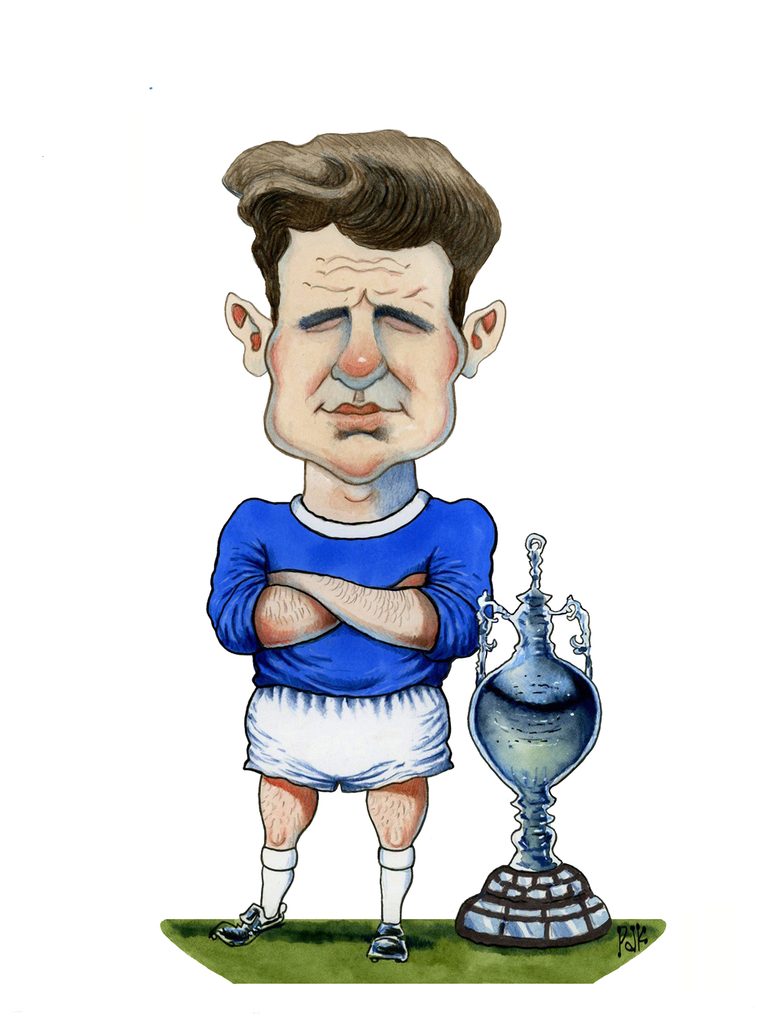
Brian Labone
As for Brian Labone, no words can do justice to his contributions to his one and only club. In addition to his monogamous relationship with Everton, ’ The Last of the Corinthians’ was a gentleman who combined sportsmanship with polished defending. The Liverpool-born centre-half joined Everton directly from school and turned professional in 1957. After making his senior debut at Birmingham City later that season, his career spanned 1957/58 – 1971/7 . Firm yet fair in the tackle and outstanding in the air, his approach reflected his personality – honest and composed. In fact, England international was booked just twice in his career. Labone won two League titles and captained the club to an FA Cup triumph in 1966.
Some background about the Everton Academy
In 1983, the Everton Academy was established at Netherton before relocating to Bellefield and Finch Farm.
Approximately 440 youths (typically 16-and 17-year-olds) have been registered, with 19% of them advancing to make a first-team appearance and another 9% to serve as an unused matchday substitute.
Research findings – academy graduates since 1983
During the academy era, Everton captured the FA Youth Cup in 1983/84 and 1997/98 as well as the Premier League 2 title in 2016/17 and 2018/19, but the most productive seasons in terms of academy-cultivated debutants were 2009/10 (8 players) and 2017/18 (7 players).
As of October 2026, some 83 graduates have represented Everton in League and domestic/European cup fixtures – that is approximately 24 % of all first-team players were nurtured by the academy since its inception. However it should be noted that 22 men made solitary appearances and the data are skewed by the increase in the number of substitutes permitted since 2008 and the fielding of weakened line-ups containing youngsters in European dead-rubbers.
These former scholars/trainees made debuts in 78% of all seasons since 1983 and accounted for 16% of all senior appearances during that time.
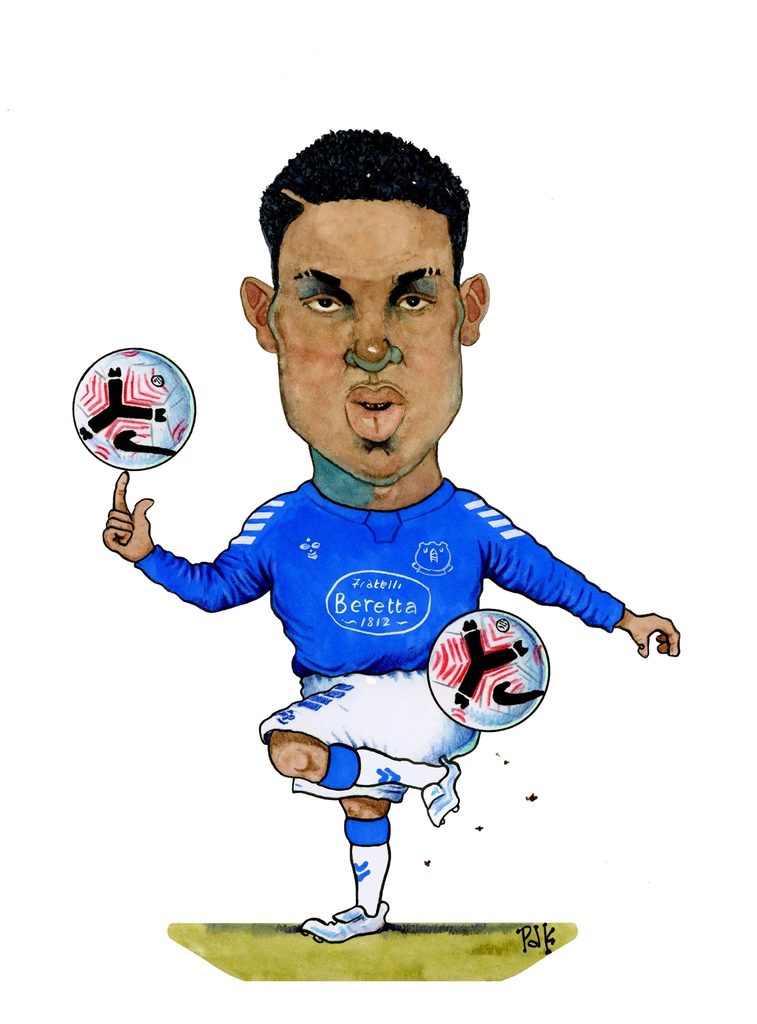
Thierry Small is the club’s youngest first-teamer at 16 years and 176 days, whereas the average age of an academy-raised debutant is 19 years and 2 days. Most senior appearances were made by Leon Osman (433 games), David Unsworth – the only academy graduate to lift meaningful silverware (350), Tony Hibbert (329) and John Ebbrell (265). But on average, an academy-raised first-teamer featured in 37 games during his Everton career. More recently, the most promising youngsters were sacrificed to ease financial woes. These include Michael Ball, Francis Jeffers, Ross Barkley, Jack Rodwell, Anthony Gordon and, of course, Wayne Rooney. Thankfully, the list does not include Harrison Armstrong – for now.
Thierry Small
Thiery Small discovered that the grass is not greener away from Merseyside. Born in Solihull in 2004, Small joined Everton’s academy at age 11. The exceptionally gifted left-back came to the nation’s attention on BBC’s Football Wonderkids Challenge, designed to unearth football’s hottest prospects. Fast-tracked by manager Carlo Anchelotti, he made his debut as an 85th minute substitute in an FA Cup tie against Sheffield Wednesday in early-2021. Subsequently, the talented defender turned down Everton’s attractive offer to turn professional and signed for Southampton at age 17 in 2021 with a tribunal awardibg £3.8 million compensation to Everton. In 2026, he was playing for Preston North End in the FL Championship.
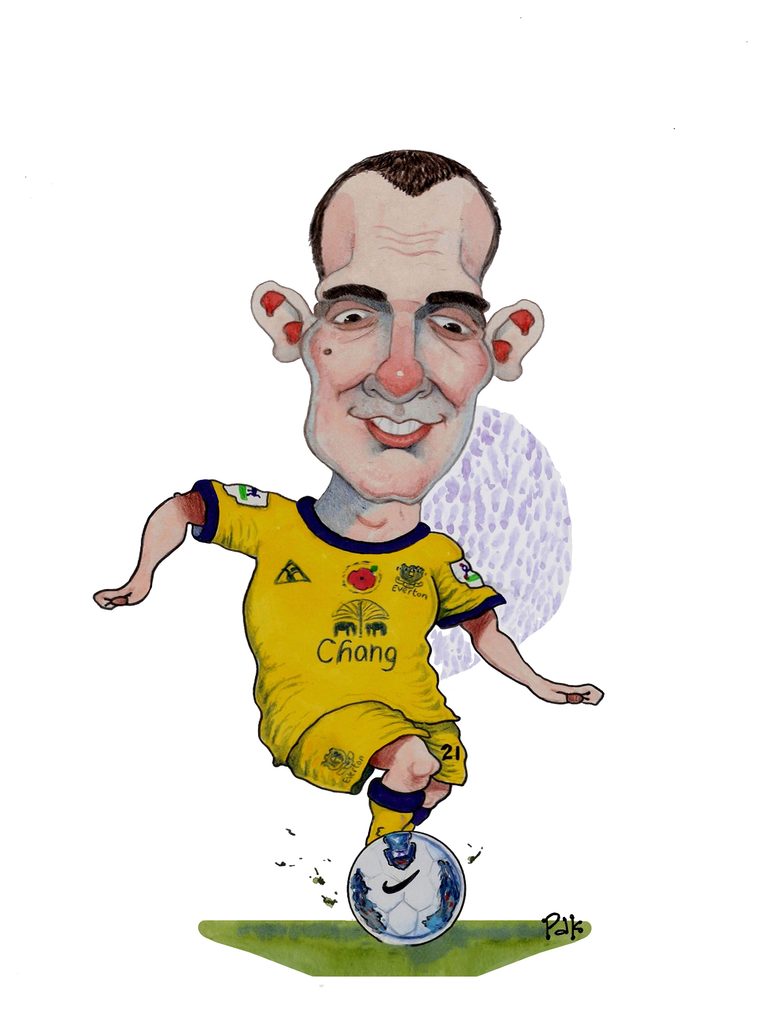
Leon Osman
Let’s not forget Leon Osman. Born in Billinge and raised in Skelmersdale, the academy product helped Everton capture the FA Youth Cup in 1998. However, Osman made a slow start to his career due to a serious injury and did not make his first-team debut until age 21. Possessing vision and sublime technique, Osman blossomed into a midfield mainstay over his long tenure (2002/03-2015/16) at Goodison, playing played 433 league and cup games for Everton – the same number as Dixie Dean. Osman also had an eye for goal. His most stunning strike was in the UEFA Cup clash with Larissa in 2007 when he finished a brilliant counterattack involving Cahill, Baines and Pienaar. In 2012, the unsung hero earned his first England cap at age 31.
ACADEMY-DEVELOPED FIRST-TEAM PLAYERS SINCE 1983 BY DEBUT SEASON
1983/84 Ian BISHOP
1983/84 Robbie WAKENSHAW
1984/85 Jason DANSKIN
1984/85 Johnny MORRISSEY (Jnr)
1984/85 Darren OLDROYD
1984/85 Neil RIMMER
1984/85 Derek WALSH
1985/86 Peter BILLING
1985/86 Darrin COYLE
1985/86 Ian MARSHALL
1986/87 John EBBRELL
1987/88 Phil JONES
1989/90 Mark WRIGHT
1990/91 Darren HUGHES
1990/91 Iain JENKINS
1991/92 David UNSWORTH
1991/92 Mark WARD
1991/92 Eddie YOUDS
1992/93 Billy KENNY (Jnr)
1992/93 Neil MOORE
1994/95 David BURROWS
1994/95 Tony GRANT
1995/96 Michael BRANCH
1995/96 Jon O’CONNOR
1996/97 Graham ALLEN
1996/97 Michael BALL
1996/97 Danny CADAMARTERI
1996/97 Richard DUNNE
1996/97 John HILLS
1997/98 Francis JEFFERS
1997/98 Gavin McCANN
1998/99 Phil JEVONS
1998/99 Adam FARLEY
1998/99 Jamie MILLIGAN
1999/00 Mark HUGHES
2000/01 Peter CLARKE
2000/01 Tony HIBBERT
2000/01 Kevin McLEOD
2001/02 Nick CHADWICK
2002/03 Leon OSMAN
2002/03 Wayne ROONEY
2004/05 James VAUGHAN
2005/06 Victor ANICHEBE
2007/08 Jack RODWELL
2008/09 Jose BAXTER
2009/10 Kieran AGARD
2009/10 Hope AKPAN
2009/10 Jake BIDWELL
2009/10 Nathan CRAIG
2009/10 Shane DUFFY
2009/10 Adam FORSHAW
2009/10 Shkodran MUSTAFI
2009/10 James WALLACE
2011/12 Ross BARKLEY
2011/12 Conor McALENY
2014/15 Tyrias BROWNING
2014/15 Kieran DOWELL
2014/15 Gethin JONES
2014/15 Ryan LEDSON
2014/15 Chris LONG
2015/16 Callum CONNOLLY
2015/16 Tom DAVIES
2015/16 Jonjoe KENNY
2015/16 Matthew PENNINGTON
2016/17 Dominic CALVERT-LEWIN
2017/18 Beni BANINGIME
2017/18 Nathan BROADHEAD
2017/18 Harry CHARSLEY
2017/18 Alex DENNY
2017/18 Morgan FEENEY
2017/18 Anthony GORDON
2017/18 Fraser HORNBY
2020/21 Thierry SMALL
2021/22 Lewis DOBBIN
2021/22 Tyler ONYANGO
2021/22 Isaac PRICE
2021/22 Ellis SIMMS
2021/22 Reece WELCH
2022/23 Tom CANNON
2022/23 Stanley MILLS
2022/23 Lewis WARRINGTON
2024/25 Harrison ARMSTRONG
2024/25 Roman DIXON
2025/26 Elijah CAMPBELL
Please note that published football statistics can be a minefield of errors. The sources employed were provided via enfa.com, evertonresults.com and efcstatto.com. Accordingly, the criteria developed to characterize homegrown players …
Between 1887-2026
. played at junior level for Everton before first-team debut
. not played professionally at first-team level for another club
. signed for Everton at age 21 or under
. no transfer fee involved on joining Everton
With the trend towards luring overseas youths to Merseyside for small fees, the criteria were refined for the academy era
Between 1983-2026
. registered with the Everton academy for three seasons
. not played professionally at first-team level for another club
………………………………..……………..
Results reviewed by Richie Gilham and Bradley Cates
Caricatures taken from Dr Everton’s Toffeemen to be published in 2027.