Simon Hart
In late October 2002, as the interest surrounding Wayne Rooney exploded after his wondrous first league goal – that winning strike against champions Arsenal – the Guardian newspaper marked his 17th birthday with an article charting his path to the Premier League from “the terraced street in the working-class suburb of Croxteth” where he grew up – and still lived.
[The Guardian: Today is Wayne Rooney’s birthday but for Everton it feels like Christmas ]
“Two miles away in the Everton club shop, Rooney’s replica shirt is outselling all others and the Merseyside club are reportedly fending off interest from Milan, Madrid and Manchester United,” wrote reporter Ian Winrow. “Remarkable considering Rooney was attending Croxteth’s De La Salle High School – where Francis Jeffers also went – only six months ago. He left the school last Easter but his mother Jeanette, 35, still works there as a dinner lady.”
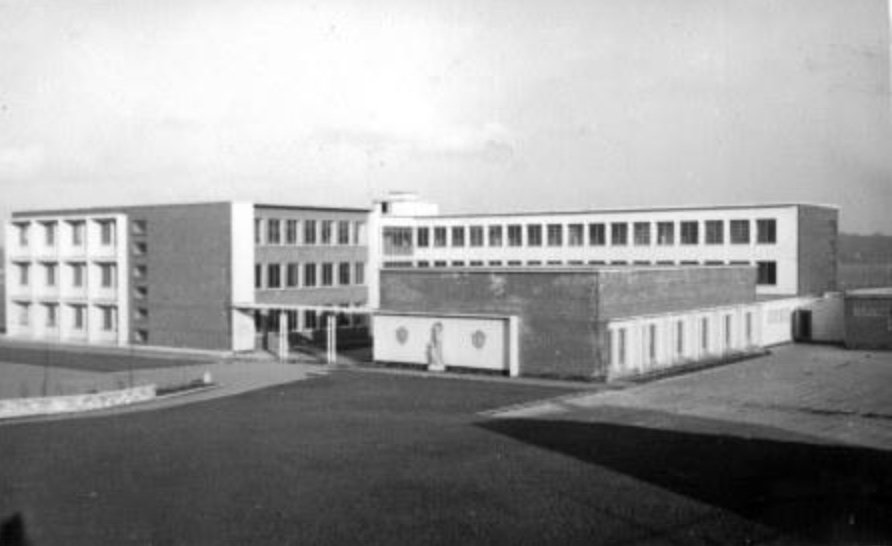
The dinner-lady detail was a gift to journalists along with reports of the teenager’s ongoing kick-arounds in the streets near his home yet while Rooney became the most famous footballing alumnus of De La Salle, he was not the first. An early chapter in my biography of Mike Lyons, The Man Who Bled Blue, carries the title ‘The Original’ and relates the secondary-school adventures of the future Everton captain, who started at De La Salle Grammar School, as it was then, in September 1963.
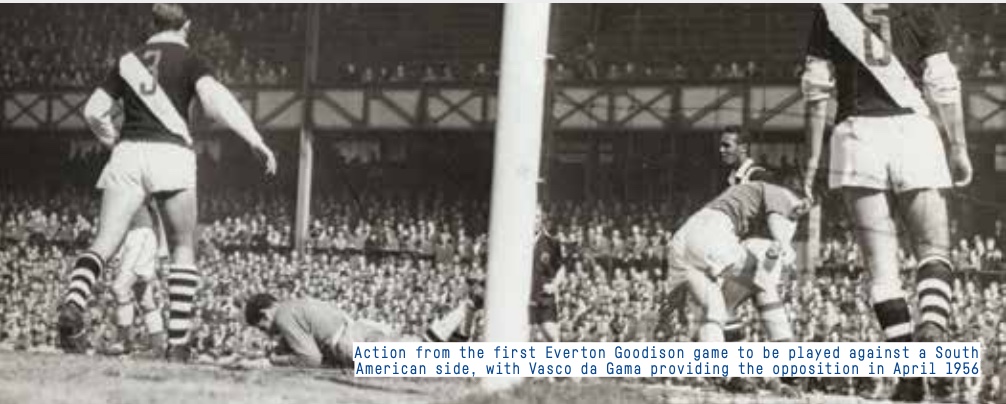
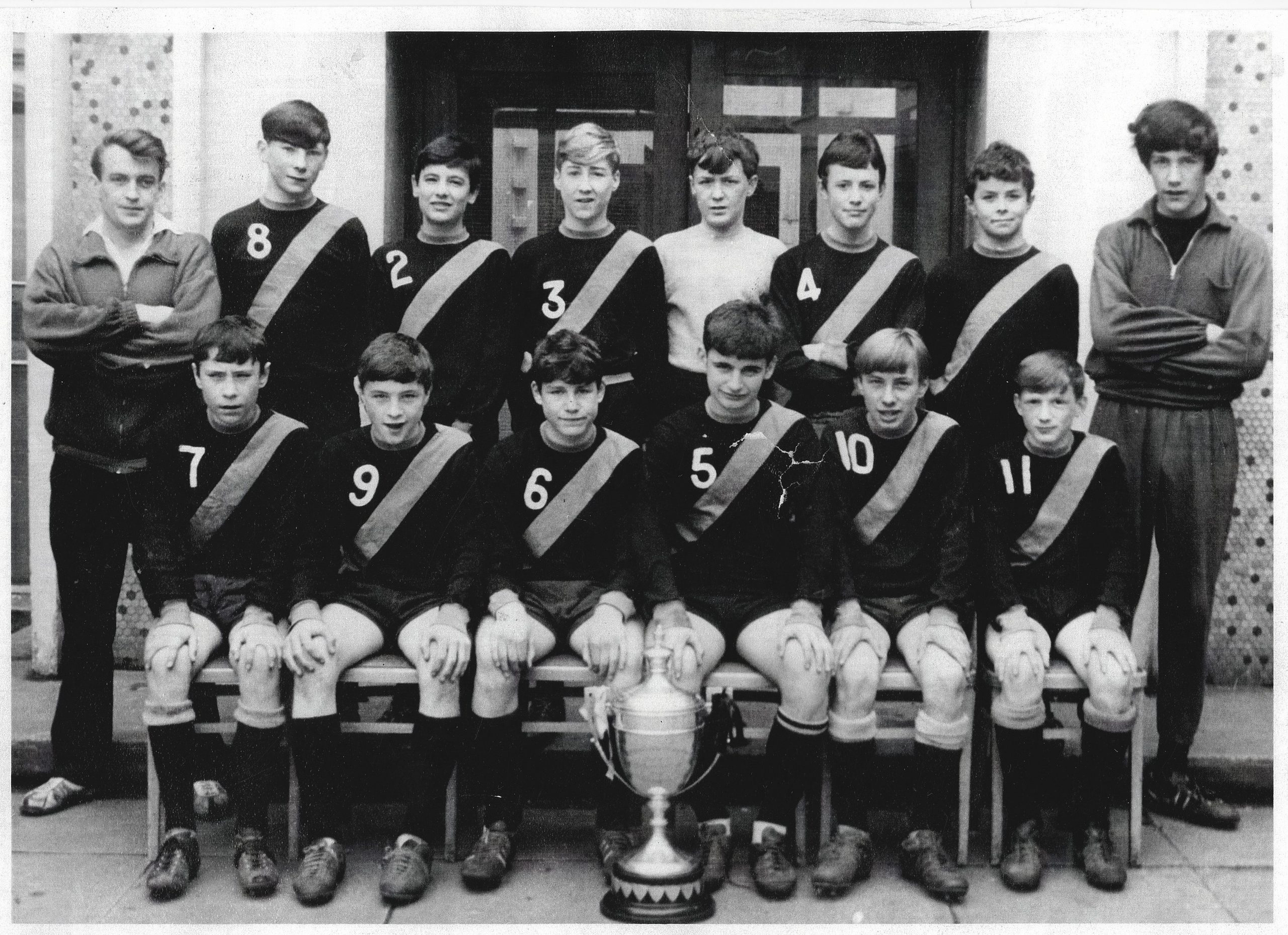
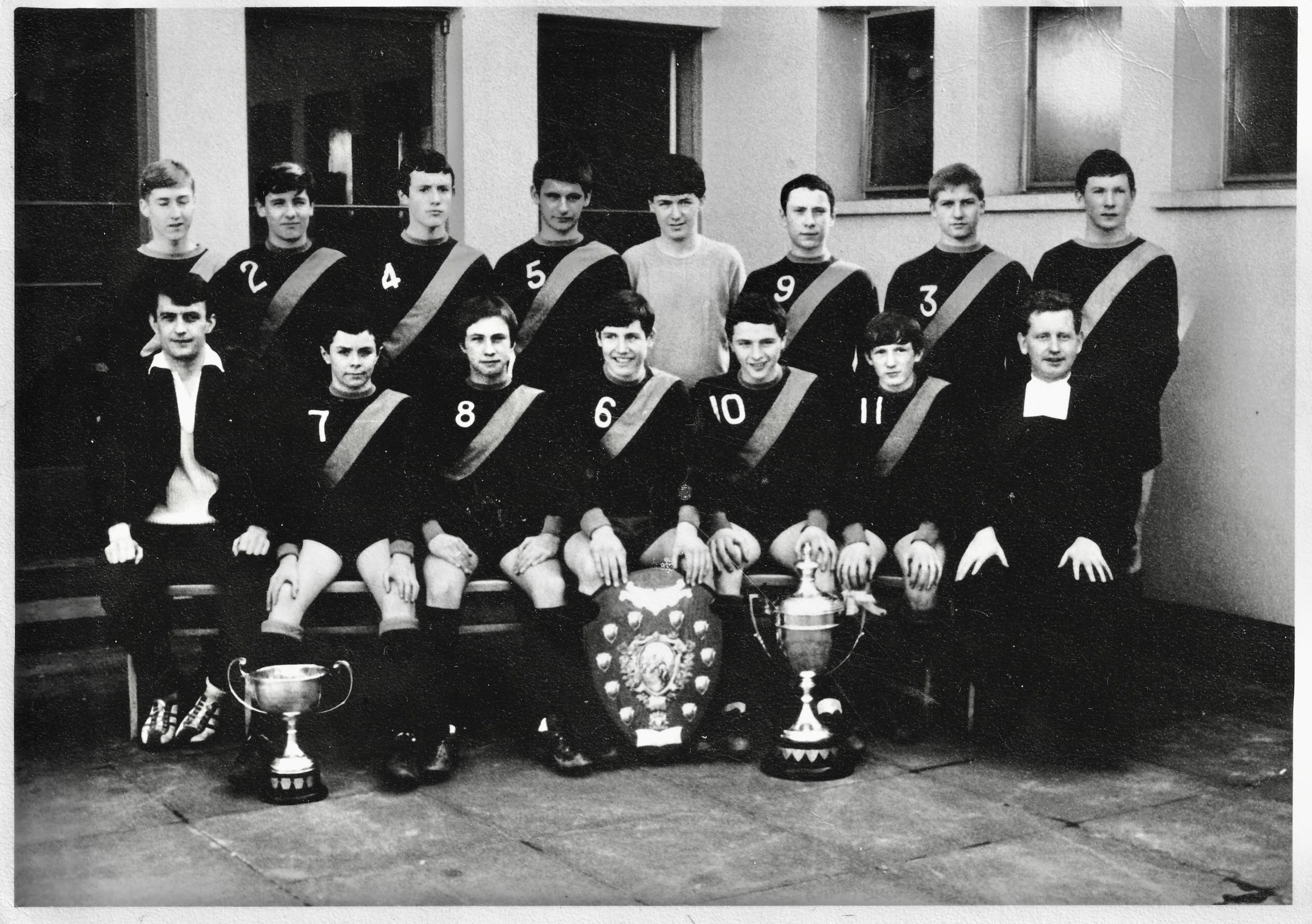
It was one of the most enjoyable chapters to write given the fact my dad, Dave Hart, as a young teacher, took Lyons’ school team at De La Salle – a team that Lyons skippered to a series of trophies, including the Liverpool Echo Cup for Under-14s in 1966. No grammar school had won that city-wide competition before. They did it wearing shirts – black with a yellow diagonal sash across the front – that my dad had chosen, drawing inspiration from the memory of watching Brazilian side Vasco da Gama play at Goodison Park in 1956. So fierce was the competition for places that the future uncle of Rooney, John Morrey, struggled to earn a starting place. As for Tim O’Keeffe, quoted on Rooney in the Guardian article above (in his then capacity as Liverpool Schools U-11s coach), he focused on cross-country running instead.
Read more here – Matchday programme article by EFCHS member John Shearon
De La Salle in Lyons’ day was a very different school from the one Rooney attended. The younger boys wore caps. One PE teacher dished out discipline with his Dunlop Green Flash tennis pumps. There were plenty of laughs too. Lyons’ old classmates still chuckle at the memory of Mick Cushion, their team’s centre-back, coming in with an improbable excuse for his absence the previous day (when he had gone to watch Everton play a midweek game in Sheffield). He presented a letter with his mother’s signature at the bottom and the request to “Please excuse my son Michael from school. The parrot ate his trousers”.
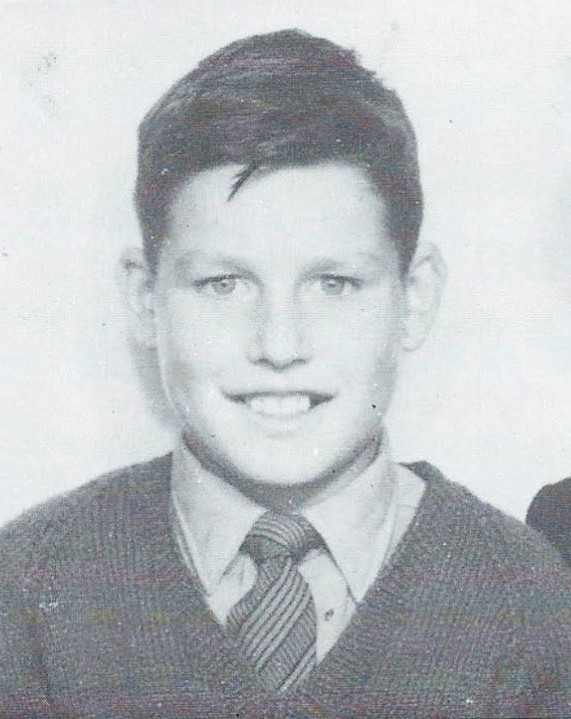
As Cushion explained to me, there was indeed a parrot, Joey, and it swore like a trooper – something Lyons never did, as his old friends recalled. In fact, Lyons would maintain that aversion to foul language throughout his career. (“The only man in football I’ve ever known who didn’t swear” was how Colin Harvey described him to me.)
After school – as another old schoolmate, Chris Howard, explained – Lyons and his friends played football most nights on the central reservation built for tramlines on Utting Avenue East. Street football was how they honed their skills. Indeed, Lyons had not played any organised eleven-a-side football until the age of nine with his primary-school team. Howard also recalled how Lyons would make him run all the way home whenever they went to watch games at Goodison or Anfield together. For his part, my dad remembered Lyons – a supreme athlete as a player – setting a Liverpool Schools record for the 800 metres.
To return to his feats on the playing fields, Cushion told me of a goal that Lyons scored at U-13s level, in the final of the Universe Cup at Penny Lane against Cardinal Godfrey High School. It came from a direct free-kick. “We got a foul and I remember one of their players going, ‘What’s he going to do?’,” said Cushion. “Michael ran up with these Di Stéfano boots and put it right in the back of the net from about 30 yards. You didn’t do those things but he and his Di Stéfano boots could do anything.”
The following year, my dad began running the team, and Lyons, wearing the number six and playing at wing-half, scored in the 3-0 Echo Cup final victory over a Gateacre Comprehensive side whose centre-forward was David Johnson, a future team-mate of Lyons in his early years at Everton … and later a derby-day rival after Johnson’s move to Liverpool from Ipswich Town.
Another schooldays opponent was Terry McDermott who played against Lyons for St Kevin’s Comprehensive in Kirkby. Years later, on an England U-21 trip together, Lyons discovered that the pair had been born just ten minutes apart at Mill Road Hospital on 8 December 1951. For the Merseyside Grammar Schools team, meanwhile, he played alongside John Lacy, the future Fulham and Tottenham defender. On that trip, Lyons was played out of position on the wing yet still scored a goal – a header – against Cologne Schoolboys.
To shift the focus back to De La Salle, the school’s post-Lyons line of footballers included Paul Jewell, who began his career as an apprentice at Liverpool, along with the abovementioned Rooney and Francis Jeffers (who made 67 league appearances across two spells with Everton).
There are other names to add. Another of my dad’s old pupils, John Alexander, played for Millwall, Reading and Northampton, before becoming a highly respected administrator in football, holding the role of club secretary at Watford, Tottenham and Manchester United (and you may have heard of his footballing nephew, Trent). Tommy Wheeldon, whom I interviewed for The Man Who Bled Blue, was briefly a reserve-team player under Billy Bingham and played league football with Torquay United – this excellent interview with Tommy by Steve Zocek is well worth reading:
Tommy Wheeldon: the Third New Boy – Everton FC Heritage Society.
BBC football journalist Phil McNulty and Guardian journalist Jamie Fahey attended the school too – and the latter has just completed work on Billy Kenny’s upcoming autobiography The Goodison Gazza. Another of Fahey’s claims to fame is his role as a ballboy at the legendary Everton v Bayern Munich game, recounted in this highly entertaining article:
The Guardian: My favourite game: Everton v Bayern Munich, 1985 Cup Winners’ Cup
At school in the 80s, he played in the same midfield as John McGreal, who went on to play for Tranmere Rovers, Ipswich and Burnley.
As this Liverpool Echo article ‘Meet the alumni of closure-threatened De La Salle Academy’ explains, one-time Everton academy players Adam Farley and James Wallace were De La Salle alumni also, each making a single first-team appearance off the bench.
But back to Everton’s original Croxteth Kid, and a quote that Mick Cushion gave me about ‘Michael’ Lyons the schoolboy footballer. It features at the close of the chapter on his De La Salle days. Cushion, who himself trained at Everton for a period as a schoolboy, told me: “Michael was brilliant and although people won’t believe this, he had a bit of class. When he started playing for Everton, I said, ‘Watch this guy, he’ll be shooting from the halfway line.’ He never did that as he was a different player when he became a professional.“
“He scored his diving headers and all that but I always thought he was better than that. His competitive spirit took away from his ability. You know, you mention Michael to an Evertonian and he’ll think, ‘Blood coming out of his head and butting the post’, but no, he was a footballer.”
Simon Hart
________________________________________
Read more about The Man Who Bled Blue: The Triumphs and Tragedy of Mike Lyons | (Mount Vernon Publishing) here:

.
The Everton Heritage Show
Featuring Simon Hart and Francesca Lyons