
Paul Owens
Over the decades, Scottish goalkeepers have often found themselves the butt of many a cruel joke south of the border. In 1961, after England had humiliated the ‘Auld Enemy’ 9-3 at Wembley, the cheeky response of ‘almost ten past Haffey’ was frequently heard being given to any Scots who had asked to know what the time was. The retort made reference to Frank Haffey, Celtic and Scotland’s misfortunate last line of defence, who found himself winning just his second international cap that day – and only really doing so because of injuries to the more experienced goalkeeping trio Bill Brown, Ronnie Simpson and Lawrie Leslie. Unsurprisingly, Haffey never played for his country again following that ignominious defeat, though it must be stated that in his first international outing he had fared far better – saving a penalty from Bobby Charlton in a 1-1 draw with England at Hampden Park 12 months earlier. The life of a goalkeeper and all that.
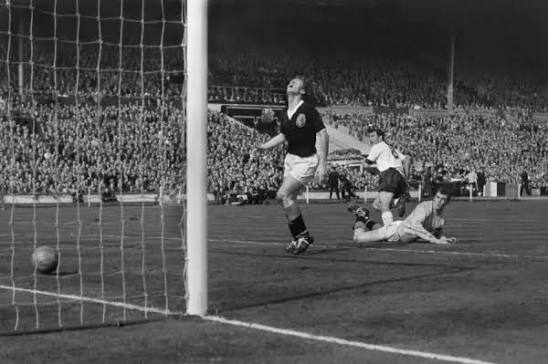
Jimmy Greaves of England scores his hat-trick goal past goalkeeper Frank Haffey and Billy McNeil of Scotland at Wembley

During the mid-to-late 1980s, legendary marksman Jimmy Greaves, who scored a hat-trick past the unfortunate Haffey in 1961, regularly found time to mock the keepers from the place he dubbed ‘Jocko Land’ on Saint and Greavesie, the popular magazine show he fronted with former Liverpool and Scotland forward Ian St John, which often showed footage of Scottish keepers making catastrophic handling errors and Greavesie revelling in their misfortune. Indeed, even after Dundee United goalkeeper Hamish McAlpine’s inspired display against Manchester United in a UEFA Cup tie at Old Trafford in 1984, the Englishman joked that the Scot had ‘got lucky’ and was simply trying to get out of the way of efforts he had expertly repelled, including a penalty from compatriot Gordon Strachan.
Although nothing more than light-hearted banter, the constant digs and jibes sent out a message that Scotland was incapable of producing glovesmen who could be trusted to guard the Tartan Army’s goalposts – a complete nonsense when you think of some of the fabulous goalkeepers who have pulled on the country’s number-one jersey over the years. To name just a few, there has been the courageous John Thomson – who tragically lost his life after bravely diving head first at the feet of Rangers’ prolific forward Sam English in an Auld Firm game in 1931; Jim Leighton – a key member of Aberdeen’s successes in the early 1980s, who won 91 caps for his country and produced a magnificent goalkeeping display in the Rous Cup encounter with England in 1988; Allan McGregor – a Rangers stalwart, whose goalkeeping style and larger-than-life character brought about comparisons with one of his predecessors at both club and international level, namely the ridiculously talented (albeit English-born) Andy Goram, who also played cricket for Scotland; and David Marshall, whose hat-trick of fine performances for Celtic against Barcelona in 2004, one of which included a penalty save from Ronaldinho, propelled him into the spotlight at just 19 years of age.
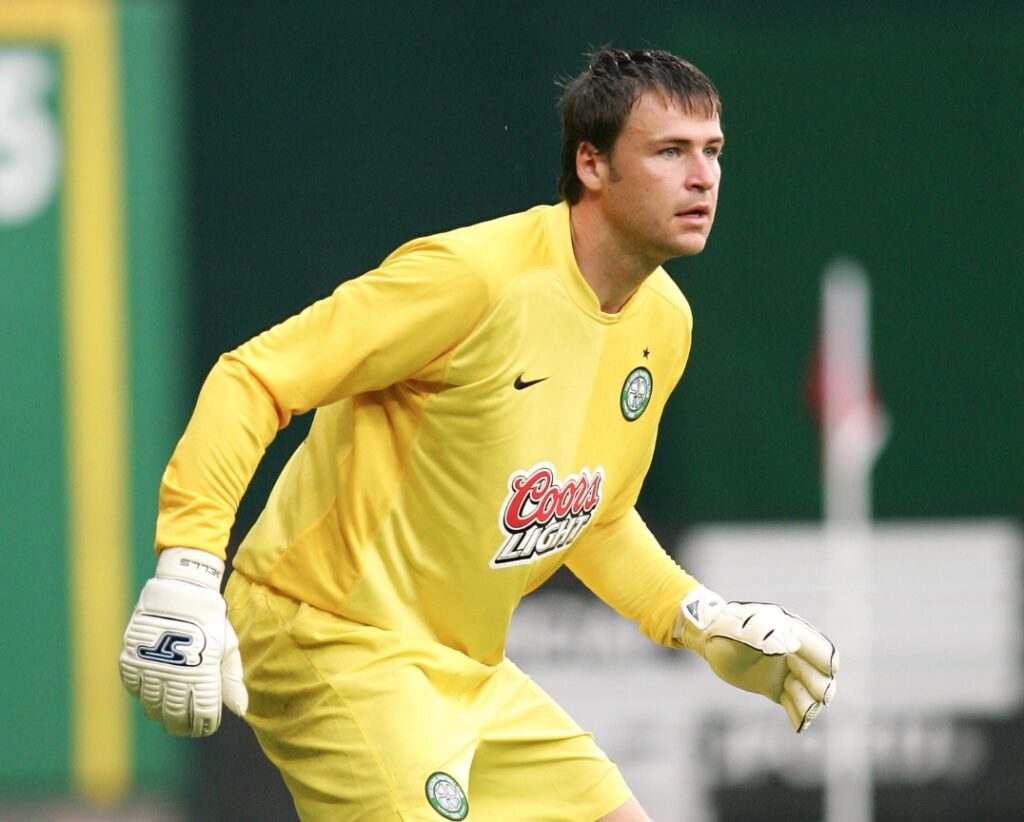
Incidentally, over the following decade or so, Marshall would be heavily linked with a transfer to Goodison Park. And although the move never materialised, the Scot did produce a phenomenal goalkeeping display at the Old Lady in 2014, keeping out efforts from Kevin Mirallas, Gerard Deulofeu and Romelu Lukaku, before eventually being beaten twice in the second half – as Roberto Martinez’s Champions-League chasing Toffees tore into Marshall’s relegation-threatened Cardiff City side.
Despite Everton’s rich goalkeeping history being largely dominated by a certain Welshman – the imperious Neville Southall – an Irishman (Billy Scott), and three Englishmen (Ted Sagar, Gordon West and Jordan Pickford), numerous Scottish goalkeepers have stood between the posts for the Blues, with many of them serving the club with great distinction and playing huge parts in our successes, particularly in the early years. Below you will find a chronological history of those men’s Everton careers.
Towards the end of the nineteenth century, a Scot who briefly found himself guarding the Everton goalposts was Walter Cox. Signed by club secretary Richard Molyneux at the goalkeeper’s home in Leith, Cox, who had fallen out of favour at Burnley, came in for regular stopper Robert Smalley on a short-term deal and played in the last four games of the 1889/90 campaign. Although the goalkeeper missed out on Everton’s inaugural title success the following season – having left Merseyside that summer and signed for non-league Nottingham Forest – Cox did pick up silverware after returning to his homeland, playing a key role in Hearts’ Scottish FA Cup victory in 1895.
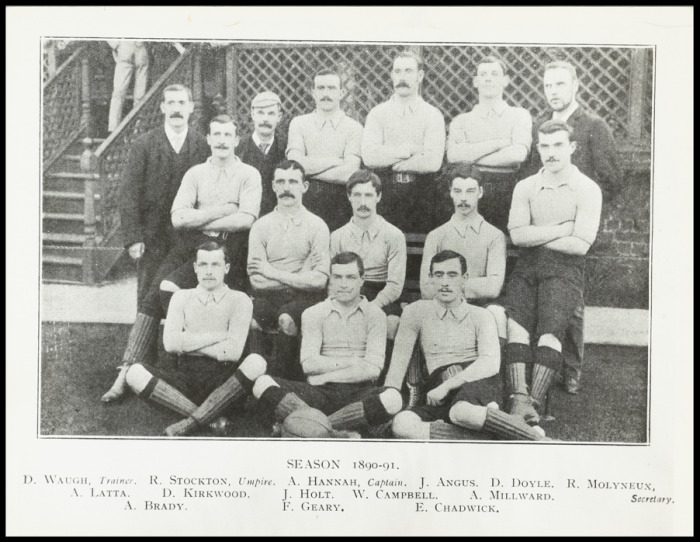
In the title-winning season of 1890/91, both John ‘Jack’ Angus and David Jardine made telling contributions and interventions in the Everton goal. The Toffees began that campaign with five straight victories, before being held to a 2-2 draw with Aston Villa at Villa Park in the October, a match in which the Aberdeen-born Angus, a signing from Football Alliance side Sunderland Albion six months earlier, having previously made his name at King’s Park, received praise in the Liverpool Mercury for the way he had to ‘fist out rather cleverly a beautiful shot from the left’. Nevertheless, after the team suffered a bad run of results and the young keeper kept just one clean sheet in four matches, Angus was replaced in the team by new signing Jardine, who had come to Everton’s attention the previous year, when helping Bootle pull off a major 2-1 shock against them. The match report in the Football Field stated: ‘The young Scot between the sticks punched, kicked and caught the ball with great agility. He threw himself down upon the ball in a manner which even the heartbroken Evertonians could not forebear to cheer.’

Winning seven of the first eight league games in which the Lockerbie-born custodian kept goal, Everton returned to the top of the league in some style and took the title from Preston North End – finishing two points ahead of the Lilywhites in a closely fought contest. In his four-year Everton spell, Jardine became not only one of the first Kings of Anfield but also the first goalkeeper to play for the Blues at Goodison Park, following the club’s move across Stanley Park in 1892. He would later go on to win the Welsh FA Cup, with Wrexham in 1897, before returning to Scotland.
Tragically, just months after playing his part in Everton’s first championship success, John Angus died after contacting typhoid fever while back in Scotland. The Sunderland Echo paid this moving tribute to the late goalkeeper: ‘Although only 24 years of age, Angus was a player of ripe experience, and as a goalkeeper he had few superiors. He rarely allowed high shots to pass him; if he had a weakness, it was for low shots, which sometimes puzzled him. Tall and strong, Angus was in appearance a model goalkeeper, and his genial disposition won for him lots of friends in Sunderland, among whom there have been many expressions of regret at his demise.’
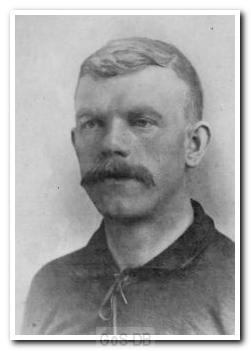
Everton’s first season at Goodison Park was a strange one in terms of the goalkeeping position. Eight keepers were used across the 30 matches that term – a club record, at the time of writing, since the inception of the Football League. Among them were Alex Rennie and the brilliantly named Archibald Pinnell, who managed just a handful of games for the club between them – yet experienced the exhilarating highs and devastating lows the position brings during their very brief Everton careers. Rennie had been signed from Halliwell in November 1892, with Everton paying the Lancashire outfit £30 to capture his signature. On his debut, the Scot was beaten five times – in a 3-5 defeat to Sheffield Wednesday – but then went on to keep clean sheets in matches against Notts County and West Bromwich Albion, the latter being a game in which he was in superb form and instrumental in the club gaining a 1-0 victory at Goodison Park. The Glasgow Herald described him as being in ‘capital form’ that day. Notwithstanding, his outstanding performance against the Throstles turned out to be his last in an Everton shirt. In July 1893 Rennie signed for Liverpool. He then went on to play for the Liverpool Police football team.
Earlier that campaign, Archibald Pinnell had come into the side for the 2-2 draw with Blackburn Rovers, seven days after David Jardine had come off injured in a 1-4 defeat at Villa Park and been replaced in goal by half back Bob Kelso – a Scotland international and future captain of his country, who would again take on the role of emergency goalkeeper over two years later following an injury to Richard Williams at Sheffield United. Having performed competently at Ewood Park, Pinnell, described as ‘a very lengthy chap’ by The Clarion, kept his place for Everton’s next game, keeping a clean sheet in the 6-0 demolition of Newton Heath at Goodison Park. Just three days later, the clubs met again but, with the teams locked at 1-1, the game was abandoned by the referee after 75 minutes as it had become too dark for him to distinguish aspects of play.
Sadly for Pinnell, his time at the club would end badly. In a 1-4 loss to Sunderland, the goalkeeper endured a nightmare performance, with the Athletic News going in particularly strongly on the rookie, who had originally been signed by Everton as a centre-forward: ‘Where the real difference in the two teams lay was in the goalkeeping. Pinnell is said to have done well against [Blackburn] Rovers, but I saw nothing in this match to justifying him in claiming ability as a goalkeeper. He never shaped anything like one, and adopted the dangerous experiment of kicking at balls when he could have used his hands, and in other instances he was very undecided what to do. I don’t know whether Murray is eligible or not but he gave me the impression that he does know something about keeping goal.’
After joining the Scots Guards and surviving the First World War, Pinnell saw out his working life as a coalminer back in Blantyre, the Scottish town in which he had first come to the attention of Everton’s scouts.
Incidentally, very little is known of the presumably Scottish stopper ‘Murray’ mentioned in the Athletic News report above, who played just a couple of times for Everton that season. Like both Rennie and Pinnell, the mystery ‘Scot’ also experienced the highs and lows of goalkeeping – performing well, according to the Athletic News, in a 6-1 victory over Derby County, having, just seven days earlier, angered the Everton supporters, who, according to the Football News, ‘were disgusted’ with their keeper’s performance in a 1-4 loss to Bolton Wanderers at Pike’s Lane.
Another Everton man who was far from happy after the game in Bolton was Scottish utility player Hope Robertson, who, having not played any part in the match, took umbrage at being summoned to a dressing-down meeting called by the board of directors and chose not to attend. Having received a letter from the secretary demanding an explanation, Robertson ‘liberated’ a crossbar from the stadium by way of protest and told the club, ‘If the directors want it back, they must send a man to remove it.’ Interestingly, ten days earlier – with Everton facing a keeper crisis – Robertson played the full game in goal at Newton Heath, with the Toffees narrowly coming out on top in a seven-goal thriller. After leaving Everton for Bootle – and his new club going into liquidation not long after – Robertson returned to his native Scotland and signed for Partick Thistle. After a spell back in England with Walsall Town Swifts, the tough Glaswegian saw out his football career back north of the border with Airdrieonians.
See more on Hope Robertson on here – Red Cards, Late Arrivals and Goalie Wars – by Paul Owens
Plus in print: Sawyer, R., The Hope Robertson Chronicles, Amazon, (2022)
Colourful character William John Hillman, known as ‘Happy Jack’ throughout his career – signed for Everton from Burnley in February 1895. The following season, the Tavistock-born custodian was an ever-present until the final day, when he lost his place to Henry Briggs – a £50 signing from Darwen. All very interesting, I hear you say, but, why, you may ask, has information about Happy Jack – an Englishman – been included here? Well, in the summer of 1896, having failed to settle on Merseyside, Hillman was on the move up north to Scotland, where he signed as both a goalkeeper for Dundee and a wicket-keeper for Forfarshire CC. However, his spell with Dundee proved to be an unhappy one, as he was suspended by the cash-strapped club for apparently ‘not trying’ midway through the 1897/98 season. In March 1898, Hillman moved back to England and began his second spell with Burnley. A year later, he gained his only international cap – playing in England’s 13-2 victory over Ireland in Sunderland. More controversy would soon follow, however, and, after allegedly attempting to bribe the Nottingham Forest players on the final day of the 1899/1900 season, when the Clarets failed to fight off relegation, he was banned for the entirety of the following campaign.
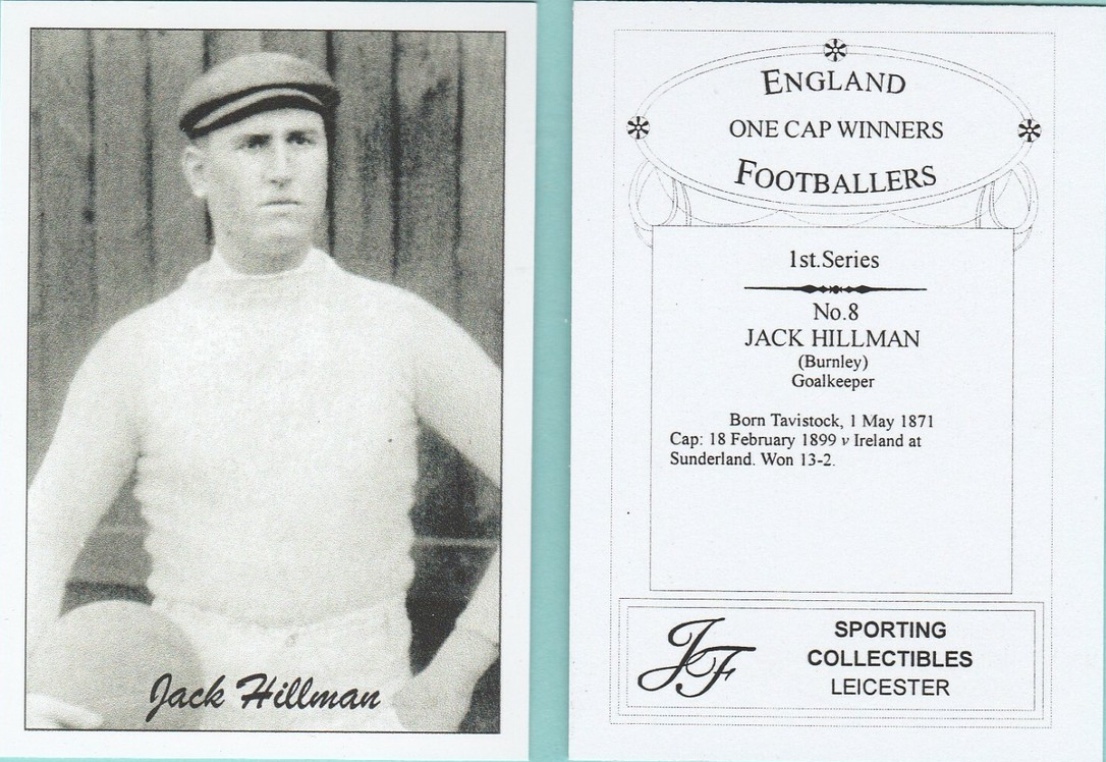
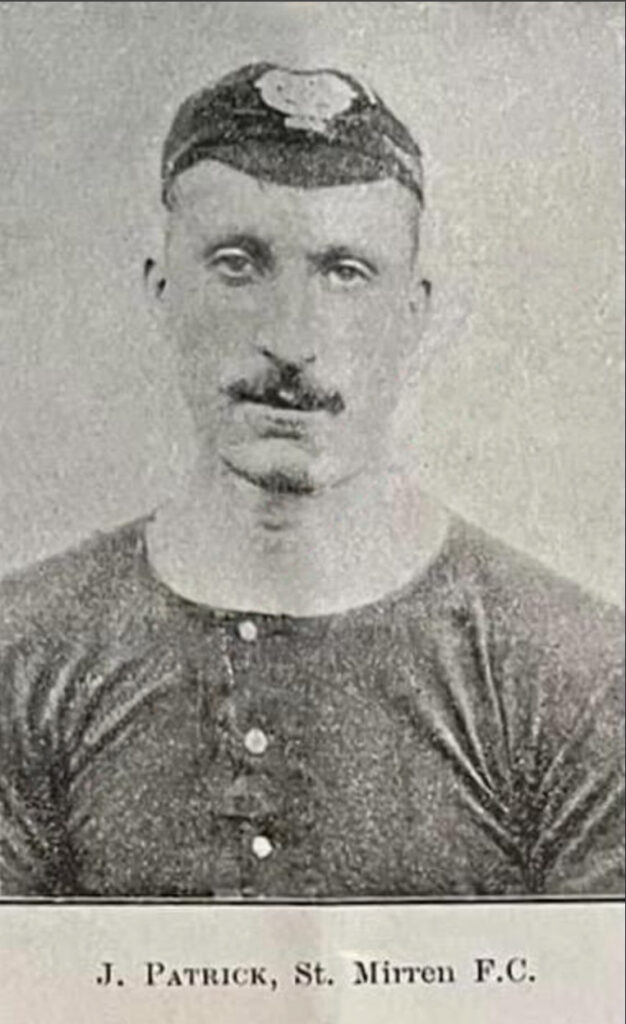
Before the turn of the century, three men who would all gain international recognition for Scotland during their careers lined up in goal for Everton: John Patrick, Robert ‘Rab’ Macfarlane and Willie Muir. In November 1896, the highly-rated Patrick came in on trial for the 6-0 victory over Burnley, which caused great excitement in the Liverpool Echo, whose reporter appeared to forget the goalkeeper’s nationality in the build-up to the game: ‘For their match tomorrow Everton have arranged a big surprise for their supporters. Patrick, the goalkeeper of Paisley St Mirren, who signed a league form for Everton a couple of seasons ago, has been prevailed upon to visit Liverpool, and will appear between the sticks against Burnley tomorrow. He is in splendid form just now and is looked upon as the only man who can expect with confidence his English cap this season.’ Although the goalkeeper played only the one game for Everton, returning to St Mirren after the match against Burnley, the Kilsyth-born custodian did go on to receive international honours the following year – playing for Scotland against both Ireland and England in 1897.

Next up was the Greenock-born Macfarlane, who started the 1897/98 season as Everton’s first-choice goalkeeper, having joined the club from Third Lanark. He came south of the border with great things expected of him – having been capped by Scotland the previous year, playing in their home international with Wales. However, after just nine games for the Toffees – and following a heavy defeat at home to Sheffield United, he was replaced by his compatriot Muir, who, over the next five years, would become the first Everton goalkeeper to play more than 100 competitive matches for the club. Macfarlane would go on to reach the same milestone himself, back in Scotland with Aberdeen, but not before a nomadic spell either side of the border, which saw him turn out for Bristol St George’s, East Stirlingshire, New Brompton, Grimsby Town, Celtic and Middlesbrough within a six-year period.
Willie Muir joined Everton for £45 from Kilmarnock in May 1897 and made a strong start to his Goodison Park career. After coming into the side at the start of November, he was an ever-present in the team for the rest of his maiden campaign, saving two penalties early in the new year. The Liverpool Mercury labelled the Coalburn-born keeper a ‘capable custodian’ and described him as ‘steady, cool and fast’ after his performance in the 1898 Christmas Eve 1-0 victory over Burnley, a game in which he ‘excelled himself between the uprights, saving his charge from Torran when a score appeared a certainty’. Over the next few seasons he was a near-ever present in the Everton team.
Nevertheless, after losing his place in the team to patient understudy George Kitchen at the start of the twentieth century, Muir returned north of the border in the summer of 1902 and signed for Dundee. His fine form for the Dens Park outfit resulted in him being selected for both the Scottish League XI, for whom he kept a clean sheet in the 0-0 draw with their English counterparts on 2 March 1907, and his country – playing for Scotland in their 3-0 victory over Ireland at Celtic Park just two weeks later. After short spells with Bradford City (where he won a Second Division championship medal), Hearts and Dumbarton, Muir retired at the age of thirty-three. Everton’s first centurion stopper had enjoyed an excellent career.
In the first fifteen years of the twentieth century, opportunities were limited for Scotsmen to guard the Goodison Park goalposts – thanks mainly to the remarkable levels of consistency found by both Irishman Billy Scott and Englishman Tom Fern before the outbreak of the Great War. Indeed, it was not until the 1912/13 campaign – ten years after Willie Muir’s departure – that we got our next Scotsmen playing in goal for Everton, though left back Jock Maconnachie had acted as an emergency goalkeeper and taken over from the injured Billy Scott in the ill-fated FA Cup semi-final replay against Barnsley at Old Trafford in 1910 (incidentally, the Aberdonian would go on to make another two appearances as an emergency stopper over the next five years).
Ahead of the 1912/13 campaign, major changes were made in the Everton goalkeeping department, with Scottish duo James Caldwell and William Hodge coming into the club. Caldwell, a £500 signing from Reading, started the season as first choice, but lost his place in the March after an awful performance against Oldham Athletic in the FA Cup, a game in which his erratic kicking and handling error in the lead-up to the visitors’ winning goal drew strong criticism from supporters and newspaper reporters alike. At the end of the season, having played just three more first-team games, the Carronshore-born stopper left the club for a reduced transfer fee of £200. After short spells with Woolwich Arsenal and at former club Reading, the goalkeeper served as a private in the Black Watch during the Great War. He then returned to Scotland, where he won the Second Division title with Alloa Athletic before finishing his career at East Stirlingshire.

Featuring both Hodge and Caldwell. This is also the first reported use of an Everton crest on the team shirt
After the FA Cup exit to Oldham, William Hodge – a free transfer signing from Kilwinning Rangers – was handed his chance at home to Sheffield United and received huge praise for his debut display – with the Liverpool Echo describing him as being ‘safe, acute and swift in clearance’, and reporting that he received great applause from the Goodison crowd. Such is a goalkeeper’s lot, though, that a week later he dislocated a finger in a 3-1 win at Chelsea. Although the Scotsman returned for the last four matches of the season, he played only four more times for Everton’s first team and was released at the end of his contract in May 1914.

Everton’s next Scottish custodian, Elgin-born Frank Mitchell, made 24 competitive first-team appearances during his war-interrupted spell at the club. After starting the first nine games of the 1913/14 campaign, the goalkeeper lost his place in the team following an error-strewn display against Manchester City, when, according to the Daily Citizen, his poor handling and indecision ‘made his colleagues tremble.’ From that point on, the former Motherwell man was mainly employed as the club’s understudy goalkeeper – winning the Central League with the reserves in his first season on Merseyside – with new signing Tom Fern instantly making the first-team spot his own. Following his arrival from Lincoln City in December 1913, Fern would go on to make 231 appearances for the club and become a true club legend – playing a huge part in Everton’s 1914/15 title success.
Nevertheless, although Mitchell held the first-team position for only a short period, it is important to highlight that he did play three games in the victorious 1914/15 campaign, and that he made an impressive 99 appearances for Everton during the wartime football period – a number of appearances bettered by only five Everton players during that time. Having started the first campaign after the Great War between the posts at Goodison Park, Mitchell moved on to Liverpool in 1920 and later joined Tranmere Rovers, meaning he shares the distinction of turning out for all three Merseyside clubs with 1950s legendary forward Dave Hickson. The only other Scot to make an appearance in goal for Everton around that time was skilful full back David Raitt, who temporarily took over goalkeeping duties from Ireland international Alfie Harland at Newcastle in April 1924, after the Everton keeper retired having taken a blow to the head. Unbelievably, Harland returned to the field of play after receiving treatment.
If opportunities for Scots to impress in goal for Everton were few and far between in the opening three decades of the twentieth century, then it became an almost impossible task in the four that followed – with the commanding Ted Sagar, affectionately known as ‘The Boss’, dominating the Goodison goalkeeping landscape in the 1930s and 1940s, and the genial Gordon West doing likewise throughout the Swinging Sixties. Even in Everton’s troubled 1950s period between Sagar and West’s outstanding careers, it was an Irishman, the lithe and acrobatic Jimmy O’Neill, who made the most starts between the posts for the Blues. Between them, Sagar, O’Neill and West made a staggering 1,113 appearances for the club. Indeed, the only Scot to keep goal during that period was an outfielder acting as an emergency stopper – with utility man Sandy Brown taking over from the injured Andy Rankin (another Englishman, and one widely regarded as the best back-up keeper in Britain in the 1960s) at Stoke in 1964 and then Gordon West, following the legendary (and temperamental) goalkeeper’s dismissal for striking Newcastle United forward Albert Bennett in 1967.

In Dr David France and Becky Tallentire’s book, Gwladys Street’s Holy Trinity, West recounted the incident: ‘In those days it wasn’t uncommon for the nastier forwards to bad-mouth or spit at the keeper. So I learned to retaliate by throwing the ball out with a clenched fist and if they didn’t get out of my way then it was their own fault. Well, this day a fella called Burton [sic] happened to get on to the end of my fist and, shortly after he hit the deck, the referee directed me towards the showers. Sandy Brown, who would play anywhere for Everton, pulled on my green shirt and the first time that he touched the ball was to pick it out of the net from the penalty kick. I sulked most of the way home on the coach until Sandy tried to console me by informing me that I’d ruined the game for him. I simply glared at him: “I don’t know what you are going on about. It was 0-0 when I came off!” I had expected Bally [Alan Ball] to have a go at me, not an unsung hero like Alexander Dewar Brown.’
In the early 1970s, following the departures of both West and Rankin, Everton’s goalkeeping situation was a real mess. Welshman Dai Davies and England U21 international David Lawson had been brought to the club as replacements, but neither keeper did anywhere near enough to satisfy the demanding Goodison crowd. In November 1975, with both stoppers sidelined with injuries, teenager Drew Brand was handed his chance at Elland Road. Sadly, it wasn’t an opportunity the Edinburgh-born keeper was able to grasp – he conceded five goals in a 5-2 mauling, though it must be stated that he also made a number of fine stops in West Yorkshire that day as Jimmy Armfield’s side well and truly put Billy Bingham’s sorry Blues to the sword.

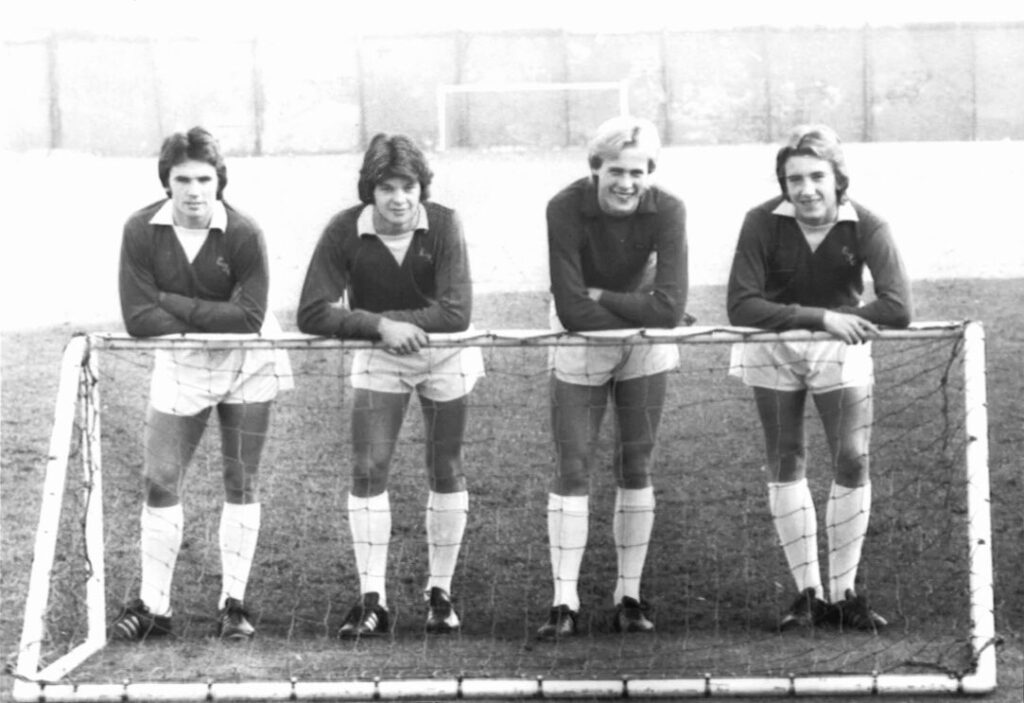
On the final day of the following campaign, Brand made his only other Everton appearance – a far happier one, keeping a clean sheet in a 2-0 home victory over Newcastle United. After a spell on loan at Crewe Alexandra, he signed permanently for Hereford United in 1980 but left the professional game three years later to become a police officer in Cheshire. Everton FC Heritage Society vice-chairman and historian Mike Royden got to know Brand during his time with the Blues. Mike told me: ‘We met through our girlfriends at the time who worked together, and I can remember that first handshake as his hands were huge, which we laughed about at the time, being a good attribute for a goalie. So the four of us would meet up occasionally, we were all about the same age, around nineteen or twenty. As an Everton fan and a goalie too, we always had a lot to talk about! Years later, I was teaching in South Wirral in the 1990s, and by an amazing coincidence his son was in my class. He was a good footballer too, a midfielder and captain of the school team. We organised coach trips to support them in their cup run, which they eventually won, the Cheshire Schools under 16s I think it was. And of course he’d been brought up an Evertonian.’
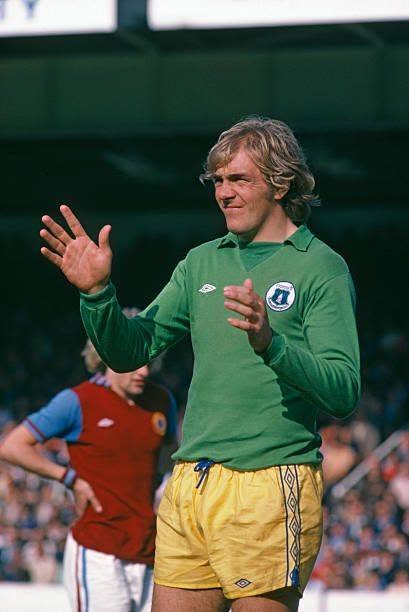
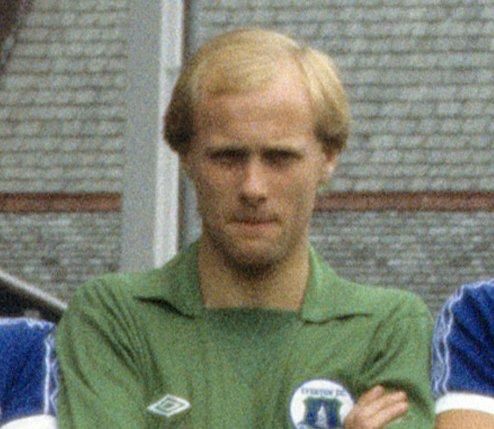
The mid-to-late 1970s was a frustrating period for many Blues, as new manager Gordon Lee’s free-flowing side, containing the prolific forward Bob Latchford, stylish and elegant Martin Dobson and creative Dave Thomas, came close to lifting silverware on more than one occasion. Indeed, many match-going Evertonians of that period still believe that they were only a top-drawer goalkeeper away from being a title-winning side during that time. Nevertheless, a keeper who many Toffees hold close to their hearts from that period is Douglas-born George Wood, a £150,000 signing from Blackpool in 1977, following a failed attempt by Lee to bring another Scot, David Harvey, to the club from Leeds United. Wood came into the team at the start of the 1977/78 campaign and performed outstandingly well in his first two seasons on Merseyside, barring a nightmare debut at home to Nottingham Forest, a game in which he was blamed for all three goals in a 3-1 defeat.
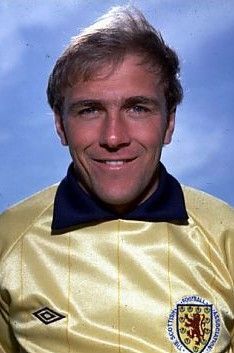
At Anfield, in a bruising autumnal encounter, he was magnificent in a 0-0 draw, which had the Liverpool Echo reporter Michael Charters stating Everton would have been well beaten had it not been for Wood, ‘their finest goalkeeper since Gordon West’. His team-mates were equally gushing with their praise. Ahead of the trip to Portman Road in November, Mick Lyons told the same newspaper, ‘George Wood usually pulls off great saves, and that makes us feel that we can go and win.’ That season, they normally did – finishing third behind Nottingham Forest and Liverpool, having battled for the title until the final month of the campaign.
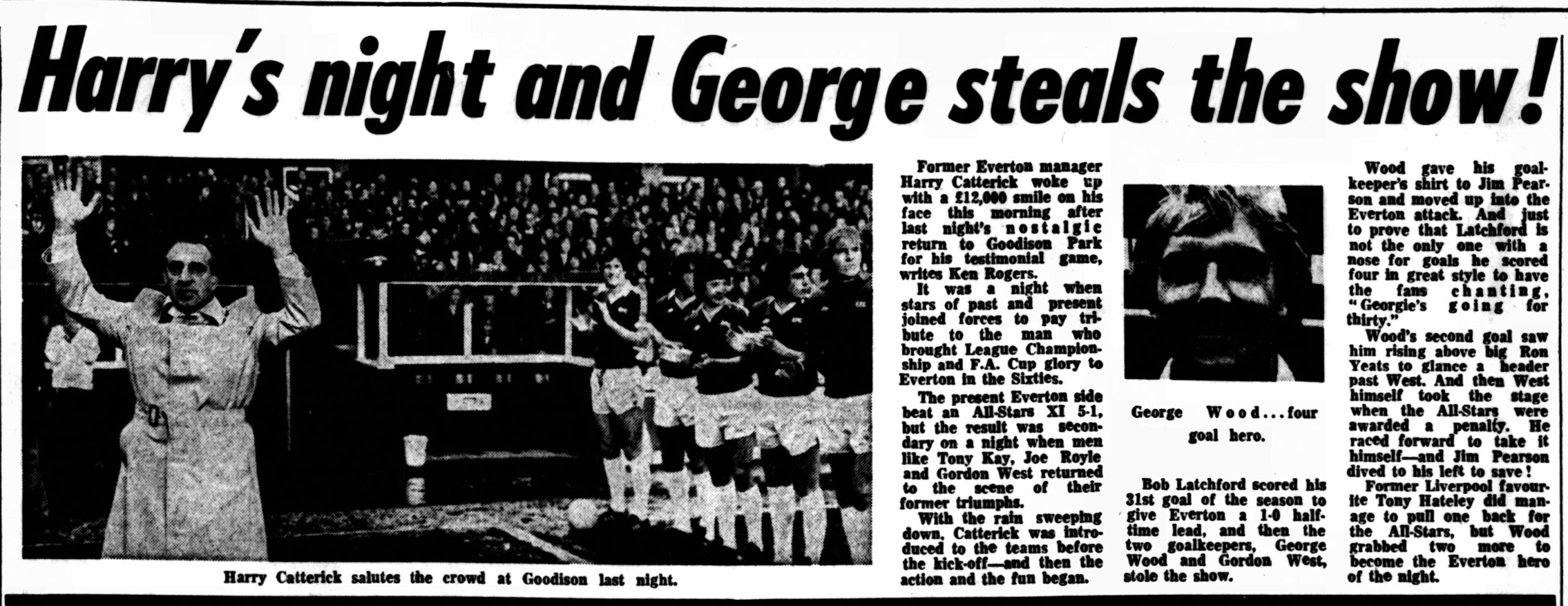
He also scored a great number of goals! With Everton leading 1-0 against an All Stars XI in Harry Catterick’s testimonial that summer, Wood swapped shirts with striker Jim Pearson and joined Bob Latchford in attack for the second half. By the end of the game, he had scored four goals as Everton trounced their opponents 5-1. At Runcorn just 24 hours later, he scored again in a testimonial for Alan King, and then banged five goals in at Wigan in another testimonial before the week was over. Ten goals in three matches was some record for any player, never mind a goalkeeper! He did have previous form in front of goal, however, having played, and scored, as a forward for East Stirlingshire early on in his career.
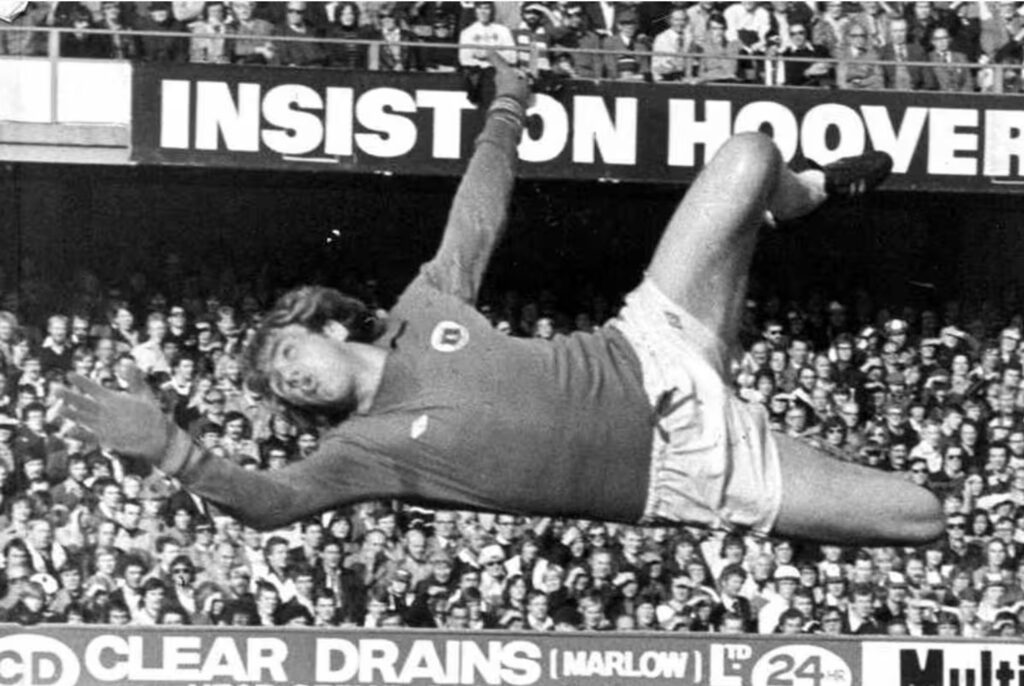
Back between the posts, his fine form continued in the 1978/79 season – with Wood conceding just 40 goals in 42 league games and Everton challenging for the title late into the campaign. At Anfield in the March, he again performed heroics, making a number of tremendous saves that earned Everton a point and drew special praise from his opposite number Ray Clemence, who told the Liverpool Echo, ‘George was brilliant. Without him, we could have been four or five up before they got back into it. Two or three saves were out of this world. For me his best save was from David Johnson’s diving header just after half-time. It was the sign of a good goalkeeper that he didn’t give up when all seemed lost.’
Wood’s fine performances throughout his first two seasons on Merseyside brought him international recognition, with the goalkeeper making his debut for Scotland, in a 1-0 victory over Northern Ireland in May 1979. He played twice more for his country that year, against England and Argentina, and holds the dubious title of being the first goalkeeper that Diego Maradona scored against in Argentina colours.
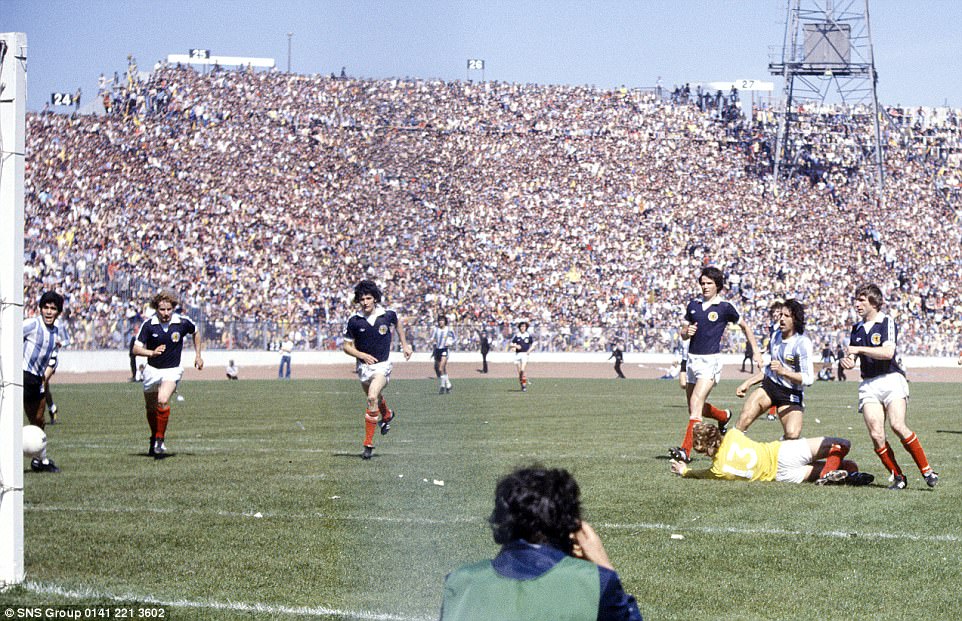
Sadly, the drop-off in Wood’s form and that of the whole squad the following season was massive and to this day remains a mystery to many Evertonians. A public fallout with the manager regarding not only a demand for a better contract but also his performances in both legs of the UEFA Cup tie with Feyenoord sadly spelled the end for Everton’s affable last line of defence, who enjoyed a wonderful relationship with the Goodison crowd. When interviewed for my book The Glovesmen of Goodison: A History of Everton’s Goalkeepers, author and journalist Brian Viner had the following to say about his hero from the 1970s: ‘There was something about Georgie Wood, even for an entirely heterosexual 16-year-old that was just incredibly beguiling and actually quite sexy. He was handsome and had this incredible head of blonde hair. I stood on the Gwladys Street terraces and he would respond to us whenever we asked him to give us a wave. My friends and I really worshipped him. He was physically the closest player to us at a game and to see him pull off a truly acrobatic save in front of us was incredible, really.’
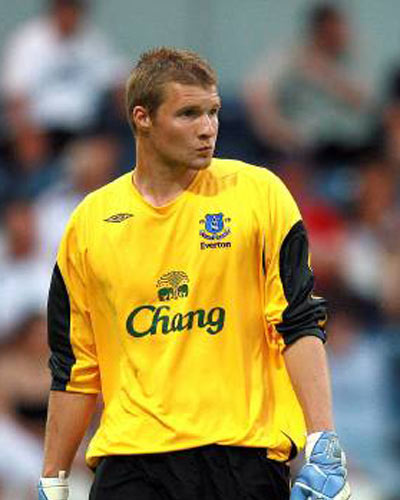
Over the last forty-six years, only one Scotsman has played in goal for Everton – namely, Iain Turner, a £50,000 signing from Stirling Albion, who made just 6 appearances during his spell on Merseyside, deputising for the likes of Richard Wright, Nigel Martyn and Tim Howard. After the hapless Wright had fallen over a sign telling the keepers not to warm-up in the penalty areas ahead of an FA Cup tie at Stamford Bridge in January 2006, Turner made his Everton bow on a tough night in West London, when Everton exited the competition after a 1-4 loss to Jose Mourinho’s expensively assembled side. Three days later, the Stirling-born stopper made his Goodison debut but lasted less than ten minutes as he was sent off by referee Peter Walton for handling centre-half Alan Stubbs’ headed back pass outside his box in the early exchanges of the 1-0 victory over Blackburn Rovers. In 2011, after eight years at the club (and eight loan moves), Turner signed for Preston North End, for whom he scored a goal with a long punt upfield against Notts County.


It has been almost twenty years since a Scot kept goal for Everton. Nevertheless, the Everton-Scotland goalkeeping connections remain to this day. Between 1998 and 2013, Everton’s keepers were put through their paces by Chris Woods, the former England international who enjoyed incredible success at Glasgow Rangers during his playing career before moving down south and joining Sheffield Wednesday in 1991. Following retirement, and Howard Kendall’s departure from the Goodison hot-seat in the summer of 1998, Woods teamed up with incoming manager Walter Smith and his assistant Archie Knox, with the hope being that the former Ibrox trio could bring the winning mentality that they had mustered in Glasgow to the Blue side of Merseyside. Alas, it wasn’t to be – though Woods’ reputation as one of the country’s finest goalkeeping coaches continued to grow during his time at the club – with Tim Howard in particular paying tribute to the coach who had helped him to regain his confidence after an awful experience and relationship breakdown at Old Trafford, not only with his manager Sir Alex Ferguson but also his goalkeeping coach, Tony Coton. After leaving Everton with David Moyes in 2013, Woods continued his coaching career, firstly at Manchester United and then at West Ham United, where he teamed up with former Everton defender Slaven Bilic. On the international front, he has been Scotland’s goalkeeping coach for the past five years and was part of Steve Clarke’s backroom staff at this summer’s World Cup finals tournament.
Paul Owens
Acknowledgements
Huge thanks to Jamie Yates, another masterful writer at the Society, for proofreading this piece and inspiring me to write it in the first place.
A massive thank you to Everton FC Heritage Society vice-chairman Mike Royden for doing a fabulous job researching and inserting the images into this article and for his fine words on Drew Brand.
Thank you, Brian Viner, for both your time and brilliant thoughts on George Wood and Everton’s other keepers of the 1970s when I was researching The Glovesmen of Goodison: A History of Everton’s Goalkeepers.
References and further reading
Owens, P., The Glovesmen of Goodison: A History of Everton’s Goalkeepers, Pitch Publishing, 2025
France, D. and Tallentire, B., Gwladys Street’s Holy Trinity: Kendall, Harvey and Ball, Skript Publishing, 2001
Onslow, T., ‘Well-Tailored to Keep Goal for Everton’ (an article that originally appeared on the website www.toffeeweb.com and now archived on www.evertonia.com)
Sawyer, R., The Hope Robertson Chronicles, Amazon, 2022
Newspapers and Periodicals
Athletic News
The Clarion
Liverpool Mercury
Liverpool Echo
Liverpool Daily Post
Daily Citizen
Football News
Glasgow Herald
Sunderland Echo
……………………………………………
Paul Owens is the author of The Glovesmen of Goodison, on sale in all good bookshops and online
(click image)
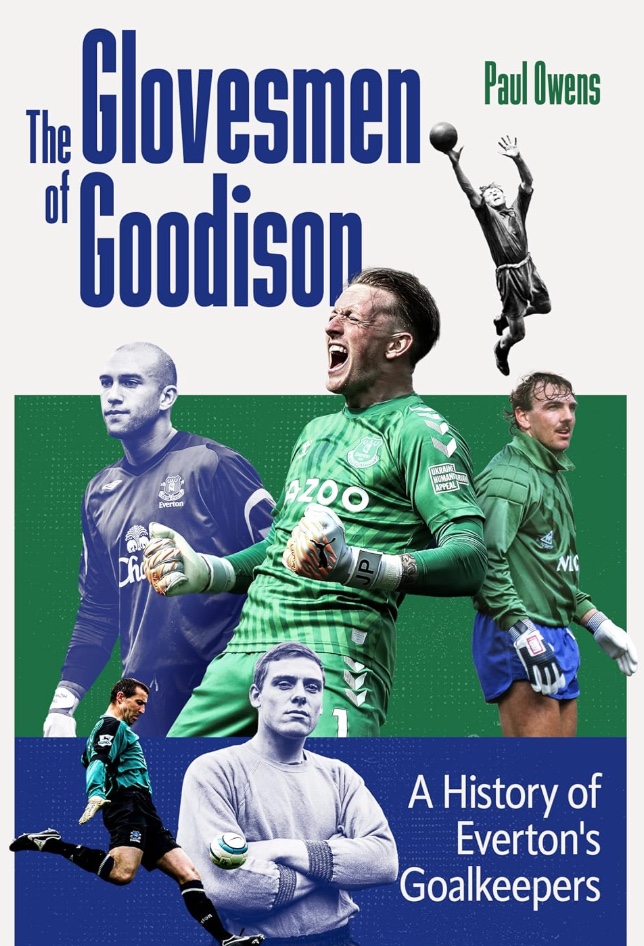
See Pauls’s appearance with goalkeeper coach Alan Kelly on our Everton Heritage Show, presented by Lewis Royden;
………………………………………………………………………….

I remember seeing George Wood pull off the greatest single performance I’ve ever seen from an Everton goalie (even better than Neville) at Anfield in the late Seventies. If I recall properly, Dalglish eventually scored for them with Andy King rescuing a barely-deserved point for us. Think it was a night match and it felt like LFC v George Wood at times.