Everton amateur footballer, Olympian, Wartime Major and Captain of industry
Richie Gillham and Dr David France
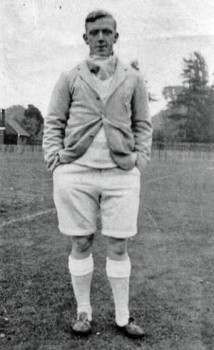
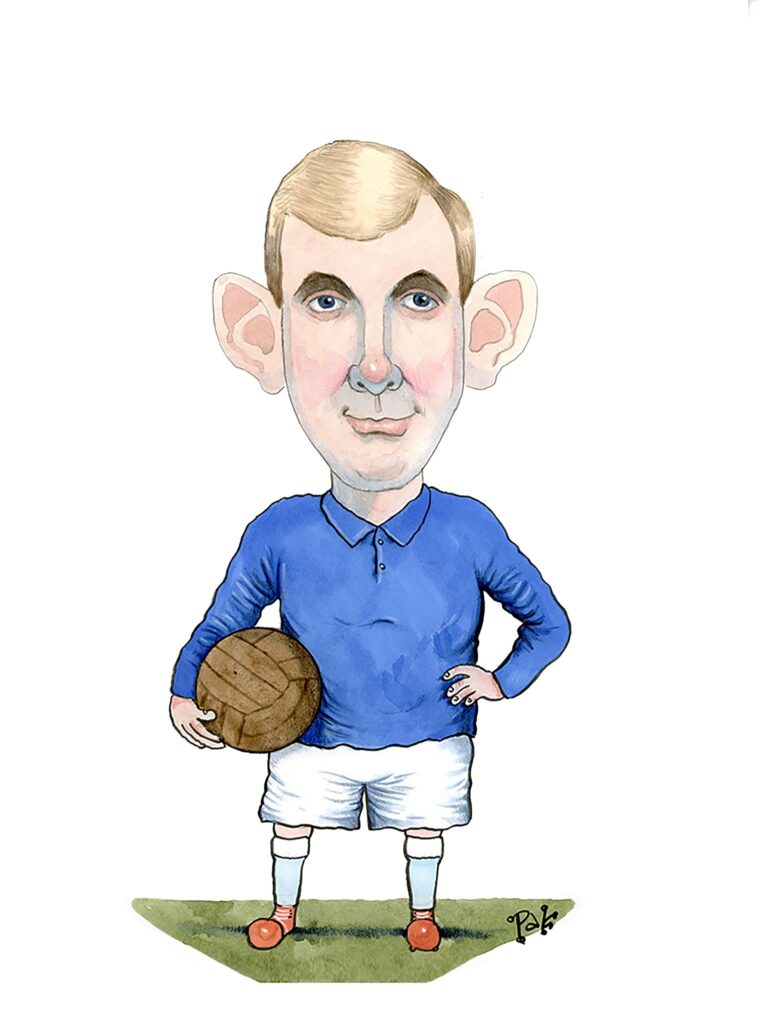
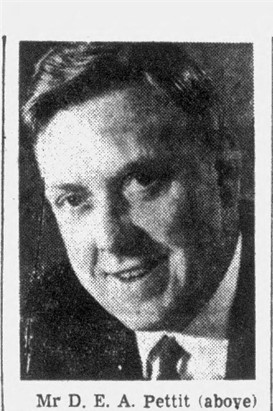
Sir Daniel Eric Arthur Pettit was a Liverpool-born amateur footballer who represented Great Britain in football at the 1936 Berlin Olympic Games and signed and played for Everton at amateur level in the same year. He served as an officer in the Royal Artillery during the Second World War and went on to enjoy a successful career in British industry.
Pettit was born in Liverpool on 19 February 1915, one of six children born to Thomas Edgar Pettit, a bookkeeper and fruit merchant. Raised first in Walton and later in Mossley Hill, he attended Quarry Bank High School, leaving in 1934.
Pettit was noted for both academic promise and athletic ability. Contemporary school athletics reports credit him with winning the senior quarter mile at Liverpool & District Secondary Schools level, placing in hurdles and high jump events, and setting a mile record at a school sports day, where he tied for the Victor Ludorum award (for best all-round competitor).Newspaper accounts described him as a talented all-round .
In the Liverpool Football Echo sporting column, ‘Stud Marks,’ he was identified as an Everton amateur footballer, playing as a centre-half and appearing for Everton’s minor sides. Later recollections also place him in junior football associated with both Liverpool and Everton, with reported appearances for Everton Reserves.
University football and the amateur game
In 1934 Pettit went up to the University of Cambridge to read History at Fitzwilliam House, later called Fitzwilliam College (some accounts have described his course as History and French). He became a central figure in Cambridge University A.F.C., first appearing in more advanced roles but soon establishing himself as a cultured, tactically astute half-back, described in match reports as a ‘steadying influence’ who could read the game and distribute calmly under pressure. His positional versatility was notable: across successive seasons he appeared at inside-forward, wing-half and centre-half, and was at times used in a deeper ‘third back’ role to protect the defence in high-class amateur fixtures.
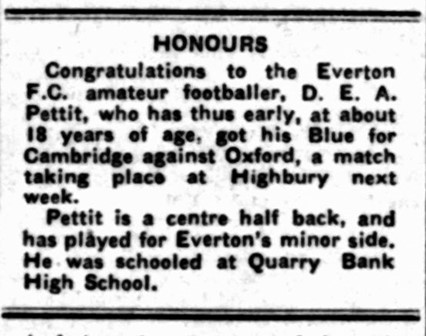
A four-time Cambridge football Blue, he featured in Varsity matches against Oxford played at Highbury and was later captain of the side (1937/38). In 1936 he served as Honorary Secretary of Cambridge University A.F.C. The Cambridge teams of this period frequently mixed experienced and inexperienced players; reports credited Pettit’s leadership with helping the side to recover from slow starts and finish seasons strongly.
During his early Cambridge years, he was reportedly approached about turning professional (including receiving an invitation to sign for Arsenal), but he chose to remain an amateur.
In January 1935 the Liverpool Football Echo published a feature interview in which Pettit praised Everton’s style of play and explained his preference for remaining an amateur.
‘Put down Everton as the most artistic side in the country today – yes, including Arsenal. I’ve seen ’em both. Watching Everton at the top of their form is, in my opinion, nothing short of a revelation!
As for Pettit—well, read what Hunter Hart (who is in charge of the Everton ‘A’ side) says: “A very promising lad: has the right physique and will, I am sure, develop into a really good centre half.” While on vacation, Pettit trains at Goodison.’
Alongside his university football, Pettit played for the Corinthians, the leading amateur club of the period, and toured Denmark and Germany with them in 1936. He was also selected for a range of representative sides and trial matches associated with the Football Association’s amateur programme, including North v South and other amateur international trials.
When home from Cambridge he appeared for Northern Nomads, another famous amateur outfit, and in holiday fixtures for South Liverpool. He was reported to have signed for Runcorn as a centre-half during the 1935/36 season. Later pre-war press reports mention Port Sunlight, including involvement in F.A. Amateur Cup ties, and describe him as the club captain. He also had captaincy roles in county and city representative football, including Cheshire F.A. and Liverpool F.A. selections connected with the Northern Counties Amateur Championship.
Outside football he played competitive cricket for Garston, with one local paper reporting a score of eight in a match against Rev. J. M. Swift’s XI.
1936 Berlin Olympics
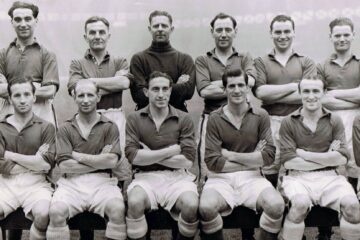
Having come into contention through his amateur representative football, Pettit was selected for Great Britain’s Olympic football team at the 1936 Games in Berlin, joining the squad as a late replacement for Moor Green’s half-back Tom Leek. He played in both matches: a 2–0 win over China on 6 August 1936 at the Mommsenstadion and a 5–2 defeat by Poland on 8 August 1936 at the Poststadion. Great Britain’s final placing was joint fifth.
Pettit also won a single England Amateur cap for his appearance in a 8–2 win against Wales at Belle Vue, Rhyl, on 29 January 1938. He was unavailable when selected again.
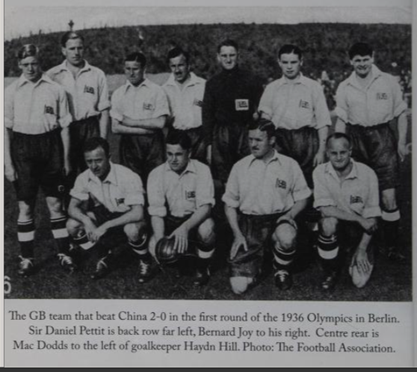
Pettit’s time in Germany during the 1936 Berlin Olympics left some of the most vivid and, in all likelihood, contradictory memories of his life. The British team made a politically charged excursion to Berchtesgaden, where players were required to shake hands with Adolf Hitler. Although he did shake hands with the German leader, Pettit later said, ‘I’ve been washing my hands ever since.’ He would also subsequently claim that the team drew the line at performing the Nazi salute, instead choosing to be ‘British’ and simply turn their eyes right as they marched past.
After the Poland game, the Commonwealth athletes were invited to the British Embassy where Pettit found himself unwittingly in conversation with high-ranking Nazi officials Doctor Joseph Gobbels and Joachim Von Rippentrop. Yet amid the propaganda and intimidation, one encounter stood apart for Pettit: namely meeting Jesse Owens. He was deeply struck by Owens’ modesty and quiet dignity, and the impression was so lasting that Pettit later carried small cards bearing Owens’ photograph, each one personally signed by the American sprinter. Reportedly, for decades afterwards he would hand these out to friends and acquaintances.
Wartime service
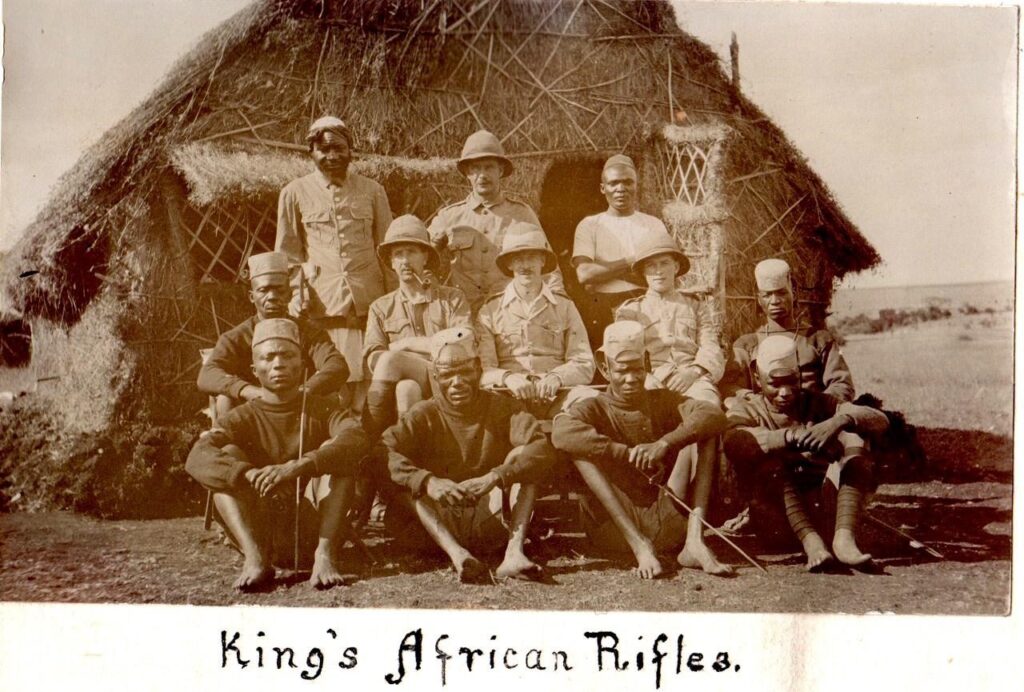
The outbreak of the Second World War brought Pettit’s teaching career at Highgate School to an abrupt halt. Although in a protected profession, he enlisted and joined a troopship to El Alemain in North Africa. Quickly identified as officer material by the Royal Artillery, he was directed to learn Swahili and was posted to East Africa, where he worked with tribal leaders to recruit soldiers for the King’s African Rifles. His ability to communicate clearly, command respect, and lead without arrogance proved invaluable.
He later served in India and Burma, engaging Japanese forces and remaining overseas until the end of the war. On returning to Britain in 1945 he was said to have met his young son, then about five years old, for the first time.
Teaching and industrial career
Back home, he resumed his teaching career at Highgate School before leaving in December 1947. In the late 1940s he joined Lever Brothers at Port Sunlight (later known as Unilever). In 1954 he moved to S.P.D (Speedy Prompt Delivery)., Unilever’s distribution and warehousing arm, becoming its chairman in 1961. He was elected to the Council of the Institute of Transport in 1967. From 1971 to 1978 he served as chairman of the National Freight Corporation, and from 1977 to 1985 he held directorships within the Lloyds Bank group. He was knighted in 1974 for services to industry.
A frequently repeated piece of workplace folklore is that he dismissed two persistently late employees at S.P.D., one of whom was said to be Paul McCartney. He may have unintentionally helped spur the teenager to musical stardom. Sir Daniel said in an interview: ‘I told him he had to make up his mind. He might become a foreman or even a manager – which would be much better than being in a one-night stand in a dance band.’ McCartney was said to have made up his mind there and then. The rest, as you know well, is history.
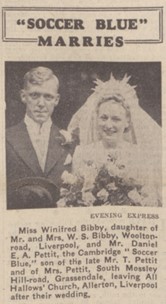
Pettit married Winifred (‘Wynne’) Bibby in 1940 and they had two sons. From the 1970s the couple lived in Worcestershire, including at Bransford Court near Worcester. He undertook local roles including school governance and farming. Winifred Pettit died in 2004 after 64 years of marriage. Sir Daniel died on 28 July 2010, aged 95.
Sir Daniel Pettit is remembered in Merseyside football heritage as a schoolboy centre-half who played in the cultured Everton style. His later selection for England Amateurs and for Great Britain at the 1936 Olympics confirms his status as one of the finest amateur players of his era.
Bibliography and Acknowledgements
Rob Sawyer – Proof reading
Burnham, Alan, Pettit, Daniel Eric Arthur [1915-2010], Liverpool Footprints – (online blog) https://www.liverpoolfootprint.co.uk/pettit-daniel
Oli Johnson & Joshua Taylor – CUAFC Men’s Co-Presidents – Cambridge University Association Football Club – (1935–1936) Varsity Match programmes and officer lists.
Mosley, C. (ed.) Debrett’s Handbook 1982: Distinguished People in British Life. London: Debrett’s Peerage Limited (1982) .
Olympedia ‘Daniel Pettit’. https://www.olympedia.org/athletes/25268.
Sports Reference ‘Daniel Pettit’. https://www.sports-reference.com/olympics/athletes/pe/daniel-pettit-1.html.
WorldFootball.net ‘Daniel Pettit’. https://www.worldfootball.net/player_summary/daniel-pettit/.
Drury, F. (2010) ‘Amazing life of the footballer who shook hands with Hitler’. Worcester News, 23 August.
Liverpool Echo (2010) ‘Captain of industry Sir Daniel Pettit dies aged 95’ (obituary).
Liverpool Football Echo (1934) ‘Stud Marks’ (sporting column), 8 December.
Liverpool Football Echo (1935) ‘Everton F.C.—An amateur’s tribute’ (interview feature), 19 January.
Debrett’s, ‘Brief biography of Daniel Eric Arthur Pettit’.
The Times ‘Mention of Daniel Pettit’s 93rd birthday’.
Football Association archives (1936) Great Britain Olympic team photographs and match reports.
Liverpool press archives (1930s–1950s) Reports on Pettit’s early career and industrial appointments.
Menary, S., GB United? London: Pitch Publishing (2016) .
Ancestry.com. UK, London Gazettes World War II Military Notices, 1939-1945 [database on-line]. Lehi, UT, USA: Ancestry.com Operations, Inc., 2022.