
Jamie Yates
(* Bob Lennon, Goodison Park, Thursday 7 November 2024)
‘Everyone’s a groundsman before the game,
Everyone’s a manager during the game,
Everyone’s a pundit after the game!’
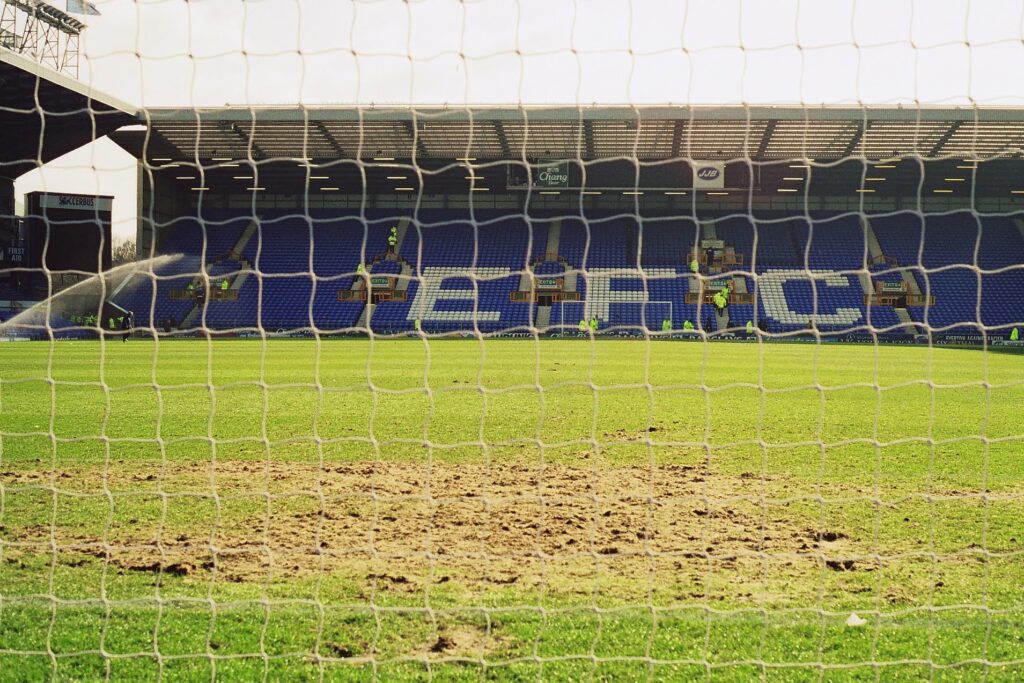
Robert (‘Bob’) Lennon was born at home at 14 Moss Lane, Lydiate, on Saturday, 20 June 1959. Just shy of two months previously, Everton Football Club finished the 1958/59 season with a whimper, losing four of their last five matches and slipping to a disappointing sixteenth place finish under new manager Johnny Carey. Not much better was to follow in 1959/60, as Carey’s entertaining but infuriatingly inconsistent side finished sixteenth without winning a single match away from home, an ignominious feat never achieved by an Everton side before or since. A dreadful season was compounded by a humiliating 3-0 defeat at Third Division Bradford City in the third round of the F.A. Cup. At the end of the season Goodison Park’s long-serving Head Groundsman Ted Storey retired after almost sixty years’ service at the Club and handed the reins to his son, Alan.
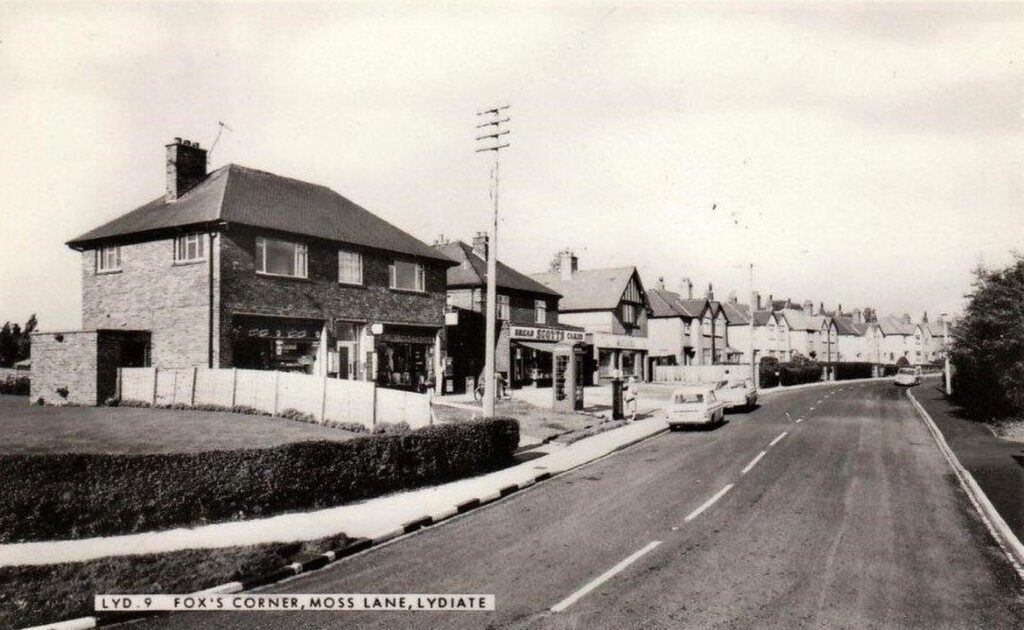
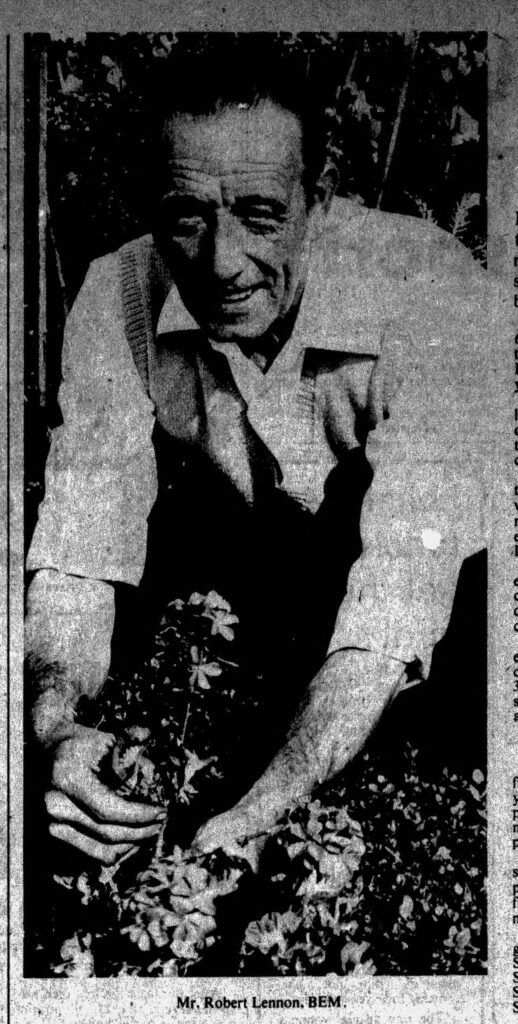
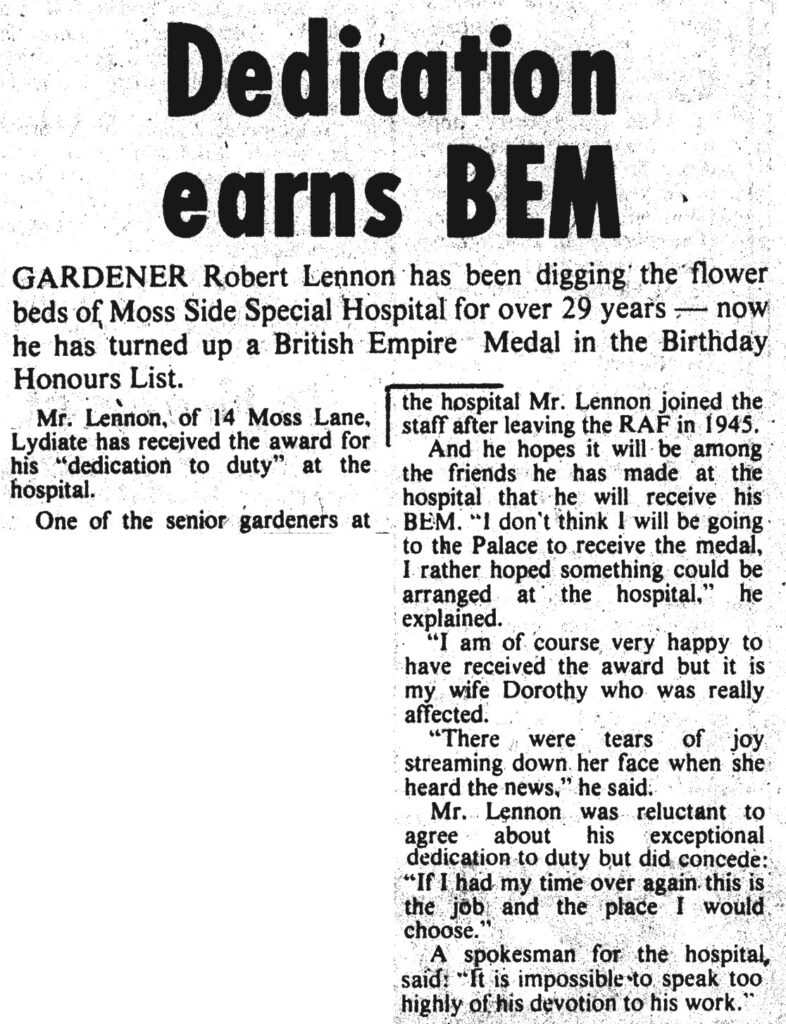
Young Bob Lennon grew up with a keen interest in the outdoors, spending his time fishing, exploring and learning about nature in the green expanses on his doorstep around Lydiate and Maghull, and partaking in a variety of sports including athletics, tennis and football at school. Bob’s father, Robert Lennon senior (1915-1985), flew Lancaster Bombers with the Royal Air Force in the Second World War. Once settled back into civilian life after the war, Robert worked his way up to the role of Head Gardener at Moss Side Special Hospital in Maghull, and educated his son in the art of gardening, maintaining a lawn, nurturing plants and vegetables. Robert was awarded the British Empire Medal in 1974 in recognition of his twenty-nine years’ service at the hospital. The Lennon family’s efforts helped their street to success on numerous occasions in the annual best kept garden competition in the area.
Bob’s great grandfather William Lennon worked as a roadman, a foreman on the roads, for West Lancashire Rural District Council for twenty-two years. Born in Edenderry, County Offaly (known at the time as King’s County), Ireland, he died in Lydiate, aged eighty, on 7 December 1931, having celebrated his Golden Wedding anniversary with wife Jane four years previously. William’s obituary in the Ormskirk Advertiser of 10 December 1931 spoke of ‘a familiar and popular figure’ in the area and an ‘enthusiastic gardener, his last thoughts were of the cropping of his little plot for the coming season.’ Records suggest that the Lennon family lived on Moss Lane, Lydiate, Bob Lennon’s birthplace, from at least as early as the 1901 census. His grandfather John Lennon (1878-1950) worked as a farm labourer on the estate of farmer Henry Silcock on Filling Lane, Lydiate.
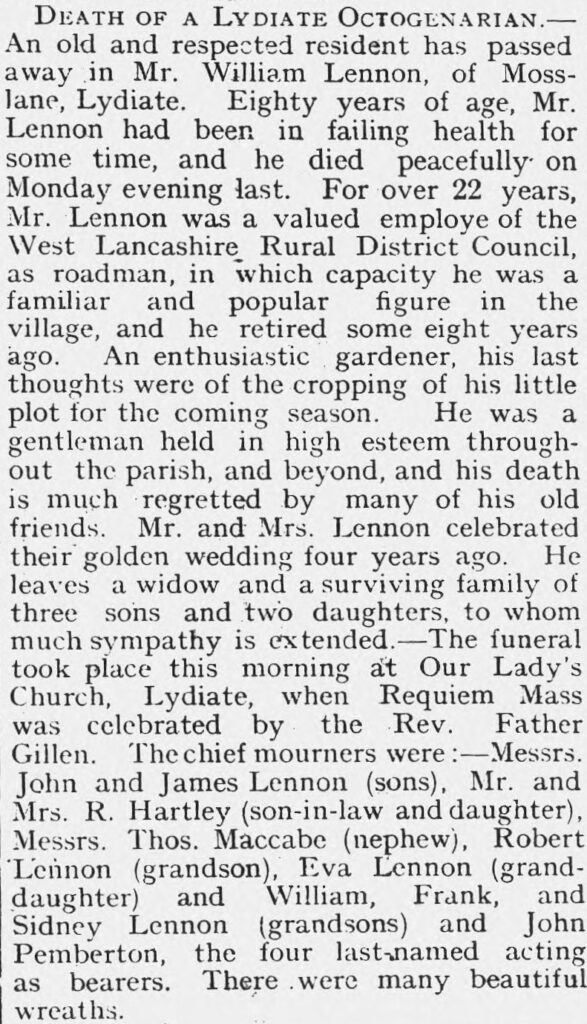
Ormskirk Advertiser, 10 December 1931
It seems that being green fingered really is in Bob Lennon’s DNA.
Bob’s heart was set from an early age on seeking employment that utilised the skills he had learned at his father’s side; hands-on work, certainly not stuck behind a desk or otherwise cooped up indoors all day! Upon leaving school, having earned pocket money here and there doing landscape gardening work in his youth, Bob took up an apprenticeship in joinery, onsite at Liverpool’s Anglican Cathedral. He quickly realised that working on wobbly platforms winched high up within the towering structure was not for him, as he commented while reminiscing in the Captain’s Table lounge at Goodison Park, “It was only when I started the job that I realised I had a terrible fear of heights!”
Feet back safely on terra firma, Bob soon found work with a landscaping business in Aintree, where he learned more about the art of laying turf, repairing brickwork, planting and gardening in general. Unfortunately he was laid off, still aged only sixteen, in 1975. Thankfully an ideal opportunity lay just around the corner. Via a contact of his father at Liverpool City Council, Bob was able to secure a position as a gardener at the Mansion House in Calderstones Park, which had recently been closed to the public and converted for use as Council office space. From there he progressed to the position of Apprentice Gardener at Walton Hall Park, just a mile from Goodison Park and home to Everton Women’s team for a few years prior to their move to Goodison Park in 2025.
During his time at Walton Hall Park, Bob furthered his horticultural qualifications, earning an ordinary national diploma (OND), an ordinary national certificate (ONC) and an higher national diploma (HND), making him a certified gardener and putting him in pole position to take on the role of foreman at Croxteth Country Park, the ancestral home of the Molyneux family, the Earls of Sefton, where he spent two years.
The summer of 1988 brought a wind of change. Strike action at Liverpool City Council caused great uncertainty. Bob had bought his first house in May, on Latham Drive in Maghull, and married Carole at St. Andrew’s Church just a mile down Northway two months later. The Lennon’s new house had previously belonged to Eric Harrison, coach at Everton Football Club from 1972-1981. Eric was a casualty when Howard Kendall first arrived as manager and chose to appoint his own coaching staff. He went on to nurture generations of talent at Manchester United, initially for Ron Atkinson and, most notably, bringing through Sir Alex Ferguson’s golden generation of ‘fledglings’ in the 1990s. Bob recalled finding a bag of Eric’s old football gear in the loft at the house and returning it to him.
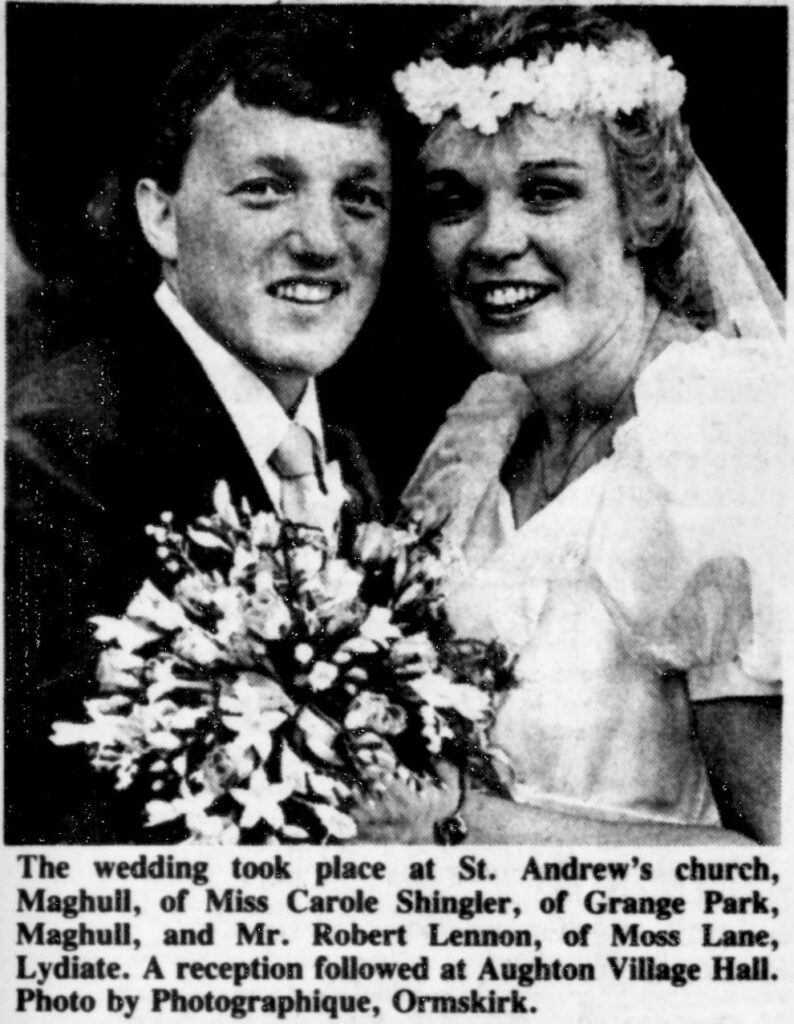
Ormskirk Advertiser, 11 August 1988
As summer turned to autumn, Bob’s new brother and father-in-law – both staunch Evertonians – drew his attention to an advertisement in the vacancies section of the Liverpool Echo:
‘GROUNDSMAN WANTED: APPLY TO EVERTON FOOTBALL CLUB.’
Bob sent off an application, and was invited for an interview in the boardroom at Goodison Park. A second interview followed, and finally a third. Retiring Head Groundsman Alan Storey, who had inherited the job from his father when Bob was only a year old, sat on the interview panel, along with Club Secretary (later Chief Executive) Jim Greenwood and Alan Waterworth, a member of the board of directors. On Sunday, 4 September 1988, having successfully negotiated this marathon of interviews, and seen off competition from a groundsman from Heart of Midlothian, Bob received a call to say he had got the job, which was to oversee the pitches at Everton’s Bellefield training complex in West Derby.

Long-serving Dougie Rose, who started on the Goodison Park ground staff in 1947, the same year as Alan Storey, moved back to Goodison as Head Groundsman. Dougie was accompanied there by his assistant Sid McGuinness, who had himself been on the ground staff for twenty-six years, was chairman of the Everton Supporters Club and lived at 12 Goodison Avenue. Bob was offered the option of club accommodation but, by now settled in the house in Maghull, he gratefully accepted a slight increase in salary instead. He had grown up without any strong footballing affiliation, but, influenced by wife Carole and her Everton-mad family, leaned towards the Blues. A perk of the new job was a free season ticket which he passed to his grateful Everton-mad father-in-law!


Alan Storey, meanwhile, who had originally trained as an accountant, stayed on the Goodison staff for several years, working in the old counting house, beneath the Gwladys Street stand where it merges with the Bullens Road stand. Bob vividly described the counting house, “It was like stepping back in time, it had an air of ‘Peaky Blinders’ about it!”
It isn’t difficult to picture the dark, panelled walls through a cloud of Woodbine cigarette smoke, older gentlemen in shirts, ties and braces, wearing flat caps, totting up the day’s takings. Perhaps a bottle of whisky hidden beneath the counter.
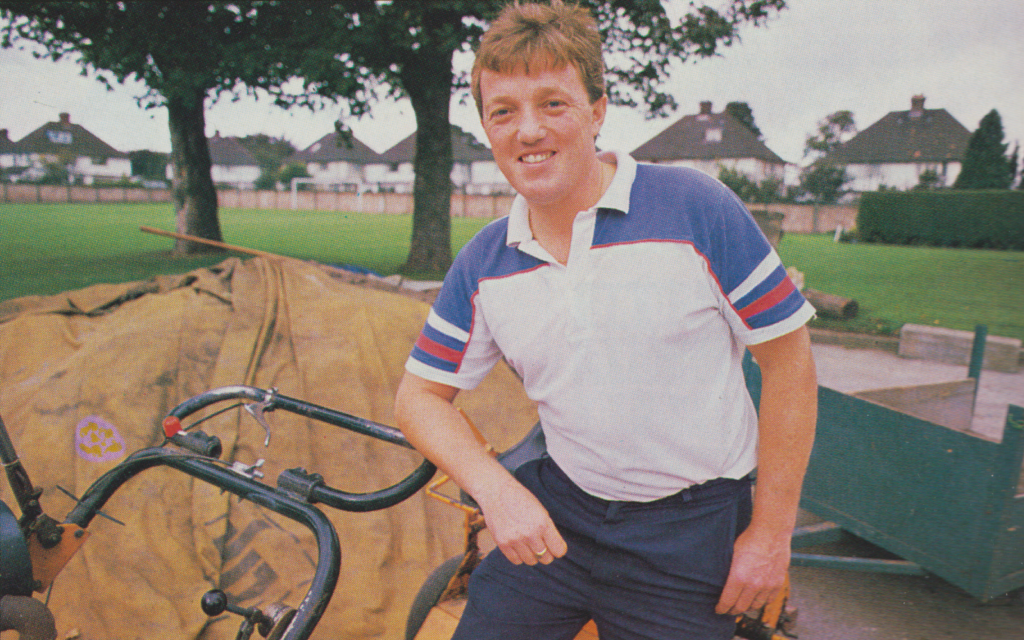
Bob fondly remembers the sense of community and camaraderie around Bellefield, where the likes of Howard Kendall and Colin Harvey would join the ground staff and other workers for lunch. Howard Kendall would explain with a deadpan expression on his face that the Goodison pitch was too hard, purely to get a rise out of the long-suffering Dougie Rose.
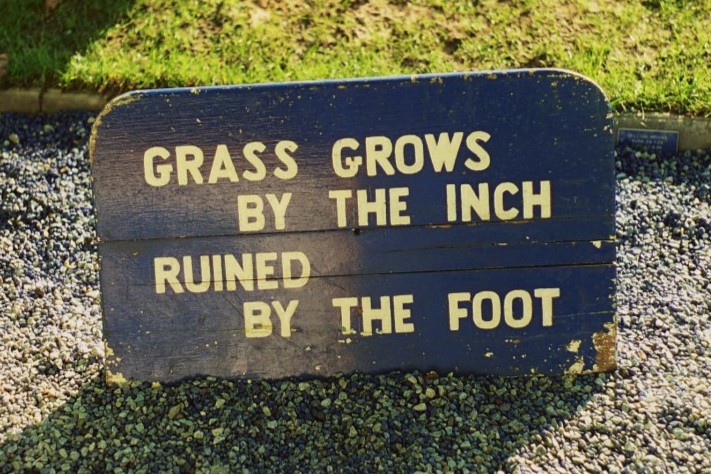
At one point the groundsmen had a set of signs made to go around the pitch bearing the legend ‘GRASS GROWS BY THE INCH, RUINED BY THE FOOT’. Kendall had a habit of booting the nearest sign as far as he could upon walking out of the Goodison Park tunnel onto the touchline on matchday, and when Howard Kendall – one of the finest exponents of a volley the game of football has ever produced – booted something, it stayed booted! Prior to the next match, Bob and one of the joiners on the ground staff, made up a new set of heavy, hand-painted wooden signs, bearing the same slogan. Kendall strode out as usual and slammed his foot into the sign, nearly breaking his toe in the process! Those signs remained in situ around the pitch for years before mysteriously disappearing, presumably to various man caves and back gardens across Merseyside.
Dougie Rose’s nickname was ‘Gulliver,’ after the lead character in Gulliver’s Travels, as he had a habit of disappearing on various unexplained errands throughout the day. He had contracted malaria while on National Service in his youth and attributed this to the fact that he was often unwell and absent in winter months. Dougie’s sidekick at Goodison, Sid McGuinness was ‘Fred Flintstone’ and Colin Harvey was known as ‘Charlie.’ Dougie, Sid and Wally Stone, an older member of the ground staff who lived for many years on Walton Hall Avenue, beside Bob’s old Walton Hall Park stomping ground, would earn overtime by working extra hours tending to the pitch before and after reserve team matches at Goodison. From the mid-1950s, Dougie, who was born and raised on Helena Street in Walton, lived in the house attached to Bellefield, later moving into a bungalow onsite and raising his family there.
A surreal memory from Bob’s early days on the ground staff, where he was learning all the time about the subtleties of managing high performance sports turf in an enclosed stadium environment, compared to open playing fields and parkland, occurred during a cup tie at Goodison Park in the late-1980s. Something was awry, as full-back Neil Pointon ran down the touchline in an attempt to meet the ball and cross it. The ball had been rolling slowly towards the by-line and was bound to run out of play before Pointon reached it… only it didn’t go out. Bob Lennon and Dougie Rose exchanged a rueful glance. The old system of repainting the white lines in layers throughout the season had caught up with them, the ball had ricocheted gently back into play off the buildup of chalky white paint! In years gone by, the layers of paint built up week-to-week, until they sat as thick, chalky mounds, sometimes as high as the blades of grass beside them. Nowadays, pitch lines are finely sprayed, removed and resprayed match-to-match, rather than rolled out on top of one another. Bob could neither confirm nor deny that this is in part to mitigate today’s players tripping over excessively thick lines and injuring themselves.
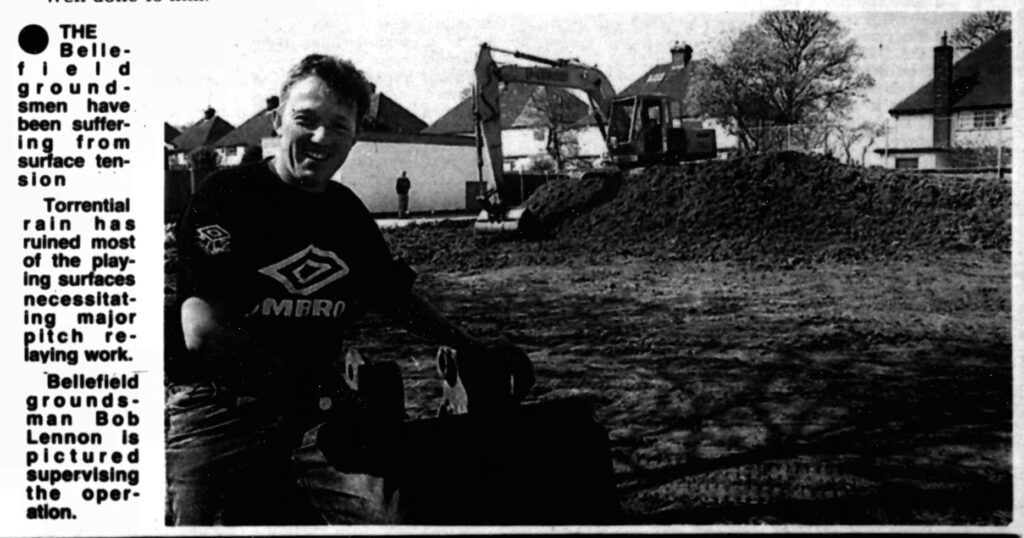
Bob spent eight years at Bellefield, before the retirements of Sid, then Dougie – whose retirement party at the Black Horse pub on County Road was by all accounts a night to remember (if not in print!) – in 1995 and 1996 respectively. Their departure opened up the big job, Head Groundsman at Goodison Park. He recalls a sense that senior staff ‘looked after’ newer recruits, and that the sense of family and togetherness was strong. This began to break up when Bellefield was sold and the Club’s training facilities moved to Finch Farm, in much the same way as staff in the early 1960s felt things changed once first-team training was moved from Goodison to Bellefield. Christmas meals for ground staff took place at the Police Club on Walton Hall Avenue, where social gatherings were a regular occurrence.
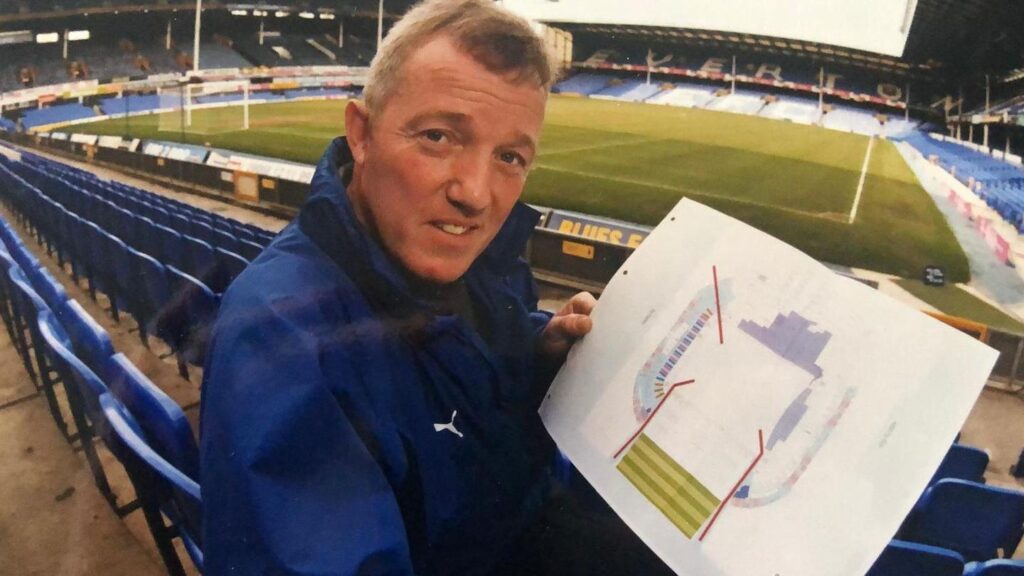
Bob remembers Joe Royle as the most openly complimentary Everton manager in his interactions with the ground staff and the work they did. Jimmy Gabriel, another former Everton great, who coached under his former teammates Howard Kendall, Colin Harvey and Royle, was also very respectful. On greetings cards Jimmy sent to the groundsmen, in his beautiful handwriting he would address them as, ‘The Forgotten Army; the men who toil on the soil.’
Bob looked back on the Walter Smith era at Everton, in the late-1990s and early 2000s, where often as many as five centre-backs would feature in an Everton defensive line-up, and wingers were often nowhere to be seen. Under instruction from the former Rangers manager, the pitch was painted to the narrowest legal dimensions permitted by the Premier League rulebook. However, for cup games, the playing surface had to be widened to meet regulations. This involved Bob Lennon getting creative with cans of green spray paint and his line-painting equipment. Did anybody notice at the time?!
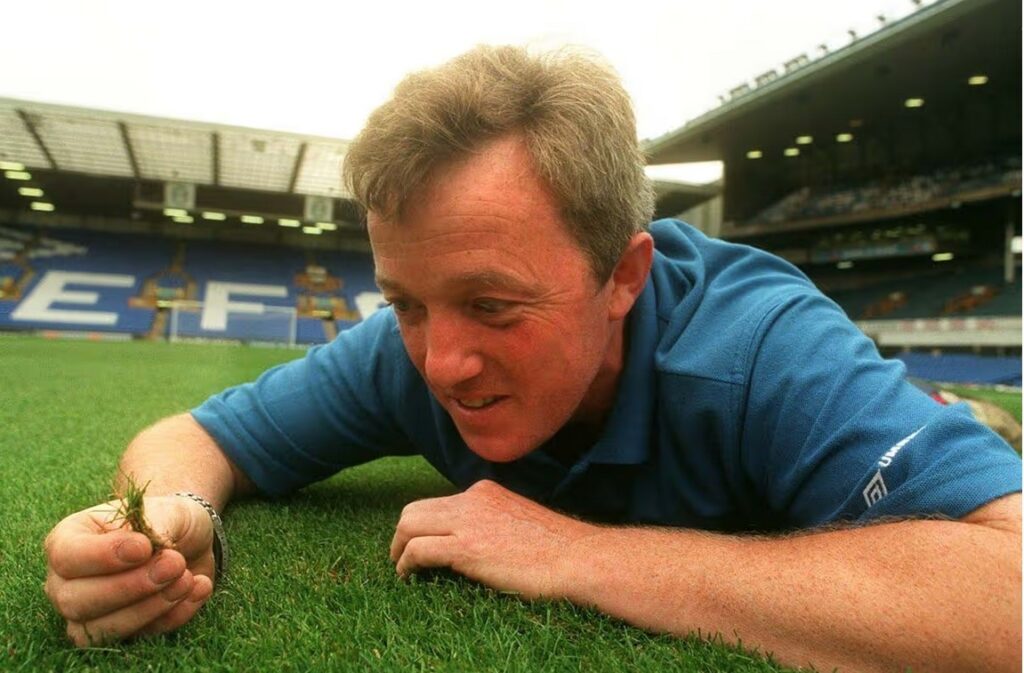
Relations in ground staff circles with neighbours Liverpool, were traditionally very open and cordial, although ranks appear to have closed somewhat in recent years. This is due, in part, to Everton moving their training facilities south to Finch Farm and Liverpool moving their own out to Kirkby. Talking to Bob, I can’t help but feel it is also just another unfortunate sign of the times. Throughout the twentieth century, Liverpool had their own equivalent of the Storey dynasty, with successive generations of the Riley family tending to the Anfield turf and much exchange of ideas, equipment and sacks of grass seed. Bill Shankly, of course, is well known to have frequented Bellefield during his retirement, but not without incurring the wrath of Dougie Rose, who, upon witnessing Shankly’s poodle relieving itself on his precious grass one day, handed Mr. Shankly a shovel and ordered him to clean it up!
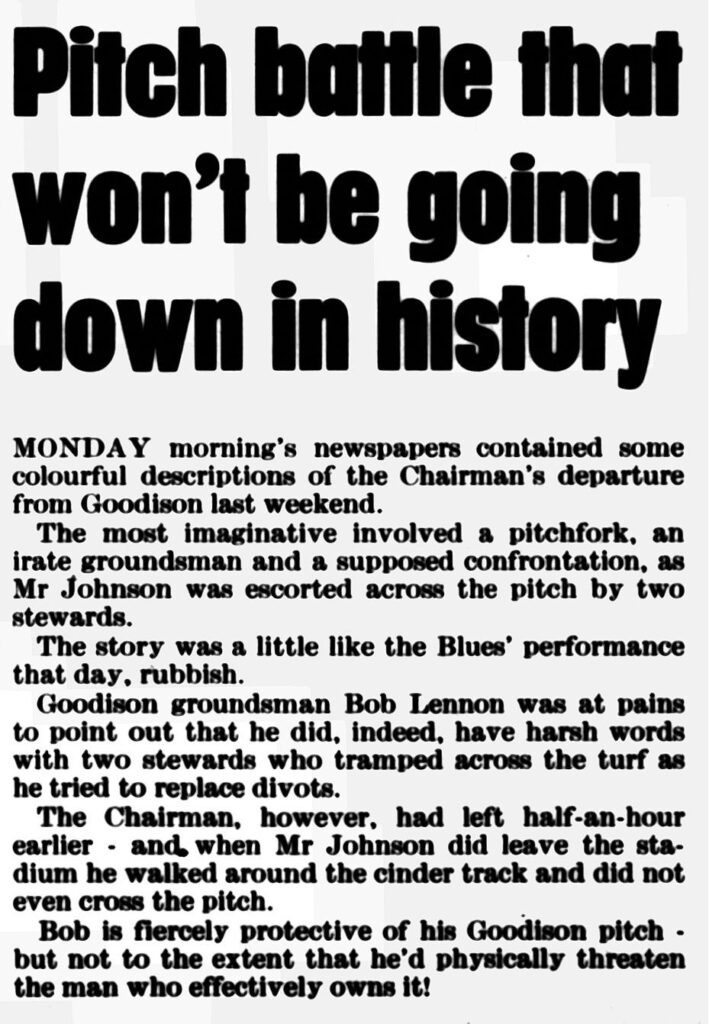
Only eighteen months into his tenure at Goodison Park, the Liverpool Echo published a pun-strewn report which cleared up rumours that a frustrated Head Groundsman, armed with a pitchfork had resorted to chasing Club Chairman Peter Johnson off the Goodison Park pitch:
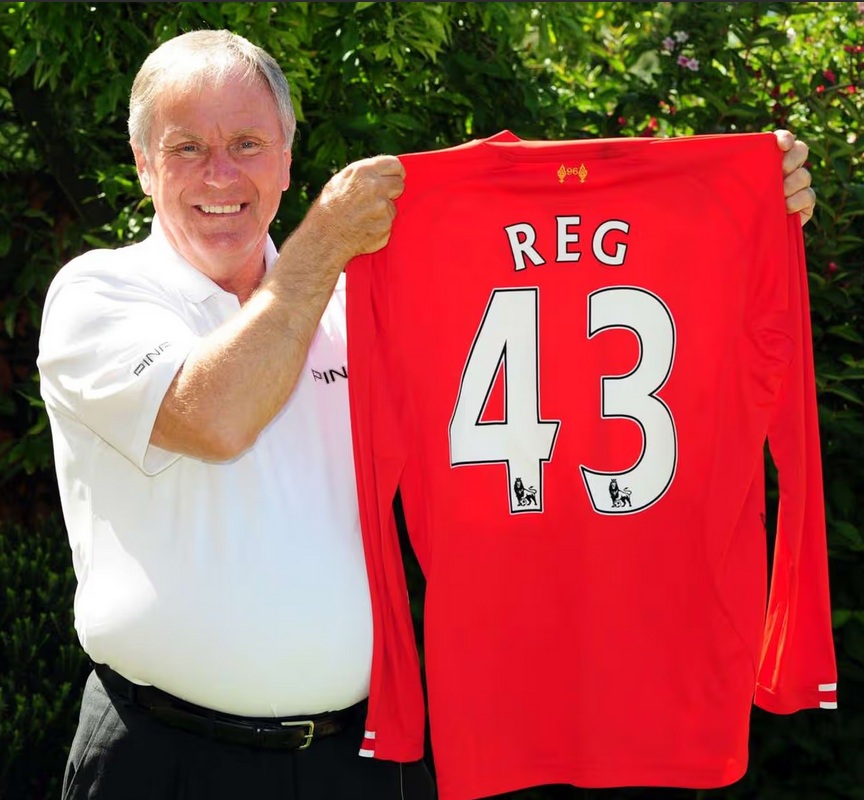
In an echo of Bill Shankly’s experience in retirement, in 2014 when Bob’s opposite number at Anfield, Reg Summers – a lifelong Evertonian – retired after forty-four years’ loyal service across the park, he found himself a bit bored at home of a Saturday afternoon. Bob reached out to his old friend and invited him to come and help out with forking the pitch at Goodison after home games, and helping out at Finch Farm. Reg happily accepted the offer. Who’d have thought, the ex-Head Groundsman at Liverpool Football Club lending a hand to the current one at Goodison Park?
But that was always the norm, sharing of knowledge, the latest tools and techniques, swapping and washing of kit. Camaraderie and companionship. Every Friday the two ground staff teams would meet for a brew at Melwood. They even shared a coach home from the all-Merseyside F.A. Cup semi-final at Wembley as recently as 2012. Around the same time Bob managed to pinch Paul Mutch – a lifelong Evertonian – from the Melwood staff and bring him to work at Finch Farm. Over the years, Bob would invite various friends, fellow groundsmen across Merseyside like Morris Owen of Litherland Sports Park, to whom Reg Summers served as apprentice as a young greenskeeper, to help out with tending to the Goodison Park playing surface.
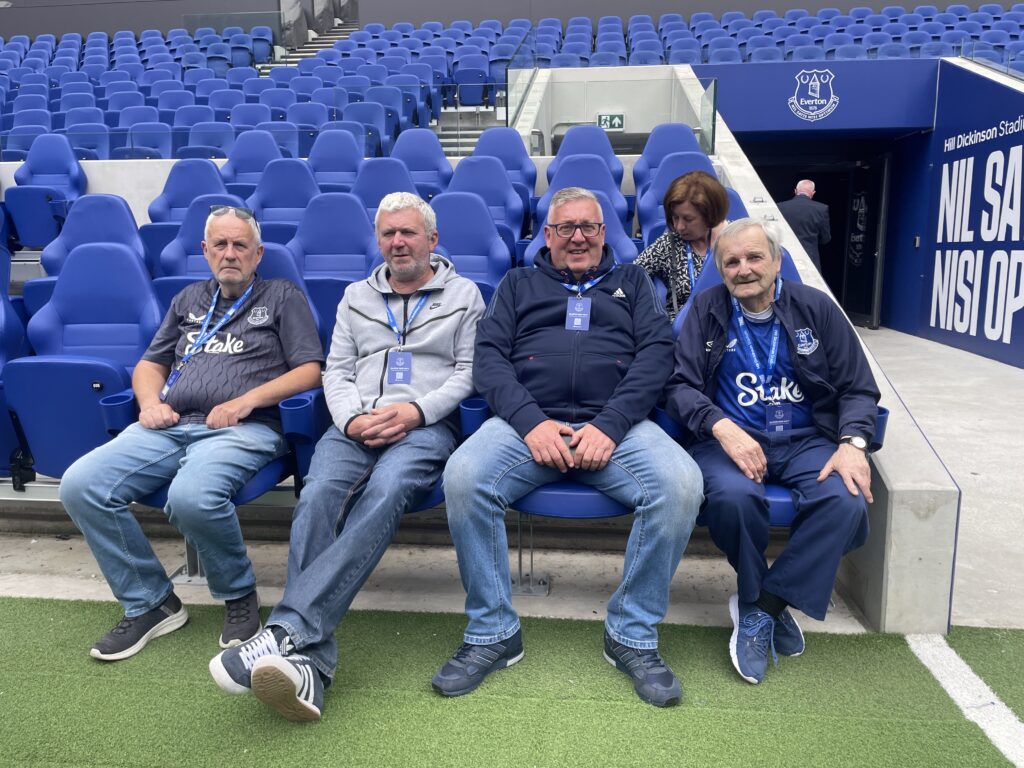
a hand over the years at Goodison Park on a tour of Hill Dickinson stadium, May 2026.
Bob recalls that when he took over full responsibility for the Goodison pitch in 1996 it was ‘still in the Dark Ages’ in some ways. It had been run by trusted older staff who were dedicated to their job. Premier League money in the 1990s changed everything, and it took some time to convince Everton’s team management that major investment in the pitch was required to keep up with rival clubs. When Dougie Rose won the Groundsman of the Year award for the 1992/93 season, he had a set of matchbooks printed with his name and winning title emblazoned on the back. Howard Kendall walked in, grabbed one, ignited the entire matchbook, and lit a cigar with it.
Interviewed in the Christmas Eve edition of the Liverpool Echo in 1999, Bob shed a little light on the demands of a Premier League groundsman. Bob and his team of seven clocked off at 2.30am on the Wednesday morning having worked through the night after the F.A. Cup replay against Exeter City on the Tuesday night to ensure the Goodison Park pitch was ready for the Boxing Day fixture with Sunderland on the Sunday. Everton’s 5-0 win over the Black Cats must have felt all that more satisfactory, despite the inevitable graft required after that match to stay on top of things.
Bob spoke to reporter Paddy Shennan about the impact all this work had on his homelife:
‘I was supposed to be Christmas shopping with my wife, Carole, this week but, because we had a game, that went out the window – I was made up! The first things groundsmen all over the country look for are the Christmas games and my wife is on the phone straight away when she sees them in the Echo, asking ‘Why can’t Liverpool play on Boxing Day for a change?’ But it’s just part and parcel of the job. A lot of the preparation for Sunday is done today (Friday) and, if it’s freezing, the underground heating will stay on. If it snows overnight, we’ll all be in tomorrow to clear the pitch. Even if the weather isn’t that bad, I’ll go to the ground to check on everything in between seeing relatives – we’ll do a detour. I can imagine what my wife will say!’

Today’s modern ‘hybrid’ pitches combine synthetic materials and technology with sand, soil and grass seed to create a controlled growing system which utilises cutting edge electronic sensors and computer equipment to monitor hydration, humidity and temperature. Despite these advances, the pitch still requires close attention around the clock and miles of walking behind mowers and seed or fertiliser spreaders, and respraying pitch markings throughout the week.

£1.2million was spent on such a state-of-the-art pitch in time for the start of Roberto Martinez’s first season as manager, 2013/14. Bob had eleven weeks from the end of the last home game to strip the old pitch, lay the new technology and then ‘stitch’ the new turf in time for the first home game in August. The grass seed is sown onto a bed of sand and soil overlaid with a synthetic mesh. The roots of the grass knit the mesh together like a living carpet, hence the sight of divots, muddy patches and scarring of the turf by sliding tackles and celebratory knee slides is pretty much a thing of the past. Bob managed to coordinate the stealthy borrowing of machinery from West Bromwich Albion and emergency interception of materials bound for Old Trafford, to get the job done in time.
Bob explains that the modern Premier League pitch consists of:
“A ‘box’ system which holds the grass in place and allows for full control of moisture levels, temperature and maintenance of pitch integrity. Moisture locks the layers of grass, soil, sand and synthetic webbing together. The technology is constantly evolving.”
Bob takes us on a walk across the pitch and crouches to part some of the grass and reveal the web of synthetic material, between which almost individual blades of grass grow in conditions monitored electronically by a network of sensors which send information back to a central computer. Levels can be adjusted to ensure optimum hydration, temperature and humidity.
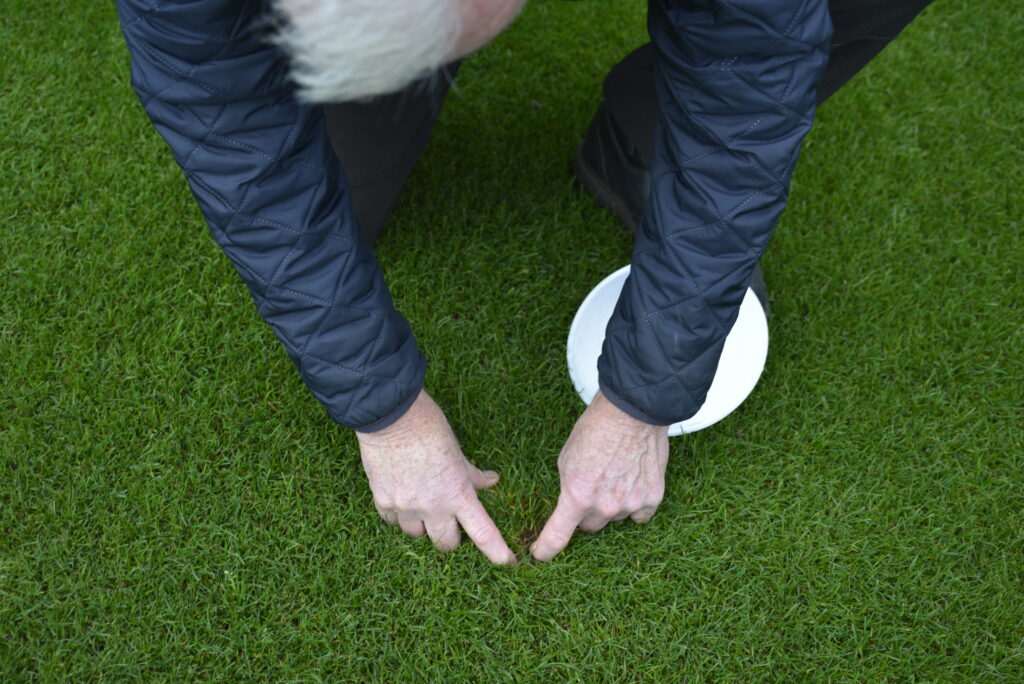
Twenty-first century Premier League football has seen the introduction of goal-line technology and video assisted refereeing (VAR), with technical staff arriving five hours before kick-off to check every angle. This means a 7am start for Bob and his team prior to midday fixtures. In years gone by, posts may not have been perfectly perpendicular to goal lines. The lines themselves may not have been as straight as a die. They are now! Prisms are used to gauge grass height and ensure it complies with Premier League guidance (which permits blade length between 20 and 27mm). The Goodison Park pitch was maintained in the final Premier League season at 25mm in length. Preferences change from manager to manager, and Bob Lennon has seen a few in recent years alone, so alterations have become routine. Modern Premier League regulations dictate that pitches must be cut from side to side in clear lines. Bob betrays a wistful smile when he talks of once cutting an intricate Chang beer palm tree motif into the grass in front of the Bullens Road stand.
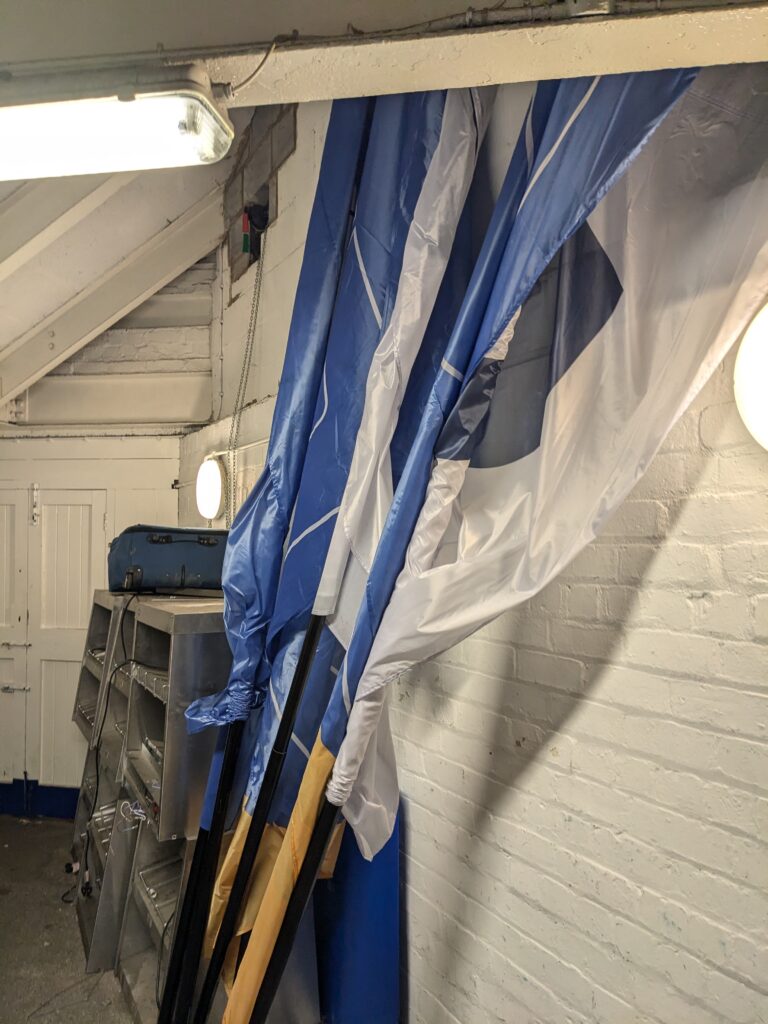
A wander beneath the stands reveals the old ‘Peaky Blinders’ Counting House is now a sanitised whitewashed storage space, bedecked with generic modern shelving and home to some of the 1878s fan group’s flag and banner collection. Oh, to having seen it in its smoke-filled prime, gate money being checked and the odd snifter of single malt being taken.
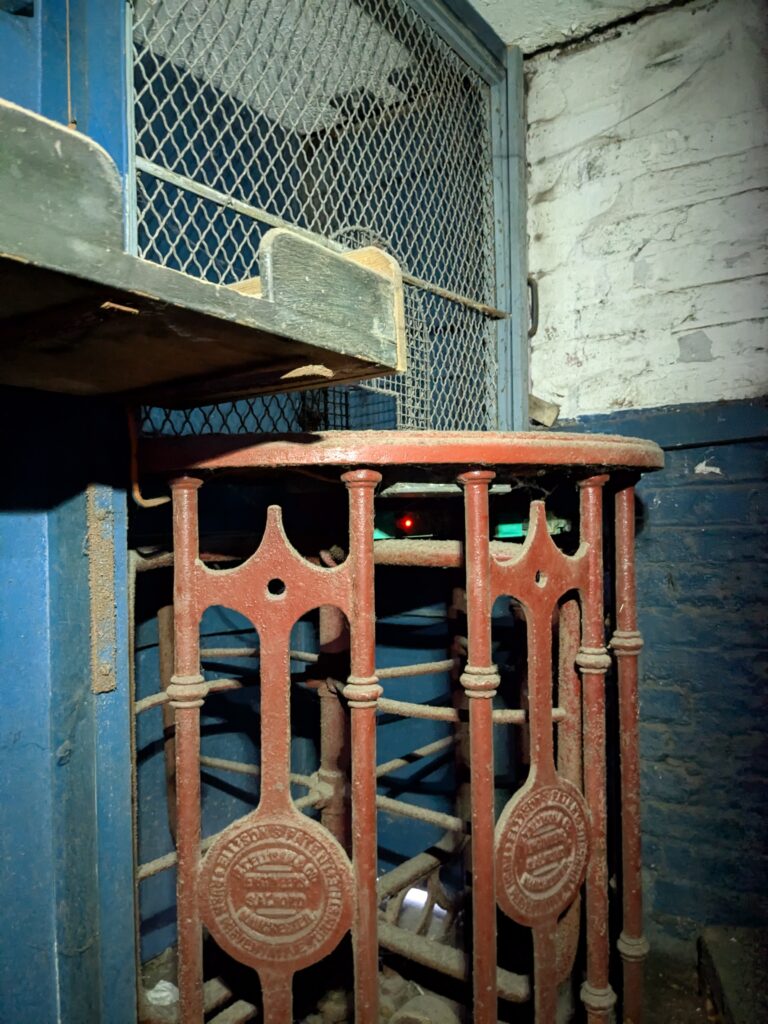
Then Bob reveals his favourite item in the whole ground, hidden beneath a concrete stairwell on the concourse in the bowels of the Bullens Road stand. Bricked up on the outside, but completely intact beneath the stairs is a turnstile,
concealed behind a small wooden door which he was told many moons ago was last used in 1966 before the gate was bricked up and the concrete stairway to the Upper Bullens built in. It remains perfectly preserved, a wooden tray for punters to drop their coins into, in exchange for a match ticket, chicken wire netting between the ghosts of an old turnstile operator and bustling queue of Evertonians. The turnstile itself is painted a dark red shade. Red? I suppose we weren’t as worried about trivialities like that when we were footballing kings back in 1966.
Bob is rather pensive at times, clearly breathing in every remaining moment he has left in this place as we wander around inside the empty stadium. He knows it better than anybody since the days of Dougie Rose and Ted Storey, and many others long since departed. He mentions more than once how times have changed. How the sense of community isn’t there in the way it once was. The painters’ room is now a ladies’ toilet. The groundsman’s hut has long been emptied of much of the century’s-worth of equipment, paraphernalia, and tat, which Bob inherited in 1996. He gives us a couple of mementos to take with us. It’s clear that he’s feeling it. As we all are. It’ll be a sad, strange day when we all walk away from the old ground for the last time.
Thirty-six years working on the pitches at Bellefield, Goodison and Finch Farm, and still going – or should that be growing – strong. Bob admits to Mrs. Lennon suggesting now might be time to call it a day, but he can’t let go yet. Contractors have laid the new pitch at the new Everton Stadium, but Bob and his team will be down there once the 2024/25 season is done and dusted to take the reins for its care. He describes the playing surface as like his ‘baby.’ Sleepless nights spent worrying about it, the patter of rain on the window, a forecast for frost or a busy run of forthcoming home fixtures causing concern. The idea of millions around the world tuning in to watch a game at Goodison Park on television – does it look ok? Will it play how the manager wants it?
As the man himself admits:
“You have to be mad to be a groundsman!”
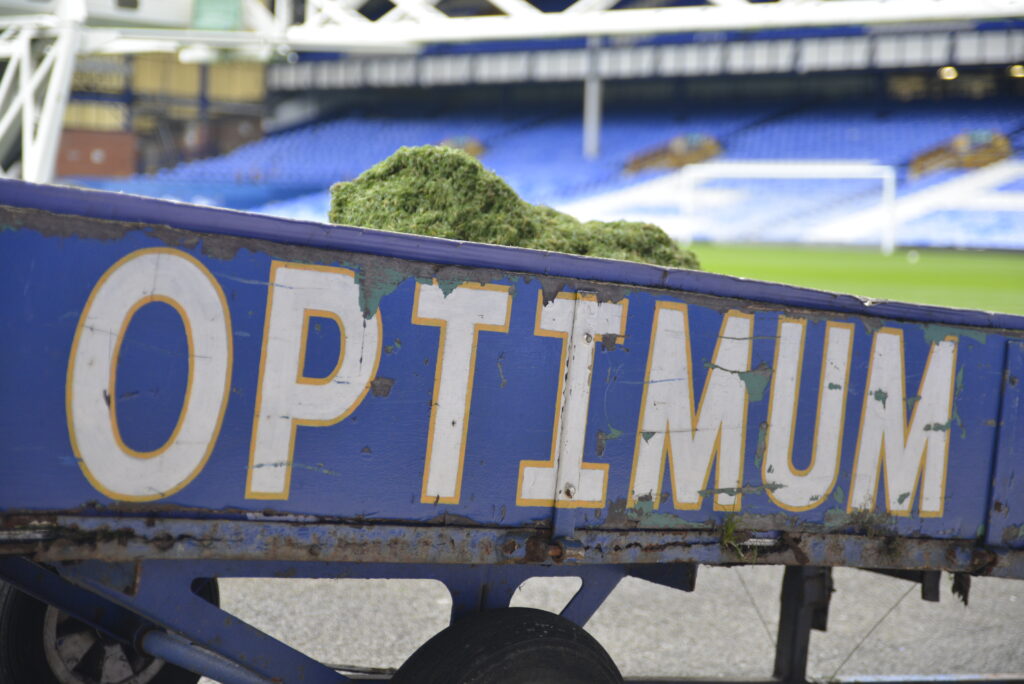
Mad or otherwise, it is abundantly clear upon viewing the playing surface at Everton’s home since 1892 that Bob Lennon, Head Groundsman, well and truly lives up to Everton’s motto:
Nil Satis Nisi Optimum.

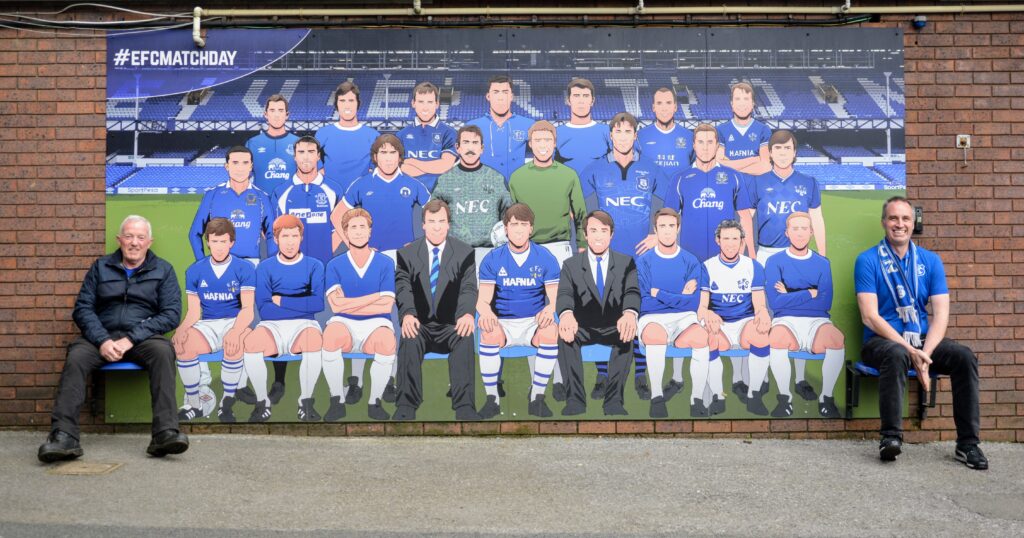
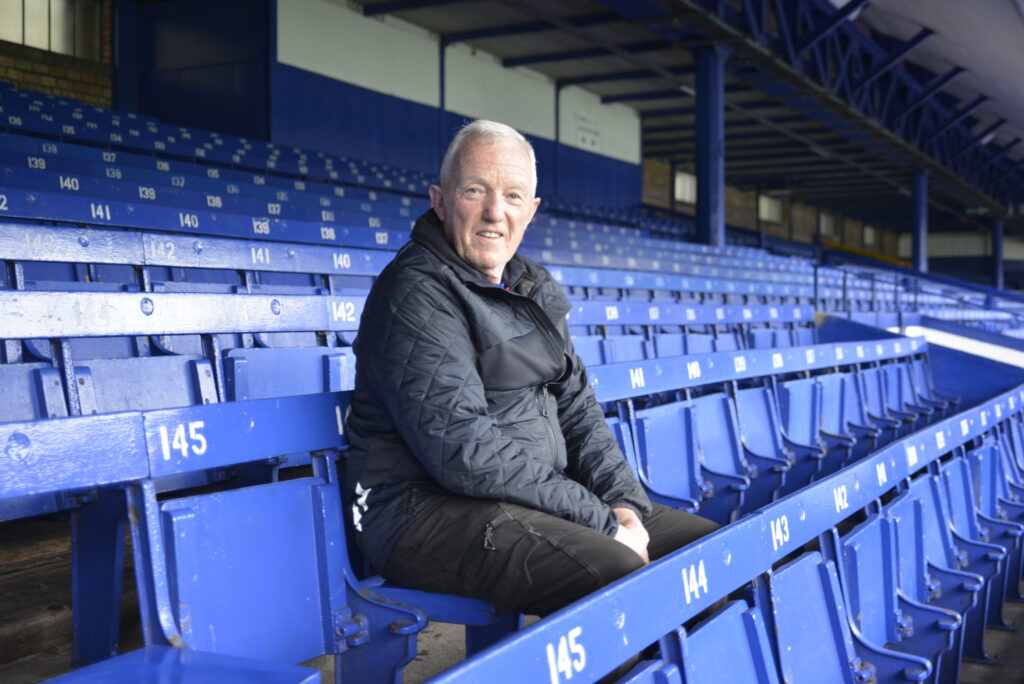
The New Era – August 2025


Author’s note:
At the time of writing this article, Shaun Dyche was entering his final weeks as Everton manager. Only sixteen home fixtures remained and, as far as we all knew, Goodison Park was to be dismantled after the final home match of the 2024/25 season against Southampton on 18 May 2025.
Thankfully, just prior to that emotional final match, an announcement was made that Everton Women were to become the new occupants of Goodison Park and that Bob Lennon would remain as Head Groundsman. A new era dawned as the 2025/26 Women’s Super League season kicked off and Everton Women set out to make one of English football’s most historic stadiums their home and build a new legacy there in years to come.
Bob Lennon retired at the end of May 2026 after thirty years as Head Groundsman at Goodison Park and thirty-eight years’ service on the Everton Football Club ground staff in total.
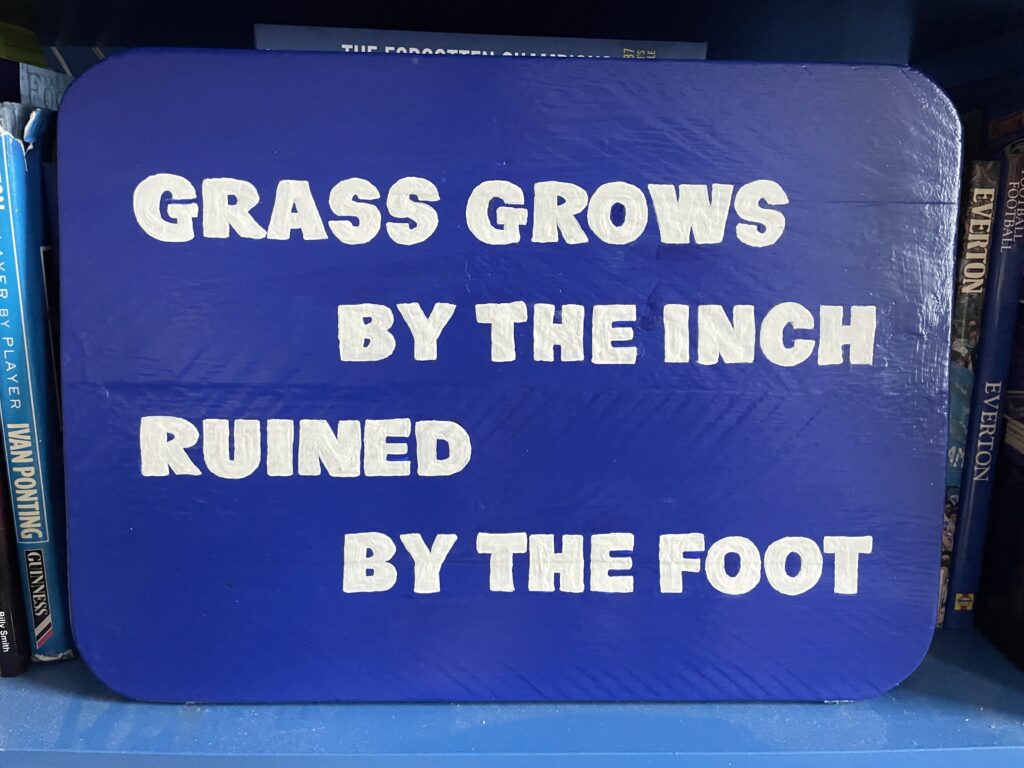
I made Bob a replica of one of the lost wooden ‘GRASS GROWS BY THE INCH, RUINED BY THE FOOT’ signs shortly after this interview and presented it to Bob at the end of the 2024/2025 season.
On the back I printed a chronological list of the Head Groundsmen at Goodison Park since the stadium opened in August 1892. Unbelievably there were only eight of them in 133 years, so, although madness may have been a prerequisite for taking the job, it’s one that those chosen stayed in for the long haul.
After the first two incumbents (George Howard tragically took his own life at his Gwladys Street home at the end of the first season, and his replacement, a Mr. Richardson, spent only one season in the role), the six men who followed, lasted for an average of over twenty-one years each in the top job. All of them bar William Weston (who collapsed while tending to the pitch and died later that day at home across the Goodison Road on Neston Street) having served a lengthy apprenticeship:
Head Groundsmen at Goodison Park (Everton FC men’s team era) 1892-2025
1892-1893 George Howard
1893-1894 S. Richardson
1895-1921 William Weston
1921-1940 Joe Smith (joined the ground staff in 1896)
1940-1960 Ted Storey (joined the ground staff in 1902)
1960-1988 Alan Storey (joined the ground staff in 1947)
1988-1996 Dougie Rose (joined the ground staff in 1947)
1996-2025 Bob Lennon (joined the ground staff in 1988)
2025-2026 Bob Lennon – Founding Head Groundsman of the women’s team era
With huge thanks to Bob Lennon for his time, patience and hospitality at Goodison Park, and for all the hard work he has done over his long career at Everton Football Club. Wishing you every happiness in your retirement, Bob!
My Everton FC Heritage Society colleague Rob Sawyer accompanied me on the day, took a series of brilliant photographs to document our visit, participated in what was a truly wonderful conversation with Bob and helped me with shaping and editing this account of a special afternoon spent with one of the last great Goodison Park stalwarts.
The forgotten army will never be forgotten!
For an account of the Storey’s tenure as groundsmen, see;
Ted and Alan Storey – Guardians of Goodison Park’s Pitch by Rob Sawyer
OMG this is absolutely brilliant!
Loads of facinating info, well researched facts, and laugh-out-loud stories.
Bob is an absolute legend. I’m editor of the Grounds Management Association’s membership magazine and would like to share a link – if that’s OK?
This story has to be shared as so many other groundspeople will totally connect with Bob’s story … and his passion to share knowledge and support others is a real measure of his exceptional character.
I had the pleasure of meeting him a few times in recent years and always enjoyed his company.
Hi Karen, sorry for delay in replying, I’ve only just seen your message. More than happy for you to share far and wide. I can’t speak highly enough of our Bob, he is the living embodiment of our motto, nothing but the best is good enough!