1890-1899

Alf Milward – The Toffees’ First Great Left Winger of the League Era

Alf Milward – The Toffees’ First Great Left Winger of the League Era

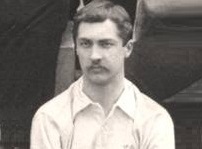
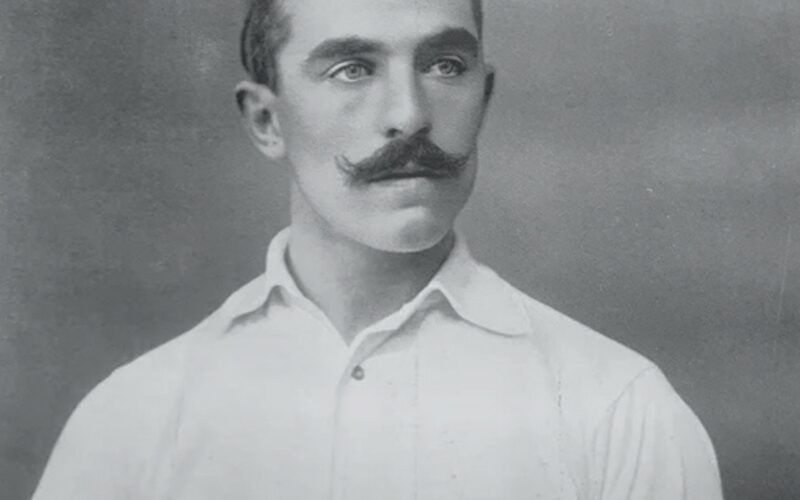
by Rob Sawyer ‘His buoyant spirit called for the wild career down the wing, for the flying charge, and the flying shot to the goalmouth where Geary or Chadwick could be trusted to meet the rebound.’ Victor Hall, Liverpool Echo, 1924. Baines and Pienaar, Dobson and Thomas, Fielding and Eglington, Stevenson and Coulter – all fantastic partnerships on the left side of the Toffees’ attack. The original great partnership on that flank was formed by the contrasting but complimentary attributes of Edgar Chadwick and Alf Milward. Supporters and reporters would refer to them together simply as ‘The Wing’, such was…
Read More
The George Farmer Story

The George Farmer Story

Jamie Yates of Everton FC Heritage Society, who researched the story of George Farmer and directed the project, writes; Why George Farmer? Without the philanthropy of Everton Football Club and the local community around Liverpool 4 and beyond upon the death of George Farmer in May 1905, it is not unreasonable to assume that his widow and eight young children would not have survived the poverty-stricken future they were facing. Without George Farmer capturing the imagination of thousands of Evertonians - not to mention the thousands who went along to watch football for the first time in that era with…
Read More
Richard ‘Dickie’ Boyle

Richard ‘Dickie’ Boyle

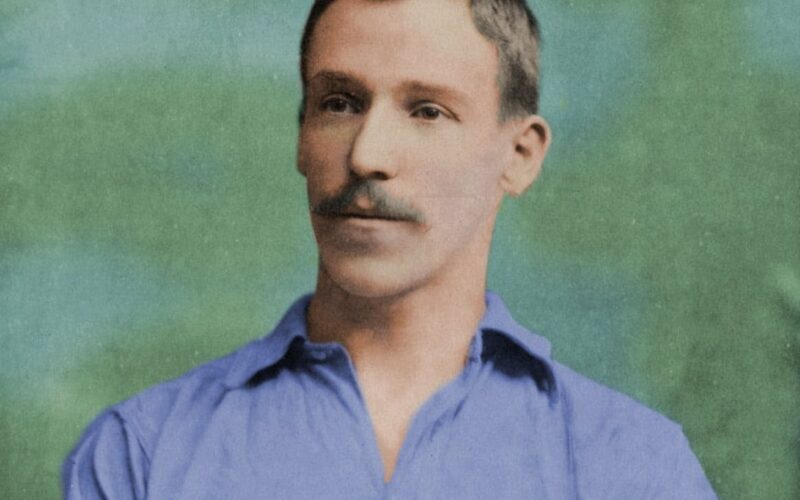
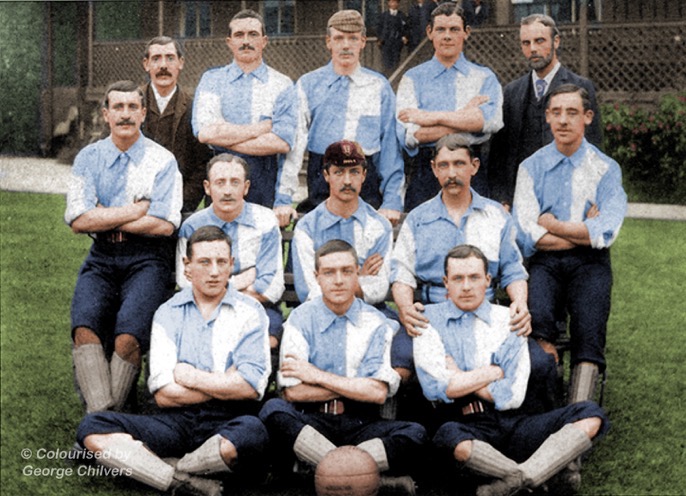
By Rob Sawyer [Above photo: Dickie Boyle of Everton c.1894(colourised by George Chilvers) ] Everton was awash with Sons of the Rock in the early years of the Football League: fellow Dumbarton-raised John Bell, and the long-serving Jack Taylor, the latter being the captain of Everton’s first victorious FA Cup side in 1906. No less vital and dedicated to the Toffees cause in the last years of the nineteenth century was Richard Hill Boyle. Commonly known as Dickie (or Dicky), he was one of those indomitable Everton servants, like Peter Farrell and Mike Lyons, who never earned the silverware he…
Read More
Jack Taylor – Everton’s Son of the Rock

Jack Taylor – Everton’s Son of the Rock

by Rob Sawyer ‘He played anywhere readily and played well anywhere. No Everton player has left Evertonians with a more fragrant memory.’ Thomas Keates (1928) Portrait of Jack during his playing days There must have been something in the water in Dunbartonshire in the second half of the 19th century. Between 1889 and 1897, six footballers with strong connections to the Clydeside town of Dumbarton represented the Toffees. First there was Alex Latta, followed by Richard ‘Dickie’ Boyle, Abe Hartley and the Bell brothers (John and Laurie). But only one, John ‘Jack’ Taylor, would get his hands on silverware whilst…
Read More
Net Gains: John Alexander Brodie’s Sporting and Civic Legacy

Net Gains: John Alexander Brodie’s Sporting and Civic Legacy

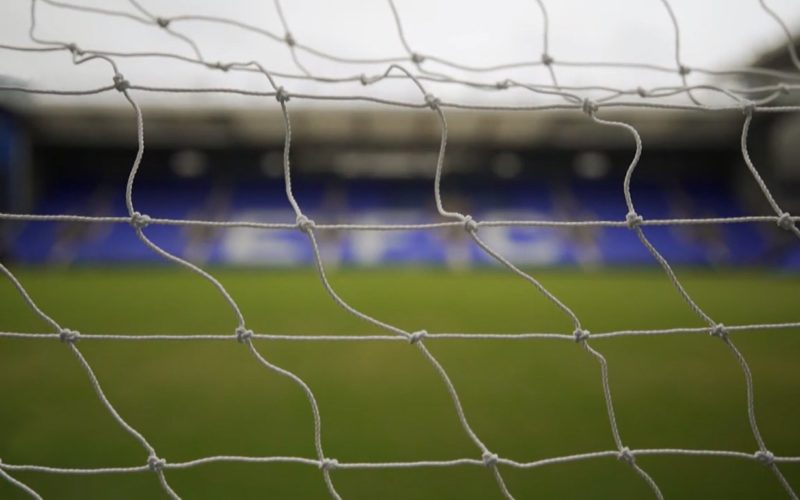
Rob Sawyer appears on French TV Recently, Heritage Society member Rob Sawyer appeared on the French TV channel ARTE, to tell the story of the origin of goal nets. It's an enjoyable film put together by our gallic visitors, capturing some great shots around Goodison, as well as the surrounding area. Unfortunately, there are no subtitles, but if your French skills aren't quite up to the job, Rob's fascinating article telling the full tale appears below. (click the image to watch the video) Net Gains: John Alexander Brodie’s Sporting and Civic Legacy Rob Sawyer The rustle of the net as…
Read More
Queen’s Head Hotel Archaeological Excavations

Queen’s Head Hotel Archaeological Excavations

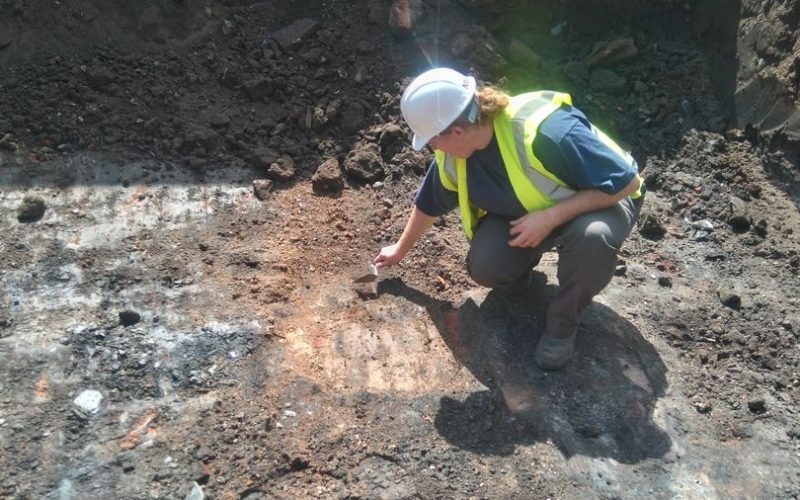
Hotel Confirmed as Everton F.C.'s first headquarters and the birthplace of big-time football on Merseyside Everton F.C.’s first secretary was the younger 26 years old John William Clarke, and not his landlord father John, who, down the years, had often been incorrectly credited with having had that historic role The Queen's Head Hotel has become part of Everton folklore regarding the events that took place within its walls and the decisions made that laid down the foundation of Everton Football Club. This historic venue is where St Domingo’s Football Club became Everton Football Club in November 1879, and in 2015…
Read More
Johnny Holt – Everton’s Little Devil

Johnny Holt – Everton’s Little Devil

Rob Sawyer "The undisputed king of centre-halves – a living object lesson of the superiority of brain over muscle." (Contemporary newspaper description of Johnny Holt) Time passes, and with it go first-hand memories of footballers who bestowed greatness on Everton. T.G. Jones is widely cited as the club’s finest centre-half, with the next generation of fans also holding Brian Labone in the highest of esteem. But let us not overlook Johnny Holt, the Little Devil – without equal in his era in the art of defending, and a bedrock of the First Kings of Anfield. John Holt entered this world…
Read More
The Birth of Sponsorship

The Birth of Sponsorship

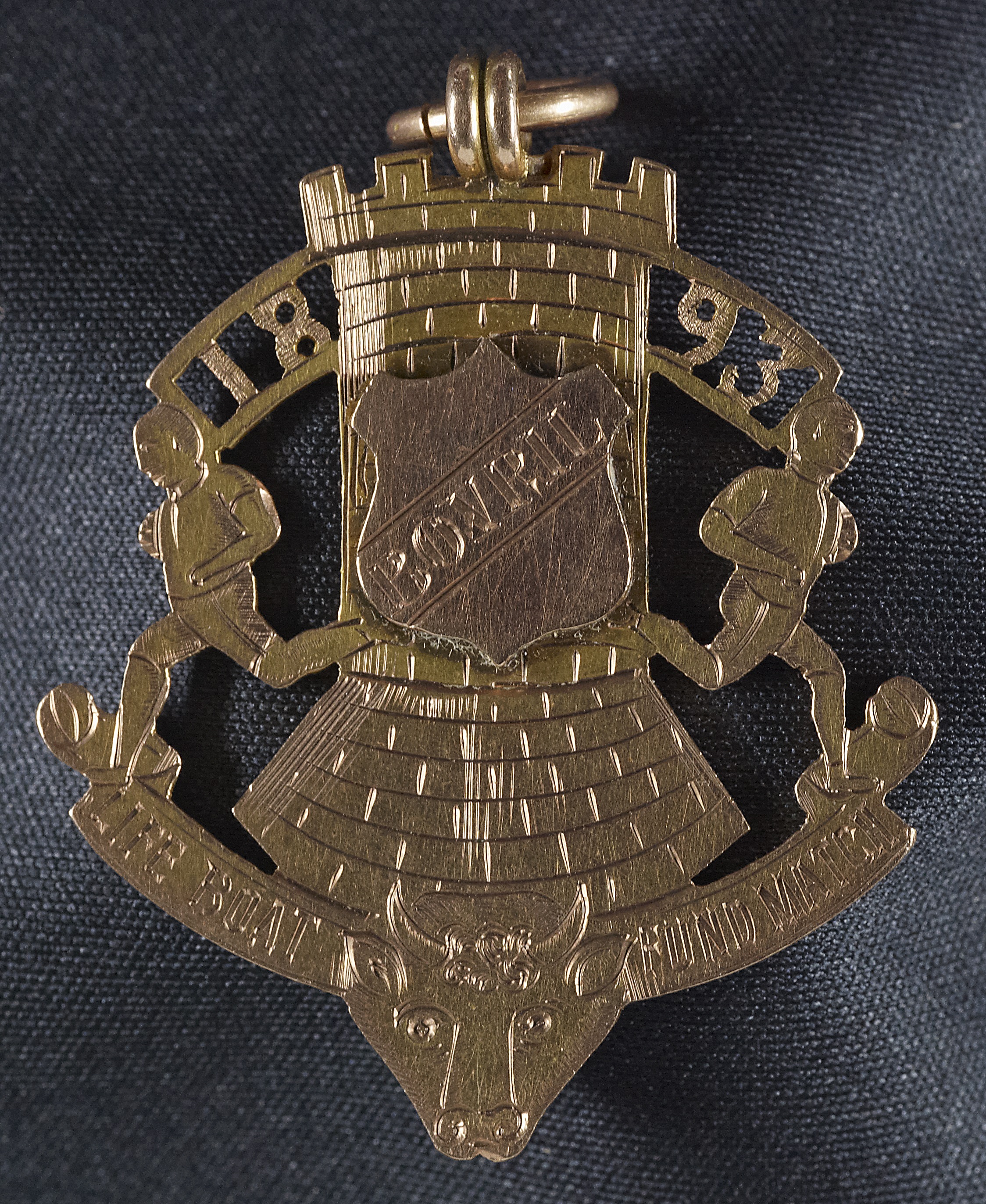
I was asked what appeared to be a fairly straightforward Everton FC quiz question recently but failed miserably with my answer. To be fair, it was a Richarlison-style curved ball, linked with the first known commercial sponsors of a Goodison Park fixture. I thought I started well by suggesting Hafnia and NEC but I wasn’t even close. Linked with today’s visitors I was told that the answer had a Manchester connection and links to lifeboats, a beefy end-product and an historical light spectacular. In the end I turned to a classic source of information for the answer by viewing the…
Read More
Jack Keys and William Warmby — The Duo from Derby

Jack Keys and William Warmby — The Duo from Derby

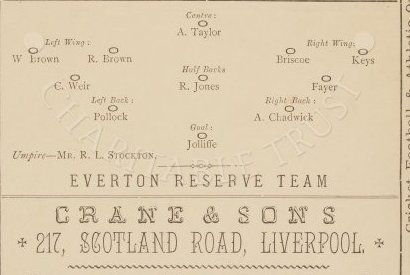
Jack Keys and William Warmby — The Duo from Derby In preparation for life in the Football League, Everton Football Club made several new signings during the summer of 1888. Two of them, Keys and Warmby, had joined from Derby County. Despite the fact that the local newspapers made no reference to their background, they were in fact related by marriage and had reached the Mersey seaport by two slightly different routes. William Henry Warmby was born in 1863 in South Yorkshire, where he began his football career with his local team, Rotherham Town. Some time around 1883 he moved…
Read More
Edward Turner, the carpenter from Lancaster

Edward Turner, the carpenter from Lancaster

Renowned for its mint cake and grey limestone buildings, the former Westmorland county town of Kendal – now part of Cumbria – was the location at which an Everton talent scout discovered a defender by the name of Edward Turner. Born 24 February 1874 in Lancaster, he was the second child of John, a cotton spinner, and his wife Mary. The 1881 census records the family living on Rigg Lane, but by 1891 they had moved to Penfold Lane where Edward had begun to learn the carpentry trade. Around this time his name briefly appeared in the press while playing…
Read More