Reflections on a pioneering woman’s half century of service at Everton Football Club
Jamie Yates
With women’s football firmly back on the map and growing once more in popularity, much has rightly been made in recent times of the abrupt ban placed in December 1921 on women playing the game at Football Association affiliated club stadia in England. Twelve months prior, on Boxing Day 1920, Goodison Park had hosted a record crowd for women’s football of around 46,000 (with as many as 10,000 more locked out) for a match between St Helens Ladies and the famous Preston factory team Dick, Kerr Ladies.
The women’s game enjoyed a surge in attendances before, during and after the Great War and there seems to have been a genuine fear among the football establishment that these large crowds (the Goodison match garnered over £3,000 in gate receipts) were diverting funds away from the men’s game and to other causes, namely charities and political activity – Dick, Kerr Ladies’ FC were prominent supporters of striking coal miners. Not only that, but the game was viewed by some in positions of power as far from ladylike. The ban remained in effect until 1971, and the Women’s Football Association was only formally affiliated with the Football Association in 1983. Similar bans were enforced in Scotland and Wales.
Although predominantly thought of as the game of the working man in its origins as a spectator sport, women and girls have been fans and present at matches, albeit in smaller numbers, in British football since the earliest days of the game. However, not many are documented as having worked to any significant level behind the scenes. Certainly, in the early decades of the game, pre-World War Two, women were scarcely employed in roles beyond the stereotypical cook, cleaner, tea-lady or seamstress, as and when shirts, shorts and socks needed repairing. Even then, these were often voluntary roles or nominally recompensed jobs undertaken by the wives and daughters of ground staff, coaches and players, even at the level of First Division clubs like Everton.
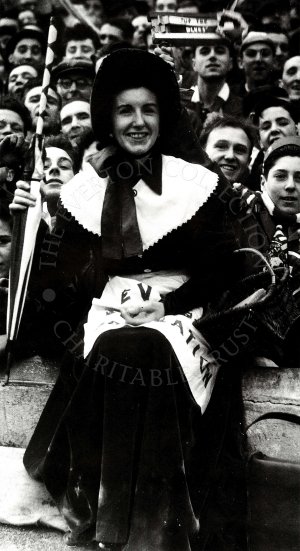
On a side note, Everton FC was unique from the early days of league football in that matchdays regularly featured a mascot whose duties were carried out by a young woman, in the form of the Toffee Lady (or Mother Noblett), throwing toffees to supporters before kick-off. In the months after the 1966 FA Cup final, the Everton Supporters’ Club went as far as to demand the club ask unofficial ‘boy mascot’ Bernard Gamble, a young lad who for several seasons had accompanied the players onto the pitch bedecked in his own Everton strip, to cease his pre-match routine. The supporters’ club had brought about the official adoption of the Toffee Lady as club mascot in 1953, and felt that young Bernard detracted from her impact. The Everton directors acceded to this request and the poor boy was asked to stand down. Meanwhile, when asked for their opinion on the subject, the Liverpool FC Supporters’ Club chairman Ted Black told the Liverpool Echo:
‘I think it’s a gimmick to have a girl going round the pitch. Our mascot, Les McCann, has been encouraging the players since he was four and he’s eleven now. The players look forward to seeing him. But a girl? Well, it’s just so much toffee.’
One young woman who bucked the trend when it came to establishing herself in a key role in top flight professional football in the immediate post-war era, as executive secretary – and personal assistant effectively – to successive Everton Football Club secretaries (and later chief executives), was a teenager from Clubmoor by the name of Jessie Milne.
Jessie’s story is a remarkable one, which appears to have been at risk of being lost to the sands of time. Jessie never married, had no children and certainly never courted publicity in her long career in the back office at Goodison Park. When she passed away, aged ninety, in December 2019, she took with her over fifty years of experience from behind the scenes at one of England’s greatest football clubs. The book she could have written had she chosen to tell her side of the story would surely have been a bestseller. Her legacy is that of a strong, independent, dignified woman who served her employers in exemplary fashion for half a century and remained loyal to the cause till her final breath.
To quote Michael Dunford, Everton Chief Executive from 1994 until 2004:
‘Jessie Milne was an absolute godsend to Everton Football Club. With the Everton Women’s team now playing there, I think it would be fitting for the club to consider renaming the Main Stand at Goodison Park after her.’
This is Jessie’s story in as much as I have been able to piece together from statutory and census records, family recollections and what few other clues she left behind. I hope it serves to help preserve her memory as a key figure at the heart of the Goodison Park engine room throughout the second half of the twentieth century, an era of soaring highs and crushing lows.
This is the story of Jessie Milne, the first lady of Goodison Park.
EARLY YEARS
Jessie Milne was born at home, 24 Teynham Crescent in Norris Green, just off Utting Avenue, on Sunday, 3 November 1929. She was the youngest child of Albert Milne, by his second wife Robina Frances Anderson and very possibly named after her father’s older sister Jessie, who died aged thirty-six, in May 1923. The day before Jessie was born, Everton beat Newcastle United by five goals to two at Goodison Park. Alas, this was a rare high point in an awful season, and five months later, Everton were relegated from the First Division for the first time in their history.
In 1913 Albert Milne married Gladys Louisa Deal in Liverpool and the couple had two daughters, Imogene and Eileen, and a son, Albert junior. Gladys died at the end of March 1921, shortly after her twenty-eighth birthday and possibly as a consequence of childbirth. She had given birth to a second son, Walter, two months previously. Baby Walter, who poignantly ended up listed in the 1921 Census as an inpatient at Alder Hey Children’s Hospital, died a year later.
Albert Milne worked as a driver for the Co-Operative and later as a ship’s porter, with his mother Imogene and older sister Jessie helping raise his three older children after Gladys passed away. In 1921, the Milne family, sixty-nine-year-old widow Imogene, siblings Jessie, Robert and Albert with Jessie’s teenage son, Leonard, and Albert’s eight-year-old daughter Imogene, were living together at 119 Lawrence Road, Wavertree, on the western tip of Wavertree public playing fields, known locally as ‘The Mystery’.
The marriage of Albert Milne and Robina Frances Anderson took place in the autumn of 1922 and their first daughter, Jessie’s older sister Frances Elizabeth (known as Betty), was born on 26 January 1923. According to the electoral rolls for Liverpool, the family moved just under a mile west along Utting Avenue to a new house at 122 Richard Kelly Drive, on the corner of Lambourne Road, Clubmoor, at least as early as 1933. They may well have been the houses first inhabitants.
(Author’s note: Many families, including my own, moved to new houses in the area around the time from more places like Kirkdale and Vauxhall, but more of that later!)
WARTIME
The 1939 England and Wales Register, taken at the outbreak of the Second World War, lists Albert, by now working as caretaker at a provisions and clothing store, Robina, Betty and Jessie all living at 122 Richard Kelly Drive. Jessie would have been approaching her tenth birthday and may well have spent some time as an evacuee over the next few years. Betty, by now aged sixteen, was working as a short-hand typist for a mail order company.
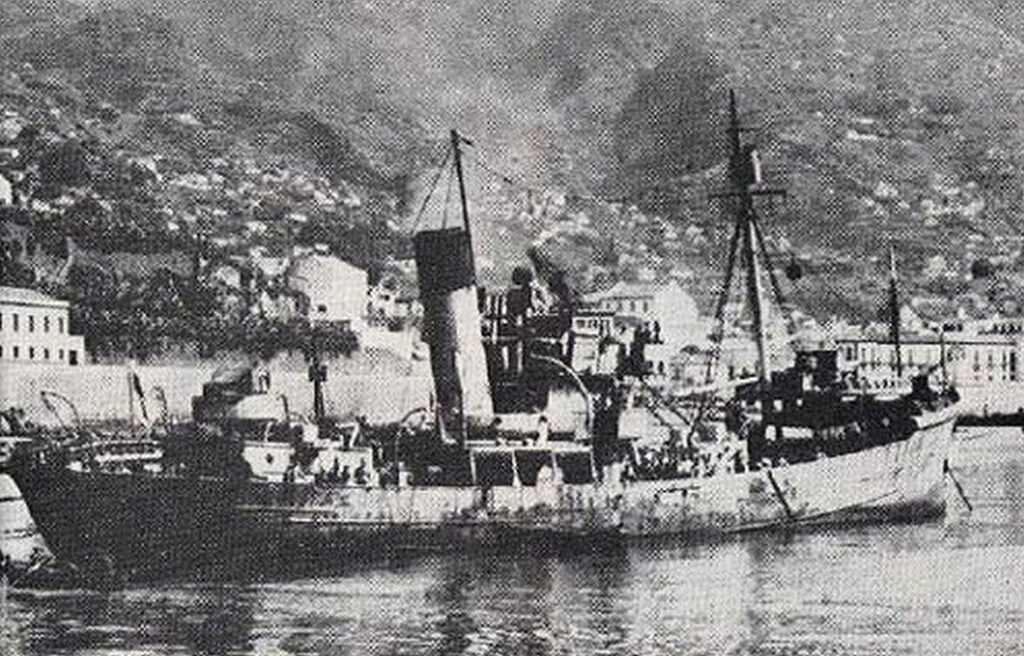
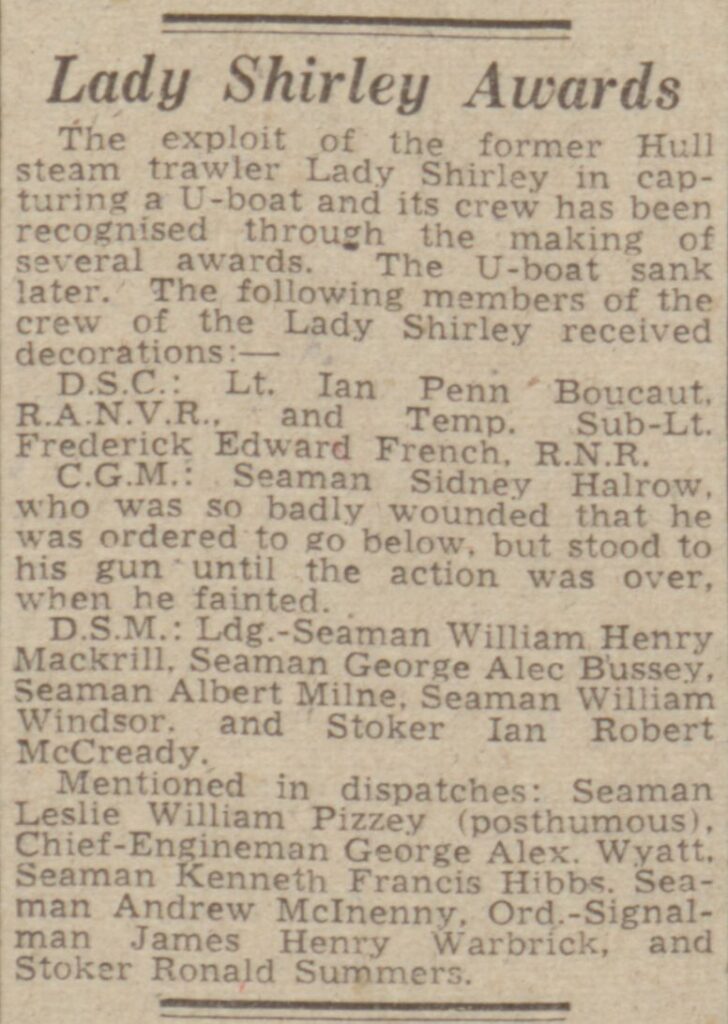
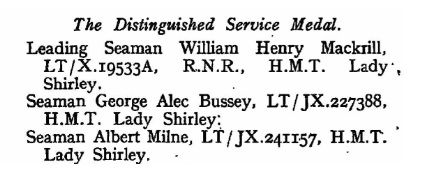
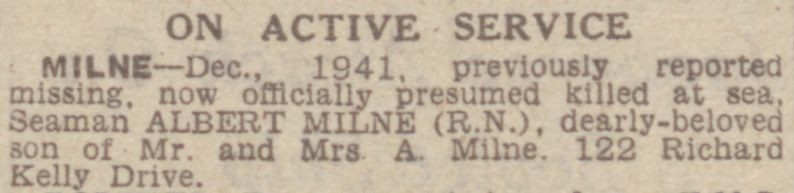
Tragedy struck the family, when Betty and Jessie’s older half-brother, Albert Milne junior, who had married in 1938 and fathered a son (also called Albert), was lost at sea aged twenty-five. He had sailed with the Royal Navy Patrol Service aboard His Majesty’s Trawler Lady Shirley, which was torpedoed in the strait of Gibraltar on 11 December 1941. Albert and two of his crew mates were awarded the Distinguished Service Medal just a month before he died, for their role in the Lady Shirley sinking the German submarine U-111 on 4 October 1941, and capturing forty-four of her crew. This was the first instance of prisoners of war being taken from a U-boat operating in the South Atlantic.
EVERTON CALLING!
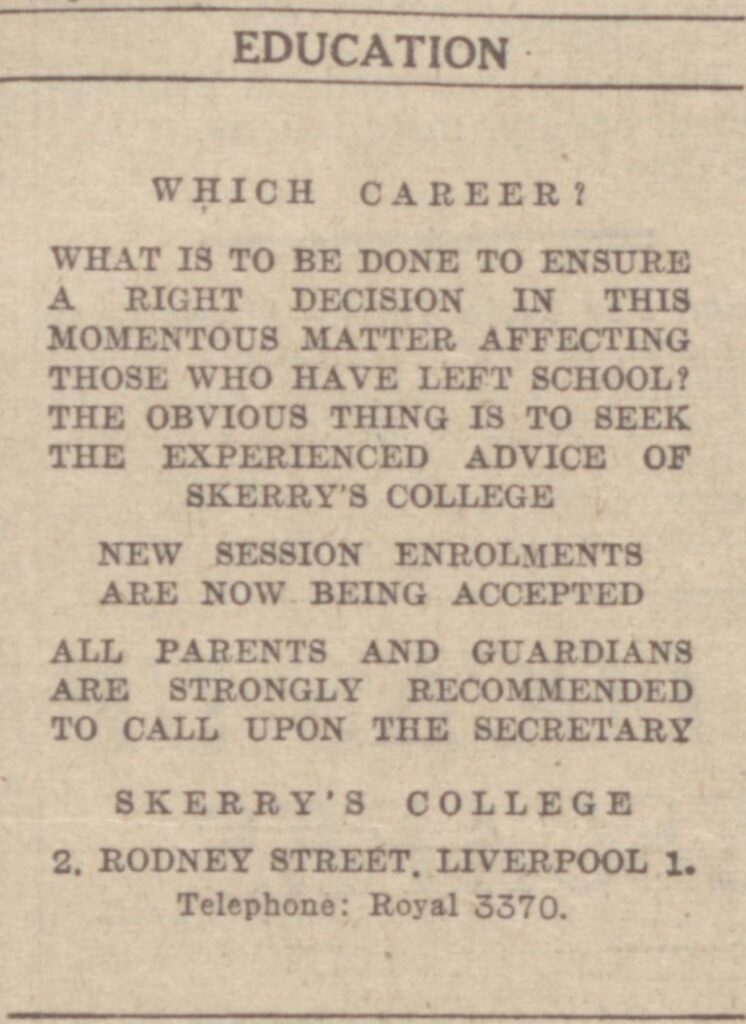
By the end of the war, Jessie had followed in her big sister Betty’s footsteps and signed up for a short-hand typing course at Skerry’s College, on Rodney Street in Liverpool in the summer of 1945.
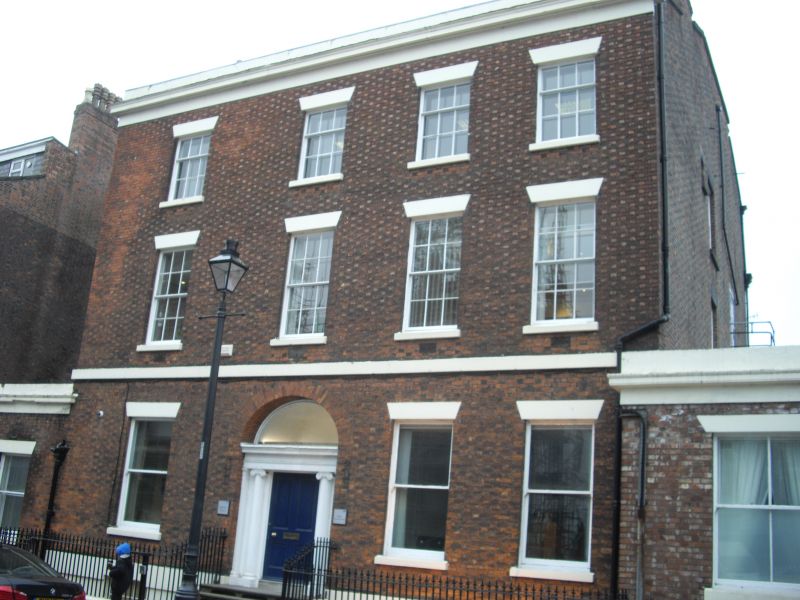
The first Skerry’s College was founded in Edinburgh in (of all years!) 1878 by George Skerry, an educator and mathematician. The institution was set up with the intention of training candidates for Civil Service examinations. In 1880 Skerry developed correspondence courses run by postal return – the first of their kind in the United Kingdom – for students unable to attend classes in person. Over the next fifty years, further Skerry’s Colleges were opened in London, Newcastle and Liverpool in England, Glasgow and Dundee in Scotland, Cork, Dublin, Derry and Belfast in Ireland, and Cardiff in Wales.
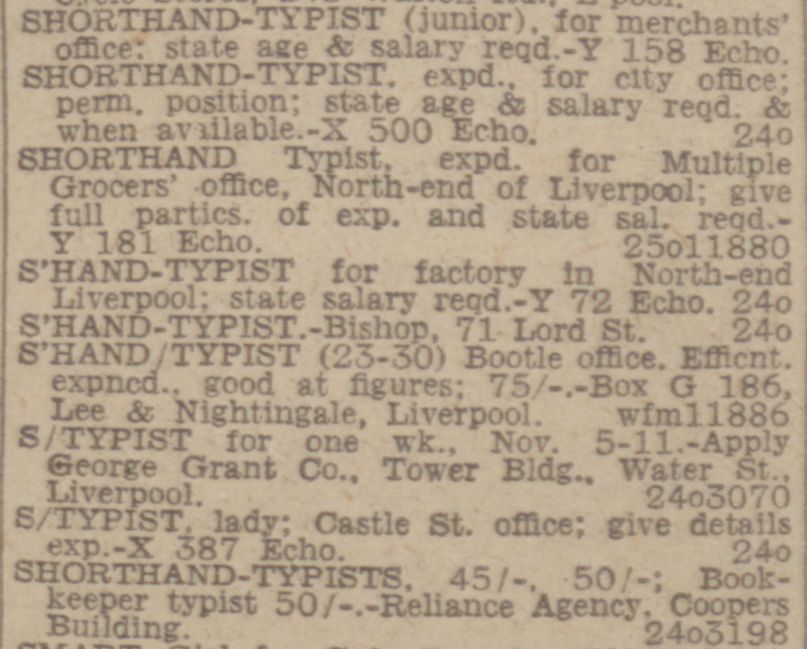
In the spring of 1946, aged just sixteen, Jessie Milne responded to an advertisement for a typist under a box number in the Liverpool Echo. Shortly thereafter her school received communication from the offices of Everton Football Club, requesting that Jessie attend an interview at Goodison Park, a mile and a half west up Queens Drive and Walton Lane from Jessie’s family home.
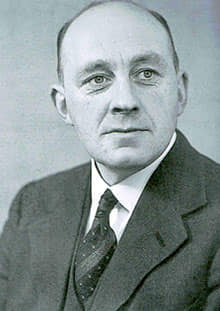
Jessie Milne started work at a First Division football club picking up the pieces in the aftermath of the War. Goodison Park had suffered significant bomb damage, and the Football League and FA Cup competitions had been suspended for the entirety of the conflict. Secretary Theo Kelly had fires of his own to extinguish as star players, including Tommy Lawton, Joe Mercer and T.G. Jones were all unsettled. The glittering League Championship success of 1938/39 must have seemed a lifetime ago to war-weary players, staff and supporters alike.
In an interview for the Everton matchday programme for a First Division fixture against Tottenham Hotspur on 16 December 1972, Jessie looked back on the telephone call that changed her life:
‘We were sorting ourselves out just after the war when I spotted this advertisement in the newspaper, and my mother thought it would be tailor-made because it was so handy for home. I never thought it was anything to do with Everton – and, in any case, I was not interested in football – and when I discovered it was at Goodison I had to ask the way. I had an interview and was given the job by Mr. Theo Kelly, who was then Secretary.’
The first Football League fixture in seven years – and the first since Jessie Milne had taken up her post – was a home game against Brentford on the opening day of the 1946/47 season. Everton lost 2-0 in front of a bumper crowd of 55,338. In an inconsistent season Everton’s form was reflected with a disappointing tenth place finish and an early exit from the FA Cup, with a rare highlight being the 1-0 Goodison Park win over eventual champions Liverpool, thanks to an Eddie Wainwright goal.
Jessie recalled vivid details of her early days in the job:
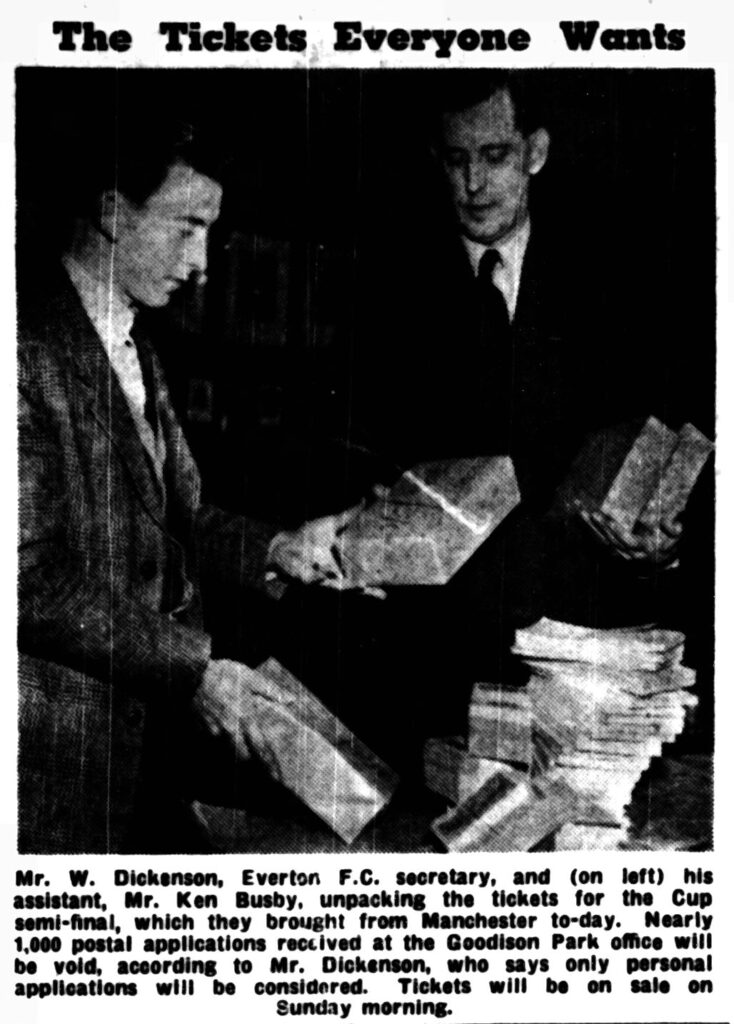
‘I shared an extremely small office with a male clerk called Ken Busby – he left in the 1950s – and it was very, very old. For instance, all the locks had ‘V.R.’ (Victoria Regina) embossed on them, so it must have been built before the turn of the century. It was all so old-fashioned. We used to have to sit on those very high stools and sometimes – don’t forget this was well before the days of central heating – it used to get extremely cold. It was modernized a few years after I came to the club and then the directors’ rooms and offices were improving, and, with them, the workload was increasing.’
TROUBLED TIMES IN LIVERPOOL 4
After an eleventh place finish in 1947/48, the 1948/49 season began with eight defeats in twelve games. Everton only scored in four of those matches and suffered back-to-back 5-0 home defeats to eventual League Champions Portsmouth and Birmingham City in a torrid September which also featured a 6-0 drubbing at Chelsea. Theo Kelly’s involvement with the first team was brought to an end, although he remained in post as Club Secretary.
Former Everton player Cliff Britton, a League Champion and FA Cup winner in his days as a stylish wing-half in 242 appearances for the Toffees during the 1930s, was appointed as the club’s inaugural first team manager. Britton had won plaudits in his debut managerial role by steering Second Division Burnley to the 1947 FA Cup Final where they lost to Chelsea, and a third-place finish in their first season back in the top-flight since 1929/30.
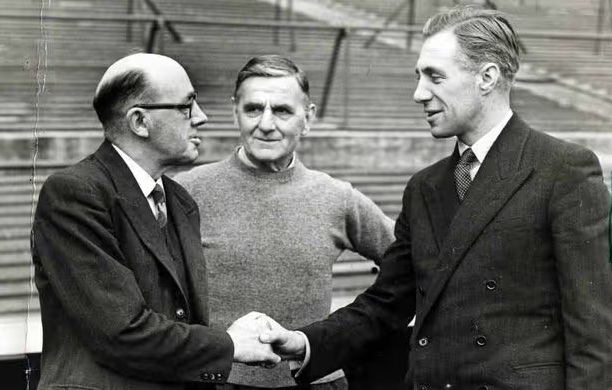
by Theo Kelly (left) and veteran trainer Harry Cooke (centre)
Frustratingly, the new Everton manager’s first match in charge ended in another disappointing defeat, 1-0 at Goodison Park versus Derby County. Everton finished in eighteenth place in the 1948/49 season, winning only four of their last sixteen games. The following campaign, 1949/50, saw no tangible improvement, with another chastening defeat at the hands of Portsmouth, who hammered the hapless Toffees 7-0 at Fratton Park in September en route to retaining their League title, and another eighteenth place finish. Britton’s men did reach the FA Cup semi-finals in 1949/50 but were beaten 2-0 by neighbours Liverpool at Maine Road. Evertonians must have cast a wistful glance as the evergreen Joe Mercer, approaching his thirty-sixth birthday, lifted the trophy for Arsenal at Wembley a few weeks later having also been voted the Football Writers’ Association Footballer of the Year.
The Everton minute books reveal that, as of the close season of 1950, Jessie Milne was on a weekly wage of £4 5s 0d. That November it was ‘agreed that this employee should be granted a 10/- per week increase in her wages’.
Meanwhile, worse was to follow for the long-suffering Everton crowd. At the climax of the 1950/51 season, Everton Football Club suffered the ignominy of relegation for only the second time in the club’s history. High-flying Portsmouth once more proved Everton’s nemesis, winning 5-1 at Goodison and 6-3 in the return fixture on the south coast as Everton finished bottom of the table.
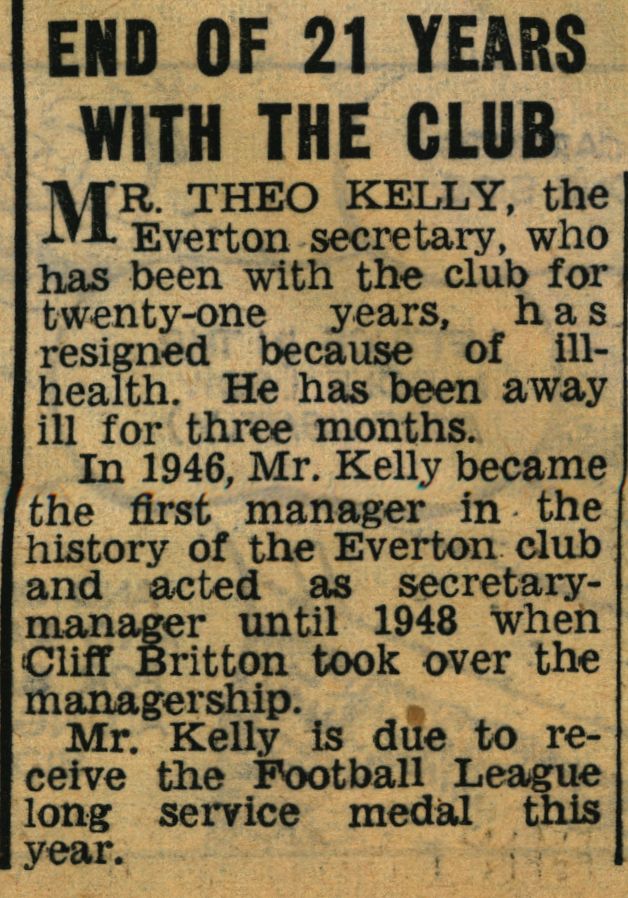
Daily Mirror, 1 March 1951
Three tough seasons would follow in the second tier as clubs savoured the opportunity to take the scalp of one of English football’s big boys. Particular lows included a 5-1 home defeat to a Notts County side led from the front by (a surprisingly goalless on the day) Tommy Lawton in October 1951, and an 8-2 pummelling at Huddersfield Town in April 1953 during which future Everton player Jimmy Glazzard scored four goals including a first-half hattrick. Positives included the emergence of a fearless young centre-forward in Ellesmere Port-born Dave Hickson.
Cliff Britton must have feared for his future as manager throughout this difficult era, but the Everton directors stood firmly by their man. The club finished in seventh place in 1951/52, before sliding to their lowest ever position, sixteenth in the Second Division in 1952/53. Despite struggling in the League, the team managed to put together a rollicking run to the semi-finals of the FA Cup, thanks in no small part to Hickson scoring in every round. Britton’s men eventually lost 4-3 to Bolton Wanderers, again at Manchester City’s Maine Road ground, having trailed 4-0 at half-time.
GOING UP!
Salvation finally came a year later. Dave Hickson’s twenty-four goals and his strike-partner John Willie Parker’s thirty-one from thirty-eight games helped Everton match table-topping Leicester City on fifty-six points for the 1953/54 season. Automatic promotion back to the First Division was secured and, much to the delight of Evertonians everywhere, the Toffees passed neighbours Liverpool on their way back up. The Reds were relegated having finished bottom of the First Division table and would not return to the top flight until the 1962/63 season. Twenty-four-year-old Jessie Milne was among the list of backroom staff who were awarded a £10 bonus in the summer following Everton’s promotion.
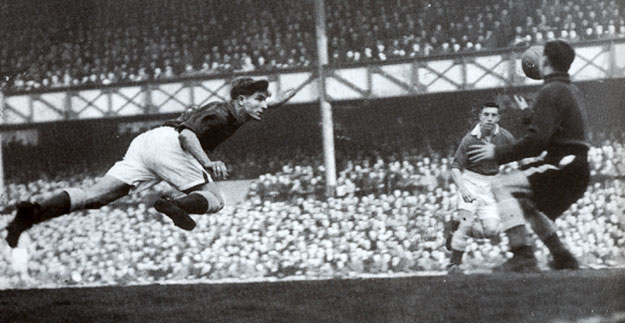
Despite the trials and tribulations of the Everton team on the pitch, matchday attendances soared throughout the post-war period. Jessie Milne, who worked under Theo Kelly’s replacement Bill Dickinson from April 1951, provided her own reflections:
‘Remember that when I first came to Everton, we used to sell just 800 to 1,000 season tickets per year – and ground season tickets had not been introduced. In fact, I believe we did not sell tickets for individual matches. It was pay at the gate and help yourself. But, come 1949, and a boom in interest in soccer and from that time, there has been so much administrative work to be done – especially with the changes in administration and regulations, concerning European football, etc.’
After a bright start which saw them win four of their first five League fixtures, Cliff Britton’s newly promoted Everton side finished in the relative comfort of eleventh position in the First Division in 1954/55. The season was somewhat soured by a 4-0 FA Cup fourth round defeat at home to Second Division Liverpool at the end of January, and a run of only one win in the final nine League fixtures.
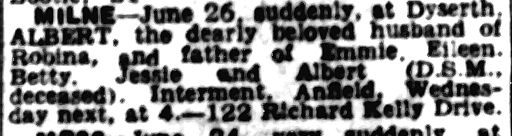
Sadly, on 26 June 1955, Jessie Milne’s father, Albert, passed away aged sixty-two while on holiday at Dyserth in Flintshire, North Wales. He was buried at Anfield Cemetery, just a short walk from Jessie’s office at Goodison Park and only a few feet from the grave of former Liverpool FC Club Secretary George Patterson who had died a few weeks previously. Patterson’s grave was left unmarked until 2019 when funds were raised by Liverpool supporters and a headstone was commissioned.
Cliff Britton’s Everton team continued to struggle with inconsistency throughout the first half of the 1955/56 season and found themselves mired in mid-table in February. Britton was sacked and team selection duties were taken on by a sub-committee of directors for the final eleven First Division fixtures. A meagre three wins, one draw and seven defeats saw Everton finish in fifteenth place. The directors also oversaw an FA Cup quarter-final defeat to Manchester City in March. Jimmy Harris gave Everton a first-half lead, only for City to score twice in six second half minutes and win the match 2-1.
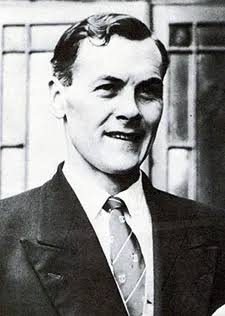
Britton’s replacement represented a bold, some might argue reckless, move by the Everton board. Ian Buchan was a physical fitness instructor with no experience in professional football when he was appointed to what might be equated with the modern-day position of Head Coach. Everton lost seven of their first nine matches under Buchan and suffered several heavy away defeats as players struggled with the new manager’s intense fitness regime. They finished in fifteenth place for the second successive season, before slipping to sixteenth in 1957/58.
With Everton rock-bottom of the table after losing the first six games of the 1958/59 campaign, Buchan was sacked in September 1958. The directors oversaw a run of three wins from four games – the one defeat being a club record 10-4 reverse at Tottenham Hotspur – before a much bigger football name than Ian Buchan was brought in with the remit of turning Everton’s fortunes around once and for all.
Johnny Carey was a Manchester United and Ireland legend who had just won promotion as manager of Blackburn Rovers. Spearheaded by goals from Dave Hickson, Jimmy Harris and Eddie Thomas and the leadership of Bobby Collins, Carey was able to guide the team away from the threat of relegation to another sixteenth place finish.
MERSEY MILLIONAIRES
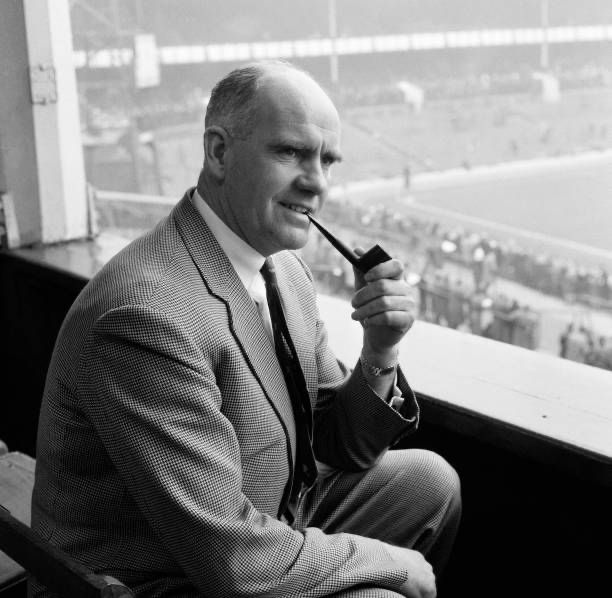
During the 1959/60 campaign Carey was given money to spend on quality players like Roy Vernon and Tommy Ring but could only lift the club one spot to fifteenth position. Carey’s free-flowing but unpredictable side lost only five home fixtures but failed to win a single away game in the league for the first and, to this day, only time in the club’s history.
1960/61 saw Everton finally deliver a First Division season memorable for positive reasons in the post-war era. Roy Vernon’s twenty-two goals, capably supported by double-figure contributions from Collins, Frank Wignall and Billy Bingham, plus the arrival of Alex Young, saw Everton play an attractive, but more importantly winning, brand of football. The club soared to fourth place in the table with just two fixtures remaining, on course for by far their best finish since the 1938/39 League Championship winning campaign.
Carey’s team had won four of their five previous matches, the last of which a crushing 5-1 Goodison Park victory over Cardiff City. This performance was illuminated by a Bobby Collins hattrick and two goals from Carey’s January signing Alex Young. Recruited from Heart of Midlothian, Young was already well on his way to becoming the darling of the Everton faithful.
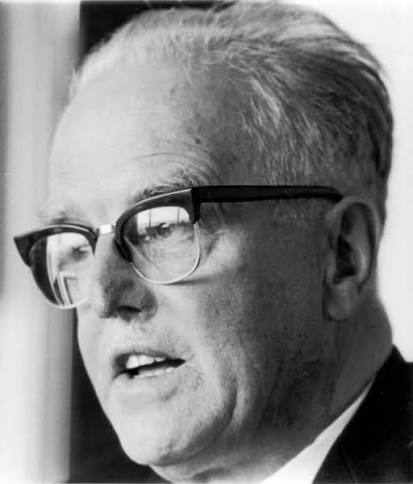
At this point club owner and financial backer John Moores, founder of the Littlewoods Pools empire, shocked the football world. He sacked Johnny Carey, infamously breaking the news to the Everton manager in the back of a taxi. Moores immediately installed former Everton centre-forward Harry Catterick, then manager of Sheffield Wednesday, in Carey’s place. Catterick oversaw wins against his former club and Arsenal in the final two matches of the season, results which secured Everton a fifth-place finish.
At the midway point of the season, Jessie Milne was granted a pay rise. The minutes from the Everton board meeting of 11 November 1960, held at 47 Castle Street, Liverpool, and signed off by John Moores himself, stated as follows:
‘Miss Milne and Mrs Daniels: That the wages of Miss Milne and Mrs. Daniels be increased by £1.0.0d per week each to £8.10.0d and £7.10.0d respectively.’
By now in her early thirties, Jessie Milne had already been part of the backroom team at Goodison Park for fifteen tumultuous years. Harry Catterick was the fifth secretary or manager in charge of the team during that era.
Everton’s prospects were beginning to look much brighter under John Moores’ bold regime.
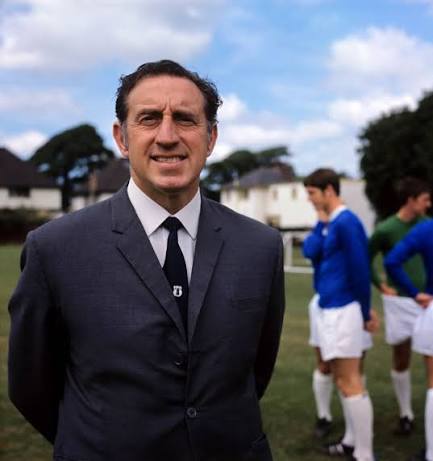
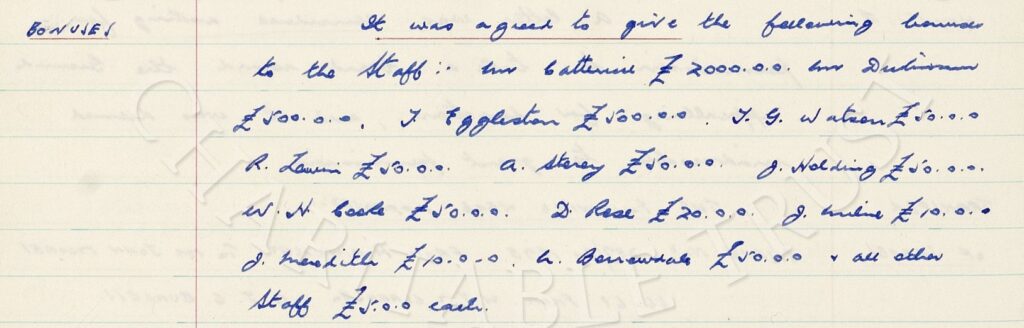
Harry Catterick would go on to lead Everton to two League titles and two FA Cup finals over the next decade, building teams awash with international players who played football in the finest traditions of the School of Science. A sixth League Championship title followed in the 1962/63 season, at the climax of which Jessie Milne was among a select group of staff to be granted a bonus. Manager Harry Catterick received £2,000, club secretary Bill Dickinson £500 and head groundsman Alan Storey £50. Storey’s assistant Dougie Rose whose Everton career ran parallel with Jessie’s from the mid-1940s, received £20, and Jessie was the first female name on the list, one of only two women alongside her secretarial colleague Jean Meredith. Both were granted a £10 bonus in recognition of their efforts. All other full-time club staff received a payment of £5.
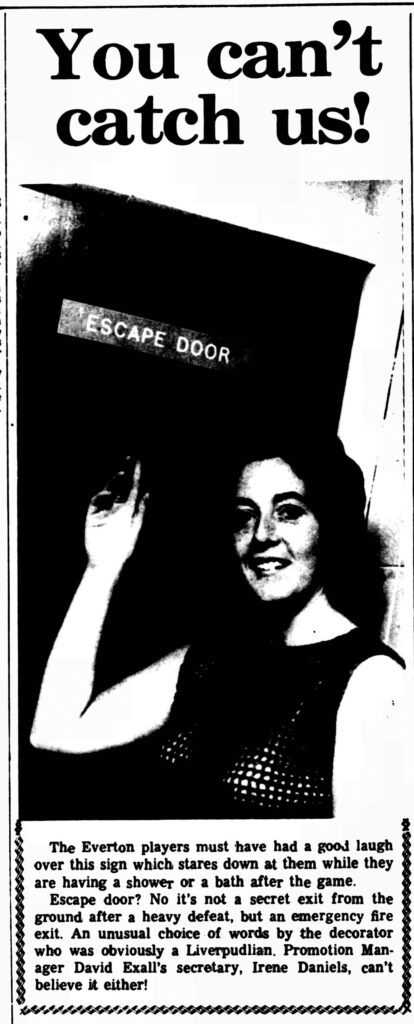
Runcorn Weekly News,
2 September 1971
1966 saw the FA Cup return to the Goodison Park trophy cabinet after a thrilling comeback victory over Sheffield Wednesday at Wembley, notable for the pitch invading antics of well-known Evertonian Eddie Cavanagh. Goodison also played host to five fixtures, including the West Germany-Soviet Union semi-final, during the 1966 World Cup during what became a golden era in Everton’s history.
In her 1972 matchday programme interview, Jessie Milne spoke fondly of these times and the impact that working for Everton had on her outlook on the game:
‘I came without an interest in football as such. But I reckon that over the years I have been brain-washed into becoming an Evertonian. Somehow, I cannot seem to summon up the interest in other grounds. I have only once been to Anfield, for instance – that was for an Irish League v Football League clash in which Peter Farrell was playing. But, of course, I have enjoyed our two visits to Wembley in the FA Cup and, naturally, the one against Sheffield Wednesday when we won (in particular). But I think some of the most memorable matches I have seen were in the World Cup of 1966 – and I particularly remember Eusebio of Portugal.
‘I have enjoyed every minute of my job here at Goodison, and was very appreciative when the club presented me with the necklace last year. It just goes to show what football can do to you when the only time that Irene Daniels – Everton matchday programme editor David Exall’s secretary – and I fall out is when Liverpool come here to Goodison. Irene is a long-standing Liverpool fan. During that game, we stand well away from each other and do not talk. It just goes to show, doesn’t it?’
The necklace mentioned above was a gift given to Jessie by the Everton board of directors in 1971 in recognition of her twenty-five years’ service with the club. This anniversary was reported in the Liverpool Echo of 17 April 1971. GOAL, a popular weekly football magazine, also picked up on the story:
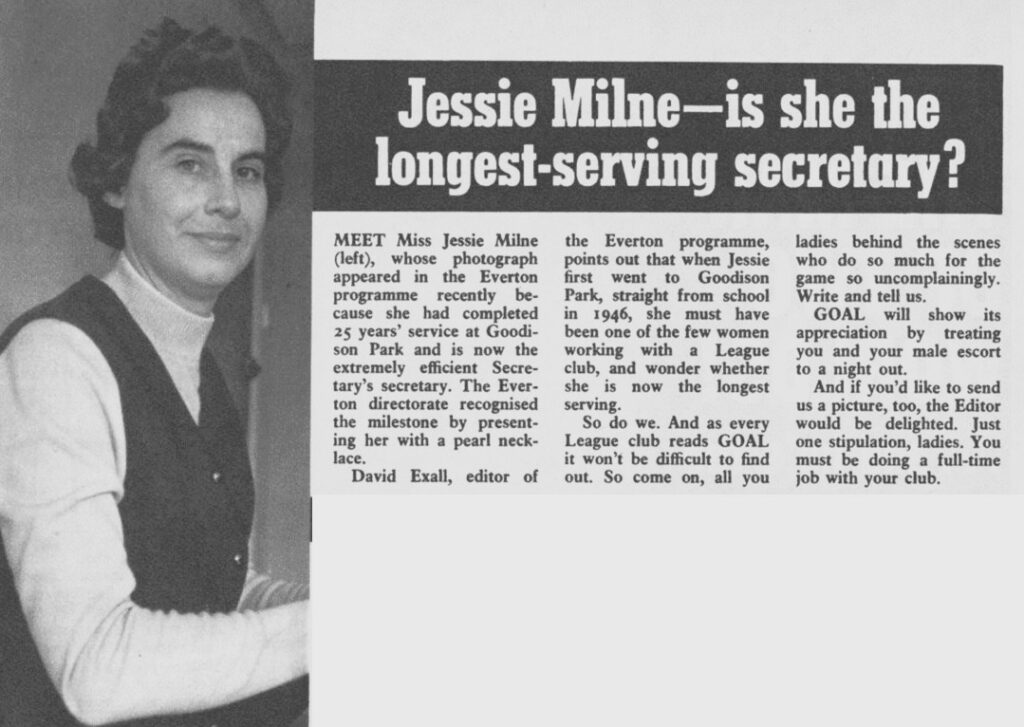
I wonder whether any lucky ladies – full-time employees only of course! – from other football clubs (and their male escorts!) ever were treated to a night out on GOAL.
Jessie and her sister Betty were still living at 122 Richard Kelly Drive throughout the 1960s and Jessie would walk or cycle the mile and a half route up Queens Drive to work at Goodison Park. Everton marked the end of the decade – one in which both football clubs and the music of The Beatles had well and truly put the city of Liverpool back on the world map – with a glittering League Championship-clinching 1969/70 season. Jessie would have attended the many celebratory dinners and other club functions throughout this period, and indeed most likely have been involved in organising some of them.
A TIME OF CHANGE
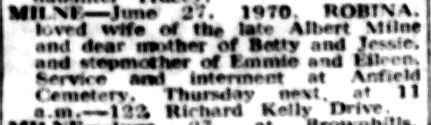
Once the title-winning celebrations had died down, over the summer of 1970 the backroom staff at Goodison Park, were busy assisting with preparations for several members of the Everton squad travelling to Mexico for the 1970 World Cup competition. Goodison Park itself was also undergoing major surgery with the construction of a new Main Stand to replace Archibald Leitch’s 1909 structure well underway. Jessie’s mother Robina passed away aged eighty on 27 June 1970, a week after the World Cup Final, and was buried with husband Albert at Anfield Cemetery on 2 July.
The 1970s proved a decade of frustration for Everton Football Club. Harry Catterick’s team gradually broke up as club stalwarts like captain Brian Labone, Joe Royle and Colin Harvey succumbed to injuries and off-field issues led to the departure of stars like Alan Ball. Meanwhile, Catterick’s health began to falter and, in summer 1973, he was replaced as manager by Billy Bingham, a member of his 1962/63 League Championship winning team.
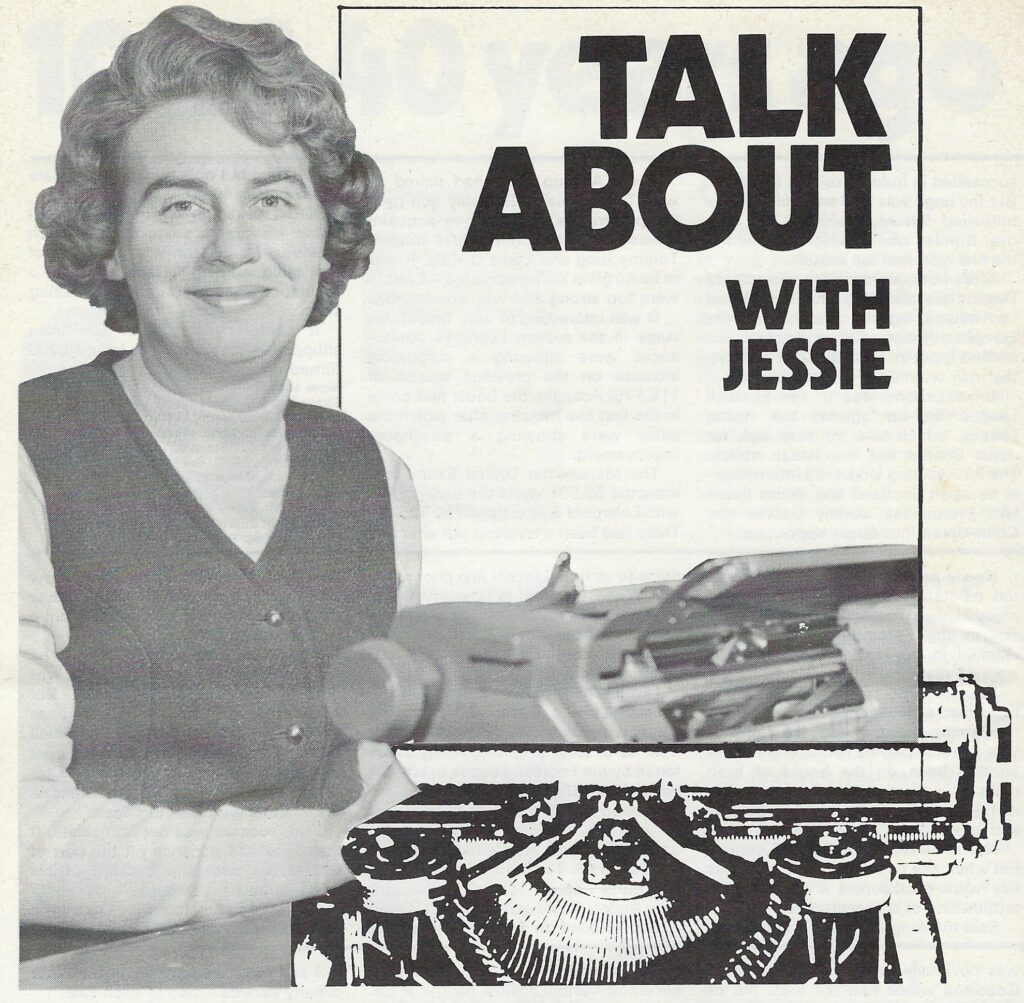
Everton v Tottenham Hotspur, 16 December 1972
In what was a period of transition at the club, Jessie’s boss, Bill Dickinson, retired after twenty-two years’ service as Club Secretary in 1973 and was replaced by Chris Hassell, who was recruited from Crystal Palace. Something of an up-and-coming figure in the world of football administration, the thirty-one-year-old Hassell’s time with Everton would prove relatively brief. He departed after two and a half years and later worked with Harry Catterick at Preston North End, before serving lengthy spells as chief executive at Lancashire and later Yorkshire Cricket Clubs. When I spoke to Chris he mentioned feeling as though Jessie, by now in her early forties, struggled somewhat with new ideas and taking orders from someone over a decade younger than her, but remembered her as absolutely dedicated and professional in her work.
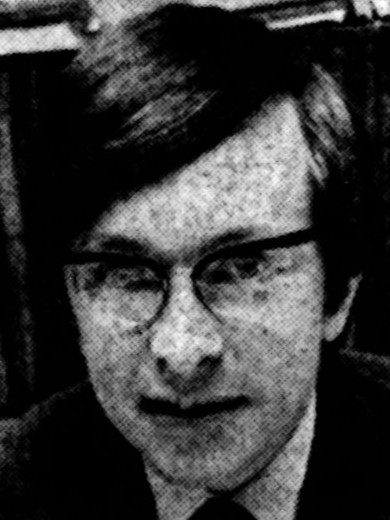
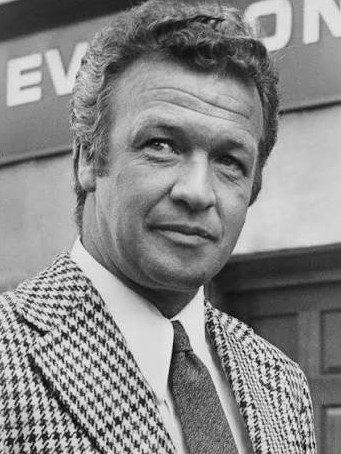
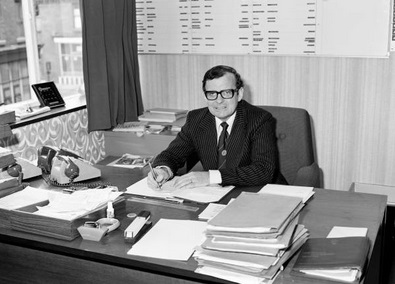
Chris Hassell was replaced at Everton in 1975 by Jim Greenwood, a Wigan-born businessman who was the Managing Director of A. and J. Coffey, Ltd., wholesale grocers, a family with strong Everton connections. Andrew Coffey was an Everton director for thirty years prior to the Second World War, including two short spells as chairman, and his son Norman also served on the Everton board for several years. Greenwood would serve Everton with distinction for two decades himself, leading the club into the Premier League era.
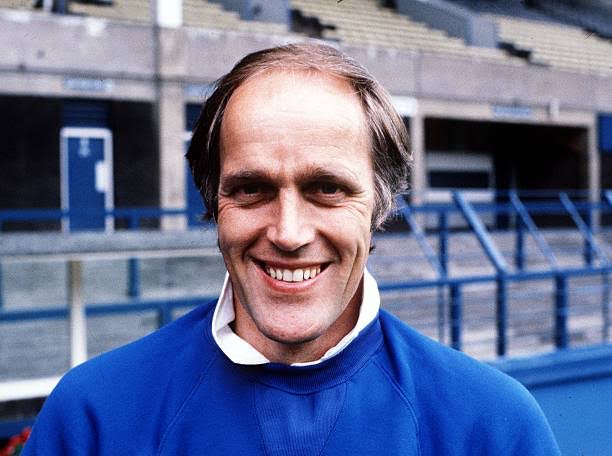
Newcastle United manager Gordon Lee was the man the Everton board turned to after sacking Billy Bingham halfway through the 1976/77 season and, despite a twice replayed League Cup final defeat to Aston Villa in 1977, Bob Latchford’s goalscoring exploits and the heroics of players like Andy King and Mick Lyons, silverware continued to prove elusive.
BACK ON TOP
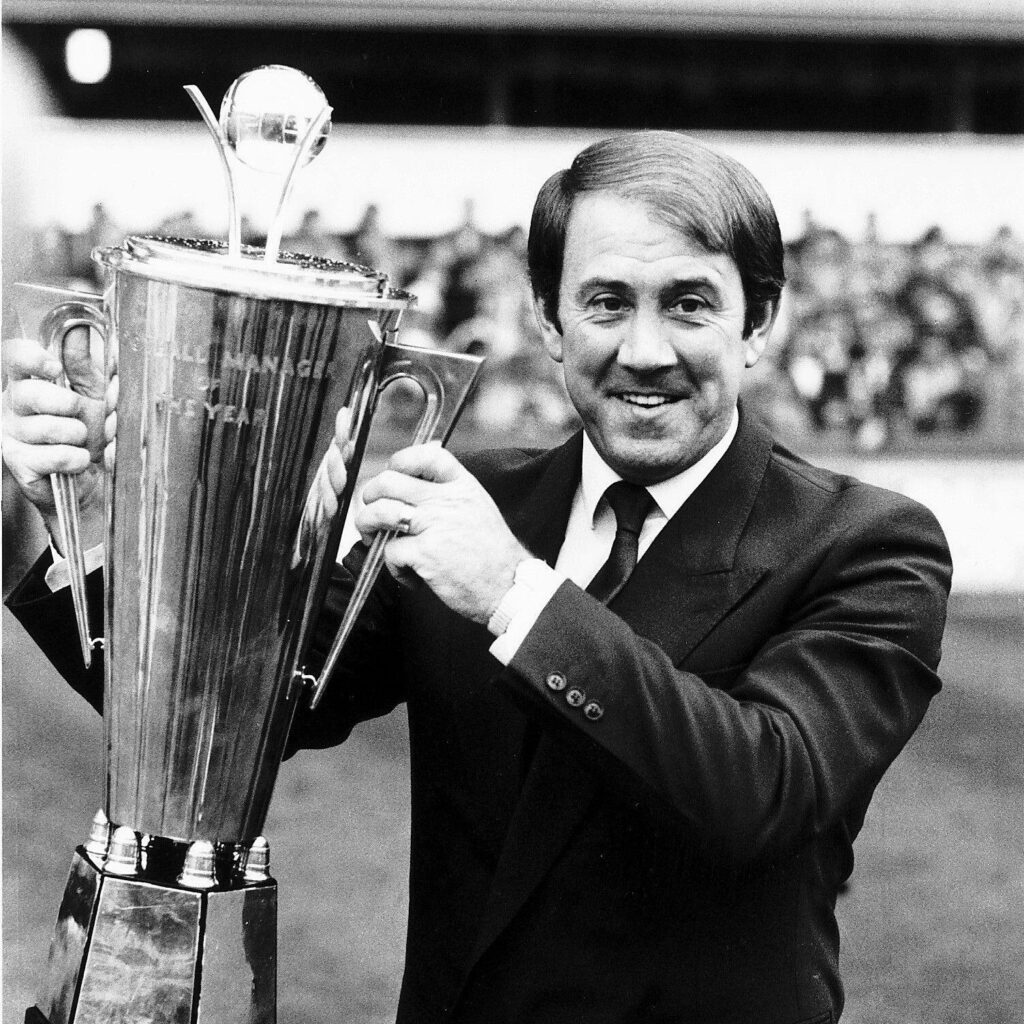
In 1981 another of Harry Catterick’s proteges, Howard Kendall, returned to the club as manager. In tandem with his fellow former Everton midfield maestro Colin Harvey, Kendall went on to emulate ‘The Catt’ in some style, winning two League titles of his own and an F.A. Cup. He even went one further by securing Everton’s first European title, the European Cup Winners’ Cup, as the crowning glory of a quite magnificent 1984/85 season.
Amid the second great footballing era of her long career at Everton, Jessie Milne was featured once more in the matchday programme in January 1986. On the occasion of the FA Cup third round tie with Exeter City, Jessie was interviewed as part of a Behind The Scenes series which ran throughout the season, interviewing the people who kept Goodison Park ticking over. By this time, aged fifty-six, she had now been in the job for just shy of forty years:
‘Jessie Milne has been secretary to four club secretaries – Theo Kelly, Bill Dickinson, Chris Hassell and Jim Greenwood – during her thirty-nine years at Goodison Park. In that time, she has witnessed enormous changes in football, at Everton in particular, and in life in general. Jessie recalls that “there were only three of us dealing with everything” when she joined the club, yet today there are separate departments for Promotions and Souvenirs, Ticket Sales, and Restaurants and Clubs.
“The offices were very old-fashioned when I started here; in fact, the initials ‘V.R.’ were on most of the locks. I had a little, narrow office, with wooden walls, and the furniture was built by the joiner. I had one of those Victorian-style high desks and a very old Underwood typewriter. Everything was ripped out when the old Main Stand was modernised, and we moved to the lower floor, in what used to be the Billiard Room, until the stand was pulled down in 1970. For many years we had an ancient switchboard – one of those where you had to turn the handle like mad.”
The new stand, built at a cost of £1m, was officially opened in 1971, and by then, the wind of change was fairly howling through Goodison Park.
“From the time we had our first Commercial Manager, things snowballed in all directions,” says Jessie. “Now we have the latest computers and word-processors, and the administration offices take up a big area. Things have even changed with the more modern ideas. When the 300 Club was first opened, it was a ‘dead’ room during the week, but it is now the Royal Blue Restaurant, and the place is buzzing every day.”
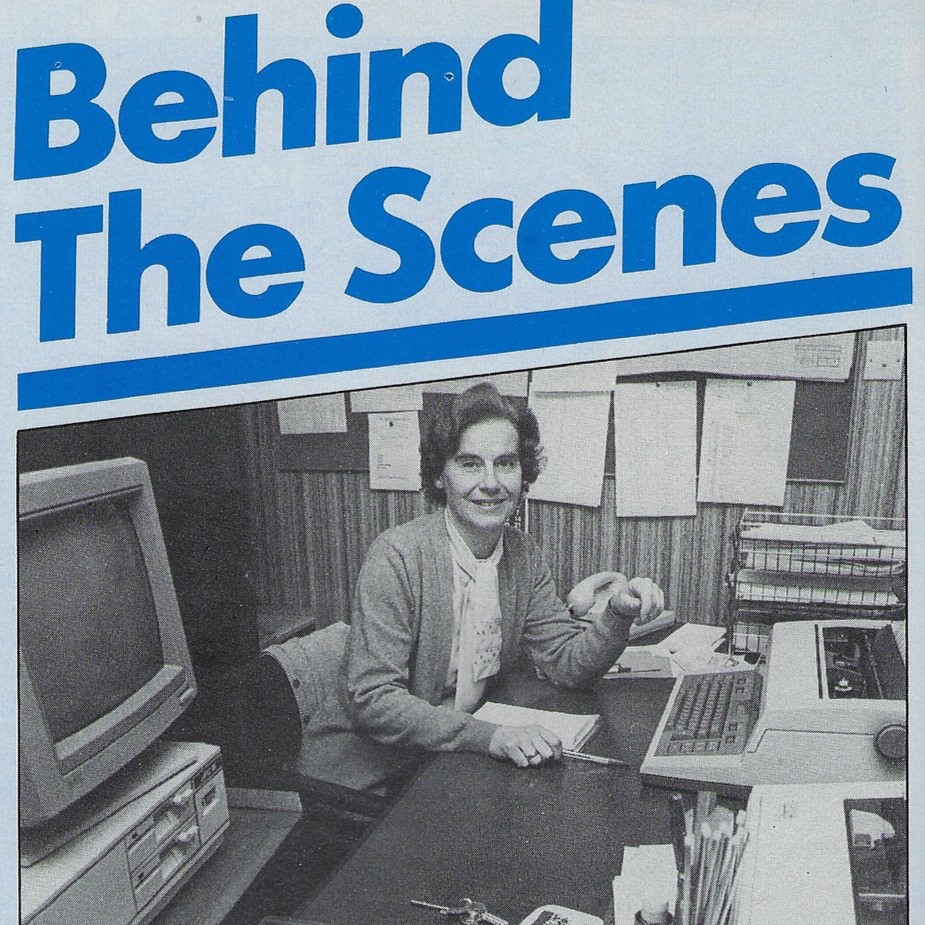
Everton v Exeter City, 5 January 1986
Jessie, who lives within five minutes’ drive of the ground, enjoys meeting many of the former players who still come to matches. “It’s always nice to look back on the old days,” she says. “The players used to train here every day, but they moved to Bellefield in 1966, and we don’t see as much of today’s players at the ground.”
On matchdays, Jessie has a whole host of jobs, dealing with complimentary tickets, answering enquiries from other clubs and newspapers, typing the team changes and distributing this information to directors and guests, press and radio, etc.’
A good example of the wide-ranging nature of Jessie Milne’s job description cropped up later in 1986. She was assigned the delicate task of arranging for the ashes of Everton legend Ted Sagar – who was still keeping goal for Everton when she started her job in 1946 – being buried within a few feet of many of his greatest performances. Jessie recounted being landed with this most delicate of tasks to journalist David Prentice in a feature about Sagar which was published in the Liverpool Echo of 5 February 1995:
“We were inundated by shareholders and supporters who wanted their ashes scattered on the pitch, but obviously we couldn’t say yes to everyone. But with Ted being such a special case his ashes were buried behind the Gwladys Street goalmouth.“
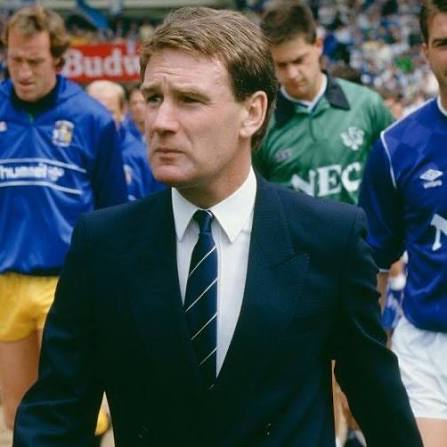
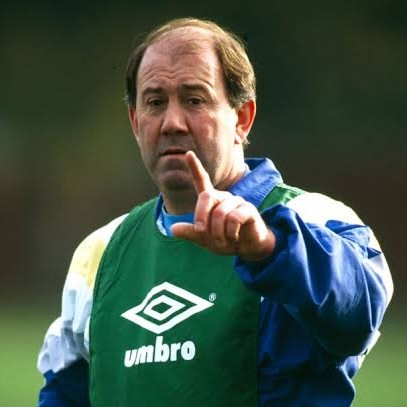
Howard Kendall left Everton to work in Spain in the summer of 1987 and was replaced by his assistant Colin Harvey, who managed Everton to the end of the decade. Kendall returned as manager in November 1990. His second spell in charge saw the start of the Premier League era in 1992 and Everton Football Club struggling on and off the field. Frustrated that the board of directors could not back him adequately in the transfer market, Kendall departed in December 1993 and was replaced as manager by Mike Walker, who had worked miracles in recent seasons at the helm at Norwich City.
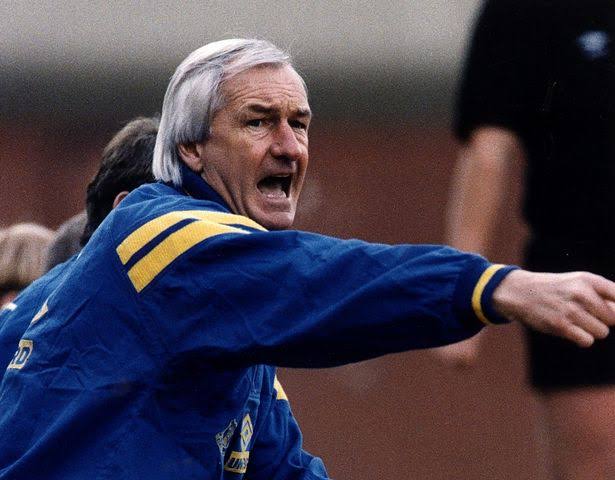
Mike Walker’s short reign as Everton manager saw the club survive a last-day relegation scrap in dramatic fashion, clawing back a 0-2 deficit at Goodison Park versus Wimbledon to win 3-2 and escape the dreaded drop for the first time since the 1950s by a whisker. Walker’s first full season in charge, 1994/95, started in ignominious fashion with the team failing to win any of their first twelve Premier League fixtures. A lucky thirteenth league game finally brought a 1-0 win over West Ham United at Goodison Park thanks to a Gary Ablett goal, but it was too little too late for Mike Walker, who was sacked after just over ten months in the job.
A RIGHT ROYLE SEND OFF
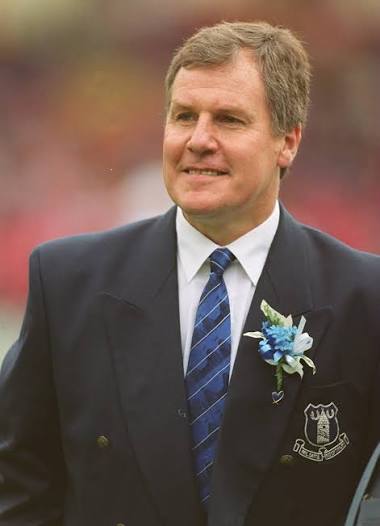
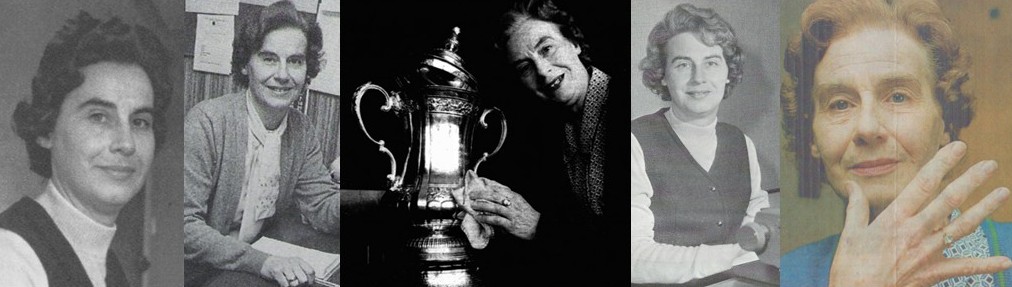
Another of Harry Catterick’s stars of the 1960s, Oldham Athletic manager Joe Royle, was brought back to the club as a popular replacement for Walker. After overseeing an emotional 2-0 victory over the old enemy Liverpool under the floodlights at a raucous Goodison Park, Royle guided the team to safety in the Premier League table and FA Cup glory for a fifth time – the third during Jessie Milne’s long career at Everton. A beaming Jessie was pictured polishing the trophy on the back page of the Liverpool Echo on the Monday after the final at Wembley. Jessie’s boss for the past 19 years, Jim Greenwood, who had become the club’s first Chief Executive, had retired six months earlier, in November 1994.
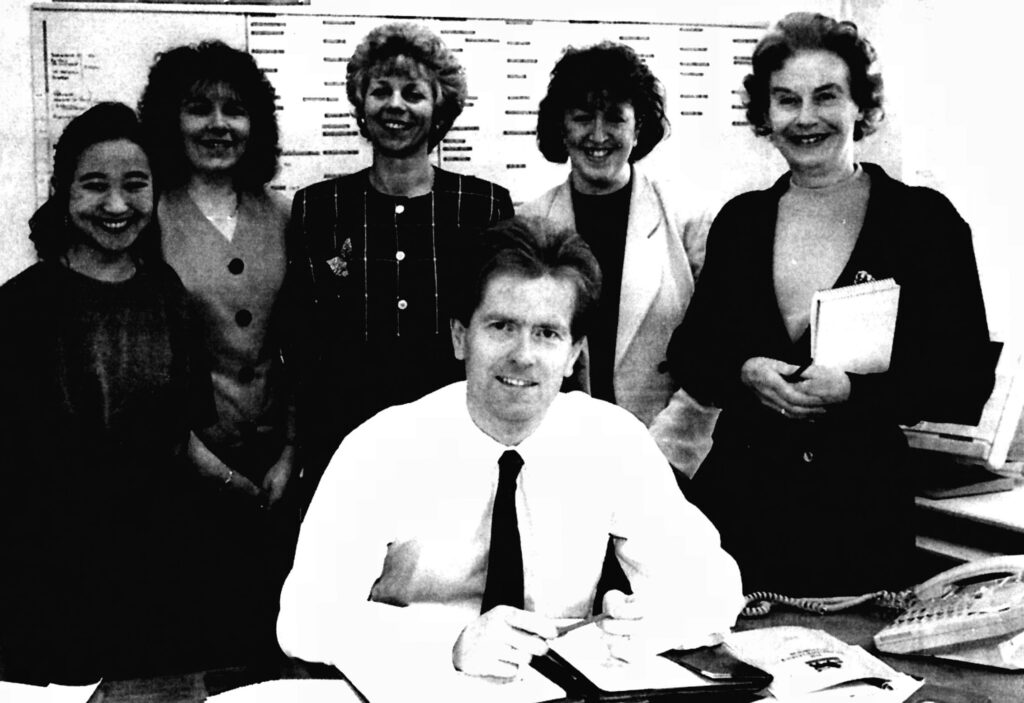
Over the summer of 2026 I spoke to Michael Dunford, who joined Everton as Club Secretary from Derby County, in November 1994. He was very generous with his time and effusive in recalling the short period he spent working with Jessie Milne.
Michael Dunford was appointed to the post of Club Secretary at Everton Football Club after a meeting with chairman Peter Johnson and directors Clifford Finch and Richard Hughes on Sunday, 6 November 1994. Michael’s predecessor, Jim Greenwood, who had served the club for almost twenty years, stayed on for two months to oversee a full handover. Michael had previously worked for twenty-five years at Derby County, in various roles, the last of which was General Manager.
Jim Greenwood had a long working relationship with Peter Robinson, Chief Executive at Liverpool, and Michael’s intention was to build a similar relationship with Rick Parry, Peter Robinson’s successor. Michael became Chief Executive at Everton in 1999 and served the club for a decade, before moving to a similar role at Plymouth Argyle.
On the Tuesday, two days after his appointment, Michael encountered Everton boss Mike Walker for the first time. After Michael had greeted his new manager, Walker replied ‘well…I was the manager!’
After Everton’s close shave with relegation under Walker at the end of the 1993/94 season and abysmal start to 1994/95, Peter Johnson decided to make a change. As detailed above, Walker was out, to be replaced by former Everton striker Joe Royle. Michael met Royle, his second new manager in three days, on the Thursday. Quite the first week in his new job!
In the meantime, Michael Dunford had already been introduced to a Goodison Park institution. Jessie Milne had, by this time, been a secretary at Everton Football Club for over forty-eight years, having started work under Theo Kelly seven years before the then forty-one-year-old Dunford was born!
Jessie agreed to stay on until the end of the 1994/95 season to assist Michael and help hand over her own workload. As it happened, she retired at the top, after Everton’s triumph at Wembley Stadium on 20 May 1995 in the FA Cup Final versus Manchester United.
Michael welcomed Jessie’s steady hand on the tiller as he found his feet, and marvelled at her archaic filing systems and seamless ability to retrieve information from them in a split second. He recalls Jim Greenwood ‘tearing his hair out’ trying to find some document or other. Within seconds Jessie would appear from her desk around the corner and hand Jim the missing papers:
‘Jessie’s filing system was impeccable, as was her memory. She could find anything I needed so quickly and was so thorough and organised. She was very, very helpful to me in those early months. I genuinely believed she stayed on out of respect for me and my role, a deep sense of duty and love for her job and unflinching loyalty to Everton Football Club.’
Michael also noted that, whenever any issues arose over things like share certificates, Jessie, having been at the club for so long, invariably knew multiple generations of the families concerned personally:
‘Her knowledge was unparalleled; she really had all the answers and knew everybody. She knew all the stories, all the folklore around the club. I think it is unlikely today that you could find someone with that level of professionalism, alongside that personal touch. I was lucky to have the chance to work with her.’
However, Michael concedes that Jessie was no pushover:
‘Jessie did it her way! She would tell me “well, that’s not the way we do things here at Everton Football Club,” and I just had to go with that. She had worked at Everton for so long, through periods when the club had reigned supreme. Who was I to question her?!’
Michael encountered similar characters at other clubs during his long career in football, including Kath Phipps (1939-2024) who served Manchester United in various roles from switchboard operator to training ground receptionist for just over fifty-five years up until her death aged eighty-five. Women with old fashioned values, an unparalleled work ethic and dedication to the cause. Kath Phipps started her remarkable career at United in 1968, three years before Jessie Milne appeared in the national press having already completed twenty-five years at Everton.
He also remembers Jessie arriving at work on her bicycle, having cycled up Queens Drive from the house she had lived in since she was a toddler. He shares his sense that Jessie Milne was, in her way, almost ‘married to Everton.’
‘Jessie was joined at the hip with Everton. She was a lovely woman with an absolute loyalty to the club. Nobody had a bad word to say about her.
The last time Michael Dunford could recall seeing Jessie Milne was at her sister Betty’s funeral at Anfield Cemetery in January 1997. He concludes with the following words (which I have no issue whatsoever with including twice in this article because, for me, they say it all!):
‘Jessie Milne was an absolute godsend to Everton Football Club. With the Everton Women’s team now playing there, I think it would be fitting for the club to consider renaming the Main Stand at Goodison Park after her.’
And so, with the 1995 FA Cup secured by her beloved boys in Royal Blue, Jessie Milne retired after half a century of dedicated service. The Liverpool Daily Post carried a comprehensive article on her remarkable career, which they published, fittingly, on 20 May 1995, the day of the FA Cup final at Wembley Stadium:
(*NB: the 1945 date mentioned in the following article contradicts earlier sources which state that Jessie started work at Everton in 1946)
‘LOYAL FAN HOPING FOR A CHAMPION SEND-OFF!
Win or lose – they have given me 50 glorious years, says retiring Blues secretary Jessie
The newspaper advertisement was bland enough, asking for a young typist in a north Liverpool office.
To 15-year-old Jessie Milne, in her final year at Skerry’s Commercial College in 1945, it seemed to offer just the start she needed. But Jessie became the centre of attention when her headmaster walked into the classroom waving a letter of reply.
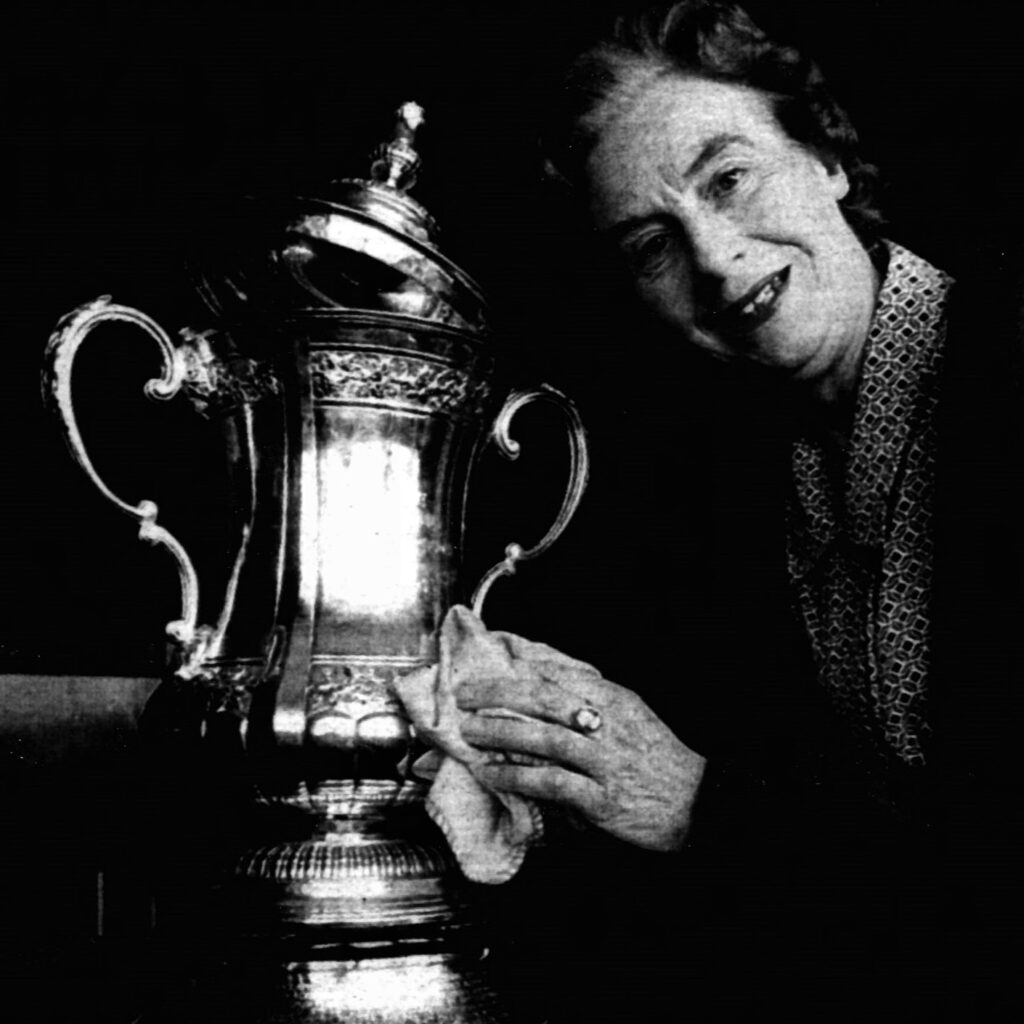
of the Liverpool Echo, 22 May 1995
“It seems Everton FC want to interview you, Jessie,” he said, and off she went straight from school in her navy-blue raincoat and uniform hat.
“I was interviewed by Mr. Theo Kelly who was Secretary of the club,” recalls Jessie with a smile. “They didn’t have a manager then – the directors used to select the team.”
Jessie was taken on and soon wanted no other job. In fact, she ended up staying fifty years, becoming secretary and a loyal member of the Everton ‘family’. Her half a century with the Blues comes to a close this month at one of the most exciting times in the club’s history. Travelling to Wembley today on the staff coach, she is hoping her team will give her a champion send-off.
“But win or lose they’ve given me fifty glorious years,” says Jessie, sixty-five.
Her office just above the souvenir shop has become her second home in the same way that Everton FC has become her life. Even after all these years she still gets that buzz on match days when the crowds begin to throng below her window.
“I never expected to stay so long, but whenever I thought of leaving, I realised that everything else would be boring compared to this,” she says.
“The league programme had just started up again after the war for the 1946/47 season,” recalls Jessie. “Once I started working on match days I began to love the game. When I got to know the players, I couldn’t help sticking up for them. They used to get about £18 a week then plus a £2 bonus if they won. And everyone got the same. There were no floodlights of course until the ‘50s so they used to play some games on weekday afternoons, and I’d slip out of my office to watch.”
Until she took her job at Goodison, the only game she had any interest in was netball. But arriving at the club in time to witness the skills of players like Peter Farrell, Tommy Eglington, T.G. Jones and Ted Sagar, Jessie slowly found herself drawn into the world of soccer.
Jessie had to log all the matches, results, players and attendance in large hard-backed ledger books which she still keeps in a drawer in her office. Now it’s all done with the flick of a V.D.U. switch.
But she needs no computers to store her knowledge of Everton FC. Over the years it has become encyclopaedic. When people write in asking who scored against so and so in 1930-something, it is Jessie who provides the answers – just as she sympathetically arranges for the ashes of fans to be buried on the pitch. Her role as secretary covers many dimensions.
Normally a rather restrained person, she admits to a personality change when her Blues run on to the pitch. “I yell and shout with the rest of them,” she chuckles. “I’ve even been known to kick out.”
To listen to Jessie reminiscing is to dip into a Who’s Who of Everton’s famous sons. Her all-time favourite was Dave Hickson. “He put everything into the game. He launched himself at the ball like a bullet.”
Her voice softens at the name of Gary Lineker too. “What a lovely boy. We didn’t have Gary long enough,” she says regretfully. Brian Labone is another favourite.
She has of course seen the coming and going of all post-war managers from the very first, Cliff Britton. “Harry Catterick,” she confides, “was a terrible disciplinarian. Everyone jumped if he spoke.”
Gordon Lee was a nice man – “too nice perhaps to be a manager.” Billy Bingham’s name passes without comment but not that of Howard Kendall whom she knew as player and manager. “Ah, Howard,” she smiles. “I was sorry to see him go.”
Mike Walker, it seems, was rather quiet. But now there’s Joe Royle of course, whom she also knew as a player. That name brings a definite smile to Jessie’s face. “He’s very good-natured and brought about a terrific change in morale.”
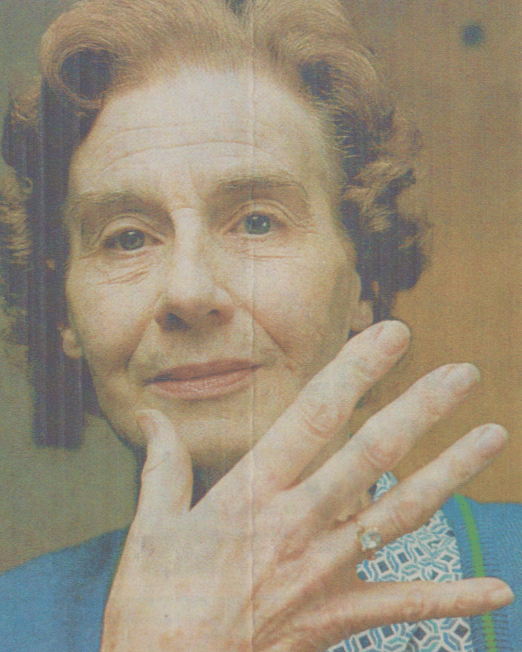
Although Jessie is leaving this month, she will still be helping out on match days. Some people at the club might insist upon it. They feel the aquamarine ring they bought Jessie for her sixty-fifth birthday in November, and which she wears on matchdays, is Everton’s secret weapon.
“I was given the ring just as Joe came back in time for the Derby game (Everton 2 Liverpool 0, 21 November 1994) – and you know what happened after that,” smiles Jessie. “I wave it at the pitch when they’re doing badly.”
The aquamarine will naturally be on her finger when she takes her seat at Wembley today. If Everton are trailing and you catch a glimpse of something shining in the sun, it could well be Jessie waving her lucky gem at her boys.’
LATER YEARS
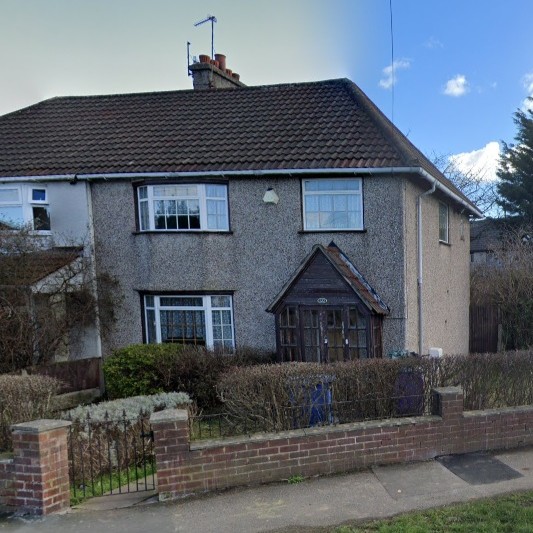
Remarkably, at the time of her retirement and more than sixty years after moving there as a small child, Jessie and sister Betty still lived at 122 Richard Kelly Drive. Her diaries reveal that, along with a strictly ordered routine which included regular trips to the same local hairdresser for decades, she began to take driving lessons in her early sixties (dates and times for which she also logged dutifully), perhaps with an eye on a spot of travel during her retirement. She stayed on at Everton in a casual role on matchdays for some time after her retirement.
In successive years from 1995, Jessie’s two older half-sisters, Imogene and Eileen, both of whom had married and had children, passed away in their early-eighties. The death of her only full sibling, Betty, just shy of her seventy-fourth birthday on 3 January 1997, must have hit Jessie hardest. The two sisters had lived together for their entire lives, neither having married.
Jessie Milne’s long career as executive secretary at Everton encompassed four League Championship titles, one relegation and one promotion, thirteen F.A. Cup semi-finals and seven finals (three wins), one League Cup final, a European Cup Winners’ Cup final victory, eight Charity Shields (six wins, one shared) ten managers, one secretary-manager, two club secretaries, two chief executives, innumerable players and matches home and away across Europe. An incredible achievement for a woman in a male-dominated industry.
Jessie remained at 122 Richard Kelly Drive for the rest of her life, living in the same house for well over eighty years in total. She passed away in hospital aged ninety on 13 December 2019. Her funeral took place at St. Andrew’s Church, at the corner of Queen’s Drive and Muirhead Avenue, on 8 January 2020, prior to cremation at Anfield Crematorium.
Jessie Milne was a trailblazer in English football, a woman who paved the way for many more to take on trusted, integral roles behind the scenes at the biggest clubs in the country and throughout the football pyramid. Women like Lily Barnes, who worked in several roles, including developing the Goodison stadium tour experience which her granddaughters now oversee at Hill Dickinson, Executive PA Nicola McMahon – who grew up on Goodison Avenue and is the daughter of Tommy Clinton, a star of the post-war Everton side – Jessie’s secretarial colleagues Irene Daniels and Jean Meredith, plus numerous others who have given and continue to give sterling service to Everton Football Club.
Ann Smith, a niece of Jessie’s by her half-sister Eileen, was kind enough to share some family memories of Jessie with me:
‘I do know that, in her working capacity as executive secretary, Jessie attended many official dinners, social functions and events. It is also my understanding that she organised and travelled with the team when they were playing in Europe. Given that Jessie worked for Everton FC for fifty years, it is only right that her contribution be recorded and acknowledged.
Ann also recalled that her Aunt Jessie was a member of the Liverpool Athaneum for many years. She told me that Jessie always felt a strong connection to Scotland and had a particular affinity with Clan Gordon, of which Clan Milne is a ‘sept’, or part. Jessie was a long-standing member of the Royal Scottish Country Dance Society in Liverpool and always wore a Clan Gordon tartan sash when dancing.
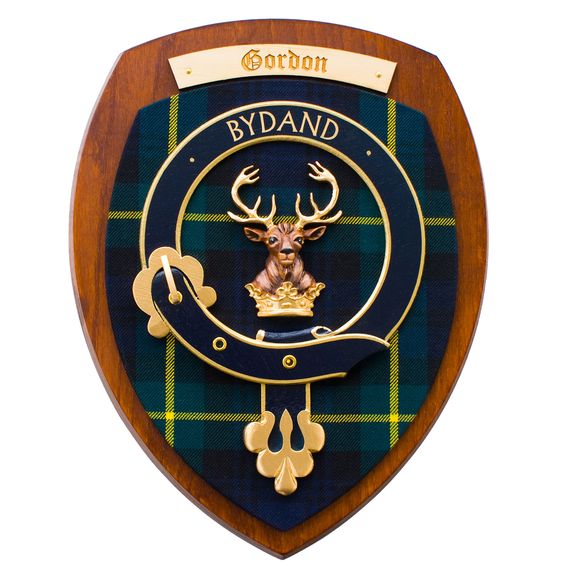
After researching Clan Gordon and Clan Milne history, Ann travelled with Jessie’s ashes to Scotland and scattered them on National Trust property in view of the Grampian mountains, near Strathbogie, south of Huntly, Aberdeenshire, a historic Clan Milne settlement.
Ann’s daughter, Rachel Mohin – who now lives in Jessie’s beloved Scotland – shared fond childhood memories of visiting her grand aunt’s Jessie and Betty in Liverpool:
‘I have memories of visiting Jessie and Betty at Richard Kelly Drive for the annual family get together before Christmas. From that time, I recall Jessie as being a woman who was confident, articulate and enjoyed intellectual conversation. Jessie had an energy about her, she would stand by the open fire conversing with different people in the room on a whole variety of topics, usually until it was time for tea. She was very sociable and always made you feel at ease despite us only visiting rarely. I confess, once I left home and Liverpool I didn’t go back to visit but I continued to receive a Christmas Card every year from Jessie until she died.’
Jessie’s neice, Barbara Lewis, by her half sister Imogene, emigrated to the United States, where she lives to this day. Her daughter Rebecca Stewart was also kind enough to share her recollections of Jessie and a little more on the family:
‘I’m from the United States but I had the great honour to meet Aunt Jessie in 2004. She was a truly inspiring woman, full of life and humour. My grandma, Barbara Lewis, took my grandpa and myself to England in 2004 when I was fourteen, for a few weeks in the summer. We stayed with her brother in Hinckley, but visited all over. I met Aunt Jessie at her home in Liverpool, where she told me some wonderful stories about my grandma’s younger years. I never felt judged by her, rather she seemed to be thrilled by my creative and slightly untamed nature. I later realised that there is a family trait for the women in this family: we are forces of nature.
My grandma moved across the Atlantic to marry my grandpa after a letter he sent when he left England, and did so somewhat spontaneously, if the stories are true. They had been in a church group together. The fact that she never made a huge deal out of the fact that she moved a world away from her family and friends to start a new life in the 1950s, tells me she must have had strong female role models. My grandma stayed in touch with her family, and some even visited us in the US, including my great grandmother, Imogene Jones (nee Milne).
Jessie indeed lived in the same home in Liverpool for a long time, and my grandma can speak more to that. I only vaguely remember the house at this point. But I immediately found that this woman I was meeting, my great great aunt, was not old and feeble, but rather she was bold, honest, joyous, generous, and funny. She was energetic and capable.’
What better description to close with?
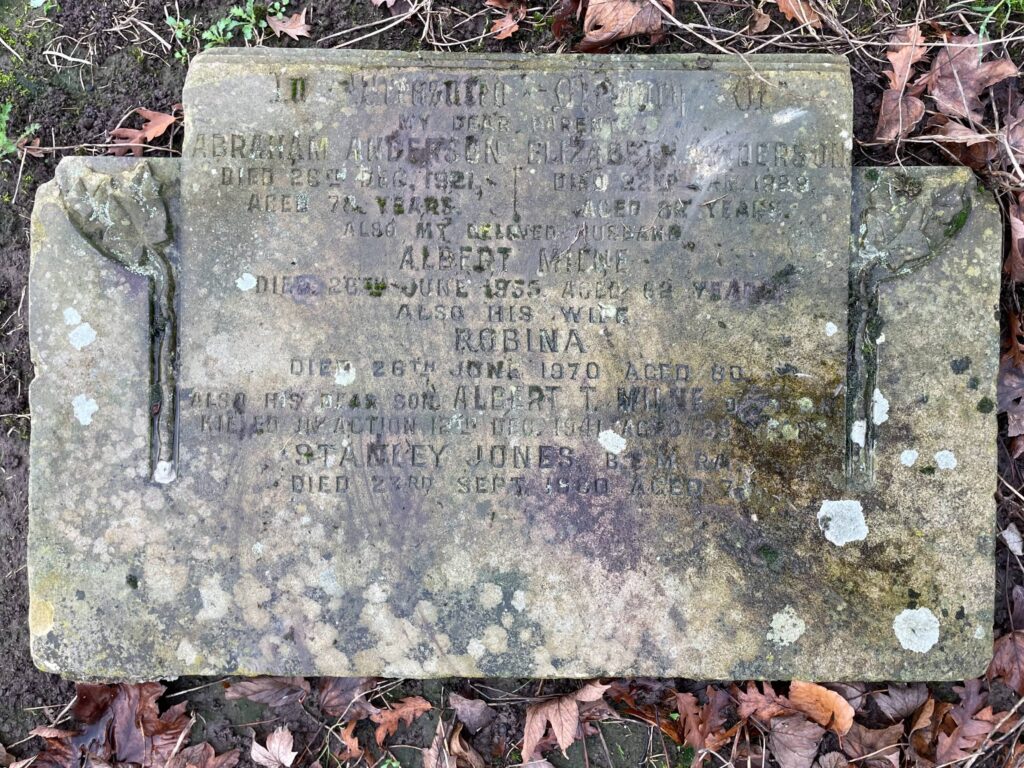
The Milne family headstone remains intact at Anfield Cemetery but is lying flat and requires attention.
Author’s Note
In researching and compiling this article it did not go unnoticed that Everton Football Club have not won a trophy since the final significant match of Jessie Milne’s long, eventful career at Goodison Park which encompassed so many highs and a good few lows. It is my hope that, by shining a light on her years of dedicated service and acknowledging her contribution, perhaps a little of the magic Jessie brought with her during her half century working for our great club might sparkle once more at Hill Dickinson Stadium.
By coincidence, around the same time as the Milne family moved into 122 Richard Kelly Drive in the early-1930s, my great grandparents Dugald and Louisa Stewart moved from 14 Conyers Street in Kirkdale to 39 Lambourne Road, which intersects with Richard Kelly Drive, right where the erstwhile Milne family home stands on the corner. My great grandparents raised their five children, including my paternal grandfather at the house on Lambourne Road. The Milnes, the Stewarts and their neighbours would have endured the Second World War side-by-side. They would have sought refuge and solace together and all felt the tremor from the munitions explosion on railway sidings at Clubmoor during the Liverpool Blitz of May 1941, which damaged many local houses, shattering windows and cracking walls.
In 1953, when my paternal grandmother Enid Stewart (nee Pert) died from tuberculosis shortly after giving birth to my uncle, he and my infant father moved into the house on Lambourne Road. There they were raised by their grandmother Louisa and aunt Agatha, played football in the streets and would have passed Jessie’s front gate on their way to Goodison Park with their uncle Hughie throughout the 1960s.
My parents were married in 1975 at Ebenezer Chapel just over a mile away up Queens Drive. They bought a house on Flemington Avenue, a five-minute walk from 39 Lambourne Road. I spent the first year of my life living at the house on Flemington Avenue before we moved to Hertfordshire. For my mum to walk with me in my pram to visit my great grandmother Louisa she would have passed Jessie Milne’s front gate at 122 Richard Kelly Drive. When my parents came to sell the Flemington Avenue house, surveyors found previously unidentified structural damage which was traced back to the 1941 Clubmoor munitions explosion. This discovery dramatically reduced the value of the house.
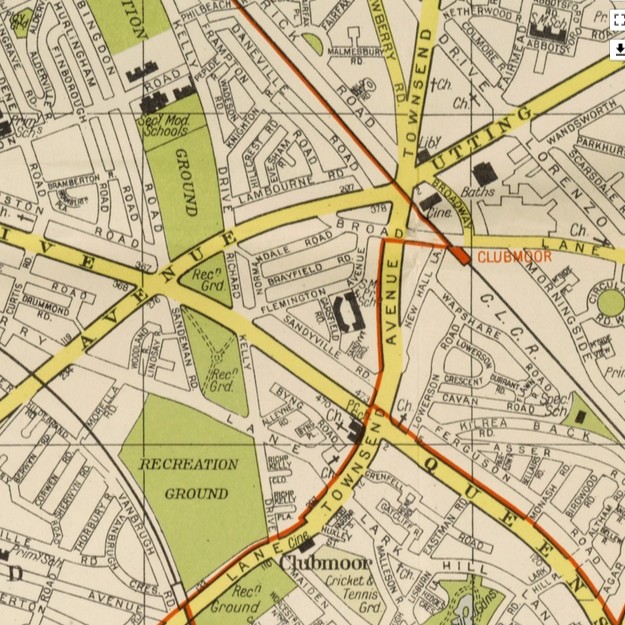
and Flemington Avenue visible in the central portion
My great grandmother Louisa lived at 39 Lambourne Road until she died in 1981. It seems almost inconceivable that my relatives never knew or were not even familiar with any of Jessie Milne’s family. They were neighbours for almost fifty years, raising generations of their respective families within yards of each other. My great grandfather Dugald Stewart died in February 1955, just four months before Jessie Milne’s father Albert. The Stewart and Milne children, five in each family, of almost identical age-range and birth years, may well have attended the same school and played in the streets together. Sadly, they are all gone so I guess we’ll never know.
Postscript
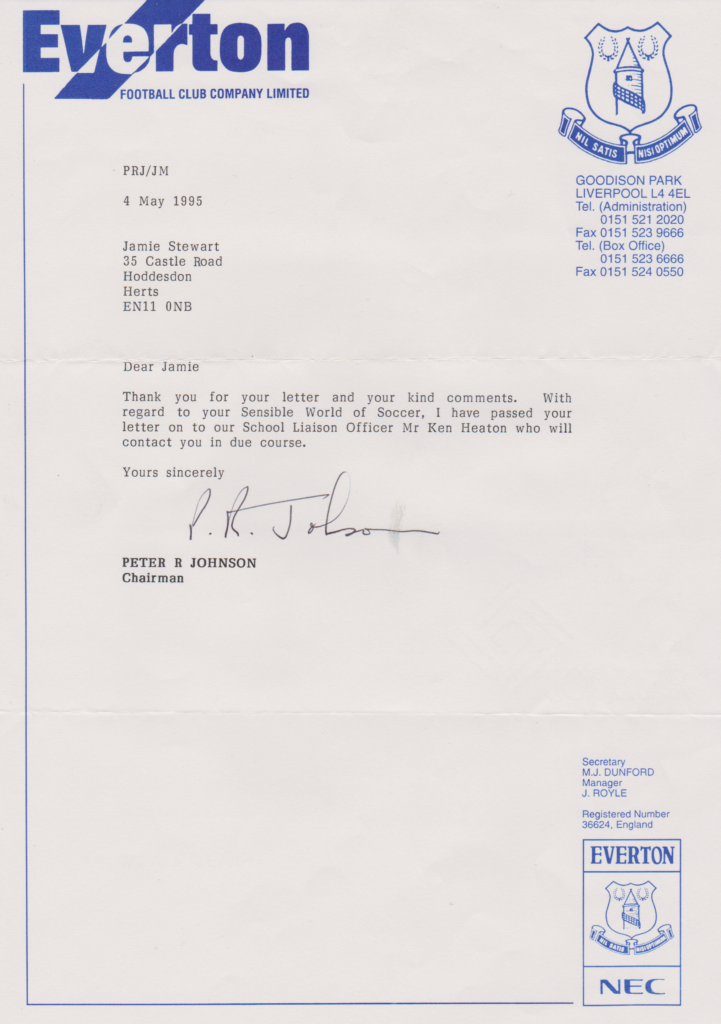
Immediately prior to publishing this article, I was looking through some of my old scrapbooks and found a letter I received from former Everton FC chairman, Peter Johnson, dated 4 May 1995. Above the date Mr. Johnson’s initials are printed, along with those of the secretary who typed the letter – answering some bizarre query I had at the time, as a fourteen-year-old Everton obsessive! (*My birth surname was Stewart, I changed it by deed poll to my mum’s maiden name, Yates, when I turned twenty-one.)
Those intials? JM.
A letter from over thirty years ago which I had completely forgotten about instantly became one of my most treasured pieces of Everton memorabilia.
Thank you, Jessie.
…………………………………………………..
Sadly, with the onset of the COVID-19 pandemic, there were issues with clearing the house at 122 Richard Kelly Drive after Jessie died, and some of her personal effects and papers went missing in the process. Thankfully, a collection of Jessie’s standard issue Football League diaries was returned to the Milne family by a kind individual who purchased them at a market and subsequently traced Jessie’s extended family.
I WOULD BE DELIGHTED TO HEAR FROM ANYONE ELSE WHO KNEW OR WORKED WITH JESSIE MILNE;
PLUS ANY FAMILY OF IRENE DANIELS, KEN BUSBY OR JEAN MEREDITH.
…………………………………………………..
Acknowledgements
With sincere thanks to Jessie Milne’s nieces Ann Smith and Barbara Lewis, and grand nieces Rachel Mohin, Rebecca Stewart (no relation of mine as far as I know!) and Karly West for sharing memories, family information, cuttings and pictures. I hope I’ve done Jessie justice.
Many thanks also to former Everton FC Chief Executive Michael Dunford who provided some wonderful recollections of his brief time working with Jessie at the beginning of his career at Goodison Park and the conclusion of her long tenure in the mid-1990s; and to one of Michael’s predecessors, Everton FC Club Secretary from 1973 to 75, Chris Hassell, for sharing his memories of working with Jessie. It was a pleasure speaking to you both.
The British Newspaper Archive
Ancestry.com
Find My Past
My Everton FC Heritage Society colleague Rob Sawyer’s excellent article Goodison Park and Women’s Football:
https://efcheritagesociety.com/goodison-park-and-womens-football/.
Liverpool Daily Post and Echo
Goal magazine
The Everton Collection
Everton matchday programmes
Steve Johnson’s brilliant website www.evertonresults.com
…………………………………………………..
Jamie Yates, August 2026