Rob Sawyer
Part 1 – The Player
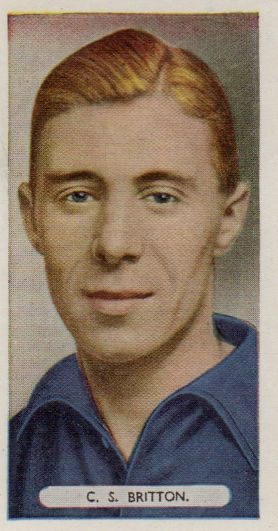
Cliff Britton was Everton’s first manager in the modern sense of the word, yet it is for his footballing feats at Goodison Park in the 1930s that he is most celebrated. His Everton playing career overlapped that of Harry Catterick, yet their experiences as managers and players at the School of Science contrasted sharply. Whilst Catterick’s modest playing career was a precursor to managerial triumphs. Britton’s, ultimately disappointing, tenure in the Goodison hot seat was at odds with a playing career which saw him hailed as one of the country’s finest half-backs.
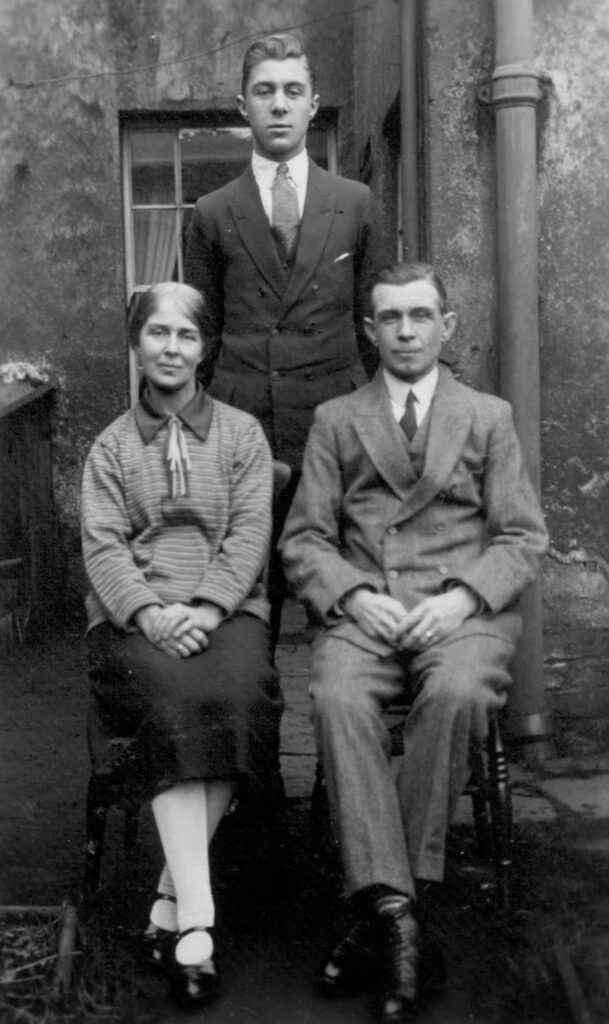
Clifford Samuel Britton was born on 29 August 1909 at the family home in Hanham, Gloucestershire, which now sits within the Bristol conurbation. He was the only child of George, a shoe-maker, and Beatrice. Cliff’s parents were active members at the village’s Ebenezer Methodist Church congregation; they also had links to the Band of Hope, a temperance movement organisation. His upbringing would have a huge bearing on Cliff’s adult outlook on life; with a strong moral compass and disapproval of alcohol and its effects.
His aptitude for football became apparent when participating in local Sunday school leagues – he would turn out for Hanham Athletic, Hanham United Methodists and Bristol St. George in his teens. Nearby Bristol Rovers signed him on amateur forms in 1926 and he turned professional two years later. All the while, he was doing a carpentry apprenticeship in which he demonstrated the craftsmanship and perfectionism which would be replicated on the football field.
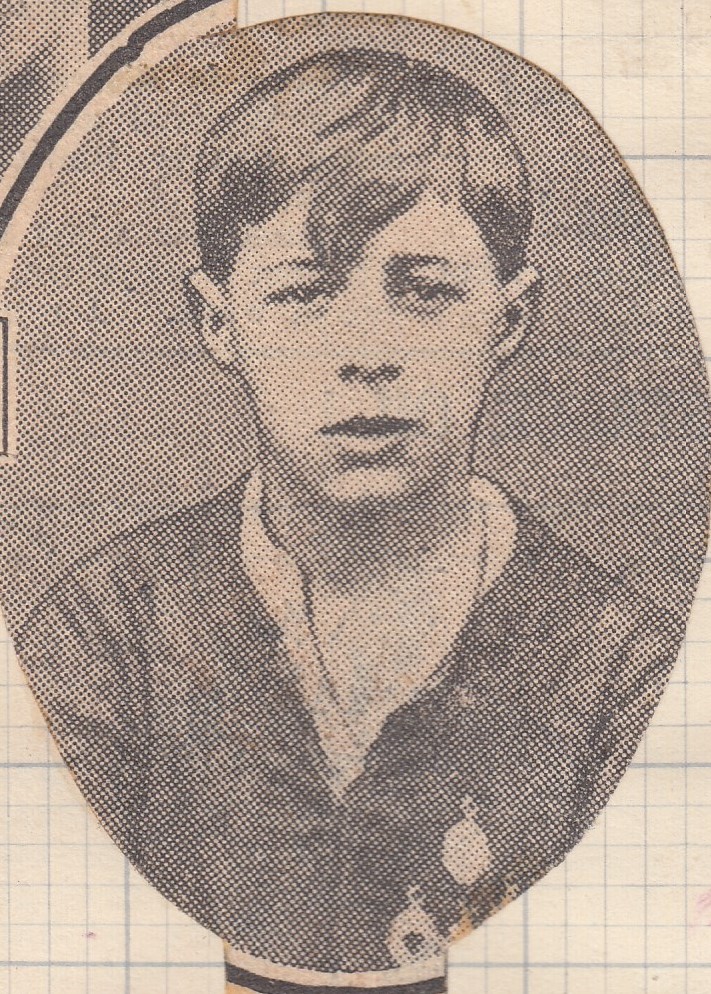
Once the teenager’s precocious talent as a wing-half was on display in Rovers’ first team, scouts flocked to Eastville. Everton’s board minutes confirm the Cliff was being watched by the Blues from April 1929 onwards and drawing rave reviews. It is decidedly odd, therefore, that when Bristol Rovers wrote to Everton in November 1929 offering to sell the player for £2,000 the Toffees’ board chose to respond in the negative – stating that they were ‘no longer interested in the player.’
Just six months later, Everton were licking their wounds after the shock of relegation from the First Division, a mere two years after ‘Dixie’s 60’ had secured the Football League championship. Holding onto stars like Dean, Johnson, Cresswell and Critchley, the board sought to inject fresh blood to rebuild the squad with a view to a swift promotion back to the top echelon. In came future internationals Charlie Gee and Nat Cunliffe from Stockport County and Adlington FC, respectively. The Everton scout, W. Wallace, had continued to champion Cliff’s cause and that persistence paid off when in June 1930. At the Football League AGM in London, Everton directors entered into negotiations with Rovers counterparts for the acquisition of Cliff and Ronnie Dix. Dix’s parents vetoed a move for their son, but a deal was struck for Cliff to move north – valued at £1600 (with Rovers taking Arthur Attwood in part-exchange) with a starting wage of £7 per week. Everton did go on to secure first refusal on Dix and, in 1932, collected ‘compensation’ for agreeing for him to join Blackburn Rovers.
Looking back, Cliff confessed to knowing little about his new club – the glamour club for people living in the Southwest of England had been Aston Villa. However, upon arriving on Merseyside, he soon became aware of Everton’s heritage and stature. Cliff’s Goodison bow, in a pre-season ‘Blues versus Whites’ practice match just after his 21st birthday, proved inauspicious. These trial matches pitted the nominal first eleven (Blues) against the reserves (Whites); play could be robust as the participants tried to impress the selectors. Appearing before 10,000 spectators for the Whites, Cliff collided with Welsh international centre-half Tom Griffiths and came off worst. The resultant broken collar-bone would delay his reserve team debut until late-September, but his senior call-up was not long coming. On 25 October 1930 he lined up against Spurs alongside Tom Griffiths and John Ross “Jock” Thomson in the half-back line with Ted Critchley ahead of him on the right wing. Pilot, in the Evening Express, was fulsome in praise for the debutant who contributed to a 4-2 victory:
Britton made a debut of which he can justly be proud. He was a willing worker resolute in defence and keen and brainy in attack. He was by no means the inferior of a solid intermediary division, which formed a sound foundation.
Cliff kept his place in the side and, just two games later he was singled out for praise by Pilot after the 4-0 drubbing of Wolves:
Britton Tames the Wolves
Britton was the best half-back on the field –a schemer, a juggler yet tenuous in tackling and intervening. His first double-turn stood him in good stead many a time – it is the move of a giant.
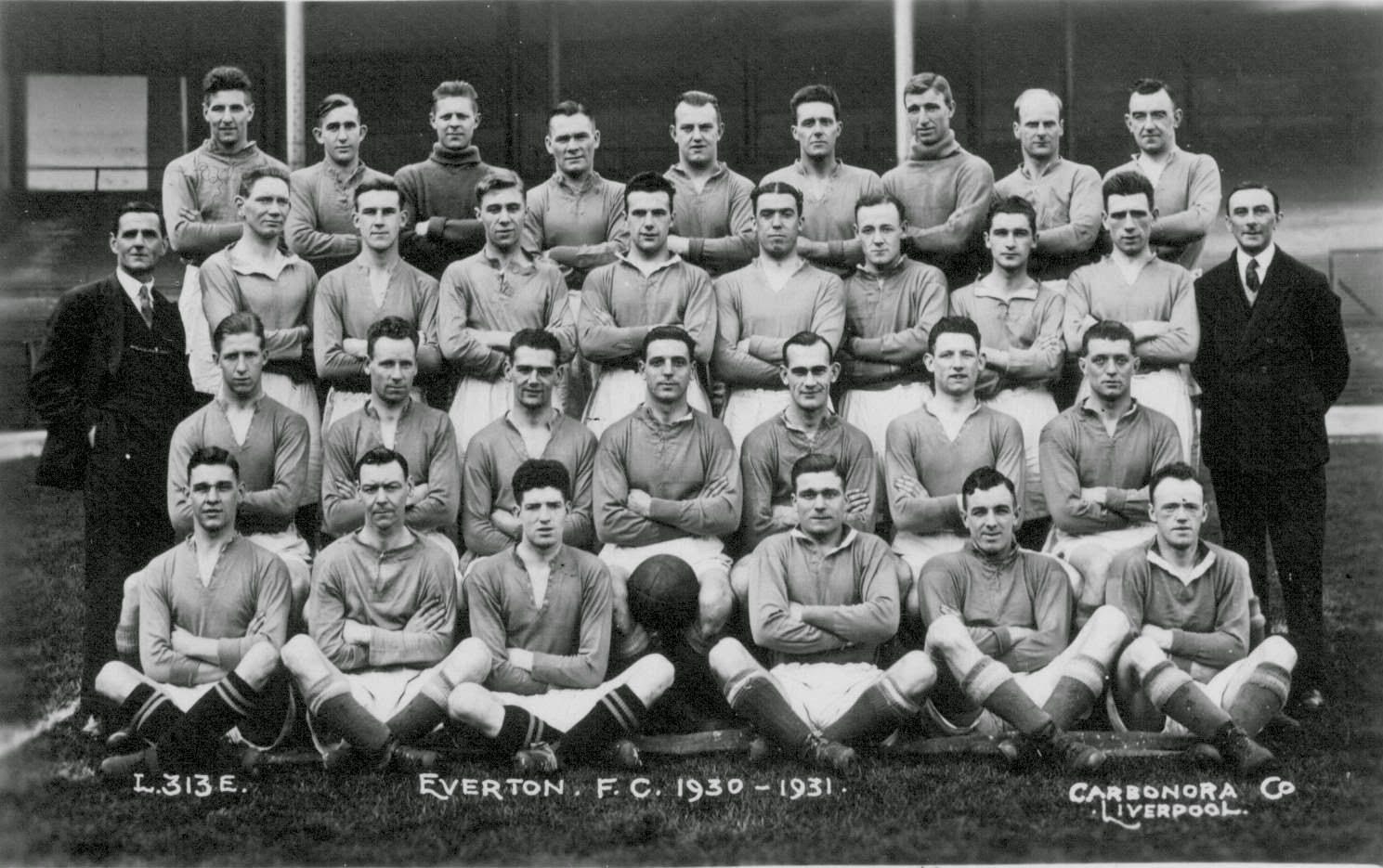
By now Cliff was offering severe competition to Lachlan McPherson, the incumbent at right-half. The young pretender made ten first team appearances as promotion was achieved at the first attempt. Fellow new-boy Charlie Gee made an even greater impression; he dislodged Tom Griffiths from the centre-half position mid-way through the season and never looked back.
Everton followed their promotion by romping to take the Football League title in the 1931/32 season. However, Cliff found himself behind Archie Clarke in the pecking order and was consigned to Central League duties for the entire campaign. The reason for this pause in his progress was the abundance of talent at the club coupled with a belief that Cliff had not developed the physique needed to withstand the rigours of top-flight football. Bee, writing for the Liverpool Post and Mercury in 1932 gave a back-handed compliment: ‘Britton has not grown in physical strength but has much daintiness.’
Looking back in 1970, Cliff recalled: ‘When I joined the club there were four international right halves and, naturally, I began to wonder when I was going to get my chance…I suppose my asset was more on the ball in a creative sense. I was not a big powerful player – generally my playing weight was a little over 11 stones – but I liked to read the game and come forward.’
A belated First Division debut for the reigning champions would come in September 1932 when Everton entertained Manchester City. The line-up selected to face City was: Sagar, Williams, Cresswell, Britton, White, Thomson, Critchley, Dunn, Dean, Johnson, Stein. Dixie Dean grabbed a brace to secure victory but match reporter Stork took special note of the top-flight debutant:
Britton is of the true Everton type and he did extremely well, for he looked up with Critchley and made a fine wing. He seemed to tire late on but, to my mind, was the best of all the half-backs.
With the breakthrough made, Cliff missed only one first-team match for the rest of the season. Forty-three competitive appearances culminated with the 1933 FA Cup Final against Manchester City. By now Cliff was cementing a reputation of being a true football artist, blessed with sublime skill and distribution skills that few at Goodison have matched since. The one aspect missing from his repertoire was goal-scoring – he notched just two in his Everton career. A paragraph from a Merseyside derby match report by Bee illustrates the esteem in which he was held:
Britton was outstanding because he did everything by way of a morsel of artistry. He toyed with the ball just long enough to turn it into space of a foot or less and then made his pass or a swinging centre towards goal. Britton had no superior although (Matt) Busby started remarkably well…Britton was an artist.
Joe Mercer would observe that Cliff could land a ball ‘on a sixpence’ for the likes of Dean. Cliff would say about the talismanic centre-forward: ‘Dean was the finest header of the ball I have ever seen. The beauty of his play in the air was his delicacy of touch. He could come to the near post and, with superb judgment of the finest of angles, flick the ball into the net by the far post.’ Horatio ‘Raich’ Carter, the Sunderland and England forward, highlighted Britton’s gift for crossing the ball early and with unerring accuracy:
‘The most devastating centre must always be the one that slashes into the middle before the defence have had time to set their stall out. The player who often finds himself best placed to catch a defence in such a position of vulnerability is the wing half. Few have demonstrated the force of this argument in such an emphatic manner as…Cliff Britton. I have come across wingers who are less effective with their centres than this cultured wing half-back.’
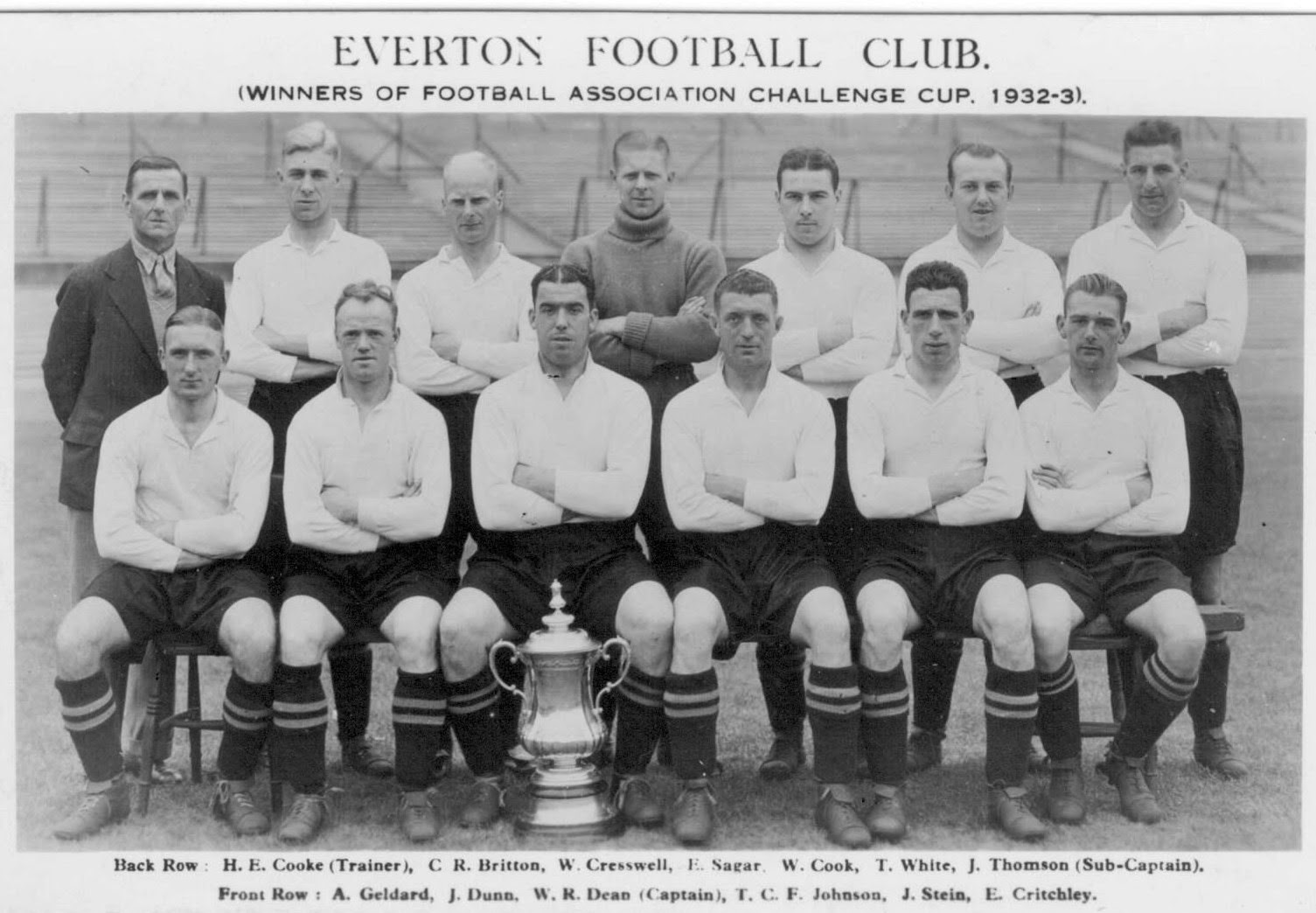
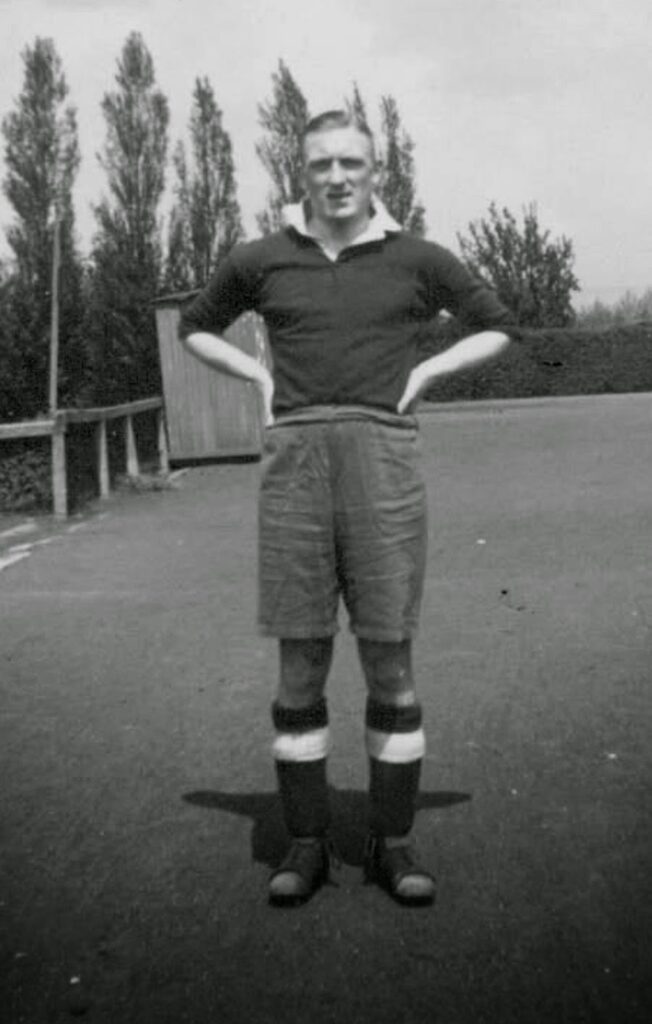
Carter’s observations were borne out in the Cup Final. Wearing the number four on the back of his shirt for the first time, Cliff delivered the crosses which led to goals for Dean and Stein in a comfortable 3-0 victory. Lining up alongside him on the right flank that day was Albert Geldard, the Yorkshireman had replaced semi-final scorer Ted Critchley in the Wembley line-up. Geldard was five years Britton’s junior when he joined Everton as an 18-year-old in 1932. Britton took the younger man under his wing, and they formed a life-long bond. In matches they forged a devastating combination profiting from Geldard’s phenomenal pace and Britton unerring accuracy with the ball. Off the pitch, the pair were rare teetotalers in the Everton dressing room. They were dubbed ‘The Vicars’ by teammates in a humorous nod to their temperance. On a 1948 visit to his childhood church, Cliff reflected to reporters that ‘alcohol and high achievement in sport did not go together.’ The bond between Cliff and Geldard extended long after their playing careers ended. Geldard would be a regular at the dinner table in the 1950s Britton household – often performing conjuring tricks, to the delight of Cliff’s sons. When being interviewed by John Rowlands for his biography in the late 1980s, Geldard broke down in tears of emotion when recalling his deceased friend. Although he never doubted his own abilities, Cliff was self-effacing and quiet. On group photos it is noticeable that he is rarely on the front row and seems adept as being partially obscured by teammates. Indeed, as a keen amateur photographer, on club tours he was often the one behind the camera.
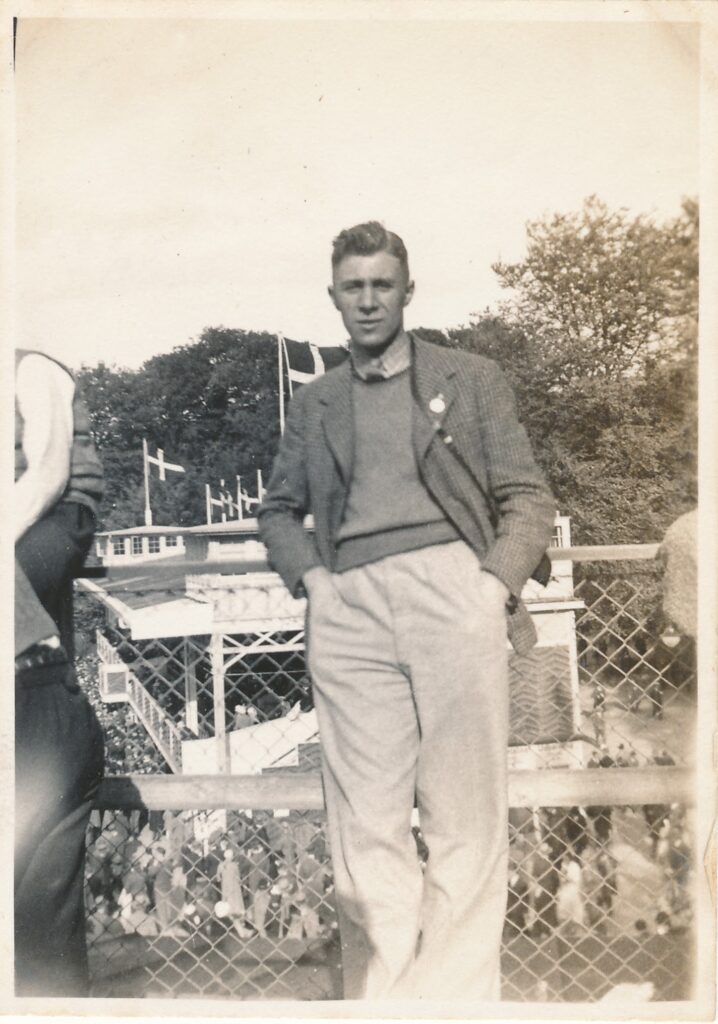
Cliff’s club form was rewarded in September 1934 when the England selectors chose him to don the three lions shirt against Wales at Ninian Park. He partnered Stanley Matthews on the right-side of attack in a 4-0 victory. The Bristolian would go on to make a further eight appearances, scoring one goal, over a two and a half-year period. This figure may seem modest but, in 1970, Cliff recalled the competition for places and vagaries of the selection process: ‘We went to Cardiff in October and beat Wales 4-0. The next international was against Scotland the following April and about eight changes were made even though we had won our previous match by four… I maintain that you could have had three or four international teams and no one would have been able to say which was best.’
In 1937 Charlie Gee lost his ‘pivot’ role to the prodigiously talented T.G. Jones. For an all-too-brief period Jones and Cliff formed an awesome half-back unit alongside one of Jock Thomson and Joe Mercer. Although never close with Cliff off the pitch, Jones rated him and Gordon Watson as the finest strikers of a ball he played with at club level. Cliff, meanwhile, felt that Jock Thomson never received the credit he was due: ‘Possibly the most underrated player in the team at that time was Jock Thomson. He possibly got less publicity than anyone else but he was one of the most important cogs in the team.’
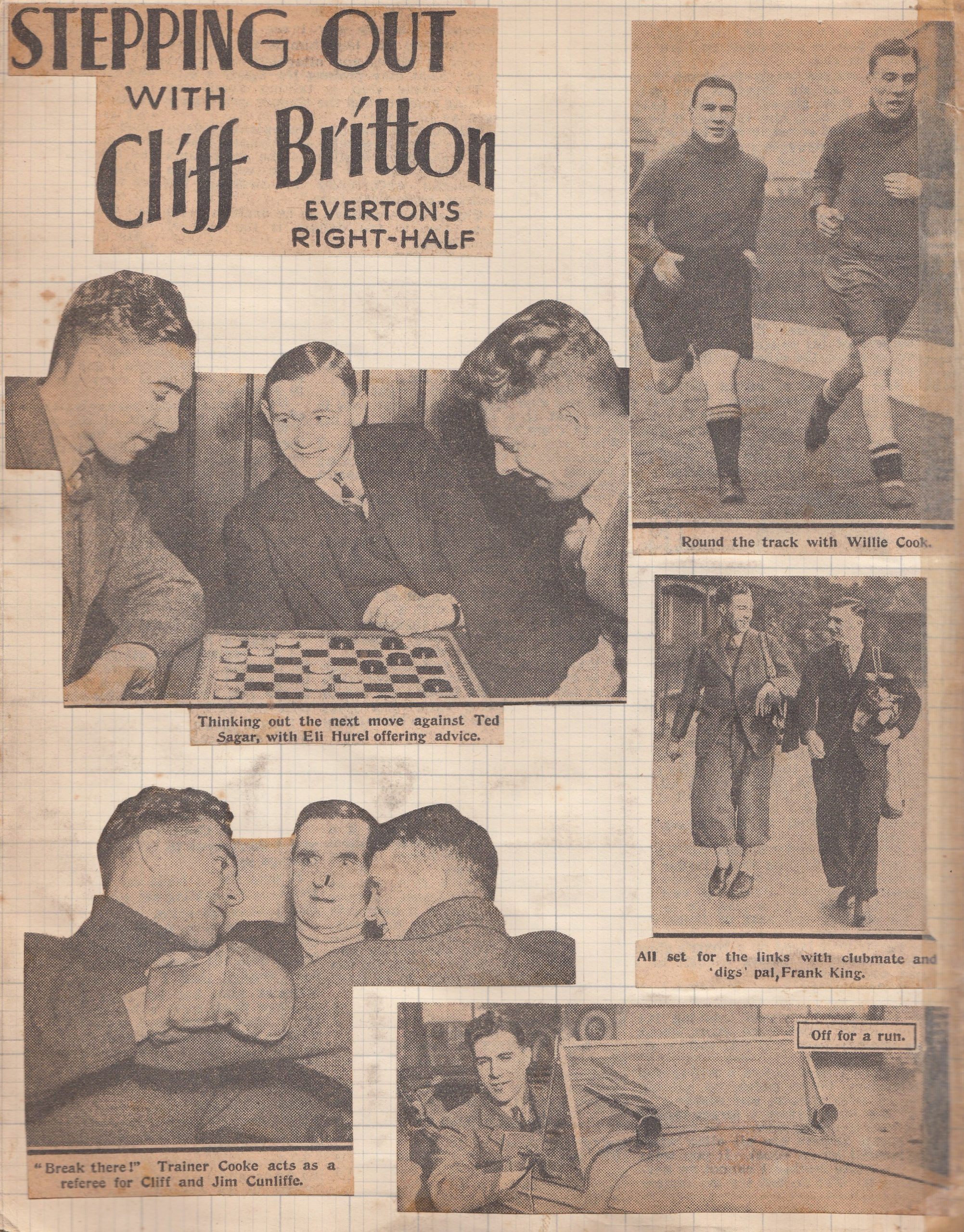
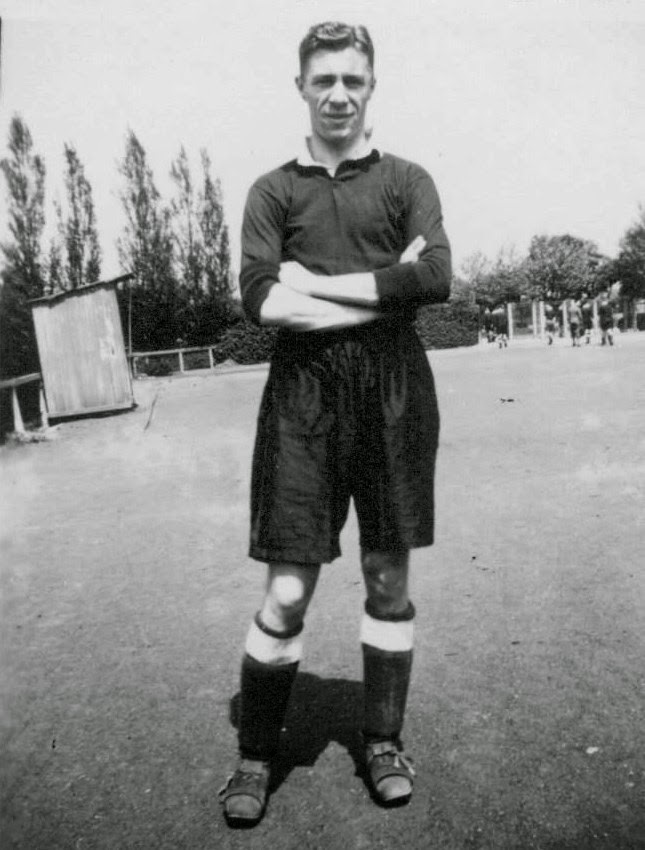
Having been appointed club captain, with the departure of Dixie Dean, Cliff almost immediately found his own place in the side under threat, and lost out to Joe Mercer and Jock Thomson for the final stages of the 1937/38 season. He would be restricted to just one first-team appearance during the championship-winning season: instead playing with the reserves and taking his first steps towards a career in coaching. His one first team appearance came in a goal-less draw with Preston in April 1939. This would turn out to be his final league appearance for the Blues.
Whilst Cliff was touring South Africa with an FA select squad in the summer of 1938, political tensions were escalating in the northern hemisphere. With the 1939/40 season aborted after just three fixtures had been completed, Cliff enlisted with the Army School of Physical Training in Aldershot (a scheme devised by the FA). Here, he joined club-mates Tommy Lawton and Joe Mercer plus the likes of Matt Busby, Frank Swift and Stan Cullis in making regular guest appearances for Aldershot FC. Having played in six wartime matches for his parent club in the autumn of 1940, Cliff would not be available to play again for the Blues for nearly three years.
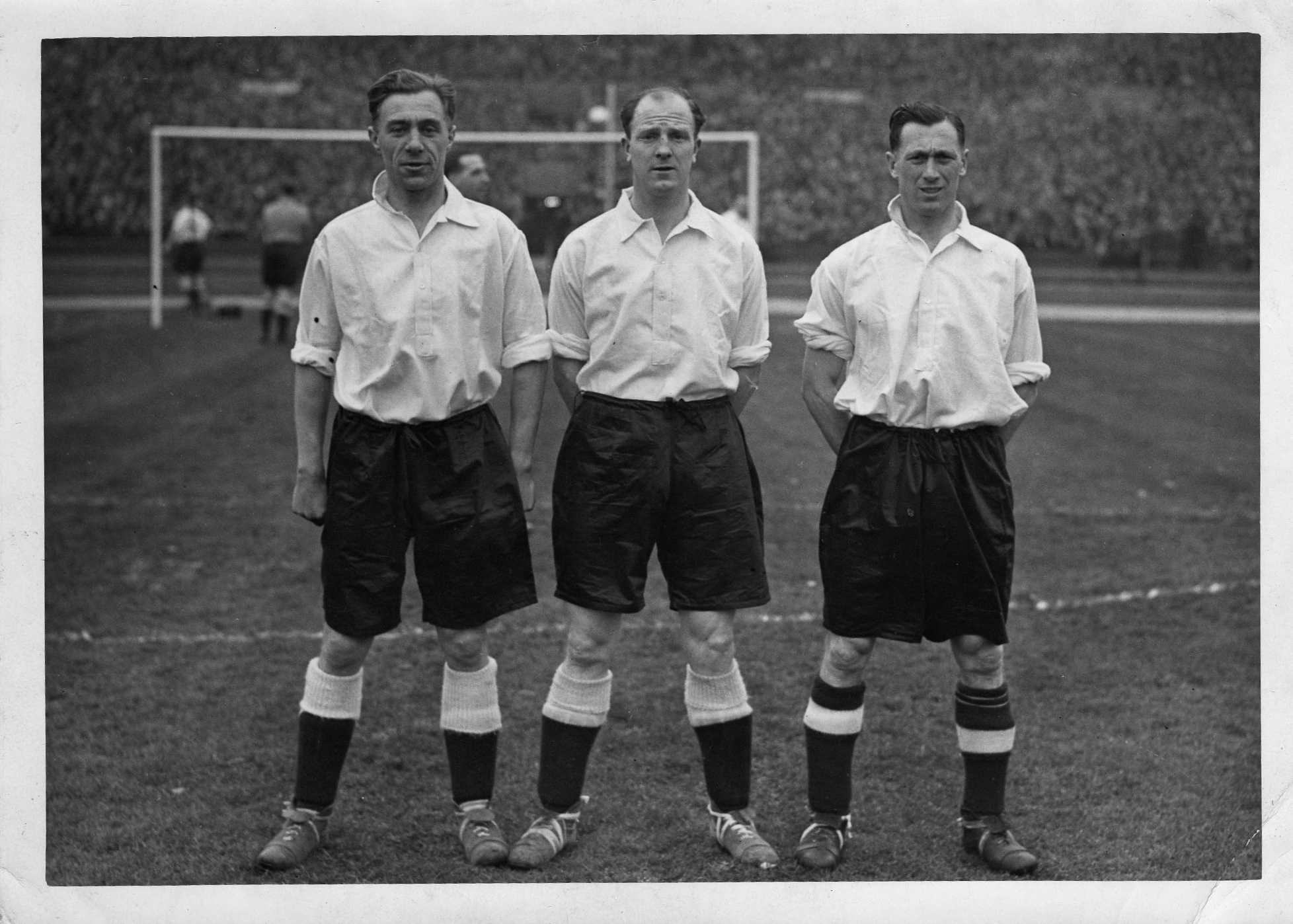
An appeal in the Evening Express from 17 August 1940 illustrates how difficult it was for clubs to remain in contact with their players in wartime:
Call to Cliff
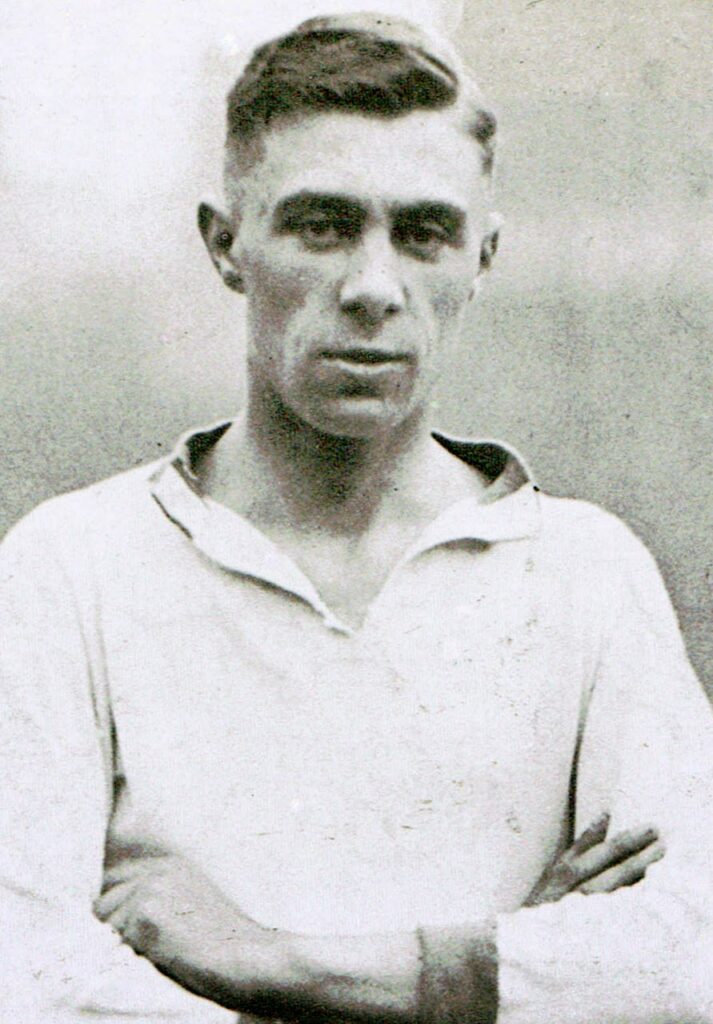
Cliff Britton, now a sergeant instructor in the army, has apparently been too busy lately to keep in touch with Goodison Park. Mr. Theo Kelly, the Everton Secretary, is anxious to get in touch with Cliff but does not know his address. He has appealed to me to help him, so if Cliff sees this paragraph, will he please communicate with Mr. Kelly?!
When he did re-appear for the Everton first team in 1944, fittingly, it was in a Merseyside derby. Present that day were many Everton stars of happier pre-war days, there to collect benefit (long service) cheques from the board. The beneficiaries included Torry Gillick, Wally Boyes, Nat Cunliffe, Gordon Watson and Charlie Gee. The latter gave an acceptance speech on behalf of the players. On the pitch Cliff turned back the clock with a starring role in the easy 3-0 Lancashire Cup victory over the neighbours. One match report stated:
There has been talk of Cliff Britton being dropped by England. I was told so by one selector some time ago, who pointed out that Britton was getting to the stage where 90 minutes was too much and the time had come when England must look for a younger man. Had the selectors been at Goodison yesterday they would have seen no sign of the “old man” about Britton. He was going as strong at the end as at the beginning, when many younger men had bellows to mend, and played a brilliant and brainy game throughout.
Cliff would be selected to make representative appearances for the Army and in 1943 he was part of a tour party which visited Ireland. Teammates included Don Welsh of Charlton, Aubrey Powell of Leeds United, Dennis Compton of Arsenal and Jimmy Hagan of Sheffield United. He was subsequently posted to Yorkshire and found the time to make twelve appearances for Doncaster Rovers in the 1944/45 season. Away from football Cliff met his future wife, Bridget, in Sussex. They wed in 1944 and brought up two sons.
The Merseyside derby appearance back in 1944 would prove to be his last outing for Everton at Goodison. In February 1945 he was given the board’s blessing to seek a managerial position elsewhere, although the club retained his playing registration until the autumn. Soon, he was appointed manager of Burnley FC. This drew to a close a fifteen-year association in which Cliff had made 242 competitive appearances for the Toffees and set the bar high for the wing-halves who would follow.
Cliff Britton would return to Goodison three years later in a very different capacity.
Part 2: The Manager
As the tide turned in the Second World War, Cliff, whilst still playing regular wartime club and international football, turned his thoughts to a time when the conflict would be over. On 17 June 1943 he wrote to Stanley Rous, Secretary of the Football Association, putting forward a blueprint for the developing national game. The centre-piece of this was what he referred to as a Football Association College. Proposals tabled by the Everton veteran included:
- The College would become a ‘mecca’ for anyone, from around the world, wishing to study football.
- Clubs could send certain of their players there for expert development. Players attending the college would receive training from the finest coaches in the game.
- Courses and refresher courses would be held for referees.
- Players approaching the end of their footballing career could spend two years learning (part-time) other roles, such as coaching and management.
- It would be used as a training venue for national teams.
Cliff finished his letter by extolling the camaraderie experienced at club and international level during the wartime period and hoped that this could be translated into peacetime football – as he believed that this spirit was key to future success.
Cliff’s thoughts were both visionary and altruistic. He wanted the FA to help footballers improve themselves on the pitch and prepare for a life after their playing days ended. Three weeks later Rous responded with a concise letter, thanking Cliff for his letter and promising to bring his suggestions before various FA committees ‘in due course’ once they were established. No more was heard on the matter. It would be over forty years before the FA finally set up a Centre of Excellence at Lilleshall in Shropshire (it was the National Sports Centre, so the FA shared it with other disciplines). It would be 2012 when the FA unveiled its National Football Centre at St George’s Park.
The end of Cliff’s own footballing career coincided with the cessation of hostilities in Europe. When a managerial opening came up at Second Division Burnley he applied and aided by a glowing reference from Everton’s board of directors, was appointed in October 1945. He put into action a three-year plan to get promotion to the First Division. New signing Allan Brown, alongside George Bray and Reg Atwell formed a half-back line of such solidity that it was dubbed ‘The Iron Curtain’ – a nod to Winston Churchill’s speech of that era about the fast-developing Cold War. Looking back with author Mike Prestage, Bray recalled:
‘Cliff Britton had a good football brain and Burnley were lucky to have got him. He built a team around defence and laid down the tactics to the team. He knew from A to Z what his players could do and what they couldn’t. He was also fair to deal with. If you had anything to come pay-wise, or whatever, he always listened and would sort it out.’
Another player from that era, Tommy Henderson, recalled the manager slightly differently:
‘He was very respected but always remained aloof. It was always “Mr. Britton” in your dealings with him. He was very strict but very fair. He had been a hell of a player and was a hell of a coach.’
In the 1946/47 season, which saw the resumption of the full domestic football league programme, only thirty-two goals were conceded by Burnley in all matches. With Harry Potts firing in the goals, the Clarets achieved promotion at the first attempt. All this was with a team assembled for only £2,000. Cliff’s stock rose further with a FA Cup run which only ended in extra-time defeat by Charlton in the final. The next season saw Cliff steer his charges to third place in the First Division, only being pipped for the runners-up spot on goal average by Manchester United.
On Merseyside the Everton directors cast envious glances towards Turf Moor. Theo Kelly had been combining the role of club Manager and Secretary since the outbreak of war. Despite possessing formidable administrative adroitness, Kelly, who had his own health challenges, proved less adept at maintaining harmonious relations with his star players. By the end of 1946, four stars of the 1939 championship side, in Tommy Lawton, Torry Gillick, Jimmy Caskie and Joe Mercer, had departed for other clubs whilst T.G. Jones was becoming an increasingly unsettled and disillusioned presence at Goodison Park. Others, such as Wally Boyes, Alex Stevenson, Ted Sagar and Norman Greenhalgh were still at the club, but past their peak. In the first two seasons of post-war football the Blues had finished tenth and fourteenth. The 1948/49 season started miserably with six defeats and only one win in the opening eight fixtures – only six goals had been scored including a penalty.
With relegation for only the second time in its history looking possible, the club acted. After a 1-0 defeat at Stoke the board resolved to approach Cliff with a view to him becoming team manager. The very next day, a meeting was convened at the Exchange Hotel between the board members and the Burnley manager. By the end of the session, it was resolved that Cliff would become Everton’s manager, but the former star wing-half ensured that he would be given unprecedented managerial powers at Goodison. The stipulations agreed to were noted in the board minutes (shown below) and attest to Cliff’s strong negotiating position:
- That he be given full power & control over everything appertaining to the players.
- That his salary shall be at the rate of £2,000 per annum plus £500 per annum as expenses.
- That he be given a written agreement legally drawn up, guaranteeing him five years’ service, dating from the day he takes up his duties with the Everton club.
- That there shall be a clause in the agreement stating that, should the Board dispense with his services before the term of this agreement is reached, namely five years, that he receive as compensation a sum of money equivalent to the amount of salary he would have received had he completed five years’ service.
Writing in the early 1970s, Cliff laid out why he had insisted on such power:
Anyone becoming a manager should be more concerned with the powers he is given than the rewards. Salary is a secondary consideration.
Any manager would be foolish to accept an appointment unless he is given full power and control over everything pertaining to the playing side of the game. This power would cover:
• Appointment of coaching and playing staff
• The final word in the buying and selling of players
• Selection of all teams
• Control of scouting and youth policies
• Control of discipline
• Control of travelling arrangements for teams
• Control of the use of grounds and staff
The news of the appointment broke four days later and Don Kendall (under the pen name Pilot), in the Evening Express, could barely contain his delight in several articles:
The appointment is great news for Everton followers, for Mr. Britton is one of the greatest of all post-war managers and as wholehearted an Evertonian as one could find anywhere. That he will serve the club as well as a manager as he did as a player, I have no doubt. It is not expecting too much of the man who, in the short space of two seasons, made Burnley into the most talked-of club in the land. What Cliff did for Burnley I think he can for Everton, for he has a keen knowledge of football coaching and training and is a master of tactics. There is nothing he asks of his players that he cannot go out on the field and demonstrate. He always works and trains with his players, and although a disciplinarian, has that golden knack of being able to get the very best out of his men and keep them team minded.
The spirit of Everton Football club is to shine with greater intensity than ever before. In a matter of days this great club which has existed since 1878, will embark on a new era, which, I believe will be one of the greatest in its long and glorious history… Personally, I cannot see anything but success for the Kelly-Britton combination with the full support of the directorate, and the teamwork of the players.
Cliff himself, told Kendall of his delight in answering the call back to the Blues:
‘You cannot lose your love for Everton, no matter how long you are away. I always have wanted to come back to Goodison and carry on where I left off – working for the benefit of the club. I know it is going to be hard work, but that I like. If I can help to bring success to Everton, then I shall be happy. I have been exceptionally happy with Burnley and shall be sorry to leave them.’
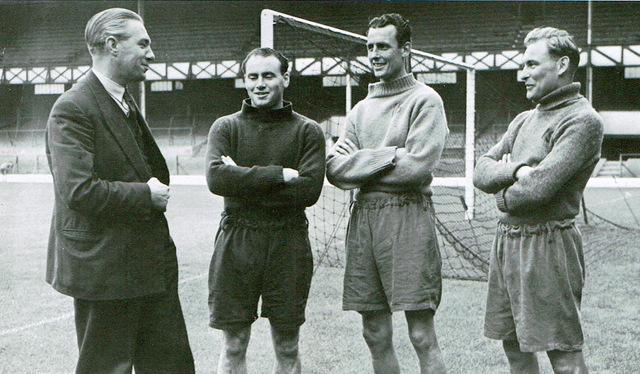
As a former Everton player with a blossoming managerial reputation, the prospective appointee ticked many of the requisite boxes. With Cliff serving several weeks’ notice at Turf Moor, the Goodison hierarchy sanctioned the departure of Ephraim ‘Jock’ Dodds, the centre-forward who succeeded Tommy Lawton and Harry Catterick in the number nine shirt. The physical forward had an impressive strike rate of 36 goals in 55 Football League games for the Blues. His move to Lincoln left the club dependent on the injury-plagued Catterick and Albert Juliussen – an ill-starred big-money signing from Portsmouth.
Two days prior to officially taking up his new role, Cliff had been a spectator in the stands at Bloomfield Road as the Toffees were drubbed 3-0 by Blackpool. Pilot noted that ‘Cliff sat in the stand watching and writing, making notes of errors, faulty tactics; why goals were given away and why goals were missed.’ Armed with the first-hand observations Cliff finally took his seat at his new desk in Goodison Park’s main stand at 10 0’clock on Monday 11th October. He was welcomed by Theo Kelly and Harry Cooke, both of whom he’d known since moving to Merseyside in 1930. Cooke, as trainer and physio, had formed a close bond with Cliff which would last for decades. Speaking for the first time in an official capacity Cliff told the Liverpool Echo’s Ranger:
‘The directors have placed their faith in me to tackle the club’s problems. I shall do my utmost to justify that faith. The position demands a 100 percent effort by all concerned and the loyal backing of supporters. I shall probably try various experiments; I am sure the club’s followers will be patient during this period and I ask them to give the side their full backing at all times.
‘If the players feel that their supporters are behind them to the last man, it will give them the vital spirit which is needed to make the effort required. Encourage them all you can. If you have any criticism – leave it until after the match. My association with Everton as a player was an extremely happy one, I trust that as manager it will be likewise.’
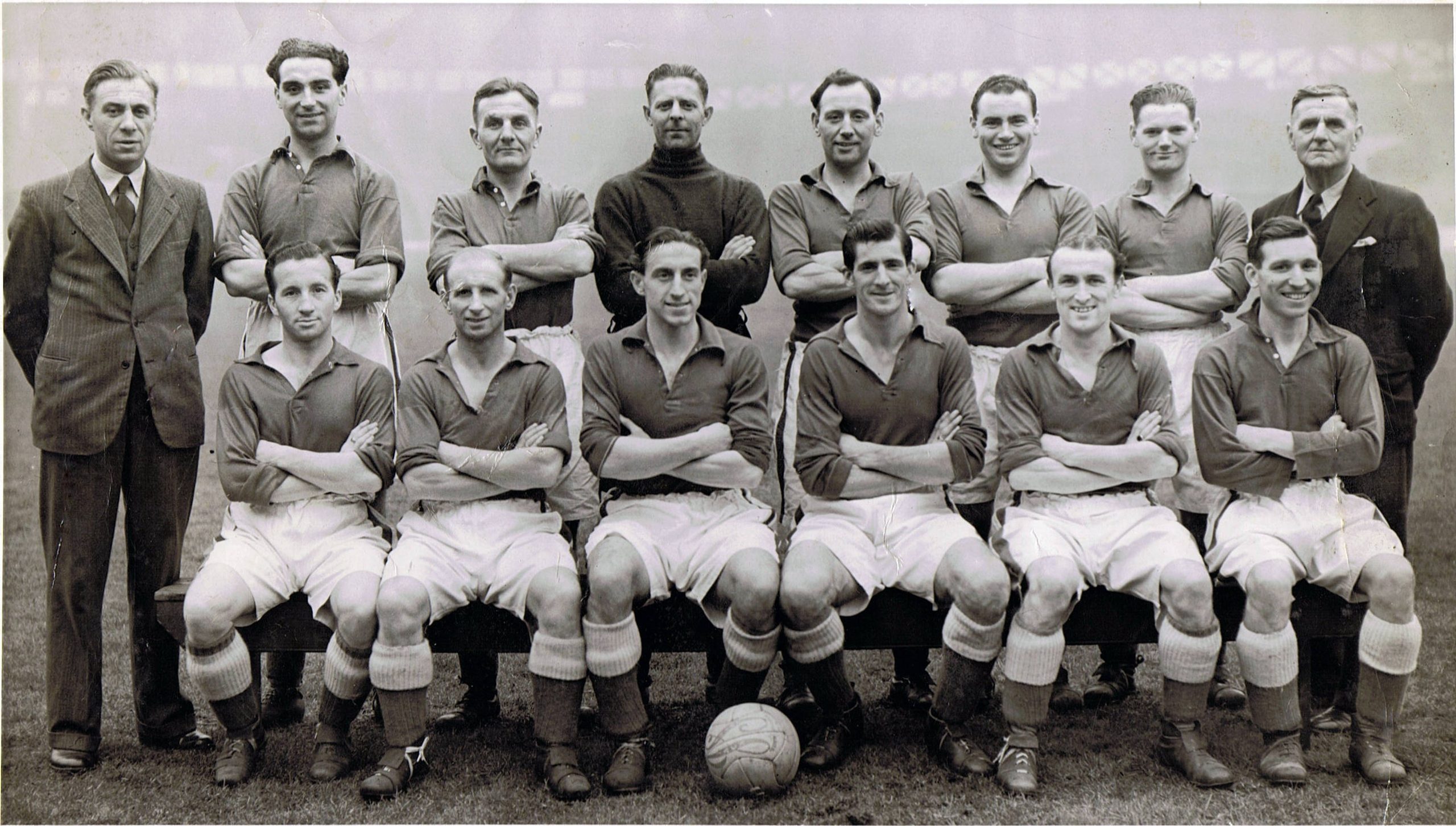
The first morning at work was devoted to receiving a handover from Theo Kelly. The next day was taken up with what was termed a ‘conference’ with the record-breaking forty-two professionals on the club’s books. Only then could training get underway at Goodison. In unpublished recollections, committed to paper in the early 1970s, Cliff explained how a new manager had to instill discipline and put down a marker immediately. However, it is interesting to note that Cliff’s approach included trying to take the players on the journey with him. He would talk to them in order to make the aims clear and put the hard work and discipline in context. Those who, ultimately, refused to buy into the ethos would be moved on:
It is not only necessary to have this authority to do the job but for the manager to hold the respect of the players. If they get to know that he lacks the power to enforce his own instructions he can expect a rough passage. To receive the full cooperation of the players the manager’s first action is to establish himself as THE BOSS. None of his staff should have any doubts about that.
After a couple of weeks to familiarise himself with the situation he should then be able to formulate his plan of action. Before putting it into operation it is wise to discuss it with the players so that they understand the objective and know the reasons for it. They must be convinced that what they are asked to do is in their interests as well as those of the club. One can’t get the full cooperation of the players by just telling them what to do. When dealing with strong-willed and self-opinionated characters ideas are communicated in the most trouble-free way when they are ‘sold’ to them in a thoughtful manner. The best response from men is more likely to be achieved by leading them rather than by driving them.
Having taken the players into his confidence and set the plan in motion it is then essential for the manager and his staff to see that everyone strictly keeps to it for the first few months so that the required routine becomes established. The majority of players are very reasonable to deal with. So long as the manager can justify his demands on them, they will accept them. This is perhaps the secret of good management – to see that they are never exceeded, unless it is for an exceptional situation. There are usually a few rebels who have to be convinced that unpunctuality, slackness and lack of interest for the job in hand will not be tolerated. Any sign of weakness or uncertainty by the officials could lead to endless trouble later on. If friendly persuasion does not produce the required response from a player, for what is in his interests, it is better for him to move on to another club for someone else to do the driving.
At Goodison, Cliff had the added difficulty of managing players and coaches who had been his teammates only a few short years previously. His insistence on being referred to as “Mr. Britton” was a bitter pill to swallow for the likes of championship winners T.G. Jones, Norman Greenhalgh and Gordon Watson.
Although he would become known as a ‘suit and trilby’ manager rather than one of the tracksuit variety, it was reported that he spent much of the first week in training gear, overseeing an ‘intensive coaching and training campaign.’ Despite this preparation, the first two games at the helm culminated in 1-0 and 5-0 defeats. The third match saw a Harry Catterick brace secure a home victory over Huddersfield.
One pressing matter to be addressed was the ongoing situation with T.G. Jones, who’d seen a dream move to Roma fall through after becoming mired in post-war red-tape. After sitting down with the new manager Jones offered to come off the transfer list. From thereon in, Everton’s form remained patchy but was sufficient to stave off relegation. The return to fitness of inside-right Eddie Wainwright, following appendicitis, and the switch of inside-left Cyril Lello to left-half helped steady the ship in the final months of the season. It would be crucial goals from Wainwright and new signing, Jimmy McIntosh, that secured vital points to ultimately keep Everton four points clear of the drop-zone. That said, the statistics for the season were damning and underlined the task facing Cliff in arresting the downward trajectory Everton had been on since the war. The Blues had finished eighteenth out of twenty-two clubs, with only forty-one goals scored, a quarter of which were thanks to Wainwright.
As at all the clubs he managed, Cliff sought to control the consumption of alcohol. Cliff’s son, John, recalls how his father’s approach could ruffle feathers throughout his managerial career:
‘When managing Hull, he had his ‘no drinking’ rules. There were some ‘players of character’ who would sneak off and try to have a beer regardless. He’d stamp down on it, but having played with the likes of Dixie Dean, Stein and Jimmy Dunn, he realised that it went on. For him, it was an absolute crying shame not to realise the fullness of your potential and to treat your talent with disrespect. My guess is that one of his biggest problems was not letting that show. A lot of players probably felt more judged than they thought was right. Having said that, the Hull City guys had tremendous respect for him.’
Over his seven and a half years in the manager’s chair at Goodison, Cliff was guarded and tried to keep the press at arm’s length. Ranger wrote about Cliff shortly after his 1956 departure from Everton. Intriguingly, on the subject of media relations, the words could just have easily been written a decade later to describe Harry Catterick:
Mr. Britton by nature was inclined to secretiveness. He was something of an enigma in that respect. One would have thought he would have welcomed any publicity which was for the good and glorification of Everton. Not always. On many occasions he clamped down on stories of that nature on the grounds that he considered they were no concern of the public. Nothing I could say would make him change his mind. Apart from the announcement of the team or transfer, information as to injuries and other comparatively minor matters he was never of great help to the pressman. This was not because he was deliberately obstructive; it was simply that he really felt they were matters which should be kept within the four walls of his office. I could never get him to realize all that the Press does for football.
John Britton feels that the reluctance to divulge much to the press was merely a reflection of the man: ‘He was a very quiet, private man. Many journalists would probably rate him as one of the most difficult people they ever had to deal with. Walter Pilkington at Lancashire Evening Post was a journalist that he trusted but he was very uncomfortable with a lot, as he didn’t trust them. He’d have been in agony with today’s world of interviews 30 seconds after the game – and dealing with agents representing players. You had to earn his trust and that was a very fragile state of affairs.’
Cliff was also at pains to keep his work and family life separate – albeit not completely successfully, as John Britton reflects:
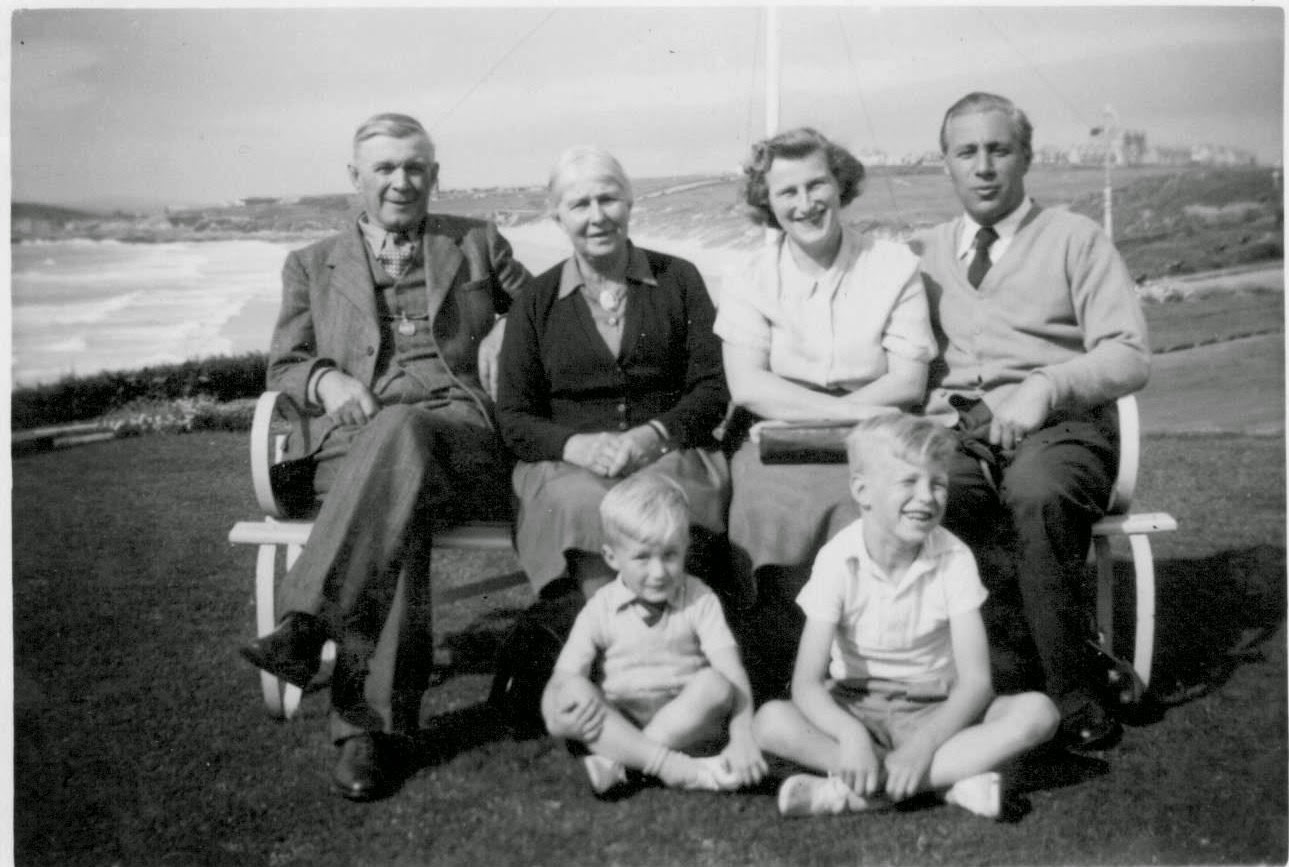
‘The thought of him taking us in front of a camera, or sharing anything professional with the family, was a no-no – never in a month of Sundays. In terms of mixing his family and his profession, there was a very clear line that never got broken. However, in terms of work-life balance, it didn’t work that way. We’d go on holiday to the Norfolk Broads and moor the boat in some way-out place. Dad would walk for miles to find a phone, and he’d be on it for hours before reappearing – then the holiday could continue! At home we had a comfy chair in the hallway by the phone as nothing was going to interrupt his work calls.’
The aloof exterior encountered by journalists and players masked the humorous side of the man away from work. John Britton recalls: He was very funny with a really dry humour. He used to wind up waitresses all the time. He never drank a drop of alcohol so when asked in a restaurant what he’d like to drink he’d reply with the whole ‘wine thing’ such as: ‘I’ll have Ginger Beer – a 1947. Fairly cold, but not too cold.’’’
An amusing vignette, which Cliff recounted to his son, was of a failed attempt to inspire the players: ‘I remember my dad telling me that one of his greatest disappointments at Everton was when Walter Winterbottom rang him up as England were playing an international in the region. He asked ‘Would you mind if we come along to Goodison for a training session?’ Dad got all the team together, saying: ‘You might have thought it was your day off but I want everyone in here as England are running a training session. I’ve broken all the rules and got it cleared with the club. You’ll see a proper coaching session, see what the best of the bunch do and learn from it.” So, they were stood there on the sidelines as the England team came out for the training session, ran round the pitch three times and went back in again without getting a ball out. All that after he’d built it up so much!’
In spite of a sometimes-difficult relationship with T.G. Jones, the Welshman was appointed team captain for the 1949/50 season. However, the hero of the terraces quickly fell out of favour again and was demoted to the “A” (third) team. The explanation for this rift may be more than Jones’ loss of form, as notes written by Cliff over twenty years later reveal:
Every star player is not prepared to conduct himself in a manner which is in the best interests of the team. This can lead to a test of strength between the player and the manager with the rest of the team as onlookers. It is an unenviable position for any manager to be in but, to retain the respect of his players, it is a battle he dare not lose.
Rather than be faced with such a confrontation some managers prefer players of lesser ability with more stable characters on which to build his team. Players who lack a sense of responsibility to themselves are not thought, by some managers, to be the best ones in whose hands to place their livelihood.
The ‘star player’ referenced was, very probably, the strong-willed Jones. The views of ‘some managers’ were, no doubt, a reflection of his own.
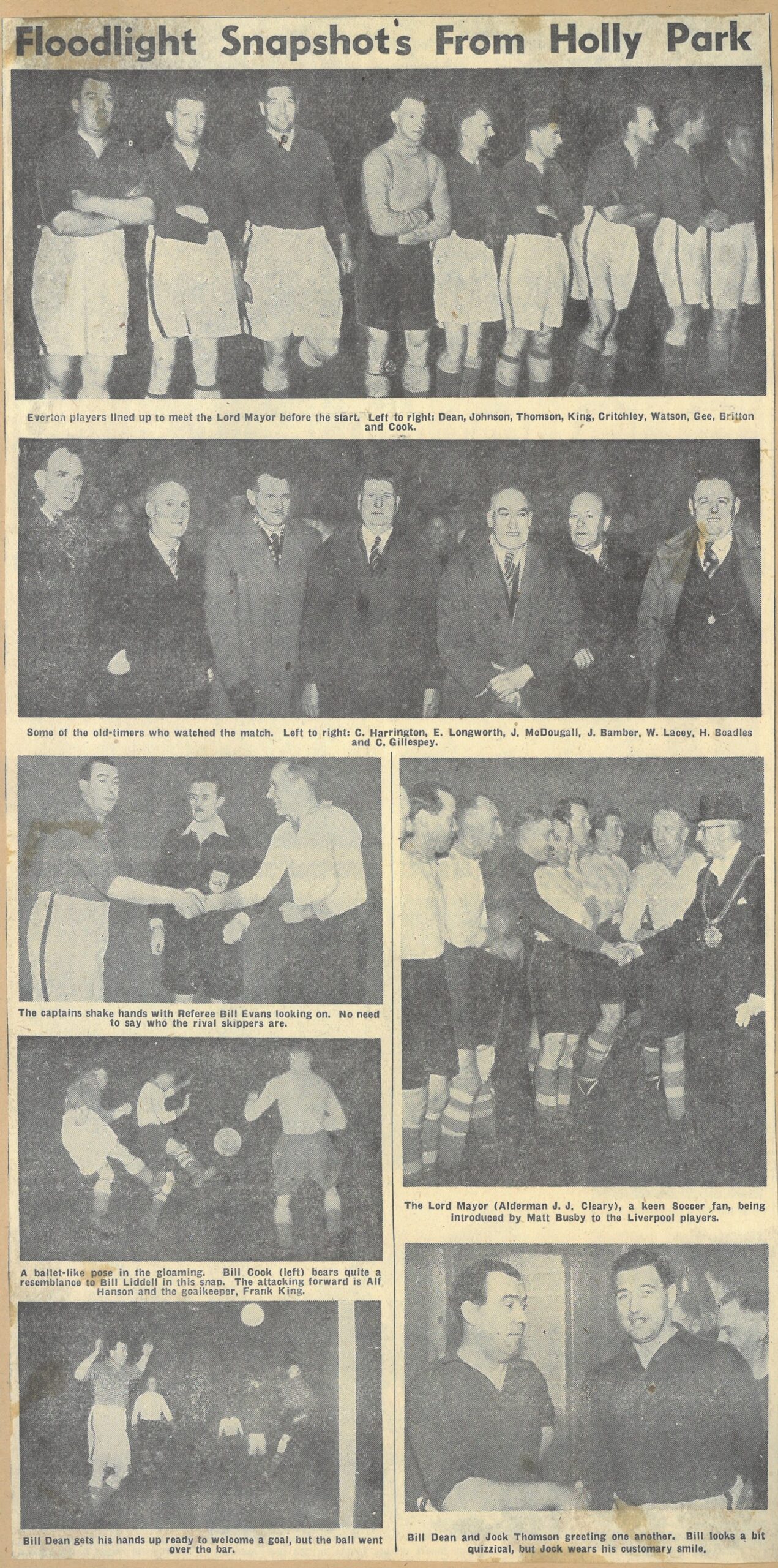
In January 1950, there was some levity as Cliff donned his boots for one last time alongside other Toffees greats of the 1930s in an Everton-Liverpool exhibition match under South Liverpool FC’s Holly Park floodlights. The classic half-back line of Cliff Britton, Charlie Gee and Jock Thomson (by this point, the manager at Maine Road) was complemented by the likes of Dixie Dean, Billy Cook, Albert Geldard, Alex Stevenson, Norman Greenhalgh and Ted Critchley. The veteran Blues defeated the Liverpool team 5-1. The Reds included Matt Busby in their ranks with the result that the managers of three of the four Lancashire football giants were on the same pitch. Ranger purred over the display forty-one-year-old Cliff: ‘Britton was magnificent, cajoling the ball over a bumpy ground in a series of passes that made the crowd gasp by its virtuosity.’
T.G. Jones finally left Everton in the summer of 1950 – quitting English league football altogether to become a hotelier and player-manager of Pwllheli FC. This left just the fading Ted Sagar on the playing staff from the 1938/39 title winners. With budgets restricted, the following season saw few new signings – Ted Buckle being one. Fears of relegation surfaced again, before vital goals in the run-in from Catterick and Wainwright saw Everton edge to safety once more. With the season also shaping up dismally, Cliff had drawn-up a list of thirty-nine potential transfer targets which was shared with the board. Perhaps the most notable name on the list was Nat Lofthouse, the Bolton Wanderers centre-forward who was on the verge of an England call-up. With Bolton not interested in selling, Cliff turned to a player he knew well for his only big-money signing as Everton manager. Harry Potts was transferred from Burnley for a sizeable £20,000 sum but the move for a player on the cusp of his thirtieth birthday would, in retrospect, prove ill-judged. The inside-right had already had his best days on the pitch, but he would go on to prove himself a capable mentor for the reserve side players.
From a position of apparent safety at the beginning of February 1951, the team spiralled inexorably towards relegation. The injured Lello and Wainwright were sorely missed as the goals dried up. One of Potts’ paltry five goals that season had secured a seemingly vital win in the penultimate match of the season. It left Everton needing a draw at Hillsborough on the last day of the season to secure top-flight status for another year. What transpired was a 6-0 capitulation in one of the darkest days the club has seen.
At a stormy AGM held in the wake of relegation, at which one director was voted off the board by unhappy shareholders, Cliff gave a speech in which he outlined what he saw as the way forward:
‘Our policy is to try to produce our own young players, but if we can see any player in the market who would increase our strength we could sign him if the fee came somewhere near his value. The mere spending of money is no proof that a club will solve its team-building problems. Many clubs have tried that and failed. The spending of money may possibly make the problem more difficult because no club has an unlimited supply of cash and when you get in the region of £30,000 how many players can you buy?’
Arsenal half-back, Joe Mercer, attending the meeting as a shareholder, added his support to his former Everton teammate: ‘There is no better trained club in the country today than Everton,’ he said, ‘otherwise they would have been in the Second Division two years ago. Mr. Britton is on the right lines in concentrating on youth.’
A scouting network scoured the Northwest of England and North Wales for players who could be groomed in the Everton way. One forward-thinking idea that Cliff espoused was a form of ‘football scholarship’, whereby promising schoolboys would become affiliated to a nearby football club for an apprenticeship whilst continuing their studies. True to his ingrained principles, he aimed to have boys of ‘good character’ at the Club, who desisted from drinking alcohol. He was reported to have once told a Liverpool audience: ‘There is nothing more pleasing for a football manager than to learn that a player he has signed is interested in the Christian way of life.’ He stated his belief that nine-tenths of football was the ability to pass the ball accurately – to do the simple football tasks superlatively well.
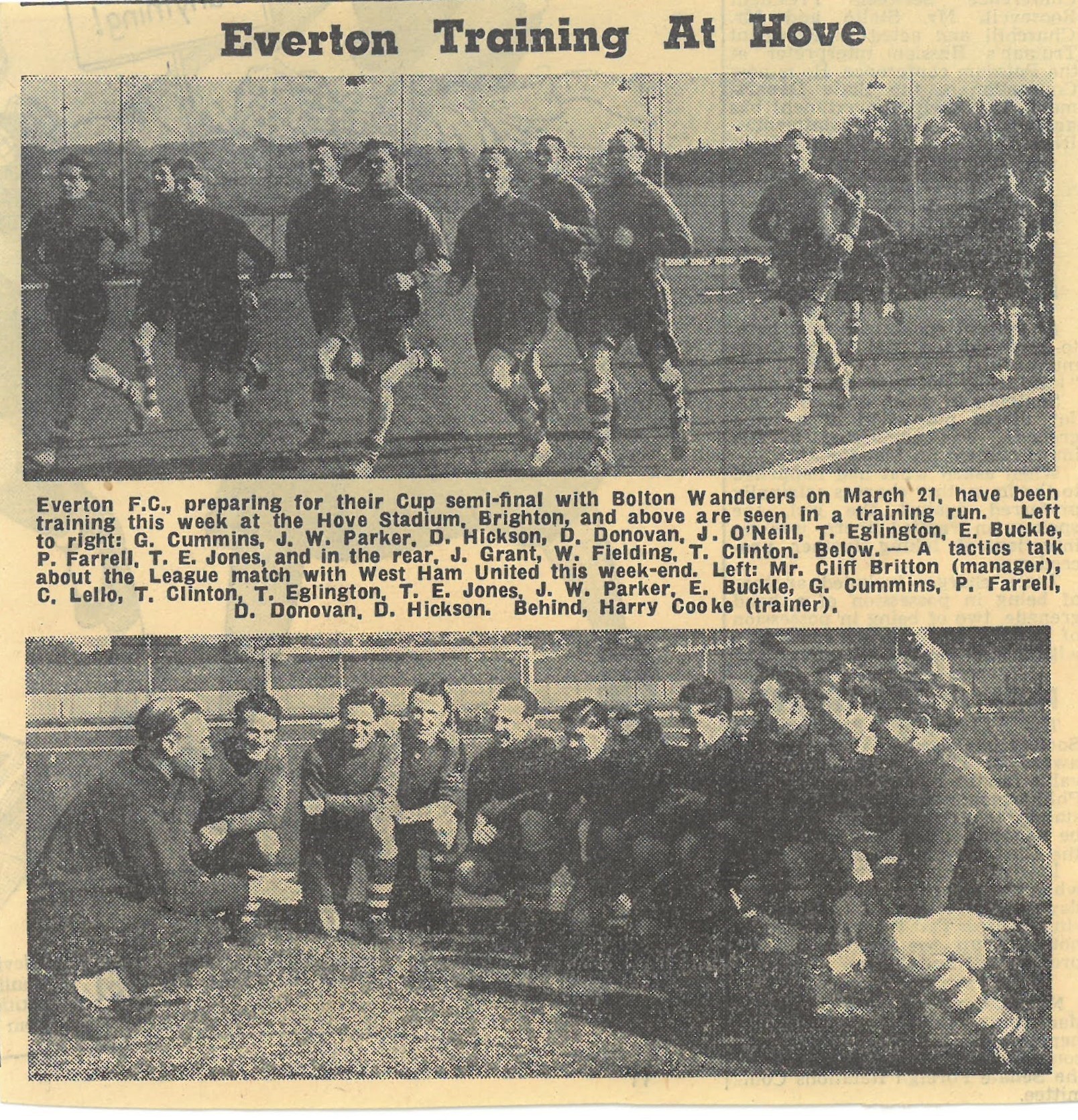
True to his word, Cliff did blood some youngsters in the Second Division. Dave Hickson usurped Harry Catterick in the number nine shirt just five games into the 1951/52 season; the Cannonball Kid never looked back. Hickson was joined in the attack by Tony McNamara. Other players developed into first teamers in the early 1950’s included: Jimmy O’Neill, George Rankin, T.E. Jones, Dave Gibson, Gwyn Lewis, John Willie Parker, George Cummins and Alan Hampson. However, in contrast to 1930/31, there would be no instant return to the top-flight as the Blues finished the campaign in a distant seventh place. At the subsequent AGM, Cliff again underlined the difficulties of signing big-name players as well as “the folly of taking unwarranted financial gambles.” He reaffirmed the desire for Everton to pursue a policy of grooming the best of the large list of amateur players for first team duty.
Everton had a healthy contingent of Irish players in the late 1940’s and 1950’s including Peter Farrell, Tommy Eglington and Don Donovan. One arrival in 1952 was Mick Meagan. The Dubliner would not make his first team debut for some five years – by which time Cliff had left the club. Mick recalled how Cliff was viewed by the players: ‘Cliff signed me for Everton. In those days nearly every manager was an old school ex-army man – when you saw them coming you nearly stood to attention. Cliff was really strict but also a very nice man – a man to respect. Under Cliff we’d be enjoying training, playing five-a-side and then he would arrive in his Crombie coat and trilby and stand there – then the “fun factor” would stop! There were no tracksuit managers in those days; Cliff left the training to Stan Bentham and Gordon Watson – he trusted the staff and that was it. Managers then always reminded me of racehorse trainers coming to see how their horses were looking at the gallops.’
In today’s frenetic football world, relegation and failure to bounce straight back would guarantee dismissal for a manager; however, the Everton board under Chairman Ernest Green – a retired school master – displayed remarkable loyalty towards Cliff. This loyalty must have been pushed to its limits when the 1952/53 season ended with a sixteenth place finish, some twenty points shy of the promotion mark. The only positivity was in the FA Cup; here Dave Hickson’s heroics got the Blues to a semi-final which they lost 4-3 to Bolton (having been 4-0 down).
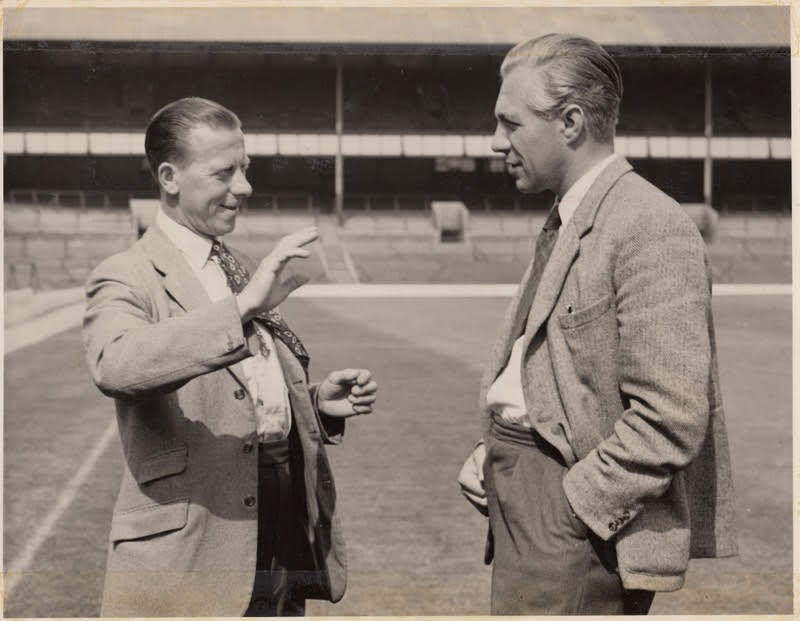
On the back of a strong start to the 1953/54 campaign, Cliff was able to renegotiate his employment conditions with a pliant board. His job title was upgraded to General Manager and a five-year contract extension was signed, with a salary of £3,000 per annum. Interestingly, not all board members were comfortable with the agreement; in a portent of future discord, Richard ‘Dick’ Searle asked that his objection be minuted.
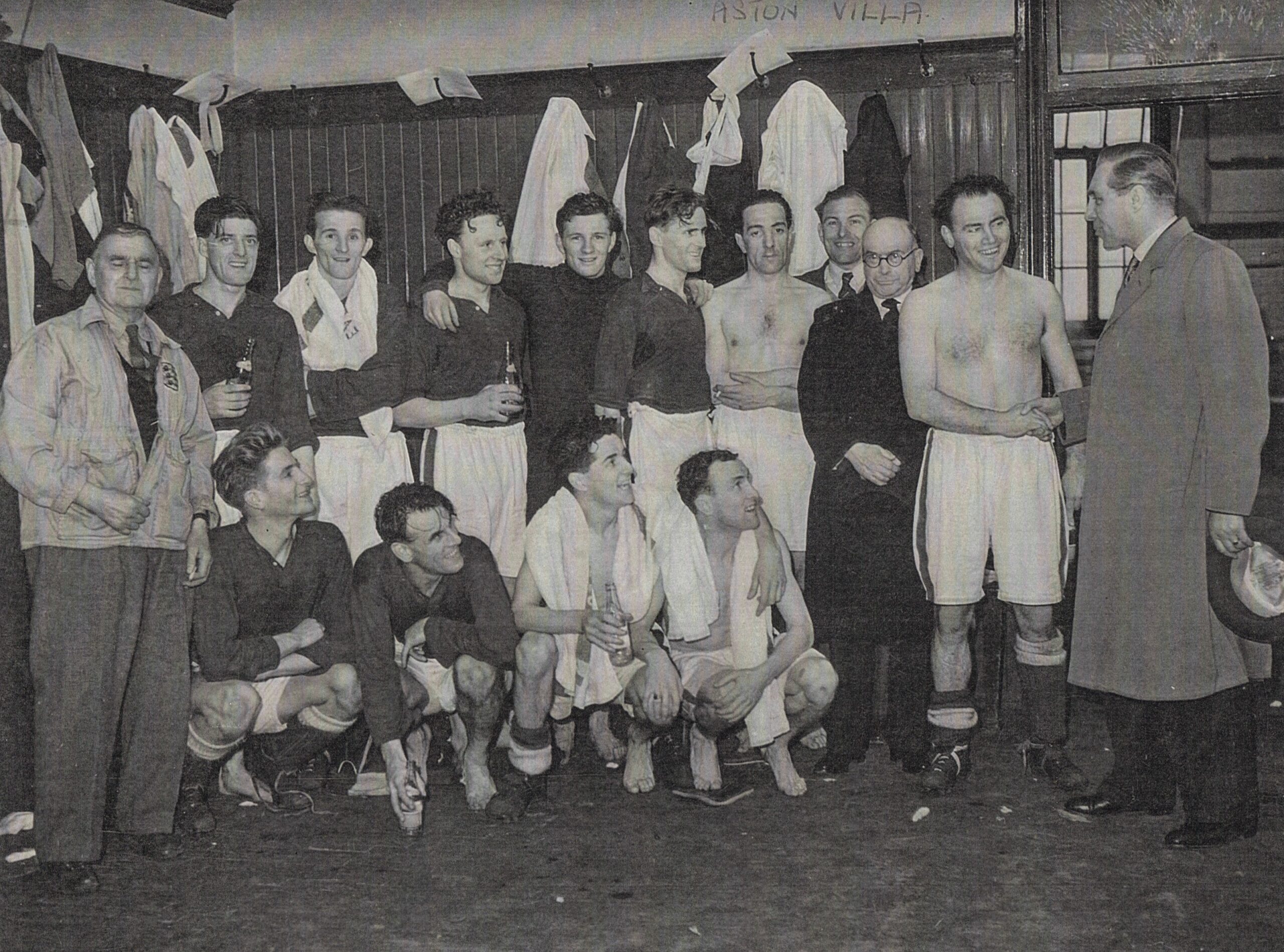
Finally, Everton secured promotion at the third attempt with Hickson and Parker’s fifty-six league goals between them making all the difference. A 4-0 defeat of Oldham at a poached Boundary Park on the final day of the season sealed the right to the top flight and there were joyous scenes involving the travelling supporters. Club captain Peter Farrell commented that Cliff was even more elated than the players in the post-match dressing room.
Back in the top-flight Cliff remained loyal – overly so – to the players who’d secured promotion. There were no new acquisitions as the 1954/55 season began promisingly with three consecutive victories. After that, the team’s form was patchy, but a comfortable mid-table finish was secured. The 1955/56 season, yet again, saw no new signings, but Cliff did slowly bring fresh blood into the senior ranks. Wirral lads Brian and Jimmy Harris debuted on the same day – the latter’s selection at number nine hastened the shock departure of Dave Hickson to Aston Villa. Jimmy, who passed away in 2022, recalled how Cliff was seen from a young player’s perspective: ‘He had an aura about him – nobody argued with him. He was very strict and kept the directors in their place. On a Friday morning we’d be lapping the track around the pitch at a very leisurely pace. Then you’d see the trilby come up through the entrance to the directors’ box in the main stand and he’d be watching you – the pace soon picked up!’
Derek Temple, a teenager playing for the reserves in this era, remembers seeing the manager at a distance: On Tuesday and Thursday nights the lads who weren’t full-time professionals trained in the concourse under the Gwladys Street stand with balls hung up under the girders. We used to run round and jump to head them. At one end there were nets and we had turns at shooting. With all the dust, you wouldn’t notice Cliff Britton come in but then, in the shadows, sometimes you’d suddenly see this figure in a big overcoat and trilby hat watching, and it would be, “Oh, eh-up – here’s the boss!”’
With the Blues stuck in mid-table in February 1956, events took a dramatic twist. For some time there had been rumblings behind the scenes from certain directors that Cliff was wielding too much power and ignoring their opinions. Some senior club figures would state, off the record to journalists, that they had been treated like ‘office boys’. Cliff, by contrast, felt that interference by certain board members was in contravention of the promises made when he agreed to join Everton in 1948. At a routine board meeting on 7 February 1956, a decision was made that would unleash a chain of events culminating in the sensational departure of the manager.
With the six-week 1956 summer tour of the USA looming, the board decided to appoint an ‘Acting Manager’, charged with taking care of business on Merseyside while Cliff was away for the duration of the tour. The person chosen for the post was Harold Pickering, a long-serving employee of the club. One person the directors had failed to consult was Cliff, who was away training with the team in Buxton. It remains unclear if the failure to consult was naivety on the part of the board or something more Machiavellian engineered by certain directors to create further tension with the manager.
Deliberate or not, the decision caused consternation when Cliff learned of the arrangements made behind his back. He sought legal advice regarding the club’s apparent breach of contract. Upon learning of Cliff’s ire, the board hastily back-tracked and rescinded the plan to appoint Pickering. A letter was sent to Cliff on 23 February reversing the previous decision. It read:
I am directed by the Board of Directors of the Everton Football Club Co., Ltd., to inform you of the intention…. to rescind a Resolution of the Board…appointing Mr. H. R. Pickering Acting Manager during your absence on the Club’s forthcoming American tour.
The Board have learned with regret that you have construed their action as a reflection upon yourself and I am, therefore, asked to assure you that the Board had no such intention and that their proposal to rescind the Resolution above referred to, is prompted by their collective desire to remove any sense of grievance which, you may entertain, however misconceived it may be.
This act of contrition fell on deaf ears – Cliff had already decided that he would be leaving. This was for reasons of principle, as Cliff’s son John explains: ‘It all goes back to right and wrong. For my dad the only judgement that counted was what a guy decided not to do. To do something and then apologise afterwards was not worth anything at all to him – it was hardly any better than doing it and not apologising.’
At a quickly-convened board meeting on the evening of Friday 24 February, Cliff did not even bother to remove his overcoat. When this was queried by a director he replied, curtly, ‘I am not stopping.’ Having listened to the board’s letter of 23 February being read out, he was asked to make suggestions for an alternative acting manager for the duration of the US tour. The board had misread Cliff’s intentions badly. Cliff later recalled: ‘I told them I was not interested in their letters and considered it an insult to my intelligence. I then read my prepared statement which I later gave to the press.’
Having re-affirmed that he was finished with the club, Cliff presented a letter to the directors. It contained a list of stipulations, which if adhered to, would lead to Cliff dropping his threat of legal action. The conditions included surety of tenancy of Cliff’s club house for forty years and transfer of the company car to his personal ownership. Cliff then left the meeting, leaving the board to consider the demands. A harassed Ernest Green followed Cliff into another room in the hotel where he had said he would wait for thirty minutes while the directors digested his letter. Green conveyed the message that the board could not agree to the conditions in the letter and advised Cliff that certain directors were minded to sue Cliff for breach of contract if he walked away from Everton. Cliff responded that he had no doubts about leaving and would be making a statement to the press at 8pm if he heard nothing further from the board. When no further communication was received that evening the following statement was given to journalists:
‘It will be very-surprising to all football followers of this town to see in print that someone has no desire to work for the Everton Football Club. After over twenty-one years of service to this great club these are my feelings at the moment.
‘This situation has been brought about by decisions which were made by a certain section of the board while I was away at Buxton on club business. After so long a period in Liverpool, I had no desire to uproot my family or leave the club. In my own interests, as it is well known that I have been responsible for the management of the club since I returned seven and a half years ago, and in the interests of all the staff who have given loyal and faithful service to this club, I consider it my duty that this matter should be brought into the open for the shareholders and all who have the interests of the club at heart to be made aware of the grave danger of the club losing its great name in the football world which has been built up over a great number of years by men of high standing and reputation.
‘I shall be very sorry to leave the team and staff who have given me the greatest loyalty and co-operation during my period of office. I cannot speak too highly of them, and also those directors who supported me during our troubled periods. But too many principles are involved to let this matter slide. I wish the team every success in the next round of the Cup and sincerely hope they will eventually bring it once again to Liverpool.’
With Everton due to play Bolton on the Saturday afternoon and an FA Cup quarter-final against Manchester City fast approaching, the managerial bombshell was broken to stunned supporters in the next day’s papers. Bee (the nom de plume of Leslie Edwards) in the Daily Post reported:
After what must have been one of the most astounding board meetings in the long history of Everton football Club. Mr. Clifford Britton last night literally and figuratively walked out of his £3,500 a year plus job as the club’s general manager. Later he told me ‘I have finished with Everton – for ever!’
Ernest Green had always been a strong ally of Cliff; in the aftermath of the resignation becoming public knowledge, the clearly distraught chairman told the Daily Post: ‘I do want to say no club has ever had a better manager, that the club is running more smoothly now – it is happier, better ordered and disciplined –than it has ever been before. It is a great loss to the club, and a great pity that after seven years of devoted service just when all his work was coming to fruition, he has felt compelled to leave. He has been a great manager and the club has suffered a very severe loss.’
For a private man like Cliff, the days which followed must have been unbearably hard as reporters camped outside his home at 39 Southport Road in Thornton. A local person would be sent to knock on the front door and, as it was opened, the press flashbulbs exploded and questions were shouted from down the drive. It was reported that Cliff failed to grab more than three hours of sleep for a number of nights after the schism developed.
The Everton first team players submitted a letter to the board with an entreaty to the directors to persuade Cliff to remain in post. One player (not named), said: ‘We feel our chances of further progress have been somewhat diminished by the news of Mr. Britton’s decision. If at all possible, we feel that the team would fare better by the guidance of Mr. Britton who has been responsible for any success we have achieved so far.’
Cliff and the board then entered into several days of press statement ping-pong. The directors issued a statement:
Instead of Mr. Britton accepting the board’s invitation to make a suggestion as to temporary arrangements during his absence, he confronted the board with his resignation unless the board agreed within a time limit of half an hour to stipulated terms in order to retain his service, one of which was that he and his family should be secured in their present residence for a period of forty years. “Mr. Britton is under contract with the Everton club for a period of which two and a half years is unexpired and the board are considering the position in relation thereto in the light of Mr. Britton’s action and his subsequent statement to the Press.”
The directors then chose to circulate to the press a copy of the letter which Cliff had brought to the meeting on 24 February. Interestingly, the meeting at which it was decided to release the letter was not attended by Ernest Green. Green felt his position as Chairman had become untenable in light of his closeness to Cliff. He was replaced by Dick Searle, the director who had objected to Cliff’s new contract award back in 1954. Interestingly Green was sent, along with Jack Sharp Jr., as board representatives on the USA tour which had kick-started the resignation kerfuffle.
Cliff was angered that the board’s statement erroneously asserted that the letter had been used as an ultimatum in a bid to retain his managerial position. In fact, he was leaving no matter what – the letter related to potential subsequent legal action. Therefore he, once again, felt moved to respond via the media:
‘The statement made from the club regarding my alleged demands about the house is untrue. I would like to make it quite clear that whatever the board may say, I had definitely made up my mind to leave the club and no inducement by the board would persuade me to stay…’
Whilst the war of words lumbered on, Charlie Leyfield took charge of the first team training and the board appointed a three-man sub-committee (Messrs T.C. Nuttall, C.E Balmforth and F. Micklesfield) to oversee team matters on an interim basis.
With the ill feeling at its zenith, Cliff told journalists that he had decided to walk away from football altogether. His proposed choice of new career was quite ironic in light of his wariness of the media: ‘I am now going into the journalistic profession. I have had many offers and have decided that this shall be my livelihood in future. At all times I have stated quite definitely to the Everton board, and the Press, that I would never work for the Everton club again.’
Later he would tell Ranger of the weight which had been lifted from his shoulders:
“‘All this trouble has given me a new start on life, and I feel a much happier man today than I have for a long time” said Mr. Britton in my last conversation with him. I am pleased to be out of football and for the rest of my life I shall feel indebted to those who have forced me out of the game.’
In the wake of Cliff’s departure, Ranger penned an in-depth, and perceptive, article assessing the man. A short extract is reproduced below:
Has his tendency to aloofness and isolation for he has never been what is called a ‘good mixer’ given him a limited view on some matters to which he should have brought a broader outlook?
There is in Mr. Britton’s make-up a streak of pugnacity as well as egoism. He never makes up his mind in a hurry but once having done so it is almost impossible to shift him. His friends regard this as one of his handicaps though it does not seem to strike him that way. The round-robin which the players sent to the Board last week is sample evidence of the regard they had for their manager. The fact that it was signed by them all, despite one at least having had his arguments with Mr. Britton speaks for itself.
In the weeks which followed, the threat of legal action from both sides subsided. Cliff notified the board that he would withdraw his threat of legal action and the demand for his remaining twenty-five months’ salary to be paid up if certain directors apologised for the misleading statements made to the press. Negotiations also got underway through intermediaries for Cliff’s home to be purchased from the club for £3,500.
The board would steer clear of appointing a managerial successor to Cliff, instead choosing to retain much of the real power whilst appointing physical training expert Ian Buchan as Chief Coach. It would be a further two years before the next de-facto manager was appointed, in the shape of Johnny Carey.
Despite the bruising manner of his departure from Everton, and comments made which suggested that he was through with football, Cliff would be back in club management within seven months. Four games into the 1956/57 season, he was appointed by Preston North End and found himself managing the great Tom Finney. Ostensibly a winger, Finney had been tried in a centre-forward role shortly before Cliff’s arrival. The new manager persisted with the experiment and it reaped dividends as the 34-year-old forward found a new lease of life. Although Cliff and Finney had a strained relationship, the forward feeling that the manager was far too much of a disciplinarian who didn’t demonstrate pragmatism in this regard, the teetotal North End legend praised the manager’s acumen when speaking to his biographer, Paul Agnew:
‘Few people have ever been aware of the fact that Cliff Britton devised a special plan to accommodate my style in the middle. I was not simply switched there without careful consideration and it was not simply by chance that everything worked so well…The manager believed that a bad team with method was better than a good team without method.’
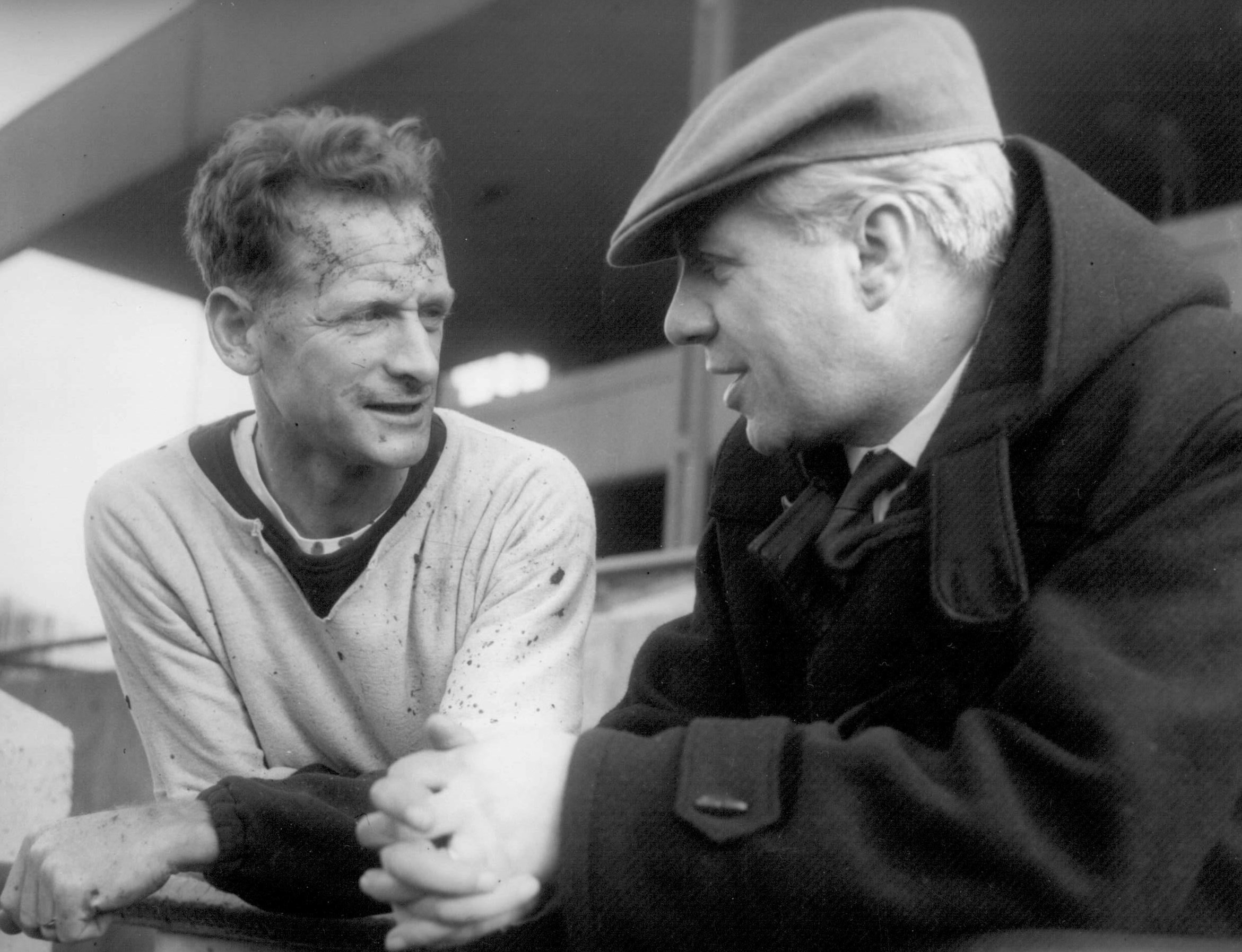
After the tumult of his departure from Goodison Park, and the feeling of underachievement there, the Preston role enabled Cliff to rebuild his reputation as a talented manager. In his first season, Finney’s twenty-three goals propelled the team to a third place finish in the First Division. The following season, with Finney rewarded with the club captaincy, the team went one better – finishing runner’s up to a Wolves side managed by his friend and former England teammate Stan Cullis (a godfather to one of Cliff’s sons). In contrast, Everton languished in fifteenth and sixteenth places in the same two seasons.
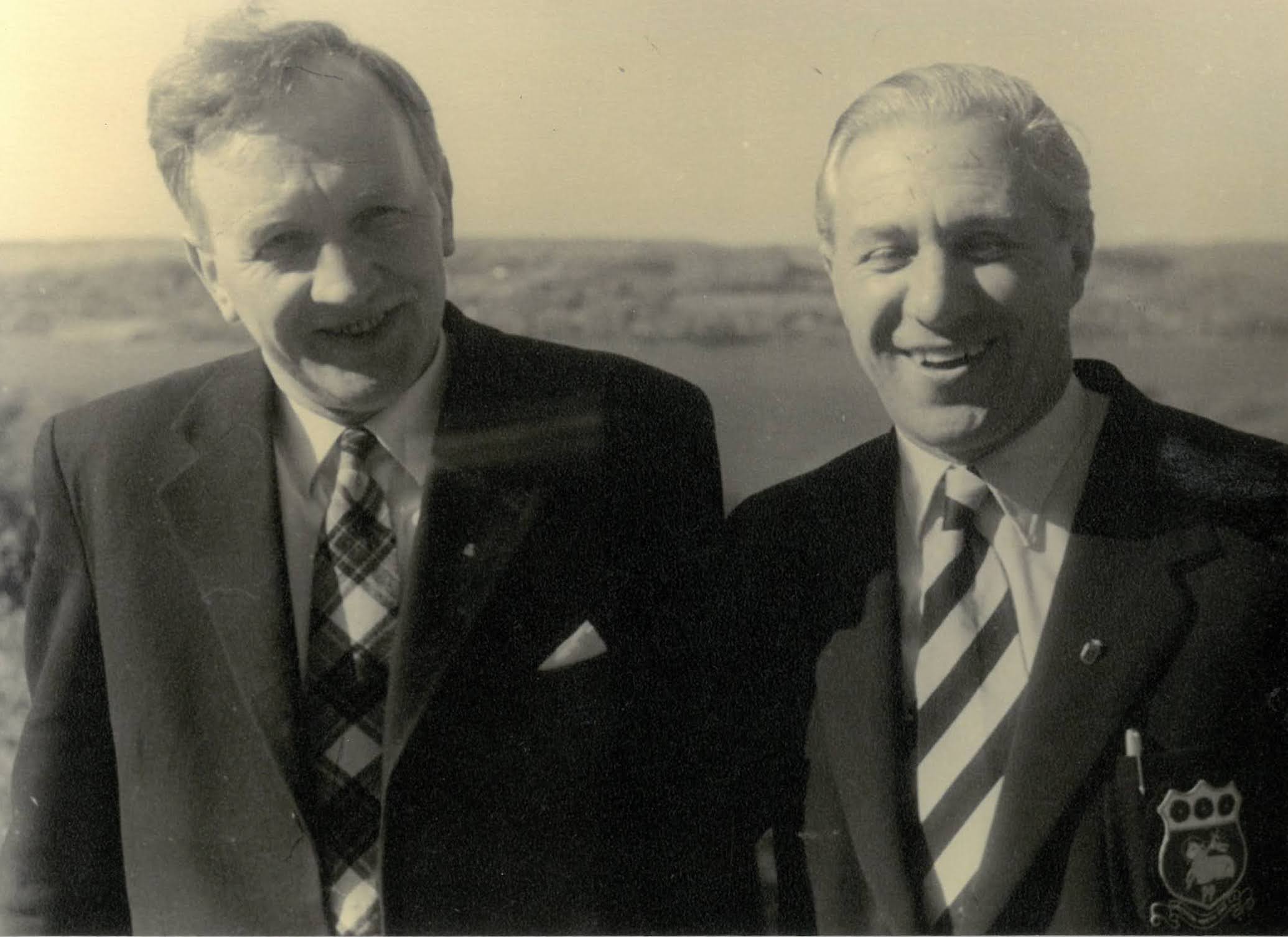
At Deepdale, as at Everton, Cliff focused on the development of youngsters. This was rewarded when the Under-18 team reached the 1960 FA Youth Cup Final against Chelsea. The Londoners, boasting future stars in Peter Bonnetti, Terry Venables and Bobby Tambling, ran out 5-2 aggregate winners. The last two seasons of the 1950s had seen Preston have mid-table finishes prior to Finney hanging up his boots in the summer of 1960. The following season saw the Finney-less team surrender its top-flight status – Preston North End has not regained it since. Cliff, believing that he could not take the club further, he left as the season ended. He was not destined to be unemployed for long.
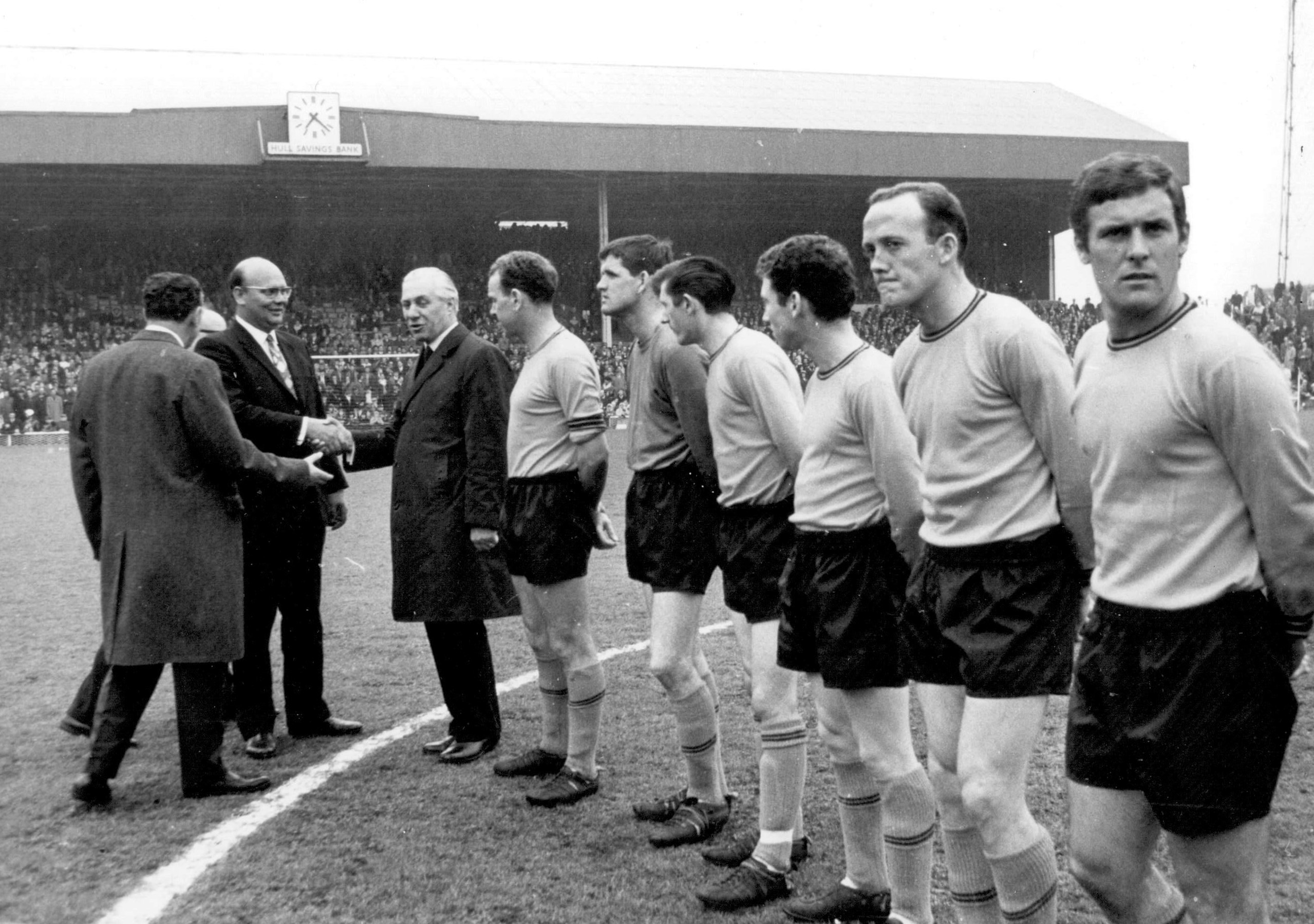
His next managerial role, commencing in July 1961, would take him to the East Riding of Yorkshire. Cliff made headlines for negotiating the first ten-year managerial contract when joining Hull City. In all he would spend twelve years at the club. The Tigers were rooted in the Third Division and the Chairman, Harold Needler, saw Cliff as the man to push the club up to the top-flight. The manager implemented his customary plan of developing a solid back line and developing young talent. He also made several astute signings such as Ken Wagstaff from Mansfield Town. Elevation to the Second Division was achieved in 1965. However, it appears that Cliff repeated the error made at Everton a decade earlier in demonstrating too much loyalty to the players who had secured promotion. After a bright start in Division Two the team lacked the quality to make the next step up. In 1970 Cliff moved ‘upstairs’ with Terry Neil coming in as manager. He finally retired in 1973.
Despite the acrimony of his departure from Everton in 1956, the links to Goodison were not completely severed. When Harry Cooke was hospitalised in the mid-60s it was Cliff who arranged for a bouquet to be sent to his long-time friend. Selflessly he sent it from ‘Dixie and the lads’ rather than in his own name, as he knew that this would mean more to Cooke. When Cooke died in 1966, Cliff was one of the surprisingly few former players to attend the funeral on the Wirral.
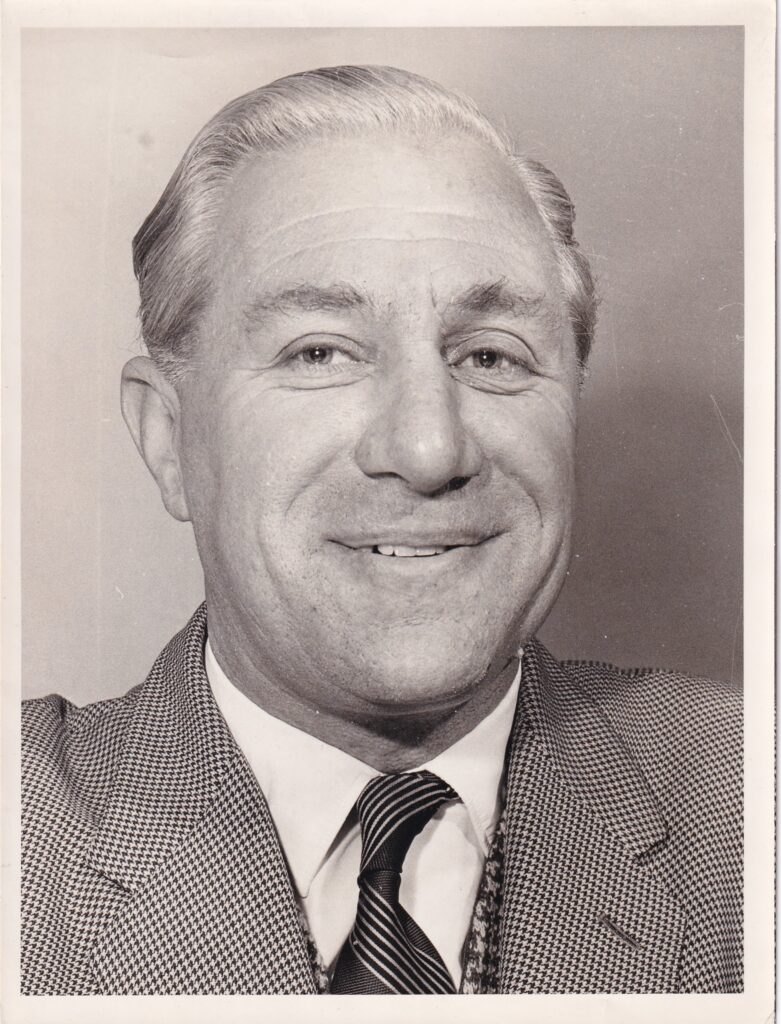
In 1966 Harry Catterick’s Everton side overcame Sheffield Wednesday in a five-goal thriller at Wembley. It would be Everton’ s first FA Cup victory since Cliff himself received his winner’s medal in 1933. That evening Cliff joined all of the 1933 team, bar the unwell Warney Cresswell, at the celebration banquet in London – it was not reported if Albert Geldard entertained his colleagues with his conjuring tricks. When the financial woes of Tommy Lawton came to the public’s attention in 1972, Cliff joined the organising committee, spearheaded by Joe Mercer, for a fundraising game to be held at Goodison Park.
In retirement, Cliff continued to watch and enjoy football. Reports suggesting that he had fallen out of love with the game were wide of the mark; what made him feel disaffected was the failure of the Hull hierarchy to deliver on some promises made regarding his pension pot. Never one to blow his own trumpet, Cliff would rarely talk about his wonderful playing career or experiences in management – even to family and friends. He had hoped to spend his post-work years giving back the time to his wife, Bridget, which football had stolen over the years. Sadly, their time together was cut short as Cliff succumbed to cancer of the colon, at the age of sixty-six, on 1 December 1975.
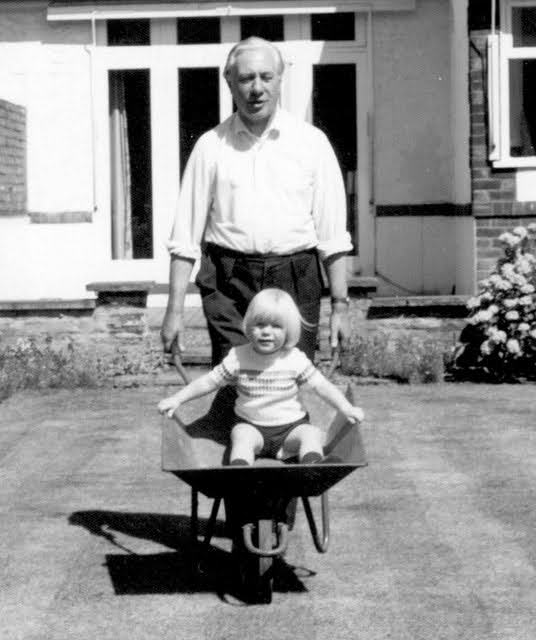
So, what was Cliff Britton’s legacy at Everton, the club with which he is most closely associated? As a player he set a standard at right-half that has been emulated by very few – he was a true School of Science star. Conversely his managerial reign no doubt disappointed him as much as the supporters. His obstinacy and disinclination to be a ‘mixer’ counted against him – so too did relegation in 1951 and an apparent reluctance to be more daring in the transfer market. That said, he brought through a number of talented players such as T.E. Jones, Jimmy Harris, Brian Harris and Derek Temple (the latter of whom would make his senior debut under Ian Buchan).
Looking back in retirement on his time in management Cliff made it clear that he would abhor success if it meant compromising his principles about life and the game. The term ‘some managers’ was used again to reflect his own beliefs:
The main features for team building are talent, character and discipline. By what degree these three elements are blended together will vary according to the importance placed on each one by the individual manager. It will also depend on whether or not the ends are more important than the means. Some managers are not interested in success at any price. It would be an embarrassment for them to know that the players, or anyone else thought the club was being managed in a way which gave it, and the game, a bad image. These are the men who only get the full satisfaction of winning honours when they know, within themselves, that they did it within the rules and in a manner worthy of the game.
Perhaps Cliff’s greatest, but unforeseen, Goodison legacy was the influence he had on a quiet centre-forward who spent three years under him at the tail-end of the 1940s and early 1950s. The desire for privacy, a guarded approach to the press, a strong belief in discipline and maintaining distance from the players coupled with the vision to nurture home-grown talent were traits Cliff shared with Harry Catterick. Catterick was able to combine those characteristics with managerial ruthlessness and an élan in spending the Moores transfer fund as he led Everton into its golden 1960s era.
Rob Sawyer
………………………………………….
Acknowledgements/thanks:
John Britton
Billy Smith (Blue Correspondent website containing newspaper transcripts)
Steve Johnson (evertonresults.com)
Everton Board ledgers (Everton Collection)
Chris Goodwin (England Football Online)
James Corbett
David France
John Rowlands
George Orr
Various Everton, Preston North England and Hull-related websites