Paul Owens
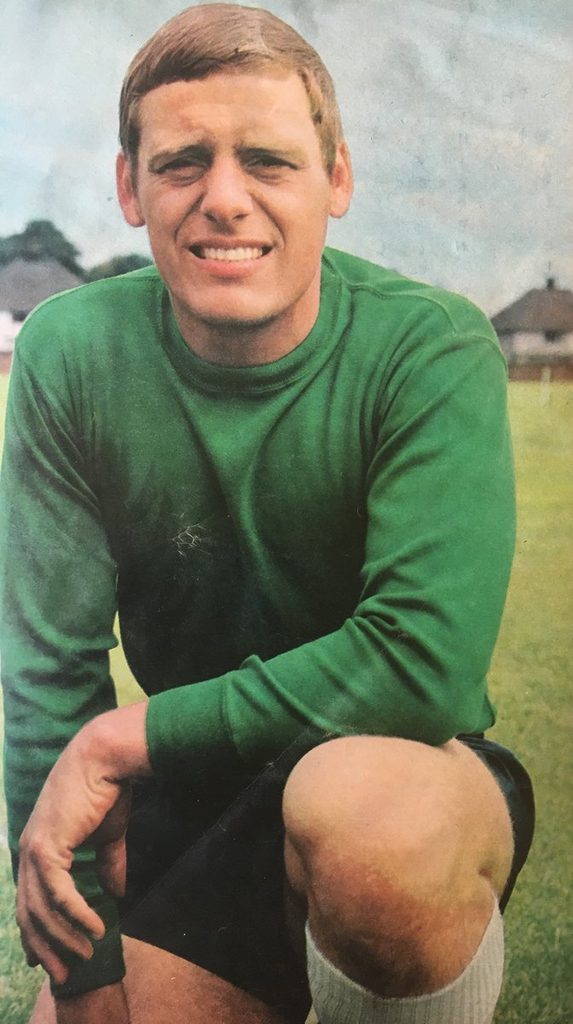
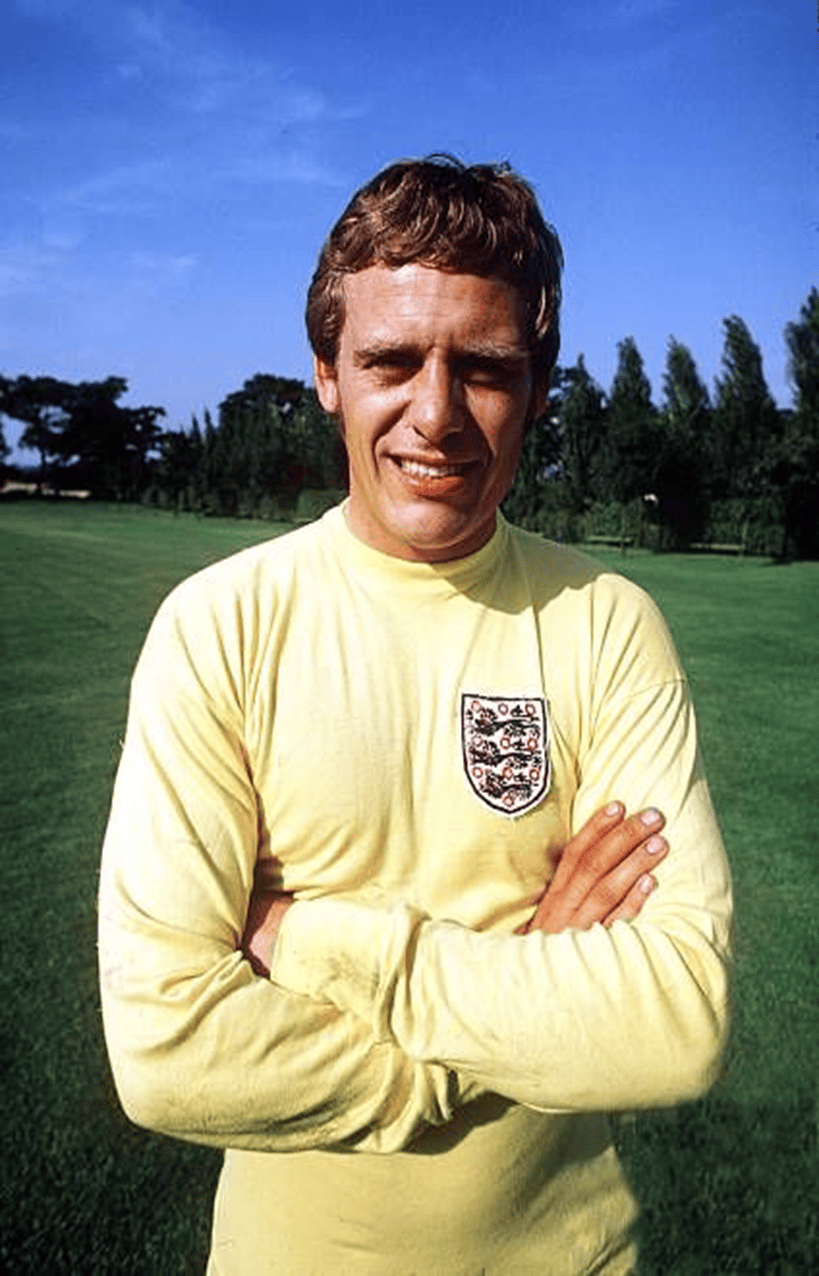
On Wednesday 25 April 1973, Gordon West made the last of his 402 first-team appearances for Everton, eleven years after signing from Blackpool for £27,500 – a then record-fee for a goalkeeper. Fittingly, the Darfield-born stopper, who had celebrated his 30th birthday two days previously, kept a clean sheet, a shut-out that helped his beloved Blues earn a share of the spoils at St James’ Park, Newcastle. Although the curtain had come down on the first-team career of one of Everton’s most successful and charismatic sons – a double title winner, an FA Cup winner and the recipient of three England caps during his time on Merseyside – the genial goalkeeper wasn’t going anywhere just yet.
In many respected publications – and in online articles published by the club itself – it has often been stated that Gordon West left Everton in the summer of 1973. The oft repeated tale was that he retired from the game before making an unlikely comeback with Tranmere Rovers three years later, in 1976. Having no reason to question whether or not this was the case, I used the line in my own book, The Glovesmen of Goodison: A History of Everton’s Goalkeepers, which came out in August 2025.
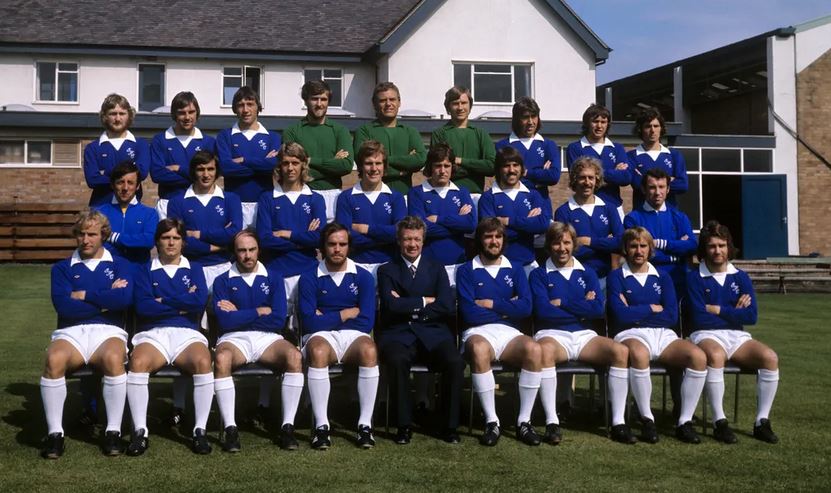
However, when recently studying a photo of Everton’s 1974/75 squad, I was surprised to see Westy standing alongside fellow keepers Lawson and Dai Davies on the back row. Puzzled, I decided to do a deeper dive into the big goalkeeper’s final years at the club, a period in which he seemingly slipped away from the public eye and consciousness – despite his incredible ability, gargantuan personality, and the huge issues Everton were experiencing between the uprights during that time.
1972/73 – The beginning of the end
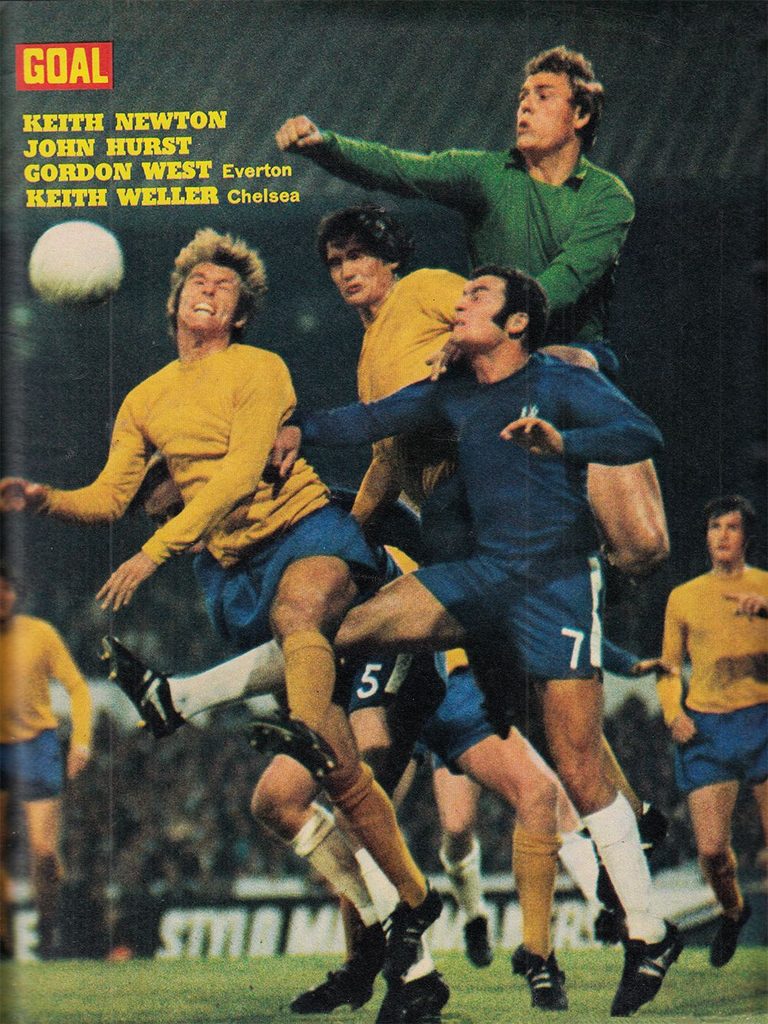
Having lost his place to new signing David Lawson in August 1972, West had been linked with numerous moves away from Merseyside that season (including a transfer to Stoke City – who were in need of a new goalkeeper following Gordon Banks’ horrific car crash that October, a crash which resulted in the England international leaving the professional game after losing an eye. Although he did return in 1977 to play for Fort Lauderdale Strikers in the North American Soccer League)).
The Everton veteran made just four appearances for the Blues during the 1972/73 campaign – all in April, after Lawson had come off with an injured groin at West Bromwich Albion, in a bruising encounter that saw Mick Lyons take over in goal for the last thirty minutes of Everton’s 1-4 defeat at the Hawthorns. This has often been described as the first game of the post Harry Catterick era, with Tommy Eggleston overseeing team affairs in a caretaker capacity. In fact, Catterick, assisted by ‘Eggo’, would continue to oversee matters with his customary rod of iron until the end of the season.
After conceding four goals against Wolves in Everton’s next game, West would record a hat-trick of clean sheets in his final three outings for the club – in home games against both Chelsea and Arsenal, as well as in the aforementioned goalless draw at Newcastle United.
1973/74 – Into the wilderness
In a bid to build up stamina ahead of the new campaign, the Everton first-team squad, under new manager Billy Bingham, spent much of the summer running on the beaches and sandhills of Ainsdale. Fitness work was an aspect of the game that West had never really enjoyed – with the goalkeeper openly admitting to reporter Erlend Clouston that the summer sandhill sessions had made him feel ‘as bad as he had done in an England training session years earlier,’ a training session in which the Everton man had collapsed after just 20 minutes of a rigorous workout.
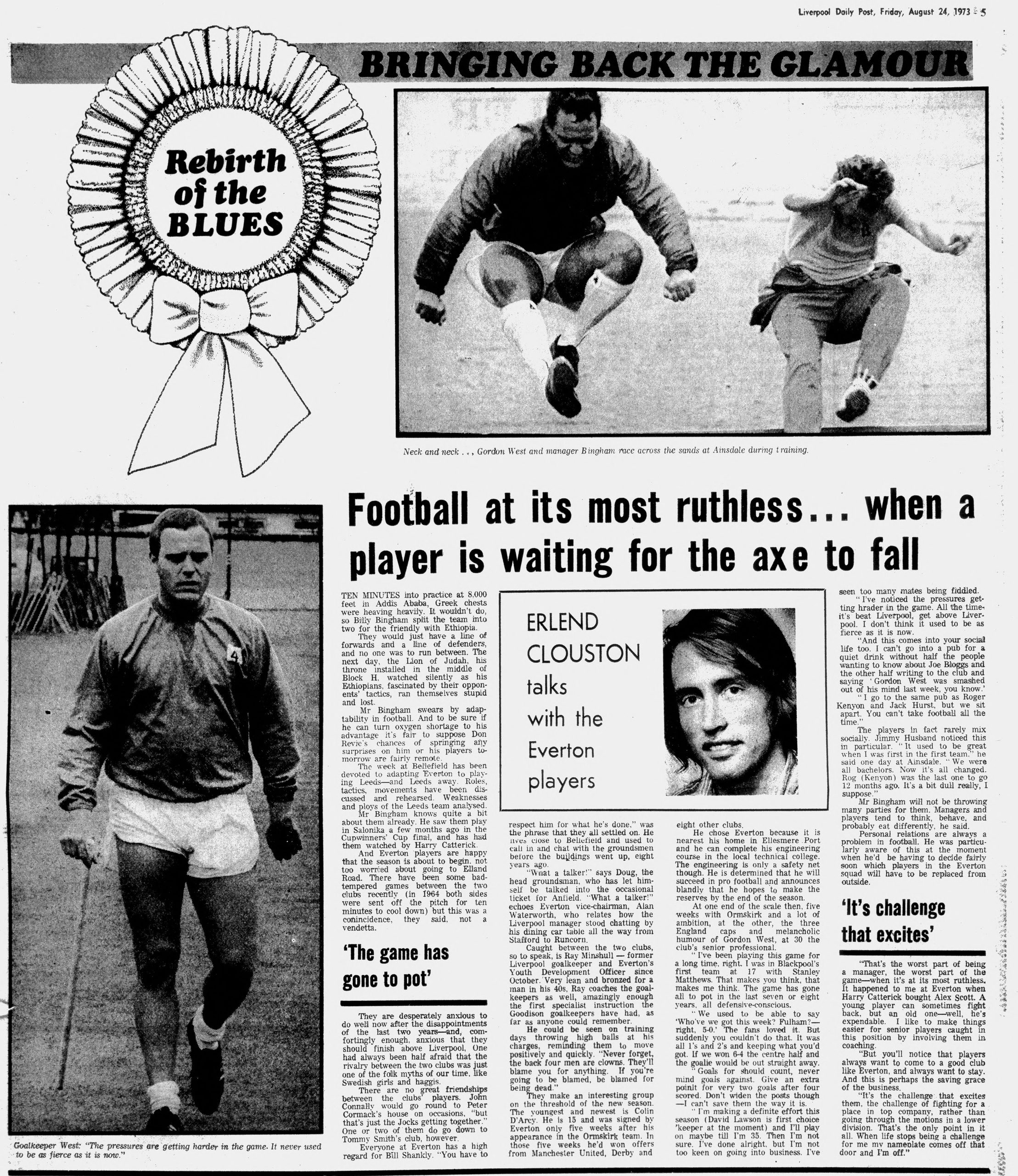
In Clouston’s lengthy article for the Liverpool Daily Post of 24 August 1973, West outlined his hopes for both the new season and beyond: ‘I’m making a definite effort this season and I’ll play on maybe till I’m thirty-five. Then I’m not sure. I’ve done alright but I’m not keen on going into business. I’ve seen too many mates being fiddled. I’ve noticed the pressures getting harder in the game. All the time it’s “beat Liverpool, get above Liverpool”. I don’t think it used to be as fierce as it is now.’
The piece (entitled ‘Football at its most ruthless…when a player is waiting for the axe to fall’) is an interesting one in the sense that it signposted readers to the crossroads that lay ahead for West: in the text he undoubtedly displayed a desire to return to the first-team fold, but there was also a clear dwindling of affection for the game present in his words.
The same article suggested that goalkeeper training took place for the first time at Everton that summer, with Clouston reporting that Youth Development Officer Ray Minshull – the former Liverpool, Southport and Bradford Park Avenue goalkeeper – put the likes of West and Lawson through their paces back then: ‘Very lean and bronze for a man in his 40s, Ray coaches the goalkeepers as well [as looking after the youth players], amazingly the first specialist instruction the goalkeepers have had as far as anyone could remember. He could be seen throwing high balls at his charges,
reminding them to move positively and quickly. “Never forget, the back four are clowns. They will blame you for anything. If you’re going to be blamed, be blamed for being dead.”’
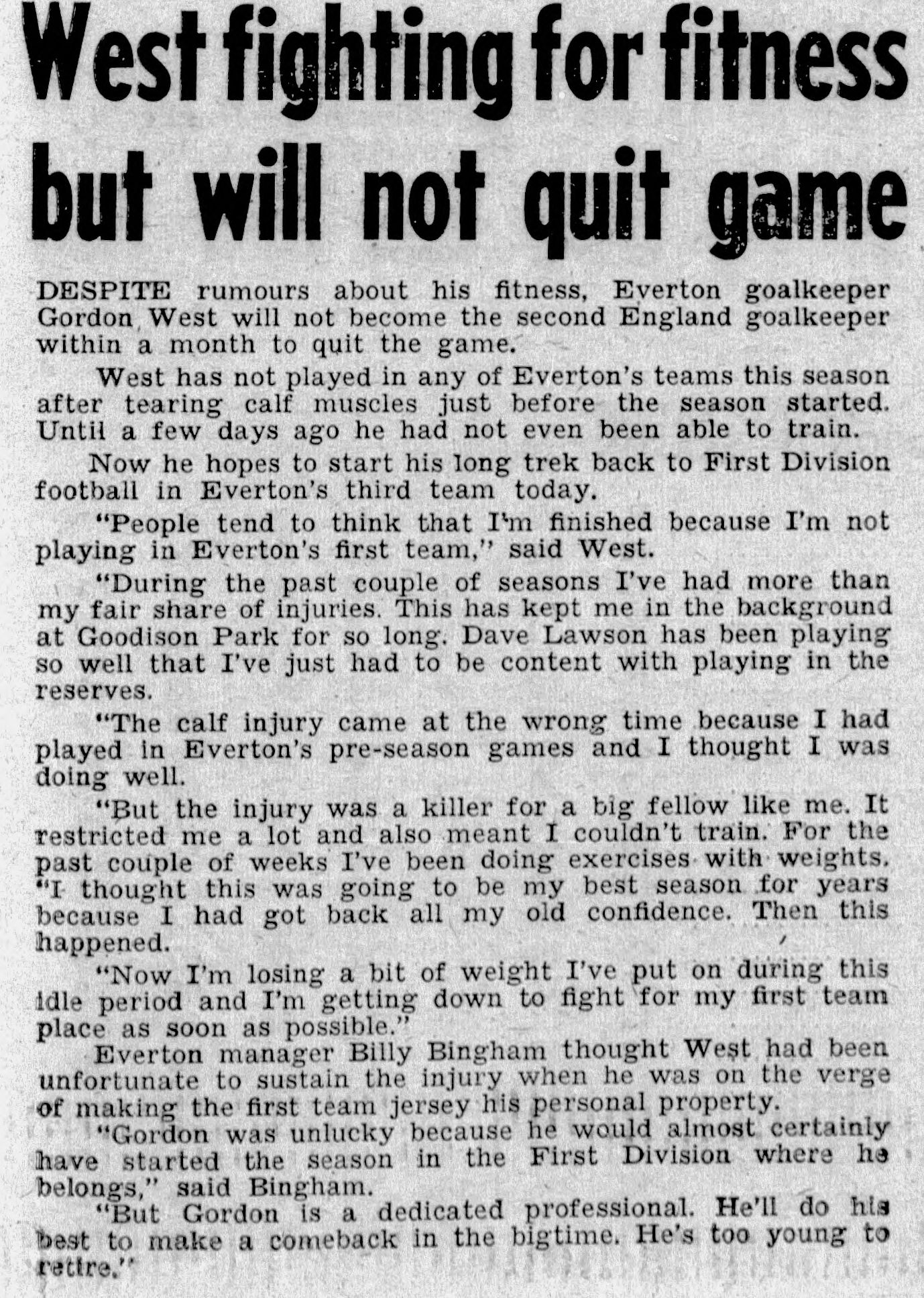
Unfortunately for West, a strained calf muscle killed off any hopes he had of returning to the first-team picture that August – with Bingham intimating that had the goalkeeper not sustained the injury then he would have started the new season as his number one (or possibly been moved on to another top-flight club). Bingham told the Derby Telegraph (15 September 1973);
‘Gordon was unlucky as he would have almost certainly started the season in the First Division – where he belongs. But Gordon is a dedicated professional. He’ll do his best to make a comeback in the big time. He is too young to retire.’ An interesting final line – and one that suggests that the idea of hanging up his boots and gloves had, at the very least, crossed West’s mind that summer.
In December 1973, the goalkeeper was linked with a permanent move to Cardiff City – having previously been linked with a loan move to Bingham’s former club Southport. Despite the injuries and rumours regarding moves away from the club and retirement from the game, West remained adamant that he still had a future on Merseyside.
A fortnight before Christmas, he told Horace Yates of the Liverpool Daily Post (published 13 December 1973), ‘I have still not lost hope that history might repeat itself and if Everton need me I would leap at the opportunity. I am not old as goalkeepers go and believe I could play on for another five years. All I want is the chance to prove it. I have loved every minute of my career with Everton. I don’t believe there is a club to compare with them. They still treat me well, but it’s not like earning your money where it really counts – in the team. I am the eternal optimist. I still believe that one day I will jump out of my skin with the excitement of seeing my name on the team sheet again.’
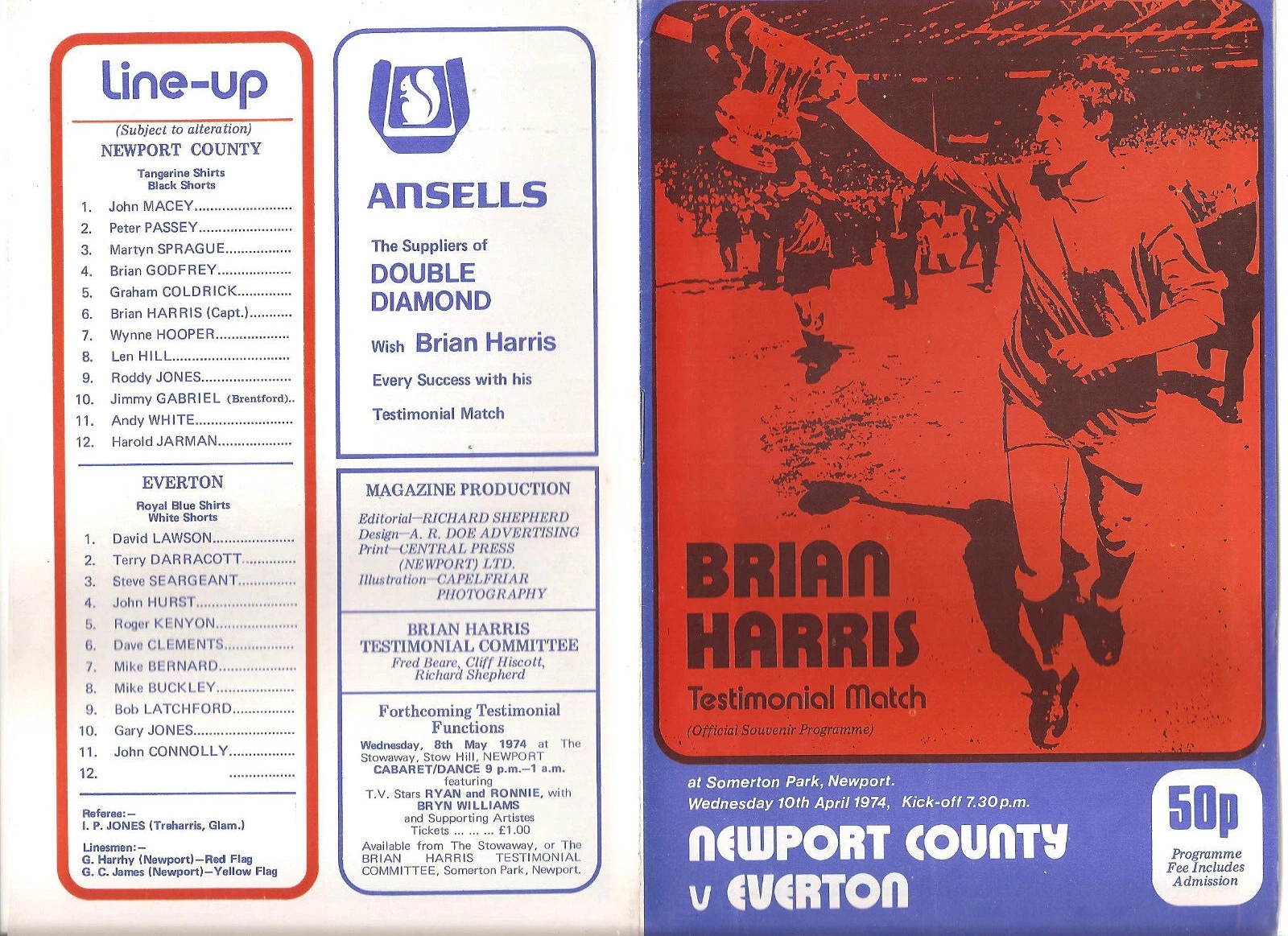
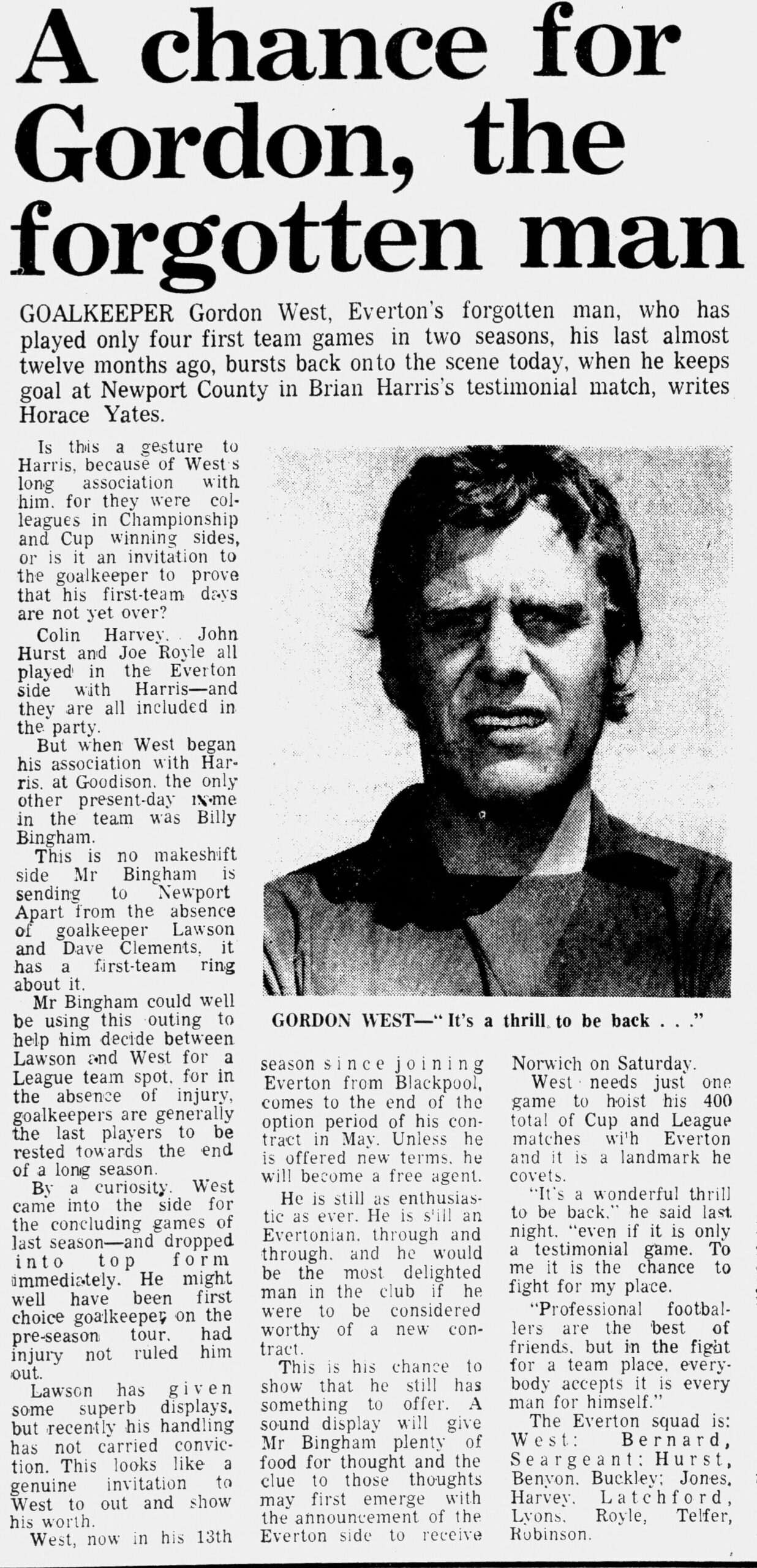
Sadly for West, the only time his name appeared on an Everton team sheet of note that season was for Brian Harris’s testimonial game – a 3-3 draw with Newport County in April 1974. Although, despite his name being listed in the press preview reports, Newport County recorded David Lawson as the starting goalkeeper.
1974/75 – You have got to be kidding me!
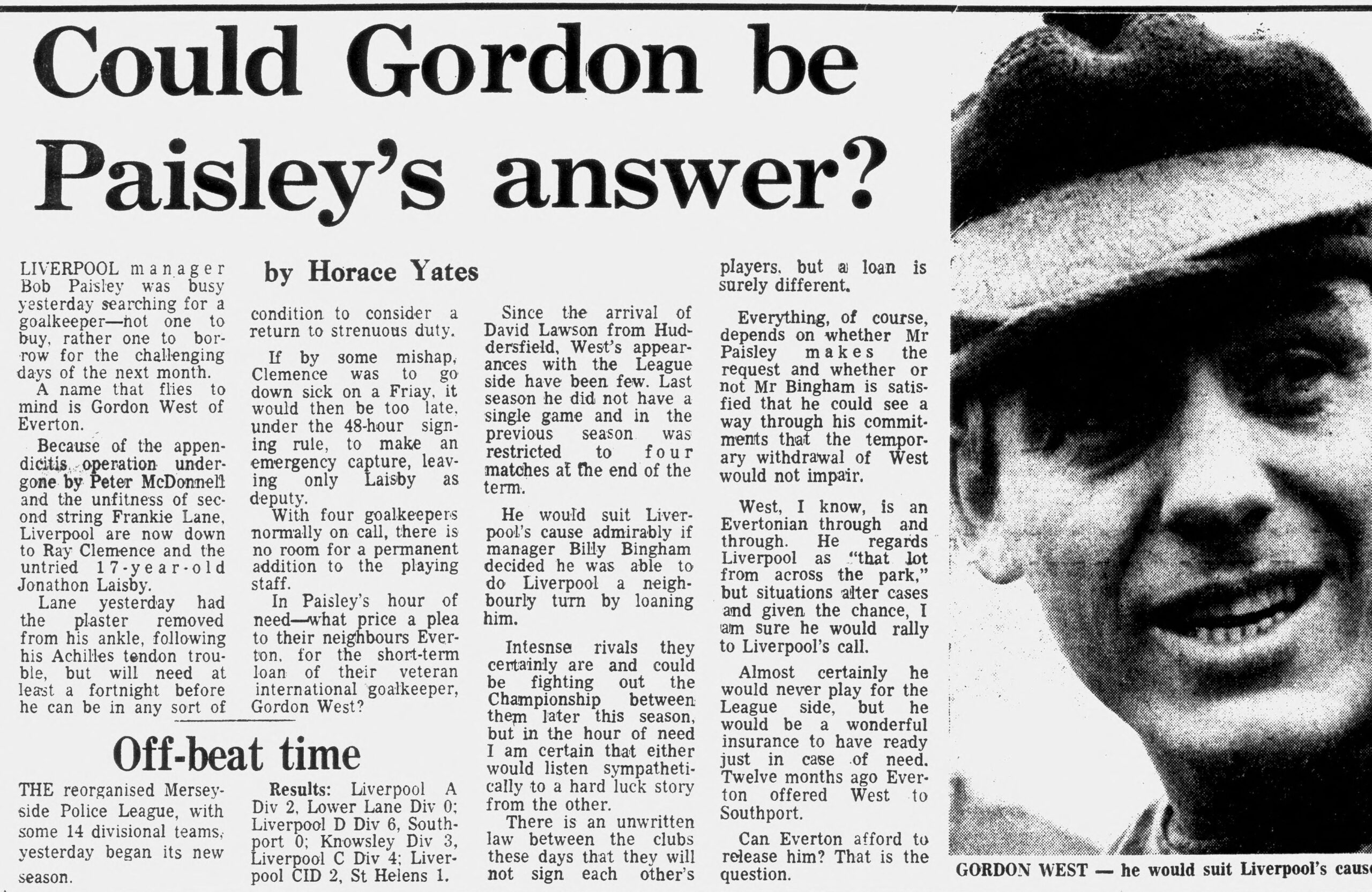
If a return to the Everton first-team fold would have resulted in Gordon West jumping out of his own skin, then him moving to Liverpool would probably have caused many Evertonians to have had a heart attack! Nevertheless, in September 1974 – with Liverpool facing a keeper crisis – rumours abound that Bob Paisley was about to make
a move for Westy. At that time, Ray Clemence was the Reds’ only fit senior keeper, as second-string stopper Peter McDonnell was about to undergo an appendicitis operation and Frankie Lane was ruled out through injury. Thankfully for Blues, Paisley never made the call. The Scot told the Liverpool Daily Post (dated 7 September 1974), ‘I feel it would be unfair to ask Everton. I have no doubt that Billy Bingham would have helped me out but I felt I shouldn’t put him
in an awkward position.’
If the call had been made, and Bingham had given his third-choice goalkeeper the green light to hold talks with Paisley, then how awkward or difficult a decision would it actually have been for West, whose relationship with the Anfield Kop (from whom he had often received a new handbag emblazoned with the name ‘Honey’ or ‘Mae’, and in
front of whom he had often celebrated Everton winners) was the stuff of legend? After all, it was becoming increasingly clear that he had no future at Everton.
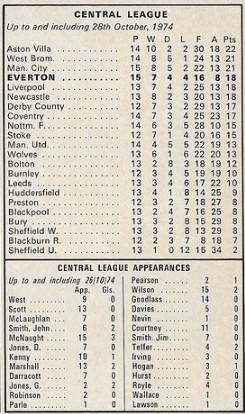
Around the same time as Liverpool’s keeper crisis, David Lawson’s problems in goal for Everton started to develop – an injury in the League Cup second-round defeat to Aston Villa resulted in Dai Davies coming into the team for the rest of that campaign, with West never really in serious contention for a recall. Throughout his Everton career, Davies failed to convince the supporters or the management staff that he was up to the task of keeping goal in the pressure-cauldron atmosphere of Goodison Park. Moreover, Lawson never recaptured his promising early form – making high-profile errors in later seasons (including two against Villa in the 1977 League Cup Final), which resulted in Everton moving both men on and signing George Wood from Blackpool in August 1977.
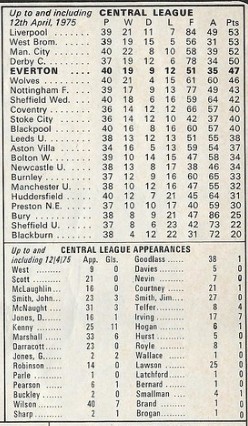
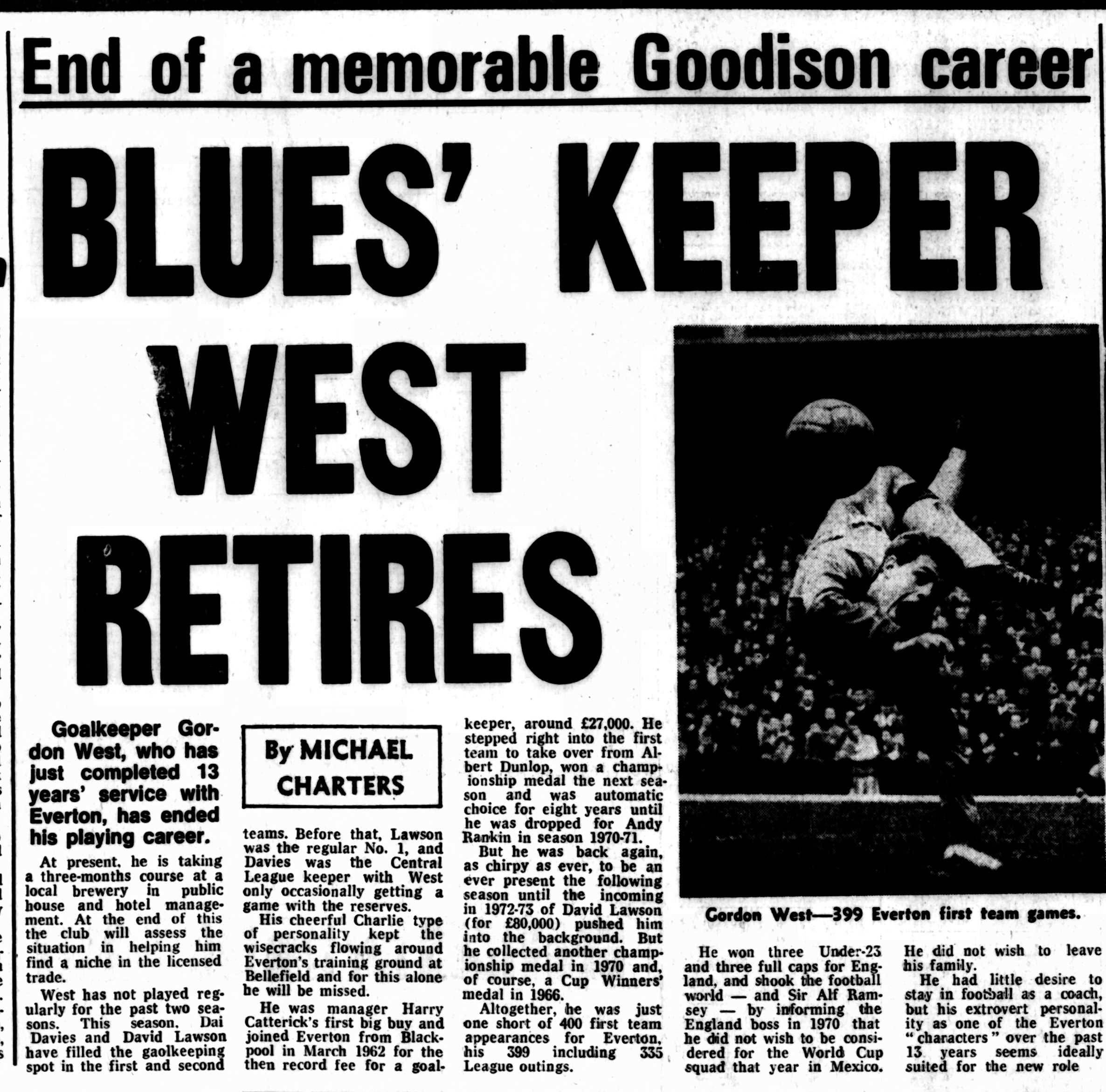
On 28 December 1974, the Irish Independent reported that Everton had given Gordon West a free transfer, though it wasn’t until the end of the 1974/75 campaign that the Liverpool Echo (of 26 April 1975) informed its readers that the goalkeeper had retired from the sport. In the same piece for the local newspaper, Michael Charters also reported that West was undertaking a three-month course in public house and hotel management. Interestingly, in the months prior to that article, West had been linked with moves to the US, with the journalists writing those pieces still referring to him as a current Everton player in their discourse. As a result, it is unclear whether Westy actually left the club in 1974 or 1975. Either way, it was a little later than the 1973 date that has since been widely reported.
Moving on…but not going far
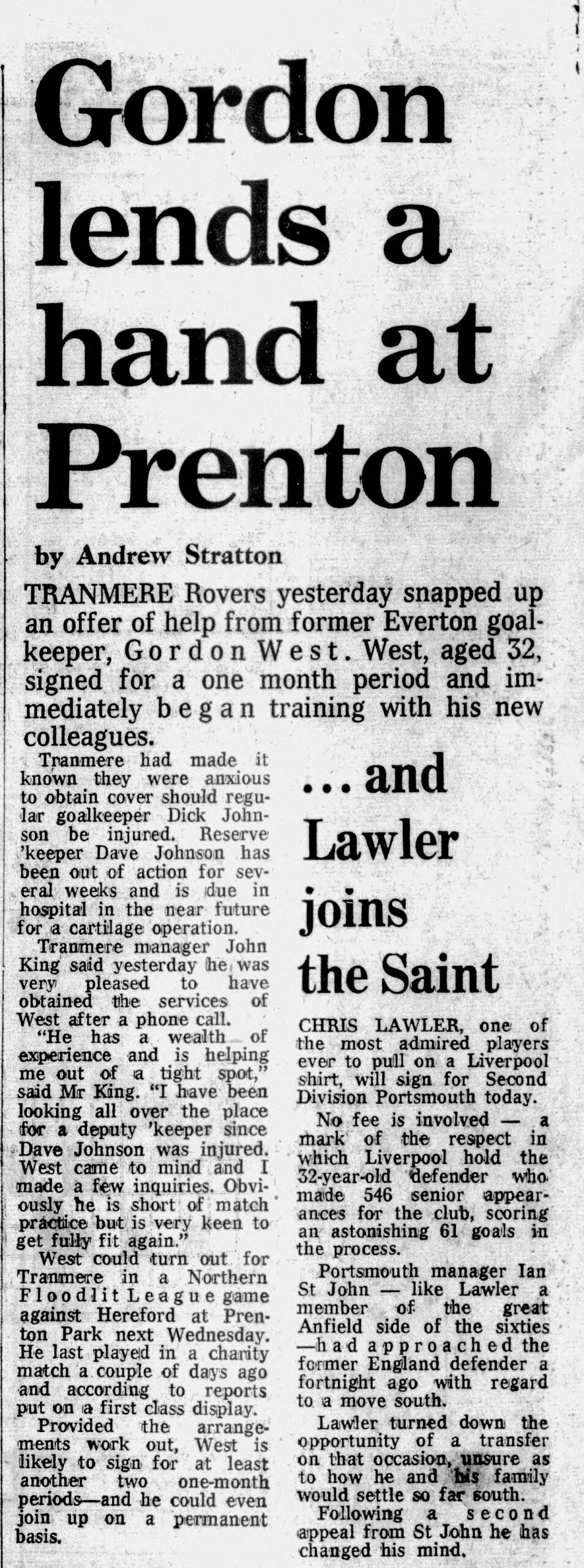
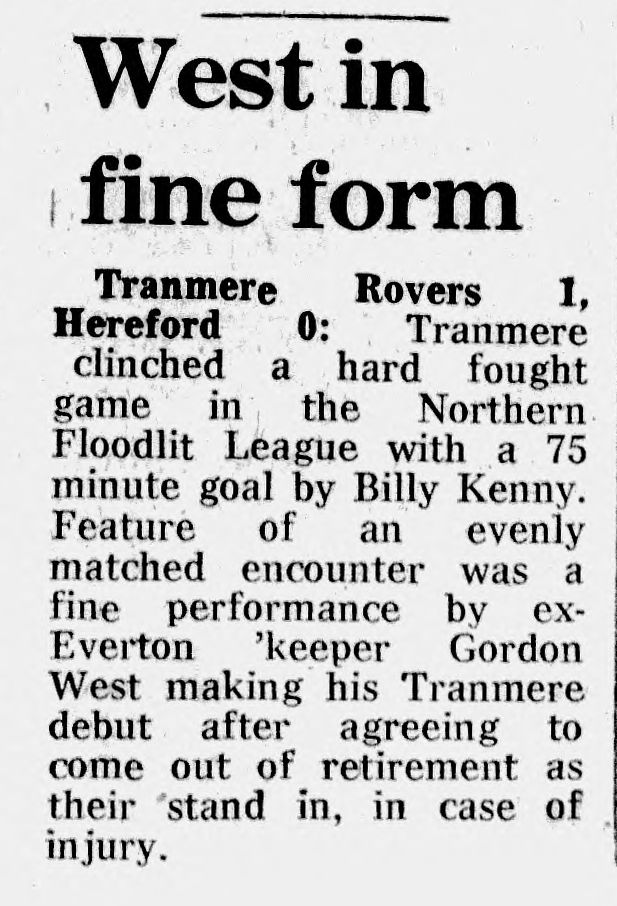
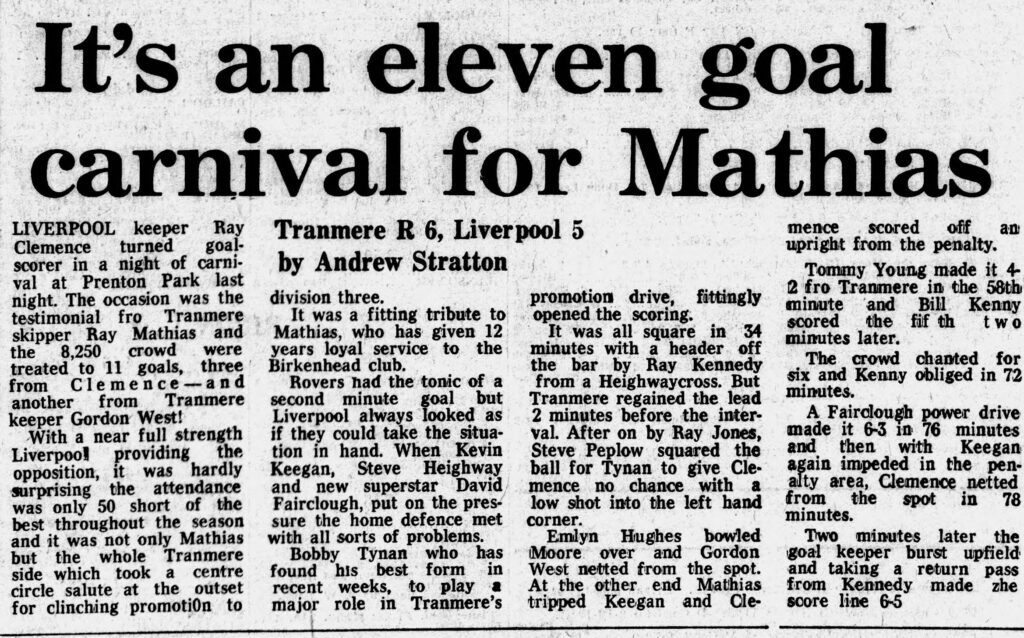
After a short period away from the game (months, not years!), West signed a one-month contract with Tranmere Rovers in October 1975, initially coming in as cover for Dick Johnson, following injury to reserve keeper Dave Johnson. After a fine showing on his debut for the second-string – a 1-0 victory over Hereford, in which Bill Kenny bagged the winner – and having shed a vast amount of the 19.5 stone he was carrying when he first arrived at Prenton Park, a permanent deal was agreed in the new year. At the end of his first season with Tranmere, Westy scored from the spot in a 5-6 defeat to old rivals Liverpool, in a bonkers testimonial game for Ray Mathias, which saw opposing
number Ray Clemence bag a hat-trick for the Reds.
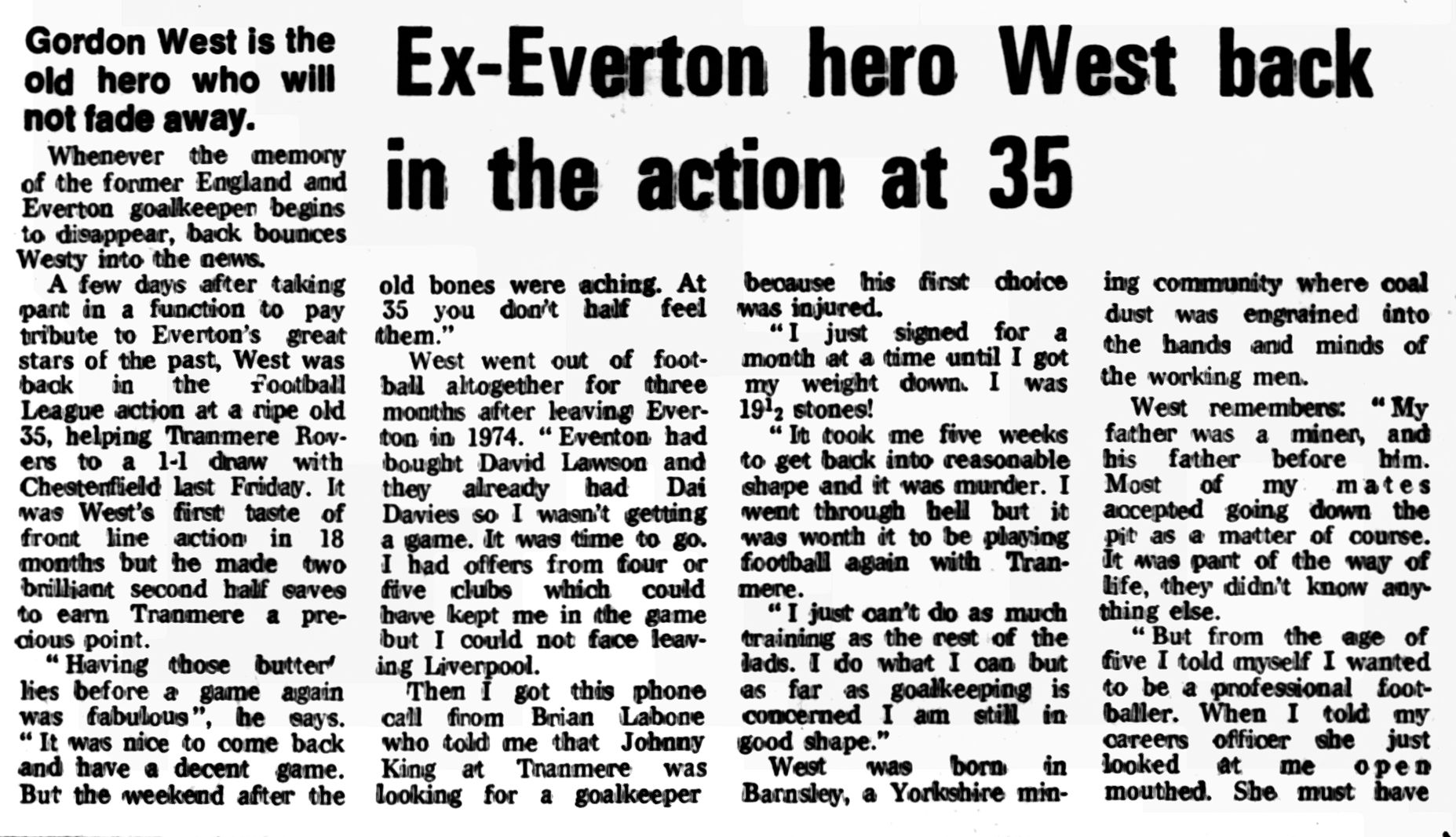
Three years after signing for Tranmere, in a piece published on 4 November 1978, West told the Liverpool Echo, ‘I wasn’t getting a game at Everton so it was time to go. I had offers from four or five clubs which could have kept me in the game but I couldn’t face leaving Liverpool. Then I got this phone call from Brian Labone who told me that Johnny King at Tranmere Rovers was after a goalkeeper. It took me weeks to get back into reasonable shape and it was murder. I went through hell but it was worth it to be playing football again with Tranmere. I just can’t do as much training as the other lads. I do what I can but as far as goalkeeping is
concerned I am still in good shape.’
During his time at Prenton Park, the former Everton man combined stand-in
duties with coaching the younger players at the club. Manager King was full of praise for the way the experienced keeper treated the club’s home-grown players, telling the Liverpool Daily Post on 17 December 1977, ‘He helps the boys along tremendously and it’s marvellous to have an England international like him in your goal.’
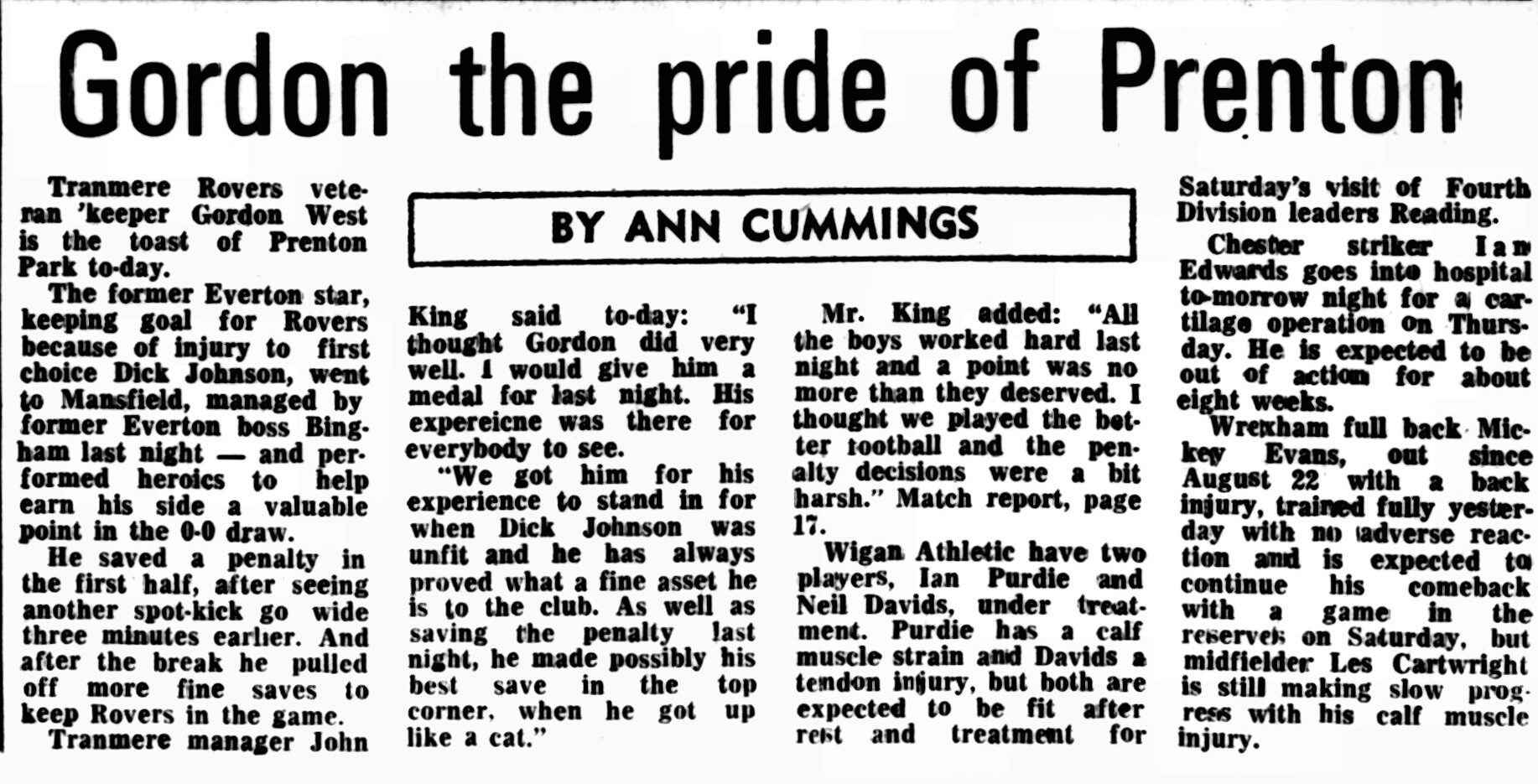
Perhaps West’s best performance for Rovers came in November 1978, in a basement battle with Mansfield Town, by then managed, somewhat ironically, by Billy Bingham – the manager who had granted him a free transfer less than four years earlier. In a 0-0 draw, West rolled back the years to pull off an acrobatic save high to his left, with King
likening the veteran’s actions to those of an agile cat. Earlier in the game, West had also denied Gary Saxby from the spot, having been guilty of hauling down Dave Syrett who’d had the audacity to try to round the big goalkeeper that evening!
Goodison’s Gentle Giant
In 1980, Evertonians were reminded of how much their former number one loved their football club – through his attendance at two very different events. In the March, along with Mick Lyons, Bob Latchford and best friend Brian Labone, West was a pall bearer at Dixie Dean’s funeral, following Dean’s passing at the Goodison derby earlier that month. Over 700 people squeezed into St James’ Church, Birkenhead, on the day of the funeral with a further 1,000 people lining the streets outside to pay tribute to the legendary marksman. Six months later, on a more joyous evening, West stole the limelight at Mick Lyons’ testimonial game – coming on in goal for the ex-Blues team in place of Dai Davies, but only after hopping off a stretcher, on which he had been covered by a blanket to keep him hidden from the adoring Goodison faithful. Soon after, he pulled off a tremendous reflex save from John Bailey that would get the biggest cheer of the night.

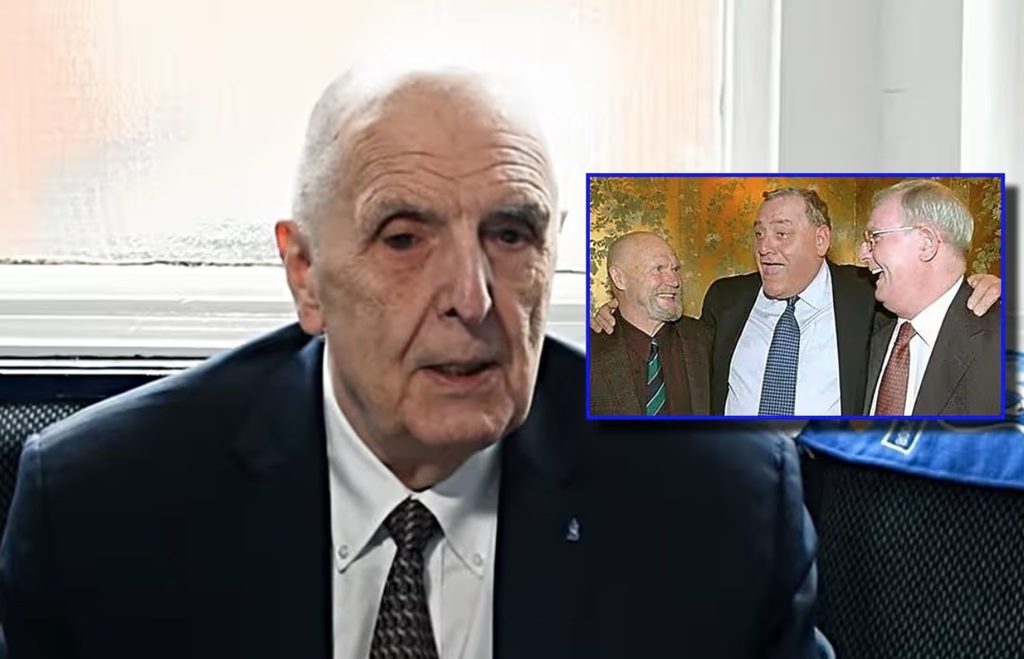
After hanging up his boots and gloves, and working in security at RAF Woodvale in Southport, Big Westy sadly fell on hard times. Having been helped back to his feet by the Everton Former Players’ Foundation, he declared: ‘No fans look after their heroes like Evertonians do.’ The club and its fanatical supporters had restored his pride and helped to give him back his dignity.
Speaking after West’s passing in 2012, Doctor David France summed up his friend perfectly. France told the Liverpool Echo (in a tribute piece published online on 3 May 2013): ‘As the most expensive keeper in the world, he was an agile giant who made the kind of full-length saves that you rarely see today. As my friend, he was one of the nicest and funniest people I’ve ever met. He also possessed rarer charm and even rarer humility. I suppose my favourite memories of Gordon are as a great Evertonian rather than a great Everton keeper.’
He was both.
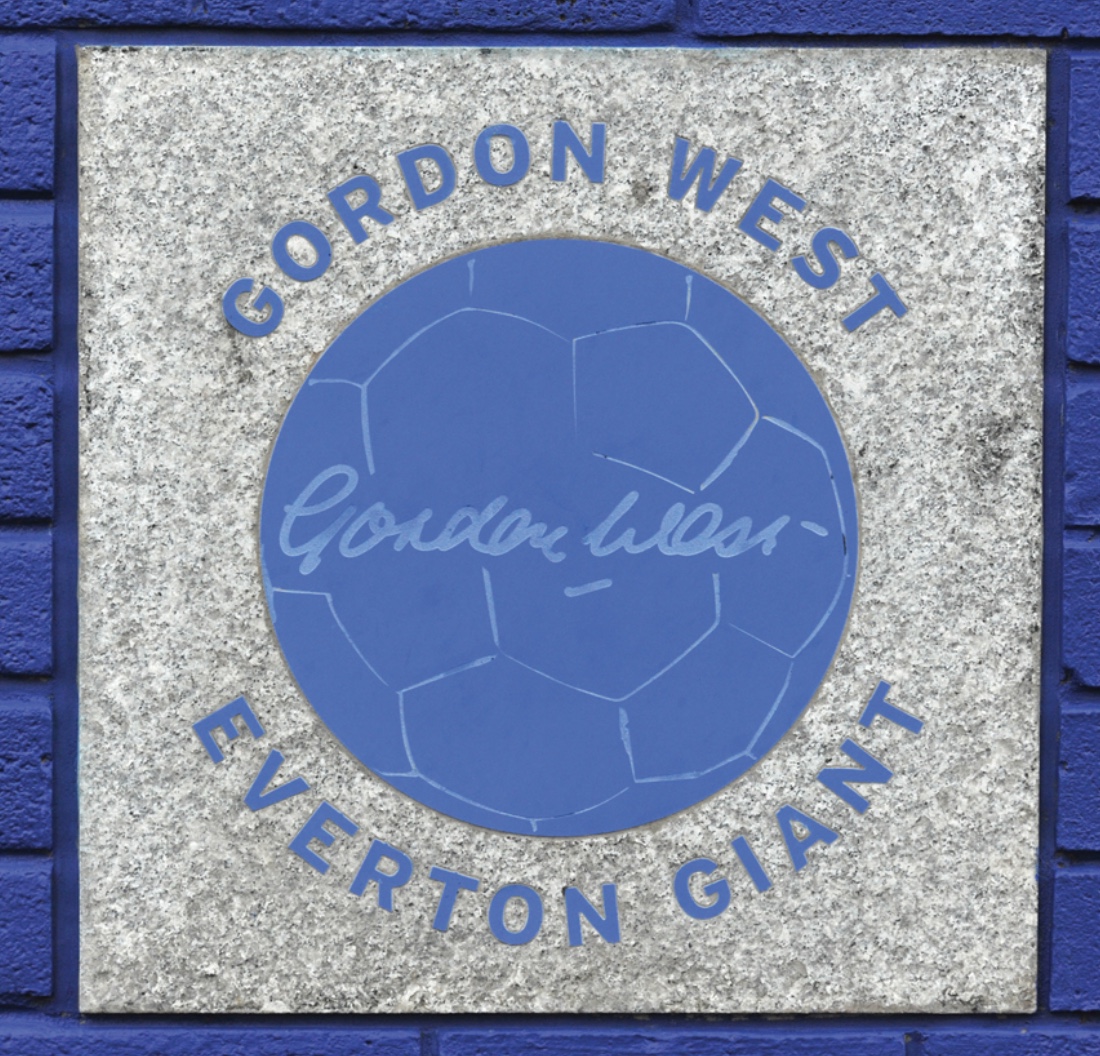
Gordon West adored Everton Football Club. The quotations in this article alone show just how much the club meant to him – even when he was out of the first-team picture. Loved by supporters and teammates alike, this long-lived appreciation was still clearly evident at the 3 September 2026 meeting of the Everton FC Heritage Society at the Denbigh Castle (their series of Talks and Social Nights, where I presented the Goalkeepers’ Evening). Now more than half a century after his last appearance for the club, this Everton Giant had the warmest of hearts and the longest of throws. He also had a slightly longer stint on our books (and a shorter break from the game) than we are often led to believe.
Nice one, Westy.
And thank God he never signed for Liverpool!
………………………………………..
Acknowledgements
A massive thank you to both Everton FC Heritage Society vice-chairman Mike
Royden and Rob Sawyer for proofreading, web layout and the selection of images.
References and further reading
Owens, P., The Glovesmen of Goodison: A History of Everton’s Goalkeepers, Pitch
Publishing, (2025)
Derby Daily Telegraph
Irish Independent
Liverpool Daily Post
Liverpool Echo