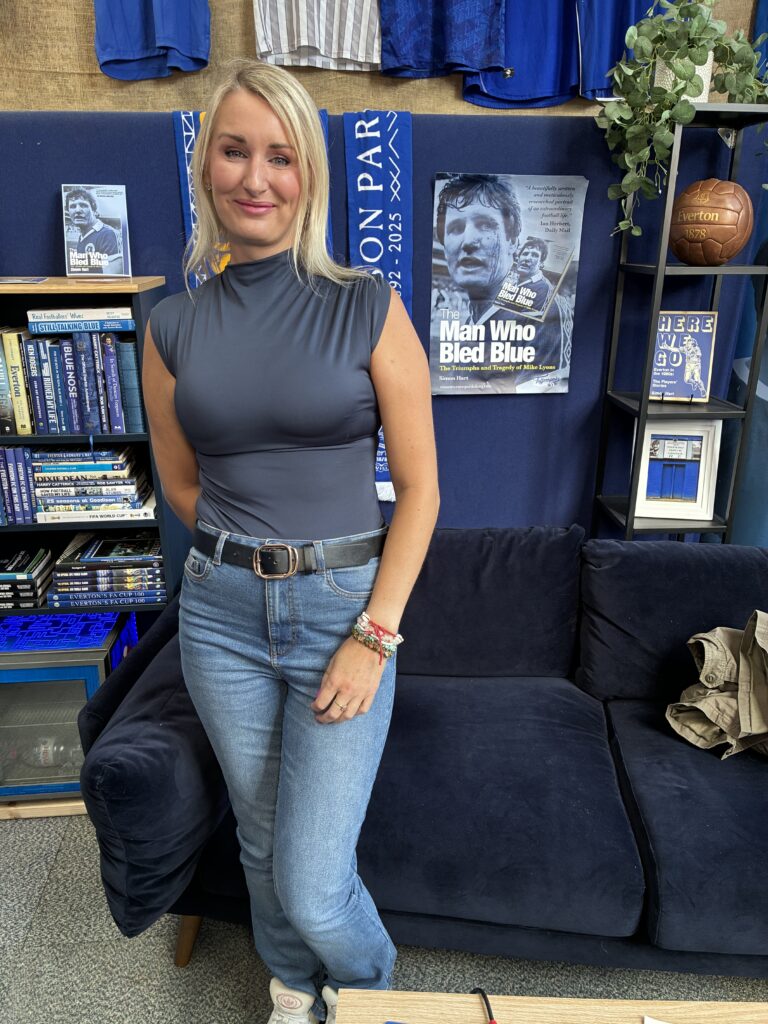
Becky Tallentire
[Trish Lyons: Born Patricia Maloney, 2 June 1957, Dublin, Republic of Ireland]
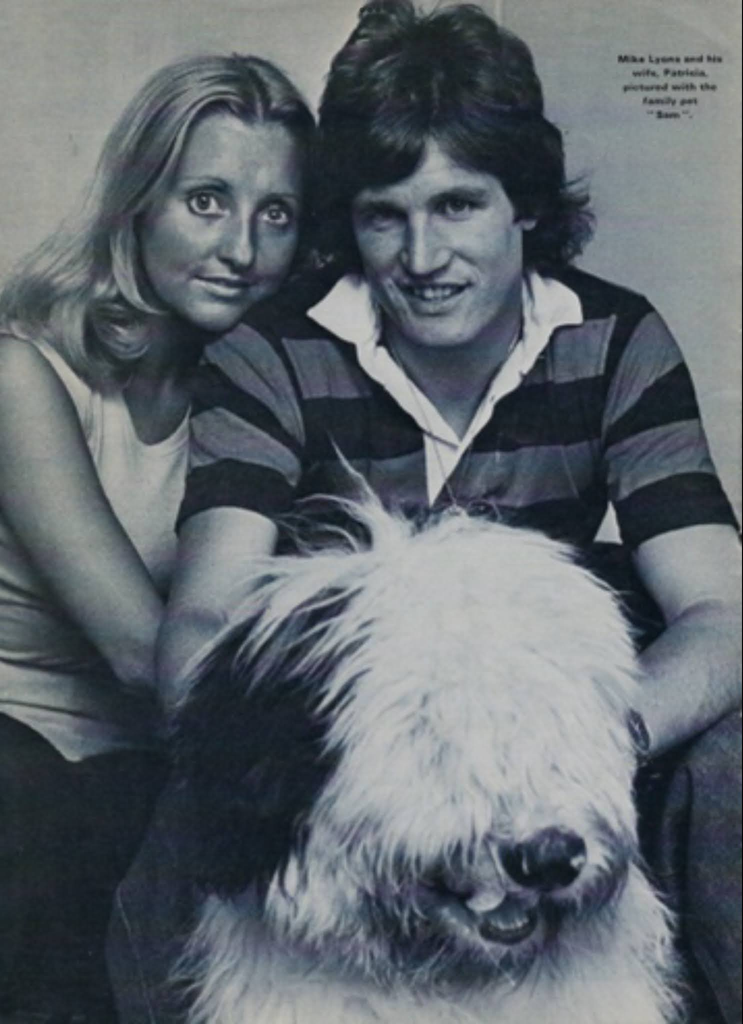
Dad was Irish and came over to England on business. He met and fell in love with mum and eventually took her back to Dublin with him. He was a tailor by trade and owned a shop called Louis Copeland on Capel Street in Dublin. Louis was his business partner and the master tailor; he cut the cloth and was the real craftsman in the partnership. It was the most acclaimed tailors in Ireland and probably still is, because it’s still running to this day. Mum was young and beautiful and came from a privileged, horsey ‘green-welly’ background and worked as a hairdresser.
I was born in Dublin and was about four when my parents separated. There was never any possibility of divorce because they were staunch Catholics, so mum returned to England and brought me with her. Dad was still involved in his business but followed us over to try to resolve the situation, and from their reconciliation my two brothers, Michael and Brendan, were born. We lived in Crosby, north Liverpool, and my mum had a hairdressing shop called Pauline’s in the city centre. It was a gift from her parents and she ran it and worked there full time. Life was good and we had a lovely, happy childhood.
Notre Dame was a grammar school in Maryland Street and I loved my time there. I really enjoyed learning and found it came quite easily to me. I was blessed with an u usual combination of a mathematical mind and an artistic hand. Somebody told me it was quite common with left-handed people. Numbers intrigued me but art was the love of my life.
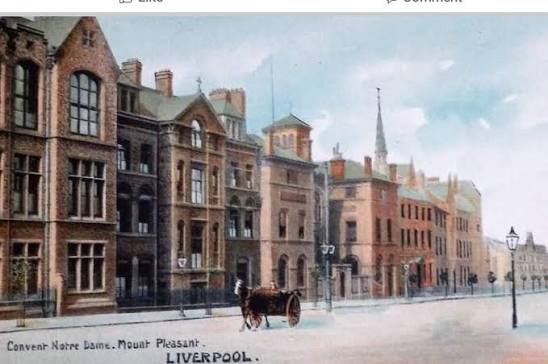
I left school at 18 with six O’ levels, three A’ levels and a master plan: I was going to become an actress. I’d started off acting in the church hall, went to drama school from the age of five, then on to the Everyman. I worked hard and went on to become a member of the National Youth Theatre. We were semi-professional; I danced, performed on stage and absolutely loved it. Laurence Olivier was there when I passed my audition for the Guild Hall School of Music and Drama in London. I knew I would have to relocate to continue my education but my Aunt Caroline was living in Swiss Cottage and invited me to stay with her. I couldn’t wait for my plan to swing into action so in the meantime, I moved down in readiness and while I was waiting for the academic year to start, I decided to find a temporary job.
The Playboy Club was at 45 Park Lane. It was a fabulous, five-story building overlooking Hyde Park and was terribly sophisticated. One Saturday morning they were holding auditions for waitresses and croupiers, so I went along. I don’t think it would be allowed now, but in those days and you would have your interview and then you had to parade your figure in a swimsuit to see if you would look good in the Bunny outfit. It wasn’t just about your bust size, though; I like to think it was a combination of personality, numeracy, appearance and dexterity. Two of us got jobs, myself and a Mauritian girl called Mari and because I was good with numbers, I trained as a croupier on the American roulette tables. Casinos were glamorous places back then and it really was another world, but I didn’t get too carried away. I’d just turned 18 and was always mindful that I was going to be enrolled into the Guild Hall in a couple of months and was just trying to save money for the student years in front of me.
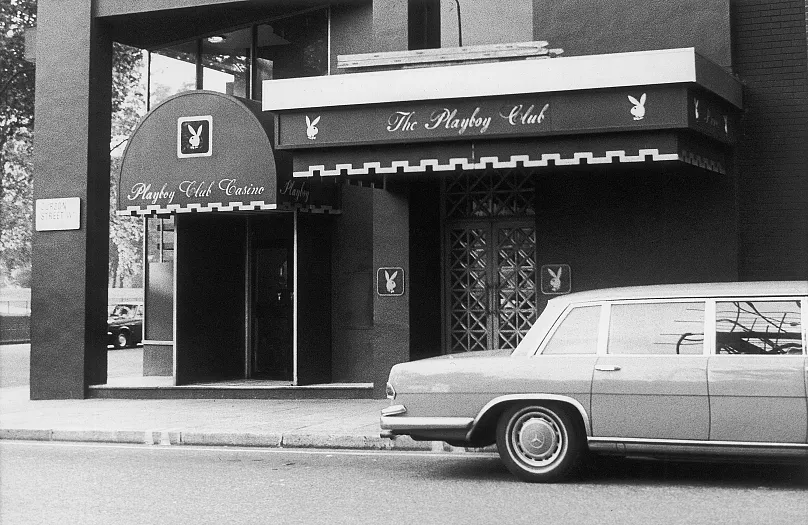
The uniform was pretty standard complete with cuffs, collar, bow tie and ears, but came in different colours. Mine was maroon velvet and my name tag said Bunny Patricia. Everton had been playing in London and some of the players came into the club and were having a drink in the Playmates bar. I was chatting to one of the other girls as we headed off for a break, when Michael heard my accent. He came over and asked where in Liverpool I was from. I was quite perplexed because I didn’t even know I had a Liverpool accent, but we exchanged a few pleasantries and I went on my way, because it was strictly forbidden for us to fraternise with the punters.
He hung around the gaming floor and when he got the chance, gave me his phone number and asked me to ring him. I had no idea what he did for a living but I stashed the note in my purse. The next time I went up to Liverpool to visit my family, I remembered how lovely he had been and how handsome he was, so I called the number but he wasn’t in. The next day he was there, and was quite secretive about where he’d been. He said he wanted to see me again, but it was difficult for him to get away, and could he take me out the next time I came home. I said that would be lovely and headed back down to London with a spring in my step.
I couldn’t wait to see him again, and had never known the time to pass so slowly. It was during the summer and I caught the train up to Liverpool Lime Street. We met and he took me to a trendy little pub in Knowsley Village. I’d never drunk alcohol before and when he asked what I wanted, I asked for a packet of crisps and an orange juice.
He told me he had to go away for a few weeks, and was quite evasive when I asked him questions about how he earned his living. I began to think there was something suspicious about him. He had a nice car, travelled abroad a lot and always had money in his pocket, and then it dawned on me that he must be a drug smuggler, it was like a hammer blow but it all seemed to fit. I was too scared to tell my mum about him, in case he was a criminal, and I thought I’d lose my job in the casino, so with a heavy heart, I told him I didn’t want to see him anymore because I thought he was a bit odd. He assured me there was no shady business going on, but he had to go away for the summer and there was no way he could get out of it. Then he came clean and told me he was a footballer and it was the pre-season tour. I didn’t know anything about football but I was so relieved, I almost wept because by that time I was quite smitten.
I was still based in London, but the way my rota worked, I was off at the weekends, so I caught the train up to Liverpool on my days off. We spent more and more time together and fell totally in love. He made me feel like I was in heaven, I adored him and within a very short space of time he asked me to come back to Liverpool so I could be nearer to him. There was another Playboy Club in Manchester so I requested a transfer and about a month later, was living back at home with my parents in Crosby, and driving backwards and forwards to work, until the club closed down a short time later. That was when I got a job as a beauty consultant for Revlon in Henderson’s department store.
My first experience of football had been when I was a little girl, but it was at Anfield because dad was an avid Liverpudlian. It was boring, and at half-time, I thought it was the end and we could go home. I couldn’t believe I had to endure the same again. I never went to another football match, until Michael invited me to watch him play, and I took my dad along.
I was a ‘happening chick’ before I met Michael, but after a few months he’d asked me to marry him and I didn’t hesitate to accept. It all happened so quickly, and we were married just over a year after we’d met. It was a true whirlwind romance.
Our wedding was on Sunday 18 January 1976, at the high altar in Liverpool’s Catholic cathedral. He’d played against Norwich City the day before, and they drew 1–1. I remember the commentator announced over the Tannoy beforehand not to put Mick Lyons in the wall if Norwich got a free-kick because he was getting married in the morning.
Looking back, I suppose I was incredibly naïve, or just too consumed with what I was doing, but I had no idea so many people would be there. It was absolutely chaotic, chock-full of press, and about a thousand Evertonians standing outside in the freezing cold who’d come to wish him well. It was a great big wedding and there were police everywhere, trying to hold back the crowds. It wasn’t a great day, in fact it was pretty awful, and we didn’t even get wonderful photographs, because the weather was so bad, and there weren’t enough police to keep the people away. All the photos had to be taken indoors at Goodison Park, where we had our reception.
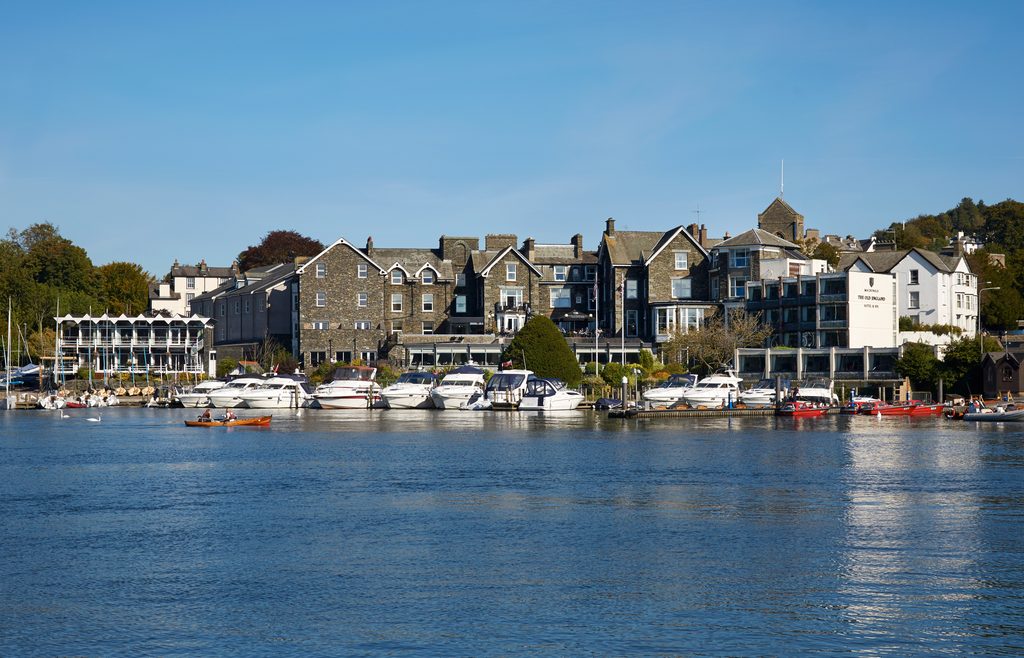
We couldn’t go on honeymoon because it was mid-season, but Billy Bingham gave Michael two days off from training and we drove up to Lake Windermere and stayed at a hotel called The Old England. It was in beautiful surroundings but very old fashioned and terribly out of date, and the wind was so horrific we couldn’t go out.
He was the club captain then and earning £225 a week, it seemed like a lot of money. He bought a lovely dormer bungalow in Maghull and that was where we lived for about 18 months, then we sold it and bought a house in Sefton Village where we settled and I remain with the children to this day.
The directors of the club were good to me and gave me a job in the Littlewoods offices in Old Hall St. I worked full time and really enjoyed it and stayed until I fell pregnant in 1978.
I went to all the games, home and away. Not an awful lot of the other wives wanted to do that travelling, so I went on my own or with Lynn Hughes, my buddy who’d also been my bridesmaid. Michael would travel with the team on the coach and we would pick him up from Goodison, where they got dropped off. I began to understand the game after a while, and I could have a legitimate conversation and analysis with him about tactics and the way matches had panned out.
I remember going midweek to Maine Road one time to watch Everton play Man City; it was the era of the patchwork jeans and cheesecloth shirts. Michael was renowned for being the last one out of the dressing room after every game and I always seemed to be waiting forever in the players’ lounge. A guy with an entourage came over and asked if I wanted a drink. I said no thanks, but he started chatting to me anyway. I told him I was waiting for my husband and with that, Michael appeared. He apologised to Michael and said he’d been chatting me up trying to get me to go out for a drink with him. They say George Best always had a soft spot for blondes.
My best pal in those days was Lynn Stanley, Gary’s wife. She lived in Childwall, but I had my car and could go and visit her, I seem to have lost contact with her now. Ann and Billy Wright were great company, and so were Dave and Ann Jones, who lived in Formby. We had a wonderful life and I loved it.
Saturday was our big night out, usually as part of a crowd to either celebrate or commiserate the result of the day, and we used to have lots of fun. We wouldn’t necessarily go to a club, but we’d always go out for dinner as a group and usually stay in the restaurant for the whole evening. We’d go into Southport or Ormskirk, or somewhere in the countryside. There would be a post mortem on the game and they’d figure out what went wrong and what went right. Fans would often come up to chat and express their feelings about the match, but that was part of the job and it’s what you expected to happen. I can honestly say that it never bothered me at all.
If we’d won, those Saturday evenings would be absolutely fantastic. If we lost, Michael was awful to live with, and he morphed into a terrible, terrible man. He couldn’t help it, he just loved the club so much. Everton is him and he is Everton.
Before a home game he had a strict regime. He’d have something light for dinner on Friday night and go to bed at about 9 o’clock. In the morning he’d go for a very long walk followed by stretching, collecting his thoughts and meditating, then at about 11 o’clock he’d get himself ready to go into work. He didn’t speak a word, he was totally focused on the game and psyching himself up. There was no sex before the match either; he would be in bed at 9 o’clock and go straight to sleep. He was extremely disciplined with his training and his lifestyle.
There was a few things I did in my role as the captain’s wife. I would often go with him to Alder Hey hospital or on charity evenings and I did fund raising with him, too. I was a hostess on a coach down to Wembley for the 1977 League Cup final. It was good fun to listen to all the banter. The club was wonderful with us and made me feel very welcome and included.
I didn’t really mind people ringing for tickets or asking for autographs, it was part of his job. It was when it got nasty and personal that I began to dislike it. Some terrible things happened when he became a target for the boo boys, but because it was unknown to me I just took it in my stride. I remember once I had a tree snapped in the garden and another time people were chanting outside the house, ‘Mick Lyons is crap.’ .I wouldn’t mind but I was in there on my own anyway and he was out having a good time.
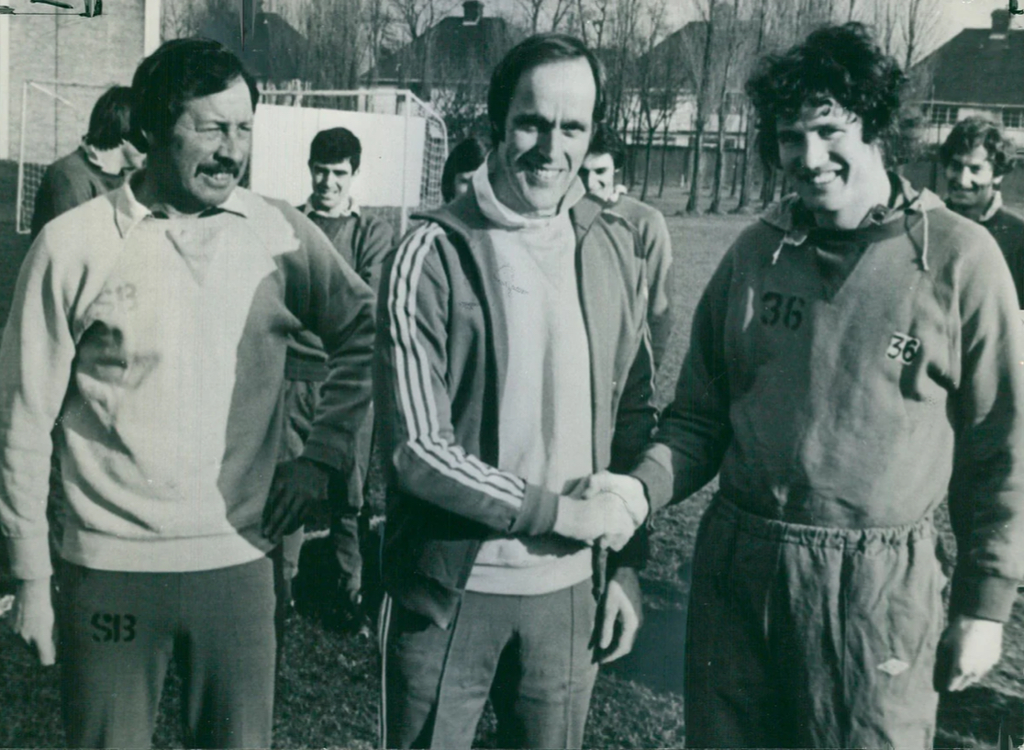
When Billy Bingham left in January 1977, Gordon Lee took over, and in him, Michael found a manager he really liked and respected deeply. He said nobody knew more about football than Gordon Lee and they got on like a house on fire. I think they shared the same passion and work ethic.
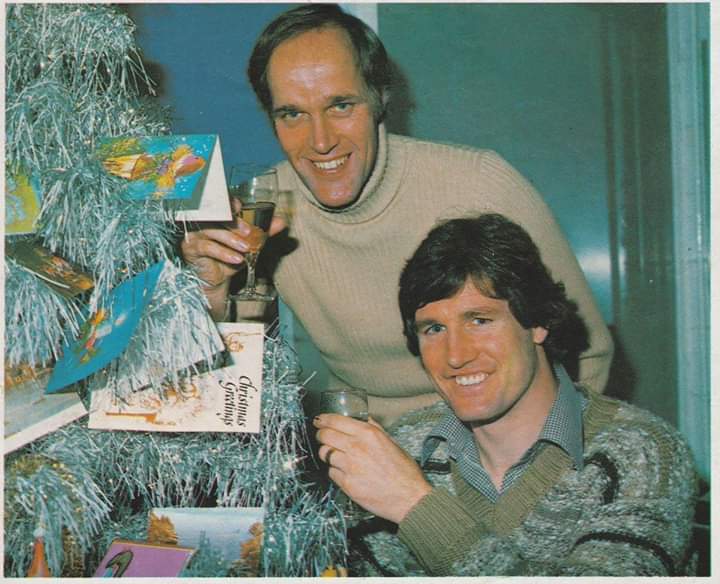
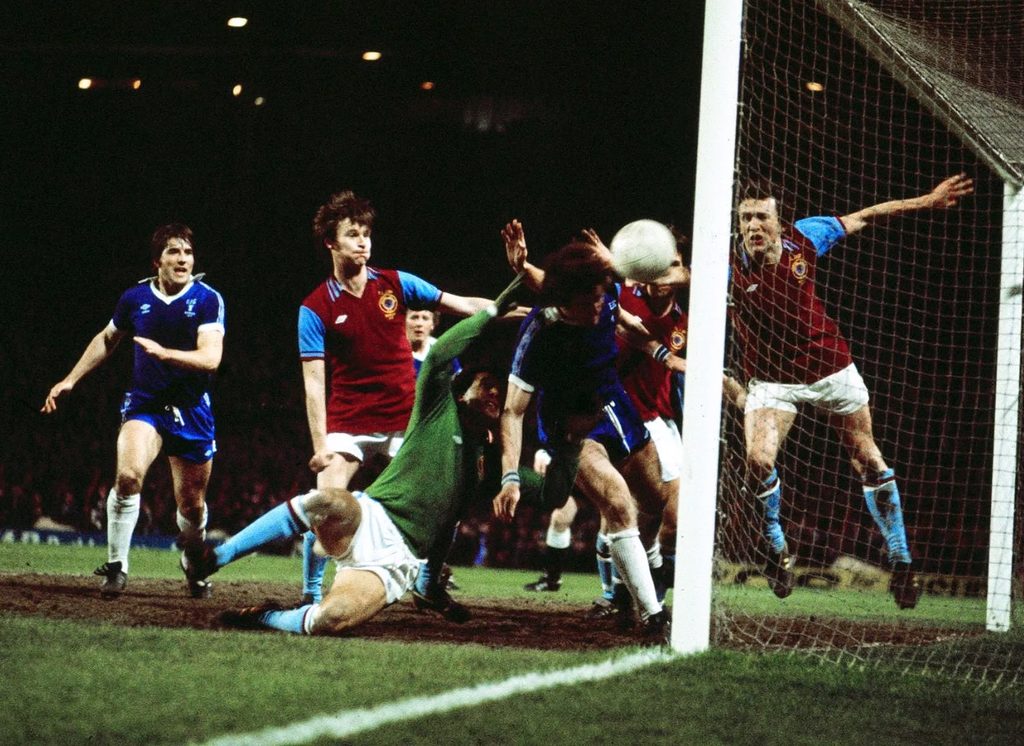
Everton were doing really well in both Cup competitions that year until a referee named Clive Thomas knocked us out of the FA Cup by disallowing a perfectly good goal against Liverpool in the semi-final. I still don’t think Michael has got over it to this day. It took the wind out of everyone’s sails but we had already got through to the League Cup final and I made my first trip down to Wembley for the decider against Aston Villa.
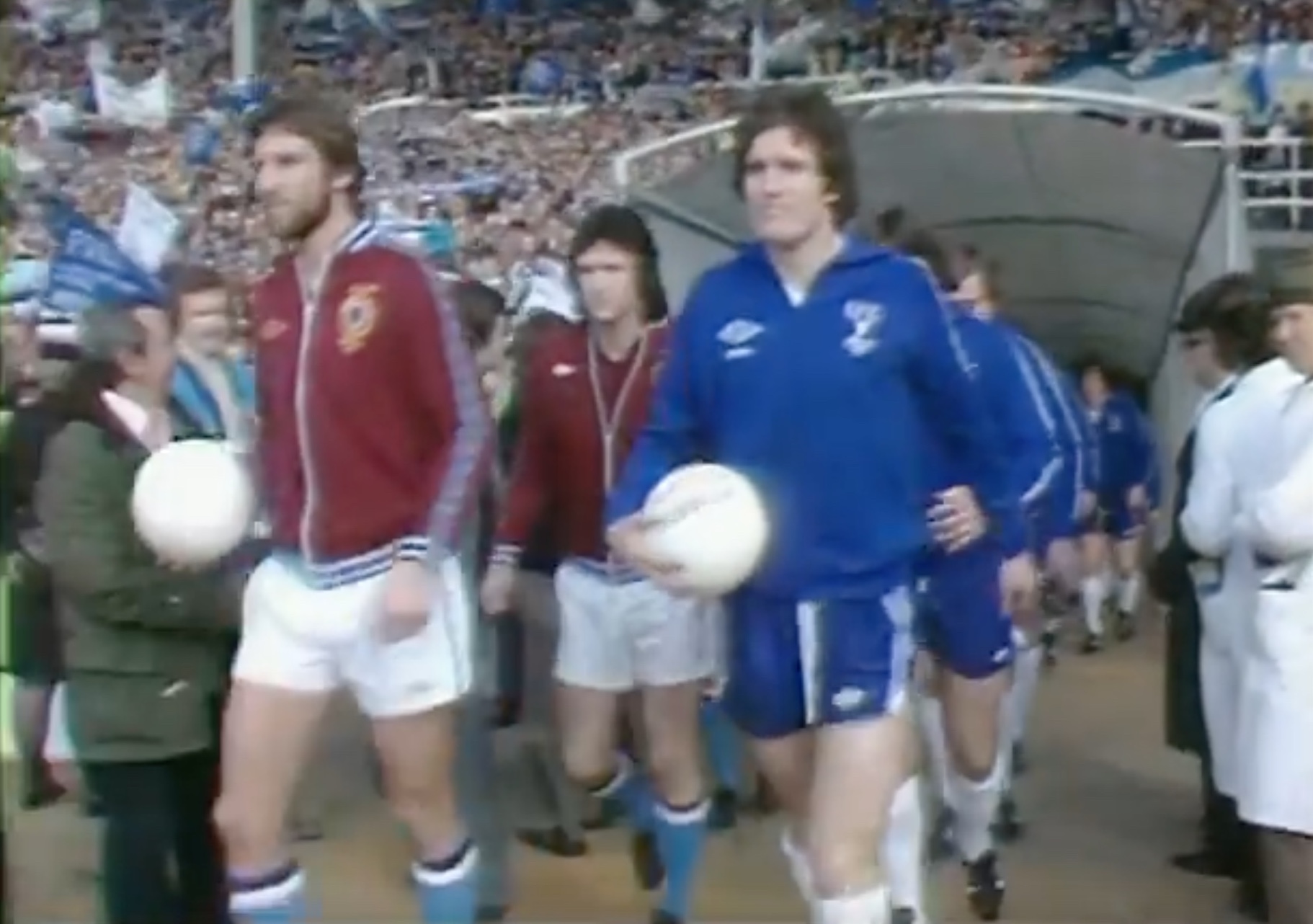
All the wives went on the train and stayed in a really posh hotel just outside Kensington Park. For the game I wore a lovely suit and remember almost bursting with pride when Michael led the team on to the pitch. If I close my eyes I can still see him now in the minutest detail, luckily I can’t remember much of the game though because it was dreadful. It finished up 0–0 and there was two replays.

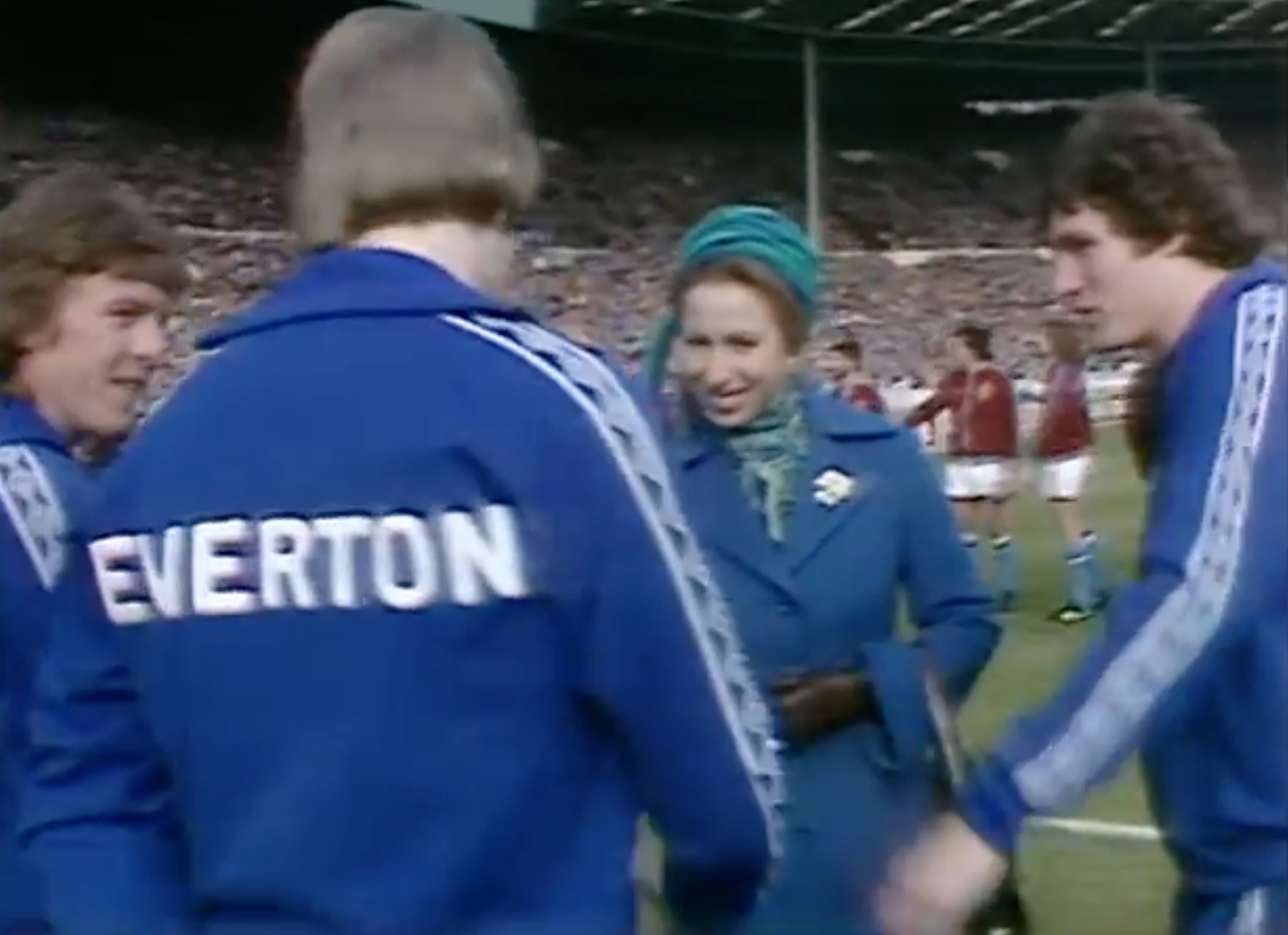
We were all in a buoyant mood when we got back to the hotel, optimistic that we’d win the replay at a canter. There was a huge dinner booked for that evening and a great time was had by all. I wore a beautiful dress, it really was something special and I must have looked so young. On the Monday, there was an article in The Times about the game, and whoever the journalist was had written, ‘Patricia Lyons could have graced the pages of Vogue, she looked so wonderful.’ I was absolutely thrilled to bits. The replay was at Hillsborough and ended up 1-1 and the second replay was at Old Trafford, when we got beat 3–2, although Michael had scored to make it 2-2 before they lost in extra-time. It was heartbreaking.
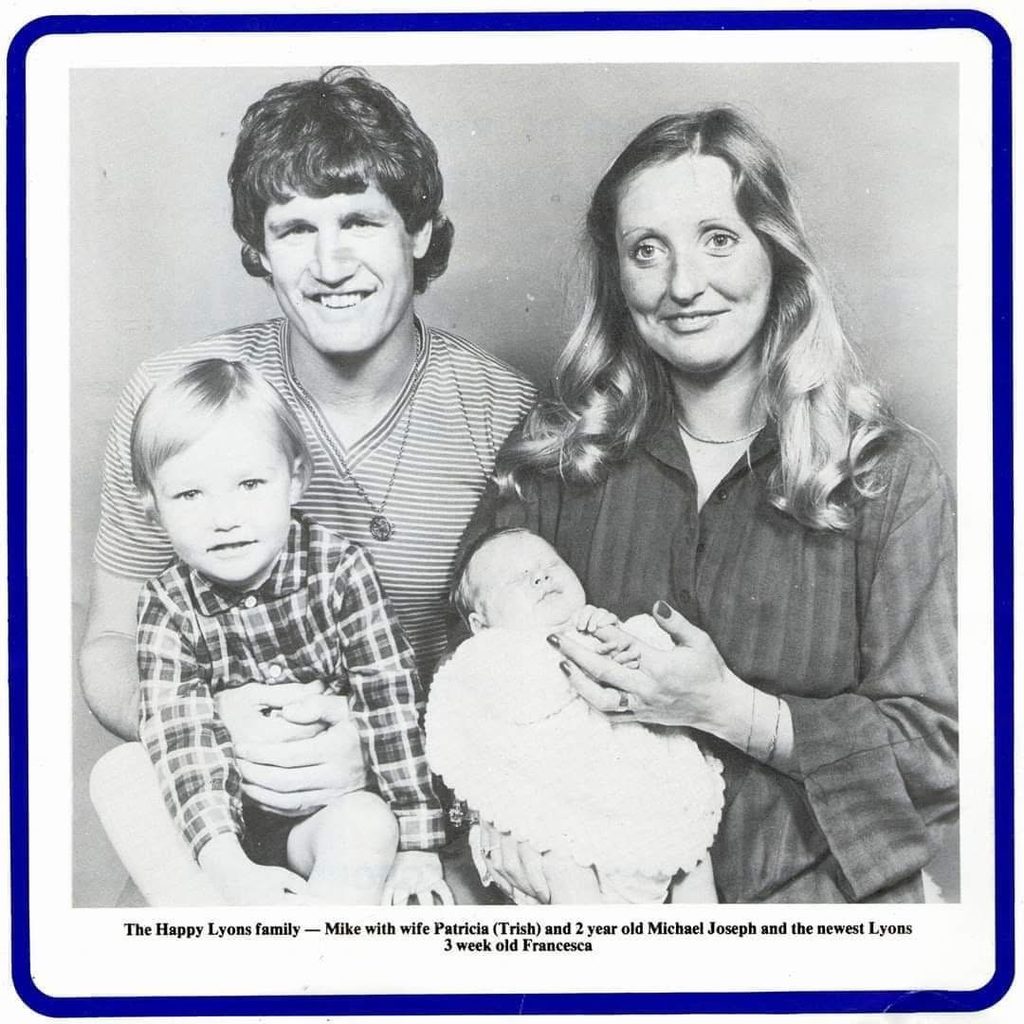
We’d been married for 18 months when I fell pregnant. Michael Joseph was born in May 1978 at Oxford Street Maternity Hospital. I had to be induced, but the day I was going in, Sebastian Coe was running in the 800m at the European Championships so Michael asked if I would wait until the next day so he could watch the race. In the end, I drove myself to the hospital and met my mum there. I had a private room, but somebody must have been indiscreet, because I left the room to go to the loo, and when I came back it had been ransacked. Everything I owned had been pinched; my bag, my keys my purse, everything was gone, and I had CID there taking fingerprints all night. It was the last thing I needed the day before my baby was born, but sadly it happened. Whoever did it must have laid in wait.
Everton always seemed to take the players away for long periods of time, and I would get terribly lonely, but Christmas was the worst. For me the best days were in June, when he was off for the close season, because I would hardly get to see him at all in December. The team would often go to Alder Hey to see the sick children, but Michael was there all the time anyway. During the summer, he must have done more presentations than anybody alive, sometimes he’d do three in one evening and would never ask for, or accept a fee. He was wonderful in that respect and still is. He always felt football had given him so much, the least he could do was give something back.
Michael was fantastic with young local teams, too, as he had come up that way himself. He went to De Le Salle school, the same as Francis Jeffers and Wayne Rooney, and ran three teams in all, and I was the team secretary. If he ever had any spare time, he liked to play golf, and he’s quite good at it now. He loved tennis too and Billy Wright was always his partner.
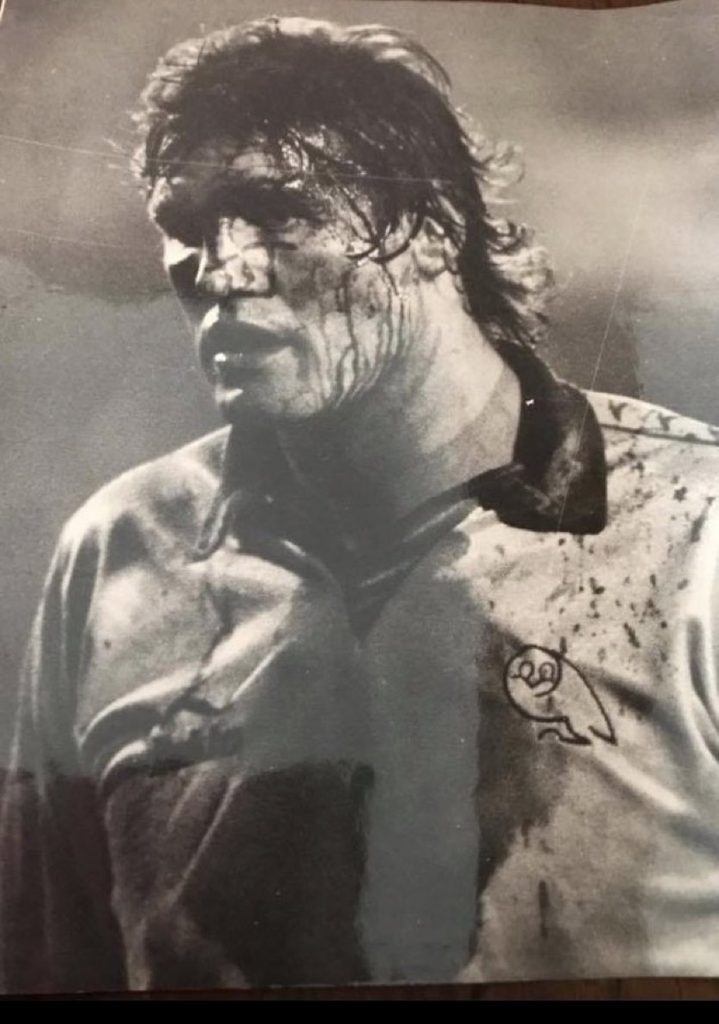
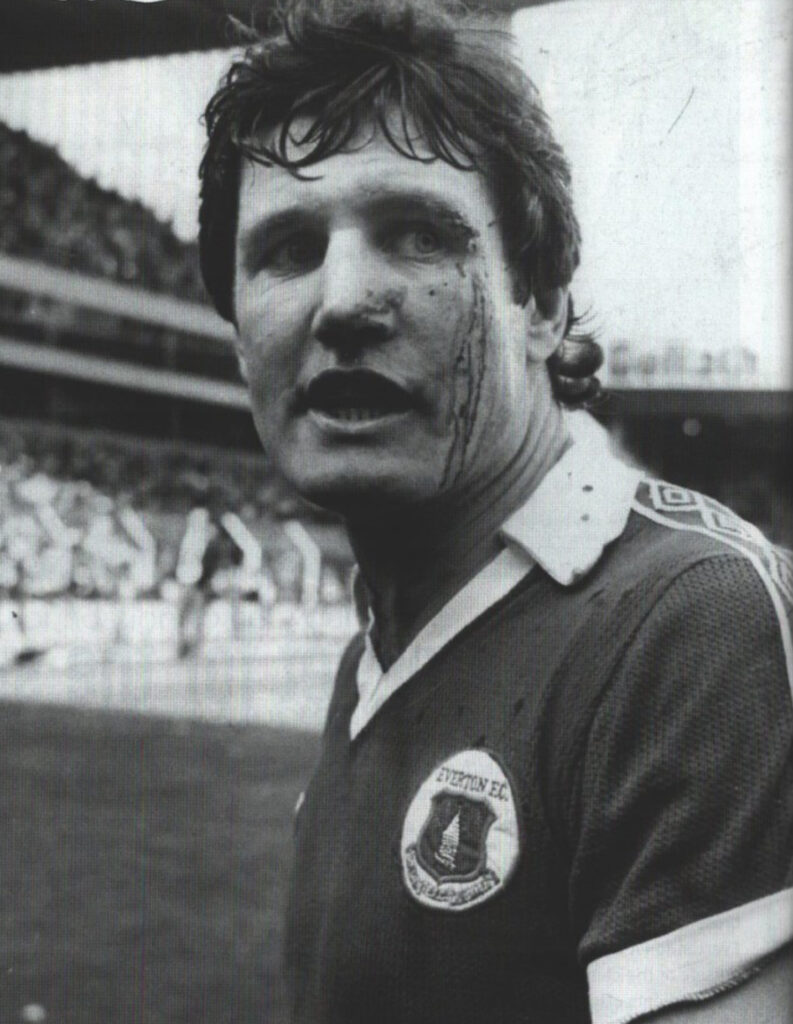
I remember him coming home with terrible injuries; he was an extremely brave player, and always bleeding from somewhere. He had any number of cut eyes and eyebrows, and one time John Fashanu elbowed a tooth out. I remember when he had an elbow in his face and came off the pitch, had stitches and then ran back out to carry on playing. He was in plaster up to his hip one time after a cartilage operation, but the worst I can remember was after away game. I went to pick him up to bring him home and he couldn’t walk, he’d had a really vicious kick in the shin. Jim McGregor, the physio, somehow got him into the car and told me to take him home. I got him into bed and he went delirious. The kick had poisoned his blood and made him hallucinate. He thought he was a soldier in the Second World War, fighting on the front line. The poison had travelled from the bottom of his leg to his groin. It was very scary and eventually he became so ill he had to go to hospital.
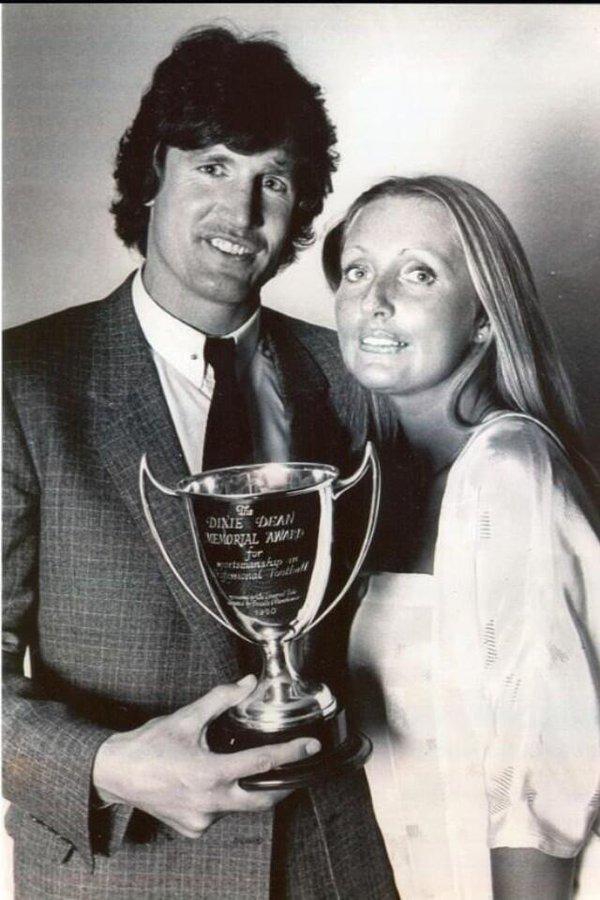
Francesca was born on July 26, 1980. I know it sounds daft because she’s a girl but she’s the image of her dad, beautiful. She’s daddy’s girl and he loves her to bits. Mum was absolutely fantastic when the children were born, she would take both of them off my hands when I went to the match.
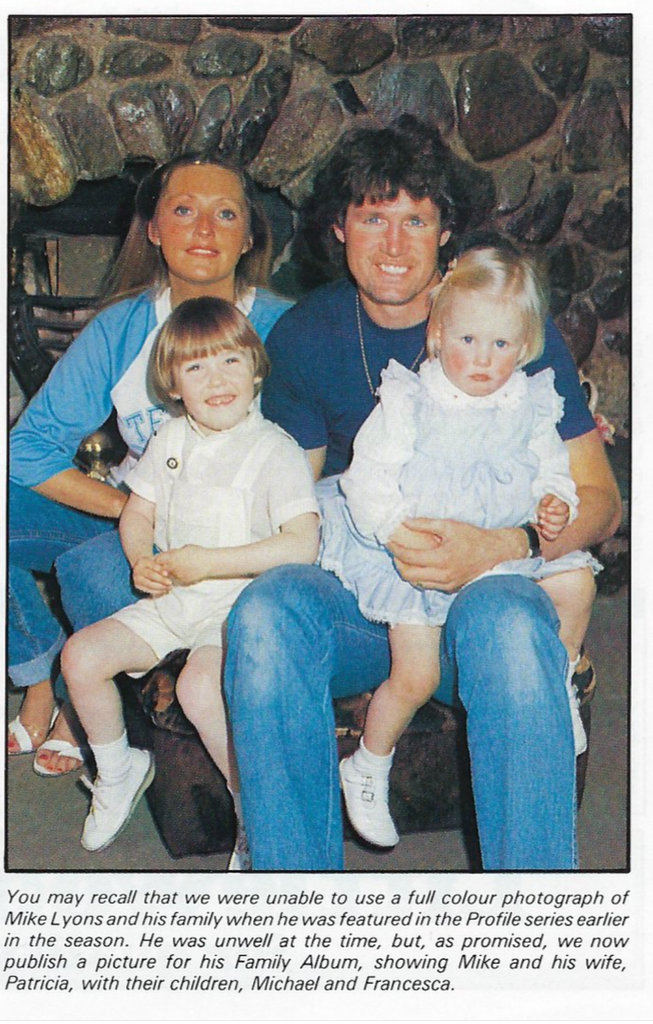
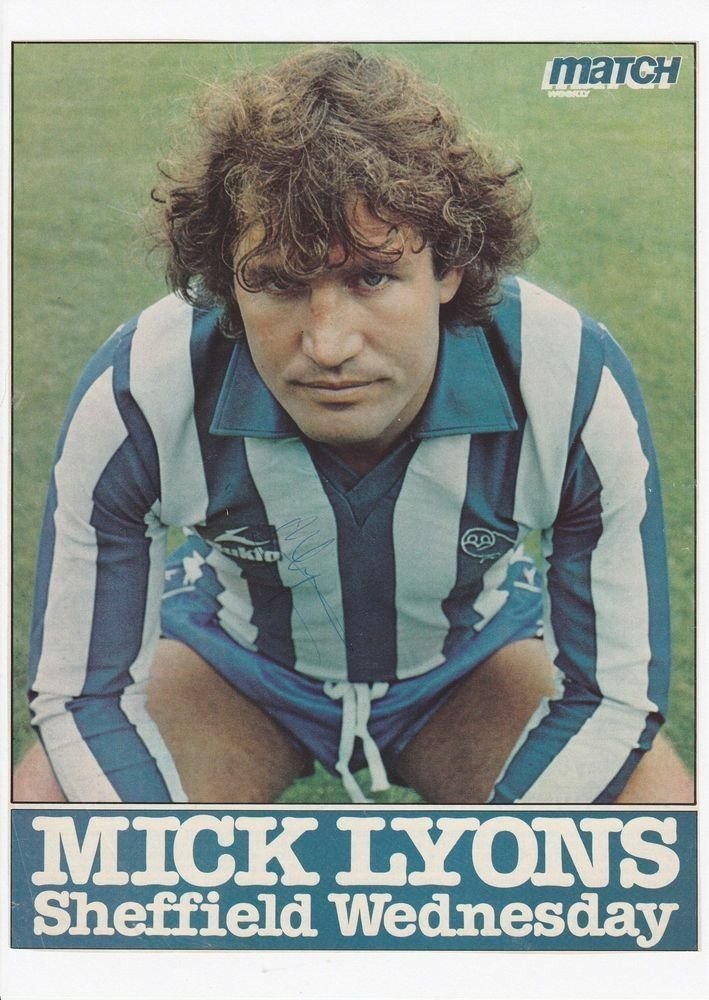
The transfer to Sheffield Wednesday was a big shock to the system. Howard Kendall had arrived and it was quite clear that Michael wasn’t in his plans at Everton so he was put on the transfer list. Wednesday were in the old Second Division at that time and Jack Charlton was the manager. He was a lovely man who really admired Michael and came in for him. We couldn’t sell our house, so Michael moved over to south Yorkshire and bought a house with Lee Chapman. Jack Charlton made Michael captain and they got promoted the next season. It was a great big event.
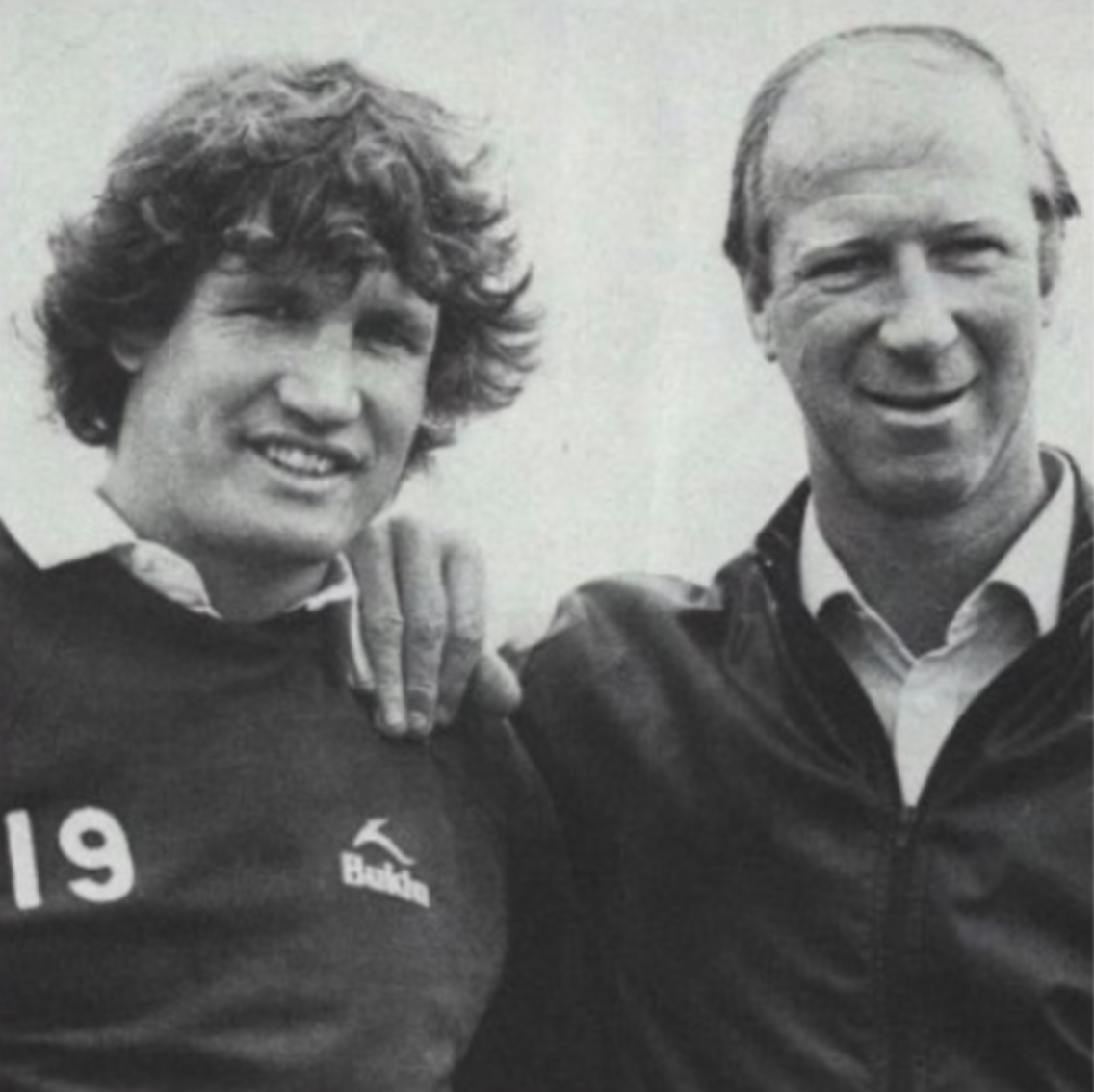
The transfer was good move for Michael and he made the most of it. He tried to pursue his career the best way he could but unfortunately it didn’t really happen. He would drive there on a Monday morning and come back again on the Saturday, after the game. Meanwhile, I was just looking after the children. My family was nearby and they were very supportive and I started doing some promotional work. I worked for four different cosmetic houses promoting their new lines and products.
Michael had a short spell as player-manager of Grimsby but the wanderlust set in after he finished and he went to work abroad in 1991, in the Far East and Australia. I travelled with him on and off but I finally came back to our old house with the children in 1999.
We’re separated now but we still have an amicable relationship, and are in touch all the time. We spent so much time together it would be very strange if he wasn’t still part of my life.
Our son Michael Joseph can play football, he’s quite an adequate sportsman but he’s more academic and extremely gifted with his hands. He’s very arty, a carpenter by trade and a musician by night.
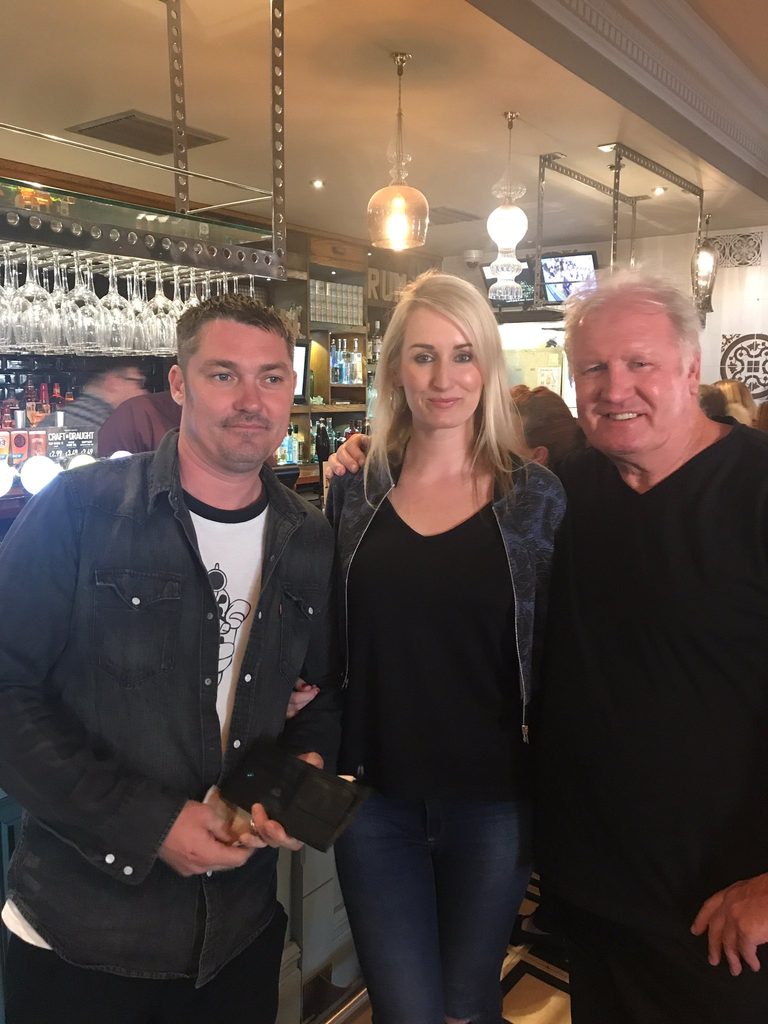
I’m so pleased when I hear people speaking well of Michael, I think it’s wonderful. I realise he’s a living legend and having known, loved and cherished him for all these years, I’m not the slightest bit surprised. He’s a good, honourable man and deserves all the recognition he gets. People come up to him all the time to ask for an autograph or to shake his hand, even in the depths of Borneo.
I did make sacrifices for him in many ways; obviously within a professional capacity, but emotionally too, and so did the children. Having said that, I’d do it all over again. I always felt very lucky and privileged and that feeling never left me all the time we were together.
If Michael Lyons hadn’t walked into the Playboy Club that night, my life would have been so different. I’d have followed my dream and enrolled at the Guild Hall School of Music and Drama. Nothing would have been the same, but I have no regrets. I had a great time and my spirit and love for the arts has always shone through.
Trish Lyons, speaking to Becky Tallentire in 2002
***********************************
Update – 2022
The Australian climate and lifestyle really suited Michael; he made his life there and only returned to England for significant birthdays and various football-related events with Everton and Sheffield Wednesday. We finally divorced in 2007. It was sad, but we’d been apart for a long time, so we’re both OK with it and life goes on.
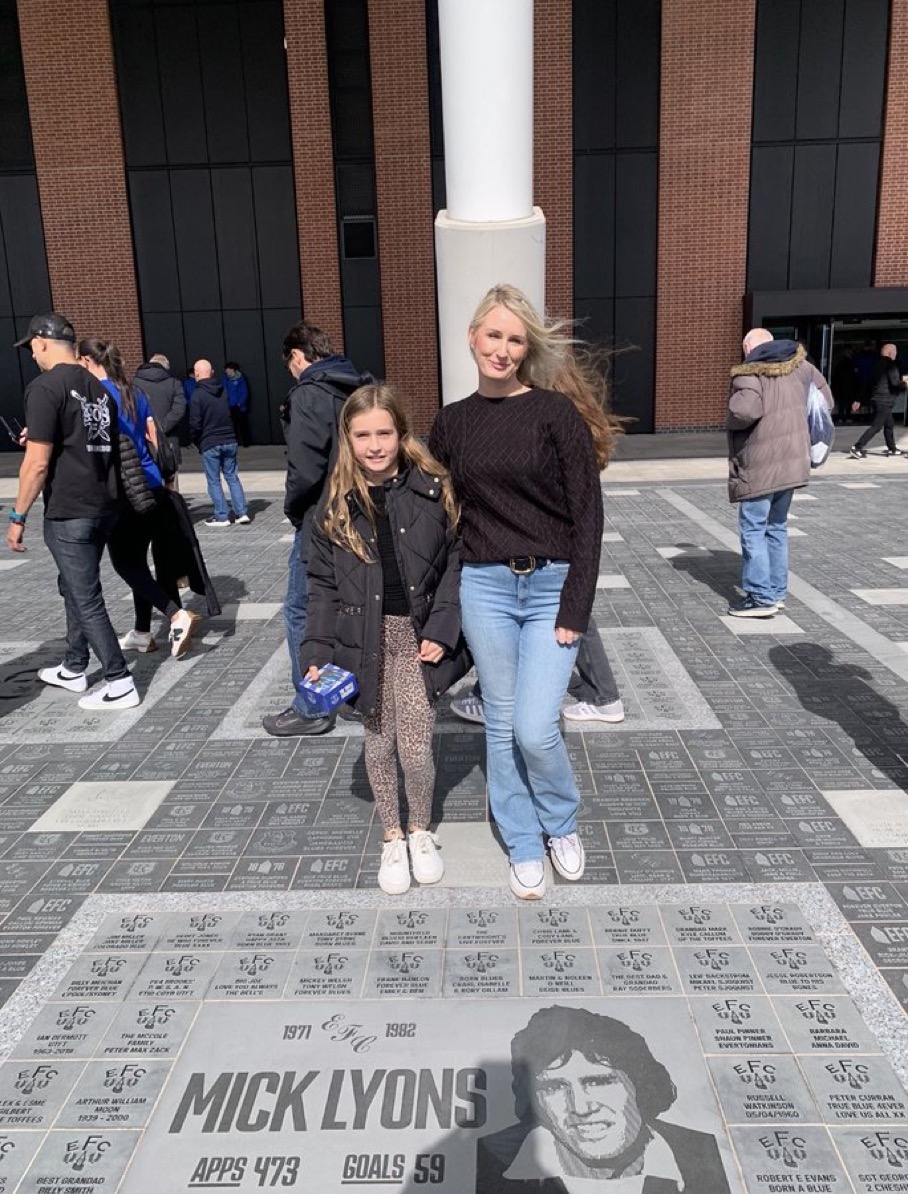
Francesca settled quite close to me and I became a grandmother to Callum in 2010 and Scarlett, four years later. I’m involved in their lives and they bring me endless joy.
Michael Joseph went over to Perth in 2007, he wanted to spend time with his dad and get to know him better. He soon found work as a joiner, met and married a girl and I have a second grandson called Sean, born in 2013.
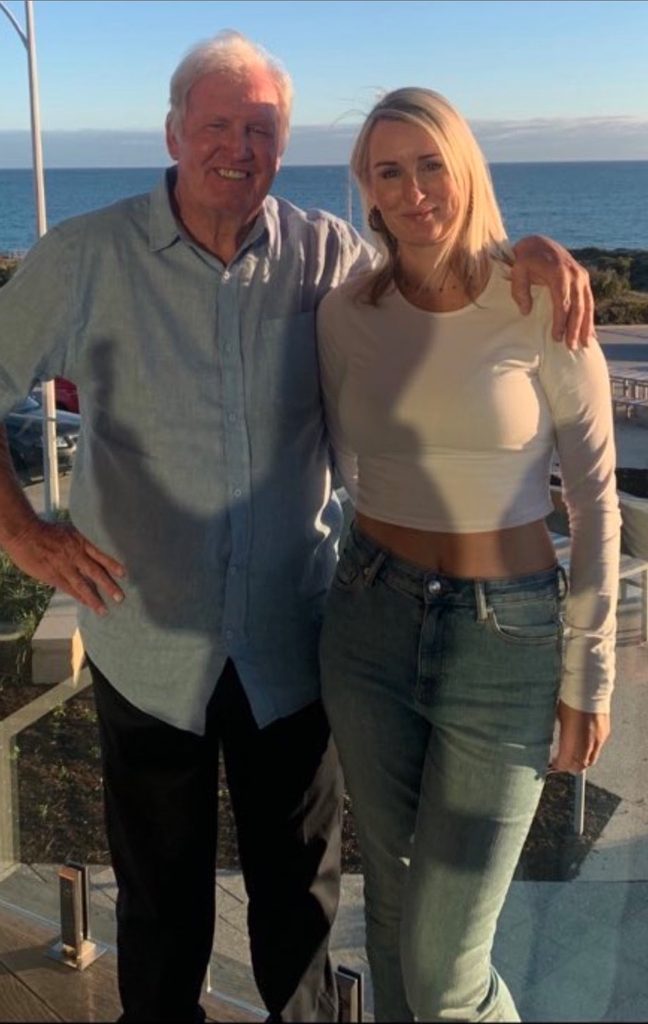
Francesca is still daddy’s girl and would regularly travel to Western Australia to see him. When he came back to England, they’d spend as much time together as they could. A few people who knew him in Australia had sent her messages saying they were slightly concerned about him and she noticed he was becoming vague with names and faces but didn’t know whether it was just the sheer number of people who came over to shake his hand and chat, or something else.
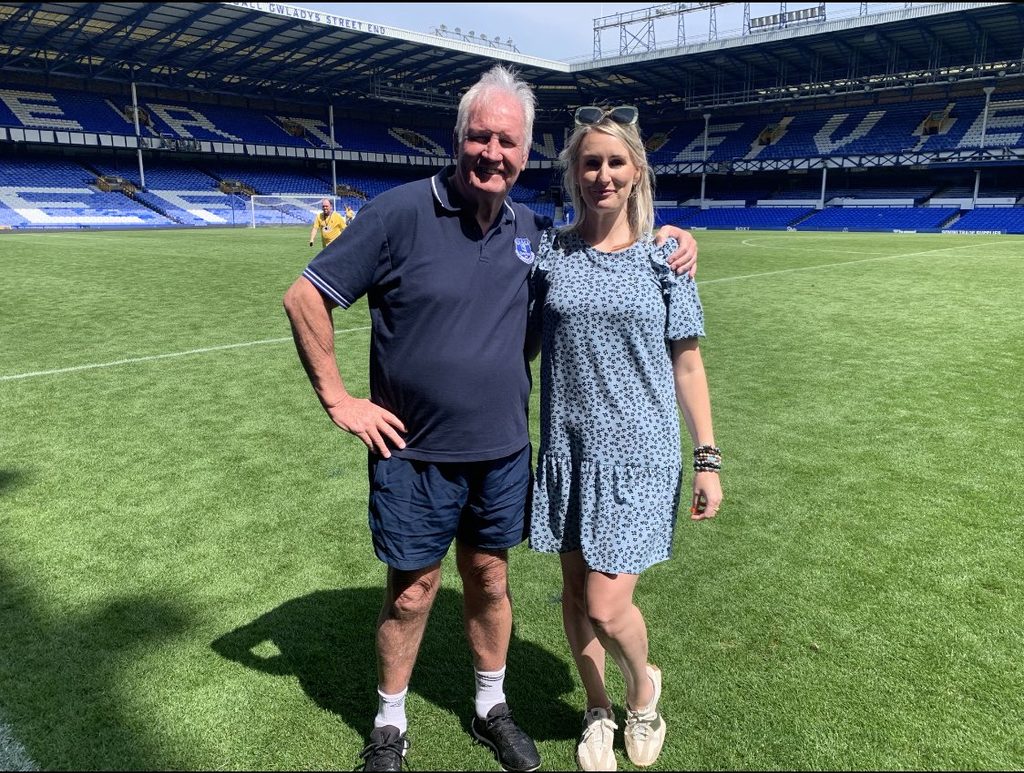
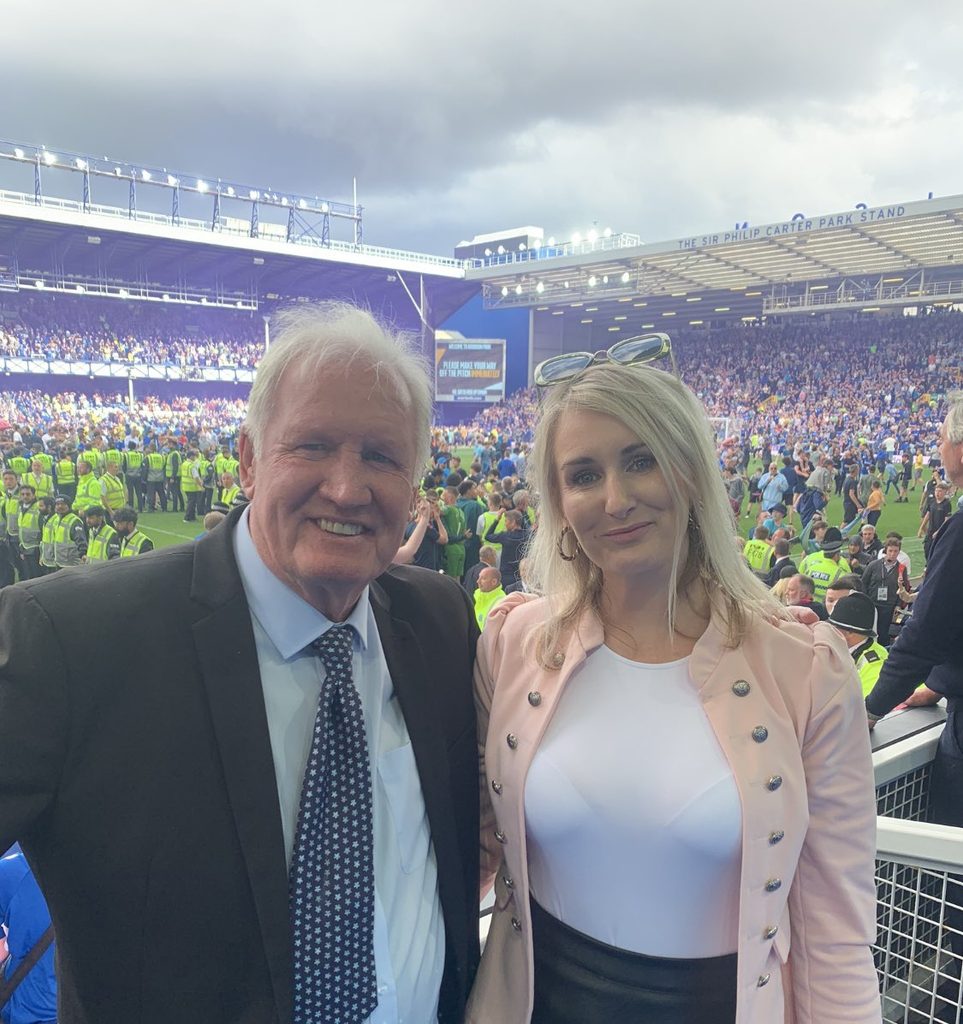
She went over in 2019 and he was quite forgetful, often repeating himself and he didn’t remember places or certain people, so she began to lay the foundations for him to see a doctor. He’s a typical man who never seeks help. Then the pandemic hit, the world was in lockdown and she couldn’t get back to follow it up.
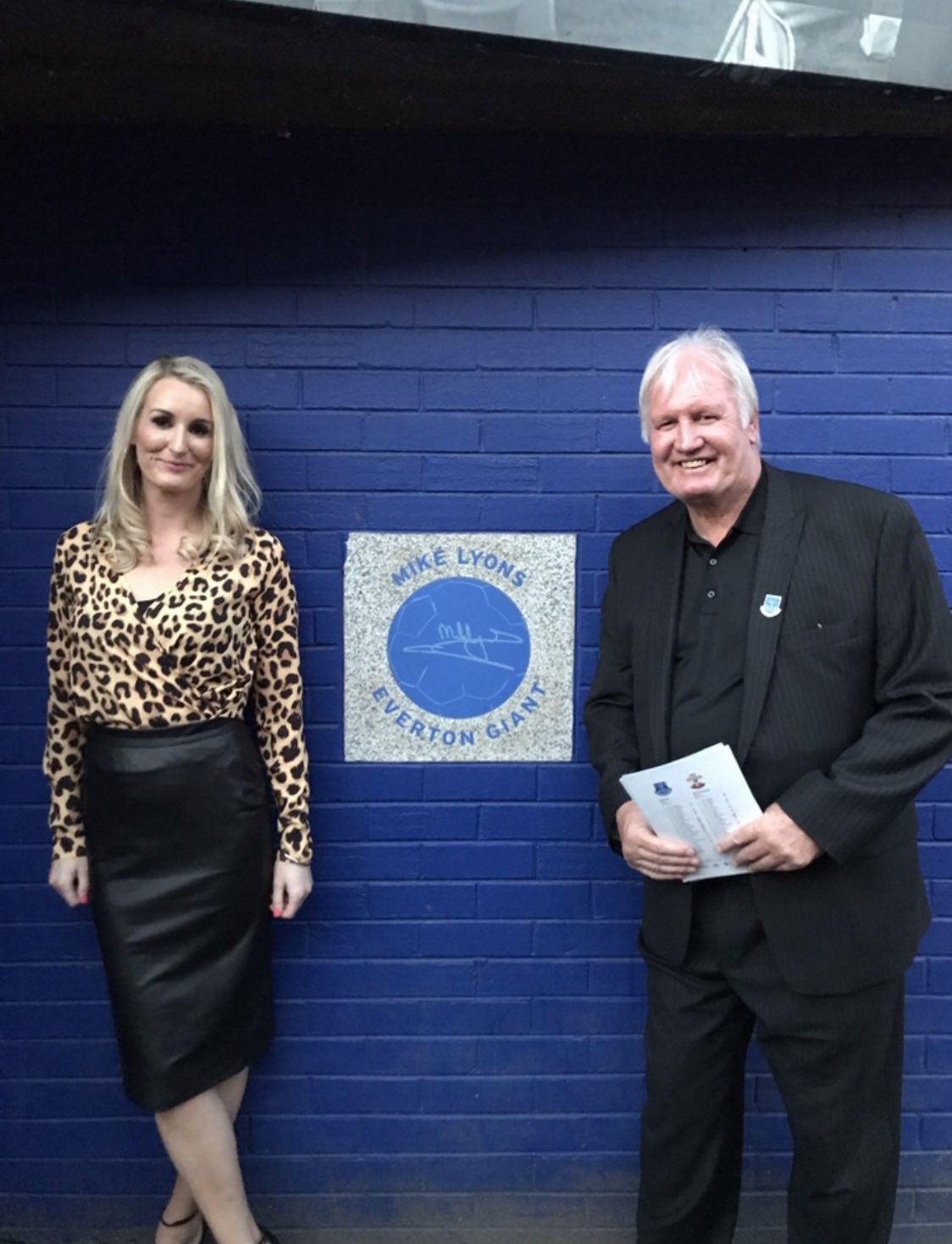
People were still contacting her with their worries, so she emailed his doctor saying she was concerned about her dad who’s a former professional footballer. Meanwhile, she’d started researching Dementia in Footballers and found herself speaking to Dawn Astle who quickly confirmed her fears. The doctor finally got him in for scans but by then it was quite apparent.
The Evertonians used to say ‘Mick Lyons would run through a brick wall for Everton’ and it’s probably true. He was a brave footballer who would play on through all kinds of injuries, he once had broken ribs and took an epidural so he could carry on. If you speak to him, he’ll tell you that’s how he played his game – 100% committed and absolutely fearless and if he had his time again, he wouldn’t change a thing. He’s had a great life, football has given him so many opportunities and he seized them. It’s probably more upsetting for his family and close friends than it is for him, because we know how it’s going to be.
He’s at stage 2 of 4, and sometimes you wouldn’t know there was anything wrong. He lives in Perth with Michael Joseph and they’re just doing their thing. I spent some time in Australia a few years ago, but it wasn’t for me. Home for me is where I have lived all these years in Sefton Village.
It’s almost twenty years since this memoir was first written and reminds me of the adage; plus ça change, plus c’est la même chose.
The more things change, they more they stay the same.
Taken from ‘Real Footballers’ Wives – the First Ladies of Everton’
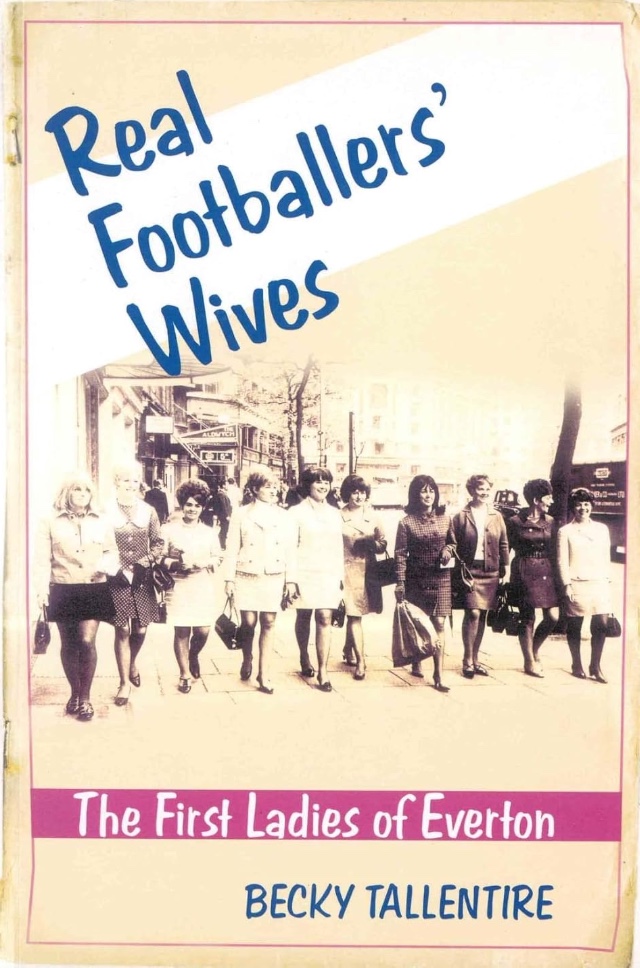
© Becky Tallentire 2004
.
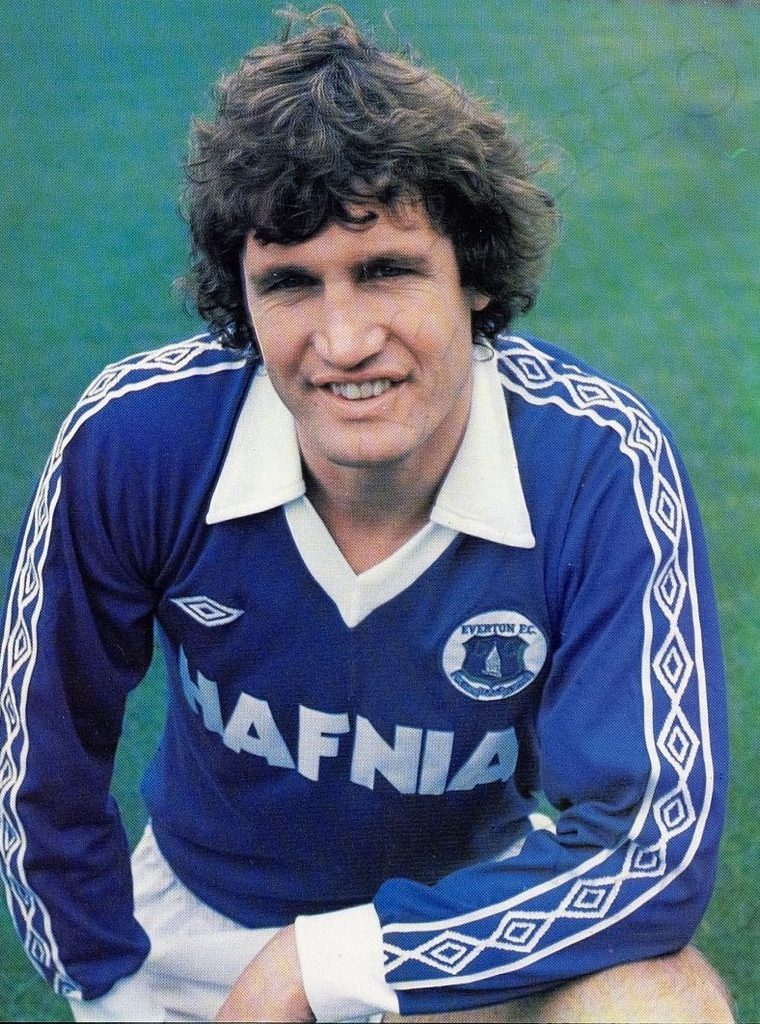
Mick Lyons 1970/1 – 1981/2
Born Liverpool 8.12.51, Centre-back, Played 434 games, Scored 59 goals
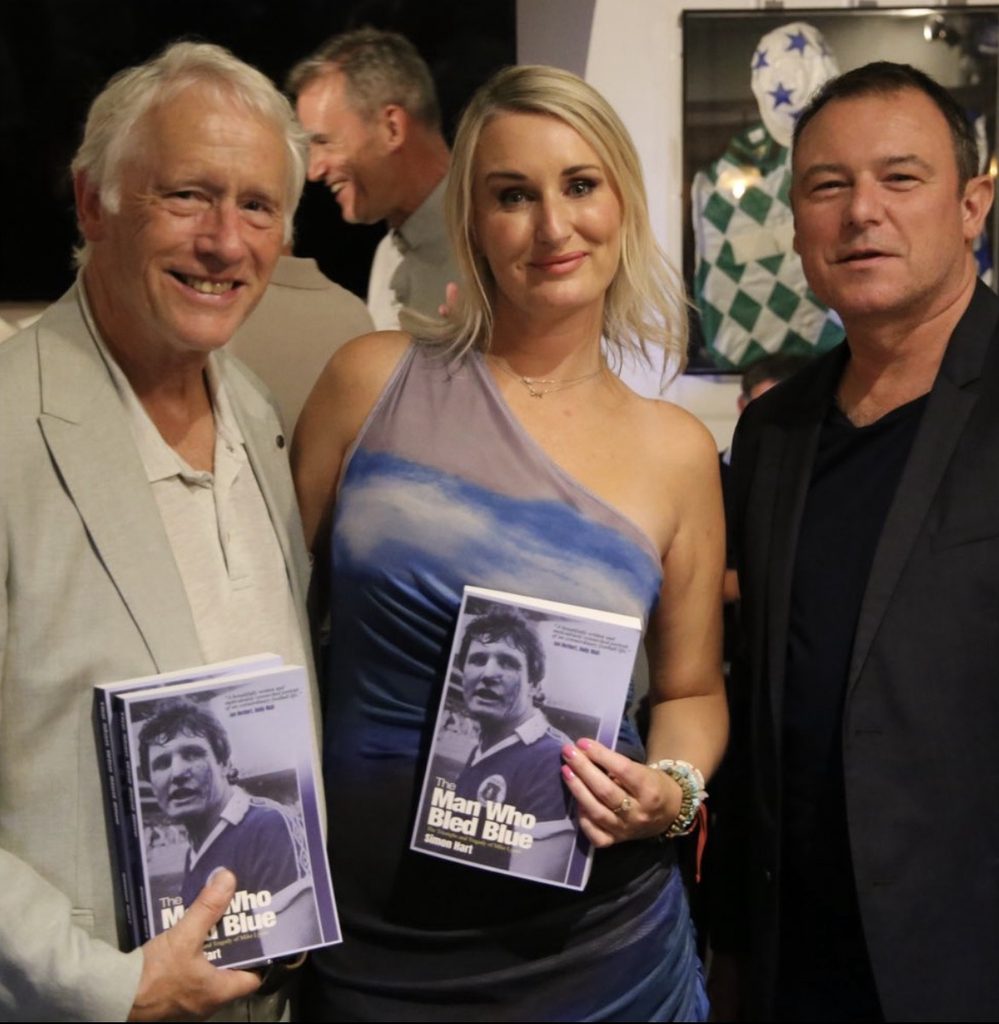
of the new biography about her father by Simon Hart (August 2026)